Results by title
375 books match the query 'Excavations (Archaeology)' and 30 start with c
Caborn-Welborn
Constructing a New Society after the Angel Chiefdom CollapseDavid Pollack
University of Alabama Press, 2004
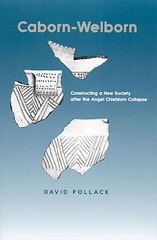
Caborn-Welborn, a late Mississippian (A.D. 1400-1700) farming society centered at the confluence of the Ohio and Wabash Rivers (in what is now southwestern Indiana, southeastern Illinois, and northwestern Kentucky), developed following the collapse of the Angel chiefdom (A.D. 1000-1400). Using ceramic and settlement data, David Pollack examines the ways in which that new society reconstructed social, political, and economic relationships from the remnants of the Angel chiefdom. Unlike most instances of the demise of a complex society led by elites, the Caborn-Welborn population did not become more inward-looking, as indicated by an increase in extraregional interaction, nor did they disperse to smaller more widely scattered settlements, as evidenced by a continuation of a hierarchy that included large villages.
This book makes available for the first time detailed, well-illustrated descriptions of Caborn-Welborn ceramics, identifies ceramic types and attributes that reflect Caborn-Welborn interaction with Oneota tribal groups and central Mississippi valley Mississippian groups, and offers an internal regional chronology. Based on intraregional differences in ceramic decoration, the types of vessels interred with the dead, and cemetery location, Pollack suggests that in addition to the former Angel population, Caborn-Welborn society may have included households that relocated to the Ohio/Wabash confluence from nearby collapsing polities, and that Caborn-Welborn’s sociopolitical organization could be better considered as a riverine confederacy.
Caere
Edited by Nancy Thomson de Grummond and Lisa C. Pieraccini
University of Texas Press, 2016
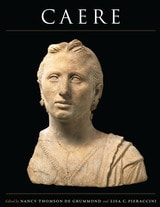
The Etruscan city of Caere and eleven other Etruscan city-states were among the first urban centers in ancient Italy. Roman descriptions of Etruscan cities highlight their wealth, beauty, and formidable defenses. Although Caere left little written historical record outside of funerary inscriptions, its complex story can be deciphered by analyzing surviving material culture, including architecture, tomb paintings, temples, sanctuaries, and materials such as terracotta, bronze, gold, and amber found in Etruscan crafts. Studying Caere provides valuable insight not only into Etruscan history and culture but more broadly into urbanism and the development of urban centers across ancient Italy.
Comprehensive in scope, Caere is the first English-language book dedicated to the study of its eponymous city. Collecting the work of an international team of scholars, it features chapters on a wide range of topics, such as Caere’s formation and history, economy, foreign relations, trade networks, art, funerary traditions, built environment, religion, daily life, and rediscovery. Extensively illustrated throughout, Caere presents new perspectives on and analysis of not just Etruscan civilization but also the city’s role in the wider pan-Mediterranean basin.

Cahokia, the Great Native American Metropolis
Biloine Whiting Young and Melvin L. Fowler
University of Illinois Press, 2000
Camels Back Cave
Anthropological Paper 125Dave N. Schmitt
University of Utah Press, 2005
University of Utah Anthropological Paper No. 125
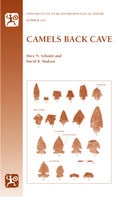
Camels Back Cave is in an isolated limestone ridge on the southern edge of the Great Salt Lake Desert. Recent archaeological investigations there have exposed a series of stratified deposits spanning the entire Holocene era (10,000 BP–present), deposits that show intermittent human occupations dating back through the past 7,600 years. Most human visits to the cave were brief—many likely representing overnight stays—and visitors did not dig pits or move sediment. As a result, fieldworkers were able to recognize and remove thirty-three stratigraphic horizons; radiocarbon analysis provided a pristine, high-resolution chronological sequence of human use. The brevity of visits and the undisturbed nature of the deposits also allowed researchers to identify portions of eight “living surfaces” where they exposed and mapped artifacts and ecofacts across contiguous blocks of units.
Aside from presenting model field techniques, this volume provides new and unique information on regional Holocene climates and biotic communities, cave taphonomy and small mammal hunting, as well as updated human chronologies for Great Basin occupation.
Caribbean Paleodemography
Population, Culture History, and Sociopolitical Processes in Ancient Puerto RicoL. Antonio Curet
University of Alabama Press, 2005
Unearthing the demographic past of the Caribbean to illuminate its cultural origins and transformations.
According to the European chronicles, at the time of contact, the Greater Antilles were inhabited by the Taino or Arawak Indians, who were organized in hierarchical societies. Since its inception Caribbean archaeology has used population as an important variable in explaining many social, political, and economic processes such as migration, changes in subsistence systems, and the development of institutionalized social stratification.
In Caribbean Paleodemography, L. Antonio Curet argues that population has been used casually by Caribbean archaeologists and proposes more rigorous and promising ways in which demographic factors can be incorporated in our modeling of past human behavior. He analyzes a number of demographic issues in island archaeology at various levels of analysis, including inter- and intra-island migration, carrying capacity, population structures, variables in prehistory, cultural changes, and the relationship with material culture and social development. With this work, Curet brings together the diverse theories on Greater Antilles island populations and the social and political forces governing their growth and migration.
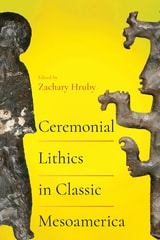
Ceremonial Lithics in Classic Mesoamerica
Zachary Hruby
University Press of Colorado, 2025
Ceremonial Lithics in Classic Mesoamerica explores how and why ceremonial lithic artifacts were made in ancient Mesoamerica’s Classic period, focusing on their implications for economic and sociopolitical organization. Technological analyses of unique examples are interpreted to understand the processes of lithic production and how chipped stone was ritualized across Mesoamerica.
Investigations of ritualized lithics also draw on iconography, epigraphy, and ethnohistory to understand the meaning of these objects, including the so-called eccentric flints and obsidians of the Maya area and Central Mexico, massive debitage deposits in tomb contexts, and the use of utilitarian objects in ceremonial contexts. In the cases of the largest and most elaborate artifacts (e.g., the effigy flints of Copan, Honduras and the obsidian serpents of Teotihuacan), authors examine what the basic production processes may have been, while cases of blade and debitage deposits focus on how the objects were produced within their social context, in what sequence, and why they may have been chosen for ritual deposition.
Ceremonial Lithics in Classic Mesoamerica is the first book to address from a pan-Mesoamerican perspective how and why these objects were made. While obsidian and flint carried their own respective symbolic meanings, the final form of an artifact and the process of its production also contributed to its identification. Hence, this volume is an essential step toward understanding the ancient meanings imbued in these material objects.
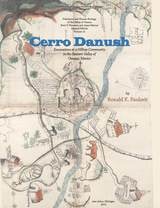
Cerro Danush
Excavations at a Hilltop Community in the Eastern Valley of Oaxaca, MexicoRonald K. Faulseit
University of Michigan Press, 2013
Monte Albán was the capital of the Valley of Oaxaca, Mexico, ca. 500 BC–AD 600, but once its control began to wane, other sites filled the political vacuum. Archaeologists have long awaited a meticulous excavation of one of these sites—one that would help us better understand the process that transformed second-tier sites into a series of polities or señoríos that competed with each other for centuries.
This book reports in detail on Ronald Faulseit’s excavations at the site of Dainzú-Macuilxóchitl in the Valley of Oaxaca. His 2007–2010 mapping and excavation seasons focused on the Late Classic (AD 600–900) and Early Postclassic (AD 900–1300). The spatial distributions of surface artifacts—collected during the intensive mapping and systematic surface collecting—on residential terraces at Cerro Danush are analyzed to evaluate evidence for craft production, ritual, and abandonment at the community level. This community analysis is complemented by data from the comprehensive excavation of a residential terrace, which documents diachronic patterns of behavior at the household level. The results from Faulseit’s survey and excavations are evaluated within the theoretical frameworks of political cycling and resilience theory. Faulseit concludes that resilient social structures may have helped orchestrate reorganization in the dynamic political landscape of Oaxaca after the political collapse of Monte Albán.
Cetamura del Chianti
By Nancy Thomson de Grummond
University of Texas Press, 2020
Expanding the study of Etruscan habitation sites to include not only traditional cities but also smaller Etruscan communities, Cetamura del Chianti examines a settlement that flourished during an exceptional time period, amid wars with the Romans in the fourth to first centuries BCE.
Situated in an ideal hilltop location that was easy to defend and had access to fresh water, clay, and timber, the community never grew to the size of a city, and no known references to it survive in ancient writings; its ancient name isn’t even known. Because no cities were ever built on top of the site, excavation is unusually unimpeded. Intriguing features described in Cetamura del Chianti include an artisans’ zone with an adjoining sanctuary, which fostered the cult worship of Lur and Leinth, two relatively little known Etruscan deities, and ancient wells that reveal the cultural development and natural environment, including the vineyards and oak forests of Chianti, over a period of some six hundred years. Deeply enhancing our understanding of an intriguing economic, political, and cultural environment, this is a compelling portrait of a singular society.
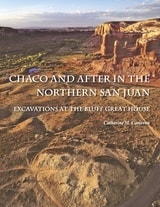
Chaco and After in the Northern San Juan
Excavations at the Bluff Great HouseCatherine M. Cameron
University of Arizona Press, 2009
Bluff’s massive great house, great kiva, and earthen berms are described and compared to other great houses in the northern Chaco region. Those assessments support intriguing new ideas about the Chaco region and the effect of the collapse of Chaco Canyon on “outlying” great houses.
New insights from the Bluff Great House clarify the construction and use of great houses during the Chaco era and trace the history of great houses in the generations after Chaco’s decline. An innovative comparative study of the northern and southern portions of the Chaco world (the northern San Juan area around Bluff and the Cibola area around Zuni) leads to new ideas about population aggregation and regional abandonment in the Southwest. Appendixes present details and descriptions of artifacts recovered from Bluff: ceramics, projectile points, pollen analyses, faunal remains, bone tools, ornaments, and more.
This book is one of only a handful of reports on Chacoan great houses in the northern San Juan region. It provides an in-depth study of the Chaco era and clarifies the relationship of “outlying” great houses to Chaco Canyon. Research at the Bluff Great House begins to answer key questions about the nature of Chaco and its region, and the history of the northern San Juan in the Chaco and post-Chaco worlds.
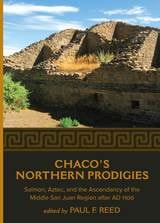
Chaco's Northern Prodigies
Salmon, Aztec, and the Ascendancy of the Middle San Juan Region after AD 1100Paul F Reed
University of Utah Press, 2011
Work by two groups of contributors resulted in this synthetic volume, which interprets thirty-five years of research at Salmon Ruins. Chaco’s Northern Prodigies also puts recent work at Salmon Ruins in the context of Middle San Juan archaeological research. It is a timely synopsis of the archaeology of this region of the Southwest.
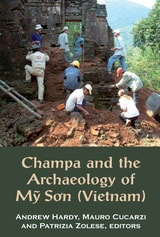
Champa and the Archaeology of M? So'n (Vietnam)
Edited by Andrew Hardy, Mauro Cucarzi, and Patrizia Zolese
National University of Singapore Press, 2009
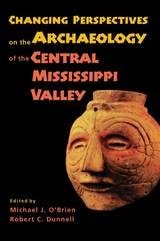
Changing Perspectives on the Archaeology of the Central Mississippi Valley
Michael J. O'Brien
University of Alabama Press, 1998
Fourteen experts examine the current state of Central Valley prehistoric research and provide an important touchstone for future archaeological study of the region
The Mississippi Valley region has long played a critical role in the development of American archaeology and continues to be widely known for the major research of the early 1950s. To bring the archaeological record up to date, fourteen Central Valley experts address diverse topics including the distribution of artifacts across the landscape, internal configurations of large fortified settlements, human-bone chemistry, and ceramic technology.
The authors demonstrate that much is to be learned from the rich and varied archaeological record of the region and that the methods and techniques used to study the record have changed dramatically over the past half century. Operating at the cutting edge of current research strategies, these archaeologists provide a fresh look at old problems in central Mississippi Valley research.
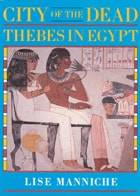
City of the Dead
Thebes in EgyptLise Manniche
University of Chicago Press, 1987
The author traces the history of the site discussing the more important tombs in some detail, and sheds new light on the symbolism used in painting to help the deceased in the Afterlife. She also surveys the role of the treasure hunters and travellers of the eighteenth and early nineteenth-centuries and the pioneer epigraphers who followed them and paved the way for the archeological investigation and research that continues today.
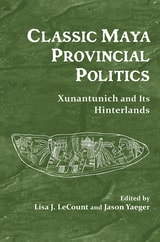
Classic Maya Provincial Politics
Xunantunich and Its HinterlandsEdited by Lisa J. LeCount and Jason Yaeger
University of Arizona Press, 2010
The contributors to this volume chart the rise and fall of the Classic Maya center of Xunantunich, paying special attention to its changing relationships with the communities that comprised its hinterlands. They examine how the changing relationships between Xunantunich and the larger kingdom of Naranjo affected the local population, the location of their farms and houses, and the range of economic and subsistence activities in which both elites and commoners engaged. They also examine the ways common people seized opportunities and met challenges offered by a changing political landscape.
The rich archaeological data in this book show that incorporating subject communities and people—and keeping them incorporated—was an on-going challenge to ancient Maya rulers. Until now, archaeologists have lacked integrated regional data and a fine-grained chronology in which to document short-term shifts in site occupations, subsistence strategies, and other important practices of the daily life of the Maya. This book provides a revised picture of Maya politics—one of different ways of governing and alliance formation among dominant centers, provincial polities, and hinterland communities.
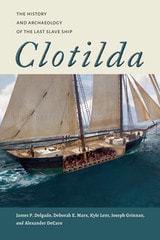
Clotilda
The History and Archaeology of the Last Slave ShipJames P. Delgado, Deborah E. Marx, Kyle Lent, Joseph Grinnan, and Alexander DeCaro
University of Alabama Press, 2023
Documents the maritime historical research and archaeological fieldwork used to identify the wreck of the notorious schooner Clotilda
Clotilda: The History and Archaeology of the Last Slave Ship is the first definitive work to examine the maritime historical and archaeological record of one of the most infamous ships in American history. Clotilda was owned by Alabama businessman Timothy Meaher, who, on a dare, equipped it to carry captured Africans from what is now Benin and bring them to Alabama in 1860—some fifty years after the import of captives to be enslaved was banned. To hide the evidence, Clotilda was set afire and sunk.
What remained was a substantially intact, submerged, and partially buried shipwreck located in a backwater of the Mobile River. The site of the wreck was an open secret to some people who knew Meaher, but its identity remained unknown for more than a century as various surveys through the years failed to locate the ship.
This volume, authored by the archaeological team who conducted a comprehensive, systematic survey of a forgotten “ship graveyard,” details the exhaustive forensic work that conclusively identified the wreck, as well as the stories and secrets that have emerged from the partly burned hulk. James P. Delgado and his coauthors discuss the various searches for Clotilda, sharing the forensic data and other analyses showing how those involved concluded that this wreck was indeed Clotilda. Additionally, they offer physical evidence not previously shared that situates the schooner and its voyage in a larger context of the slave trade.
Clotilda: The History and Archaeology of the Last Slave Ship serves as a nautical biography of the ship as well. After reviewing the maritime trade in and out of Mobile Bay, this account places Clotilda within the larger landscape of American and Gulf of Mexico schooners and chronicles its career before being used as a slave ship. All of its voyages had a link to slavery, and one may have been another smuggling voyage in violation of federal law. The authors have also painstakingly reconstructed Clotilda’s likely appearance and characteristics.
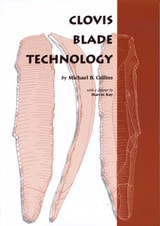
Clovis Blade Technology
A Comparative Study of the Keven Davis Cache, TexasBy Michael B. Collins
University of Texas Press, 1999
Around 11,000 years ago, a Paleoindian culture known to us as "Clovis" occupied much of North America. Considered to be among the continent's earliest human inhabitants, the Clovis peoples were probably nomadic hunters and gatherers whose remaining traces include camp sites and caches of goods stored for utilitarian or ritual purposes.
This book offers the first comprehensive study of a little-known aspect of Clovis culture—stone blade technology. Michael Collins introduces the topic with a close look at the nature of blades and the techniques of their manufacture, followed by a discussion of the full spectrum of Clovis lithic technology and how blade production relates to the production of other stone tools. He then provides a full report of the discovery and examination of fourteen blades found in 1988 in the Keven Davis Cache in Navarro County, Texas.
Collins also presents a comparative study of known and presumed Clovis blades from many sites, discusses the Clovis peoples' caching practices, and considers what lithic technology and caching behavior can add to our knowledge of Clovis lifeways. These findings will be important reading for both specialists and amateurs who are piecing together the puzzle of the peopling of the Americas, since the manufacture of blades is a trait that Clovis peoples shared with the Upper Paleolithic peoples in Europe and northern Asia.
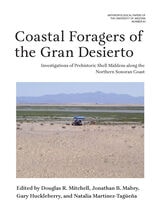
Coastal Foragers of the Gran Desierto
Investigations of Prehistoric Shell Middens along the Northern Sonoran CoastDouglas R. Mitchell, Jonathan B. Mabry, Gary Huckleberry, and Natalia Martínez-Tagüeña
University of Arizona Press, 2024
Focused on the coast near Puerto Peñasco, Sonora, Mexico, Coastal Foragers of the Gran Desierto examines the diverse groups occupying the coast for salt, abundant food sources, and shells for ornament manufacturing. The archaeological patterns demonstrated by the data gathered lead to the conclusion that, since ancient times, this coastal landscape was not a marginal zone but rather an important source of food and trade goods, and a pilgrimage destination that influenced broad and diverse communities across the Sonoran Desert and beyond.
Contributors
Jenny L. Adams
Karen R. Adams
Thomas Bowen
Tessa L. Branyan
Bill Broyles
Richard C. Brusca
David L. Dettman
Michael S. Foster
Gary Huckleberry
Jonathan B. Mabry
Natalia Martínez-Tagüeña
Richard J. Martynec
Douglas R. Mitchell
Kirsten Rowell
Melissa R. Schwan
M. Steven Shackley
R. J. Sliva
Kayla B. Worthey
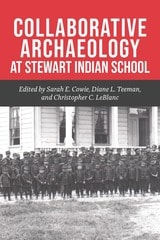
Collaborative Archaeology at Stewart Indian School
Sarah E. Cowie
University of Nevada Press, 2019
This edited volume addresses the theory, methods, and outcomes of collaborative archaeology conducted at the Stewart Indian School site and is a genuine collective effort between archaeologists, former students of the school, and other tribal members. With more than twenty contributing authors from the University of Nevada, Reno, Nevada Indian Commission, Washoe Tribal Historic Preservation Office, and members of Washoe, Paiute, and Shoshone tribes, this rich case study is strongly influenced by previous work in collaborative and Indigenous archaeologies. It elaborates on those efforts by applying concepts of governmentality (legal instruments and practices that constrain and enable decisions, in this case, regarding the management of historical populations and modern heritage resources) as well as social capital (valued relations with others, in this case, between Native and non-Native stakeholders).
As told through the trials, errors, shared experiences, sobering memories, and stunning accomplishments of a group of students, archaeologists, and tribal members, this rare gem humanizes archaeological method and theory and bolsters collaborative archaeological research.
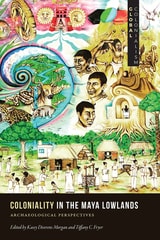
Coloniality in the Maya Lowlands
Archaeological Perspectivesedited by Kasey Diserens Morgan &Tiffany C. Fryer
University Press of Colorado, 2022
The work takes a hemispheric approach to the historical and material analysis of colonialism, bridging the often disparate literatures on coloniality and settler colonialism. Archaeologists and anthropologists working in what are today southeastern Mexico, Belize, Guatemala, and Honduras grapple with the material realities of coloniality at a regional level. They provide sustained discussions of Maya experiences with wide-ranging colonial endurances: violence, resource insecurity, land rights, refugees, the control of borders, the movement of contraband, surveillance, individual and collective agency, consumption, and use of historic resources.
Considering a future for historical archaeologies of the Maya region that bridges anthropology, ethnohistory, Indigenous studies, settler colonial studies, and Latin American studies, Coloniality in the Maya Lowlands presents a new understanding of how ways of being in the Maya world have formed and changed over time, as well as the shared investments of historical archaeologists and sociocultural anthropologists working in the Maya region.
Contributors: Fernando Armstrong-Fumero, Alejandra Badillo Sánchez, Adolfo Iván Batún Alpuche, A. Brooke Bonorden, Maia C. Dedrick, Scott L. Fedick, Fior García Lara, John Gust, Brett A. Houk, Rosemary A. Joyce, Gertrude B. Kilgore, Jennifer P. Mathews, Patricia A. McAnany, James W. Meierhoff, Fabián A. Olán de la Cruz, Julie K. Wesp
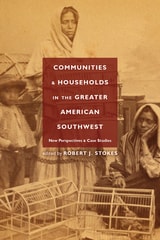
Communities and Households in the Greater American Southwest
New Perspectives and Case StudiesRobert J. Stokes
University Press of Colorado, 2019
Today’s archaeologists and anthropologists understand that communities operate as a multi-level, -organizational, -contextual, and -referential human creation, which informs their understanding of how people actively negotiate their way through and around community constraints. The chapters in this book creatively examine these interactions, revealing the dynamic nature of ancient and modern groups in the American Southwest. The book has two broad complementary themes: one focusing on household decision-making, identity, and structural relations with the greater community; the other concerned with community organization and integration, household roles within the community, and changes in community organization—violence and destabilization, coalescence and cooperation—over time.
Communities and Households in the Greater American Southwest weaves a rich tapestry of ancient and modern life through innovative approaches that will be of interest not only to Southwestern archaeologists but to all researchers and students interested in social organization at the household and community levels.
Contributors: James R. Allison, Andrew Duff, Lindsay Johansson, Michael Lindeman, Myles Miller, James Potter, Alison E. Rautman, J. Jefferson Reid, Katie Richards, Oscar Rodriguez, Barbara Roth, Kristin Safi, Deni Seymour, Robert J. Stokes, Richard K. Talbot, Scott Ure, Henry Wallace, Stephanie M. Whittlesey
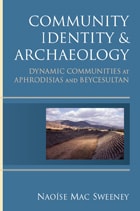
Community Identity and Archaeology
Dynamic Communities at Aphrodisias and BeycesultanNaoíse Mac Sweeney
University of Michigan Press, 2011
Constructing Community
The Archaeology of Early Villages in Central New MexicoAlison E. Rautman
University of Arizona Press, 2014
Rautman tackles a very broad topic: how archaeologists use material evidence to infer and imagine how people lived in the past, how they coped with everyday decisions and tensions, and how they created a sense of themselves and their place in the world. Using several different lines of evidence, she reconstructs what life was like for the Ancestral Pueblo people of Salinas, and identifies some of the specific strategies that they used to develop and sustain their villages over time.
Examining evidence of each site’s construction and developing spatial layout, Rautman traces changes in community organization across the architectural transitions from pithouses to jacal structures to unit pueblos, and finally to plaza-oriented pueblos. She finds that, in contrast to some other areas of the American Southwest, early villagers in Salinas repeatedly managed their built environment to emphasize the coherence and unity of the village as a whole. In this way, she argues, people in early farming villages across the Salinas region actively constructed and sustained a sense of social community.
Contemporary Lithic Analysis in the Southeast
Problems, Solutions, and InterpretationsPhilip J. Carr
University of Alabama Press, 2012
William Andrefsky Jr. / Andrew P. Bradbury / Philip J. Carr / CarolynConklin /
Cosa V
An Intermittent Town, Excavations 1991-1997Elizabeth Fentress
University of Michigan Press, 2003
Cosa
The Roman and Greek AmphorasElizabeth Lyding Will and Kathleen Warner Slane
University of Michigan Press, 2019
At the time of Will’s death, her manuscript consisted of a typed catalogue of the amphora stamps from Cosa and an equal number of unstamped vessels, but was missing important elements. On the basis of extensive notes and photographs, Kathleen Warner Slane has reviewed and updated the manuscript, adding type descriptions and footnotes to materials that have appeared since Will’s death as well as a framing introduction and conclusions. Appendices highlight an Augustan amphora dump on the Arx and add a catalogue of the Greek amphora stamps found at Cosa.
Cosa: The Roman and Greek Amphoras will be of interest to scholars and students of Rome and its system of colonies, and also to those interested in Greek and Roman archaeology and trade in the ancient world.
Crossing the Borders
New Methods and Techniques in the Study of Archaeological Materials from the CaribbeanEdited by Corinne L. Hofman, Menno Hoogland, and Annelou L. van Gijn
University of Alabama Press, 2008
Crossing the Rift
Resources, Settlements Patterns and Interaction in the Wadi ArabahP. Bienkwoski
Council for British Research in the Levant, 2006
Crowfield (Af Hj-31)
A Unique Paleoindian Fluted Point Site from Southwestern OntarioD. Brian Deller and Christopher J. Ellis with contributions by James R. Keron and Roger H. King and a foreword by Henry T. Wright
University of Michigan Press, 2011
Cueva Blanca
Social Change in the Archaic of the Valley of OaxacaKent V. Flannery and Frank Hole
University of Michigan Press, 2019
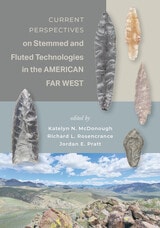
Current Perspectives on Stemmed and Fluted Technologies in the American Far West
Edited by Katelyn N. McDonough, Richard L. Rosencrance, and Jordan E. Pratt
University of Utah Press, 2023
This volume provides the most comprehensive overview of archaeological research into the late Pleistocene and early Holocene occupation of the North American Far West in over a decade. It focuses on the relationship between stemmed and fluted point technologies in the region, which has recently risen to the forefront of debate about the initial settlement of the Americas. Established and early career researchers apply a wide range of analytical approaches to explore chronological, geographical, and technological aspects of these tools and what they reveal about the people who made them. While such interrelationships have intrigued archaeologists for nearly a century, until now they have not been systematically examined together in a single curated volume.
Contributions are organized into three main sections: stemmed point technologies, fluted point technologies, and broader interactions. Topics range from regional overviews of chronologies and technologies to site-level findings containing extensive new data. The culmination of many years of work by dozens of researchers, this volume lays new groundwork for understanding technological innovation, diversity, and exchange among early Indigenous peoples in North America.