Results by title
278 books match the query 'Guide' and 9 start with c
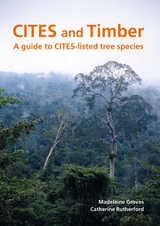
CITES and Timber
A guide to CITES-listed tree speciesMadeline Groves and Catherine Rutherford
Royal Botanic Gardens, Kew, 2015
Additional sections cover timber identification and measurement, guidance on CITES documentation and key resources.
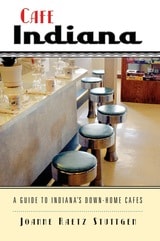
Cafe Indiana
A Guide to Indiana’s Down-Home CafesJoanne Raetz Stuttgen
University of Wisconsin Press, 2007
Over plates of chicken and noodles, fried bologna sandwiches, and sugar cream pie, folks are crafting community at the Main Street eatery. In Cafe Indiana, Hoosiers and out-of-staters alike are invited to pull out a chair and sit a spell.

Cafe Wisconsin
A Guide To Wisconsin's Down-Home CafesJoanne Raetz Stuttgen
University of Wisconsin Press, 2004
Featuring 133 cafes, with another 101 Next Best Bets alternatives, Cafe Wisconsin is every hungry traveler’s guide to real mashed potatoes, melt-in-your-mouth hot beef, from-scratch baked goods, and colorful coffee klatches. At the counter of aptly named cafes like the Coffee Cup, Main Street, and Chatterbox, you’ll laugh with owners, shake dice with customers, and find the authentic taste and flavor of Wisconsin.
Come on. Let’s go out to eat!

Cataloging Cultural Objects
A Guide to Describing Cultural Works and Their ImagesMurtha Baca
American Library Association, 2006
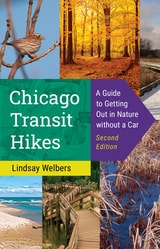
Chicago Transit Hikes
A Guide to Getting Out in Nature without a CarLindsay Welbers
University of Illinois Press, 2025
Taking the train to nature in Chicagoland
Beyond the steel and asphalt await natural spaces that are easy to access and balm for the soul. Lindsay Welbers’s guide tells readers how to use Chicagoland’s extensive public rail system to reach forests, prairies, wetlands, dunes, and Lake Michigan. Designed to take up minimal space in a backpack, Chicago Transit Hikes provides train-to-trailhead information for thirty nature treks with features that include:
- Chapters with hikes organized by each rail line on the Metra, the South Shore train, and the CTA;
- Information on everything from accessibility to dog-friendliness to flora and fauna;
- Detailed descriptions of every destination;
- Practical tips on packing lists and itineraries.
Up-to-date and user-friendly, Chicago Transit Hikes connects Chicagoans and visitors alike with excursions for every season and level of difficulty.
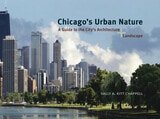
Chicago's Urban Nature
A Guide to the City's Architecture + LandscapeSally A. Kitt Chappell
University of Chicago Press, 2007
At the heart of this new urban concept is the idea of connection, bringing buildings and landscapes, culture and nature, commerce and leisure into an energetic harmony. With Chicago’s Urban Nature in hand, you’ll see those connections woven through the fabric of the city. Chappell provides new insights into such historic Chicago sites as Jens Jensen’s Garfield Park Conservatory, Frederick Law Olmsted’s Jackson Park, and Alfred Caldwell’s Lily Pond, then takes us to the innovative contemporary green spaces they influenced, from City Hall’s rooftop garden to the North Lawndale Green Youth Farm to Chicago’s heralded new Millennium Park. These beautiful green spaces, with their unprecedented melding of art, architecture, and ecology, have become far more than places of escape for Chicagoans—they’re now fully integrated into the urban scene, an essential part of the cultural life of the modern city.
Packed with maps and recommended tours, and bursting with splendid photos, this is an essential guidebook for day-trippers, lifelong Chicago residents, and professionals in landscape architecture, urbanism, and design.
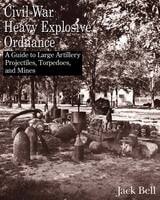
Civil War Heavy Explosive Ordnance
A Guide to Large Artillery Projectiles, Torpedoes, and MinesJack Bell
University of North Texas Press, 2003
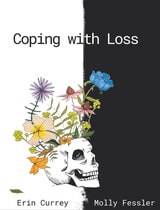
Coping with Loss
A Guide to Death, Grief and Clinical Experiences with Dying PatientsErin Currey
Michigan Publishing Services, 2025
In a cure-focused profession, the death of a patient can often feel like a failure. Yet, every patient will inevitably transition from health to illness, independence to dependence, and life to death. These transitions often mark some of the most meaningful interactions between patients and care providers. Coping with Loss is a self-directed workbook that provides addresses common questions, concerns, and emotional responses to these interactions with dying patients. Each lesson opens with real stories of professional grief that will resonate with healthcare professionals at multiple stages of their careers. Critical topics covered include recognizing the diverse presentations of grief, identifying dying patients, decompressing individually, and debriefing as a team. Significant portions of the text discuss how challenging patient cases impact the formation of professional identity. Ultimately, this workbook provides a place for healthcare providers to reflect on their patient interactions and learn how to support themselves and their healthcare teams through grief.
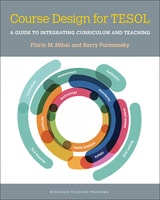
Course Design for TESOL
A Guide to Integrating Curriculum and TeachingFlorin M. Mihai and Kerry Purmensky
University of Michigan Press, 2016
Part I explores the basic language acquisition theories and their influences on current teaching practices in the field. Part II then moves on to the core elements of designing a curriculum or course: conducting the needs analysis, setting of course goals/objectives, designing the syllabus, and writing lesson plans.
Part III: Instructional Activities and Assessment Techniques features chapters on the teaching of listening, speaking, reading, writing, grammar, and culture. Within each of these chapters, the authors address the fundamental issues related to the teaching of each skill and then discuss the components of a good activity for that skill (and how to design one), and then offer four sample activities (one for each type of syllabus) and guidance on assessing that skill. The activities can be adapted for use in a variety of classrooms and settings.
Part IV addresses contemporary trends—curriculum issues in North America and Europe (standards and educational policy), practices in teaching in Asia (particularly China and Korea), and technology-enhanced learning.