Results by title
438 books match the query 'Hispanic & Latino' and 35 start with c
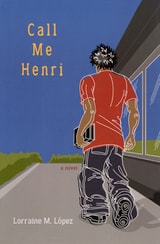
Call Me Henri
Lorraine López
Northwestern University Press, 2006
Lorraine López (author of Soy la Avon Lady and Other Stories) has created a vivid picture of barrio life, filled with honesty, insight, and humor for young adults. She paints a balanced and detailed landscape of Enrique's world. Although Enrique is confused and angered by his mother's refusal to stand up for him against the abuse of his stepfather, he also draws strength from the supportive and loving family of his friend Francisco. While some of his teachers are uncaring or inept, others provide help and encouragement at critical moments in his life.
When Enrique witnesses his friend Horacio gunned down in a drive-by shooting and is seen by the assailants, gang members set out to kill him. As the novel reaches its climax, Enrique must make some agonizing decisions.
Although specifically about barrio life, this novel is universal in its themes—the drive for success, the desire for love and family support, and the need for true friendship. López's fully delineated characters provide a rich and credible mural of our human comedy.
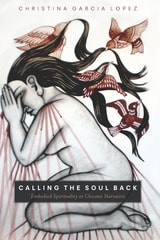
Calling the Soul Back
Embodied Spirituality in Chicanx NarrativeChristina Garcia Lopez
University of Arizona Press, 2019
Calling the Soul Back explores the spiritual and ancestral knowledge offered in narratives of bodies in trauma, bodies engaged in ritual, grieving bodies, bodies immersed in and becoming part of nature, and dreaming bodies. Reading across narrative nonfiction, performative monologue, short fiction, fables, illustrated children’s books, and a novel, Garcia Lopez asks how these narratives draw on the embodied intersections of ways of knowing and being to shift readers’ consciousness regarding relationships to space, time, and natural environments.
Using an interdisciplinary approach, Calling the Soul Back draws on literary and Chicanx studies scholars as well as those in religious studies, feminist studies, sociology, environmental studies, philosophy, and Indigenous studies, to reveal narrative’s healing potential to bring the soul into balance with the body and mind.
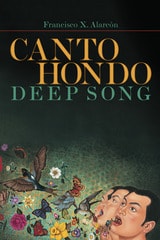
Canto hondo / Deep Song
Francisco X. Alarcón
University of Arizona Press, 2015
In this new collection, Alarcón creates poetry with roots in Gypsy songs clapped out in the distinctively short rhythms of flamenco music. Each page lifts the heart and stirs the soul by delving deep into the struggle for self and sexual identity.
Canto hondo / Deep Song includes 106 poems divided into four sections that articulate struggle, otherness, and the meaning of the poetic landscape. Like Lorca, Alarcón seeks out the fault lines where the lyric and the political bleed productively and proactively into one another.
An important voice in Chicano and GLBT poetry, Alarcón writes with a complex, emotionally powerful style that is accessible to students and all lovers of poetry and poetic traditions.
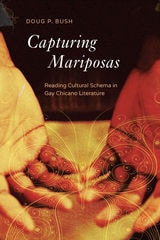
Capturing Mariposas
Reading Cultural Schema in Gay Chicano LiteratureDoug P. Bush
The Ohio State University Press, 2019
In Capturing Mariposas: Reading Cultural Schema in Gay Chicano Literature, Doug P. Bush looks at the book as only the beginning, considering how this literature has the power to bring understanding to disparate groups, speak truth about repressed sexuality and repressive communities, and recast traditional spaces as ones of inclusion, all through the idea of the cultural schema. Integrating elements of narratology and cognitive studies of literature, the cultural schema speaks to how these authors challenge, reaffirm, and transform commonly held experiences of gay Chicanos—or potentially any audience who reads their works. Focusing on twenty-first-century writers such as Manuel Muñoz, Rigoberto González, and Alex Espinoza, Bush examines the cultural schema of their works and then moves toward a more holistic discussion of the publishing and political implications of this genre. In addition to Bush’s important scholarship, the book includes extensive interviews with the authors themselves.
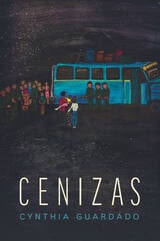
Cenizas
PoemsCynthia Guardado
University of Arizona Press, 2022
Guardado crafted the poems in Cenizas over a ten-year period, often traveling to El Salvador for research and to conduct interviews. The Salvadoran Civil War haunts the pages of this collection as it unflinchingly explores war, its aftermath, and the bittersweet legacies that are passed down from one generation to the next. The poems mourn those who were lost and honor the strength of the speaker’s ancestors. “All my people have been born from the ashes of volcanoes,” she writes, invoking a family lineage that has endured the atrocities committed against them. Even so, El Salvador keeps pulling the speaker back—and despite warnings of danger, she still manages to find beauty among the ruins.
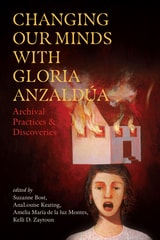
Changing Our Minds with Gloria Anzaldúa
Archival Practices and Discoveriesedited by Suzanne Bost, AnaLouise Keating, Amelia María de la luz Montes, Kelli D. Zaytoun
University of Texas Press, 2026
A collection of essays using Gloria Anzaldúa’s archival works to further explore and reassess the meaning of her legacy.
In the 1980s, Gloria Anzaldúa’s pioneering Borderlands/La Frontera and This Bridge Called My Back created new and durable trajectories for feminist, queer, Latinx, and postcolonial thought. Still, much of her writing was never published. Drawing on Anzaldúa’s impressive archive—manuscript drafts, personal memorabilia, correspondence, and drawings held at the Benson Collection at the University of Texas, Austin—this volume explores what we are still learning from a pathbreaking scholar more than twenty years after her death.
Changing Our Minds with Gloria Anzaldúa gathers essays from eleven writers working in diverse fields, including philosophy, literature, geography, performance studies, and visual arts. All have been powerfully influenced by Anzaldúa, and after examining her archives, all came to know her work anew. Each chapter relates discoveries among the unpublished materials, illuminating Anzaldúa’s celebrated texts and raising novel questions. A meditation, as well, on archivalism itself, Changing Our Minds reckons with the power of dusty papers to motivate new generations of readers outside the geographies and academic departments in which Anzaldúa has long been a fixture.
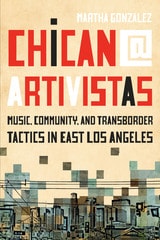
Chican@ Artivistas
Music, Community, and Transborder Tactics in East Los AngelesMartha Gonzalez
University of Texas Press, 2020
As the lead singer of the Grammy Award–winning rock band Quetzal and a scholar of Chicana/o and Latina/o studies, Martha Gonzalez is uniquely positioned to articulate the ways in which creative expression can serve the dual roles of political commentary and community building. Drawing on postcolonial, Chicana, black feminist, and performance theories, Chican@ Artivistas explores the visual, musical, and performance art produced in East Los Angeles since the inception of NAFTA and the subsequent anti-immigration rhetoric of the 1990s.
Showcasing the social impact made by key artist-activists on their communities and on the mainstream art world and music industry, Gonzalez charts the evolution of a now-canonical body of work that took its inspiration from the Zapatista movement, particularly its masked indigenous participants, and that responded to efforts to impose systems of labor exploitation and social subjugation. Incorporating Gonzalez’s memories of the Mexican nationalist music of her childhood and her band’s journey to Chiapas, the book captures the mobilizing music, poetry, dance, and art that emerged in pre-gentrification corners of downtown Los Angeles and that went on to inspire flourishing networks of bold, innovative artivistas.
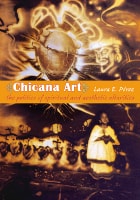
Chicana Art
The Politics of Spiritual and Aesthetic AltaritiesLaura E. Pérez
Duke University Press, 2007
Creating an invaluable archive, Laura E. Pérez examines the work of more than forty Chicana artists across a variety of media including painting, printmaking, sculpture, performance, photography, film and video, comics, sound recording, interactive CD-ROM, altars and other installation forms, and fiction, poetry, and plays. While key works from the 1960s and 1970s are discussed, most of the pieces considered were produced between 1985 and 2001. Providing a rich interpretive framework, Pérez describes how Chicana artists invoke a culturally hybrid spirituality to challenge racism, bigotry, patriarchy, and homophobia. They make use of, and often radically rework, pre-Columbian Mesoamerican and other non-Western notions of art and art-making, and they struggle to create liberating versions of familiar iconography such as the Virgin of Guadalupe and the Sacred Heart. Filled with representations of spirituality and allusions to non-Western visual and cultural traditions, the work of these Chicana artists is a vital contribution to a more inclusive canon of American arts.
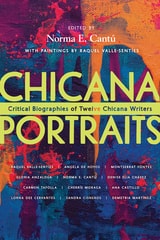
Chicana Portraits
Critical Biographies of Twelve Chicana WritersEdited by Norma E. Cantú; With paintings by Raquel Valle-Sentíes
University of Arizona Press, 2023
Artist Raquel Valle-Sentíes’s portraits bring visual dimension, while essays delve deeply into the authors’ lives for details that inform their literary, artistic, feminist, and political trajectories and sensibilities. The collection brilliantly intersects artistic visual and literary cultural productions, allowing complex themes to emerge, such as the fragility of life, sexism and misogyny, Chicana agency and forging one’s own path, the struggles of becoming a writer and battling self-doubt, economic instability, and political engagement and activism.
Arranged chronologically by birth order of the authors, the book can be read cover to cover for a genealogical overview, or scholars and general readers can easily jump in at any point and read about an individual author, regardless of the chronology.
Biographies included in this work include Raquel Valle-Sentíes, Angela de Hoyos, Montserrat Fontes, Gloria E. Anzaldúa, Norma E. Cantú, Denise Elia Chávez, Carmen Tafolla, Cherríe Moraga, Ana Castillo, Lorna Dee Cervantes, Sandra Cisneros, and Demetria Martínez.
Contributors
Cordelia E. Barrera
Mary Pat Brady
Norma E. Cantú
María Jesus Castro Dopacio
Carlos Nicolás Flores
Myrriah Gómez
Maria Magdalena Guerra de Charur
Gabriella Gutiérrez y Muhs
Georgina Guzmán
Cristina Herrera
María Esther Quintana
Eliza Rodríguez y Gibson
Meagan Solomon
Lourdes Torres
Raquel Valle-Sentíes
Jen Yáñez-Alaniz
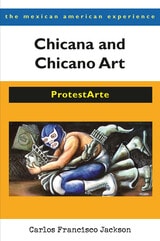
Chicana and Chicano Art
ProtestArteCarlos Francisco Jackson
University of Arizona Press, 2009
Although the word “Chicano” once held negative connotations, students—along with civil rights activists and artists—adopted it in the late 1960s in order to reimagine and redefine what it meant to be Mexican American in the United States. Chicanismo is the ideology and spirit behind the Chicano Movement and Chicanismo unites the artists whose work is revealed and celebrated in this book.
Jackson’s scope is wide. He includes paintings, prints, murals, altars, sculptures, and photographs—and, of course, the artists who created them. Beginning with key influences, he describes the importance of poster and mural art, focusing on the work of the Mexican artist José Guadalupe Posada and the significance of Mexican and Cuban talleres (print workshops). He examines the importance of art collectives in the United States, as well as Chicano talleres and community art centers, for the growth of the Chicano art movement. In conclusion, he considers how Chicano art has been presented to the general American public.
As Jackson shows, the visual arts have both reflected and created Chicano culture in the United States. For college students—and for all readers who want to learn more about this fascinating subject—his book is an ideal introduction to an art movement with a social conscience.
Chicana/o and Latina/o Fiction
The New Memory of LatinidadYlce Irizarry
University of Illinois Press, 2016
Irizarry establishes four dominant categories of narrative--loss, reclamation, fracture, and new memory--that address immigration, gender and sexuality, cultural nationalisms, and neocolonialism. As she shows, narrative concerns have moved away from the weathered notions of arrival and assimilation. Contemporary Chicana/o and Latina/o literatures instead tell stories that have little, if anything, to do with integration into the Anglo-American world. The result is the creation of new memory. This reformulation of cultural membership unmasks the neocolonial story and charts the conscious engagement of cultural memory. It outlines the ways contemporary Chicana/o and Latina/o communities create belonging and memory of their ethnic origins.
An engaging contribution to an important literary tradition, Chicana/o and Latina/o Fiction privileges the stories Chicanas/os and Latinas/os remember about themselves rather than the stories of those subjugating them.
NACCS Book Award, National Association for Chicana and Chicano Studies, 2018; MLA Prize in United States Latina and Latino and Chicana and Chicano Literary and Cultural Studies, Modern Language Association, 2017
Chicano Authors
Inquiry by InterviewBy Bruce-Novoa
University of Texas Press, 1980
The need for this book became apparent to Bruce-Novoa when he first taught a Chicano culture course in 1970. His students could find no source to satisfy their curiosity about Chicano writers' backgrounds, opinions, and attitudes. Chicano Authors: Inquiry by Interview provides that information.
Fourteen leading Chicano authors respond to questions about their personal and educational backgrounds, their perception of the role of the Chicano writer, and their evaluation of the literary, linguistic, and sociocultural significance of Chicano literature. The authors included are José Antonio Villarreal, Rolando Hinojosa, Sergio Elizondo, Miguel Méndez M., Abelardo Delgado, José Montoya, Tomás Rivera, Estela Portillo, Rudolfo A. Anaya, Bernice Zamora, Ricardo Sánchez, Ron Arias, Tino Villanueva, and Alurista.
Each interview is preceded by a brief introductory note which locates the author in the context of Chicano literature and provides a sense of his or her writing. Also included are a general introduction to Chicano literature, a chronological chart of publications by genre, and a selected bibliography. The volume will be an essential research tool for the student of Chicano literature and culture and a useful introduction for the general reader.
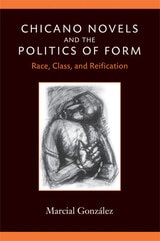
Chicano Novels and the Politics of Form
Race, Class, and ReificationMarcial González
University of Michigan Press, 2008
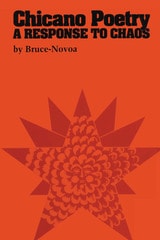
Chicano Poetry
A Response to ChaosBy Bruce-Novoa
University of Texas Press, 1982
Alurista. Gary Soto. Bernice Zamora. José Montoya. These names, luminous to some, remain unknown to those who have not yet discovered the rich variety of late twentieth century Chicano poetry.
With the flowering of the Chicano Movement in the mid-1960s came not only increased political awareness for many Mexican Americans but also a body of fine creative writing. Now the major voices of Chicano literature have begun to reach the wider audience they deserve. Bruce-Novoa's Chicano Poetry: A Response to Chaos—the first booklength critical study of Chicano poetry—examines the most significant works of a body of literature that has grown dramatically in size and importance in less than two decades.
Here are insightful new readings of the major writings of Abelardo Delgado, Sergio Elizondo, Rodolfo Gonzales, Miguel Méndez, J. L. Navarro, Raúl Salinas, Ricardo Sánchez, and Tino Villanueva, as well as Alurista, Soto, Zamora, and Montoya. Close textual analyses of such important works as I Am Joaquín, Restless Serpents, and Floricanto en Aztlán enrich and deepen our understanding of their imagery, themes, structure, and meaning.
Bruce-Novoa argues that Chicano poetry responds to the threat of loss, whether of hero, barrio, family, or tradition. Thus José Montoya elegizes a dead Pachuco in "El Louie," and Raúl Salinas laments the disappearance of a barrio in "A Trip through the Mind Jail." But this elegy at the heart of Chicano poetry is both lament and celebration, for it expresses the group's continuing vitality and strength.
Common to twentieth-century poetry is the preoccupation with time, death, and alienation, and the work of Chicano poets—sometimes seen as outside the traditions of world literature—shares these concerns. Bruce-Novoa brilliantly defines both the unique and the universal in Chicano poetry.
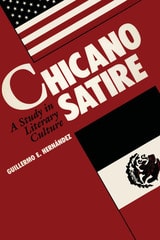
Chicano Satire
A Study in Literary CultureBy Guillermo E. Hernández
University of Texas Press, 1991
Geographically close to Mexico, but surrounded by Anglo-American culture in the United States, Chicanos experience many cultural tensions and contradictions. Their lifeways are no longer identical with Mexican norms, nor are they fully assimilated to Anglo-American patterns. Coping with these tensions—knowing how much to let go of, how much to keep—is a common concern of Chicano writers, who frequently use satire as a means of testing norms and deviations from acceptable community standards. In this groundbreaking study, Guillermo Hernández focuses on the uses of satire in the works of three authors—Luis Valdez, Rolando Hinojosa, and José Montoya—and on the larger context of Chicano culture in which satire operates.
Hernández looks specifically at the figures of the pocho (the assimilated Chicano) and the pachuco (the zoot-suiter, or urbanized youth). He shows how changes in their literary treatment—from simple ridicule to more understanding and respect—reflect the culture's changes in attitude toward the process of assimilation.
Hernández also offers many important insights into the process of cultural definition that engaged Chicano writers during the 1960s and 1970s. He shows how the writers imaginatively and syncretically formed new norms for the Chicano experience, based on elements from both Mexican and United States culture but congruent with the historical reality of Chicanos.
With its emphasis on culture change and creation, Chicano Satire will be of interest across a range of human sciences.
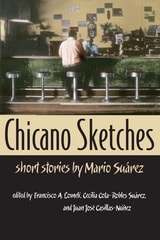
Chicano Sketches
Short Stories by Mario SuárezMario Suárez; Edited by Francisco A. Lomelí, Cecilia Cota-Robles Suárez, and Juan Casillas-Núñez
University of Arizona Press, 2004
A key figure in the foundation of Chicano literature, Mario Suárez (1923–1998) was among the first writers to focus not only on Chicano characters but also on the multicultural space in which they live, whether a Tucson barbershop or a Manhattan boxing ring. Many of his stories have received wide acclaim through publication in periodicals and anthologies; this book presents those eleven previously published stories along with eight others from the archive of his unpublished work. It also includes a biographical introduction and a critical analysis of the stories that will broaden readers’ appreciation for his place in Chicano literature.
In most of his stories, Suárez sought to portray people he knew from Tucson’s El Hoyo barrio, a place usually thought of as urban wasteland when it is thought of at all. Suárez set out to fictionalize this place of ignored men and women because he believed their human stories were worth telling, and he hoped that through his depictions American literature would recognize their existence. By seeking to record the so-called underside of America, Suárez was inspired to pay close attention to people’s mannerisms, language, and aspirations. And by focusing on these barrio characters he also crafted a unique, mild-mannered realism overflowing with humor and pathos.
Along with Fray Angélico Chávez, Suárez stands as arguably the mid-twentieth century’s most important short story writer of Mexican descent. Chicano Sketches reclaims Suárez as a major figure of the genre and offers lovers of fine fiction a chance to rediscover this major talent.
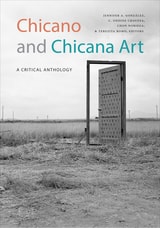
Chicano and Chicana Art
A Critical AnthologyJennifer A. Gonzalez, C. Ondine Chavoya, Chon Noriega, and Terezita Romo, editors
Duke University Press, 2019
Contributors. Carlos Almaraz, David Avalos, Judith F. Baca, Raye Bemis, Jo-Anne Berelowitz, Elizabeth Blair, Chaz Bojóroquez, Philip Brookman, Mel Casas, C. Ondine Chavoya, Karen Mary Davalos, Rupert García, Alicia Gaspar de Alba, Shifra Goldman, Jennifer A. González, Rita Gonzalez, Robb Hernández, Juan Felipe Herrera, Louis Hock, Nancy L. Kelker, Philip Kennicott, Josh Kun, Asta Kuusinen, Gilberto “Magu” Luján, Amelia Malagamba-Ansotegui, Amalia Mesa-Bains, Dylan Miner, Malaquias Montoya, Judithe Hernández de Neikrug, Chon Noriega, Joseph Palis, Laura Elisa Pérez, Peter Plagens, Catherine Ramírez, Matthew Reilly, James Rojas, Terezita Romo, Ralph Rugoff, Lezlie Salkowitz-Montoya, Marcos Sanchez-Tranquilino, Cylena Simonds, Elizabeth Sisco, John Tagg, Roberto Tejada, Rubén Trejo, Gabriela Valdivia, Tomás Ybarra-Frausto, Victor Zamudio-Taylor
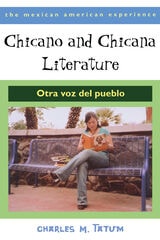
Chicano and Chicana Literature
Otra voz del puebloCharles M. Tatum
University of Arizona Press, 2006
In this comprehensive examination of Chicano and Chicana literature, Charles M. Tatum brings a new and refreshing perspective to the ethnic identity of Mexican Americans. From the earliest sixteenth-century chronicles of the Spanish Period, to the poetry and narrative fiction of the second half of the nineteenth century and the first half of the twentieth century, and then to the flowering of all literary genres in the post–Chicano Movement years, Chicano/a literature amply reflects the hopes and aspirations as well as the frustrations and disillusionments of an often marginalized population.
Exploring the work of Rudolfo Anaya, Sandra Cisneros, Luis Alberto Urrea, and many more, Tatum examines the important social, historical, and cultural contexts in which the writing evolved, paying special attention to the Chicano Movement and the flourishing of literary texts during the 1960s and early 1970s. Chapters provide an overview of the most important theoretical and critical approaches employed by scholars over the past forty years and survey the major trends and themes in contemporary autobiography, memoir, fiction, and poetry.
The most complete and up-to-date introduction to Chicana/o literature available, this book will be an ideal reference for scholars of Hispanic and American literature. Discussion questions and suggested reading included at the end of each chapter are especially suited for classroom use.
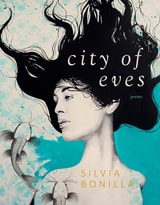
City of Eves
PoemsSilvia Bonilla
University of Arizona Press, 2026
Sonia and her two best friends grow up on the urban coast of Ecuador, sharing cigarettes, school uniforms, and a determination to overcome their circumstances even if the price to pay is exile. Full of fantasies and curiosity, the friends navigate hunger at home, absent parents, and religious pressures as they help each other through the pleasures and traumas of adolescence. As their desire for something greater changes from dreams into actions, they pursue escape routes that hover between choice and compulsion: forced marriages, early widowhood, and a death-haunted migration to the United States. Even in the throes of escape, the constraints of their reality always lie waiting.
Subtle and unsparing, Bonilla’s lyrical poems capture the wild inner horizons and vivid embodiment of youth as it shades into the reflective poignance of maturity marked by disappointment, compromise, and loss. Despite this, it is memories of deep friendship, bonded through shared understanding and aspiration, that lingers. Looking back on her life, Sonia recalls the courage and vitality of girls determined to shape their own futures: “We lifted Coca-Cola bottles to the / opened granadilla of our mouths.”
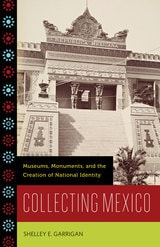
Collecting Mexico
Museums, Monuments, and the Creation of National IdentityShelley E. Garrigan
University of Minnesota Press, 2012
Collecting Mexico centers on the ways in which aesthetics and commercialism intersected in officially sanctioned public collections and displays in late nineteenth-century Mexico. Shelley E. Garrigan approaches questions of origin, citizenry, membership, and difference by reconstructing the lineage of institutionally collected objects around which a modern Mexican identity was negotiated. In doing so, she arrives at a deeper understanding of the ways in which displayed objects become linked with nationalistic meaning and why they exert such persuasive force.
Spanning the Porfiriato period from 1867 to 1910, Collecting Mexico illuminates the creation and institutionalization of a Mexican cultural inheritance. Employing a wide range of examples—including the erection of public monuments, the culture of fine arts, and the representation of Mexico at the Paris World’s Fair of 1889—Garrigan pursues two strands of thought that weave together in surprising ways: national heritage as a transcendental value and patrimony as potential commercial interest.
Collecting Mexico shows that the patterns of institutional collecting reveal how Mexican public collections engendered social meaning. Using extensive archival materials, Garrigan’s close readings of the processes of collection building offer a new vantage point for viewing larger issues of identity, social position, and cultural/capital exchange.
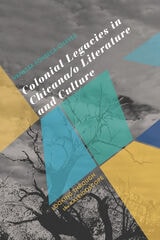
Colonial Legacies in Chicana/o Literature and Culture
Looking Through the KaleidoscopeVanessa Fonseca-Chávez
University of Arizona Press, 2020
Vanessa Fonseca-Chávez traces how Spanish colonial texts reflect the motivation for colonial domination. She argues that layers of U.S. colonialism complicate how Chicana/o literary scholars think about Chicana/o literary and cultural production. She brings into view the experiences of Chicana/o communities that have long-standing ties to the U.S. Southwest but whose cultural heritage is tied through colonialism to multiple nations, including Spain, Mexico, and the United States.
While the legacies of Chicana/o literature simultaneously uphold and challenge colonial constructs, the metaphor of the kaleidoscope makes visible the rupturing of these colonial fragments via political and social urgencies. This book challenges readers to consider the possibilities of shifting our perspectives to reflect on stories told and untold and to advocate for the inclusion of fragmented and peripheral pieces within the kaleidoscope for more complex understandings of individual and collective subjectivities.
This book is intended for readers interested in how colonial legacies are performed in the U.S. Southwest, particularly in the context of New Mexico, Texas, and Arizona. Readers will relate to the book’s personal narrative thread that provides a path to understanding fragmented identities.
Comfort Measures Only
New and Selected Poems, 1994–2016Rafael Campo
Duke University Press, 2018
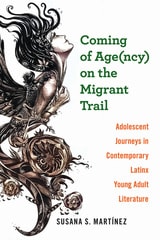
Coming of Age(ncy) on the Migrant Trail
Adolescent Journeys in Contemporary Latinx Young Adult LiteratureSusana S. Martínez
The Ohio State University Press, 2025
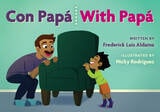
Con Papá / With Papá
Written by Frederick Luis Aldama Illustrated by Nicky Rodriguez
The Ohio State University Press, 2022
With Papá, anything is possible! With playful illustrations and rich imagery, this gentle bilingual story for ages 3–8 celebrates fathers, children, and Latinx identity as it takes readers on a childhood journey of growth and discovery. From delivery from the serpent god’s wings to Papá’s safe arms to witnessing the magical tapestry of stars, Con Papá / With Papá shows us the world through a child’s eyes, hand in hand with Papá, until they are ready to set off on their own adventures.
Constructed Latinx(s) Identities
Racialized Bodies in Visual and Textual CultureEdited by José I. Lara
Amherst College Press, 2025
Consuelo Jimenez Underwood
Art, Weaving, VisionLaura E. Pérez and Ann Marie Leimer, editors
Duke University Press, 2021
Contributors. Constance Cortez, Karen Mary Davalos, Carmen Febles, M. Esther Fernández, Christine Laffer, Ann Marie Leimer, Amalia Mesa-Bains, Robert Milnes, Jenell Navarro, Laura E. Pérez, Marcos Pizarro, Verónica Reyes, Clara Román-Odio, Carol Sauvion, Cristina Serna, Emily Zaiden
Contemporary Chican@ Art
Color and Culture for a New AmericaBy George Vargas
University of Texas Press, 2010
From its inception in the 1960s to its present form, contemporary Mexican American or Chicano art has developed as an art of identity, asserting the uniqueness of Chicanos and their dual Mexican and U.S. American cultural backgrounds. Because it emerged as a social phenomenon, however, many people outside the Chicano community have perceived Chicano art as merely protest art or social commentary, and Mexican American artists have been largely ignored in mainstream museums and absent in art history texts on American art. Yet more than ever before, Chicano art is diverse in medium, style, technique, and content—the cutting edge of a bold attempt to redefine and advance the American experience through new ideas of who we are as Americans and what American art is.
Contemporary Chican@ Art is a general introduction and guide to one of the most exciting and meaningful expressions in contemporary American art. Intended for the casual reader as well as for art history scholars and students, the book provides an overview of work created from the 1960s to the present. George Vargas follows the dramatic evolution of Chicano art within the broader context of American cultural history. He shows that while identity politics was and still is a prevailing force in Chicano expression, Chicano art has undergone a remarkable transformation, shifting from a strict Chicano perspective to a more universal one, while still remaining a people's art. In the concluding chapter, Vargas takes an in-depth look at selected Chicano artists who share their thoughts about the Chicano artistic enterprise and their own work.
Cosmopolitan Desires
Global Modernity and World Literature in Latin AmericaMariano Siskind
Northwestern University Press, 2014
Mariano Siskind’s groundbreaking debut book redefines the scope of world literature, particularly regarding the place of Latin America in its imaginaries and mappings. In Siskind’s formulation, world literature is a modernizing discursive strategy, a way in which cultures negotiate their aspirations to participate in global networks of cultural exchange, and an original tool to reorganize literary history. Working with novels, poems, essays, travel narratives, and historical documents, Siskind reads the way Latin American literary modernity was produced as a global relation, from the rise of planetary novels in the 1870s and the cosmopolitan imaginaries of modernism at the turn of the twentieth century, to the global spread of magical realism. With its unusual breadth of reference and firm but unobtrusive grounding in philosophy, literary theory, and psychoanalysis, Cosmopolitan Desires will have a major impact in the fields of Latin American studies and comparative literature.
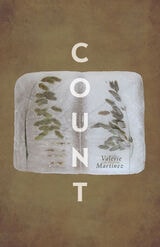
Count
Valerie Martínez
University of Arizona Press, 2021
With sections that vary between poetry, science, Indigenous storytelling, numerical measurement, and narration, Valerie Martínez’s new work results in an epic panorama infused with the timely urgency of facing an apocalyptic future. This beautiful, tragic, and unusual poem is a testimonial, a warning, and a call to action that will captivate lovers of contemporary poetry and ecopoetry, environmentalists, and climate activists alike. Count skillfully calls on our collective desire to leave a livable world, filled with the potential for healing, as a legacy to the generations of children that come after us.

Critical Passions
Selected EssaysJean Franco
Duke University Press, 1999
A key participant in the major debates in Latin American studies—beginning with the “boom” period of the 1960s and continuing through debates on ideology and discourse, Marxism, mass culture, and postmodernism—Franco is recognized for her feminist critique of Latin American writing. While her principal books are all readily available, Franco’s several dozen articles are dispersed in a variety of periodicals in Latin America, Europe, and the United States. Although many of these essays are considered pioneering and classic, they have never before been collected in a single work. In this volume, Mary Louise Pratt and Kathleen Newman have organized the essays into four interrelated sections: feminism and the critique of authoritarianism, mass and popular culture, Latin American literature from the “boom” onward, and the cultural history of Mexico. As a group, these writings demonstrate Franco’s ability to reflect on and judge with equal seriousness all spheres of expression, whether subway graffiti, a fashion manual, or an avant-garde haiku. A bona fide fan of popular and mass media, Franco never allows her critiques to dissolve into the puritanical or reductive; instead, she finds ways to present and debate complex theoretical questions in direct and accessible language.
This volume will draw an extensive readership in Latin American, cultural, and women’s studies.
Criticism in the Borderlands
Studies in Chicano Literature, Culture, and IdeologyHéctor Calderón and José David Saldívar, eds.
Duke University Press, 1991
The editors have organized essays around four board themes: the situation of Chicano literary studies within American literary history and debates about the “canon”; representations of the Chicana/o subject; genre, ideology, and history; and the aesthetics of Chicano literature. The volume as a whole aims at generating new ways of understanding what counts as culture and “theory” and who counts as a theorist. A selected and annotated bibliography of contemporary Chicano literary criticism is also included.
By recovering neglected authors and texts and introducing readers to an emergent Chicano canon, by introducing new perspectives on American literary history, ethnicity, gender, culture, and the literary process itself, Criticism in the Borderlands is an agenda-setting collection that moves beyond previous scholarship to open up the field of Chicano literary studies and to define anew what is American literature.
Contributors. Norma Alarcón, Héctor Calderón, Angie Chabram, Barbara Harlow, Rolando Hinojosa, Luis Leal, José E. Limón, Terese McKenna, Elizabeth J. Ordóñez, Genero Padilla, Alvina E. Quintana, Renato Rosaldo, José David Saldívar, Sonia Saldívar-Hull, Rosaura Sánchez, Roberto Trujillo
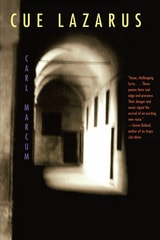
Cue Lazarus
Carl Marcum
University of Arizona Press, 2001
In this collection of poetry by Carl Marcum, a young man traces his rise to consciousness, his coming of age in the Southwest as a medio, an individual of mixed race. Displaying his Hispanic heritage as fact, emblem, and music in his poems, Marcum balances hip humor with larger themes of loss and reinvention to paint a work of seriousness and imagination, wrestling sense from the giddy rush of experience. The lead poem, "Cue Lazarus," conveys the sense of loss that permeates the collection, revisiting time the author spent with a friend he now knows will die. It sets the tone for the explorations to follow as the poet haunts his past: death, traumatic experience, the uneasiness that comes from being unable to forestall tragedy, all combine to create a sense of paradox, that he who endures becomes a ghost compelled to haunt his own life.
As poetry becomes a subtle game of language, experience is refigured as an array of possibilities; Marcum finds meaning and epiphany through close observation as he revels in images of constant motion and sustained search. Here is a suite in celebration of Chevys ("That Camaro ran nearly on machismo alone") and a prayer for breakfast ("I'd like to renounce the salt and pepper shakers / of this life. But the eggs are here / twelve lines into this poem / and getting cold"). He dreams of himself as Pancho Villa, "my poetry at the end of a pistol," and invokes the spirits of poets past, "beggars on the media of Limbo, holding shabby signs: WILL WORK FOR TRUTH."
Ultimately, Cue Lazarus is about resurrection—of the spirit, of a life, of an identity. It marks the emergence of a vital new voice that, in baring his soul, reveals lessons as old as time.
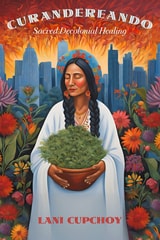
Curandereando
Sacred Decolonial HealingLani Cupchoy
University of Arizona Press, 2026
Curandereando: Sacred Decolonial Healing reclaims curanderismo as a living and revolutionary practice of ancestral wisdom, resilience, and renewal. Blending poetry, Spanglish storytelling, oral histories, and testimonios, this hybrid work illuminates healing as both a sacred tradition and a decolonial act of resistance.
The book traces curanderismo’s survival under colonial oppression, its adaptations across diasporas, and its vital role in addressing contemporary struggles for ecological balance, cultural survival, and social justice. By centering diverse healers and community voices, it resists folkloric portrayals and instead presents curanderismo as an evolving practice deeply relevant to today’s crises.
Accessible yet scholarly, Curandereando bridges sacred traditions with academic discourse, challenging Western medical dominance while offering holistic frameworks grounded in ancestral knowledge. This book is an essential resource for Chicana/o and Latina/o studies, ethnic studies, Indigenous studies, gender and sexuality studies, and environmental justice. It will also resonate with community healers, educators, and readers seeking decolonial approaches to wellness, spirituality, and cultural renewal.
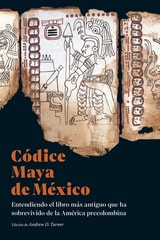
Códice Maya de México
Entendiendo el libro más antiguo que ha sobrevivido de la América precolombinaAndrew D. Turner
J. Paul Getty Trust, The, 0
Los antiguos escribas mayas registraban profecías y observaciones astronómicas en las páginas de libros pintados. Aunque la mayoría se perdieron por el desgaste del paso del tiempo o porque fueron destruidos, se sabía que tres códices mayas prehispánicos habían sobrevivido. Sin embargo, en la década de 1960 apareció en México, en circunstancias misteriosas, un cuarto libro diferente a los demás. Después de cincuenta años de debate sobre su autenticidad, investigaciones recientes con análisis científicos e histórico-artísticos de vanguardia, determinaron que el Códice Maya de México (antes conocido como Códice Grolier) es, de hecho, el libro más antiguo del continente americano: al menos doscientos años más antiguo que los demás.
Este volumen ofrece una introducción multifacética a la creación, el descubrimiento, la interpretación y la autenticación científica del Códice Maya de México. Además, un facsímil a todo color y una guía de la iconografía página por página hacen que un amplio público pueda acceder al códice. Otros temas incluyen los usos y la importancia de los libros sagrados en Mesoamérica, el papel de la astronomía en las antiguas sociedades mayas y la continua relevancia del códice para las comunidades mayas contemporáneas.
La publicación de este volumen acompaña la exposición que se exhibirá en el J. Paul Getty Museum ubicado en el Getty Center del 18 de octubre de 2022 al 15 de enero de 2023.
An in-depth exploration of the history, authentication, and modern relevance of Códice Maya de México, the oldest surviving book of the Americas.
Ancient Maya scribes recorded prophecies and astronomical observations on the pages of painted books. Although most were lost to decay or destruction, three pre-Hispanic Maya codices were known to have survived, when, in the 1960s, a fourth book that differed from the others appeared in Mexico under mysterious circumstances. After fifty years of debate over its authenticity, recent investigations using cutting-edge scientific and art historical analyses determined that Códice Maya de México (formerly known as Grolier Codex) is in fact the oldest surviving book of the Americas, predating all others by at least two hundred years.
This volume provides a multifaceted introduction to the creation, discovery, interpretation, and scientific authentication of Códice Maya de México. In addition, a full-color facsimile and a page-by-page guide to the iconography make the codex accessible to a wide audience. Additional topics include the uses and importance of sacred books in Mesoamerica, the role of astronomy in ancient Maya societies, and the codex's continued relevance to contemporary Maya communities.
This volume is published to accompany an exhibition on view at the J. Paul Getty Museum at the Getty Center from October 18, 2022, to January 15, 2023.
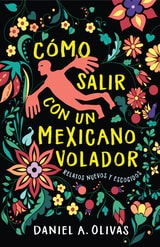
Cómo Salir con un Mexicano Volador
Relatos Nuevos y EscogidosDaniel A. Olivas
University of Nevada Press, 2023
La colección se compone de los relatos favoritos de Daniel A. Olivas, previamente publicados, junto con dos nuevos relatos, uno distópico y otro mítico, que desafían la retórica y las políticas anti-inmigración de la administración Trump. Los lectores se encontrarán con un mundo lleno tanto de lo mágico como de lo cotidiano: un hombre con doce dedos que se encuentra a sí mismo en una cita mística con una mujer; Dios, que se aparece en forma de gallina raquítica; una mujer que lucha con valentía contra su maltratador; y dioses aztecas en busca de relevancia tras la conquista española—solo por nombrar algunos de los singulares personajes que pueblan estas páginas. El libro reúne algunos de los cuentos más extraños e inolvidables de Olivas, permitiendo a los lectores experimentar su muy distintiva, y muy Chicana, ficción.