Results by title
1031 books match the query 'Intellectual life' and 88 start with c
C. L. R. James's Caribbean
Paget Henry and Paul Buhle, eds.
Duke University Press, 1992
Drawing upon James's observations of his own life as revealed to interviewers and close friends, this volume provides an examination of James's childhood and early years as colonial literatteur and his massive contribution to West Indian political-cultural understanding. Moving beyond previous biographical interpretations, the contributors here take up the problem of reading James's texts in light of poststructuralist criticism, the implications of his texts for Marxist discourse, and for problems of Caribbean development.
C.L.R. James
His Intellectual LegaciesEdited by Selwyn R. Cudjoe and William E. Cain
University of Massachusetts Press, 1995
C.L.R. James (1901–1989) made important contributions in a host of fields—literature, criticism, cultural studies, political theory, history, and philosophy. One of the most astute minds of this century, he served as mentor for two generations of international intellectuals. He contributed enormously to their understanding of the colonial question, the Negro question, the Russian question, the role of dialectics in proletarian struggle, and the theory and practice of Marxism in the Americas. In addition to The Black Jacobins, his incisive account of the Haitian revolution of the 1790s, and Notes on Dialectics, James published a range of other books, including a classic work on the game of cricket and a study of Herman Melville.
This collection of essays offers a variety of fresh perspectives on James's life and writings. Included are reminiscences of those who knew James well and critical essays by eminent scholars. The book is the first to offer a full treatment of James's many contributions to twentieth-century intellectual life.
CROSS-CULTURAL VISIONS IN AFRICAN AMERICAN MODERNISM
FROM SPATIAL NARRATIVE TO JAZZ HAIKUYOSHINOBU HAKUTANI
The Ohio State University Press, 2006
In writing Black Boy, the centerpiece of the Chicago Renaissance, Wright was inspired by Theodore Dreiser. Because the European and African cultural visions that Wright, Ralph Ellison, Alice Walker, and Toni Morrison acquired were buttressed by the universal humanism that is common to all cultures, this ideology is shown to transcend the problems of society. Fascinated by Eastern thought and art, Wright, Walker, Sonia Sanchez, and James Emanuel wrote highly accomplished poetry and prose. Like Ezra Pound, Wright was drawn to classic haiku, as reflected in the 4,000 haiku he wrote at the end of his life. As W. B. Yeats’s symbolism was influenced by his cross-cultural visions of noh theatre and Irish folklore, so is James Emanuel’s jazz haiku energized by his cross-cultural rhythms of Japanese poetry and African American music.
The book demonstrates some of the most visible cultural exchanges in modern and postmodern African American literature. Such a study can be extended to other contemporary African American writers whose works also thrive on their cross-cultural visions, such as Amiri Baraka, Ishmael Reed, Charles Johnson, and haiku poet Lenard Moore.
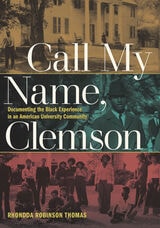
Call My Name, Clemson
Documenting the Black Experience in an American University CommunityRhondda Robinson Thomas
University of Iowa Press, 2020
Between 1890 and 1915, a predominately African American state convict crew built Clemson University on John C. Calhoun’s Fort Hill Plantation in upstate South Carolina. Calhoun’s plantation house still sits in the middle of campus. From the establishment of the plantation in 1825 through the integration of Clemson in 1963, African Americans have played a pivotal role in sustaining the land and the university. Yet their stories and contributions are largely omitted from Clemson’s public history.
This book traces “Call My Name: African Americans in Early Clemson University History,” a Clemson English professor’s public history project that helped convince the university to reexamine and reconceptualize the institution’s complete and complex story from the origins of its land as Cherokee territory to its transformation into an increasingly diverse higher-education institution in the twenty-first century. Threading together scenes of communal history and conversation, student protests, white supremacist terrorism, and personal and institutional reckoning with Clemson’s past, this story helps us better understand the inextricable link between the history and legacies of slavery and the development of higher education institutions in America.

Canaan Bound
The African-American Great Migration NovelLawrence R. Rodgers
University of Illinois Press, 1997
The Great Migration--the exodus of more than six million blacks from
their southern homes hoping for better lives in the North--is a defining
event of post-emancipation African-American life and a central feature
of twentieth-century black literature. Lawrence Rodgers explores the historical
and literary significance of this event and in the process identifies
the Great Migration novel as a literary form that intertwines geography
and identity.
Drawing on a wide range of major literary voices, including Richard Wright,
Ralph Ellison, and Toni Morrison, as well as lesser-known writers such
as William Attaway (Blood on the Forge) and Dorothy West (The Living Is
Easy), Rodgers conducts a kind of literary archaeology of the Great Migration.
He mines the writers' biographical connections to migration and teases
apart the ways in which individual novels relate to one another, to the
historical situation of black America, and to African-American literature
as a whole.
In reading migration novels in relation to African-American literary
texts such as slave narratives, folk tales, and urban fiction, Rodgers
affirms the southern folk roots of African-American culture and argues
for a need to stem the erosion of southern memory.
Capital of Mind
The Idea of a Modern American UniversityAdam R. Nelson
University of Chicago Press, 2024
Capital of Mind is the second volume in a breathtakingly ambitious new economic history of American higher education. Picking up from the first volume, Exchange of Ideas, Adam R. Nelson looks at the early decades of the nineteenth century, explaining how the idea of the modern university arose from a set of institutional and ideological reforms designed to foster the mass production and mass consumption of knowledge. This “industrialization of ideas” mirrored the industrialization of the American economy and catered to the demands of a new industrial middle class for practical and professional education. From Harvard in the north to the University of Virginia in the south, new experiments with the idea of a university elicited intense debate about the role of scholarship in national development and international competition, and whether higher education should be supported by public funds, especially in periods of fiscal austerity. The history of capitalism and the history of the university, Nelson reveals, are intimately intertwined—which raises a host of important questions that remain salient today. How do we understand knowledge and education as commercial goods? Should they be public or private? Who should pay for them? And, fundamentally, what is the optimal system of higher education for a capitalist democracy?
Capturing Mariposas
Reading Cultural Schema in Gay Chicano LiteratureDoug P. Bush
The Ohio State University Press, 2019
In Capturing Mariposas: Reading Cultural Schema in Gay Chicano Literature, Doug P. Bush looks at the book as only the beginning, considering how this literature has the power to bring understanding to disparate groups, speak truth about repressed sexuality and repressive communities, and recast traditional spaces as ones of inclusion, all through the idea of the cultural schema. Integrating elements of narratology and cognitive studies of literature, the cultural schema speaks to how these authors challenge, reaffirm, and transform commonly held experiences of gay Chicanos—or potentially any audience who reads their works. Focusing on twenty-first-century writers such as Manuel Muñoz, Rigoberto González, and Alex Espinoza, Bush examines the cultural schema of their works and then moves toward a more holistic discussion of the publishing and political implications of this genre. In addition to Bush’s important scholarship, the book includes extensive interviews with the authors themselves.
Caribbean American Narratives of Belonging
Vivian Nun Halloran
The Ohio State University Press, 2023
In Caribbean American Narratives of Belonging, Vivian Nun Halloran analyzes memoirs, picture books, comic books, young adult novels, musicals, and television shows through which Caribbean Americans recount and celebrate their contributions to contemporary politics, culture, and activism in the United States. The writers, civil servants, illustrators, performers, and entertainers whose work is discussed here show what it is like to fit in and be included within the body politic. From civic memoirs by Sonia Sotomayor and others, to West Side Story, Hamilton, and Into the Spider-Verse, these texts share a forward-looking perspective, distinct from the more nostalgic rhetoric of traditional diasporic texts that privilege connections to the islands of origin.
There is no one way of being Caribbean. Diasporic communities exhibit a broad spectrum of ethnic, racial, religious, linguistic, and political qualities. Claiming a Caribbean American identity asks wider society to recognize and affirm hybridity in ways that challenge binaristic conceptions of race and nationality. Halloran provides a common language and critical framework to discuss the achievements of members of the Caribbean diaspora and their considerable cultural and political capital as evident in their contributions to literature and popular culture.
Caribbean Crusaders and the Harlem Renaissance
Joyce Moore Turner
University of Illinois Press, 2005
To explore the roots of the Caribbean emigres' radical ideology and the strategies used to extend agitation from Harlem to national and international platforms, the study draws on the papers and writings of Hermina Huiswoud, Cyril Briggs, the Reverend E. Ethelred Brown, Langston Hughes, and Richard B. Moore, as well as from interviews and biographies of related contemporary figures. It also incorporates census records, FBI files, and hundreds of documents from the recently opened Russian Archive.
Through a focus on Otto Huiswoud, the sole African American charter member of the Communist Party, and his wife, Hermina, Turner exposes the complex developments within the socialist and communist parties on the question of race. The account ranges beyond Harlem to Europe, Africa, and the Soviet Union to reveal the breadth, depth, and nearly global reach of the Afro-Caribbean activists' activities.
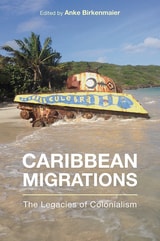
Caribbean Migrations
The Legacies of ColonialismAnke Birkenmaier
Rutgers University Press, 2021
With mass migration changing the configuration of societies worldwide, we can look to the Caribbean to reflect on the long-standing, entangled relations between countries and areas as uneven in size and influence as the United States, Cuba, Hispaniola, Puerto Rico, and Jamaica. More so than other world regions, the Caribbean has been characterized as an always already colonial region. It has long been a key area for empires warring over influence spheres in the new world, and where migration waves from Africa, Europe, and Asia accompanied every political transformation over the last five centuries. In Caribbean Migrations, an interdisciplinary group of humanities and social science scholars study migration from a long-term perspective, analyzing the Caribbean's "unincorporated subjects" from a legal, historical, and cultural standpoint, and exploring how despite often fractured public spheres, Caribbean intellectuals, artists, filmmakers, and writers have been resourceful at showcasing migration as the hallmark of our modern age.
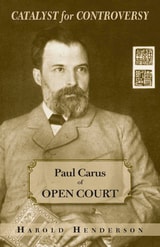
Catalyst for Controversy
Paul Carus of Open CourtHarold Henderson
Southern Illinois University Press, 2009
"I am not a common atheist; I am an atheist who loves God."—Paul Carus, "The God of Science," 1904
In the summer of 1880, while teaching at the military academy of the Royal Corps of Cadets of Saxony in Dresden, Paul Carus published a brief pamphlet denying the literal truth of scripture and describing the Bible as a great literary work comparable to the Odyssey.
This unremarkable document was Carus’s first step in a wide-ranging intellectual voyage in which he traversed philosophy, science, religion, mathematics, history, music, literature, and social and political issues. The Royal Corps, Carus later reported, found his published views "not in harmony with the Christian spirit, in accordance with which the training and education of the Corps of Cadets should be conducted." And so the corps offered the young teacher the choice of asking "most humbly for forgiveness for daring to have an opinion of my own and to express it, perhaps even promise to publish nothing more on religious matters, or to give up my post. I chose the latter. . . . There was thus no other choice for me but to emigrate and, trusting in my own powers, to establish for myself a new home." His resignation was effective on Easter Sunday, 1881.
Carus toured the Rhine, lived briefly in Belgium, and taught in a military college in England to learn English well enough to "thrive in the United States." By late 1884 or early 1885 he was on his way to the New World. Thriving in the United States proved more difficult than it had in England, but before 1885 ended he had published his first philosophical work in English, Monism and Meliorism. The book was not widely read, but it did reach Edward C. Hegeler, a La Salle, Illinois, zinc processor who became his father-in-law as well as his ideological and financial backer.
Established in La Salle, Carus began the work that would place him among the prominent American philosophers of his day and make the Open Court Publishing Company a leading publisher of philosophical, scientific, and religious books. He edited The Open Court and The Monist, offering the finest view of Oriental thought and religion then available in the West, and sought unsuccessfully to bring about a second World Parliament of Religions. He befriended physicist-philosopher Ernst Mach. For eleven years he employed D. T. Suzuki, who later became a great Zen Buddhist teacher. He published more articles by Charles S. Peirce, now viewed as one of the great world philosophers, in The Monist than appeared in any other publication.
Biographer Harold Henderson concludes his study of this remarkable man: "Whenever anyone is so fired with an idea that he or she can’t wait to write it down, there the spirit of Paul Carus remains, as he would have wished, active in the world."
Catholic Modernism and the Irish "Avant-Garde
" The Achievement of Brian Coffey, Denis Devlin, and Thomas MacGreeveyJames Matthew Wilson
Catholic University of America Press, 2023

Catholics, Anglicans, and Puritans
Seventeenth-Century EssaysHugh Trevor-Roper
University of Chicago Press, 1988
The opening essay, a skillful work of historical detection, investigates the strange career of Nicholas Hill. In "Laudianism and Political Power," Trevor-Roper returns to the subject of his first, now classic, book. He analyzes the real significance of the ecclesiastical movement associated with Archbishop Laud and speculates on what might have happened if the Stuarts had not abandoned it. "James Ussher, Archbishop of Armagh" deals with a key figure in the intellectual and religious life of his time. A long essay on "The Great Tew Circle" reinstates Lord Falkland as an important influence on the continuity of ideas through the English revolution. The final essay reassesses the political ideology of Milton.
English intellectual history, as Trevor-Roper constructs it here for the seventeenth century, is conditioned by its social and political context. Always engaging and fresh, these essays deal with currently interesting historical topics and up-to-date controversies.

Changing Our Own Words
Cheryl A. Wall
Rutgers University Press, 1991
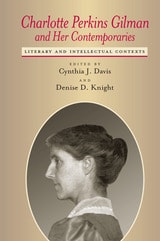
Charlotte Perkins Gilman and Her Contemporaries
Literary and Intellectual ContextsEdited by Cynthia J. Davis and Denise D. Knight
University of Alabama Press, 2004
Considers Gilman’s place in American literary and social history by examining her relationships to other prominent intellectuals of her era
By placing Charlotte Perkins Gilman in the company of her contemporaries, this collection seeks to correct misunderstandings of the feminist writer and lecturer as an isolated radical. Gilman believed and preached that no life is ever led in isolation; indeed, the cornerstone of her philosophy was the idea that “humanity is a relation.”Gilman's highly public and combative stances as a critic and social activist brought her into contact and conflict with many of the major thinkers and writers of the period, including Mary Austin, Margaret Sanger, Ambrose Bierce, Grace Ellery Channing, Lester Ward, Inez Haynes Gillmore, William Randolph Hearst, Karen Horney, William Dean Howells, Catharine Beecher, George Bernard Shaw, and Owen Wister. Gilman wrote on subjects as wide ranging as birth control, eugenics, race, women's rights and suffrage, psychology, Marxism, and literary aesthetics. Her many contributions to social, intellectual, and literary life at the turn of the 20th century raised the bar for future discourse, but at great personal and professional cost.
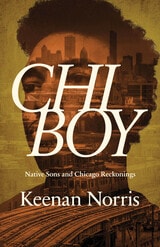
Chi Boy
Native Sons and Chicago ReckoningsKeenan Norris
The Ohio State University Press, 2022
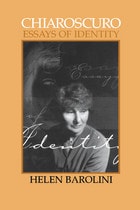
Chiaroscuro
Essays on Identity: Revised EditionHelen Barolini
University of Wisconsin Press, 1999
“A lively, lucid, and often extremely moving collection of essays.”—Sandra Gilbert, author of Wrongful Death: A Memoir
“Barolini’s essays moved me. Their commitment, their passion, their intelligence struck me very powerfully and made them among the most incisive essays on Italian-Americana, ethnicity, and diversity in literature that I have ever read.”—Fred Misurella, author of Understanding Milan Kundera: Public Events, Private Affairs and Short Time
Part memoir, part social commentary, and part literary criticism, Chiaroscuro is not only profoundly original but also of crucial importance in establishing the contours of an Italian-American tradition. Spanning a quarter century of work, the essays in Helen Barolini’s essays explore her personal search; literature as a formative influence; and the turning of the personal into the political. Included in Chiaroscuro is an updated re-introduction to Barolini’s American Book Award-winning collection, The Dream Book: An Anthology of Writings by Italian-American Women.
Chic Ironic Bitterness
R. Jay Magill, Jr.
University of Michigan Press, 2009
A brilliant and timely reflection on irony in contemporary American culture
“This book is a powerful and persuasive defense of sophisticated irony and subtle humor that contributes to the possibility of a genuine civic trust and democratic life. R. Jay Magill deserves our congratulations for a superb job!”
—Cornel West, University Professor, Princeton University
“A well-written, well-argued assessment of the importance of irony in contemporary American social life, along with the nature of recent misguided attacks and, happily, a deep conviction that irony is too important in our lives to succumb. The book reflects wide reading, varied experience, and real analytical prowess.”
—Peter Stearns, Provost, George Mason University
“Somehow, Americans—a pragmatic and colloquial lot, for the most part—are now supposed to speak the Word, without ironic embellishment, in order to rebuild the civic culture. So irony’s critics decide it has become ‘worthy of moral condemnation.’ Magill pushes back against this new conventional wisdom, eloquently defending a much livelier American sensibility than the many apologists for a somber ‘civic culture’ could ever acknowledge."
—William Chaloupka, Chair and Professor, Department of Political Science, Colorado State University
The events of 9/11 had many pundits on the left and right scrambling to declare an end to the Age of Irony. But six years on, we're as ironic as ever. From The Simpsons and Borat to The Daily Show and The Colbert Report, the ironic worldview measures out a certain cosmopolitan distance, keeping hypocrisy and threats to personal integrity at bay.
Chic Ironic Bitterness is a defense of this detachment, an attitude that helps us preserve values such as authenticity, sincerity, and seriousness that might otherwise be lost in a world filled with spin, marketing, and jargon. And it is an effective counterweight to the prevailing conservative view that irony is the first step toward cynicism and the breakdown of Western culture.
R. Jay Magill, Jr., is a writer and illustrator whose work has appeared in American Prospect, American Interest, Atlantic Monthly, Foreign Policy, International Herald Tribune, New York Times, Wall Street Journal, and Print, amongother periodicals and books. A former Harvard Teaching Fellow and Executive Editor of DoubleTake, he holds a Ph.D. in American Studies from the University of Hamburg in Germany. This is his first book.
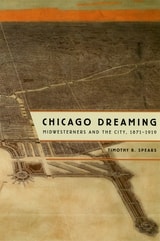
Chicago Dreaming
Midwesterners and the City, 1871-1919Timothy B. Spears
University of Chicago Press, 2005
Through innovative readings of Theodore Dreiser, Willa Cather, and Richard Wright, Spears argues that the migratory perspective was crucial to the rise of Chicago's emerging literary culture. In following the paths of several well-known migrants, including Jane Addams, cartoonist John T. McCutcheon, and businessman John Glessner, Spears also shows how the view from the hinterland permeated urban culture and informed the development of key Chicago institutions. Further exploring the notion of dreaming, he brings to light the internal desires that lured Midwestern migrants to the city as well as the nostalgia that led them to dream of the homes they left behind.
With this fascinating new take on the rise of Chicago, Chicago Dreaming blurs the line between country and city to reveal the provincial character of modern urban culture.
Chicago by the Book
101 Publications That Shaped the City and Its ImageCaxton Club
University of Chicago Press, 2018
Chicago by the Book profiles 101 landmark publications about Chicago from the past 170 years that have helped define the city and its image. Each title—carefully selected by the Caxton Club, a venerable Chicago bibliophilic organization—is the focus of an illustrated essay by a leading scholar, writer, or bibliophile.
Arranged chronologically to show the history of both the city and its books, the essays can be read in order from Mrs. John H. Kinzie’s 1844 Narrative of the Massacre of Chicago to Sara Paretsky’s 2015 crime novel Brush Back. Or one can dip in and out, savoring reflections on the arts, sports, crime, race relations, urban planning, politics, and even Mrs. O’Leary’s legendary cow. The selections do not shy from the underside of the city, recognizing that its grit and graft have as much a place in the written imagination as soaring odes and boosterism. As Neil Harris observes in his introduction, “Even when Chicagoans celebrate their hearth and home, they do so while acknowledging deep-seated flaws.” At the same time, this collection heartily reminds us all of what makes Chicago, as Norman Mailer called it, the “great American city.”
With essays from, among others, Ira Berkow, Thomas Dyja, Ann Durkin Keating, Alex Kotlowitz, Toni Preckwinkle, Frank Rich, Don Share, Carl Smith, Regina Taylor, Garry Wills, and William Julius Wilson; and featuring works by Saul Bellow, Gwendolyn Brooks, Sandra Cisneros, Clarence Darrow, Erik Larson, David Mamet, Studs Terkel, Ida B. Wells-Barnett, Frank Lloyd Wright, and many more.
Chicago's Greatest Year, 1893
The White City and the Birth of a Modern MetropolisJoseph Gustaitis
Southern Illinois University Press, 2013
In 1893, the 27.5 million visitors to the Chicago World’s Fair feasted their eyes on the impressive architecture of the White City, lit at night by thousands of electric lights. In addition to marveling at the revolutionary exhibits, most visitors discovered something else: beyond the fair’s 633 acres lay a modern metropolis that rivaled the world’s greatest cities. The Columbian Exposition marked Chicago’s arrival on the world stage, but even without the splendor of the fair, 1893 would still have been Chicago’s greatest year.
An almost endless list of achievements took place in Chicago in 1893. Chicago’s most important skyscraper was completed in 1893, and Frank Lloyd Wright opened his office in the same year. African American physician and Chicagoan Daniel Hale Williams performed one of the first known open-heart surgeries in 1893. Sears and Roebuck was incorporated, and William Wrigley invented Juicy Fruit gum that year. The Field Museum, the Art Institute of Chicago, and the Museum of Science and Industry all started in 1893. The Cubs’ new ballpark opened in this year, and an Austro-Hungarian immigrant began selling hot dogs outside the World’s Fair grounds. His wares became the famous “Chicago hot dog.”
“Cities are not buildings; cities are people,” writes author Joseph Gustaitis. Throughout the book, he brings forgotten pioneers back to the forefront of Chicago’s history, connecting these important people of 1893 with their effects on the city and its institutions today. The facts in this history of a year range from funny to astounding, showcasing innovators, civic leaders, VIPs, and power brokers who made 1893 Chicago about so much more than the fair.
Chicana Ways
Conversations With Ten Chicana WritersKarin Rosa Ikas
University of Nevada Press, 2001
Chicano Authors
Inquiry by InterviewBy Bruce-Novoa
University of Texas Press, 1980
The need for this book became apparent to Bruce-Novoa when he first taught a Chicano culture course in 1970. His students could find no source to satisfy their curiosity about Chicano writers' backgrounds, opinions, and attitudes. Chicano Authors: Inquiry by Interview provides that information.
Fourteen leading Chicano authors respond to questions about their personal and educational backgrounds, their perception of the role of the Chicano writer, and their evaluation of the literary, linguistic, and sociocultural significance of Chicano literature. The authors included are José Antonio Villarreal, Rolando Hinojosa, Sergio Elizondo, Miguel Méndez M., Abelardo Delgado, José Montoya, Tomás Rivera, Estela Portillo, Rudolfo A. Anaya, Bernice Zamora, Ricardo Sánchez, Ron Arias, Tino Villanueva, and Alurista.
Each interview is preceded by a brief introductory note which locates the author in the context of Chicano literature and provides a sense of his or her writing. Also included are a general introduction to Chicano literature, a chronological chart of publications by genre, and a selected bibliography. The volume will be an essential research tool for the student of Chicano literature and culture and a useful introduction for the general reader.
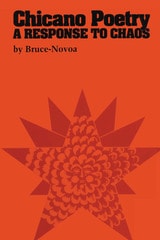
Chicano Poetry
A Response to ChaosBy Bruce-Novoa
University of Texas Press, 1982
Alurista. Gary Soto. Bernice Zamora. José Montoya. These names, luminous to some, remain unknown to those who have not yet discovered the rich variety of late twentieth century Chicano poetry.
With the flowering of the Chicano Movement in the mid-1960s came not only increased political awareness for many Mexican Americans but also a body of fine creative writing. Now the major voices of Chicano literature have begun to reach the wider audience they deserve. Bruce-Novoa's Chicano Poetry: A Response to Chaos—the first booklength critical study of Chicano poetry—examines the most significant works of a body of literature that has grown dramatically in size and importance in less than two decades.
Here are insightful new readings of the major writings of Abelardo Delgado, Sergio Elizondo, Rodolfo Gonzales, Miguel Méndez, J. L. Navarro, Raúl Salinas, Ricardo Sánchez, and Tino Villanueva, as well as Alurista, Soto, Zamora, and Montoya. Close textual analyses of such important works as I Am Joaquín, Restless Serpents, and Floricanto en Aztlán enrich and deepen our understanding of their imagery, themes, structure, and meaning.
Bruce-Novoa argues that Chicano poetry responds to the threat of loss, whether of hero, barrio, family, or tradition. Thus José Montoya elegizes a dead Pachuco in "El Louie," and Raúl Salinas laments the disappearance of a barrio in "A Trip through the Mind Jail." But this elegy at the heart of Chicano poetry is both lament and celebration, for it expresses the group's continuing vitality and strength.
Common to twentieth-century poetry is the preoccupation with time, death, and alienation, and the work of Chicano poets—sometimes seen as outside the traditions of world literature—shares these concerns. Bruce-Novoa brilliantly defines both the unique and the universal in Chicano poetry.
Chicano Popular Culture, Second Edition
Que Hable el PuebloCharles M. Tatum
University of Arizona Press, 2017
This edition features:
- Chicanas in the Chicano Movement and Chicanos since the Chicano Movement
- New material on popular authors such as Denise Chávez, Alfredo Vea, Luis Alberto Urrea, and Juan Felipe Herrera
- Suggested Readings to supplement each chapter
- Theoretical approaches to popular culture, including the perspectives of Norma Cantú, Alicia Gaspar de Alba, Pancho McFarland, Michelle Habell-Pallán, and Víctor Sorell
With clear examples, an engaging writing style, and helpful discussion questions, Chicano Popular Culture, Second Edition invites readers to discover and enjoy Mexican American popular culture.
Chicano Popular Culture
Que Hable el PuebloCharles M. Tatum
University of Arizona Press, 2001
Chicano Renaissance
Contemporary Cultural TrendsEdited by David R. Maciel, Isidro D. Ortiz, and María Herrera-Sobek
University of Arizona Press, 2000
This collection examines changes across a broad range of cultural forms--art, literature, music, cinema and television, radio, and theater--with an emphasis on the last two decades. Original articles by both established and emerging scholars review such subjects as the growth of Tejano music and the rise of Selena, how films and television have affected the Chicana/o experience, the evolution of Chicana/o art over the last twenty years, and postmodern literary trends.
In all of the essays, the contributors emphasize that, contrary to the popular notion that Chicanas/os have succumbed to a victim mentality, they continue to actively struggle to shape the conditions of their lives and to influence the direction of American society through their arts and social struggle. Despite decades usually associated with self-interest in the larger society, the spirit of commitment and empowerment has continued to infuse Chicana/o cultural expression and points toward a vibrant future.
CONTENTSAll Over the Map: La Onda Tejana and the Making of Selena, Roberto R. Calderón
Outside Inside-The Immigrant Workers: Creating Popular Myths, Cultural Expressions, and Personal Politics in Borderlands Southern California, Juan Gómez-Quiñones
"Yo soy chicano": The Turbulent and Heroic Life of Chicanas/os in Cinema and Television, David R. Maciel and Susan Racho
The Politics of Chicano Representation in the Media, Virginia Escalante
Chicana/o and Latina/o Gazing: Audiences of the Mass Media, Diana I. Ríos
An Historical Overview/Update on the State of Chicano Art, George Vargas
Contemporary Chicano Theater, Arturo Ramírez
Breaking the Silence: Developments in the Publication and Politics of Chicana Creative Writing, 1973-1998, Edwina Barvosa-Carter
Trends and Themes in Chicana/o Writings in Postmodern Times, Francisco A. Lomelí, Teresa Márquez, and María Herrera-Sobek
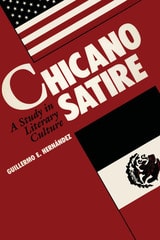
Chicano Satire
A Study in Literary CultureBy Guillermo E. Hernández
University of Texas Press, 1991
Geographically close to Mexico, but surrounded by Anglo-American culture in the United States, Chicanos experience many cultural tensions and contradictions. Their lifeways are no longer identical with Mexican norms, nor are they fully assimilated to Anglo-American patterns. Coping with these tensions—knowing how much to let go of, how much to keep—is a common concern of Chicano writers, who frequently use satire as a means of testing norms and deviations from acceptable community standards. In this groundbreaking study, Guillermo Hernández focuses on the uses of satire in the works of three authors—Luis Valdez, Rolando Hinojosa, and José Montoya—and on the larger context of Chicano culture in which satire operates.
Hernández looks specifically at the figures of the pocho (the assimilated Chicano) and the pachuco (the zoot-suiter, or urbanized youth). He shows how changes in their literary treatment—from simple ridicule to more understanding and respect—reflect the culture's changes in attitude toward the process of assimilation.
Hernández also offers many important insights into the process of cultural definition that engaged Chicano writers during the 1960s and 1970s. He shows how the writers imaginatively and syncretically formed new norms for the Chicano experience, based on elements from both Mexican and United States culture but congruent with the historical reality of Chicanos.
With its emphasis on culture change and creation, Chicano Satire will be of interest across a range of human sciences.
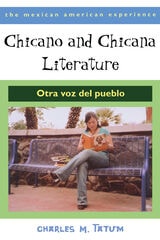
Chicano and Chicana Literature
Otra voz del puebloCharles M. Tatum
University of Arizona Press, 2006
In this comprehensive examination of Chicano and Chicana literature, Charles M. Tatum brings a new and refreshing perspective to the ethnic identity of Mexican Americans. From the earliest sixteenth-century chronicles of the Spanish Period, to the poetry and narrative fiction of the second half of the nineteenth century and the first half of the twentieth century, and then to the flowering of all literary genres in the post–Chicano Movement years, Chicano/a literature amply reflects the hopes and aspirations as well as the frustrations and disillusionments of an often marginalized population.
Exploring the work of Rudolfo Anaya, Sandra Cisneros, Luis Alberto Urrea, and many more, Tatum examines the important social, historical, and cultural contexts in which the writing evolved, paying special attention to the Chicano Movement and the flourishing of literary texts during the 1960s and early 1970s. Chapters provide an overview of the most important theoretical and critical approaches employed by scholars over the past forty years and survey the major trends and themes in contemporary autobiography, memoir, fiction, and poetry.
The most complete and up-to-date introduction to Chicana/o literature available, this book will be an ideal reference for scholars of Hispanic and American literature. Discussion questions and suggested reading included at the end of each chapter are especially suited for classroom use.
Chinese American Literature since the 1850s
Xiao-huang Yin
University of Illinois Press, 2000
The writings of immigrants from China and their descendants in the United States reflect the changes and continuity in the Chinese American experience. Xiao-huang Yin combines literary and historical scholarship to trace the origins and development of this extensive, neglected body of literature.
Chinese American Literature since the 1850s covers representative works from the 1850s to the present. Selections include journalism and autobiography by nineteenth-century Chinese authors; writings on the walls of Angel Island, the main Asian immigrant arrival point on the West Coast; writings of late-nineteenth and early-twentieth-century "cultivated Chinese," students and scholars who came to America to advance their educations; important writing by immigrants such as Chen Ruoxi, Yu Lihua, and Zhang Xiguo; and the works of more recent authors like Sui Sin Far, Jade Snow Wong, Frank Chin, Maxine Hong Kingston, and Amy Tan.
An essential introduction and guide to the field, Chinese American Literature since the 1850s enlarges the available body of literature and provides new insights into the Chinese American immigrant experience and the writing inspired by it.
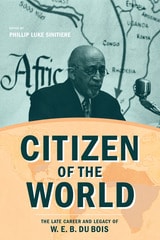
Citizen of the World
The Late Career and Legacy of W. E. B. Du BoisEdited by Phillip Luke Sinitiere
Northwestern University Press, 2019
From his birth in 1868 until his death in 1963, Du Bois sought the liberation of black people in the United States and across the world through intellectual and political labor. His tireless efforts documented and demonstrated connections between freedom for African-descended people abroad and black freedom at home.
In concert with growing scholarship on his twilight years, the essays in this volume assert the fundamental importance of considering Du Bois’s later decades not as a life in decline that descended into blind ideological allegiance to socialism and communism but as the life of a productive, generative intellectual who responded rationally, imaginatively, and radically to massive mid-century changes around the world, and who remained committed to freedom’s realization until his final hour.
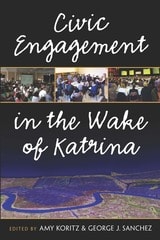
Civic Engagement in the Wake of Katrina
Amy Koritz and George J. Sanchez, editors
University of Michigan Press, 2009
"Civic engagement has been underrated and overlooked. Koritz and Sanchez illuminate the power of what community engagement through art and culture revitalization can do to give voice to the voiceless and a sense of being to those displaced."
---Sonia BasSheva Mañjon, Wesleyan University
"This profound and eloquent collection describes and assesses the new coalitions bringing a city back to life. It's a powerful call to expand our notions of culture, social justice, and engaged scholarship. I'd put this on my 'must read' list."
---Nancy Cantor, Syracuse University
"Civic Engagement in the Wake of Katrina is a rich and compelling text for thinking about universities and the arts amid social crisis. Americans need to hear the voices of colleagues who were caught in Katrina's wake and who responded with commitment, creativity, and skill."
---Peter Levine, CIRCLE (The Center for Information & Research on Civic Learning & Engagement)
This collection of essays documents the ways in which educational institutions and the arts community responded to the devastation wrought by Hurricane Katrina. While firmly rooted in concrete projects, Civic Engagement in the Wake of Katrina also addresses the larger issues raised by committed public scholarship. How can higher education institutions engage with their surrounding communities? What are the pros and cons of "asset-based" and "outreach" models of civic engagement? Is it appropriate for the private sector to play a direct role in promoting civic engagement? How does public scholarship impact traditional standards of academic evaluation? Throughout the volume, this diverse collection of essays paints a remarkably consistent and persuasive account of arts-based initiatives' ability to foster social and civic renewal.
Amy Koritz is Director of the Center for Civic Engagement and Professor of English at Drew University.
George J. Sanchez is Professor of American Studies and Ethnicity and History at the University of Southern California.
Front and rear cover designs, photographs, and satellite imagery processing by Richard Campanella.
digitalculturebooks is an imprint of the University of Michigan Press and the Scholarly Publishing Office of the University of Michigan Library dedicated to publishing innovative and accessible work exploring new media and their impact on society, culture, and scholarly communication. Visit the website at www.digitalculture.org.
Claiming a Tradition
Italian American Women WritersMary Jo Bona
Southern Illinois University Press, 1999
Bona discusses the novels in pairs according to their focus on Italian American life. She first examines the traditions of italianitá (a flavor of things Italian) that inform and enhance works of fiction. The novelists in that tradition were Mari Tomasi (Like Lesser Gods, 1949) and Marion Benasutti (No Steady Job for Papa, 1966).
Bona then turns to later novels that highlight the Italian American belief in the family's honor and reputation. Conflicts between generations, specifically between autocratic fathers and their children, are central to Octavia Waldo's 1961 A Cup of the Sun and Josephine Gattuso Hendin's 1988 The Right Thing to Do.
Even when writers choose to steer away from the familial focus, Bona notes, their developmental narratives trace the reintegration of characters suffering from a crisis of cultural identity. Relating the characters' struggles to their relationship to the family, Bona examines Diana Cavallo's 1961 A Bridge of Leaves and Dorothy Bryant's 1978 Miss Giardino.
Bona then discusses two innovative novels— Helen Barolini's 1979 Umbertina and Tina De Rosa's 1980 Paper Fish— both of which feature a granddaughter who invokes her grandmother, a godparent figure. Through Barolini's feminist and De Rosa's modernist perspectives, both novels present a young girl developing artistically.
Closing with a discussion of the contemporary terrain Italian American women traverse, Bona examines such topics as sexual identity when it meets cultural identity and the inclusion of italianitá when Italian American identity is not central to the story. Italian American women writers, she concludes, continue in the 1980s and 1990s to focus on the interplay between cultural identity and women's development.
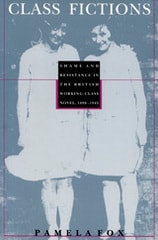
Class Fictions
Shame and Resistance in the British Working Class Novel, 1890–1945Pamela Fox
Duke University Press, 1994
With a focus on certain classics in the working-class literary "canon," such as The Ragged Trousered Philanthropists and Love on the Dole, as well as lesser-known texts by working-class women, Fox uncovers the anxieties that underlie representations of class and consciousness. Shame repeatedly emerges as a powerful counterforce in these works, continually unsettling the surface narrative of protest to reveal an ambivalent relation toward the working-class identities the novels apparently champion.
Class Fictions offers an equally rigorous analysis of cultural studies itself, which has historically sought to defend and value the radical difference of working-class culture. Fox also brings to her analysis a strong feminist perspective that devotes considerable attention to the often overlooked role of gender in working-class fiction. She demonstrates that working-class novels not only expose master narratives of middle-class culture that must be resisted, but that they also reveal to us a need to create counter narratives or formulas of working-class life. In doing so, this book provides a more subtle sense of the role of resistance in working class culture. While of interest to scholars of Victorian and working-class fiction, Pamela Fox’s argument has far-reaching implications for the way literary and cultural studies will be defined and practiced.
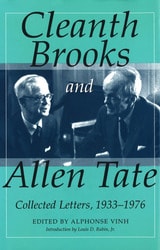
Cleanth Brooks and Allen Tate
Collected Letters, 1933-1976Edited by Alphonse Vinh & Intro by Louis D. Rubin, Jr.
University of Missouri Press, 1998
Offering all of the extant letters exchanged by two of the twentieth century's most distinguished literary figures, Cleanth Brooks and Allen Tate: Collected Letters, 1933-1976 vividly depicts the remarkable relationship, both professional and personal, between Brooks and Tate over the course of their lifelong friendship.
An accomplished poet, critic, biographer, and teacher, Allen Tate had a powerful influence on the literary world of his era. Editor of the Fugitive and the Sewanee Review, Tate greatly affected the lives and careers of his fellow literati, including Cleanth Brooks. Esteemed coeditor of An Approach to Literature and Understanding Poetry, Brooks was one of the principal creators of the New Criticism. His Modern Poetry and the Tradition and The Well Wrought Urn, as well as his two-volume study of Faulkner, remain among the classics read by any serious student of literature. The correspondence between these two gentlemen-scholars, which began in the 1930s, extended over five decades and covered a vast amount of twentieth-century literary history.
In the more than 250 letters collected here, the reader will encounter their shared concerns for and responses to the work of their numerous friends and many prominent writers, including T. S. Eliot, William Faulkner, and Robert Lowell. Their letters offer details about their own developing careers and also provide striking insight into the group dynamics of the Agrarians, the noteworthy community of southern writers who played so influential a role in the literature of modernism.
Brooks once said that Tate treated him like a younger brother, and despite great differences between their personalities and characters, these two figures each felt deep brotherly affection for the other. Whether they contain warm invitations for the one to visit the other, genteel or honest commentaries on their families and friends, or descriptions of the vast array of social, professional, and even political activities each experienced, the letters of Brooks and Tate clearly reveal the personalities of both men and the powerful ties of their strong camaraderie.
Invaluable to both students and teachers of literature, Cleanth Brooks and Allen Tate provides a substantial contribution to the study of twentieth-century American, and particularly southern, literary history.
Clear Word and Third Sight
Folk Groundings and Diasporic Consciousness in African Caribbean WritingCatherine A. John
Duke University Press, 2003
Contesting popular discourses about what constitutes culture and maintaining that neglected strains in negritude discourse provide a crucial philosophical perspective on the connections between folk practices, cultural memory, and collective consciousness, John examines the diasporic principles in the work of the negritude writers Léon Damas, Aimé Césaire, and Léopold Senghor. She traces the manifestations and reworkings of their ideas in Afro-Caribbean writing from the eastern and French Caribbean, as well as the Caribbean diaspora in the United States. The authors she discusses include Jamaica Kincaid, Earl Lovelace, Simone Schwarz-Bart, Audre Lorde, Paule Marshall, and Edouard Glissant, among others. John argues that by incorporating what she calls folk groundings—such as poems, folktales, proverbs, and songs—into their work, Afro-Caribbean writers invoke a psychospiritual consciousness which combines old and new strategies for addressing the ongoing postcolonial struggle.
Climate in Motion
Science, Empire, and the Problem of ScaleDeborah R. Coen
University of Chicago Press, 2018
Closet Devotions
Richard Rambuss
Duke University Press, 1998
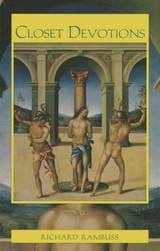
Through startling rereadings of works ranging from the devotional verse of the metaphysical poets (Donne, Herbert, Crashaw, and Traherne) to photographer Andres Serrano’s controversial “Piss Christ,” from Renaissance religious iconography to contemporary gay porn, Rambuss uncovers the highly charged erotic imagery that suffuses religious devotional art and literature. And he explores one of Christian culture’s most guarded (and literal) closets—the prayer closet itself, a privileged space where the vectors of same-sex desire can travel privately between the worshiper and his or her God.
Elegantly written and theoretically astute, Closet Devotions illuminates the ways in which sacred Christian devotion is homoeroticized, a phenomenon that until now has gone unexplored in current scholarship on religion, the body, and its passions. This book will attract readers across a wide array of disciplines, including gay and lesbian studies, literary theory and criticism, Renaissance studies, and religion.
Codes of Conduct
Race, Ethics, and the Color of Our CharacterHolloway, Karla F. C.
Rutgers University Press, 1995
In Codes of Conduct, Karla Holloway meditates on the dynamics of race and ethnicity as they are negotiated in the realms of power. Her uniquely insightful and intelligent analysis guides us in a fresh way through Anita Hill’s interrogation, the assault on Tawana Brawley, the mass murders of Atlanta’s children, the schisms between the personal and public domains of her life as a black professor, and––in a moving epilogue––the story of her son’s difficulties growing up as a young black male in contemporary society. Its three main sections: “The Body Politic,” “Language, Thought, and Culture,” and “The Moral Lives of Children,” relate these issues to the visual power of the black and female body, the aesthetic resonance and racialized drama of language, and our children’s precarious habits of surviving. Throughout, Holloway questions the consequences in African-American community life of citizenship that is meted out sparingly when one’s ethnicity is colored.
This is a book of a culture’s stories––from literature, public life, contemporary and historical events, aesthetic expression, and popular culture––all located within the common ground of African-American ethnicity. Holloway writes with a passion, urgency, and wit that carry the reader swiftly through each chapter. The book should take its place among those other important contemporary works that speak to the future relationships between whites and blacks in this country.
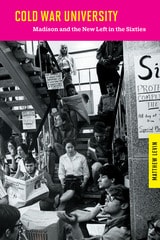
Cold War University
Madison and the New Left in the SixtiesMatthew Levin
University of Wisconsin Press, 2013
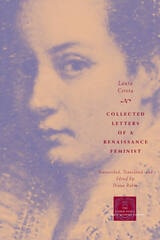
Collected Letters of a Renaissance Feminist
Laura Cereta
University of Chicago Press, 1997
Yet these letters also furnish a detailed portrait of an early modern woman’s private experience, for Cereta addressed many letters to a close circle of family and friends, discussing highly personal concerns such as her difficult relationships with her mother and her husband. Taken together, these letters are a testament both to an individual woman and to enduring feminist concerns.
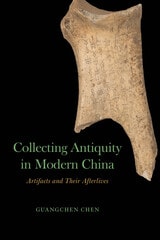
Collecting Antiquity in Modern China
Artifacts and Their AfterlivesGuangchen Chen
University of Chicago Press, 2026
In this book, Guangchen Chen argues that discerning collectors used antiquities to upend dominant discourses on history and cultural memory in twentieth-century China. Examining four categories of ancient artifacts—“carving” (oracle bones), “rubbing” (imprints of inscriptions and books), “brushing” (calligraphy), and “weaving” (textiles and costumes)—Chen explains how their modern (re)emergences changed our understanding of the relationship between tradition and modernity, textuality and materiality, and the very meaning of “Chineseness.”
Chen considers intellectuals such as Wang Yirong, Liu E, Luo Zhenyu, Wang Guowei, and Chen Mengjia, who played a pivotal role in the oracle bones’ modern reception. He also looks to major literary figures including Lu Xun, whose engagements with textual remnants of the past inspired his critique of Chinese culture; Guo Moruo, whose work on the calligraphic masterpiece Lantingxu contributed to the cultural-political climate that sparked the Cultural Revolution; Shi Zhecun, whose interest in inscriptions on ancient stelae helped him to hold fast to intellectual integrity in the face of political pressure; and Shen Congwen, whose obsession with ancient textiles saved him from committing suicide after his writing fell out of favor. These antiquarians used their collections as a strategy to synchronize historical time and to challenge two dominant yet contrasting ideologies in modern China: a regressive idealization of antiquity and an unquestioning trust in linear progress. During this turbulent period, long-lost artifacts came to function as omens, warnings, and revelations from another time, generating new meanings that were uniquely relevant to the present.
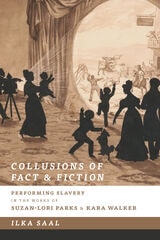
Collusions of Fact and Fiction
Performing Slavery in the Works of Suzan-Lori Parks and Kara WalkerSaal, Ilka
University of Iowa Press, 2021
Saal argues that the attempt to reconstruct or recuperate the experience of African Americans under slavery is no longer at stake in the works of artists growing up in the post–Civil Rights era. Instead, they lay bare the discursive dimension of our contemporary understanding of the past and address the continued impact of its various verbal and visual signs upon contemporary identities. In this manner, Parks and Walker stake out new possibilities for engaging the past and inhabiting the present and future.
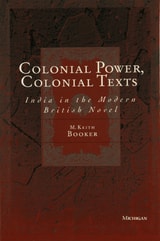
Colonial Power, Colonial Texts
India in the Modern British NovelM. Keith Booker
University of Michigan Press, 1997
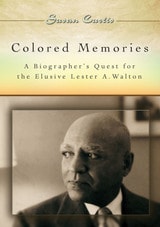
Colored Memories
A Biographer's Quest for the Elusive Lester A. WaltonSusan Curtis
University of Missouri Press, 2008
Lester A. Walton was a well-known public figure in his day. An African American journalist, cultural critic, diplomat, and political activist, he was an adviser to presidents and industrialists in a career that spanned the first six decades of the twentieth century. He was a steadfast champion of democracy and lived to see the passage of major civil rights legislation. But one word best describes Walton today: forgotten.
Exploring the contours of this extraordinary life, Susan Curtis seeks to discover why our collective memory of Walton has failed. In a unique narrative of historical research, she recounts a fifteen-year journey, from the streets of Harlem and “The Ville” in St. Louis to scattered archives and obscure public records, as she uncovers the mysterious circumstances surrounding Walton’s disappearance from national consciousness. And despite numerous roadblocks and dead ends in her quest, she tells how she came to know this emblematic citizen of the American Century in surprising ways.
In this unconventional book—a postmodern ghost story, an unprecedented experiment in life-writing—Curtis shares her discoveries as a researcher. Relating her frustrating search through long-overlooked documents to discover this forgotten man, she offers insight into how America’s obsession with race has made Walton’s story unwelcome. She explores the treachery, duplicity, and archival accidents that transformed a man dedicated to the fulfillment of American democracy into a shadowy figure.
Combining anecdotal memories with the investigative instincts of the historian, Curtis embraces the subjectivity of her research to show that what a society forgets or suppresses is just as important as what it includes in its history. Colored Memories is a highly original work that not only introduces readers to a once-influential figure but also invites us to reconsider how we view, understand, and preserve the past.
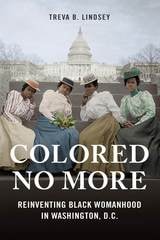
Colored No More
Reinventing Black Womanhood in Washington, D.C.Treva B. Lindsey
University of Illinois Press, 2017
Treva B. Lindsey presents New Negro womanhood as a multidimensional space that included race women, blues women, mothers, white collar professionals, beauticians, fortune tellers, sex workers, same-gender couples, artists, activists, and innovators. Drawing from these differing but interconnected African American women's spaces, Lindsey excavates a multifaceted urban and cultural history of struggle toward a vision of equality that could emerge and sustain itself. Upward mobility to equal citizenship for African American women encompassed challenging racial, gender, class, and sexuality status quos. Lindsey maps the intersection of these challenges and their place at the core of New Negro womanhood.
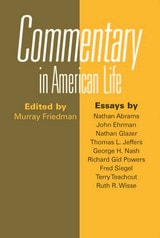
Commentary In American Life
edited by Murray Friedman
Temple University Press, 2005
Community and Solitude
New Essays on Johnson’s CircleLee, Anthony W
Bucknell University Press, 2019
Contributors: Christopher Catanese, James Caudle, Marilyn Francus, Christine Jackson-Holzberg, Claudia Thomas Kairoff, Elizabeth Lambert, Anthony W. Lee, James E. May, John Radner, and Lance Wilcox.
Published by Bucknell University Press. Distributed worldwide by Rutgers University Press.
Complete Writings
Letterbook, Dialogue on Adam and Eve, OrationsIsotta Nogarola
University of Chicago Press, 2004
This volume presents English translations of all of Nogarola's extant works and highlights just how daring and original her convictions were. In her letters and orations, Nogarola elegantly synthesized Greco-Roman thought with biblical teachings. And striding across the stage in public, she lectured the Veronese citizenry on everything from history and religion to politics and morality. But the most influential of Nogarola's works was a performance piece, Dialogue on Adam and Eve, in which she discussed the relative sinfulness of Adam and Eve—thereby opening up a centuries-long debate in Europe on gender and the nature of woman and establishing herself as an important figure in Western intellectual history. This book will be a must read for teachers and students of Women's Studies as well as of Renaissance literature and history.
Complicities
The Intellectual and ApartheidMark Sanders
Duke University Press, 2002
Sanders gives detailed analyses of widely divergent thinkers: Afrikaner nationalist poet N. P. van Wyk Louw, Drum writer Bloke Modisane, Xhosa novelist A. C. Jordan, Afrikaner dissident Breyten Breytenbach, and Black Consciousness leader Steve Biko. Drawing on theorists including Derrida, Sartre, and Fanon, and paying particular attention to the linguistic intricacy of the literary and political texts considered, Sanders shows how complicity emerges as a predicament for intellectuals across the ideological and social spectrum. Through discussions of the colonial intellectuals Olive Schreiner and Sol T. Plaatje and of post-apartheid feminist critiques of the Truth and Reconciliation Commission, Complicities reveals how sexual difference joins with race to further complicate issues of collusion.
Complicities sheds new light on the history and literature of twentieth-century South Africa as it weighs into debates about the role of the intellectual in public life.