Results by title
301 books match the query 'Knowledge' and 23 start with c
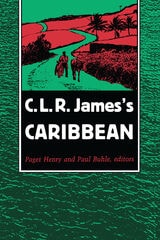
C. L. R. James's Caribbean
Paget Henry and Paul Buhle, eds.
Duke University Press, 1992
Drawing upon James's observations of his own life as revealed to interviewers and close friends, this volume provides an examination of James's childhood and early years as colonial literatteur and his massive contribution to West Indian political-cultural understanding. Moving beyond previous biographical interpretations, the contributors here take up the problem of reading James's texts in light of poststructuralist criticism, the implications of his texts for Marxist discourse, and for problems of Caribbean development.
Caliban's Curse
George Lamming and the Revisioning of HistorySupriya Nair
University of Michigan Press, 1996
Caliban's Curse draws upon a range of theories--postcolonial, Marxist, and feminist--to contextualize the black diaspora of the modern Caribbean through one of its primary anglophone novelists. Putting George Lamming in conversation with such contemporaries as C.L.R. James, Derek Walcott, and Wilson Harris, Nair argues that Lamming's works expand the protest of Shakespeare's Caliban to articulate a reinvention of Caribbean cultures. Both cursed by and cursing the weight of colonial history, Lamming works against the paralysis induced by such an encounter; his work serves to rewrite canonical icons and to reimagine popular cultures.
"Supriya Nair writes about the problems of history and social revolution with passion and clarity and an amazing range of critical and cultural reference. . . . She brings to existing studies of Lamming a wide and sustained knowledge of the forces that have shaped the West Indian novel, and the wider postcolonial debates in which these novels are read and discussed." --Simon Gikandi, University of Michigan
Supriya Nair is Associate Professor of English, Tulane University.
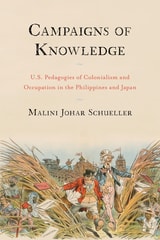
Campaigns of Knowledge
U.S. Pedagogies of Colonialism and Occupation in the Philippines and JapanMalini Johar Schueller
Temple University Press, 2019
The creation of a new school system in the Philippines in 1898 and educational reforms in occupied Japan, both with stated goals of democratization, speaks to a singular vision of America as savior, following its politics of violence with benevolent recuperation. The pedagogy of recovery—in which schooling was central and natives were forced to accept empire through education—might have shown how Americans could be good occupiers, but it also created projects of Orientalist racial management: Filipinos had to be educated and civilized, while the Japanese had to be reeducated and “de-civilized.”
In Campaigns of Knowledge, Malini Schueller contrapuntally reads state-sanctioned proclamations, educational agendas, and school textbooks alongside political cartoons, novels, short stories, and films to demonstrate how the U.S. tutelary project was rerouted, appropriated, reinterpreted, and resisted. In doing so, she highlights how schooling was conceived as a process of subjectification, creating particular modes of thought, behaviors, aspirations, and desires that would render the natives docile subjects amenable to American-style colonialism in the Philippines and occupation in Japan.
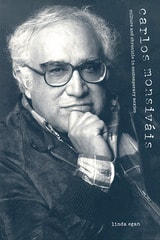
Carlos Monsiváis
Culture and Chronicle in Contemporary MexicoLinda Egan
University of Arizona Press, 2001
One of Mexico’s foremost social and political chroniclers and its most celebrated cultural critic, Carlos Monsiváis has read the pulse of his country over the past half century. The author of five collections of literary journalism pieces called crónicas, he is perhaps best known for his analytic and often satirical descriptions of Mexico City’s popular culture.
This comprehensive study of Monsiváis’s crónicas is the first book to offer an analysis of these works and to place Monsiváis’s work within a theoretical framework that recognizes the importance of his vision of Mexican culture. Linda Egan examines his ideology in relation to theoretical postures in Latin America, the United States, and Europe to cast Monsiváis as both a heterodox pioneer and a mainstream spokesman. She then explores the poetics of the contemporary chronicle in Mexico, reviewing the genre’s history and its relation to other narrative forms. Finally, she focuses on the canonical status of Monsiváis’s work, devoting a chapter to each of his five principal collections.
Egan argues that the five books that are the focus of her study tell a story of ever-renewing suspense: we cannot know “the end” until Monsiváis is through constructing his literary project. Despite this, she observes, his work between 1970 and 1995 documents important discoveries in his search for causes, effects, and deconstructions of historical obstacles to Mexico’s passage into modernity.
While anthropologists and historians continue to introduce new paradigms for the study of Mexico’s cultural space, Egan’s book provides a reflexive twist by examining the work of one of the thinkers who first inspired such a critical movement. More than an appraisal of Monsiváis, it offers a valuable discussion of theoretical issues surrounding the study of the chronicle as it is currently practiced in Mexico. It balances theory and criticism to lend new insight into the ties between Mexican society, social conscience, and literature.
Changing of Knowledge in Composition
Contemporary PerspectivesLance Massey and Richard C Gephardt
Utah State University Press, 2011
Lance Massey and Richard Gebhardt offer in this collection many signs that composition again faces a moment of precariousness, even as it did in the 1980s—the years of the great divorce from literary studies. The contours of writing in the university again are rapidly changing, making the objects of scholarship in composition again unstable. Composition is poised to move not from modern to postmodern but from process to postprocess, from a service-oriented "field" to a research-driven "discipline." Some would say we are already there. Momentum is building to replace "composition" and the pedagogical imperative long implied in that term with a "writing studies" model devoted to the study of composition as a fundamental tool of, and force within, all areas of human activity.
Appropriately, contributors here use Stephen M. North's 1987 book The Making of Knowledge in Composition to frame and background their discussion, as they look at both the present state of the field and its potential futures. As in North's volume, The Changing of Knowledge in Composition describes a body of research and pedagogy brimming with conflicting claims, methodologies, and politics, and with little consensus regarding the proper subjects and modes of inquiry.
The deep ambivalence within the field itself is evident in this collection. Contributors here envision composition both as retaining its commitment to broad-based, generalized writing instruction and as heading toward content-based vertical writing programs in departments and programs of writing studies. They both challenge and affirm composition's pedagogical heritage. And they sound both sanguine and pessimistic notes about composition's future.
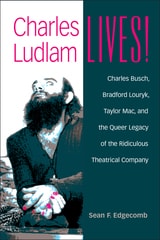
Charles Ludlam Lives!
Charles Busch, Bradford Louryk, Taylor Mac, and the Queer Legacy of the Ridiculous Theatrical CompanySean F. Edgecomb
University of Michigan Press, 2017
Author Sean F. Edgecomb focuses on the neo-Ridiculous artists Charles Busch, Bradford Louryk, and Taylor Mac to trace the connections between Ludlam’s legacy and their performances, using alternative queer models such as kinetic kinship, lateral historiography, and a new approach to camp. Charles Ludlam Lives! demonstrates that the queer legacy of Ludlam is one of distinct transformation—one where artists can reject faithful interpretations in order to move in new interpretive directions.
Chaucer and the Subject of History
Lee Patterson
University of Wisconsin Press, 1991
Renowned scholar of medieval literature, Lee Patterson, presents a compelling vision of the shape and direction of Geoffrey Chaucer’s entire career in Chaucer and the Subject of History.
Chaucer's interest in individuality was strikingly modern. At the same time he was profoundly aware of the pressures on individuality exerted by the past and by society—by history. This tension between the subject and history is Patterson's topic. He begins by showing how Chaucer’s understanding of history as a subject for poetry—a world to be represented and a cultural force affecting human action—began to take shape in his poems on classical themes, especially in Troilus and Criseyde. Patterson's extended analysis of this profound yet deeply conflicted exploration of the relationship between "history" and "the subject" provides the basis for understanding Chaucer's shift to his contemporary world in the Canterbury Tales. There, in the shrewdest and most wide-ranging analysis of late medieval society we possess, Chaucer investigated not just the idea of history but the historical world intimately related to his own political and literary career.
Patterson's chapters on individual tales clarify and confirm his provocative arguments. He shows, for example, how the Knight's Tale represents the contemporary crisis of governance in terms of a crisis in chivalric identity itself; how the Miller’s Tale reflects the social pressures and rhetoric of peasant movements generally and the Rising of 1381 in particular; and how the tales of the Merchant and Shipman register the paradoxical placement of a bourgeois class lacking class identity. And Patterson's brilliant readings of the Wife of Bath’s Tale—"the triumph of the subject"—and the Pardoner’s Tale —"the subject of confession"—reveal how Chaucer reworked traditional materials to accomplish stunning innovations that make visible unmistakably social meanings. Chaucer and the Subject of History is a landmark book, one that will shape the way that Chaucer is read for years to come.
Chaucer's Italian Tradition
Warren Ginsberg
University of Michigan Press, 2002
Because divergent political, municipal, and literary histories would have made the Italian cities--Genoa, Florence, and Milan--unfamiliar to an English poet from medieval London, Ginsberg argues that we must consider what Chaucer overlooked and mistook from his Italian models alongside the material he did appropriate. To make sense of premises in texts like Dante's Comedy that were peculiarly Italian, Chaucer would look to Boccaccio as a gloss; by reading these authors in conjunction with one another, Chaucer generates an "Italian tradition" that translates into the terms of his English experience works already mediated by a prior stage of transposition.
Ginsberg explores Chaucer's relationship to Italian poets not in terms of the interaction of individual talents with accredited authorities (Chaucer and Dante, Boccaccio and Petrarch, etc.). Rather, he focuses on the shifts in tension that occur when the civic engagements and disengagements of Florence's poets are brought into contact with Chaucer's growing metropolitanism and increasing reluctance to make London the locus of his poetic art.
Beyond its appeal to medievalists and those who study the Renaissance, Chaucer's Italian Tradition will be welcomed by readers interested in theoretical questions about translation and the development of tradition, including individuals who study history, literature, and the nature of the humanities.
Warren Ginsberg is Professor of English, University of Oregon.
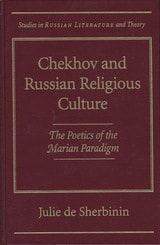
Chekhov and Russian Religious Culture
Poetics of the Marian ParadigmJulie de Sherbinin
Northwestern University Press, 1997
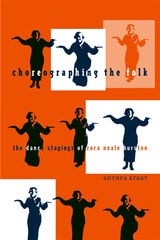
Choreographing the Folk
The Dance Stagings of Zora Neale HurstonAnthea Kraut
University of Minnesota Press, 2008
Recovers an important dimension of the work of the renowned African American artist
While Zora Neale Hurston and her 1937 novel Their Eyes Were Watching God have become widely celebrated, she was also a prolific stage director and choreographer. In the 1930s Hurston produced theatrical concerts that depicted a day in the life of a railroad work camp in Florida and featured a rousing Bahamian Fire Dance as the dramatic finale. In Choreographing the Folk, Anthea Kraut traces the significance and influence of Hurston’s little-known choreographic work.
Hurston’s concerts were concrete illustrations of the “real Negro art theatre” she was eager to establish, and they compellingly demonstrate how she used the arena of performance to advance a nuanced understanding of the black diaspora. Her version of the Fire Dance was staged in a variety of venues during the 1930s. In its multiple representations, Kraut asserts, the dance raised critical issues about ownership, artistry, and authenticity. Choreographing the Folk argues for the significance of Hurston’s choreography, and with perceptiveness, sensitivity, and originality, Kraut illuminates the important and often-contested place of black folk dance in American culture.
Climate Change and the Production of Knowledge
Ian Baucom and Matthew Omelsky, special issue editors
Duke University Press, 2017
Contributors. Ian Baucom, Rosi Braidotti, David Buckland, Matthew Burtner, Noel Castree, Dipesh Chakrabarty, Tom Cohen, Claire Colebrook, Olivia Gray, Willis Jenkins, Catherine Malabou, Matthew Omelsky, Michael Segal, Bently Spang, Gary Tomlinson, Astrid Ulloa, Lucy Wood
Co-production of Knowledge in Action
Emancipatory Strategies for Urban EqualityEdited by Cassidy Johnson, Vanesa Castán Broto, Wilbard Kombe, Catalina Ortiz, Barbara Lipietz, Emmanuel Osuteye, and Caren Levy
University College London, 2025
In urban development, co-production refers to a strategy that prioritizes collaboration across multiple institutions and with citizens, aiming to enable conflict resolution and transformative change. However, critics contend that these theoretical ambitions often have limited practical impact. Co-production of Knowledge in Action examines how co-production is articulated and deployed in cities such as Lima, Freetown, Kampala, Dar es Salaam, and Delhi. It engages with ongoing experiences of co-production-inspired action, mapping the different aspirations that inform co-production practices and their impacts on urban communities. Critiquing co-production strategies for urban development in relation to practical experiences in these cities, this volume adopts a postcolonial approach to knowledge production as a means to transform urban planning practices.
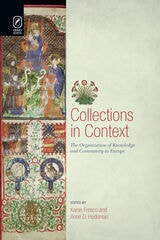
Collections in Context
The Organization of Knowledge and Community in EuropeEdited by Karen Fresco and Anne D. Hedeman
The Ohio State University Press, 2011
The fourteen essays that comprise Collections in Context: The Organization of Knowledge and Community in Europe interrogate questions posed by French, Flemish, English, and Italian collections of all sorts—libraries as a whole, anthologies and miscellanies assembled within a single manuscript or printed book, and even illustrated ivory boxes.
With essays by a wide array of international scholars, Collections in Context demonstrates that the very act of collecting inevitably imposes some kind of relationship among what might otherwise be naively thought of as disparate elements and simultaneously exposes something about the community that created and used the collection. Thus, Collections in Context offers unusual insights into how collecting both produced knowledge and built community in early modern Europe.
Comparing Muslim Societies
Knowledge and the State in a World CivilizationJuan R. I. Cole, Editor
University of Michigan Press, 1992
Confronting Child Sexual Abuse
Knowledge to ActionAnne M. Nurse
Lever Press, 2020
Constructing the Pluriverse
The Geopolitics of KnowledgeBernd Reiter, editor
Duke University Press, 2018
Contributors. Zaid Ahmad, Manuela Boatcă, Hans-Jürgen Burchardt, Raewyn Connell, Arturo Escobar, Sandra Harding, Ehsan Kashfi, Venu Mehta, Walter D. Mignolo, Ulrich Oslender, Issiaka Ouattara, Bernd Reiter, Manu Samnotra, Catherine E. Walsh, Aram Ziai
Contemporary Physics and the Limits of Knowledge
Tavel, Morton
Rutgers University Press, 2002
Courts, Jurisdictions, and Law in John Milton and His Contemporaries
Alison A. Chapman
University of Chicago Press, 2020
Surveying Milton’s early pamphlets, divorce tracts, late political tracts, and major prose works in comparison with the writings and cases of some of Milton’s contemporaries—including George Herbert, John Donne, Ben Jonson, and John Bunyan—Chapman reveals the variety and nuance in Milton’s juridical toolkit and his subtle use of competing legal traditions in pursuit of justice.
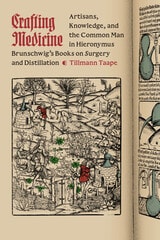
Crafting Medicine
Artisans, Knowledge, and the Common Man in Hieronymus Brunschwig's Books on Surgery and DistillationTillmann Taape
University of Chicago Press, 2025
Between 1497 and 1512, Hieronymus Brunschwig (ca. 1450–ca. 1530), an obscure craftsman from Strasbourg, wrote books on surgery and pharmacy that transformed medical expertise, how it was codified in print, and how it was communicated to new audiences. Brunschwig was an unlikely author. He apprenticed as a surgeon in the local guild and dispensed medicines from his own shop. But he was remarkably well-read in surgery, alchemy, and medical theory, even if he lacked a university education. His unique authorial voice spoke to the healing practices of craftsmen and common people in a down-to-earth German dialect.
Crafting Medicine, by Tillmann Taape, is the first in-depth study of Brunschwig and his works. In it, Taape argues that Brunschwig’s writings shaped a nascent tradition of vernacular medicine. Brunschwig’s books represent a key moment in the history of medical print, for they conveyed medical expertise to a new readership of nonacademic practitioners, who became a key audience for a flood of vernacular medical publications during the sixteenth century. Using Brunschwig’s books as a unique window into the past, Crafting Medicine beautifully reconstructs the world of science inhabited by Brunschwig, his fellow craftsmen, his translators, and his readers.

Creole Medievalism
Colonial France and Joseph Bédier’s Middle AgesMichelle R. Warren
University of Minnesota Press, 2010
In Creole Medievalism, Michelle Warren demonstrates that Bédier's relationship to this multicultural and economically peripheral colony motivates his nationalism in complex ways. Simultaneously proud of his French heritage and nostalgic for the island, Bédier defends French sovereignty based on an ambivalent resistance to his creole culture. Warren shows that in the early twentieth century, influential intellectuals from Réunion helped define the new genre of the "colonial novel," adopting a pro-colonial spirit that shaped both medieval and Francophone studies. Probing the work of a once famous but little understood cultural figure, Creole Medievalism illustrates how postcolonial France and Réunion continue to grapple with histories too varied to meet expectations of national unity.
Crisis of the Wasteful Nation
Empire and Conservation in Theodore Roosevelt's AmericaIan Tyrrell
University of Chicago Press, 2014
In Crisis of the Wasteful Nation, Ian Tyrrell gives us a cohesive picture of Roosevelt’s engagement with the natural world along with a compelling portrait of how Americans used, wasted, and worried about natural resources in a time of burgeoning empire. Countering traditional narratives that cast conservation as a purely domestic issue, Tyrrell shows that the movement had global significance, playing a key role in domestic security and in defining American interests around the world. Tyrrell goes beyond Roosevelt to encompass other conservation advocates and policy makers, particularly those engaged with shaping the nation’s economic and social policies—policies built on an understanding of the importance of crucial natural resources. Crisis of the Wasteful Nation is a sweeping transnational work that blends environmental, economic, and imperial history into a cohesive tale of America’s fraught relationships with raw materials, other countries, and the animal kingdom.
Cubans in Angola
South-South Cooperation and Transfer of Knowledge, 1976–1991Christine Hatzky
University of Wisconsin Press, 2015
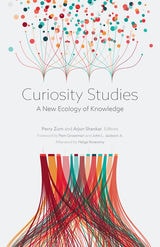
Curiosity Studies
A New Ecology of KnowledgePerry Zurn
University of Minnesota Press, 2020
The first English-language collection to establish curiosity studies as a unique field
From science and technology to business and education, curiosity is often taken for granted as an unquestioned good. And yet, few people can define curiosity. Curiosity Studies marshals scholars from more than a dozen fields not only to define curiosity but also to grapple with its ethics as well as its role in technological advancement and global citizenship. While intriguing research on curiosity has occurred in numerous disciplines for decades, no rigorously cross-disciplinary study has existed—until now.
Curiosity Studies stages an interdisciplinary conversation about what curiosity is and what resources it holds for human and ecological flourishing. These engaging essays are integrated into four clusters: scientific inquiry, educational practice, social relations, and transformative power. By exploring curiosity through the practice of scientific inquiry, the contours of human learning, the stakes of social difference, and the potential of radical imagination, these clusters focus and reinvigorate the study of this universal but slippery phenomenon: the desire to know.
Against the assumption that curiosity is neutral, this volume insists that curiosity has a history and a political import and requires precision to define and operationalize. As various fields deepen its analysis, a new ecosystem for knowledge production can flourish, driven by real-world problems and a commitment to solve them in collaboration. By paying particular attention to pedagogy throughout, Curiosity Studies equips us to live critically and creatively in what might be called our new Age of Curiosity.
Contributors: Danielle S. Bassett, U of Pennsylvania; Barbara M. Benedict, Trinity College; Susan Engel, Williams College; Ellen K. Feder, American U; Kristina T. Johnson, Massachusetts Institute of Technology; Narendra Keval; Christina León, Princeton U; Tyson Lewis, U of North Texas; Amy Marvin, U of Oregon; Hilary M. Schor, U of Southern California; Seeta Sistla, Hampshire College; Heather Anne Swanson, Aarhus U.