Results by title
791 books match the query 'Levels' and 60 start with c

CANCELED - Notes from Home
Jonna McKone
Rutgers University Press, 2021
Through portraiture, oral history, writing, and family archives, the contributors explore childhood, geography, immigration, education, and family relationships, recovering misunderstood or overlooked moments. In the process of making this work, the group found old family photos, returned to sites of significance, and made new friendships, discovering the transformational potential of this kind of storytelling to reframe hardship, loss, and uncertainty. In the words of one contributor, “I felt like this process was a necessary step that allowed me to acknowledge and comprehend what I was experiencing at the time. It allowed me to create a more coherent understanding that I am who I am because of my past and because I was the one who had control of molding my own, better path.” Each chapter, encompassing one person’s story, is strikingly unique in its vision and approach.
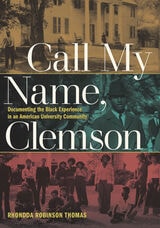
Call My Name, Clemson
Documenting the Black Experience in an American University CommunityRhondda Robinson Thomas
University of Iowa Press, 2020
Between 1890 and 1915, a predominately African American state convict crew built Clemson University on John C. Calhoun’s Fort Hill Plantation in upstate South Carolina. Calhoun’s plantation house still sits in the middle of campus. From the establishment of the plantation in 1825 through the integration of Clemson in 1963, African Americans have played a pivotal role in sustaining the land and the university. Yet their stories and contributions are largely omitted from Clemson’s public history.
This book traces “Call My Name: African Americans in Early Clemson University History,” a Clemson English professor’s public history project that helped convince the university to reexamine and reconceptualize the institution’s complete and complex story from the origins of its land as Cherokee territory to its transformation into an increasingly diverse higher-education institution in the twenty-first century. Threading together scenes of communal history and conversation, student protests, white supremacist terrorism, and personal and institutional reckoning with Clemson’s past, this story helps us better understand the inextricable link between the history and legacies of slavery and the development of higher education institutions in America.
Campus Life
Undergraduate Cultures from the End of the Eighteenth Century to the PresentHelen Lefkowitz Horowitz
University of Chicago Press, 1988
Campus with Purpose
Building a Mission-Driven CampusStephen Lehmkuhle
Rutgers University Press, 2021
Canons by Consensus
Critical Trends and American Literature AnthologiesJoseph Csicsila, with a foreword by Tom Quirk
University of Alabama Press, 2004
The first systematic analysis of American literature textbooks used by college instructors in the last century
Scholars have long noted the role that college literary anthologies play in the rising and falling reputations of American authors. Canons by Consensus examines this classroom fixture in detail to challenge and correct a number of assumptions about the development of the literary canon throughout the 20th century.
Joseph Csicsila analyzes more than 80 anthologies published since 1919 and traces not only the critical fortunes of individual authors, but also the treatment of entire genres and groupings of authors by race, region, gender, and formal approach. In doing so, he calls into question accusations of deliberate or inadvertent sexism and racism. Selections by anthology editors, Csicsila demonstrates, have always been governed far more by prevailing trends in academic criticism than by personal bias.
Academic anthologies are found to constitute a rich and often overlooked resource for studying American literature, as well as an irrefutable record of the academy’s changing literary tastes throughout the last century.
Capital of Mind
The Idea of a Modern American UniversityAdam R. Nelson
University of Chicago Press, 2024
Capital of Mind is the second volume in a breathtakingly ambitious new economic history of American higher education. Picking up from the first volume, Exchange of Ideas, Adam R. Nelson looks at the early decades of the nineteenth century, explaining how the idea of the modern university arose from a set of institutional and ideological reforms designed to foster the mass production and mass consumption of knowledge. This “industrialization of ideas” mirrored the industrialization of the American economy and catered to the demands of a new industrial middle class for practical and professional education. From Harvard in the north to the University of Virginia in the south, new experiments with the idea of a university elicited intense debate about the role of scholarship in national development and international competition, and whether higher education should be supported by public funds, especially in periods of fiscal austerity. The history of capitalism and the history of the university, Nelson reveals, are intimately intertwined—which raises a host of important questions that remain salient today. How do we understand knowledge and education as commercial goods? Should they be public or private? Who should pay for them? And, fundamentally, what is the optimal system of higher education for a capitalist democracy?
Case for Critical Literacy
A History of Reading in Writing StudiesAlice S. Horning
Utah State University Press, 2024
This book examines how college-level instruction reached this point and provides pedagogical strategies that writing instructors and teachers can use to address the problem. Alice Horning makes the case for the importance of critical reading in the teaching of writing with intentionality and imagination, while sharing glimpses of her own personal history with reading and writing. Horning provides the context for understanding what college faculty face in their classrooms and offers a history of critical literacy that explains why, to date, it has mostly neglected or ignored the diverse statuses of students’ reading challenges.
The Case for Critical Literacy explores actionable options to better meet students’ literacy needs. College and university faculty, especially writing instructors, will benefit from an understanding of what has happened in the field and what needs to change.
Centering Student Activism
Feminist Rhetorical Interruptions of Sexual Assault CultureShari J. Stenberg
Utah State University Press, 2026
Centering Student Activism is a deep exploration of institutional responses to sexual assault. It addresses critical issues facing campuses today, examining how students navigate institutional dynamics and utilize the power of new and traditional rhetorical strategies to effect change. In doing so, it provides a profound understanding of the mechanisms by which coalitions can transform educational environments.
Centering Student Activism features a national interview-based study of contemporary student activists who deploy rhetorical strategies and tactics—old and new, embodied and digital—with agility and awareness. They aim their strategies and tactics of “intersectional rhetorical feminism” to interrupt and transform a sedimented culture. The students’ activism highlights not only the harms experienced by survivors in the aftermath of their assaults but also how their efforts to communicate those harms are often stymied or silenced by official responses and practices. These student activists pair interruption with rhetorical transformation as they seek to create a survivor-centric culture. In so doing they spotlight the systemic roots of sexual violence and respond to sexual assault through intersectional, coalition-based work.
Through detailed analysis and compelling narratives, Shari J. Stenberg underscores the importance of community care and mutual support in advocacy efforts. Centering Student Activism is an essential work for navigating institutional dynamics, providing an important resource to students, educators, and administrators who seek to understand how universities silence survivors and how students create ways to speak back and transform institutional culture.
Chalk Lines
The Politics of Work in the Managed UniversityRandy Martin, ed.
Duke University Press, 1999
While tracing the socioeconomic conditions that have led to the present labor situation on campuses, the contributors consider such topics as the political implications of managerialism and the conceptual status of academic labor.
They examine the trend toward restructuring and downsizing, the particular plight of the adjunct professor, the growing emphasis on vocational training in the classroom, and union organizing among university faculty, staff, and graduate students. Placing such issues within the context of the history of labor movements as well as governmental initiatives to train a workforce capable of competing in the global economy, Chalk Lines explores how universities have attempted to remake themselves in the image of the corporate sector. Originally published as an issue of Social Text, this expanded volume, which includes four new essays, offers a broad view of academic labor in the United States.
With its important, timely contribution to debates concerning the future of higher education, Chalk Lines will interest a wide array of academics, administrators, policymakers, and others invested in the state—and fate—of academia.
Contributors. Stanley Aronowitz, Jan Currie, Zelda F. Gamson, Emily Hacker, Stefano Harney, Randy Martin, Bart Meyers, David Montgomery, Frederick Moten, Christopher Newfield, Gary Rhoades, Sheila Slaughter, Jeremy Smith, Vincent Tirelli, William Vaughn, Lesley Vidovich, Ira Yankwitt
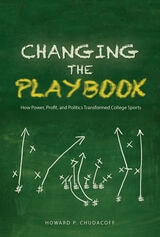
Changing the Playbook
How Power, Profit, and Politics Transformed College SportsHoward Chudacoff
University of Illinois Press, 2015
- the failed 1950 effort to pass a Sanity Code regulating payments to football players;
- the thorny racial integration of university sports programs;
- the boom in television money;
- the 1984 Supreme Court decision that settled who could control skyrocketing media revenues;
- Title IX's transformation of women's athletics;
- the cheating, eligibility, and recruitment scandals that tarnished college sports in the 1980s and 1990s;
- the ongoing controversy over paying student athletes a share of the enormous moneys harvested by schools and athletic departments.
A thought-provoking journey into the whos and whys of college sports history, Changing the Playbook reveals how the turning points of yesterday and today will impact tomorrow."
Charting Your Path to Full
A Guide for Women Associate ProfessorsVicki L. Baker
Rutgers University Press, 2020

Cheating the Spread
Gamblers, Point Shavers, and Game Fixers in College Football and BasketballAlbert J. Figone
University of Illinois Press, 2012
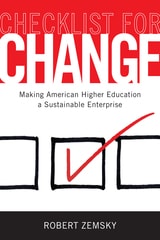
Checklist for Change
Making American Higher Education a Sustainable EnterpriseZemsky, Robert
Rutgers University Press, 2013
Robert Zemsky details the complications that have impeded every credible reform intended to change American higher education. He demythologizes such initiatives as the Morrill Act, the GI Bill, and the Higher Education Act of 1972, shedding new light on their origins and the ways they have shaped higher education in unanticipated and not commonly understood ways. Next, he addresses overly simplistic arguments about the causes of the problems we face and builds a convincing argument that well-intentioned actions have combined to create the current mess for which everyone is to blame.
Using provocative case studies, Zemsky describes the reforms being implemented at a few institutions with the hope that these might serve as harbingers of the kinds of change needed: the University of Minnesota at Rochester’s compact curriculum in the health sciences only, Whittier College’s emphasis on learning outcomes, and the University of Wisconsin Oshkosh’s coherent overall curriculum.
In conclusion, Zemsky describes the principal changes that must occur not singly but in combination. These include a fundamental recasting of federal financial aid; new mechanisms for better channeling the competition among colleges and universities; recasting the undergraduate curriculum; and a stronger, more collective faculty voice in governance that defines not why, but how the enterprise must change.
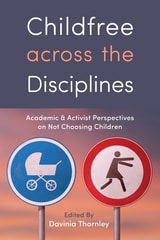
Childfree across the Disciplines
Academic and Activist Perspectives on Not Choosing ChildrenDavinia Thornley
Rutgers University Press, 2022
Recently, childfree people have been foregrounded in mainstream media. More than seven percent of Western women choose to remain childfree and this figure is increasing. Being childfree challenges the ‘procreation imperative’ residing at the center of our hetero-normative understandings, occupying an uneasy position in relation to—simultaneously—traditional academic ideologies and prevalent social norms. After all, as Adi Avivi recognizes, "if a woman is not a mother, the patriarchal social order is in danger." This collection engages with these (mis)perceptions about childfree people: in media representations, demographics, historical documents, and both psychological and philosophical models. Foundational pieces from established experts on the childfree choice--Rhonny Dam, Laurie Lisle, Christopher Clausen, and Berenice Fisher--appear alongside both activist manifestos and original scholarly work, comprehensively brought together. Academics and activists in various disciplines and movements also riff on the childfree life: its implications, its challenges, its conversations, and its agency—all in relation to its inevitability in the 21st century. Childfree across the Disciplines unequivocally takes a stance supporting the subversive potential of the childfree choice, allowing readers to understand childfreedom as a sense of continuing potential in who—or what—a person can become.
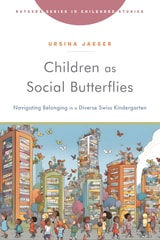
Children as Social Butterflies
Navigating Belonging in a Diverse Swiss KindergartenUrsina Jaeger
Rutgers University Press, 2025
This book is also freely available online as an open-access digital edition, published with the support of the Swiss National Science Foundation.
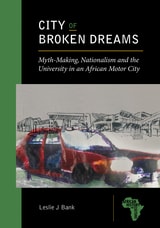
City of Broken Dreams
Myth-Making, Nationalism and the University in an African Motor CityLeslie J. Bank
Michigan State University Press, 2019
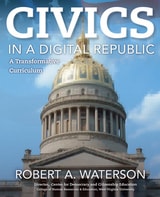
Civics in a Digital Republic
A Transformative CurriculumRobert A. Waterson
West Virginia University Press, 2012
This innovative curriculum book provides key materials, resources, and tools to help secondary educators prepare their students to be engaged citizens of their community, state, nation and world. Five complete units of instruction, based on West Virginia Content Standards and Objectives, provide meaningful lessons while being mindful of the transition from tangible text to more digital curricula:
•Rights of the Individual•Freedoms of the Individual
•Responsibilities of the Individual
•Beliefs Concerning Societal Conditions
•Financial Literacy
•4 culminating activities for enrichment opportunities
•A matrix illustrating the West Virginia Content Standards and Objectives covered
•A matrix illustrating compliance with the National Council for the Social Studies Standards
•A curriculum toolbox that provides over 70 engaging web sites to visit and explore.
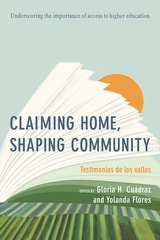
Claiming Home, Shaping Community
Testimonios de los vallesEdited by Gloria H. Cuádraz and Yolanda Flores
University of Arizona Press, 2017
While symbolically their journeys embody the master narrative of the “American Dream,” Claiming Home, Shaping Community does not echo the “rags to riches” trope reified in dominant culture, but rather, it asserts the need to rehumanize the purpose and heart of education. In each chapter, the narrators illustrate myriad supports that allowed them to move forward on their academic and professional journeys: hard work, affirmative action, inclusionary practices, mentors, and their communities’ cultural wealth. Each trajectory is unique, but put together as a collection, the commonalities emerge.
Denoting a sense of political and social urgency that responds to the current accentuated economic disparities between the haves and the have-nots, these essays illuminate the broader societal benefits of federal legislation and resources for state-funded public higher education and policies that broaden access and resources. By telling their stories, the contributors seek to empower others on their journeys to and through higher education.
Contributors:
Daniel “Nane” Alejandrez
Manuel Barajas
Angelica Cárdenas-Chaisson
Gloria H. Cuádraz
Yolanda Flores
Francisco J. Galarte
John J. Halcón
Ester Hernández
Rosa M. Jiménez
Roberto Moreno
José R. Padilla
Enid Pérez
Caroline Sotello Viernes Turner
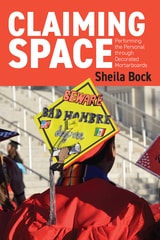
Claiming Space
Performing the Personal through Decorated MortarboardsSheila Bock
Utah State University Press, 2023
Claiming the space of these graduation caps is a popular and widespread way that individuals make their voices heard, or rather seen, in the visual landscape of commencement ceremonies. The forms and meanings of these material displays take shape in relation to broader, ongoing conversations about higher education in the United States, conversations grounded in discourses of belonging, citizenship, and the promises of the American Dream. Integrating observational fieldwork with extensive interviews and surveys, author Sheila Bock highlights the interpretations of individuals participating in this tradition. She also attends to the public framings of this tradition, including how images of mortarboards have grounded online enactments of community through hashtags such as #LatinxGradCaps and #LetTheFeathersFly, as well as what rhetorical framings are employed in news coverage and legal documents in cases where the value of the practice is both called into question and justified.
As university administrators and cultural commentators seek to make sense of the current state of higher education, these forms of material expression offer insight into how students themselves are grappling with higher ed's promises and shortcomings. Claiming Space is a meaningful contribution to folklore, cultural studies, media studies, and education.
Class Cultures and Social Mobility
The Hidden Strengths of Working-Class First-Generation GraduatesPaul Dean
Rutgers University Press, 2026
When working-class first-generation students enter college or the professional workplace, they often find themselves immersed in entirely new worlds. They must learn the unwritten rules for how to speak, dress, behave, and interact with new peers and colleagues. While striving to fit in and do well, they risk feeling imposter syndrome, a loss of identity, or broken ties with friends and family.
Class Cultures and Social Mobility tells the stories of upwardly mobile first-gen graduates who flipped the script and turned their working-class roots into a strength. This accessible and highly engaging book reveals how first-gen graduates overcame hardship while leveraging unique skills—their working-class cultural capital—in college and their professional careers. It demonstrates there needn’t be a choice between economic success and maintaining authenticity to one’s roots—we can balance the competing demands of the two class worlds together. Whether you're an educator, student, working professional, or advocate, this book provides a powerful way to reimagine the transformations that accompany class mobility.
Class Not Dismissed
Reflections on Undergraduate Education and Teaching the Liberal ArtsAnthony Aveni
University Press of Colorado, 2014
Although in recent years the lecture has come under fire as a pedagogical method, Aveni ardently defends lecturing to students. He shares his secrets on crafting an engaging lecture and creating productive dialogue in class discussions. He lays out his rules on classroom discipline and tells how he promotes the lost art of listening. He is a passionate proponent of the liberal arts and core course requirements as well as a believer in sound teaching promoted by active scholarship.
Aveni is known to his students as a consummate storyteller. In Class Not Dismissed he shares real stories about everyday college life that shed light on serious educational issues. The result is a humorous, reflective, inviting, and powerful inquiry into higher education that will be of interest to anyone invested in the current and future state of college and university education.
Class Warfare
Class, Race, and College Admissions in Top-Tier Secondary SchoolsLois Weis, Kristin Cipollone, and Heather Jenkins
University of Chicago Press, 2014
Drawing on deep and sustained contact with students, parents, teachers, and administrators at three iconic secondary schools in the United States, the authors unveil a formidable process of class positioning at the heart of the college admissions process. They detail the ways students and parents exploit every opportunity and employ every bit of cultural, social, and economic capital they can in order to gain admission into a “Most Competitive” or “Highly Competitive Plus” university. Moreover, they show how admissions into these schools—with their attendant rankings—are used to lock in or improve class standing for the next generation. It’s a story of class warfare within a given class, the substrata of which—whether economically, racially, or socially determined—are fiercely negotiated through the college admissions process.
In a historic moment marked by deep economic uncertainty, anxieties over socioeconomic standing are at their highest. Class, as this book shows, must be won, and the collateral damage of this aggressive pursuit may just be education itself, flattened into a mere victory banner.
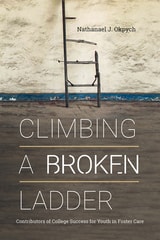
Climbing a Broken Ladder
Contributors of College Success for Youth in Foster CareNathanael J. Okpych
Rutgers University Press, 2021
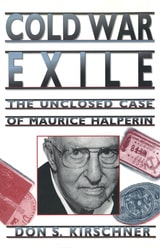
Cold War Exile
The Unclosed Case of Maurice HalperinDon S. Kirschner
University of Missouri Press, 1995
In 1953 Maurice Halperin was called before the Senate Internal Security Subcommittee to defend himself on charges of espionage. He was accused of having supplied Soviet sources with classified material from the Office of Strategic Services while he was an employee during World War II.
The Cold War was in full force. McCarthyism was at its peak. Caught up in the rapids of history, Maurice Halperin's life spun out of control. Denying the charges but knowing he could never fully clear his name, Halperin fled to Mexico and then, to avoid extradition, to Moscow. Among the friends he made there were British spy Donald MacLean and Cuban revolutionary leader Che Guevara. Disenchanted with socialism in the Soviet Union, he accepted Guevara's invitation to come to Havana in 1962. There he worked for Castro's government for five years before political tension forced him to leave for Vancouver, Canada, where he now resides.
Was Halperin a spy or a scapegoat? Was he a victim of Red- baiting or a onetime Communist espionage agent who eventually lost faith in Communism? Halperin's accuser was Elizabeth Bentley, a confessed Soviet courier who accused more than one hundred Americans of spying. Yet Bentley had no proof, and Halperin continues to maintain his innocence. One of them was lying. As Kirschner unravels the engrossing facts of the case--utilizing FBI files and dozens of interviews, including extensive interviews with Halperin himself--the reader becomes the investigator in a riveting real-life spy mystery. Along the way Kirschner offers new material on the OSS and further disturbing information about J. Edgar Hoover's use of his considerable power.
Maurice Halperin has lived a life like few Americans in our century. A left-wing American exile, he experienced two socialist worlds from the inside. In recounting the unclosed case of Maurice Halperin, Cold War Exile is both a gripping account of that remarkable life and a significant contribution to our understanding of a fascinating and controversial era in American political history.
Collaborations & Innovations
Supporting Multilingual Writers across Campus UnitsNancy DeJoy and Beatrice Quarshie Smith
University of Michigan Press, 2017
The chapters in this volume demonstrate that teaching effective communication skills to all students in ways that recognize the needs of multiple language users requires a shift in perspective that approaches multilingualism as an opportunity that is enhanced by the internationalization of higher education because it makes transparent the problems of current structures and disciplinary approaches in accessing those opportunities. A goal of this collection is to address the economic, structural, disciplinary, and pedagogical challenges of making this type of shift in bold and compassionate ways.
Chapters are organized into these four parts--Program-Level Challenges and Opportunities, Opportunities for Enhancing Teacher Training, Multilingualism and the Revision of First-Year Writing, and Integrating Writing Center Insights—and reflect the perspectives of a variety of university language settings. The contributions feature collaborative models and illustrate the need to rethink structures, pedagogies, assessment/evaluation processes, and teacher training for graduate and undergraduate students who will teach writing and other forms of communication.
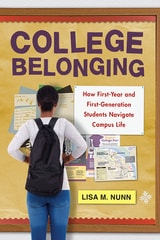
College Belonging
How First-Year and First-Generation Students Navigate Campus LifeLisa M. Nunn
Rutgers University Press, 2021
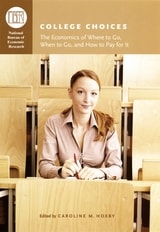
College Choices
The Economics of Where to Go, When to Go, and How to Pay for ItEdited by Caroline M. Hoxby
University of Chicago Press, 2004
In College Choices, Caroline Hoxby and a distinguished group of economists show how students and their families really make college decisions—how they respond to financial aid options, how peer relationships figure in the decision-making process, and even whether they need mentoring to get through the admissions process. Students of all sorts are considered—from poor students, who may struggle with applications and whether to continue on to college, to high aptitude students who are offered "free rides" at elite schools. College Choices utilizes the best methods and latest data to analyze the college decision-making process, while explaining how changes in aid and admissions practices inform those decisions as well.
College Knowledge for the Student Athlete
David Schoem and Shelly Kovacs
University of Michigan Press, 2011
This book was written to support the academic success of student athletes—whether at a large or small university or college, whether team or individual sport, whether women or men, whether on scholarship or not.
While all college students must learn to negotiate the complex transition from high school to college, student athletes face unique challenges, including the complicated set of regulations set out by the NCAA and individual conferences that determine eligibility. The current environment in college athletics makes it even more critical that student athletes understand what they need to do academically and how to avoid potential situations that could jeopardize their athletic careers.
College Knowledge for the Student Athlete is a road map and tour guide for a successful career as a student athlete. Tips are based on research and the authors’ experience, as well as the wisdom and advice of hundreds of former student athletes.
College in Prison
Reading in an Age of Mass IncarcerationKarpowitz, Daniel
Rutgers University Press, 2017
College in Prison chronicles how, since 2001, Bard College has provided hundreds of incarcerated men and women across the country access to a high-quality liberal arts education. Earning degrees in subjects ranging from Mandarin to advanced mathematics, graduates have, upon release, gone on to rewarding careers and elite graduate and professional programs. Yet this is more than just a story of exceptional individuals triumphing against the odds. It is a study in how the liberal arts can alter the landscape of some of our most important public institutions giving people from all walks of life a chance to enrich their minds and expand their opportunities.
Drawing on fifteen years of experience as a director of and teacher within the Bard Prison Initiative, Daniel Karpowitz tells the story of BPI’s development from a small pilot project to a nationwide network. At the same time, he recounts dramatic scenes from in and around college-in-prison classrooms pinpointing the contested meanings that emerge in moments of highly-charged reading, writing, and public speaking. Through examining the transformative encounter between two characteristically American institutions—the undergraduate college and the modern penitentiary—College in Prison makes a powerful case for why liberal arts education is still vital to the future of democracy in the United States.
Community Engagement Abroad
Perspectives and Practices on Service, Engagement, and Learning OverseasPat Crawford
Michigan State University Press, 2020
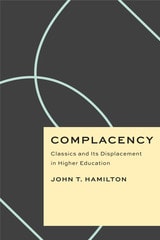
Complacency
Classics and Its Displacement in Higher EducationJohn T. Hamilton
University of Chicago Press, 2022
In response to philosopher Simon Blackburn’s portrayal of complacency as a vice that impairs university study at its core, John T. Hamilton examines the history of complacency in classics and its implications for our contemporary moment.
The subjects, philosophies, and literatures of ancient Greece and Rome were once treated as the foundation of learning, with everything else devolving from them. Hamilton investigates what this model of superiority, derived from the golden age of the classical tradition, shares with the current hegemony of mathematics and the natural sciences. He considers how the qualitative methods of classics relate to the quantitative positivism of big data, statistical reasoning, and presumably neutral abstraction, which often dismiss humanist subjectivity, legitimize self-sufficiency, and promote a fresh brand of academic complacency. In acknowledging the reduced status of classics in higher education today, he questions how scholarly striation and stagnation continue to bolster personal, ethical, and political complacency in our present era.

Complaint!
Sara Ahmed
Duke University Press, 2021
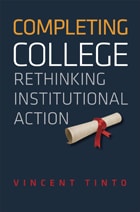
Completing College
Rethinking Institutional ActionVincent Tinto
University of Chicago Press, 2012
Even as the number of students attending college has more than doubled in the past forty years, it is still the case that nearly half of all college students in the United States will not complete their degree within six years. It is clear that much remains to be done toward improving student success. For more than twenty years, Vincent Tinto’s pathbreaking book Leaving College has been recognized as the definitive resource on student retention in higher education. Now, with Completing College, Tinto offers administrators a coherent framework with which to develop and implement programs to promote completion.
Deftly distilling an enormous amount of research, Tinto identifies the essential conditions enabling students to succeed and continue on within institutions. Especially during the early years, he shows that students thrive in settings that pair high expectations for success with structured academic, social, and financial support, provide frequent feedback and assessments of their performance, and promote their active involvement with other students and faculty. And while these conditions may be worked on and met at different institutional levels, Tinto points to the classroom as the center of student education and life, and therefore the primary target for institutional action.
Improving retention rates continues to be among the most widely studied fields in higher education, and Completing College carefully synthesizes the latest research and, most importantly, translates it into practical steps that administrators can take to enhance student success.
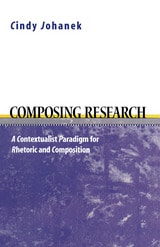
Composing Research
A Contextualist Paradigm for Rhetoric and CompositionCindy Johanek
Utah State University Press, 2000
Cindy Johanek offers a new perspective on the ideological conflict between qualitative and quantitative research approaches, and the theories of knowledge that inform them. With a paradigm that is sensitive to the context of one's research questions, she argues, scholars can develop less dichotomous forms that invoke the strengths of both research traditions. Context-oriented approaches can lift the narrative from beneath the numbers in an experimental study, for example, or bring the useful clarity of numbers to an ethnographic study.
A pragmatic scholar, Johanek moves easily across the boundaries that divide the field, and argues for contextualist theory as a lens through which to view composition research. This approach brings with it a new focus, she writes. "This new focus will call us to attend to the contexts in which rhetorical issues and research issues converge, producing varied forms, many voices, and new knowledge, indeed reconstructing a discipline that will be simultaneously focused on its tasks, its knowledge-makers, and its students."
Composing Research is a work full of personal voice and professional commitment and will be a welcome addition to the research methods classroom and to the composition researcher's own bookshelf.
2000 Outstanding Scholarship Award from the International Writing Centers Association.
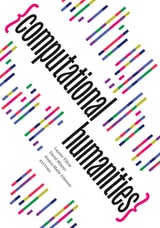
Computational Humanities
Jessica Marie Johnson
University of Minnesota Press, 2024
The first book to intervene in debates on computation in the digital humanities
Bringing together leading experts from across North America and Europe, Computational Humanities redirects debates around computation and humanities digital scholarship from dualistic arguments to nuanced discourse centered around theories of knowledge and power. This volume is organized around four questions: Why or why not pursue computational humanities? How do we engage in computational humanities? What can we study using these methods? Who are the stakeholders?
Recent advances in technologies for image and sound processing have expanded computational approaches to cultural forms beyond text, and new forms of data, from listservs and code repositories to tweets and other social media content, have enlivened debates about what counts as digital humanities scholarship. Providing case studies of collaborations between humanities-centered and computation-centered researchers, this volume highlights both opportunities and frictions, showing that data and computation are as much about power, prestige, and precarity as they are about p-values.
Contributors: Mark Algee-Hewitt, Stanford U; David Bamman, U of California, Berkeley; Kaspar Beelen, U of London; Peter Bell, Philipps U of Marburg; Tobias Blanke, U of Amsterdam; Julia Damerow, Arizona State U; Quinn Dombrowski, Stanford U; Crystal Nicole Eddins, U of Pittsburgh; Abraham Gibson, U of Texas at San Antonio; Tassie Gniady; Crystal Hall, Bowdoin College; Vanessa M. Holden, U of Kentucky; David Kloster, Indiana U; Manfred D. Laubichler, Arizona State U; Katherine McDonough, Lancaster U; Barbara McGillivray, King’s College London; Megan Meredith-Lobay, Simon Fraser U; Federico Nanni, Alan Turing Institute; Fabian Offert, U of California, Santa Barbara; Hannah Ringler, Illinois Institute of Technology; Roopika Risam, Dartmouth College; Joshua D. Rothman, U of Alabama; Benjamin M. Schmidt; Lisa Tagliaferri, Rutgers U; Jeffrey Tharsen, U of Chicago; Marieke van Erp, Royal Netherlands Academy of Arts and Sciences; Lee Zickel, Case Western Reserve U.
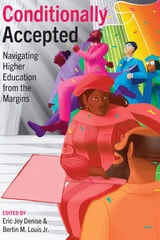
Conditionally Accepted
Navigating Higher Education from the MarginsEdited by Eric Joy Denise and Bertin M. Louis, Jr.
University of Texas Press, 2024
A collection of essays that provides advice and strategies for BIPOC scholars on how to survive, thrive, and resist in academic institutions.
Conditionally Accepted builds upon an eponymous blog on InsideHigherEd.com, which is now a decade-old national platform for BIPOC academics in the United States. Bringing together perspectives from academics of color on navigating intersecting forms of injustice in the academy, each chapter offers situated knowledge about experiencing—and resisting—marginalization in academia. Contextualized within existing scholarship, these personal narratives speak to institutional betrayals while highlighting agency and sharing stories of surviving on treacherous terrain. Covering topics from professional development to the emptiness of diversity, equity, and inclusion efforts, and redefining what it means to be an academic in our contemporary moment, this edited collection directly confronts issues of systemic exclusion, discrimination, harassment, microaggressions, tokenism, and surveillance. Letting marginalized scholars know they are not alone, Conditionally Accepted offers concrete wisdom for readers seeking to navigate and transform oppressive academic institutions.
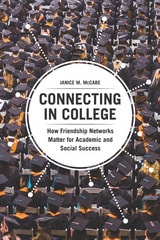
Connecting in College
How Friendship Networks Matter for Academic and Social SuccessJanice M. McCabe
University of Chicago Press, 2016
As McCabe and the students she talks to show, the friendships we forge in college are deeply meaningful, more meaningful than we often give them credit for. They can also vary widely. Some students have only one tight-knit group, others move between several, and still others seem to meet someone new every day. Some students separate their social and academic lives, while others rely on friendships to help them do better in their coursework. McCabe explores how these dynamics lead to different outcomes and how they both influence and are influenced by larger factors such as social and racial inequality. She then looks toward the future and how college friendships affect early adulthood, ultimately drawing her findings into a set of concrete solutions to improve student experiences and better guarantee success in college and beyond.
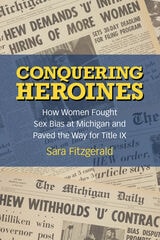
Conquering Heroines
How Women Fought Sex Bias at Michigan and Paved the Way for Title IXSara Fitzgerald
University of Michigan Press, 2020
Galvanized by their shared experiences with sex discrimination, the Ann Arbor women organized a group called FOCUS on Equal Employment for Women, led by activist Jean Ledwith King. Working with Bernice Sandler of the Women’s Equity Action League, they developed a strategy to unleash the power of another powerful institution—the federal government—to demand change at U-M and, they hoped, across the world of higher education. Prompted by a complaint filed by FOCUS, the U.S. Department of Health, Education, and Welfare soon documented egregious examples of discrimination in Michigan’s practices toward women and threatened to withhold millions of dollars in contracts unless the school adopted remedies. Among the hundreds of similar complaints filed against U.S. colleges in 1970–1971, the one brought by the Michigan women achieved the breakthrough that provided the historic template for settlements with other institutions.
Drawing on oral histories from archives as well as new interviews with living participants, Conquering Heroines chronicles this pivotal period in the histories of the University of Michigan and the women’s movement. An incredible story of grassroots activism and courageous women, the book highlights the kind of relentless effort that has helped make inclusivity an ongoing goal at U-M.
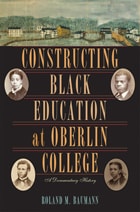
Constructing Black Education at Oberlin College
A Documentary HistoryRoland M. Baumann
Ohio University Press, 2010
In 1835 Oberlin became the first institute of higher education to make a cause of racial egalitarianism when it decided to educate students “irrespective of color.” Yet the visionary college’s implementation of this admissions policy was uneven. In Constructing Black Education at Oberlin College: A Documentary History, Roland M. Baumann presents a comprehensive documentary history of the education of African American students at Oberlin College.
Following the Reconstruction era, Oberlin College mirrored the rest of society as it reduced its commitment to black students by treating them as less than equals of their white counterparts. By the middle of the twentieth century, black and white student activists partially reclaimed the Oberlin legacy by refusing to be defined by race. Generations of Oberlin students, plus a minority of faculty and staff, rekindled the college’s commitment to racial equality by 1970. In time, black separatism in its many forms replaced the integrationist ethic on campus as African Americans sought to chart their own destiny and advance curricular change.
Oberlin’s is not a story of unbroken progress, but rather of irony, of contradictions and integrity, of myth and reality, and of imperfections. Baumann takes readers directly to the original sources by including thirty complete documents from the Oberlin College Archives. This richly illustrated volume is an important contribution to the college’s 175th anniversary celebration of its distinguished history, for it convincinglydocuments how Oberlin wrestled over the meaning of race and the destiny of black people in American society.
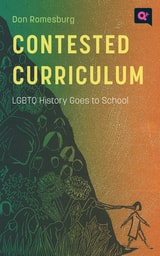
Contested Curriculum
LGBTQ History Goes to SchoolDon Romesburg
Rutgers University Press, 2025
What began in fits and starts in activism and educational materials across the late twentieth century led to the passage of California’s landmark FAIR Education Act in 2011, ensuring that LGBTQ history has a place in the K–12 classroom. Historian Don Romesburg, the lead scholar who worked with advocacy organizations to pass the act, recounts the decades-long struggle to integrate LGBTQ content into history education policy, textbooks, and classrooms. Looking at California and states that followed its lead, he assesses the challenges and opportunities presented by this new way of teaching history. Romesburg’s powerful case for LGBTQ-inclusive education is all the more urgent in this era of anti-gay book bans, regressive legislation, and attempts to diminish the vital role that inclusive and honest history education should play in a democratic nation.

Coordinated Science Laboratory
75 Years of Multidisciplinary ExcellenceCoordinated Science Laboratory
University of Illinois Press, 2026
Published in honor of CSL’s seventy-fifth anniversary, this book reveals how the institution evolved into a rich research ecosystem that pursues a wide range of diverse projects. CSL’s work to date has given rise to dozens of startups, thousands of careers, and countless innovations in communications, robotics, computing, and other areas of science and technology. As the stories in this book show, CSL brings together diverse minds from across disciplines to solve some of the world’s most complex challenges. Indeed, the institution’s history is interwoven with the histories of industry, national security, and the familiar everyday technologies that connect and empower our world.

Copyright, Fair Use, and the Challenge for Universities
Promoting the Progress of Higher EducationKenneth D. Crews
University of Chicago Press, 1993
In the first large-scale study of its kind, Kenneth D. Crews surveys the copyright policies of ninety-eight American research universities. His analysis reveals a variety of ways in which universities have responded to—and how they could better manage—the conflicting goals of copyright policies: avoiding infringements while promoting lawful uses that serve teaching and research. He explains in detail the background of copyright law and congressional guidelines affecting familiar uses of photocopies, videotapes, software, and reserve rooms. Crews concludes that most universities are overly conservative in their interpretation of copyright and often neglect their own interests, adding unnecessary costs and obstacles to the lawful dissemination of information.
Copyright, Fair Use, and the Challenge for Universities provides administrators, instructors, lawyers, librarians, and educational leaders a much-needed exegesis of copyright and how it can better serve higher education.
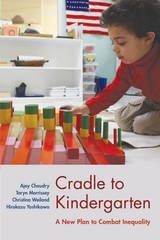
Cradle to Kindergarten
A New Plan to Combat InequalityAjay Chaudry
Russell Sage Foundation, 2017
The U.S. government invests less in children under the age of five than do most other developed nations. Most working families must seek private childcare, which means that children from low-income households, who would benefit most from high-quality early education, are the least likely to attend them. Existing policies, such as pre-kindergarten in some states are only partial solutions. To address these deficiencies, the authors propose to overhaul the early care system, beginning with a federal paid parental leave policy that provides both mothers and fathers with time and financial support after the birth of a child. They also advocate increased public benefits, including an expansion of the child care tax credit, and a new child care assurance program that subsidizes the cost of early care for low- and moderate-income families. They also propose that universal, high-quality early education in the states should start by age three, and a reform of the Head Start program that would include more intensive services for families living in areas of concentrated poverty and experiencing multiple adversities from the earliest point in these most disadvantaged children’s lives. They conclude with an implementation plan and contend that these reforms are attainable within a ten-year timeline.
Reducing educational and economic inequalities requires that all children have robust opportunities to learn, fully develop their capacities, and have a fair shot at success. Cradle to Kindergarten presents a blueprint for fulfilling this promise by expanding access to educational and financial resources at a critical stage of child development.
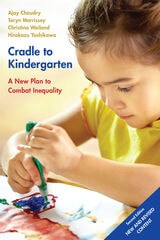
Cradle to Kindergarten
A New Plan to Combat InequalityAjay Chaudry
Russell Sage Foundation, 2021
The U.S. government invests less in children under the age of five than do most other developed nations. Most working families must seek private child care, but high-quality child care options are expensive relative to the means of most families. This means that children from lower-income households, who would benefit most from high-quality early education, are the least likely to attend them. Existing policies, such as pre-kindergarten in some states, are only partial solutions, and what exists varies tremendously in terms of access and quality.
To address these deficiencies, the authors propose to overhaul the early care and education system, beginning with a federal paid parental leave policy that provides both mothers and fathers with time and financial support after the birth of a child. They also advance an expansion of the child care tax credit, and a new child care assurance program that provides grant assistance towards the cost of high-quality early care for low- and moderate-income families. Their plan establishes universal, high-quality early education in the states starting by age three, and a reform of the Head Start program that would include more intensive services for families living in areas of concentrated poverty and experiencing multiple adversities from the earliest point in these most disadvantaged children’s lives. They conclude with an implementation plan and contend that these reforms are attainable well within a ten-year timeline.
Reducing educational and economic inequalities requires that all children have robust opportunities to learn and fully develop their capacities and have a fair shot at success. Cradle to Kindergarten presents a blueprint for fulfilling this promise by expanding access to educational and financial resources at a critical stage of child development.
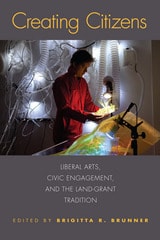
Creating Citizens
Liberal Arts, Civic Engagement, and the Land-Grant TraditionEdited by Brigitta R. Brunner
University of Alabama Press, 2016
Creating Citizens is a collection of essays about Community and Civic Engagement (CCE) learning at land-grant universities.
In Creating Citizens, professors and administrators at Auburn University’s College of Liberal Arts recount valuable, first-hand experiences teaching Community and Civic Engagement (CCE). They demonstrate that, contrary to many expectations, CCE instruction both complements the mission of liberal arts curricula and powerfully advances the fundamental mission of American land-grand institutions.
The nine essays in Creating Citizens offer structures for incorporating CCE initiatives into university programs, instructional methods and techniques, and numerous case studies and examples undertaken at Auburn University but applicable at any university. Many contributors describe their own rewarding experiences with CCE and emphasize the ways outreach efforts reinvigorate their teaching or research.
Creating Citizens recounts the foundation of land-grant institutions by the Morrill Act of 1862. Their mission is to instruct in agriculture, military science, and mechanics, but these goals augmented rather than replaced an education in the classics, or liberal arts. Land-grant institutions, therefore, have a special calling to provide a broad spectrum of society with an education that not only enriched the personal lives of their students, but the communities they are a part of. Creating Citizens demonstrates the important opportunities CCE instruction represents to any university but are especially close to the heart of the mission of land-grant colleges.
In open societies, the role and mission of public institutions of higher learning that are supported by public subsidies are perennial subjects of interest and debate. Creating Citizens provides valuable insights of interest to educators, education administrators, students, and policy makers involved in the field of higher education.
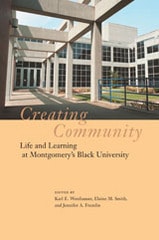
Creating Community
Life and Learning at Alabama State UniversityEdited by Karl E. Westhauser, Elaine M. Smith, and Jennifer A. Fremlin
University of Alabama Press, 2008
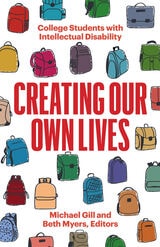
Creating Our Own Lives
College Students with Intellectual DisabilityMichael Gill
University of Minnesota Press, 2023
Young adults with intellectual disability tell the story of their own experience of higher education
How do students with intellectual disability experience higher education? Creating Our Own Lives addresses this question through the eyes of participants themselves. In relating their experiences and aspirations, these student perspectives mount a powerful challenge to assumptions that intellectual disability is best met with protection or segregation.
Taken together, the essays expose and contradict the inherently ableist claim that individuals with intellectual disability cannot be reliable storytellers. Instead, their deeply informative stories serve as a corrective narrative. The first of the four sections, “Laying the Foundation: Why Everyone Belongs in College,” focuses on belonging and inclusion; the second, “Opening Up Possibilities: Overcoming Doubt and Uncertainty,” conveys the optimism of this generation of advocates through stories of personal hardship, hopeful perseverance, and triumph over adversity; the third, “Inclusion as Action: Diversifying Student Experiences,” supports the understanding of diverse student experiences in inclusive higher education; and the fourth, “Supporting Growth: Peer Mentoring and Advice,” offers guidance to those reimagining and creating educational spaces.
Students with disabilities belong in higher education. Not only does this book serve as an important record of students enrolled in inclusive higher education programs, it is also an unprecedented resource, packed with information and inspiration both for parents seeking opportunities for their children and for individuals with intellectual disability who aspire to attend college.
Contributors: Makayla Adkins, Olivia Baist, Brandon Baldwin, George Barham, Marquavious Barnes, Katie Bartlett, Steven Brief, De'Onte Brown, Meghan Brozaitis, Mary Bryant, Gracie Carrol, Taylor Cathey, Maia Chamberlain, Antonio E. Contreras, Kim Dean, Elizabeth Droessler, Katie Ducett, Keiron Dyck, Rachel Gomez, Deriq Graves, Micah Gray, Maggie Guillaume, Cleo Hamilton, Nathan Heald, Joshua R. Hourigan, Hannah Lenae Humes, Courtney Jorgensen, Eilish Kelderman, Kailin Kelderman, Kenneth Kelty, Kaelan Knowles, Karlee Lambert, Kate Lisotta, Rachel Mast, Elise McDaniel, Emma Miller, Jake Miller, Lydia Newnum, Brenna Mantz Nielsen, Carly O’Connell, Nadia Osbey, Stirling Peebles, Breyan Pettaway, Amanda Pilkenton, True Rafferty, Taylor Ruppe, Lawrence Sapp, Tyler Shore, Brianna Silva, Alex Smith, Elliott Smith, Phillandra Smith, Payton Storms, Allen Thomas, Kylie Walter, Stephen Wanser, Sayid Webb, Breana Whittlesey, Luke Wilcox, Adam Wolfond.

Creating a Framework for Developing Sessional Teachers in Higher Education
A practical guide for education leadersEdited by Neil Sutherland and Alex Standen
University College London, 2026
Addressing a critical yet underserved community in higher education, this volume is the first of its kind to focus on the professional development of sessional and atypically contracted teaching staff.
Across higher education, a significant proportion of teaching is carried out by non-permanent staff, be they graduate teaching assistants, associate lecturers, visiting lecturers, postdoctoral researchers, or hourly paid staff. Their work is invaluable to the sector, yet they frequently lack access to structured professional development and institutional support.
Creating a Framework for Developing Sessional Teachers in Higher Education aims to address this problem with guidance for the higher education leaders who support and manage sessional teachers. It offers a comprehensive framework that will enable education leaders to improve the experience and effectiveness of sessional staff through practical guidance, evidence-informed recommendations, best practice case studies, sector-wide research, and the lived experience of academic leaders. The book explores key areas including induction, teaching, learning and assessment practices, mentoring, reward and recognition, community building and ongoing professional development. It presents strategies for embedding consistency and quality across departments and disciplines while recognizing the individuality and diverse contributions of sessional teachers. With clear, actionable guidance and insights from across the higher education sector, this book is an essential resource for education leaders such as program directors, department heads, faculty managers, and anyone involved in academic staffing and teaching development. It champions an inclusive, sustainable approach to educational leadership—one that values and rewards all contributors to student learning.
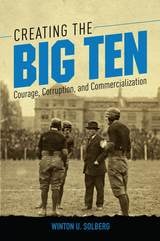
Creating the Big Ten
Courage, Corruption, and CommercializationWinton U Solberg
University of Illinois Press, 2018
Winton U. Solberg explores the relationship between higher education and collegiate football in the Big Ten's first fifty years. This formative era saw debates over eligibility and amateurism roil the sport. In particular, faculty concerned with academics clashed with coaches, university presidents, and others who played to win. Solberg follows the conference's successful early efforts to put the best interests of institutions and athletes first. Yet, as he shows, commercial concerns undid such work after World War I as sports increasingly eclipsed academics. By the 1940s, the Big Ten's impact on American sports was undeniable. It had shaped the development of intercollegiate athletics and college football nationwide while serving as a model for other athletic conferences.

Creativity and Academic Activism
Instituting Cultural StudiesMeaghan Morris and Mette Hjort, eds.
Duke University Press, 0
This book also investigates the impact of managerialism, marketization, and globalization on university cultures, asking what critical cultural scholarship can do in such increasingly adversarial conditions. Experiments in Asian universities are emphasized as exemplary of what can or could be achieved in other contexts of globalized university policy.
Contributors. Tony Bennett, Stephen Ching-Kiu Chan, Kuan-Hsing Chen, Douglas Crimp, Dai Jinhua, John Nguyet Erni, Mette Hjort, Josephine Ho, Koichi Iwabuchi, Meaghan Morris, Tejaswini Niranjana, Wang Xiaoming, Audrey Yue