Results by title
94 books match the query 'Middle Ages, 600-1500' and 9 start with c
Canon Law and Cloistered Women
Periculoso and Its Commentators, 1298–1545 (Studies in Medieval and Early Modern Canon Law, Volume 5)Elizabeth Makowski
Catholic University of America Press, 1997
Pope Boniface VIII (1294-1303) published a decree in 1298 that transformed long-standing attitudes toward nuns into universal Church law. Referred to as Periculoso, the first word of the Latin text, this decree announced that all nuns, no matter what rule they observed and no matter where their monasteries were located, were to be perpetually cloistered. With the exception of those who were contagiously ill, nuns were under no circumstances to break the law of enclosure, either by leaving their monasteries or by inviting unauthorized persons into them. Ultimately, the decree altered the lives of nuns, while indirectly abetting the move toward alternatives to the cloister. Although historians of women religious have frequently cited Periculoso as a milestone, the text of the law and the legal comment that its publication occasioned have never before been exhaustively studied.
Canon Law and Cloistered Women provides the most thorough examination to date of the landmark decree. Elizabeth Makowski surveys precedents for Periculoso as well as some of the problems Boniface VIII hoped to solve with his legislation. She further analyzes the commentary on Periculoso, much of it written by practicing lawyers, which unveils late medieval attitudes toward nuns and their male counterparts. Finally, she concludes with a discussion of the attempts to enforce the legislation.
Makowski's analysis illustrates not only the contribution that similar investigations of local efforts on the Continent might make to our understanding of conventual life, but also the difficulties—so often alluded to by medieval canonists—of making the "ideal" real.
ABOUT THE AUTHOR: Elizabeth Makowski is associate professor of history at Southwest Texas State University. She is the coauthor of Wykked Wyves and the Woes of Marriage: Misogamous Literature from Juvenal to Chaucer (SUNY Press, 1989) and the author of numerous articles and book reviews. PRAISE FOR THE BOOK: "This is a significant contribution to the study of female monasticism. . . . Makowski's work is a welcome effort to understand the monastic discipline of enclosure and its application to convents. . . . What Makowski does in this fine study is to help scholars understand what [Periculoso] meant, both in the context in which it was fashioned and in the world of subsequent commentary. . . . An important book that should be required reading for all scholars of male and female monasticism."—Sixteenth Century Journal
"This is a clearly written survey of the decree and of medieval commentaries on it up to the Council of Trent. It will be of interest to historians both of legal and social history as well as throwing light upon the background of a much debated topic among religious orders."—English Historical Review "[The] work is well-written, contains helpful information on the topic in context, and should be a useful resource for those interested in this historical era as well as for those intrigued by the institutional Church's less than even-handed treatment of cloistered contemplative women through the centuries."—Studia Canonica "The clearly written survey of legal commentary on Periculoso is this book's greatest contribution. Even technical points of law are explained with sufficient clarity, so that the matters at issue can be understood even by one who is not a specialist in mediaeval canon law."—Ecclesiastical Law Journal
"This study provides insight into the way in which the leaders of the late medieval Church dealt with what they saw as the threat that women's spirituality posed to the Church and how to control it. To that extent alone, it is a valuable contribution to scholarship."—Catholic Historical Review
"Makowski has explored the comment
[more]
Canon Law, Religion, and Politics
"Liber Amicorum" Robert SomervilleUta-Renate Blumenthal
Catholic University of America Press, 2012
Canon Law, Religion, and Politics extends and honors the work of the distinguished historian Robert Somerville, a preeminent expert on medieval church councils, law, and papal history.
[more]
Charity and Religion in Medieval Europe
James William Brodman
Catholic University of America Press, 2009
Challenges conventional views of medieval piety by demonstrating how the ideology of charity and its vision of the active life provided an important alternative to the ascetical, contemplative tradition emphasized by most historians
[more]
Christ and Spirituality in St. Thomas Aquinas
Jean-Pierre Torrell
Catholic University of America Press, 2011
The studies in this volume investigate themes of particular spiritual relevance in Aquinas's theology: friendship, charity, prayer, configuration to Christ, priesthood, preaching.
[more]
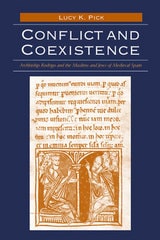
Conflict and Coexistence
Archbishop Rodrigo and the Muslims and Jews of Medieval SpainLucy K. Pick
University of Michigan Press, 2004
"An outstanding contribution not only to Spanish but to European history at large. Pick's book is the first to clarify the unity of purpose that drove Archbishop Rodrigo, a major figure not only as a historian and controversialist, but as a churchman whose military campaigns advanced the conquest of Muslim Spain and shifted the whole balance of power in the Iberian peninsula."
---J. N. Hillgarth, Professor Emeritus, University of Toronto
"By focusing on the diversified activities of the talented mid-thirteenth-century archbishop of Toledo, Lucy Pick brilliantly illuminates the complex relations between the Christian conquerors of Spain and the conquered Muslim and Jewish populations. Students of medieval Spain, of the medieval Roman Catholic Church, of medieval Muslims and Islam, and of medieval Jews and Judaism will benefit from this excellent study."
---Robert Chazan, New York University.
In Conflict and Coexistence, Lucy Pick sets out to explain how Christians, Muslims, and Jews lived alongside one another in medieval Spain. By examining the life and works of Rodrigo Jiménez de Rada, the Archbishop of Toledo (1209-47), Pick explains that the perceived threat of the non-Christian presence was managed through the subordination of Muslims and Jews.
Rodrigo stood at the center of a transformative period of history in the Iberian peninsula. During his long and varied career as archbishop, he acted as scholar, warrior, builder, and political leader. The wave of victories he helped initiate were instrumental in turning back the tide of Muslim attacks on Christian Spain and restarting the process of Christian territorial conquest. However, Toledo was still a multiethnic city in which Christians lived side by side with Jews and Muslims. As archbishop, he was faced with the considerable challenge of maintaining peace and prosperity in a city where religious passions and intolerance were a constant threat to stability.
This work seeks to examine Rodrigo's relations with the Muslims and Jews of his community both as he idealized them on paper and as he worked through them in real life. Though Rodrigo wrote an anti-Jewish polemic, and set out to conquer Muslim-held lands, he also used scholarly patronage and literary creation to combat internal and external, Christian and non-Christian threats alike. His intended and actual consequences of these varied techniques were to allow Christians, Muslims, and Jews to live together under Christian authority. Rodrigo was bound by practical necessity to find a means of accommodating these groups that was both effective and theologically satisfactory. Throughout this influential work, Pick examines the various aspects of Rodrigo's life and career that led to his policies and the consequences that his work and beliefs brought about in medieval Spain.
This book will be of interest to anyone who studies the history, religion, and literature of medieval Spain, to those interested in the transmission of learning from the Muslim to the Christian world, and to those who study intellectual life and development in medieval Europe.
[more]
Constantinople and the West
Essays on the Late Byzantine (Palaeologan) and Italian Renaissances and the Byzantine and Roman ChurchesDeno John Geanakoplos
University of Wisconsin Press, 1989
Deno John Geanakoplos demonstrates the fusion of Byzantine and Latin cultural and ecelsiastical relations in the Renaissance.
[more]
Contested Canonizations
The Last Medieval Saints, 1482-1523Ronald C. Finucane
Catholic University of America Press, 2011
This work, which forms an important bridge between medieval and Counter-Reformation sanctity and canonization, provides a richly contextualized analysis of the ways in which the last five candidates for sainthood before the Reformation came to be canonized.
[more]
Cordially Yours, Brother Cadfael
Edited by Anne K. Kaler
University of Wisconsin Press, 1998
Detective, monk, father, herbalist, Crusader, sailor, Celt, friend—author Ellis Peters bestows all these attributes on her twelfth-century Benedictine monk-detective Brother Cadfael. As a detective, Cadfael uses his analytic mind to solve crimes and administer justice. As a man of God, he also dispenses mercy along with his famous cordials.
Why, essays ask, is a cloistered monk solving murders? How can an author combine a valid detective and an effective healer?
Why, essays ask, is a cloistered monk solving murders? How can an author combine a valid detective and an effective healer?
[more]
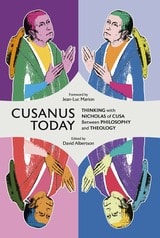
Cusanus Today
Thinking with Nicholas of Cusa Between Philosophy and TheologyDavid C. Albertson
Catholic University of America Press, 2024
At the end of the nineteenth century, German theologians and philosophers rediscovered the Renaissance cardinal Nicholas of Cusa (1401-1464). Immediately they hailed Cusanus as the first modern thinker, a brilliant German rival to the French Descartes. But since the founding of the Cusanus critical edition in 1927 up to its conclusion in 2005, historians have gradually learned that Nicholas was more of a medieval preacher and contemplative than a modern philosopher.
Yet over the same century, modern German and French readers were already digging into Nicholas’s many works. There they encountered an exciting voice with fresh perspectives about God’s immanence in the cosmos and the awesome capacities of the human mind. Leading philosophers and theologians from Erich Przywara to Karl Jaspers to Hans-Georg Gadamer, and from Gilles Deleuze to Jacques Lacan to Michel de Certeau, found their own thinking stimulated by the cardinal’s innovative concepts and interdisciplinary style. Even as Nicholas shifted from modern to medieval among historians, he was emerging as a contemporary interlocutor for moderns and postmoderns. Who could have guessed that the first debate between Jean-Luc Marion and Emmanuel Falque would take place over the fifteenth-century mystical dialogue, De
visione dei?
If Meister Eckhart found his moment amidst Deconstruction in prior decades, Nicholas of Cusa is our thinker for today. His interests anticipate themes in continental philosophy of religion, whether alterity, invisibility, the fold, or the icon. His habit of interweaving philosophy and theology anticipates current debates on the thresholds of phenomenology. Our volume first maps the contours of modern receptions of Nicholas of Cusa in French and German spheres, and then beyond Europe to the Americas and Japan. It also hosts the next round of engagement by some of today’s most original Christian thinkers: Emmanuel Falque, John Milbank, and David Bentley Hart.
[more]