Results by title
683 books match the query 'Middle East' and 37 start with c
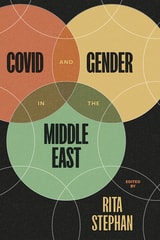
COVID and Gender in the Middle East
Edited by Rita Stephan
University of Texas Press, 2023
As the coronavirus ravages the globe, its aftermaths have brought gender inequalities to the forefront of many conversations. Countries in the Middle East and North Africa have been slow to prepare for, adapt to, and mitigate the COVID-19 health crisis and its impacts on governance, economics, security, and rights. Women’s physical well-being, social safety nets, and economic participation have been disproportionately affected, and with widespread shutdowns and capricious social welfare programs, women are exiting the workplace and the classroom, carrying the caregiving burden.
With feminist foregrounding, Rita Stephan's collection COVID and Gender in the Middle East gathers an impressive group of local scholars, activists, and policy experts. The book examines a range of national and localized responses to gender-specific issues around COVID’s health impact and the economic fallout and resulting social vulnerabilities, including the magnified marginalization of Syrian refugees; the inequitable treatment of migrant workers in Bahrain; and the inadequate implementation of gender-based violence legislation in Morocco. An essential global resource, this book is the first to provide empirical evidence of COVID’s gendered effects.
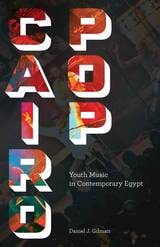
Cairo Pop
Youth Music in Contemporary EgyptDaniel J. Gilman
University of Minnesota Press, 2014
Cairo Pop is the first book to examine the dominant popular music of Egypt, shababiyya. Scorned or ignored by scholars and older Egyptians alike, shababiyya plays incessantly in Cairo, even while Egyptian youth joined in mass protests against their government, which eventually helped oust longtime Egyptian president Hosni Mubarak in early 2011. Living in Cairo at the time of the revolution, Daniel Gilman saw, and more importantly heard, the impact that popular music can have on culture and politics. Here he contributes a richly ethnographic analysis of the relationship between mass-mediated popular music, modernity, and nationalism in the Arab world.
Before Cairo Pop, most scholarship on the popular music of Egypt focused on musiqa al-ṭarab. Immensely popular in the 1950s and ’60s and even into the ’70s, musiqa al-ṭarab adheres to Arabic musical theory, with non-Western scales based on tunings of the strings of the ‘ud—the lute that features prominently, nearly ubiquitously, in Arabic music. However, today one in five Egyptians is between the ages of 15 and 24; half the population is under the age of 25. And shababiyya is their music of choice. By speaking informally with dozens of everyday young people in Cairo, Gilman comes to understand shababiyya as more than just a musical genre: sometimes it is for dancing or seduction, other times it propels social activism, at others it is simply sonic junk food.
In addition to providing a clear Egyptian musical history as well as a succinct modern political history of the nation, Cairo Pop elevates the aural and visual aesthetic of shababiyya—and its role in the lives of a nation’s youth.
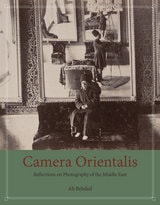
Camera Orientalis
Reflections on Photography of the Middle EastAli Behdad
University of Chicago Press, 2016
Considering a range of Western and Middle Eastern archival material from the late nineteenth and early twentieth centuries, Ali Behdad offers a rich account of how photography transformed Europe’s distinctly Orientalist vision into what seemed objective fact, a transformation that proved central to the project of European colonialism. At the same time, Orientalism was useful for photographers from both regions, as it gave them a set of conventions by which to frame exotic Middle Eastern cultures for Western audiences. Behdad also shows how Middle Eastern audiences embraced photography as a way to foreground status and patriarchal values while also exoticizing other social classes.
An important examination of previously overlooked European and Middle Eastern photographers and studios, Camera Orientalis demonstrates that, far from being a one-sided European development, Orientalist photography was the product of rich cultural contact between the East and the West.

Canine Pioneer
The Extraordinary Life of Rudolphina MenzelEdited by Susan Martha Kahn
Brandeis University Press, 2022
Rudolphina Menzel (née Waltuch, 1891–1973), was a Viennese-born, Jewish scientist whose pioneering research on canine psychology, development, and behavior fundamentally shaped the ways dogs came to be trained, cared for, and understood. Between the two world wars, Menzel was known throughout Europe as one of the foremost breeders and trainers of police dogs and served as a sought-after consultant at Kummersdorf, the German military dog training institute in Berlin. She was also a fervent Zionist who was responsible for inventing the canine infrastructure in what came to be the State of Israel and for training hundreds of dogs to protect Jewish lives and property in pre-state Palestine. Teaching Jews to like dogs and training dogs to serve Jews became Menzel’s unique kind of Zionist mission. Detailed and insightful, Canine Pioneer: The Extraordinary Life of Rudolphina Menzel brings to light an important piece of history.
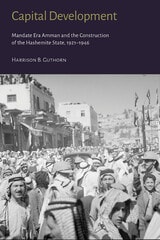
Capital Development
Mandate Era Amman and the Construction of the Hashemite State (1921–1946)Harrison B. Guthorn
Gingko, 2021
Amman, the capital of Jordan, contends with a crisis of identity rooted in how it grew to become a symbol for the Anglo-Hashemite government first, and a city second. As a representation of the new centralized authority, Amman became the seat of the Mandatory government that orchestrated the development of Transjordan, the British mandate established in 1921.
Despite its diminutive size, the city grew to house all the components necessary for a thriving and cohesive state by the end of the British mandate in 1946. However, in spite of its modernizing and regulatory ambitions, the Transjordan government did not control all facets of life in the region. Instead, the story of Transjordan is one of tensions between the state and the realities of the region, and these limitations forced the government to scale down its aspirations. This book presents the history of Amman’s development under the rule of the British mandate from 1921–46 and illustrates how the growth of the Anglo-Hashemite state imbued the city with physical, political, and symbolic significance.
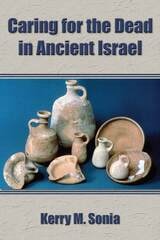
Caring for the Dead in Ancient Israel
Kerry M. Sonia
SBL Press, 2020
A new reconstruction of cultic practices surrounding death in ancient Israel
In Caring for the Dead in Ancient Israel, Kerry M. Sonia examines the commemoration and care for the dead in ancient Israel against the broader cultural backdrop of West Asia. This cult of dead kin, often referred to as ancestor cult, comprised a range of ritual practices in which the living provided food and drink offerings, constructed commemorative monuments, invoked the names of the dead, and protected their remains. This ritual care negotiated the ongoing relationships between the living and the dead and, in so doing, helped construct social, political, and religious landscapes in relationship to the past. Sonia explores the nature of this cult of dead kin in ancient Israel, focusing on its role within the family and household as well as its relationship to Israel’s national deity and the Jerusalem temple.
Features:
- A reevaluation of whether burial and necromantic rituals were part of the cult of dead kin
- A portrait of the various roles Israelite women played in the cult of dead kin
- A reassessment of biblical writers’ attitudes toward the cult of dead kin
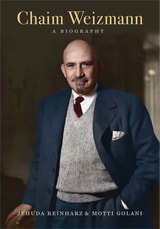
Chaim Weizmann
A BiographyJehuda Reinharz and Motti Golani
Brandeis University Press, 2024
In Chaim Weizmann: A Biography, Jehuda Reinharz and Motti Golani show how Weizmann, a leader of the World Zionist Organization who became the first president of Israel, advocated for a Jewish state by gaining the support of influential politicians and statesmen as well as Jews around the world. Beginning with his childhood in Belorussia and concluding with his tenure as president, Reinharz and Golani describe how a Russian Jew, who immigrated to the United Kingdom in the early twentieth century, was able to advance the goals of Theodor Herzl, the founder of the Zionist Organization. Weizmann is also shown as a man of human foibles—his infatuations, political machinations, and elitism—as well as a man of admirable qualities—intelligence, wit, charisma, and dedication.
Weizmann, who came to the UK to work as a biochemist, was in regular communication with British political figures, including prime ministers Arthur James Balfour, David Lloyd George, Winston Churchill, and Ramsay MacDonald. He also met presidents of the United States from Woodrow Wilson to Harry Truman. His success in earning the support of British political figures helped lead to the Balfour Declaration, which advocated for a “national home” for the Jewish people in Palestine.
As the authors show in this authoritative account of Weizmann’s life, Weizmann was guided by the belief that “Zion shall be redeemed in justice,” a phrase that recurs often in his writings.
Chaim Weizmann
The Making of a StatesmanJehuda Reinharz
Brandeis University Press, 1985
Chaim Weizmann
The Making of a Zionist LeaderJehuda Reinharz
Brandeis University Press, 1985
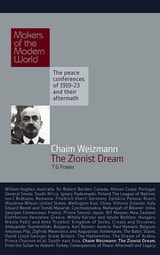
Chaim Weizmann
The Zionist DreamTom Fraser
Haus Publishing, 2009
Chances for Peace
Missed Opportunities in the Arab-Israeli ConflictBy Elie Podeh
University of Texas Press, 2015
Drawing on a newly developed theoretical definition of “missed opportunity,” Chances for Peace uses extensive sources in English, Hebrew, and Arabic to systematically measure the potentiality levels of opportunity across some ninety years of attempted negotiations in the Arab-Israeli conflict. With enlightening revelations that defy conventional wisdom, this study provides a balanced account of the most significant attempts to forge peace, initiated by the world’s superpowers, the Arabs (including the Palestinians), and Israel. From Arab-Zionist negotiations at the end of World War I to the subsequent partition, the aftermath of the 1967 War and the Sadat Initiative, and numerous agreements throughout the 1980s and 1990s, concluding with the Annapolis Conference in 2007 and the Abu Mazen-Olmert talks in 2008, pioneering scholar Elie Podeh uses empirical criteria and diverse secondary sources to assess the protagonists’ roles at more than two dozen key junctures.
A resource that brings together historiography, political science, and the practice of peace negotiation, Podeh’s insightful exploration also showcases opportunities that were not missed. Three agreements in particular (Israeli-Egyptian, 1979; Israeli-Lebanese, 1983; and Israeli-Jordanian, 1994) illuminate important variables for forging new paths to successful negotiation. By applying his framework to a broad range of power brokers and time periods, Podeh also sheds light on numerous incidents that contradict official narratives. This unique approach is poised to reshape the realm of conflict resolution.
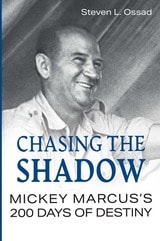
Chasing the Shadow
Mickey Marcus's 200 Days of DestinySteven L. Ossad
University of Missouri Press, 2024
The life of David “Mickey” Marcus has become the stuff of legends and myths (even fantasy), conspiracy, wild exaggeration, and untethered embellishment. The image of Marcus cast by the character portrayed by Kirk Douglas in the film version of his life still dominates most evocations of the man, for good or ill. And these days, reactions to the book or film rest mostly on the current headlines rather than the historical context of the struggle in which Marcus died, or the events that cast him as a real-life player in an event marked by destiny.
Chasing the Shadow: Mickey Marcus’s 200 Days of Destiny is the first comprehensive and balanced biography of David Daniel “Mickey” Marcus, a founder of American Civil Affairs and Military Government doctrine and practice and a seminal figure in early Israeli military history. Far from merely a tribute to Mickey Marcus's legacy, Ossad’s work serves as a critical tool for understanding the realities of mid-20th-century warfare in a Postwar colonial struggle and the dynamics of U.S.-Israeli military and political relations in 1948, the critical year for Israel’s struggle for independence. Indeed, Chasing the Shadow is a valuable read for those interested in Middle East history, Jewish military history, and a fascinating character whose story is told in an engaging, informative, and insightful narrative.
Checkbook Zionism
Philanthropy and Power in the Israel-Diaspora RelationshipEric Fleisch
Rutgers University Press, 2024
By delving into the history of American Jews’ philanthropic giving to Israelis, Fleisch assesses the core nature of power sharing between both sides of the Jewish diaspora to the United States through in-depth contemporary case studies of the relationship between sixteen non-governmental organizations and their American Jewish donors. Field observation, document analysis, and interviews with leaders, activists, and select donors alike serve a critical role here, as Fleisch assesses whether these contemporary philanthropic associations repeat classic dynamics of power-sharing or whether they represent a marked departure from the Checkbook Zionism of old. The result is a new paradigm for evaluating power sharing that can be applied to future considerations of development in the Israel-Diaspora relationship.
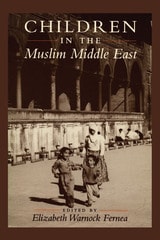
Children in the Muslim Middle East
Edited by Elizabeth Warnock Fernea
University of Texas Press, 1995
Today nearly half of all people in the Middle East are under the age of fifteen. Yet little is known about the new generation of boys and girls who are growing up in a world vastly different from that of their parents, a generation who will be the leaders of tomorrow. This groundbreaking anthology is an attempt to look at the current situation of children by presenting materials by both Middle Eastern and Western scholars. Many of the works have been translated from Arabic, Persian, and French.
The forty-one pieces are organized into sections on the history of childhood, growing up, health, work, education, politics and war, and play and the arts. They are presented in many forms: essays in history and social science, poems, proverbs, lullabies, games, and short stories. Countries represented are Egypt, Jordan, Morocco, Tunisia, Israel/West Bank, Kuwait, Saudi Arabia, Iran, Iraq, Syria, Sudan, Lebanon, Turkey, Yemen, and Afghanistan.
This book complements Elizabeth Fernea's earlier works, Women and the Family in the Middle East and Middle Eastern Muslim Women Speak (coedited with Basima Bezirgan). Like them, it will be important reading for everyone interested in the Middle East and in women's and children's issues.
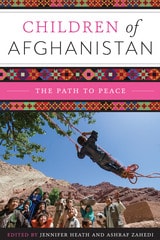
Children of Afghanistan
The Path to PeaceEdited by Jennifer Heath and Ashraf Zahedi
University of Texas Press, 2014
The first comprehensive look at youth living in a country attempting to rebuild itself after three decades of civil conflict, Children of Afghanistan relies on the research and fieldwork of twenty-one experts to cover an incredible range of topics. Focusing on the full scope of childhood, from birth through young adulthood, this edited volume examines a myriad of issues: early childhood socialization in war and peace; education, literacy, vocational training, and apprenticeship; refugee life; mental and physical health, including disabilities and nutrition; children’s songs, folktales, and art; sports and play; orphans; life on the streets; child labor and children as family breadwinners; child soldiers and militarization; sexual exploitation; growing up in prison; marriage; family violence; and other issues vital to understanding, empowerment, and transformation.
Children of Afghanistan is the first volume that not only attempts to analyze the range of challenges facing Afghan children across class, gender, and region but also offers solutions to the problems they face. With nearly half of the population under the age of fifteen, the future of the country no doubt lies with its children. Those who seek peace for the region must find solutions to the host of crises that have led the United Nations to call Afghanistan “the worst place on earth to be born.” The authors of Children of Afghanistan provide child-centered solutions to rebuilding the country’s cultural, social, and economic institutions.
Christian Networks in the Ottoman Empire
A Transnational HistoryYura Konstantinova
Central European University Press, 2024
Observers and historians continue to marvel at the diversity and complexity of the Ottoman Empire. This book explores the significant and multifaceted role that Orthodox Christian networks played in the sultan’s realm from the 17th century until WWI. These multi-ethnic, multi-lingual, and multi-confessional formations contributed fundamentally to the political, economic, social, and cultural development of the Empire as well as to its gradual disintegration.
Bringing together scholars from most Balkan countries, Christian Networks in the Ottoman Empire describes the variety of Orthodox Christian networks under Ottoman rule. The examples examined include commercial relations, intellectual networks, educational systems, religious dynamics, consular activities, and revolutionary movements, and involve Muslims and Christians, Romanians and Serbs, Bulgarians and Greeks, Albanians and Turks. The contributions show that the Christian populations and their elites were an integral part of Ottoman society.
The geographical spread of the formal and informal networks enriches our understanding of the terms ‘center’ and ‘periphery.’ They were either centered within the official Ottoman borders and extended their activities to other states and empires, or vice versa, located elsewhere, but also active in the Ottoman Empire. A common feature of these formations is their constant fluctuation, which enables a dynamic understanding of Ottoman history.

Cinnamon
Samar Yazbek
Haus Publishing, 2012
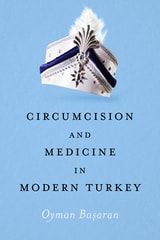
Circumcision and Medicine in Modern Turkey
Oyman Basaran
University of Texas Press, 2023
An investigation of how the expansion of modern medicine in Turkey transformed young boys’ experiences of circumcision.
In Turkey, circumcision is viewed as both a religious obligation and a rite of passage for young boys, as communities celebrate the ritual through gatherings, gifts, and special outfits. Yet the procedure is a potentially painful and traumatic ordeal. With the expansion of modern medicine, the social position of sünnetçi (male circumcisers) became subject to the institutional arrangements of Turkey’s evolving health care and welfare system. In the transition from traditional itinerant circumcisers to low-ranking health officers in the 1960s and hospital doctors in the 1990s, the medicalization of male circumcision has become entangled with state formation, market fetishism, and class inequalities.
Based on Oyman Başaran’s extensive ethnographic and historical research, Circumcision and Medicine in Modern Turkey is a close examination of the socioreligious practice of circumcision in twenty-five cities and their outlying towns and villages in Turkey. By analyzing the changing subjectivity of medical actors who seek to alleviate suffering in male circumcision, Başaran offers a psychoanalytically informed alternate approach to the standard sociological arguments surrounding medicalization and male circumcision.
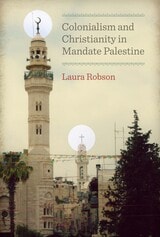
Colonialism and Christianity in Mandate Palestine
By Laura Robson
University of Texas Press, 2011
Drawing on a rich base of British archival materials, Arabic periodicals, and secondary sources, Colonialism and Christianity in Mandate Palestine brings to light the ways in which the British colonial state in Palestine exacerbated sectarianism. By transforming Muslim, Christian, and Jewish religious identities into legal categories, Laura Robson argues, the British ultimately marginalized Christian communities in Palestine. Robson explores the turning points that developed as a result of such policies, many of which led to permanent changes in the region's political landscapes. Cases include the British refusal to support Arab Christian leadership within Greek-controlled Orthodox churches, attempts to avert involvement from French or Vatican-related groups by sidelining Latin and Eastern Rite Catholics, and interfering with Arab Christians' efforts to cooperate with Muslims in objecting to Zionist expansion. Challenging the widespread but mistaken notion that violent sectarianism was endemic to Palestine, Colonialism and Christianity in Mandate Palestine shows that it was intentionally stoked in the wake of British rule beginning in 1917, with catastrophic effects well into the twenty-first century.
Common Knowledge (Inaugural issue marking return to publication), Volume 8
Jeffrey M. Perl, ed.
Duke University Press, 0
Described by the New York Times as one of two American journals in which public intellectuals and other scholars prefer to publish, the highly acclaimed Common Knowledge has returned to publication after a two-year hiatus. In an effort to place itself in the ferment of intellectual life and broaden its geographical range, the journal has moved to the Middle East, to Israel. Born in an attempt to moderate and get past the "culture wars" of the 90s, Common Knowledge has moved, literally, to a war zone, and accordingly its editorial interests have broadened to include culture wars of a less metaphorical kind.
Its mission is both incredibly ambitious and shockingly simple: to open up lines of communication between the academy and the community of thoughtful people outside its walls. Common Knowledge was created to form a new intellectual model, one based on conversation or cooperation rather than on metaphors adopted from sports and war, of "sides" that one must "take." The journal will collect work from a variety of fields and specialties, including philosophy, religion, psychology, literary criticism, cultural studies, art history, political science, and social, cultural, and intellectual history.
Scholars such as Richard Rorty, Bruno Latour, Clifford Geertz, Julia Kristeva, Karma Nabulsi, and J. G. A. Pocock will cross paths with political figures like Prince Hassan of Jordan and President Arpad Goncz of Hungary, novelists like Susan Sontag, poets like Yves Bonnefoy, composers like Alexander Goehr, and journalists like Adam Michnik. The pages of Common Knowledge are sure to challenge the ways we think about theory and its relevance to humanity. The first volume will feature the beginning of a Seriatim Symposium, “Disagreement, Enmity, and Dispute,” which will include discussions of the title concepts from a variety of theoretical perspectives. The Symposium asks why, in an intellectual context in which “true” and “real” are words that can be used only in condescending scare quotes, there is so much absolute conflict. If truth and reality are constructions, then why aren’t we constructing consensual orders (metaphysical and social) that are conducive to peace, calm, and cooperation?
Contributors for forthcoming issues include: Manfred Frank, Jacques Le Goff, Vicki Hearne, Sissela Bok, Edward Cardinal Cassidy, Linda Hutcheon, G. Thomas Tanselle, Arlette Farge, Marcel Detienne, Caryl Emerson, Stanley Katz, and Peter Laslett.
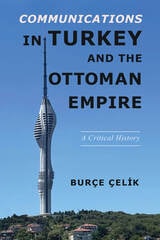
Communications in Turkey and the Ottoman Empire
A Critical HistoryBurçe Çelik
University of Illinois Press, 2023
The history of communications in the Ottoman Empire and Turkey contradicts the widespread belief that communications is a byproduct of modern capitalism and other Western forces. Burçe Çelik uses a decolonial perspective to analyze the historical commodification and militarization of communications and how it affected production and practice for oppressed populations like women, the working class, and ethnic and religious minorities. Moving from the mid-nineteenth century through today, Çelik places networks within the changing geopolitical landscape and the evolution of modern capitalism in relationship to struggles involving a range of social and political actors. Throughout, she challenges Anglo- and Eurocentric assumptions that see the non-West as an ahistorical imitation of, or aberration from, the development of Western communications.
Ambitious and comprehensive, Communications in Turkey and the Ottoman Empire merges political economy with social history to challenge Western-centered assumptions about the origins and development of modern communications.
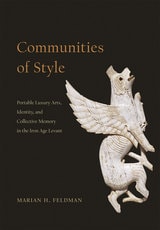
Communities of Style
Portable Luxury Arts, Identity, and Collective Memory in the Iron Age LevantMarian H. Feldman
University of Chicago Press, 2014
Marian H. Feldman brings her dual training as an art historian and an archaeologist to bear on the networks that were essential to the movement and trade of luxury goods—particularly ivories and metal works—and how they were also central to community formation. The interest in, and relationships to, these art objects, Feldman shows, led to wide-ranging interactions and transformations both within and between communities. Ultimately, she argues, the production and movement of luxury goods in the period demands a rethinking of our very geo-cultural conception of the Levant, as well as its influence beyond what have traditionally been thought of as its borders.
Competitive Archaeology in Jordan
Narrating Identity from the Ottomans to the HashemitesBy Elena D. Corbett
University of Texas Press, 2015
An examination of archaeology in Jordan and Palestine, Competitive Archaeology in Jordan explores how antiquities have been used to build narratives and national identities. Tracing Jordanian history, and the importance of Jerusalem within that history, Corbett analyzes how both foreign and indigenous powers have engaged in a competition over ownership of antiquities and the power to craft history and geography based on archaeological artifacts. She begins with the Ottoman and British Empires—under whose rule the institutions and borders of modern Jordan began to take shape—asking how they used antiquities in varying ways to advance their imperial projects. Corbett continues through the Mandate era and the era of independence of an expanded Hashemite Kingdom, examining how the Hashemites and other factions, both within and beyond Jordan, have tried to define national identity by drawing upon antiquities.
Competitive Archaeology in Jordan traces a complex history through the lens of archaeology’s power as a modern science to create and give value to spaces, artifacts, peoples, narratives, and academic disciplines. It thus considers the role of archaeology in realizing Jordan’s modernity—drawing its map; delineating sacred and secular spaces; validating taxonomies of citizens; justifying legal frameworks and institutions of state; determining logos of the nation for display on stamps, currency, and in museums; and writing history. Framing Jordan’s history in this way, Corbett illustrates the manipulation of archaeology by governments, institutions, and individuals to craft narratives, draw borders, and create national identities.
Connecting with the Enemy
A Century of Palestinian-Israeli Joint NonviolenceBy Sheila H. Katz
University of Texas Press, 2016
Thousands of ordinary people in Israel and Palestine have engaged in a dazzling array of daring and visionary joint nonviolent initiatives for more than a century. They have endured despite condemnation by their own societies, repetitive failures of diplomacy, harsh inequalities, and endemic cycles of violence.
Connecting with the Enemy presents the first comprehensive history of unprecedented grassroots efforts to forge nonviolent alternatives to the lethal collision of the two national movements. Bringing to light the work of over five hundred groups, Sheila H. Katz describes how Arabs and Jews, children and elders, artists and activists, educators and students, garage mechanics and physicists, and lawyers and prisoners have spoken truth to power, protected the environment, demonstrated peacefully, mourned together, stood in resistance and solidarity, and advocated for justice and security. She also critiques and assesses the significance of their work and explores why these good-will efforts have not yet managed to end the conflict or occupation. This previously untold story of Palestinian-Israeli joint nonviolence will challenge the mainstream narratives of terror and despair, monsters and heroes, that help to perpetuate the conflict. It will also inspire and encourage anyone grappling with social change, peace and war, oppression and inequality, and grassroots activism anywhere in the world.
Constantinople and the West
Essays on the Late Byzantine (Palaeologan) and Italian Renaissances and the Byzantine and Roman ChurchesDeno John Geanakoplos
University of Wisconsin Press, 1989
Consult Them in the Matter
A Nineteenth-Century Islamic Argument for Constitutional GovernmentAhmad ibn Abi Diyaf
University of Arkansas Press, 2005
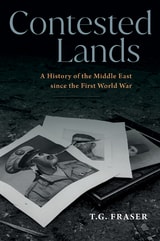
Contested Lands
A History of the Middle East From the First World War to the PresentT. G. Fraser
Haus Publishing, 2024
Until the First World War, the Ottoman Empire had dominated the Middle East for four centuries. Its collapse, coupled with the subsequent clash of European imperial policies, unleashed a surge of political feelings among the people of the Middle East as they vied for national self-determination. Over the century that followed, the region has become almost synonymous with unrest and conflict.
An accessible survey of the last century, Contested Lands tells the story of what happened in the Middle East and what it means today. T. G. Fraser analyzes the fault lines of the tension, including the damage brought by imperialism, the creation of the State of Israel, competition between secular rulers and emerging democratic and theocratic forces, and the rise of Arab Nationalism in the face of fraying regional alliances and the Islamic revival. Fraser offers a close look at how the events of the twenty-first century—the tragedy of 9/11, the Arab Spring, and Syria’s civil war—have combined with complex social and economic changes to transform the region. Untangling the history of the Middle East, this book offers a detailed and insightful picture of the region and why its heritage remains important today.
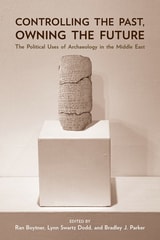
Controlling the Past, Owning the Future
The Political Uses of Archaeology in the Middle EastEdited by Ran Boytner, Lynn Swartz Dodd, and Bradley J. Parker
University of Arizona Press, 2010
The diverse contributions to this volume share a common framework in which the political use of the past is viewed as a process of social discourse. According to this model, political appropriations are seen as acts of social communication designed to accrue benefits to particular groups. Thus the contributors pay special attention to competing social visions and the filters these impose on archaeological data. But they are also attentive to the potential consequences of their own work. Indeed, as the editors remind us, “people’s lives may be affected, sometimes dramatically, because of the material remains that surround them.”
Rounding out this important volume are critiques by two top scholars who summarize and synthesize the preceding chapters.
Cracks in the Wall
Beyond Apartheid in Palestine/IsraelBen White
Pluto Press, 2018
But while the situation on the ground is bleak, Ben White argues that there are widening cracks in Israel's traditional pillars of support. Opposition to Israeli policies and even critiques of Zionism are growing in Jewish communities, as well as amongst Western progressives. The election of Donald Trump has served as a catalyst for these processes, including the transformation of Israel from a partisan issue into one that divides the US establishment. Meanwhile, the Palestinian-led boycott campaign is gathering momentum, prompting a desperate backlash by Israel and its allies.
With sharp analysis, Ben White says now is the time to plot a course that avoids the mistakes of the past - a way forward beyond apartheid in Palestine. The solution is not partition and ethnic separation, but equality and self-determination - for all.
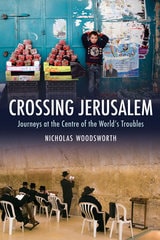
Crossing Jerusalem
Journeys at the Centre of the World’s TroubleNicholas Woodsworth
Haus Publishing, 2010
Crossing the Rift
Resources, Settlements Patterns and Interaction in the Wadi ArabahP. Bienkwoski
Council for British Research in the Levant, 2006
Ctesias’ Persica in Its Near Eastern Context
Matt Waters
University of Wisconsin Press, 2020
Waters, as a historian of Persia with command of Akkadian, Elamite, and Old Persian languages in addition to Latin and Greek, offers a fresh interdisciplinary analysis of the Persica. He shows in detail how Ctesias’ history, though written in a Greek literary style, was infused with two millennia of Mesopotamian and Persian motifs, legends, and traditions. This Hellenized version of Persian culture was enormously influential in antiquity, shaping Greek stereotypes of effeminate Persian monarchs, licentious and vengeful queens, and conniving eunuchs. Waters’ revealing study contributes significantly to knowledge of ancient historiography, Persian dynastic traditions and culture, and the influence of Near Eastern texts and oral tradition on Greek literature.
Cultivating the Nile
The Everyday Politics of Water in EgyptJessica Barnes
Duke University Press, 2014
Culture of Da'wa
Preaching in the Modern WorldEdited by Itzchak Weismann and Jamil Malik
University of Utah Press, 2020
This book provides the first in-depth, wide-scope treatment of da’wa. A term difficult to translate, da’wa covers a semantic field ranging from the call or invitation to Islam, to religious preaching and proselytizing, to the mission and message of Islam. Historically da’wa has been directed outward to nonbelievers, but in modern times it has turned increasingly inward to “straying” Muslims. While the media and many scholars have focused on extremism and militant groups that have raised the banner of jihad, this volume argues that da’wa, not jihad, forms the backbone of modern Islamic politics and religiosity, and that the study of da’wa is essential for understanding contemporary Islamic politics as well as jihadist activity. Contributors represent a variety of approaches and come from a range of academic, religious, and national backgrounds. In these essays, they analyze the major discourses of da’wa, their embodiment in the major Islamic movements of the twentieth century, and their transformation into new forms of activism through the media, the state, and jihadi groups—including al-Qaeda and ISIS—in the twenty-first century.
Culture, Chronology and the Chalcolithic
J. Lovell
Council for British Research in the Levant, 2011
Cutting the Fuse
The Explosion of Global Suicide Terrorism and How to Stop ItRobert A. Pape and James K. Feldman
University of Chicago Press, 2012
Cyberwars in the Middle East
Ahmed Al-Rawi
Rutgers University Press, 2021
On the one hand, nation-states as well as their affiliated hacking groups like cyber warriors employ hacking as offensive and defensive tools in connection to the cyber activity or inactivity of other nation-states, such as the role of Russian Trolls disseminating disinformation on social media during the US 2016 presidential election. This is regarded as a horizontal flow of political disruption. Sometimes, nation-states, like the UAE, Saudi Arabia, and Bahrain, use hacking and surveillance tactics as a vertical flow (top-bottom) form of online political disruption by targeting their own citizens due to their oppositional or activists’ political views. On the other hand, regular hackers who are often politically independent practice a form of bottom-top political disruption to address issues related to the internal politics of their respective nation-states such as the case of a number of Iraqi, Saudi, and Algerian hackers. In some cases, other hackers target ordinary citizens to express opposition to their political or ideological views which is regarded as a horizontal form of online political disruption. This book is the first of its kind to shine a light on many ways that governments and hackers are perpetrating cyber attacks in the Middle East and beyond, and to show the ripple effect of these attacks.