Results by title
1148 books match the query 'Political Ideologies' and 82 start with c
COALITION GOVERNMENT, SUBNATIONAL STYLE
Multiparty Politics in Europe’s Regional ParliamentsWilliam M. Downs
The Ohio State University Press, 1998
Coalition Government, Subnational Style examines parliamentary democracy in subnational legislative assemblies. Comparing three different European democracies—Germany, France, and Belgium—William M. Downs provides a powerful account of the ways politicians and political parties negotiate the composition of new governments following elections in which no single party wins a clear majority.
Downs argues that postelection alliance building is a window onto many of the political processes fundamental to representative democracy: the interpretations of electoral verdicts; the compromises of campaign pledges; the trade-offs between policy and power; the temporary cooperation between long-term adversaries; the collective decision making; and the blurring of lines of accountability through collective responsibility.
The study reports findings from an unprecedented collection of information, including cross-national survey responses, interviews with political elites, and three decades of postelection studies of coalition building in the German state parliaments, the French regional assemblies, and the Belgian provincial councils and regional parliaments. Coalition Government, Subnational Style conclusively demonstrates that the struggles for government status at subnational levels are profoundly important to both parties and voters and that the outcomes of these struggles can result in governments of varying political complexions. Downs's findings question key assumptions of democratic theory and raise important concerns about individual and organizational behavior in changing institutional and electoral environments, ultimately allowing for a deeper understanding of representation, power, and cooperation outside the more familiar arena of national parliamentary politics.

Caciquismo in Twentieth-Century Mexico
Edited by Alan Knight and Wil Pansters
University of London Press, 2006
Contributors include Christopher Boyer (University of Illinois at Chicago, USA), Keith Brewster (University of Newcastle upon Tyne, UK), Matthew Butler (Queen's University, Belfast, UK), Marco Calderon (El Colegio de Michoacan, Mexico), Maria Teresa Fernandez Aceves (Centro de Investigaciones en Estudios Superiores en Antropologia Social [CIESAS], Mexico), Rogelio Hernandez Rodriuez (El Colegio de Mexico), Stephen Lewis (California State University, Chico, USA), Salvador Maldonado Aranda (El Colegio de Michoacan, Mexico), Jennie Purnell (Boston College, USA), Jan Rus (Tzotzil Instituto de Asesoria Antropologica para la Region Maya, and Center for U.S.-Mexican Studies, University of California, San Diego, USA), Pieter de Vries (Wageningen University, Netherlands), and J. Eduardo Zarate H (El Colegio de Mexico, Michoacan, Mexico).

Cambodia's Trials
Contrasting Visions of Truth, Transitional Justice and National RecoveryEdited by Robin Biddulph and Alexandra Kent
National University of Singapore Press, 2023
More than four decades have passed since the end of Khmer Rouge rule in Cambodia in 1979. Even so, the country is still coming to terms with the destruction wrought by the Khmer Rouge during both the time they were in power and during the period of guerrilla resistance that lasted until 1998. The Khmer Rouge Tribunal, or the Extraordinary Chambers in the Court of Cambodia (ECCC), was established in 2006 to bring the Khmer Rouge leadership to justice. In many ways a product of the 1990s, when liberal democracy appeared to be on the rise both in Cambodia and internationally, the ECCC was imagined as a transitional justice initiative that would help ease the transition to liberal democracy.
The ECCC has long been the focus of scholarly attention in Cambodia’s recovery, but this compelling study argues that such an approach is dated, noting that the political circumstances in which the ECCC was born have since changed profoundly, both globally and locally. Cambodia’s current situation can no longer be analyzed solely in terms of transitional justice narratives or the work of the ECCC, and other ways in which Cambodians have come to terms with their past and built new lives must be considered. By decentering the ECCC in the scholarly narrative of Cambodia’s recovery, the volume’s authors offer fascinating new insights into the Khmer Rouge period and more recent years of social, cultural, and political change in Cambodia.
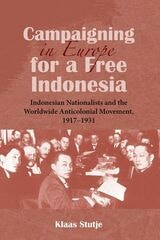
Campaigning in Europe for a Free Indonesia
Indonesian Nationalists and the Worldwide Anticolonial Movement, 1917–1932Klaas Stutje
National University of Singapore Press, 2019
Cancel Wars
How Universities Can Foster Free Speech, Promote Inclusion, and Renew DemocracySigal R. Ben-Porath
University of Chicago Press, 2023
College campuses have become flashpoints of the current culture war and, consequently, much ink has been spilled over the relationship between universities and the cultivation or coddling of young American minds. Philosopher Sigal R. Ben-Porath takes head-on arguments that infantilize students who speak out against violent and racist discourse on campus or rehash interpretations of the First Amendment. Ben-Porath sets out to demonstrate the role of the university in American society and, specifically, how it can model free speech in ways that promote democratic ideals.
In Cancel Wars, she argues that the escalating struggles over “cancel culture,” “safe spaces,” and free speech on campus are a manifestation of broader democratic erosion in the United States. At the same time, she takes a nuanced approach to the legitimate claims of harm put forward by those who are targeted by hate speech. Ben-Porath’s focus on the boundaries of acceptable speech (and on the disproportional impact that hate speech has on marginalized groups) sheds light on the responsibility of institutions to respond to extreme speech in ways that proactively establish conversations across difference. Establishing these conversations has profound implications for political discourse beyond the boundaries of collegiate institutions. If we can draw on the truth, expertise, and reliable sources of information that are within the work of academic institutions, we might harness the shared construction of knowledge that takes place at schools, colleges, and universities against truth decay. Of interest to teachers and school leaders, this book shows that by expanding and disseminating knowledge, universities can help rekindle the civic trust that is necessary for revitalizing democracy.
Cancel Wars
How Universities Can Foster Free Speech, Promote Inclusion, and Renew DemocracySigal R. Ben-Porath
University of Chicago Press, 2023
An even-handed exploration of the polarized state of campus politics that suggests ways for schools and universities to encourage discourse across difference.
College campuses have become flashpoints of the current culture war and, consequently, much ink has been spilled over the relationship between universities and the cultivation or coddling of young American minds. Philosopher Sigal R. Ben-Porath takes head-on arguments that infantilize students who speak out against violent and racist discourse on campus or rehash interpretations of the First Amendment. Ben-Porath sets out to demonstrate the role of the university in American society and, specifically, how it can model free speech in ways that promote democratic ideals.
In Cancel Wars, she argues that the escalating struggles over “cancel culture,” “safe spaces,” and free speech on campus are a manifestation of broader democratic erosion in the United States. At the same time, she takes a nuanced approach to the legitimate claims of harm put forward by those who are targeted by hate speech. Ben-Porath’s focus on the boundaries of acceptable speech (and on the disproportional impact that hate speech has on marginalized groups) sheds light on the responsibility of institutions to respond to extreme speech in ways that proactively establish conversations across difference. Establishing these conversations has profound implications for political discourse beyond the boundaries of collegiate institutions. If we can draw on the truth, expertise, and reliable sources of information that are within the work of academic institutions, we might harness the shared construction of knowledge that takes place at schools, colleges, and universities against truth decay. Of interest to teachers and school leaders, this book shows that by expanding and disseminating knowledge, universities can help rekindle the civic trust that is necessary for revitalizing democracy.

Capital, Class & Technology in Contemporary American Culture
Projecting Post-FordismNick Heffernan
Pluto Press, 2000
He turns to the stories we generate and tell ourselves - via fiction, film journalism, theory - to see how change is registered. By investigating a variety of texts, he observes how structural change affects the way people organise their lives economically, socially and culturally. Case studies include Ridley Scott's Blade Runner, William Gibson's cyberspace trilogy, Thomas Pynchon's The Crying of Lot 49, and Wim Wenders's Until the End of the World.
Using the links between narrative cultural forms and the process of historical understanding, he brings together debates that have so far been conducted largely within the separate domains of political economy, social theory and cultural criticism to provide a compelling analysis of contemporary cultural change. By relocating postmodernism in the context of changing modes of capitalism, Heffernan puts the question of class and class agency back at the centre of the critical agenda.
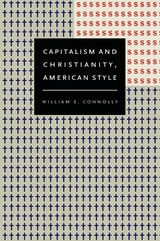
Capitalism and Christianity, American Style
William E. Connolly
Duke University Press, 2008
Connolly describes how the evangelical-capitalist machine works, how its themes resound across class lines, and how it infiltrates numerous aspects of American life. Proposing changes in sensibility and strategy to challenge this machine, Connolly contends that the liberal distinction between secular public and religious private life must be reworked. Traditional notions of unity or solidarity must be translated into drives to forge provisional assemblages comprised of multiple constituencies and creeds. The left must also learn from the political right how power is infused into everyday institutions such as the media, schools, churches, consumption practices, corporations, and neighborhoods. Connolly explores the potential of a “tragic vision” to contest the current politics of existential resentment and political hubris, explores potential lines of connection between it and theistic faiths that break with the evangelical right, and charts the possibility of forging an “eco-egalitarian” economy. Capitalism and Christianity, American Style is William E. Connolly’s most urgent work to date.
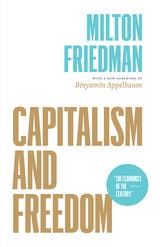
Capitalism and Freedom
Milton Friedman
University of Chicago Press, 2020
One of Times Literary Supplement’s 100 Most Influential Books Since the War
One of National Review’s 100 Best Nonfiction Books of the Century
One of the Intercollegiate Studies Institute’s 50 Best Books of the 20th Century
How can we benefit from the promise of government while avoiding the threat it poses to individual freedom? In this classic book, Milton Friedman provides the definitive statement of an immensely influential economic philosophy—one in which competitive capitalism serves as both a device for achieving economic freedom and a necessary condition for political freedom.
First published in 1962, Friedman’s Capitalism and Freedom is one of the most significant works of economic theory ever written. Enduring in its eminence and esteem, it has sold nearly a million copies in English, has been translated into eighteen languages, and continues to inform economic thinking and policymaking around the world. This new edition includes prefaces written by Friedman for both the 1982 and 2002 reissues of the book, as well as a new foreword by Binyamin Appelbaum, lead economics writer for the New York Times editorial board.
Capitalism and the Dialectic
The Uno-Sekine Approach to Marxian Political EconomyJohn R. Bell
Pluto Press, 2009
From the 1960s to the 1990s the ground-breaking Japanese economists Kozo Uno and Thomas Sekine developed a masterful reconfiguration of Marxist economics. The most well-known aspect of which is the levels of analysis approach to the study of capitalism.
Written in Japanese, the Uno-Sekine approach to Marx's work is little understood in West. John Bell seeks to correct this, explaining how problematic elements of Marxian Political Economy such as the law of value and the law of relative surplus population can be solved by using a more rigorous dialectical analysis.
Bell's clear and accessible synthesis provides economists with the tools to interrogate capitalism in a more powerful way than ever before.
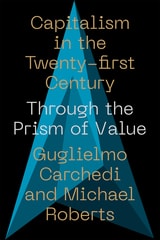
Capitalism in the 21st Century
Through the Prism of ValueMichael Roberts
Pluto Press, 2022
Contemporary capitalism is always evolving. From digital technologies to cryptocurrencies, current trends in political economy are much discussed, but often little understood. So where can we turn for clarity? As Michael Roberts and Guglielmo Carchedi argue, new trends don't necessarily call for a new theory.
In Capitalism in the 21st Century, the authors show how Marx's law of value explains numerous issues in our modern world. In both advanced economies and the periphery, value theory provides a piercing analytical framework through which we can approach topics as varied as labor, profitability, technology, the environment, the role of China, imperialism, and the state.
An ambitious work that will appeal to both heterodox economists and labor movement activists alike, as it demonstrates the ongoing contemporary relevance of Marxist theory to current trends in political economy.
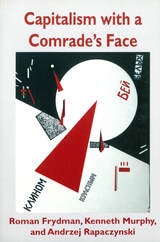
Capitalism with a Comrade's Face
Kenneth Murphy
Central European University Press, 1998
Are nations that are journeying away from communism succeeding in becoming free-market democracies? In what ways do decades of totalitarian rule continue to distort the institutional shape of these societies? Which of communism's legacies may remain as permanent features of their landscape? In an effort to answer these questions, Roman Frydman, Kenneth Murphy, and Andrzej Rapaczynski analyze the turbulent transitions that have taken place in the post-Communist world since the revolutions of 1989-1991.
Each of the essays in this collection dissects the institutional upheaval in a particular institution in transition, such as central banking, the trade union movement, capital markets, or corporate govern-ance. In a lively and accessible style, the authors bring out the links between what was and what will be in the social fabric of Eastern Europe and the former Soviet Union. They expose the fragility of political and economic institutions that can easily threaten the region's rebirth, but they also believe that many post-Communist countries are successfully seizing the opportunity to become reunited with the West and the global economy.
With both sweeping perspective and critical depth, Frydman, Murphy, and Rapaczynski show the wide range of institutional improvisations under way. They weigh the advantages and disadvantages of different reform strategies and assess the role of politics in fostering or arresting the process of transformation. Each essay illuminates the pro-found difficulties of reconciling the needs of economic development with the special interests fighting for their survival.

Capitalism, Democracy, and Ecology
Departing from MarxTimothy W. Luke
University of Illinois Press, 1999
Using Marx as a touchstone, Timothy W. Luke warns that if communities are not to be overwhelmed by new class economic and political agendas, then the practice of democracy must be reconstituted on a more populist basis. However, the galvanizing force for this new, more community-centered populism will not be the proletariat, as Marx predicted, nor contemporary militant patriotic groups. Rather, Luke argues that many groups unified by a concern for ecological justice present the strongest potential opposition to capitalism.
Wide-ranging and lucid, Capitalism, Democracy, and Ecology is essential reading in the age of information.

Capitalist Development and Democracy
Dietrich Rueschemeyer, Evelyne Huber Stephens, and John D. Stephens
University of Chicago Press, 1992
The authors offer a fresh and persuasive resolution to the controversy arising out of these contrasting traditions. Focusing on advanced industrial countries, Latin America, and the Caribbean, they find that the rise and persistence of democracy cannot be explained either by an overall structural correspondence between capitalism and democracy or by the role of the bourgeoisie as the agent of democratic reform. Rather, capitalist development is associated with democracy because it transforms the class structure, enlarging the working and middle classes, facilitating their self-organization, and thus making it more difficult for elites to exclude them. Simultaneously, development weakens the landed upper class, democracy's most consistent opponent.
The relationship of capitalist development to democracy, however, is not mechanical. As the authors show, it depends on a complex interplay of three clusters of power: the balance of power among social classes, power relations between the state and society, and transnational structures of economic and political power. Looking to the future, the book concludes with some reflections on current prospects for the development of stable democracy in Latin America and Eastern Europe.

Carrying a Secret in My Heart
Children of the Victims of the Reprisals after the Hungarian Revolution in 1956 - An Oral HistoryZsuzsanna Korösi
Central European University Press, 2003
Catholicism and Liberal Democracy
Forgotten Roots and Future ProspectsJames Martin Carr
Catholic University of America Press, 2022

Catholicism and Politics in Communist Societies
Pedro Ramet, ed.
Duke University Press, 1990
Catholicism has, on the one hand, traditionally regarded earthly life as of secondary importance—as an instrument of spiritual transformation—and, on the other, has ascribed great value to the early institutions of the church, taking great interest in temporal matters that affects its institutional concerns. Against the backdrop of this duality, the church has changed over the centuries, adapting to local and national conditions. Catholicism and Politics in Communist Societies surveys these local and national adaptations in their historical contexts, linking the past experience of the church to its present circumstances. Organized around themes of tradition vs. modernity, hierarchy vs. lower clergy, and institutional structure vs. grass-roots organization, this comprehensive volume presents a detailed, country-by-country portrait of the political and social status of the church today in communist and socialist settings.
Contributors. Pedro Ramet, Arthur F. McGovern, Roman Solchanyk, Ivan Hvat, Robert F. Goeckel, C. Chrypinski, Milan J. Reban, Leslie Laszlo, Janice Broun, Eric O. Hanson, Stephen Denney, Thomas E. Quigley, Humberto Belli, Hansjakob Stehle, George H. Williams
Catiline, The Monster of Rome
An Ancient Case of Political AssassinationFrancis Galassi
Westholme Publishing, 2014
In 62 BC, Roman Senator Lucius Sergius Catiline lay dead on a battlefield in Tuscany. He was slain along with his soldiers after his conspiracy to overthrow the Roman Republic had been exposed by his adversary Cicero. It was an ignominious end for a man described at the time as a perverted, insane monster who had attempted to return his family to fortune and social standing. Chroniclers were not kind to Catiline, and his name over the centuries was synonymous with treachery. Recently, scholars have been reappraising the life and influence of this ancient Roman. In Catiline, The Monster of Rome: An Ancient Case of Political Assassination, economic historian Francis Galassi provides the first book-length account of Catiline in more than a generation.
Rome first achieved a status as an empire during Catiline’s lifetime. The republic was, however, constantly at war with foreign powers and occasionally its own allies, and the disparity between the wealthy and the poor threatened to destabilize society. Catiline was from an aristocratic but impoverished family and first served as an officer with Cornelius Sulla during that general’s purges against Gaius Marius, the supposed champion of the oppressed masses. Catiline’s goal was to serve Sulla and then use that as a springboard to public office where he could recover his family’s former wealth and honor. However, the senatorial elite became suspicious if not threatened by the upstart Catiline and blocked his ambitions. Catiline was dogged by trumped-up charges, including raping a Vestal virgin and murdering his brother-in-law; he was acquitted each time, but his political life was ruined. With citizens demanding land and agrarian reform, Catiline genuinely embraced their dissatisfaction, and realizing that the elite would stop his attempt to gain status through elections, he organized a conspiracy to take control of Roman government through arms. Once his actions had been made public, many of his supporters and co-conspirators left him; but honoring the course he had chosen, he and his remaining soldiers fought a Roman army to their deaths. Rather than the “monster” as portrayed by his contemporaries, the author contends that Catiline was compelled to act for the benefit of common Romans to save Rome even if it meant overthrowing the government. As Galassi notes, Catiline’s contemporary, the slave Spartacus, has been a symbol of social reform for centuries, but it was actually Catiline, not Spartacus, who attempted to change Rome.
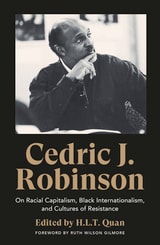
Cedric J. Robinson
On Racial Capitalism, Black Internationalism, and Cultures of ResistanceCedric J. Robinson
Pluto Press, 2019
"Like W. E. B. Du Bois, Michel Foucault, Sylvia Wynter, and Edward Said, Robinson was that rare polymath capable of seeing the whole....He left behind a body of work to which we must return constantly and urgently"—Robin D. G. Kelley, author of Freedom Dreams
Cedric J. Robinson is one of the doyens of Black Studies and a pioneer in study of the Black Radical Tradition. His works have been essential texts, deconstructing racial capitalism and inspiring insurgent movements from Ferguson, Missouri to the West Bank. For the first time, Robinson's essays come together, spanning over four decades and reflective of his diverse interests in the interconnections between culture and politics, radical social theory, and classic and modern political philosophy.
Themes explored include Africa and Black internationalism, World politics, race and US Foreign Policy, representations of blackness in popular culture, and reflections on popular resistance to racial capitalism, white supremacy and more. Essays here include:
*The Black Detective and American Memory
*Slavery and the Platonic Origins of Anti-Democracy
*Africa: In Hock to History and the Banks
*Blaxploitation and the Misrepresentation of Liberalism
*The Mulatta on Film
*Race, Capitalism, and Anti-democracy
*The Killing in Ferguson
*And much more!
Accompanied by an introduction by H. L. T. Quan and a foreword by Ruth Wilson Gilmore, this collection, which includes previously unpublished materials, extends the many contributions by a giant in Black radical thought.

Censorship in Romania
Lidia Vianu
Central European University Press, 1998

Central Peripheries
Nationhood in Central AsiaMarlene Laruelle
University College London, 2021
Committed to internationalism, Kazakhstan and other central Asian states nevertheless embrace classically nationalist conceptions of the nation-state. Their unabashed celebration of borders and citizenship challenges Western views of nationalism as a dying ideology transcended by cosmopolitanism. Drawing on twenty years of fieldwork, Central Peripheries reveals the origin of central Asian national consciousness in imaginary and ritualized efforts to grapple with the Soviet past.
Central Sites, Peripheral Visions
Cultural and Institutional Crossings in the History of AnthropologyEdited by Richard Handler
University of Wisconsin Press, 2006
The terms "center" and "periphery" are particularly relevant to anthropologists, since traditionally they look outward from institutional "centers"-universities, museums, government bureaus-to learn about people on the "peripheries." Yet anthropology itself, as compared with economics, politics, or history, occupies a space somewhat on the margins of academe. Still, anthropologists, who control esoteric knowledge about the vast range of human variation, often find themselves in a theoretically central position, able to critique the "universal" truths promoted by other disciplines.
Central Sites, Peripheral Visions presents five case studies that explore the dilemmas, moral as well as political, that emerge out of this unique position. From David Koester's analysis of how ethnographic descriptions of Iceland marginalized that country's population, to Kath Weston's account of an offshore penal colony where officials mixed prison work with ethnographic pursuits; from Brad Evans's reflections on the "bohemianism" of both the Harlem vogue and American anthropology, to Arthur J. Ray's study of anthropologists who serve as expert witnesses in legal cases, the essays in the eleventh volume of the History of Anthropology Series reflect on anthropology's always problematic status as centrally peripheral, or peripherally central.
Finally, George W. Stocking, Jr., in a contribution that is almost a book in its own right, traces the professional trajectory of American anthropologist Robert Gelston Armstrong, who was unceremoniously expelled from his place of privilege because of his communist sympathies in the 1950s. By taking up Armstrong's unfinished business decades later, Stocking engages in an extended meditation on the relationship between center and periphery and offers "a kind of posthumous reparation," a page in the history of the discipline for a distant colleague who might otherwise have remained in the footnotes.
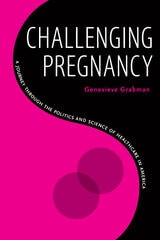
Challenging Pregnancy
A Journey through the Politics and Science of Healthcare in AmericaGenevieve Grabman
University of Iowa Press, 2022
Ultimately, national anti-abortion politics—not medicine or her own choices—determined the outcome of Grabman’s pregnancy. At every juncture, anti-abortion politics limited the care available to her, the doctors and hospitals willing to treat her, the tools doctors could use, and the words her doctors could say. Although she asked for aggressive treatment to save at least one baby, hospital ethics boards blocked all able doctors from helping her.
Challenging Pregnancy is about Grabman’s harrowing pregnancy and the science and politics of maternal healthcare in the United States, where every person must self-advocate for the desired outcome of their own pregnancy.
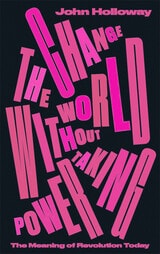
Change the World Without Taking Power
The Meaning of Revolution TodayJohn Holloway
Pluto Press, 2019
After a century of failed attempts by radical projects, the concept of revolution itself is in crisis. By asking the deepest questions about the nature of humanity, work, capitalism, organisation and resistance, John Holloway looks sharply at modern protest movements and provides tools for creating new strategies.
First published in 2002, this book marked a shift in the understanding of Autonomism, Anarchism and Marxism, addressing the doubts activists had in their own political history and work, and helped form the perspectives of a new generation who are today changing the world.

Chaos and the Automaton
Franco 'Bifo' Berardi
University of Minnesota Press, 2024
Facing real threats of extinction and futurelessness, a search for new ground on which to build projects toward emancipation
Chaos and the Automaton is the first volume to collect Franco “Bifo” Berardi’s extensive collaboration with e-flux, which has become one of his primary English-language publishers since 2010. The selection of key essays collected here presents Berardi’s prescient interventions into more than a decade of social turmoil, offering a tour through the cataclysms that have rocked the foundations of the global order since the 2008 financial crisis, from European austerity, Occupy, the Arab Spring, and Anonymous through the ascendance of Pope Francis, Brexit, Covid-19, the Trump–Biden sequence, the U.S. Capitol riots, and the Russian invasion of Ukraine—as well as bizarre new cultural occurrences that were consequences.
Berardi draws not only from current events but also movements and figures at the firmament of his thought, such as Guattari, Pasolini, and Italian street art of the 1970s. His essays represent a sustained and singular effort to reveal the psychic and material underpinnings of a society in which history came roaring back at the same moment as any vision of a sustainable future receded from sight. “I know that it is dangerous to write in simultaneity with events that nobody can precisely foresee, that can only be vaguely intuited,” he wrote on the eve of the 2020 American elections, “but the only way to imagine something about the becoming of the psycho-sphere is to run ahead of the dynamics of the disaster.”
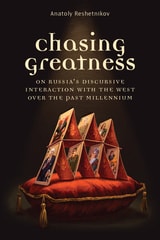
Chasing Greatness
On Russia's Discursive Interaction with the West over the Past MillenniumAnatoly Reshetnikov
University of Michigan Press, 2024
Despite its substantive historical depth, Chasing Greatness is not a book of history. Rather, it is a synthesizing social science work inspired by the continental tradition of the critical history of modernity. As such, the book is more about the present than about the past. Its main aim is to expose and explain the rich conceptual baggage behind Russia’s unceasing great power rhetoric (domestic and international) and how this rhetoric drives the current international crises involving Russia.
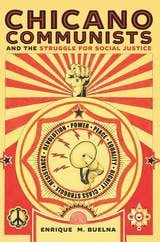
Chicano Communists and the Struggle for Social Justice
Enrique M. Buelna
University of Arizona Press, 2019
Lesser known is the influence that Communism and socialism had on the early roots of the Chicano Movement, a legacy that continues today. Examining the role of Mexican American working-class and radical labor activism in American history, Enrique M. Buelna focuses on the work of the radical Left, particularly the Communist Party (CP) USA.
Buelna delves into the experiences of Cuarón, in particular, as well as those of his family. He writes about the family’s migration from Mexico; work in the mines in Morenci, Arizona; move to Los Angeles during the Great Depression; service in World War II; and experiences during the Cold War as a background to exploring the experiences of many Mexican Americans during this time period.
The author follows the thread of radical activism and the depth of its influence on Mexican Americans struggling to achieve social justice and equality. The legacy of Cuarón and his comrades is significant to the Chicano Movement and in understanding the development of the labor and civil rights movements in the United States. Their contributions, in particular during the 1960s and 1970s, informed a new generation to demand an end to the Vietnam War and to expose educational inequality, poverty, civil rights abuses, and police brutality.
China Inside Out
Contemporary Chinese Nationalism and TransnationalismJoana Breidenbach
Central European University Press, 2005
The authors of this text believe that “areas” as assemblages of social processes requiring distinct, culture-bound explanations cannot be replaced with global theories, but that the meaning of “the area” can be different depending on the question one studies. The study of China and Chinese, in particular, is a good arena to challenge the disciplinary and geographic boundaries of conventional area studies for several reasons. First, because of the wealth of simultaneous processes of rapid political, social, and discursive change in contemporary Chinese society; second, because of the problematic relationship between state, territory, nation, and ethnicity in China; third, because China studies, perhaps more than any other area studies at the moment, is a highly competitive political and academic industry whose internal working must be critically examined. In addition, the subject of China has become one of the primary loci of contesting the meanings of globalization and the universality versus relativity of “values” and modernity.

Christian America and the Kingdom of God
Richard T. Hughes
University of Illinois Press, 2012

Christian America and the Kingdom of God
White Christian Nationalism from the Puritans through January 6, 2021Richard T. Hughes and Christina Littlefield
University of Illinois Press, 2025
A timely new edition of the acclaimed work, Christian America and the Kingdom of God spotlights how the centuries-long pursuit of a Christian America has bred an aggressive white Christian nationalism that twists faith, unleashes unchristian behavior, and threatens the nation.
Cinema is the Strongest Weapon
Race-Making and Resistance in Fascist ItalyLorenzo Fabbri
University of Minnesota Press, 2023
A deep dive into Italian cinema under Mussolini’s regime and the filmmakers who used it as a means of antifascist resistance
Looking at Italy’s national film industry under the rule of Benito Mussolini and in the era that followed, Cinema Is the Strongest Weapon examines how cinema was harnessed as a political tool by both the reigning fascist regime and those who sought to resist it. Covering a range of canonical works alongside many of their neglected contemporaries, this book explores film’s mutable relationship to the apparatuses of state power and racial capitalism.
Exploiting realism’s aesthetic, experiential, and affective affordances, Mussolini’s biopolitical project employed cinema to advance an idealized vision of life under fascism and cultivate the basis for a homogenous racial identity. In this book, Lorenzo Fabbri crucially underscores realism’s susceptibility to manipulation from diametrically opposed political perspectives, highlighting the queer, Communist, Jewish, and feminist filmmakers who subverted Mussolini’s notion that “cinema is the regime’s strongest weapon” by developing film narratives and film forms that challenged the prevailing ethno-nationalist ideology.
Focusing on an understudied era of film history and Italian cultural production, Fabbri issues an important recontextualization of Italy’s celebrated neorealist movement and the structural ties it shares with its predecessor. Drawing incisive parallels to contemporary debates around race, whiteness, authoritarianism, and politics, he presents an urgent examination into the broader impact of visual media on culture and society.
Retail e-book files for this title are screen-reader friendly with images accompanied by short alt text and/or extended descriptions.
Civil Movements in an Illiberal Regime
Political Activism in HungaryDániel Mikecz
Central European University Press, 2023
Dániel Mikecz addresses in this study the tensions between oppositional civil society and party-political actors. As successive elections demonstrate the increasing confidence of the illiberal regime of Viktor Orbán, left and liberal parties of the opposition have faced a prolonged crisis in credibility. At the same time, the civil society has not been immobile, and bottom-up initiatives, social and political movements, and non-governmental organizations have gained momentum in the public sphere. The ruling power is also active in the extra-parliamentary political arena. Through national consultations, Peace Marches, and other means, Orbán’s governing Fidesz party has mobilized voters outside of election campaigns and has implemented a so-called movement governance. The study offers a vivid examination of this top-down or astroturf mobilization of the regime.
Mikecz identifies the different patterns of activism and creates a coherent typology. He describes in detail each kind of activism based on opinion surveys, protest surveys and content analysis. The categorization and comprehensive exploration of civil movements provide a deep understanding of the mechanisms of illiberal postcommunist regimes.
Civil Society Elites
Field Studies from Cambodia and IndonesiaEdited by Astrid Norén-Nilsson, Amalinda Savirani, and Anders Uhlin
National University of Singapore Press, 2023
Class And Its Others
J. K. Gibson-Graham
University of Minnesota Press, 2000
A surprising and innovative look at class that proposes new approaches to this important topic
While references to gender, race, and class are everywhere in social theory, class has not received the kind of theoretical and empirical attention accorded to gender and race. A welcome and much-needed corrective, this book offers a novel theoretical approach to class and an active practice of class analysis.
The authors offer new and compelling ways to look at class through examinations of such topics as sex work, the experiences of African American women as domestic laborers, and blue- and white-collar workers. Their work acknowledges that individuals may participate in various class relations at one moment or over time and that class identities are multiple and changing, interacting with other aspects of identity in contingent and unpredictable ways.
The essays in the book focus on class difference, class transformation and change, and on the intersection of class, race, gender, sexuality, and other dimensions of identity. They find class in seemingly unlikely places-in households, parent-child relationships, and self-employment-and locate class politics on the interpersonal level as well as at the level of enterprises, communities, and nations. Taken together, they will prompt a rethinking of class and class subjectivity that will expand social theory.
Contributors: Enid Arvidson, U of Texas, Arlington; Jenny Cameron, Monash U, Australia; Harriet Fraad; Janet Hotch; Susan Jahoda, U of Massachusetts, Amherst; Amitava Kumar, U of Florida; Cecilia Marie Rio; Jacquelyn Southern; Marjolein van der Veen.

Class Forces
Youth and Labor in the Making of the Egyptian Uprising of 2011Nada Matta
University of Michigan Press, 2027
Class Forces offers a new political economy explanation of the forces behind Egypt’s 2011 uprising. How did movements that had long struggled to challenge an authoritarian regime suddenly help generate a mass uprising capable of bringing down President Hosni Mubarak—and why did that uprising ultimately fail? Moving beyond explanations centered on economic grievances and political repression, the book shows how transformations in capitalism and changing class relations created new opportunities for labor, democratic, and youth movements to mobilize. It traces how the evolving relationship between business and the regime indirectly helped open political space and strengthen movements whose organizational capacities had remained limited.
Nada Matta argues that class dynamics were central to the extraordinary mass mobilization that filled Tahrir Square during the uprising. By focusing on class linkages rather than the more static concept of cross-class coalitions, Matta offers a dynamic account of class relations that also identifies the limits of associational capacities and durable cross-class alliances and helps explain why democratic forces failed to consolidate political gains after President Hosni Mubarak’s ouster. Class Forces illuminates the sources of movement power and vulnerability under contemporary capitalism for social movement practitioners.
Class Politics and the Creation of the American State
James Parisot
University of Michigan Press, 2026
Why does the American federal government seem to prioritize elite capitalist interests over those of other groups? Class Politics and the Creation of the American State draws on a wide range of sources—personal letters, official government documents, private notes, and newspaper articles—to reveal that the federal government was built to give the emerging capitalist elite a way to consolidate and institutionalize their power. Challenging both liberal and conservative interpretations about what the US Constitution means, this book tells a new story about how the American state took shape.
The framers of the Constitution constructed an image of the state, enshrined in the Constitution, that presented their power as universal: a system meant to serve all Americans equally. This image helped legitimize the new order, even if the rising capitalist class stood to benefit most of all. Since the United States of the late 1780s was not yet a fully capitalist society, the state that was built opened space for less capitalistically incorporated social classes, including some artisans and yeoman farmers, to have limited representation. Class Politics and the Creation of the American State shows how the structure of the early American state worked primarily to advance capitalist interests, while incorporating other groups enough to maintain a sense of broad representation and inclusion.
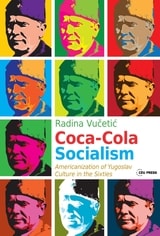
Coca-Cola Socialism
Americanization of Yugoslav Culture in the SixtiesRadina Vucetic
Central European University Press, 2018
This book is about the Americanization of Yugoslav culture and everyday life during the nineteen-sixties. After falling out with the Eastern bloc, Tito turned to the United States for support and inspiration. In the political sphere the distance between the two countries was carefully maintained, yet in the realms of culture and consumption the Yugoslav regime was definitely much more receptive to the American model. For Titoist Yugoslavia this tactic turned out to be beneficial, stabilising the regime internally and providing an image of openness in foreign policy.
Coca-Cola Socialism addresses the link between cultural diplomacy, culture, consumer society and politics. Its main argument is that both culture and everyday life modelled on the American way were a major source of legitimacy for the Yugoslav Communist Party, and a powerful weapon for both USA and Yugoslavia in the Cold War battle for hearts and minds.
Radina Vučetić explores how the Party used American culture in order to promote its own values and what life in this socialist and capitalist hybrid system looked like for ordinary people who lived in a country with communist ideology in a capitalist wrapping. Her book offers a careful reevaluation of the limits of appropriating the American dream and questions both an uncritical celebration of Yugoslavia’s openness and an exaggerated depiction of its authoritarianism.
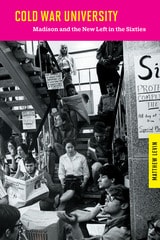
Cold War University
Madison and the New Left in the SixtiesMatthew Levin
University of Wisconsin Press, 2013
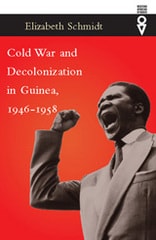
Cold War and Decolonization in Guinea, 1946–1958
Elizabeth Schmidt
Ohio University Press, 2007
In September 1958, Guinea claimed its independence, rejecting a constitution that would have relegated it to junior partnership in the French Community. In all the French empire, Guinea was the only territory to vote “No.” Orchestrating the “No” vote was the Guinean branch of the Rassemblement Démocratique Africain (RDA), an alliance of political parties with affiliates in French West and Equatorial Africa and the United Nations trusts of Togo and Cameroon. Although Guinea’s stance vis-à-vis the 1958 constitution has been recognized as unique, until now the historical roots of this phenomenon have not been adequately explained.
Clearly written and free of jargon, Cold War and Decolonization in Guinea argues that Guinea’s vote for independence was the culmination of a decade-long struggle between local militants and political leaders for control of the political agenda. Since 1950, when RDA representatives in the French parliament severed their ties to the French Communist Party, conservative elements had dominated the RDA. In Guinea, local cadres had opposed the break. Victimized by the administration and sidelined by their own leaders, they quietly rebuilt the party from the base. Leftist militants, their voices muted throughout most of the decade, gained preeminence in 1958, when trade unionists, students, the party’s women’s and youth wings, and other grassroots actors pushed the Guinean RDA to endorse a “No” vote. Thus, Guinea’s rejection of the proposed constitution in favor of immediate independence was not an isolated aberration. Rather, it was the outcome of years of political mobilization by activists who, despite Cold War repression, ultimately pushed the Guinean RDA to the left.
The significance of this highly original book, based on previously unexamined archival records and oral interviews with grassroots activists, extends far beyond its primary subject. In illuminating the Guinean case, Elizabeth Schmidt helps us understand the dynamics of decolonization and its legacy for postindependence nation-building in many parts of the developing world.
Examining Guinean history from the bottom up, Schmidt considers local politics within the larger context of the Cold War, making her book suitable for courses in African history and politics, diplomatic history, and Cold War history.

Cold War on the Airwaves
The Radio Propaganda War against East GermanyNicholas J. Schlosser
University of Illinois Press, 2015
Nicholas J. Schlosser draws on broadcast transcripts, internal memoranda, listener letters, and surveys by the U.S. Information Agency to profile RIAS. Its mission: to undermine the German Democratic Republic with propaganda that, ironically, gained in potency by obeying the rules of objective journalism. Throughout, Schlosser examines the friction inherent in such a contradictory project and propaganda's role in shaping political culture. He also portrays how RIAS's primarily German staff influenced its outlook and how the organization both competed against its rivals in the GDR and pushed communist officials to alter their methods in order to keep listeners.
From the occupation of Berlin through the airlift to the construction of the Berlin Wall, Cold War on the Airwaves offers an absorbing view of how public diplomacy played out at a flashpoint of East-West tension.

Comic Fascism
Ideology, Catholicism, and Americanism in Italian Children’s PeriodicalsZane Elward
The Ohio State University Press, 2025
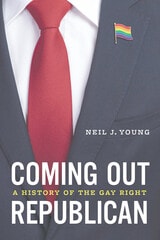
Coming Out Republican
A History of the Gay RightNeil J. Young
University of Chicago Press, 2024
One of the most maligned, misunderstood, and even mocked constituencies in American politics, gay Republicans regularly face condemnation from both the LGBTQ+ community and their own political party. Yet they’ve been active and influential for decades. Gay conservatives were instrumental, for example, in ending “Don’t Ask, Don’t Tell” and securing the legalization of same-sex marriage—but they also helped lay the groundwork for the rise of Donald Trump.
In Coming Out Republican, political historian and commentator Neil J. Young provides the first comprehensive history of the gay Right. From the 1950s up to the present day, Young excavates the multifarious origins, motivations, and evolutions of LGBTQ+ people who found their way to the institutions and networks of modern conservatism. Many on the gay Right have championed conservative values—like free markets, a strong national defense, and individual liberty—and believed that the Republican Party therefore offered LGBTQ+ people the best pathway to freedom. Meanwhile, that same party has actively and repeatedly demonized them. With his precise and provocative voice, Young details the complicated dynamics of being in—and yet never fully accepted into—the Republican Party.
Coming Out Republican provides striking insight into who LGBTQ+ conservatives are, what they want, and why many of them continue to align with a party whose rank and file largely seem to hate them. As the Republican Party renews its assaults on LGBTQ+ rights, understanding the significant history of the gay Right has never been more critical.
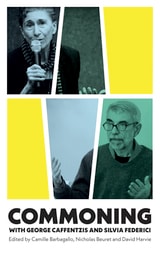
Commoning with George Caffentzis and Silvia Federic
Camille Barbagallo, Nicholas Beuret and David Harvie
Pluto Press, 2019
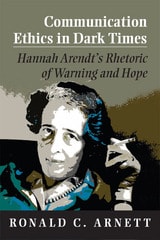
Communication Ethics in Dark Times
Hannah Arendt's Rhetoric of Warning and HopeRonald C. Arnett
Southern Illinois University Press, 2013
Renowned in the disciplines of political theory and philosophy, Hannah Arendt’s searing critiques of modernity continue to resonate in other fields of thought decades after she wrote them. In Communication Ethics in Dark Times: Hannah Arendt’s Rhetoric of Warning and Hope, author Ronald C. Arnett offers a groundbreaking examination of fifteen of Arendt’s major scholarly works, considering the German writer’s contributions to the areas of rhetoric and communication ethics for the first time.
Arnett focuses on Arendt’s use of the phrase “dark times” to describe the mistakes of modernity, defined by Arendt as the post-Enlightenment social conditions, discourses, and processes ruled by principles of efficiency, progress, and individual autonomy. These principles, Arendt argues, have led humanity down a path of folly, banality, and hubris. Throughout his interpretive evaluation, Arnett illuminates the implications of Arendt’s persistent metaphor of “dark times” and engages the question, How might communication ethics counter the tenets of dark times and their consequences? A compelling study of Hannah Arendt’s most noteworthy works and their connections to the fields of rhetoric and communication ethics, Communication Ethics in Dark Times provides an illuminating introduction for students and scholars of communication ethics and rhetoric, and a tool with which experts may discover new insights, connections, and applications to these fields.
Top Book Award for Philosophy of Communication Ethics by Communication Ethics Division of the National Communication Association, 2013
Communism Day-to-Day
State Enterprises in East German SocietySandrine Kott
University of Michigan Press, 2014
First published in France in 2001 by Éditions Belin under the title Le communisme au quotidien, Sandrine Kott’s book examines how East German businesses and government carried out communist practices on a daily basis and how citizens and workers experienced the conditions created by the totalitarian state in their daily lives. Kott undertakes a social analysis of the Communist Party’s grasp on state enterprises and the limits of its power. She then analyzes the enterprises themselves and the social, generational, and gender tensions that had a profound impact on the lived experience of socialism. Finally, she considers the development and acceptance of a complex set of rituals and gift exchanges that masked latent conflicts while providing meaning to socialism’s role in ordinary life.

Communism, Religion, and Revolt in Banten in the Early Twentieth Century
Mis Sea#86Michael Williams
Ohio University Press, 1990
Twice in this century popular revolts against colonial rule have occured in the Banten district of West Java. These revolts, conducted largely under an Islamic leadership, also proclaimed themselves Communist. Islamic Communism is seemingly a paradox. This is especially the case when one considers that probably no religion has proved more resistant to Communist ideology than Islam.
Michael Williams here details the complicated history of the Bantenese revolts in the twentieth century and probes the ideological riddle of Islamic Communism. Modern history is replete with examples of regions with a long history of organizing themselves politically to resist intrusion on their territory, resources, and people. This book establishes that in Indonesia, the Bantenese were among the most practiced exponents of resistance.
Communism
A TLS CompanionEdited by Ferdinand Mount
University of Chicago Press, 1993
Contributors to this volume include Isaac Deutscher, Eric Hobsbawm, Richard Pipes, Hugh Seton-Watson, Robert Conquest, Geoffrey Hosking, C. M. Woodhouse, Max Hayward, Leszek Kolakowski, Timothy Garton Ash, and many others of equal distinction. The volume is arranged in four sections covering the period leading to the Russian Revolution, the post-Revolution era of Lenin, Trotsky, and Stalin; the Soviet Union from World War II to 1968; and the final period of disillusionment and collapse.
Communist Gourmet
The Curious Story of Food in the People’s Republic of BulgariaAlbena Shkodrova
Central European University Press, 2021
Communist Gourmet presents a lively, detailed account of how the communist regime in Bulgaria determined people’s everyday food experience between 1944 and 1989. It examines the daily routines of acquiring food, cooking it, and eating out at restaurants through the memories of Bulgarians and foreigners, during communism.
In looking back on a wide array of issues and events, Albena Shkodrova attempts to explain the paradoxes of daily existence. She reports human stories that are touching, sometimes dark, but often full of humor and anecdotes from nearly one hundred people: some of them are Bulgarians who were involved in the communist food industry, whether as consumers or employees, while others are visitors from the United States and Western Europe who report culinary highlights and disappointments. The author made use of the national press, officially published cookbooks, Communist Party documents, and other previously unstudied sources.
An appendix containing recipes of dishes typical of the period and an extensive set of archival photographs are special features of the volume.
Communists and Community
Activism in Detroit's Labor Movement, 1941-1956Ryan S. Pettengill
Temple University Press, 2020
Communists and Community seeks to reframe the traditional chronology of the Communist Party in the United States as a means to better understand the change that occurred in community activism in the mid-twentieth century. Ryan Pettengill argues that Popular Front activism continued to flourish throughout the war years and into the postwar period. In Detroit, where there was a critical mass of heavy industry, Communist Party activists mobilized support for civil rights and affordable housing, brought attention to police brutality, sought protection for the foreign-born, and led a movement for world peace.
Communists and Community demonstrates that the Communist Party created a social space where activists became effective advocates for the socioeconomic betterment of a multiracial work force. Pettengill uses Detroit as a case study to examine how communist activists and their sympathizers maintained a community to enhance the quality of life for the city’s working class. He investigates the long-term effects of organized labor’s decision to force communists out of the unions and abandon community-based activism. Communists and Community recounts how leftists helped workers, people of color, and other under-represented groups became part of the mainstream citizenry in America.
Communists in Harlem during the Depression
Mark Naison
University of Illinois Press, 2004
Winner of the Ralph Bunche Award, American Political Science Association
No socialist organization has ever had a more profound effect on black life than the Communist Party did in Harlem during the Depression. Mark Naison describes how the party won the early endorsement of such people as Adam Clayton Powell Jr. and how its support of racial equality and integration impressed black intellectuals, including Richard Wright, Langston Hughes, and Paul Robeson.
This meticulously researched work, largely based on primary materials and interviews with leading black Communists from the 1930s, is the first to fully explore this provocative encounter between whites and blacks. It provides a detailed look at an exciting period of reform, as well as an intimate portrait of Harlem in the 1920s and 30s, at the high point of its influence and pride.