Results by title
74 books match the query 'Puerto Rico' and 7 start with c
Carceral Citizens
Labor and Confinement in Puerto RicoCaroline M. Parker
University of Chicago Press, 2024
In Carceral Citizens, anthropologist Caroline M. Parker offers an ethnographic portrait of therapeutic communities in Puerto Rico, the oldest colony in the Americas. As nonprofits nested within the carceral state, therapeutic communities serve as reeducation and recovery centers for the mostly male drug offenders who serve out their sentences engaged in manual labor and prayer. The most surprising aspect of these centers, however, is that their “graduates” often remain long after the completion of their term, working as self-appointed peer counselors in a mixture of volunteer and low-wage positions.
Parker seeks to explain this dynamic by showing how, in these therapeutic communities, criminalized men find new and meaningful ways of living in the shadow of the prison. Through their participation in the day-to-day functioning of the centers, they discover and cultivate alternative forms of belonging, livelihood, and citizenship, despite living within the restrictions of the carceral state. Situating her study against the backdrop of Puerto Rico’s colonial history, and with findings that extend across Latin America, Parker challenges common assumptions about confinement, labor, and rehabilitation. By delving into lives shaped by the convergence of imperialism, the carceral state, and self-help, she offers a fresh understanding of the transformations of labor and social life brought about by mass incarceration.
Carceral Citizens
Labor and Confinement in Puerto RicoCaroline M. Parker
University of Chicago Press, 2024
In Carceral Citizens, anthropologist Caroline M. Parker offers an ethnographic portrait of therapeutic communities in Puerto Rico, the oldest colony in the Americas. As nonprofits nested within the carceral state, therapeutic communities serve as reeducation and recovery centers for the mostly male drug offenders who serve out their sentences engaged in manual labor and prayer. The most surprising aspect of these centers, however, is that their “graduates” often remain long after the completion of their term, working as self-appointed peer counselors in a mixture of volunteer and low-wage positions.
Parker seeks to explain this dynamic by showing how, in these therapeutic communities, criminalized men find new and meaningful ways of living in the shadow of the prison. Through their participation in the day-to-day functioning of the centers, they discover and cultivate alternative forms of belonging, livelihood, and citizenship, despite living within the restrictions of the carceral state. Situating her study against the backdrop of Puerto Rico’s colonial history, and with findings that extend across Latin America, Parker challenges common assumptions about confinement, labor, and rehabilitation. By delving into lives shaped by the convergence of imperialism, the carceral state, and self-help, she offers a fresh understanding of the transformations of labor and social life brought about by mass incarceration.
Caribbean Paleodemography
Population, Culture History, and Sociopolitical Processes in Ancient Puerto RicoL. Antonio Curet
University of Alabama Press, 2005
Unearthing the demographic past of the Caribbean to illuminate its cultural origins and transformations.
According to the European chronicles, at the time of contact, the Greater Antilles were inhabited by the Taino or Arawak Indians, who were organized in hierarchical societies. Since its inception Caribbean archaeology has used population as an important variable in explaining many social, political, and economic processes such as migration, changes in subsistence systems, and the development of institutionalized social stratification.
In Caribbean Paleodemography, L. Antonio Curet argues that population has been used casually by Caribbean archaeologists and proposes more rigorous and promising ways in which demographic factors can be incorporated in our modeling of past human behavior. He analyzes a number of demographic issues in island archaeology at various levels of analysis, including inter- and intra-island migration, carrying capacity, population structures, variables in prehistory, cultural changes, and the relationship with material culture and social development. With this work, Curet brings together the diverse theories on Greater Antilles island populations and the social and political forces governing their growth and migration.
Casa Pueblo
A Puerto Rican Model of Self-GovernanceAlexis Massol González, Translated by Ashwin Ravikumar and Paul Schroeder Rodríguez
Lever Press, 2022
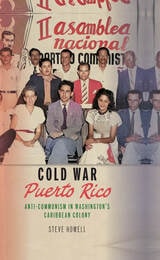
Cold War Puerto Rico
Anti-Communism in Washington’s Caribbean ColonySteve Howell
University of Massachusetts Press, 2026
A gripping history of FBI surveillance, political repression, and the fight for Puerto Rican independence
In the 1940s, with the construction of a naval base and a bombing range, Puerto Rico became a major geo-political military outpost for the United States. For a power claiming global leadership in a decolonizing world, however, the archipelago’s colonial condition underscored the dissonance between American democratic rhetoric and its imperial reality. The solution was a deal that, in 1952, gave Puerto Rico a degree of self-government without changing its legal status as an “unincorporated” US territory. The US then publicly claimed Puerto Rico was now more autonomous while using repressive tactics such as FBI surveillance, arrests, destabilization, and other methods developed in Washington to silence activists and political parties pushing for full independence.
In Cold War Puerto Rico, Steve Howell examines how J. Edgar Hoover and the FBI targeted Puerto Rican communists as part of an offensive against pro-independence parties and activists generally. Howell’s US-born father, who fell afoul of Hoover for producing radical cartoons while working in San Juan in the 1940s, remained on the FBI’s watch list long after exiling himself in Britain. His close friends, the Puerto Rican author César Andreu Iglesias and Jane Speed de Andreu, were meanwhile arrested and imprisoned three times during the 1950s. Drawing on a wealth of new sources, including interviews and FBI files, Howell tells their stories along with those of other activists who battled indictment in 1954 under the Smith Act, challenged the jurisdiction of the House Un-American Activities Committee in San Juan in 1959, and revived the Puerto Rican independence movement in the 1960s, despite the FBI deploying the covert tactics of COINTELPRO against them.
Puerto Rico is virtually invisible in histories of what is generally called McCarthyism, yet anti-communist repression was in many ways more intense there than in the mainland US. Now, with Puerto Rico’s future currently hanging in the balance, Howell’s compelling history demonstrates why we need to understand the long enforcement of its colonial status.
Colonial Debts
The Case of Puerto RicoRocío Zambrana
Duke University Press, 2021
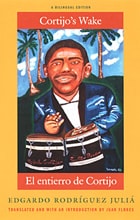
Cortijo's Wake / El entierro de Cortijo
Edgardo Rodríguez Juliá
Duke University Press, 2004
Winding through the streets of working-class San Juan with Cortijo’s funeral procession, Rodríguez Juliá’s autobiographical chronicle provides a rare portrait of the impoverished society from which Cortijo’s music emerged. Along with detailed renderings of grief-stricken mourners—including Cortijo’s childhood friend and fellow musician, the celebrated singer Ismael ("Maelo") Rivera—Rodríguez Juliá records his feelings as he, a light-skinned, middle-class writer, confronts the world of poor black Puerto Ricans. The author’s masterful shifting of linguistic registers, his acute sensitivity to Puerto Rican social codes, his broad knowledge of popular music, and his sardonic ruminations on death and immortality make this one of the most widely read books of modern Puerto Rican literature. Well-known critic and cultural historian Juan Flores has provided a scrupulous translation of Rodríguez Juliá’s text and an introduction situating the book in relation to Puerto Rican music and culture and the careers of Cortijo and Rodríguez Juliá.