Results by title
753 books match the query 'Race' and 49 start with c
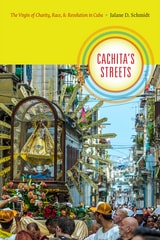
Cachita's Streets
The Virgin of Charity, Race, and Revolution in CubaJalane D. Schmidt
Duke University Press, 2015
Café con leche
Race, Class, and National Image in VenezuelaBy Winthrop R. Wright
University of Texas Press, 1990
For over a hundred years, Venezuelans have referred to themselves as a café con leche (coffee with milk) people. This colorful expression well describes the racial composition of Venezuelan society, in which European, African, and Indian peoples have intermingled to produce a population in which almost everyone is of mixed blood. It also expresses a popular belief that within their blended society Venezuelans have achieved a racial democracy in which people of all races live free from prejudice and discrimination. Whether or not historical facts actually support this popular perception is the question Winthrop Wright explores in this study.
Wright's research suggests that, contrary to popular belief, blacks in Venezuela have not enjoyed the full benefits of racial democracy. He finds that their status, even after the abolition of slavery in 1854, remained low in the minds of Venezuelan elites, who idealized the European somatic type and viewed blacks as inferior. Indeed, in an effort to whiten the population, Venezuelan elites promoted European immigration and blocked the entry of blacks and Asians during the early twentieth century.
These attitudes remained in place until the 1940s, when the populist Acción Democrática party (AD) challenged the elites' whitening policies. Since that time, blacks have made significant strides and have gained considerable political power. But, as Wright reveals, other evidence suggests that most remain social outcasts and have not accumulated significant wealth. The popular perception of racial harmony in Venezuela hides the fact of ongoing discrimination.
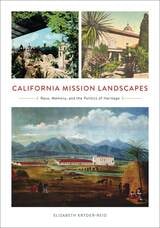
California Mission Landscapes
Race, Memory, and the Politics of HeritageElizabeth Kryder-Reid
University of Minnesota Press, 2016
“Nothing defines California and our nation’s heritage as significantly or emotionally,” says the California Mission Foundation, “as do the twenty-one missions that were founded along the coast from San Diego to Sonoma.” Indeed, the missions collectively represent the state’s most iconic tourist destinations and are touchstones for interpreting its history. Elementary school students today still make model missions evoking the romanticized versions of the 1930s. Does it occur to them or to the tourists that the missions have a dark history?
California Mission Landscapes is an unprecedented and fascinating history of California mission landscapes from colonial outposts to their reinvention as heritage sites through the late nineteenth and twentieth centuries. Illuminating the deeply political nature of this transformation, Elizabeth Kryder-Reid argues that the designed landscapes have long recast the missions from sites of colonial oppression to aestheticized and nostalgia-drenched monasteries. She investigates how such landscapes have been appropriated in social and political power struggles, particularly in the perpetuation of social inequalities across boundaries of gender, race, class, ethnicity, and religion. California Mission Landscapes demonstrates how the gardens planted in mission courtyards over the past 150 years are not merely anachronistic but have become potent ideological spaces. The transformation of these sites of conquest into physical and metaphoric gardens has reinforced the marginalization of indigenous agency and diminished the contemporary consequences of colonialism. And yet, importantly, this book also points to the potential to create very different visitor experiences than these landscapes currently do.
Despite the wealth of scholarship on California history, until now no book has explored the mission landscapes as an avenue into understanding the politics of the past, tracing the continuum between the Spanish colonial period, emerging American nationalism, and the contemporary heritage industry.
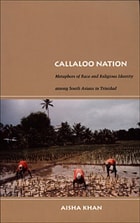
Callaloo Nation
Metaphors of Race and Religious Identity among South Asians in TrinidadAisha Khan
Duke University Press, 2004
Khan combines ethnographic research she conducted in Trinidad over the course of a decade with extensive archival research to explore how Hindu and Muslim Indo-Trinidadians interpret authority, generational tensions, and the transformations of Indian culture in the Caribbean through metaphors of mixing. She demonstrates how ambivalence about the desirability of a callaloo nation—a multicultural society—is manifest around practices and issues, including rituals, labor, intermarriage, and class mobility. Khan maintains that metaphors of mixing are pervasive and worth paying attention to: the assumptions and concerns they communicate are key to unraveling who Indo-Trinidadians imagine themselves to be and how identities such as race and religion shape and are shaped by the politics of multiculturalism.
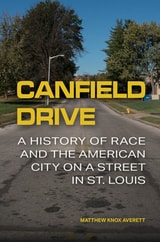
Canfield Drive
A History of Race and the American City on a Street in St. LouisMatthew Knox Averett
University of Missouri Press, 2027
Winner of the 2026 Missouri Conference on History Book Award; the 2026 Missouri History Book Award; and shortlisted for the 2026 ASU Humanities Book Award
On August 9, 2014, Michael Brown and a friend were walking down Canfield Drive, a residential street in the St. Louis suburb of Ferguson. There, they encountered Ferguson Police Officer Darren Wilson. Moments later, Brown was dead on the street—shot by Wilson at least six times. That evening, a memorial appeared on the pavement where he had fallen. In the days that followed, vigils turned into protests, and protests into an Uprising, as police in riot gear faced off with a grieving, outraged community. For nearly two weeks, Ferguson commanded the nation’s attention. The killing of Michael Brown was an outrage and it should not have happened. But Canfield Drive was primed for tragedy long before that fatal encounter because the street was already a place of racial conflict. This was no accident.
Canfield Drive: A History of Race and the American City on a Street in St. Louis uncovers the deeper history behind the street where Brown died, tracing how race and the built environment have long intersected in St. Louis—from the city’s founding to the Ferguson Uprising. The book follows the story of Black space across two centuries: from early Black communities, to the birth of the St. Louis Blues, to the Halcyon days of The Ville, to the destruction of Mill Creek Valley, to the tragedy of Pruitt-Igoe, and to the construction of Canfield Drive. Though Canfield Drive is the first comprehensive history of St. Louis’s Black urban landscape, it is more than just St. Louis's story. Canfield Drive details the racial engineering of the American city. Here is the machinery of American segregation laid bare: occupancy covenants, court decisions, racial steering, white flight, public housing, voucher systems, and predatory policing that combine to transform neighborhoods into traps. Here too are the people who fought back, building community against staggering odds and securing civil rights reforms that transformed America's understanding of government's obligations to its citizens.
Canfield Drive provides a powerful lens on the national story of race and the American city and reveals how Michael Brown's death was not just one officer's deadly decision, but the inevitable outcome of America's built environment—a tragedy centuries in the making, on a street designed for violence. This is how a place becomes a powder keg. This is how history erupts into headlines. This is the story behind the story that America couldn't look away from. This is the story of how a street came to matter, and how it came to stand for something far greater than itself.

Cannibal Democracy
Race and Representation in the Literature of the AmericasZita Nunes
University of Minnesota Press, 2008
Zita Nunes argues that the prevailing narratives of identity formation throughout the Americas share a dependence on metaphors of incorporation and, often, of cannibalism. From the position of the incorporating body, the construction of a national and racial identity through a process of assimilation presupposes a remainder, a residue.
Nunes addresses works by writers and artists who explore what is left behind in the formation of national identities and speak to the limits of the contemporary discourse of democracy. Cannibal Democracy tracks its central metaphor’s circulation through the work of writers such as Mário de Andrade, W. E. B. Du Bois, and Toni Morrison and journalists of the black press, as well as work by visual artists including Magdalena Campos-Pons and Keith Piper, and reveals how exclusion-understood in terms of what is left out-can be fruitfully understood in terms of what is left over from a process of unification or incorporation.
Nunes shows that while this remainder can be deferred into the future-lurking as a threat to the desired stability of the present-the residue haunts discourses of national unity, undermining the ideologies of democracy that claim to resolve issues of race.
Zita Nunes is associate professor of English at the University of Maryland, College Park.
Captivating Technology
Race, Carceral Technoscience, and Liberatory Imagination in Everyday LifeRuha Benjamin, editor
Duke University Press, 2019
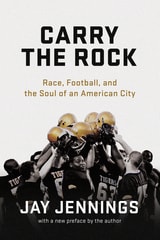
Carry the Rock
Race, Football, and the Soul of an American CityJay Jennings
University of Arkansas Press, 2023
Carry the Rock tells the story of the dramatic ups and downs of a high school football season and reveals a city struggling with its legacy of racial discrimination and the complex issues of contemporary segregation. In the season Jennings masterfully chronicles, Cox finds his ideas sorely tested in his attempts to unify the team, and the result is an account brimming with humor, compassion, frustration, and honesty. What Friday Night Lights did for small-town Texas, Carry the Rock does for the urban South and for any place like Little Rock where sports, race, and community intersect.
Cartographic Fictions
Maps, Race, and IdentityPiper, Karen
Rutgers University Press, 2002
Maps are stories as much about us as about the landscape. They reveal changing perceptions of the natural world, as well as conflicts over the acquisition of territories. Cartographic Fictions looks at maps in relation to journals, correspondence, advertisements, and novels by authors such as Joseph Conrad and Michael Ondaatje. In her innovative study, Karen Piper follows the history of cartography through three stages: the establishment of the prime meridian, the development of aerial photography, and the emergence of satellite and computer mapping.
Piper follows the cartographer’s impulse to “leave the ground” as the desire to escape the racialized or gendered subject. With the distance that the aerial view provided, maps could then be produced “objectively,” that is, devoid of “problematic” native interference. Piper attempts to bring back the dialogue of the “native informant,” demonstrating how maps have historically constructed or betrayed anxieties about race. The book also attempts to bring back key areas of contact to the map between explorer/native and masculine/feminine definitions of space.

Catching History on the Wing
Race, Culture and GlobalisationA. Sivanandan
Pluto Press, 2008
A. Sivanandan is a highly influential thinker on race, racism, globalisation and resistance. Since 1972, he has been the director of the Institute of Race Relations and the editor of Race & Class, which set the policy agenda on ethnicity and race in the UK and worldwide. Sivanandan has been writing for over forty years and this is the definitive collection of his work.
The articles selected span his entire career and are chosen for their relevance to today's most pressing issues. Included is a complete bibliography of Sivanandan’s writings, and an introduction by Colin Prescod (chair of the IRR), which sets the writings in context.
This book is highly relevant to undergraduate politics students and anyone reading or writing on race, ethnicity and immigration.
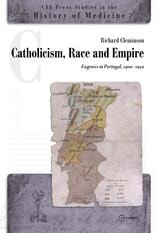
Catholicism, Race and Empire
Eugenics in Portugal, 1900-1950Richard Cleminson
Central European University Press, 2014
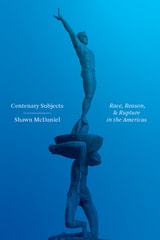
Centenary Subjects
Race, Reason, and Rupture in the AmericasShawn McDaniel
Vanderbilt University Press, 2021
Arielismo takes its name from José Enrique Rodó’s foundational essay Ariel (1900), a wide‑ranging gospel dedicated to Latin American youth that incited a cultural awakening under the banner of the spirit throughout the Americas at an ominous juncture—when the US co-opted the Cuban War of Independence in 1898, effectively rebranding it as the Spanish‑American War. Rodó’s optimistic message of transcendence as an antidote to the encroaching empire quickly became one of the most pervasive and malleable paradigms of regional empowerment, reverberating throughout a range of Latin Americanist projects in the twentieth and twenty‑first centuries.
Centenary Subjects recovers a series of important but understudied essays penned by arielista writers, radicals, pedagogues, prophets, and politicians of diverse stripes in the early twentieth century, and analyzes how, under the auspices of the arielista platform, young people emerged as historical subjects invested with unprecedented cultural capital, increasing political power, and an urgent mandate to break with the past and transform the sociopolitical and cultural landscape of their countries. But their respective designs harbor racial, epistemological, aesthetic, and anarchistic strains that bring into sharper relief the conflicting signals that the centenary subject had to parse with respect to race, reason, and rupture.

Chicago
Race, Class, and the Response to Urban DeclineGregory Squires
Temple University Press, 1989

Chicano Novels and the Politics of Form
Race, Class, and ReificationMarcial González
University of Michigan Press, 2008
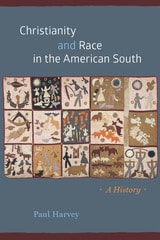
Christianity and Race in the American South
A HistoryPaul Harvey
University of Chicago Press, 2016
Harvey chronicles the diversity and complexity in the intertwined histories of race and religion in the South, dating back to the first days of European settlement. He presents a history rife with strange alliances, unlikely parallels, and far too many tragedies, along the way illustrating that ideas about the role of churches in the South were critically shaped by conflicts over slavery and race that defined southern life more broadly. Race, violence, religion, and southern identity remain a volatile brew, and this book is the persuasive historical examination that is essential to making sense of it.
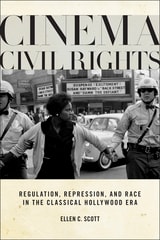
Cinema Civil Rights
Regulation, Repression, and Race in the Classical Hollywood EraScott, Ellen C
Rutgers University Press, 2015
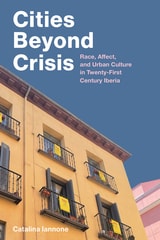
Cities Beyond Crisis
Race, Affect, and Urban Culture in Twenty-First-Century IberiaCatalina Iannone
Vanderbilt University Press, 2025
In Cities Beyond Crisis, Catalina Iannone studies the rapid evolution of Iberian urban centers in the years following the 2008 financial crisis, identifying how this event catalyzed a protracted period of unraveling and reorganization in the region. Arguing that the affects and effects of the crisis are best understood when embedded within local environments, Cities Beyond Crisis focuses on how textual, visual, and spatial interventions both drove and contested change in two racially diverse, historically marginalized neighborhoods in the capital cities of Spain and Portugal—Madrid’s Lavapiés and Lisbon’s Mouraria. Through a critical examination of the narratives shaping public perception of these spaces, whether promoting their development and consumption or challenging market-oriented trends, Iannone demonstrates how the stories that stakeholders across the ideological spectrum told about these districts illuminate enduring attachments and aspirations in each nation’s relationship to race. By approaching the study of space as a contested and contingent social product, this book takes an interdisciplinary approach, drawing from both humanistic and social science theories and practices to show how cultural production shapes and is shaped by the built environment.
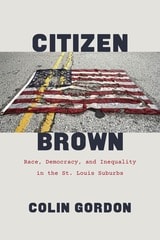
Citizen Brown
Race, Democracy, and Inequality in the St. Louis SuburbsColin Gordon
University of Chicago Press, 2019
Citizen Brown uncovers half a century of private practices and public policies that resulted in bitter inequality and sustained segregation in Ferguson and beyond. Gordon shows how municipal and school district boundaries were pointedly drawn to contain or exclude African Americans and how local policies and services—especially policing, education, and urban renewal—were weaponized to maintain civic separation. He also makes it clear that the outcry that arose in Ferguson was no impulsive outburst but rather an explosion of pent-up rage against long-standing systems of segregation and inequality—of which a police force that viewed citizens not as subjects to serve and protect but as sources of revenue was only the most immediate example. Worse, Citizen Brown illustrates the fact that though the greater St. Louis area provides some extraordinarily clear examples of fraught racial dynamics, in this it is hardly alone among American cities and regions.
Interactive maps and other companion resources to Citizen Brown are available at the book website.
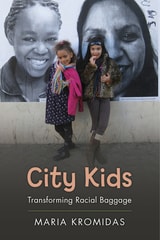
City Kids
Transforming Racial BaggageKromidas, Maria
Rutgers University Press, 2016
Civilizing Natures
Race, Resources, and Modernity in Colonial South IndiaPhilip, Kavita
Rutgers University Press, 2003
Science was a central pillar of colonialism, but the converse holds true as well: colonialism profoundly shaped the character of nineteenth-century science. Civilizing Natures unravels unexpected relationships between science, technology, and administrative systems in colonial India from the 1850s to the 1930s, deepening our perspective on continuing conflicts over race, resources, and empire.
Botanists, anthropologists, and foresters had their most important sources of data—nature and natives—located at colonial sites. In the hilly, forested regions of Madras Presidency, tribal populations were studied by ethnographers, managed by revenue officials, recruited by plantation contractors, and modernized by missionaries. Racial constructions of nature and modernity helped criminalize and domesticate unruly natives. This is a story about the construction of nature in southern India that is deeply local and irreducibly global.
Through detailed case studies, Kavita Philip shows how race and nature are fundamental to understanding colonial modernities. Through its insightful combination of methodologies from both the humanities and the social sciences, Civilizing Natures complicates our understandings of the relationships between science and religion, pre-modern and civilized, environment and society.
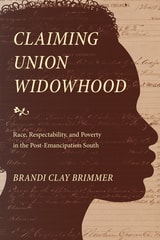
Claiming Union Widowhood
Race, Respectability, and Poverty in the Post-Emancipation SouthBrandi Clay Brimmer
Duke University Press, 2020
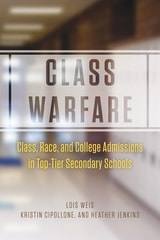
Class Warfare
Class, Race, and College Admissions in Top-Tier Secondary SchoolsLois Weis, Kristin Cipollone, and Heather Jenkins
University of Chicago Press, 2014
Drawing on deep and sustained contact with students, parents, teachers, and administrators at three iconic secondary schools in the United States, the authors unveil a formidable process of class positioning at the heart of the college admissions process. They detail the ways students and parents exploit every opportunity and employ every bit of cultural, social, and economic capital they can in order to gain admission into a “Most Competitive” or “Highly Competitive Plus” university. Moreover, they show how admissions into these schools—with their attendant rankings—are used to lock in or improve class standing for the next generation. It’s a story of class warfare within a given class, the substrata of which—whether economically, racially, or socially determined—are fiercely negotiated through the college admissions process.
In a historic moment marked by deep economic uncertainty, anxieties over socioeconomic standing are at their highest. Class, as this book shows, must be won, and the collateral damage of this aggressive pursuit may just be education itself, flattened into a mere victory banner.

Classics and Race
A Historical ReaderEdited by Sarah Derbew, Daniel Orrells, and Phiroze Vasunia
University College London, 2025
Spanning centuries and continents, Classics and Race follows the entangled histories of classical studies and racial thought to show how ancient texts have been used to shape and justify ideas about race. This essential collection presents historical primary sources from the late medieval period to the mid-twentieth century, each paired with insightful essays by leading scholars who unpack their significance in shaping both racist and anti-racist ideologies.
Moving chronologically, the volume explores classical humanism in the Renaissance, the discipline’s ties to the transatlantic slave trade, and the global intersections of race and antiquity across Africa, Asia, the Caribbean, Europe, and North America. Rather than treating Classics as a neutral intellectual pursuit, this work demonstrates how the field has long been entangled in broader struggles over identity and power. More relevant than ever, Classics and Race offers a vital historical foundation for ongoing debates about the role of antiquity in shaping modern racial discourse.
Codes of Conduct
Race, Ethics, and the Color of Our CharacterHolloway, Karla F. C.
Rutgers University Press, 1995
In Codes of Conduct, Karla Holloway meditates on the dynamics of race and ethnicity as they are negotiated in the realms of power. Her uniquely insightful and intelligent analysis guides us in a fresh way through Anita Hill’s interrogation, the assault on Tawana Brawley, the mass murders of Atlanta’s children, the schisms between the personal and public domains of her life as a black professor, and––in a moving epilogue––the story of her son’s difficulties growing up as a young black male in contemporary society. Its three main sections: “The Body Politic,” “Language, Thought, and Culture,” and “The Moral Lives of Children,” relate these issues to the visual power of the black and female body, the aesthetic resonance and racialized drama of language, and our children’s precarious habits of surviving. Throughout, Holloway questions the consequences in African-American community life of citizenship that is meted out sparingly when one’s ethnicity is colored.
This is a book of a culture’s stories––from literature, public life, contemporary and historical events, aesthetic expression, and popular culture––all located within the common ground of African-American ethnicity. Holloway writes with a passion, urgency, and wit that carry the reader swiftly through each chapter. The book should take its place among those other important contemporary works that speak to the future relationships between whites and blacks in this country.
Colonial Inscriptions
Race, Sex, and Class in KenyaCarolyn Martin Shaw
University of Minnesota Press, 1995
In Kenyan colonialist imagery, the Kikuyu were vilified as deceitful servants while the Maasai were romanticized as noble savages in a fashion similar to American representation of the Black slave and the "wild" Indian. Carolyn Martin Shaw examines this imagery in the works of historians and ethnographers, as well as in novels and films.
Through the works of Louis Leakey, Jomo Kenyatta, Elspeth Huxley, and Isak Dinesen, along with her own ethnographic research, Martin Shaw investigates the discourses that shaped inequalities, rivalries, and fantasies in colonial Kenya. She explores narratives of domination and subordination, arguing that Europeans brought to Africa long-established ideas of difference that influenced racial inequalities in the colonial situation. Including discussion of the controversial practice of female genital mutilation, Colonial Inscriptions presents an African American woman's views of how images of African colonialism have been influenced by European and American racism and sexual fantasies.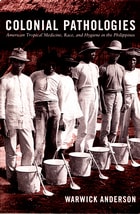
Colonial Pathologies
American Tropical Medicine, Race, and Hygiene in the PhilippinesWarwick Anderson
Duke University Press, 2006
A vivid sense of a colonial culture characterized by an anxious and assertive white masculinity emerges from Anderson’s description of American efforts to treat and discipline allegedly errant Filipinos. His narrative encompasses a colonial obsession with native excrement, a leper colony intended to transform those considered most unclean and least socialized, and the hookworm and malaria programs implemented by the Rockefeller Foundation in the 1920s and 1930s. Throughout, Anderson is attentive to the circulation of intertwined ideas about race, science, and medicine. He points to colonial public health in the Philippines as a key influence on the subsequent development of military medicine and industrial hygiene, U.S. urban health services, and racialized development regimes in other parts of the world.
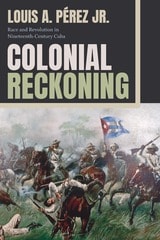
Colonial Reckoning
Race and Revolution in Nineteenth-Century CubaLouis A. Pérez Jr.
Duke University Press, 2023
Colonialism and Race in Luso-Hispanic Literature
Jerome C. Branche
University of Missouri Press, 2006
Color of Privilege
Three Blasphemies on Race and FeminismAida Hurtado
University of Michigan Press, 1996
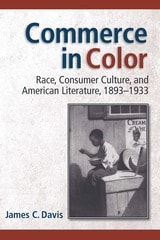
Commerce in Color
Race, Consumer Culture, and American Literature, 1893-1933James C. Davis
University of Michigan Press, 2010
Commerce in Color exploresthe juncture of consumer culture and race by examining advertising, literary texts, mass culture, and public events in the United States from 1893 to 1933. James C. Davis takes up a remarkable range of subjects—including the crucial role publishers Boni and Liveright played in the marketing of Harlem Renaissance literature, Henry James’s critique of materialism in The American Scene, and the commodification of racialized popular culture in James Weldon Johnson’s The Autobiography of anEx-Colored Man—as he argues that racial thinking was central to the emergence of U.S. consumerism and, conversely, that an emerging consumer culture was a key element in the development of racial thinking and the consolidation of racial identity in America. By urging a reassessment of the familiar rubrics of the “culture of consumption” and the “culture of segregation,” Dawson poses new and provocative questions about American culture and social history.
Both an influential literary study and an absorbing historical read, Commerce in Color proves that—in America—advertising, publicity, and the development of the modern economy cannot be understood apart from the question of race.
“A welcome addition to existing scholarship, Davis’s study of the intersection of racial thinking and the emergence of consumer culture makes connections very few scholars have considered.”
—James Smethurst, University of Massachusetts
James C. Davis is Assistant Professor of English at Brooklyn College.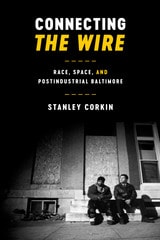
Connecting The Wire
Race, Space, and Postindustrial BaltimoreBy Stanley Corkin
University of Texas Press, 2017
Critically acclaimed as one of the best television shows ever produced, the HBO series The Wire (2002–2008) is a landmark event in television history, offering a raw and dramatically compelling vision of the teeming drug trade and the vitality of life in the abandoned spaces of the postindustrial United States. With a sprawling narrative that dramatizes the intersections of race, urban history, and the neoliberal moment, The Wire offers an intricate critique of a society riven by racism and inequality.
In Connecting The Wire, Stanley Corkin presents the first comprehensive, season-by-season analysis of the entire series. Focusing on the show’s depictions of the built environment of the city of Baltimore and the geographic dimensions of race and class, he analyzes how The Wire’s creator and showrunner, David Simon, uses the show to develop a social vision of its historical moment, as well as a device for critiquing many social “givens.” In The Wire’s gritty portrayals of drug dealers, cops, longshoremen, school officials and students, and members of the judicial system, Corkin maps a web of relationships and forces that define urban social life, and the lives of the urban underclass in particular, in the early twenty-first century. He makes a compelling case that, with its embedded history of race and race relations in the United States, The Wire is perhaps the most sustained and articulate exploration of urban life in contemporary popular culture.
Connexions
Histories of Race and Sex in North AmericaEdited by Jennifer Brier, Jim Downs, and Jennifer L. Morgan
University of Illinois Press, 2016
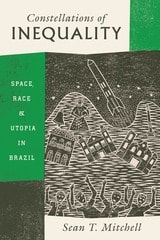
Constellations of Inequality
Space, Race, and Utopia in BrazilSean T. Mitchell
University of Chicago Press, 2017
In 1982, the Brazilian Air Force arrived on the Alcântara peninsula to build a state-of-the-art satellite launch facility. They displaced some 1,500 Afro-Brazilians from coastal land to inadequate inland villages, leaving many more threatened with displacement. Completed in 1990, this vast undertaking in one of Brazil’s poorest regions has provoked decades of conflict and controversy.
Constellations of Inequality tells this story of technological aspiration and the stark dynamics of inequality it laid bare. Sean T. Mitchell analyzes conflicts over land, ethnoracial identity, mobilization among descendants of escaped slaves, military-civilian competition in the launch program, and international intrigue. Throughout, he illuminates Brazil’s changing politics of inequality and examines how such inequality is made, reproduced, and challenged. How people conceptualize and act on the unequal conditions in which they find themselves, he shows, is as much a cultural and historical matter as a material one. Deftly broadening our understanding of race, technology, development, and political consciousness on local, national, and global levels, Constellations of Inequality paints a portrait of contemporary Brazil that will interest a broad spectrum of readers.
Constructing Cuban America
Race and Identity in Florida's Caribbean South, 1868–1945Andrew Gomez
University of Texas Press, 2024
How Black and white Cubans navigated issues of race, politics, and identity during the post-Civil War and early Jim Crow eras in South Florida.
On July 4, 1876, during the centennial celebration of US independence, the city of Key West was different from other cities. In some of post–Civil War Florida, Black residents were hindered from participating in 4th of July festivities, but Key West's celebration, “led by a Cuban revolutionary mayor working in concert with a city council composed of Afro-Bahamians, Cubans, African Americans, and Anglos,” represented a profound exercise in interracial democracy amid the Radical Reconstruction era.
Constructing Cuban America examines the first Cuban American communities in South Florida—Key West and Tampa—and how race played a central role in shaping the experiences of white and Black Cubans. Andrew Gomez argues that factors such as the Cuban independence movement and Radical Reconstruction produced interracial communities of Cubans that worked alongside African Americans and Afro-Bahamians in Florida, yielding several successes in interracial democratic representation, even as they continued to wrestle with elements of racial separatism within the Cuban community. But the conclusion of the Cuban War of Independence and early Jim Crow laws led to a fracture in the Cuban-American community. In the process, both Black and white Cubans posited distinct visions of Cuban-American identity.
Constructions of Race, Place, and Nation
Peter Jackson
University of Minnesota Press, 1993
Contentious Republicans
Popular Politics, Race, and Class in Nineteenth-Century ColombiaJames E. Sanders
Duke University Press, 2004
Beginning in the late 1840s, subaltern groups entered the political arena to forge alliances, both temporary and enduring, with the elite Liberal and Conservative Parties. In the process, each group formed its own political discourses and reframed republicanism to suit its distinct needs. These popular liberals and popular conservatives bargained for the parties’ support and deployed a broad repertoire of political actions, including voting, demonstrations, petitions, strikes, boycotts, and armed struggle. By the 1880s, though, many wealthy Colombians of both parties blamed popular political engagement for social disorder and economic failure, and they successfully restricted lower-class participation in politics. Sanders suggests that these reactionary developments contributed to the violence and unrest afflicting modern Colombia. Yet in illuminating the country’s legacy of participatory politics in the nineteenth century, he shows that the current situation is neither inevitable nor eternal.
Contested Histories in Public Space
Memory, Race, and NationDaniel J. Walkowitz and Lisa Maya Knauer, eds.
Duke University Press, 2009
Several contributors examine how the experiences of indigenous groups and the imperial past are incorporated into public histories in British Commonwealth nations: in Te Papa, New Zealand’s national museum; in the First Peoples’ Hall at the Canadian Museum of Civilization; and, more broadly, in late-twentieth-century Australian culture. Still others focus on the role of governments in mediating contested racialized histories: for example, the post-apartheid history of South Africa’s Voortrekker Monument, originally designed as a tribute to the Voortrekkers who colonized the country’s interior. Among several essays describing how national narratives have been challenged are pieces on a dispute over how to represent Nepali history and identity, on representations of Afrocuban religions in contemporary Cuba, and on the installation in the French Pantheon in Paris of a plaque honoring Louis Delgrès, a leader of Guadeloupean resistance to French colonialism.
Contributors. Paul Amar, Paul Ashton, O. Hugo Benavides, Laurent Dubois, Richard Flores, Durba Ghosh, Albert Grundlingh, Paula Hamilton, Lisa Maya Knauer, Charlotte Macdonald, Mark Salber Phillips, Ruth B. Phillips, Deborah Poole, Anne M. Rademacher, Daniel J. Walkowitz
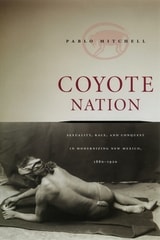
Coyote Nation
Sexuality, Race, and Conquest in Modernizing New Mexico, 1880-1920Pablo Mitchell
University of Chicago Press, 2005
Coyote Nation considers these questions as it explores how New Mexicans evaluated and categorized racial identities through bodily practices. Where ethnic groups were numerous and—in the wake of miscegenation—often difficult to discern, the ways one dressed, bathed, spoke, gestured, or even stood were largely instrumental in conveying one's race. Even such practices as cutting one's hair, shopping, drinking alcohol, or embalming a deceased loved one could inextricably link a person to a very specific racial identity.
A fascinating history of an extraordinarily plural and polyglot region, Coyote Nation will be of value to historians of race and ethnicity in American culture.
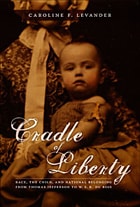
Cradle of Liberty
Race, the Child, and National Belonging from Thomas Jefferson to W. E. B. Du BoisCaroline F. Levander
Duke University Press, 2006
Reading texts by John Adams, Thomas Paine, Harriet Beecher Stowe, Augusta J. Evans, Mark Twain, Pauline Hopkins, William James, José Martí, W. E. B. Du Bois, and others, Levander traces the child as it figures in writing about several defining events for the United States. Among these are the Revolutionary War, the US-Mexican War, the Civil War, and the US expulsion of Spain from the Caribbean and Cuba. She charts how the child crystallized the concept of self—a self who could affiliate with the nation—in the early national period, and then follows the child through the rise of a school of American psychology and the period of imperialism. Demonstrating that textual representations of the child have been a potent force in shaping public opinion about race, slavery, exceptionalism, and imperialism, Cradle of Liberty shows how a powerful racial logic pervades structures of liberal democracy in the United States.
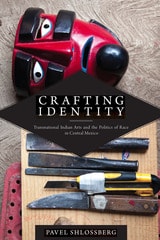
Crafting Identity
Transnational Indian Arts and the Politics of Race in Central MexicoPavel Shlossberg
University of Arizona Press, 2015
The first ethnographic study of its kind, the book examines how indigenous and mestizo mask makers, both popular and elite, view and contest relations of power and inequality through their craft. Using data from his interviews with mask makers, collectors, museum curators, editors, and others, Pavel Shlossberg places the artisans within the larger context of their relationships with the nation-state and Mexican elites, as well as with the production cultures that inform international arts and crafts markets. In exploring the connection of mask making to capitalism, the book examines the symbolic and material pressures brought to bear on Mexican artisans to embody and enact self-racializing stereotypes and the performance of stigmatized indigenous identities.
Shlossberg’s weaving of ethnographic data and cultural theory demystifies the way mask makers ascribe meaning to their practices and illuminates how these practices are influenced by state and cultural institutions. Demonstrating how the practice of mask making negotiates ethnoracial identity with regard to the Mexican state and the United States, Shlossberg shows how it derives meaning, value, and economic worth in the eyes of the state and cultural institutions that mediate between the mask maker and the market.

Creating Beauty To Cure the Soul
Race and Psychology in the Shaping of Aesthetic SurgerySander L. Gilman
Duke University Press, 1998
In his exploration of the striking parallels between the development of cosmetic surgery and the field of psychiatry, Gilman entertains an array of philosophical and psychological questions that underlie the more practical decisions rountinely made by doctors and potential patients considering these types of surgery. While surveying and incorporating the relevant theories of Sigmund Freud, Alfred Adler, Karl Menninger, Paul Schilder, contemporary feminist critics, and others, Gilman considers the highly unstable nature of cultural notions of health, happiness, and beauty. He reveals how ideas of race and gender structured early understandings of aesthetic surgery in discussions of both the “abnormality” of the Jewish nose and the historical requirement that healthy and virtuous females look “normal,” thereby enabling them to achieve invisibility. Reflecting upon historically widespread prejudices, Gilman describes the persecutions, harrassment, attacks, and even murders that continue to result from bodily difference and he encourages readers to question the cultural assumptions that underlie the increasing acceptability of this surgical form of psychotherapy.
Synthesizing a vast body of related literature and containing a comprehensive bibliography, Creating Beauty to Cure the Soul will appeal to a broad audience, including those interested in the histories of medicine and psychiatry, and in philosophy, cultural studies, Jewish cultural studies, and race and ethnicity.
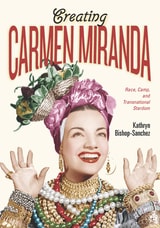
Creating Carmen Miranda
Race, Camp, and Transnational StardomKathryn Bishop-Sanchez
Vanderbilt University Press, 2016
This final performance in many ways exemplified the power of Carmen Miranda. The actress, singer, and dancer pursued a relentless mission to demonstrate the provocative theatrical force of her cultural roots in Brazil. Armed with bare-midriff dresses, platform shoes, and her iconic fruit-basket headdresses, Miranda stole the show in films like That Night in Rio and The Gang's All Here. For American film audiences, her life was an example of the exoticism of a mysterious, sensual South America. For Brazilian and Latin American audiences, she was an icon. For the gay community, she became a work of art personified and a symbol of courage and charisma.
In Creating Carmen Miranda, Kathryn Bishop-Sanchez takes the reader through the myriad methods Miranda consciously used to shape her performance of race, gender, and camp culture, all to further her journey down the road to becoming a legend.
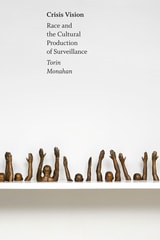
Crisis Vision
Race and the Cultural Production of SurveillanceTom Monahan
Duke University Press, 2022

Critical Fandom
Representations of Race, Gender, and Sexuality in Fan FictionCara Marta Messina
University of Iowa Press, 2026
Critical Fandom positions fan authors as rhetoricians and fan fiction as an action. Every fan author navigates—implicitly or explicitly—the politics of their fandom, the media they love, their lived experiences, digital technologies, reader expectations, and a larger culture. To better understand critical fans, Cara Marta Messina analyzes Archive of Our Own tagging practices, fan fictions, and interviews from four different fandoms.
Fans of The Legend of Korra celebrate queer relationships while understanding representation is just the first step in the face of systemic homophobia. Game of Thrones fan authors challenge racism and heteronormativity in both the community and the show. In online forums for Black Panther, fans make space for sapphic romances and explore the humanity of Erik Killmonger, ultimately contending with harmful stereotypes of radical Black men. And the Our Flag Means Death fandom demonstrates how a show can flourish when it centers queerness, especially for trans fans. Even in these moments of joy, there’s conflict. Critical Fandom seeks to answer what comes next.
Critique of Black Reason
Achille Mbembe
Duke University Press, 2017
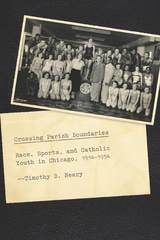
Crossing Parish Boundaries
Race, Sports, and Catholic Youth in Chicago, 1914-1954Timothy B. Neary
University of Chicago Press, 2016
In this book, Timothy B. Neary reveals the history of Bishop Bernard Sheil’s Catholic Youth Organization (CYO), which brought together thousands of young people of all races and religions from Chicago’s racially segregated neighborhoods to take part in sports and educational programming. Tens of thousands of boys and girls participated in basketball, track and field, and the most popular sport of all, boxing, which regularly filled Chicago Stadium with roaring crowds. The history of Bishop Sheil and the CYO shows a cosmopolitan version of American Catholicism, one that is usually overshadowed by accounts of white ethnic Catholics aggressively resisting the racial integration of their working-class neighborhoods. By telling the story of Catholic-sponsored interracial cooperation within Chicago, Crossing Parish Boundaries complicates our understanding of northern urban race relations in the mid-twentieth century.
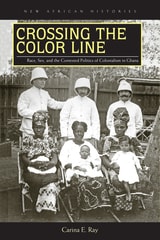
Crossing the Color Line
Race, Sex, and the Contested Politics of Colonialism in GhanaCarina E. Ray
Ohio University Press, 2015
Winner of the 2017 Aidoo-Snyder Book Prize
Winner of the 2016 American Historical Association’s Wesley-Logan Prize in African diaspora
Finalist for the 2016 Fage and Oliver Prize from the African Studies Association of the UK
Interracial sex mattered to the British colonial state in West Africa. In Crossing the Color Line, Carina E. Ray goes beyond this fact to reveal how Ghanaians shaped and defined these powerfully charged relations. The interplay between African and European perspectives and practices, argues Ray, transformed these relationships into key sites for consolidating colonial rule and for contesting its hierarchies of power. With rigorous methodology and innovative analyses, Ray brings Ghana and Britain into a single analytic frame to show how intimate relations between black men and white women in the metropole became deeply entangled with those between black women and white men in the colony in ways that were profoundly consequential.
Based on rich archival evidence and original interviews, the book moves across different registers, shifting from the micropolitics of individual disciplinary cases brought against colonial officers who “kept” local women to transatlantic networks of family, empire, and anticolonial resistance. In this way, Ray cuts to the heart of how interracial sex became a source of colonial anxiety and nationalist agitation during the first half of the twentieth century.
Cultural Melancholy
Readings of Race, Impossible Mourning, and African American RitualJermaine Singleton
University of Illinois Press, 2015
Singleton develops the concept of "cultural melancholy" as a response to scholarship that calls for the separation of critical race studies and psychoanalysis, excludes queer theoretical approaches from readings of African American literatures and cultures, and overlooks the status of racialized performance culture as a site of serious academic theorization. In doing so, he weaves critical race studies, psychoanalysis, queer theory, and performance studies into conversation to uncover a host of hidden dialogues—psychic and social, personal and political, individual and collective—for the purpose of promoting a culture of racial grieving, critical race consciousness, and collective agency.
Wide-ranging and theoretically bold, Cultural Melancholy counteracts the racial legacy effects that plague our twenty-first century multiculture.

Curating Conception
Race and Reproduction in South AfricaTessa Moll
Rutgers University Press, 2026
South Africa’s private fertility clinics promise hope: expert care, measurable success rates, and the possibility of long-desired children. While seemingly insulated from the legacies of apartheid and the stark inequalities of the present, these clinics operate within a society still shaped by racial stratification and uneven access to care. But what happens once patients step through the clinic doors? Based on fieldwork conducted over a decade, Curating Conception offers the first book-length study of IVF in sub-Saharan Africa. Tessa Moll turns to the polished, private clinics of Cape Town and Johannesburg to show how racial hierarchies are quietly sustained through everyday decisions—about donor selection, embryo grading, success statistics, and patient eligibility—that shape ideas of legitimate parenthood and belonging in the post-apartheid era. Introducing the concept of curating, Moll shows how medical authority, patient desire, and enduring social orders work together to shape which reproductive futures are seen as natural and desirable. In doing so, Curating Conception demonstrates how racial imaginaries—and the normalization of whiteness as the default family form—are woven into the intimate and technological processes of IVF. Blending vivid storytelling with careful analysis, it invites readers to rethink fertility care not simply as a technology of hope, but as a powerful site where history, inequality, and aspiration converge.