Results by title
1017 books match the query 'Reference' and 48 start with c

Canada Gazetteer Atlas
Canada Gazetteer Atlas
University of Chicago Press, 1980
It consists of two parts:
First, 48 double-page relief maps which are the most current available, together with information on the sources used and definitions of the features mapped. Geographical names are given in the language actually approved by the respective authorities for the provinces and territories.
Second, the gazetteer, or index, to places and physical features which includes:
-Every city, town, village, and hamlet of more than 50 residents
-13,000 physical features including roads, railways, waterways
-Status, population, and incorporation of urban centers
-National and provincial parks, military establishments, Indian Reserves, trailer courts
Every population center or physical feature is easily found and identified. All information is based on latest census statistics.
Care of the Dying Patient
Edited by David A. Fleming & John C. Hagan III
University of Missouri Press, 2010
This collection encompasses diverse aspects of end-of-life care across multiple disciplines, offering a broad perspective on such central issues as control of pain and other symptoms, spirituality, the needs of caregivers, and special concerns regarding the elderly. In its pages, readers will find out how to:
- effectively utilize palliative-care services and activate timely referral to hospice,
- arrange for care that takes into account patients’ cultural beliefs, and
- respond to spiritual and psychological distress, including the loss of hope that often overshadows physical suffering.
While physicians have the ability to treat disease, they also help to determine the time and place of death, and they must recognize that end-of-life choices are made more complex than ever before by advances in medicine and at the same time increasingly important. Care of the Dying Patient addresses some of the challenges frequently confronted in terminal care and points the way toward a more compassionate way of death.
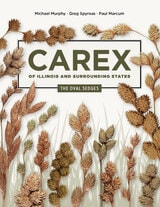
Carex of Illinois and Surrounding States
The Oval SedgesMichael Murphy, Greg Spyreas, and Paul Marcum
University of Illinois Press, 2025
Drawing on the study of thousands of specimens, Carex of Illinois and Surrounding States: The Oval Sedges is an invaluable resource for botanists, ecologists, environmental engineers, and professional and amateur environmentalists interested in a deeper understanding of these essential plants.
Carnegie Maya
The Carnegie Institution of Washington Maya Research Program, 1913-1957John M. Weeks
University Press of Colorado, 2006
The Carnegie Institution of Washington sponsored archaeological, ethnographic, linguistic, and historical investigations in the Maya region of southern Mexico and northern Central America between 1914 and 1957. The institution led the field during that time, with financial support and other resources no university could match.
Dispersed and out-of-print for fifty years, more than 350 reports from the Maya program are now available in this single volume. Reports from the institution's annual Year Books and other materials collected here tell the history of Maya research through firsthand accounts by participating scholars and reveal the progression of Mesoamerican archaeology from avocational interest to scholarly pursuit. Thematic and regional organization of the reports permits readers to monitor development of research concepts. Appendixes list all Carnegie Maya publications, Carnegie personnel, and the archival holdings of Carnegie-derived material at Harvard University, Tulane University, and the University of Chicago.
Purchase of the print book comes with free individual access to the Adobe Digital Editions Carnegie Maya Series Ebook, which contains the complete set of The Carnegie Maya, The Carnegie Maya II, The Carnegie Maya III and The Carnegie Maya IV, thus making hundreds of documents from the Carnegie Institution's Maya program available in one source.
Cartographic Mexico
A History of State Fixations and Fugitive LandscapesRaymond B. Craib
Duke University Press, 2004
Catalogue of Books and Journals, 1891-1965
The University of Chicago Press
University of Chicago Press, 1967
Catalogue of Watermarks in Italian Printed Maps, ca. 1540-1600
David Woodward
University of Chicago Press, 1996
Fifteen years in the making, this catalogue will be an essential reference for bibliographers and archivists dealing with rare books and maps of the period, for map collectors, map librarians, and scholars and librarians working with early printed items and manuscripts.
Catalogue of the Slavonic Cyrillic Manuscripts of the National Szechenyi Library
Ralph Cleminson
Central European University Press, 2007
Character, Scene, and Story
New Tools from the Dramatic Writer's CompanionWill Dunne
University of Chicago Press, 2017
Featuring forty-two new workshop-tested exercises, this sequel to The Dramatic Writer’s Companion allows writers to dig deeper into their scripts by fleshing out images, exploring characters from an emotional perspective, tapping the power of color and sense memory to trigger ideas, and trying other visceral techniques. The guide also includes a troubleshooting section to help tackle problem scenes. Writers with scripts already in progress will find they can think deeper about their characters and stories. And those who are just beginning to write will find the guidance they need to discover their best starting point. The guide is filled with hundreds of examples, many of which have been developed as both plays and films.
Character, Scene, and Story is fully aligned with the new edition of The Dramatic Writer’s Companion, with cross-references between related exercises so that writers have the option to explore a given topic in more depth. While both guides can stand alone, together they give writers more than one hundred tools to develop more vivid characters and craft stronger scripts.
Chicago Business and Industry
From Fur Trade to E-CommerceEdited by Janice L. Reiff
University of Chicago Press, 2013
Drawing on the award-winning Encyclopedia of Chicago, Janice L. Reiff has compiled a unique history of work in the Windy City. Beginning with an overview of the city’s commercial development, Chicago Business and Industry considers how key industries shaped—and were shaped by—both the local and global economies. The city’s phenomenal population growth, its proximity to water, and its development of railroads made Chicago one of the most productive markets for lumber and grain throughout the nineteenth century. The region’s once-booming steel industry, on the other hand, suffered a dramatic decline in the second half of the twentieth century, when already weakened demand met with increasing international competition. Chicago Business and Industry chronicles the Chicago region’s changing fortunes from its beginning.
Reiff has compiled and updated essays from the Encyclopedia covering the city’s most historically famous—and infamous—companies, from the Union Stock Yard to Montgomery Ward to the Board of Trade. The book concludes with a historical account of labor types and issues in the city, with attention to such topics as health-care workers, unemployment, and unionization. Today, Groupon and a host of other high-tech firms have led some experts to christen Chicago the Silicon Valley of the Midwest. Reiff’s new introduction takes account of these and other recent trends.
Engaging, accessible, and packed with fascinating facts, Chicago Business and Industry invites readers into the history and diversity of work in the city, helping them understand how Chicago became Chicago.
Chicago Guide to Preparing Electronic Manuscripts
The University of Chicago Press
University of Chicago Press, 1987
Chicago Metropolis 2020
The Chicago Plan for the Twenty-First CenturyElmer W. Johnson
University of Chicago Press, 2001
Nearly a century later, Chicago, like all cities, faces similar dilemmas: how to reconcile privatism with public control, growth with restraint, wealth with poverty, and beauty with industry. And as it did a hundred years ago with the Burnham Plan, the Commercial Club has sponsored a wholly contemporary plan for the city's future development. Written by Elmer W. Johnson, a lawyer and civic leader, Chicago Metropolis 2020 is a guide for those in all spheres of influence who are working to make cities economically and socially vigorous while addressing the greatest problems modern metropolises face. While Burnham's plan primarily addressed architecture and spatial planning, Chicago Metropolis 2020 addresses all facets of urban life, from public education to suburban sprawl, from transportation to social and economic segregation, with the expressed goal of continuing Chicago's tradition of renewal and foresight.
Chicago Metropolis 2020 is an ambitious and necessary plan for a major city at the turn of the century. In scope and execution, it aims at nothing less than economic vibrancy, quality of life, and equity of opportunity.
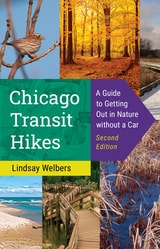
Chicago Transit Hikes
A Guide to Getting Out in Nature without a CarLindsay Welbers
University of Illinois Press, 2025
Taking the train to nature in Chicagoland
Beyond the steel and asphalt await natural spaces that are easy to access and balm for the soul. Lindsay Welbers’s guide tells readers how to use Chicagoland’s extensive public rail system to reach forests, prairies, wetlands, dunes, and Lake Michigan. Designed to take up minimal space in a backpack, Chicago Transit Hikes provides train-to-trailhead information for thirty nature treks with features that include:
- Chapters with hikes organized by each rail line on the Metra, the South Shore train, and the CTA;
- Information on everything from accessibility to dog-friendliness to flora and fauna;
- Detailed descriptions of every destination;
- Practical tips on packing lists and itineraries.
Up-to-date and user-friendly, Chicago Transit Hikes connects Chicagoans and visitors alike with excursions for every season and level of difficulty.
Chicago in Quotations
Compiled by Stuart Shea
Bodleian Library Publishing, 2016
Whether you look upon the city with admiration, disgust, or an incongruous combination of the two, Chicago has captured the imagination of generations of poets, novelists, journalists, and commentators who have visited or called it home. Chicago in Quotations offers a compendium of the most colorful impressions that citizens of—or visitors to—the Second City will appreciate.
Chick Flicks
Theories and Memories of the Feminist Film MovementB. Ruby Rich
Duke University Press, 1998
For over three decades Rich has been one of the most important voices in feminist film criticism. Her presence at film festivals (such as Sundance, where she is a member of the selection committee), her film reviews in the Village Voice, Elle, Out, and the Advocate, and her commentaries on the public radio program “The World” have secured her a place as a central figure in the remarkable history of what she deems “cinefeminism.” In the hope that a new generation of feminist film culture might be revitalized by reclaiming its own history, Rich introduces each essay with an autobiographical prologue that describes the intellectual, political, and personal moments from which the work arose. Travel, softball, sex, and voodoo all somehow fit into a book that includes classic Rich articles covering such topics as the antiporn movement, the films of Yvonne Rainer, a Julie Christie visit to Washington, and the historically evocative film Maedchen in Uniform. The result is a volume that traces the development not only of women’s involvement in cinema but of one of its key players as well.
The first book-length work from Rich—whose stature and influence in the world of film criticism and theory continue to grow—Chick Flicks exposes unexplored routes and forgotten byways of a past that’s recent enough to be remembered and far away enough to be memorable.
Chinese Communist Materials at the Bureau of Investigation Archives, Taiwan
Peter Donovan, Carl E. Dorris, and Lawrence R. Sullivan
University of Michigan Press, 1976
Chinese Paintings in Chinese Publications, 1956–1968
An Annotated Bibliography and Index to the PaintingsEllen Johnston Laing
University of Michigan Press, 1969
Choices
An Introduction to Decision TheoryMichael Resnik
University of Minnesota Press, 1987

Choosing Books for Children
A COMMONSENSE GUIDEBetsy Hearne with Deborah Stevenson
University of Illinois Press, 1999
If you have ever stood in the children's section of a bookstore or library wondering how to go about matching a book to the age, abilities, and interests of a particular child, Choosing Children's Books is for you. Renowned children's librarian and children's book review editor Betsy Hearne offers practical guidance on sorting through the bewildering array of picture books, pop-up books, books for beginning readers, young adult titles, classics, poetry, folktales, and factual books. Each chapter includes an annotated list of recommended titles.
A gold mine of commonsense, sound advice, this newly revised and completely updated edition of Betsy Hearne's classic guide is an indispensable tool for choosing books for children of all ages.
Newly available in paperback, this revised and updated third edition of Betsy Hearne's classic guide stands as the lodestar for navigating through the bewildering array of books for young readers. Hearne surveys everything from picture books, pop-up books, classics, and books for beginning readers to young adult titles, poetry, folktales, and factual books, with an annotated list of recommended titles accompanying each chapter. A gold mine of common sense and sound advice, her guide remains an indispensable tool for choosing books for children of all ages.
Choosing Not Choosing
Sharon Cameron
University of Chicago Press, 1992
Considering the poems in the context of the fascicles, Cameron argues that an essential refusal of choice pervades all aspects of Dickinson's poetry. Because Dickinson never chose whether she wanted her poems read as single lyrics or in sequence (nor is it clear where any fascicle text ends, or even how, in context, a poem is bounded), "not choosing" is a textual issue; it is also a formal issue because Dickinson refused to chose among poetic variants; it is a thematic issue; and, finally, it is a philosophical one, since what is produced by "not choosing" is a radical indifference to difference. Extending the readings of Dickinson offered in her earlier book Lyric Time, Cameron continues to enlarge our understanding of the work of this singular American poet.
Cite Right, Second Edition
A Quick Guide to Citation Styles--MLA, APA, Chicago, the Sciences, Professions, and MoreCharles Lipson
University of Chicago Press, 2011
Lipson first explains why it is so important to use citations—and to present them accurately—in research writing. He then outlines the main citation styles students and researchers are likely to encounter in their academic work: Chicago; MLA; APA; AAA (anthropology and ethnography); CSE (biological sciences); AMA (medical sciences); ACS (chemistry); physics, astrophysics, and astronomy;and mathematics, computer science, and engineering. New sections have been added on IEEE and ASCE styles, often used in engineering. Each style is presented simply and clearly with examples drawn from a wide range of source types crossing all disciplines, from the arts and humanities to the sciences and medicine. The second edition has also been updated to include a discussion of the merits and pitfalls of citation software, as well as new examples showing proper citation style for video blogs, instant messages, social networking sites, and other forms of digital media.
Based on deep experience in the academic trenches,this thoroughly revised edition is intended to appeal to anyone—student, professional, or academic—who needs an efficient, authoritative guide for citing sources across a wide range of disciplines.
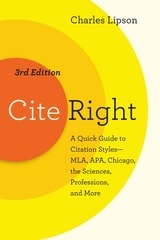
Cite Right, Third Edition
A Quick Guide to Citation Styles--MLA, APA, Chicago, the Sciences, Professions, and MoreCharles Lipson
University of Chicago Press, 2018
Cite Right is the perfect guide for anyone who needs to learn a new citation style or who needs an easy reference to Chicago, MLA, APA, AMA, and other styles. Each chapter serves as a quick guide that introduces the basics of a style, explains who might use it, and then presents an abundance of examples. This edition includes updates reflecting the most recent editions of The Chicago Manual of Style and the MLA Handbook. With this book, students and researchers can move smoothly among styles with the confidence they are getting it right.
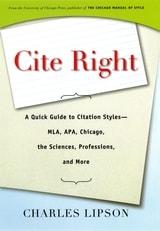
Cite Right
A Quick Guide to Citation Styles--MLA, APA, Chicago, the Sciences, Professions, and MoreCharles Lipson
University of Chicago Press, 2006
In his bestselling guide, Doing Honest Work in College: How to Prepare Citations, Avoid Plagiarism, and Achieve Real Academic Success, veteran teacher Charles Lipson brought welcome clarity to the principles of academic honesty as well as to the often murky issues surrounding plagiarism in the digital age. Thousands of students have turned to Lipson for no-nonsense advice on how to cite sources properly—and avoid plagiarism—when writing their research papers. With his latest book, Cite Right, Lipson once again provides much-needed counsel in a concise and affordable handbook for students and researchers. Building on Doing Honest Work in College, Lipson’s new book offers a wealth of information on an even greater range of citation styles and details the intricacies of many additional kinds of sources.
Lipson’s introductory essay, “Why Cite,” explains the reasons it is so important to use citations—and to present them accurately—in research writing. In subsequent chapters, Lipson explains the main citation styles students and researchers are likely to encounter in their academic work: Chicago; MLA; APA; CSE (biological sciences); AMA (medical sciences); ACS (chemistry, mathematics, and computer science); physics, astrophysics, and astronomy; Bluebook and ALWD (law); and AAA (anthropology and ethnography). His discussions of these styles are presented simply and clearly with examples drawn from a wide range of source types crossing all disciplines, from the arts and humanities to science, law, and medicine.
Based on deep experience in the academic trenches, Cite Right is an accessible, one-stop resource—a must-have guide for students and researchers alike who need to prepare citations in any of the major disciplines and professional studies.

Climber’s Guide to Devil’s Lake
Sven Olof Swartling
University of Wisconsin Press, 2008
•a summary of the geologic and natural history of the Baraboo hills by Patricia K. Armstrong
•locations and updated descriptions of nearly 1,800 climbs
•landmark photographs from most major climbing areas
•GPS waypoints, map coordinates, altimeter readings, and approach information
•detailed diagrams locating climbing routes at most major climbing areas
•6 new diagrams, 5 new climbing areas, and 120 new routes

Clinical Trials in Ovarian Cancer
Walsh, Christine S
Rutgers University Press, 2017
Coherence, Reference, and the Theory of Grammar
Andrew Kehler
CSLI, 2001
In this book, Andrew Kehler provides an analysis of coherence relationships between utterances that is rooted in three types of 'connection among ideas' first articulated by the philosopher David Hume—Resemblance, Cause or Effect, and Contiguity. Kehler then shows how these relationships affect the distribution of a variety of linguistic phenomena, including verb phrase ellipsis, gapping, extraction from coordinate structures, tense, and pronominal reference. In each of these areas, Kehler demonstrates how the constraints imposed by linguistic form interact with those imposed by the process of establishing coherence to explain data that has eluded previous analyses. his book will be of interest to researchers from the broad spectrum of disciplines from which discourse is studied, as well as those working in syntax, semantics, computational linguistics, psycholinguistics, and philosophy of language.
Commentaries on the Laws of England, Volume 1
A Facsimile of the First Edition of 1765-1769William Blackstone
University of Chicago Press, 1979
Previously available only in an expensive hardcover set, Commentaries on the Laws of England is published here in four separate volumes, each one affordably priced in a paperback edition. These works are facsimiles of the eighteenth-century first edition and are undistorted by later interpolations. Each volume deals with a particular field of law and carries with it an introduction by a leading contemporary scholar.
In his introduction to this first volume, Of the Rights of Persons, Stanley N. Katz presents a brief history of Blackstone's academic and legal career and his purposes in writing the Commentaries. Katz discusses Blackstone's treatment of the structure of the English legal system, his attempts to justify it as the best form of government, and some of the problems he encountered in doing so.
Commentaries on the Laws of England, Volume 2
A Facsimile of the First Edition of 1765-1769William Blackstone
University of Chicago Press, 1979
Previously available only in an expensive hardcover set, Commentaries on the Laws of England is published here in four separate volumes, each one affordably priced in a paperback edition. These works are facsimiles of the eighteenth-century first edition and are undistorted by later interpolations. Each volume deals with a particular field of law and carries with it an introduction by a leading contemporary scholar.
Introducing this second volume, Of the Rights of Things, A. W. Brian Simpson discusses the history of Blackstone's theory of various aspects of property rights—real property, feudalism, estates, titles, personal property, and contracts—and the work of his predecessors.
Commentaries on the Laws of England, Volume 3
A Facsimile of the First Edition of 1765-1769William Blackstone
University of Chicago Press, 1979
Previously available only in an expensive hardcover set, Commentaries on the Laws of England is published here in four separate volumes, each one affordably priced in a paperback edition. These works are facsimiles of the eighteenth-century first edition and are undistorted by later interpolations. Each volume deals with a particular field of law and carries with it an introduction by a leading contemporary scholar.
Introducing this third volume, Of Private Wrongs, John H. Langbein discusses Blackstone's account of procedure and jurisdiction, jury trial, and equity. He also examines Blackstone's uneasy attitude toward the celebrated legal frictions of English civil procedure.
Commentaries on the Laws of England, Volume 4
A Facsimile of the First Edition of 1765-1769William Blackstone
University of Chicago Press, 1979
Previously available only in an expensive hardcover set, Commentaries on the Laws of England is published here in four separate volumes, each one affordably priced in a paperback edition. These works are facsimiles of the eighteenth-century first edition and are undistorted by later interpolations. Each volume deals with a particular field of law and carries with it an introduction by a leading contemporary scholar.
Introducing this fourth and final volume, Of Public Wrongs, Thomas A. Green examines Blackstone's attempt to rationalize the severity of the law with what he saw as the essentially humane inspiration of English law. Green discusses Blackstone's ideas on criminal law, criminal procedure, and sentencing.
Common People
In Pursuit of My AncestorsAlison Light
University of Chicago Press, 2015
Most of us, however, give up a few generations back. We run into a gap, get embarrassed by a ne’er-do-well, or simply find our ancestors are less glamorous than we’d hoped. That didn’t stop Alison Light: in the last weeks of her father’s life, she embarked on an attempt to trace the history of her family as far back as she could reasonably go. The result is a clear-eyed, fascinating, frequently moving account of the lives of everyday people, of the tough decisions and hard work, the good luck and bad breaks, that chart the course of a life. Light’s forebears—servants, sailors, farm workers—were among the poorest, traveling the country looking for work; they left few lasting marks on the world. But through her painstaking work in archives, and her ability to make the people and struggles of the past come alive, Light reminds us that “every life, even glimpsed through the chinks of the census, has its surprises and secrets.”
What she did for the servants of Bloomsbury in her celebrated Mrs. Woolf and the Servants Light does here for her own ancestors, and, by extension, everyone’s: draws their experiences from the shadows of the past and helps us understand their lives, estranged from us by time yet inextricably interwoven with our own. Family history, in her hands, becomes a new kind of public history.
Communicating Ideas with Film, Video, and Multimedia
A Practical Guide to Information Motion-MediaS. Martin Shelton
Southern Illinois University Press, 2004
Forgoing discussions of technology, Shelton instead concentrates on the communication principles that can motivate an audience to achieve a particular goal—a goal that must be realistic, worthwhile, and appropriate. His inventive approach coalesces theory of the media with its philosophy, analysis, history, and application, as well as his own informed personal opinions. This valuable guide examines how to effectively encode information in motion-media by using in-depth communication analysis and pertinent filmic design. Throughout, Shelton emphasizes that kinetic visuals, rather than audio, are the defining elements of the best motion-media communication. Organized into five parts that can be used independently or in sequence, the volume frames key topics in the industry that collectively form a cohesive strategy for motion-media design and production. First, Shelton discusses the essence of the medium as a communication tool. In the second part, he addresses the forms and functions of motion-media. The third part details communication analysis and its application. Next, Shelton delves into script design, distribution, and career growth. Lastly, he offers advice on business aspects of the profession. Told from the vantage point of a seasoned expert, Communicating Ideas with Film, Video, and Multimedia is a “how to do it” book as well as a treatise on “why to do it.” Shelton’s narrative is complemented by twenty-six illustrations (including multimedia flowcharts, sample forms, and photographs of some of the great documentary filmmakers), a variety of script formats, and a listing of the all-time best documentary films.
Community Effects of Leadership Development Education
Citizen Empowerment for Civic EngagementKenneth Pigg
West Virginia University Press, 2015
Community leadership development programs are designed to increase the capacity of citizens for civic engagement. These programs fill gaps in what people know about governance and the processes of governance, especially at the local level. The work of many in this field is a response to the recognition that in smaller, rural communities, disadvantaged neighborhoods, or disaster areas, the skills and aptitudes needed for citizens to be successful leaders are often missing or underdeveloped.
Community Effects of Leadership Development Education presents the results of a five-year study tracking community-level effects of community leadership development programs drawn from research conducted in Illinois, Minnesota, Missouri, South Carolina, Ohio, and West Virginia.
As the first book of its kind to seek answers to the question of whether or not the millions of dollars invested each year in community leadership development programs are valuable in the real world, this book challenges researchers, community organizers, and citizens to identify improved ways of demonstrating the link from program to implementation, as well as the way in which programs are conceived and designed.
This text also explores how leadership development programs relate to civic engagement, power and empowerment, and community change, and it demonstrates that community leadership development programs really do produce community change. At the same time, the findings of this study strongly support a relational view of community leadership, as opposed to other traditional leadership models used for program design.
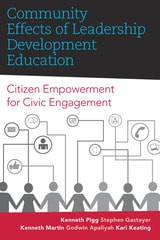
To complement their findings, the authors have developed CENCE, a new model for community leadership development programs, which links leadership development efforts to community development by understanding how Civic Engagement, Networks, Commitment, and Empowerment work together to produce community viability.
Comparative National Balance Sheets
A Study of Twenty Countries, 1688-1979Raymond W. Goldsmith
University of Chicago Press, 1985
The majority of the balance sheets were created especially for this project, their components gleaned from fragmentary and heterogeneous data. There are approximately 3,500 entries, each measuring the value of one type of tangible or financial asset or liability at a given date. Goldsmith's estimates are keyed to fifteen benchmark dates in the economic progress of the cited nations, and for twelve nations he was able to construct balance sheets dating back to the nineteenth century or earlier. Combined, worldwide balance sheet are included for 1950 and 1978.
Comparative National Balance Sheets will provide an essential basis for the quantitative analysis of the long-term financial development of these nations. In addition to national balance sheets for all large countries except Brazil and China, sectoral balance sheets for France, Germany, Great Britain, India, Japan, and the United States in the postwar period are also included.
Computers in Education
A Half-Century of InnovationRobert Smith
CSLI, 2015
Conserving Canvas
Cynthia Schwarz
J. Paul Getty Trust, The, 2023
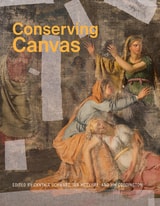
In 2019, Yale University, with the support of the Getty Foundation, held an international conference, where nearly four hundred attendees from more than twenty countries gathered to discuss a vital topic: how best to conserve paintings on canvas. It was the first major symposium on the subject since 1974, when wax-resin and glue-paste lining reigned as the predominant conservation techniques. Over the past fifty years, such methods, which were often destructive to artworks, have become less widely used in favor of more minimalist approaches to intervention. More recent decades have witnessed the reevaluation of traditional practices as well as focused research supporting significant new methodologies, procedures, and synthetic materials for the care and conservation of paintings on fabric supports.
Conserving Canvas compiles the proceedings of the conference, presenting a wide array of papers and posters that provide important global perspectives on the history, current state, and future needs of the field. Featuring an expansive glossary of terms that will be an invaluable resource for conservators, this publication promises to become a standard reference for the international conservation community.
The free online edition of this open-access publication is available at getty.edu/publications/conserving-canvas. Also available are free PDF and EPUB downloads of the book.

Contemporary Design Education in Australia
Creating Transdisciplinary FuturesEdited by Lisa Scharoun, Deanna Meth, Philip Crowther, et al.
Intellect Books, 2023
This book offers a range of approaches to teaching higher education design students to learn to design collaboratively and creatively, through transdisciplinary, multidisciplinary, cross-disciplinary, and interdisciplinary learning experiences. It highlights that the premise of traditional disciplinary silos does little to advance the competencies needed for contemporary design and non-linear career paths and emphasizes the importance of higher education being responsive to changes in society, including fluctuating market demands, economic variations, uncertainties, and globalization. Chapters highlight approaches that address this changing landscape, to meet student, industry, and societal needs and reflect a range of design education contexts in which the authors have taught, with a focus on experiences at the Queensland University of Technology (QUT), Brisbane, Australia, but also including collaborations and comparative discussions elsewhere in Australia and globally, including Europe, Asia, the Middle East, and the United States.
Country Music Humorists and Comedians
Loyal Jones
University of Illinois Press, 2008
Q: Is he afraid of work?
A: No, he can lie down beside it and go to sleep.
This volume is an encyclopedia of the many country music performers who made comedy a central part of their careers. Loyal Jones offers an informative biographical sketch of each performer and many entries include a sample of the artist's humor, a recording history, and amusing anecdotal tidbits. Starting with vaudeville and radio barn dance figures like the Skillet Lickers and the Weaver Brothers and Elviry, Jones moves on to the regulars on Hee Haw and the Grand Old Opry and present-day comedians from the Austin Lounge Lizards to Jeff Foxworthy.
Jones's introductory essay discusses such topics as stock comic figures, venues for comedic performance, and benchmark performers. Throughout the volume, he places each performer squarely in the context of the country music community, its performing traditions, and each artist's place in the larger cultural milieu.
Creating Contexts
Writing Introductions across GenresChristine B. Feak & John M. Swales
University of Michigan Press, 2011
Research article introductions are central to Creating Contexts: Writing across Genres with the CaRS (creating a research space) model used as a starting point. This volume focuses on introductions for other kinds of texts that are also part of the graduate student writing experience such as course papers and critiques, proposals, and dissertations.
This volume represents a revision and expansion of the material on introductions that appeared in English in Today's Research World.
The material presented in this volume is appropriate for graduate students and others already working in their chosen academic fields. The material has, in fact, been used with each of these groups in both writing courses and writing workshops. We believe that the material would also be suitable for those wishing to pursue a course of self-study. To target these different possible uses, we have included a variety of topics and tasks that we hope will deepen users’ understanding of how to create a writing context for their work. Tasks range from evaluating text commentaries to open-ended questions and have been designed to generate lively classroom or workshop discussion as well as thoughtful consideration by an individual user.
Crime and Family
Selected Essays of Joan McCordJoan McCord, introduction by David Farrington, foreword by Geoffrey Sayre-McCord
Temple University Press, 2007
Critical Prefaces of the French Renaissance
Bernard Weinberg
Northwestern University Press, 1950
Critical Questions
On Music and Letters, Culture and Biography, 1940-1980Jacques Barzun
University of Chicago Press, 1982
For anyone unfamiliar with Barzun's work, Critical Questions will serve as a valuable introduction to one of the most important cultural historians of our time. Others will be glad to have these pieces—most of them no longer easily available—brought together in a single volume. Uniformly insightful, provocative, and a pleasure to read, they show the consistency of Barzun's thought even as they exhibit diversity.
Critical Terms for Literary Study, Second Edition
Edited by Frank Lentricchia and Thomas McLaughlin
University of Chicago Press, 1995
Critical Terms for Literary Study is an essential handbook and introduction to the work of literary theory. Covering a broad range of key terms that include popular culture, diversity, imperialism, ethics, desire, class, gender, race, canon, representation, and much more through essays by leading scholars, it provides a concise history of each term alongside a critical exploration of the issues and questions for the field that it raises, followed by demonstrations of reading strategies driven by the term.
Exploring the concepts that shape the way we read, the essays combine to provide an extraordinary introduction to the work of literature and literary study, as the nation's most distinguished scholars put the tools of critical practice vividly to use.
Critical Terms for Media Studies
Edited by W. J. T. Mitchell and Mark B. N. Hansen
University of Chicago Press, 2010
Communications, philosophy, film and video, digital culture: media studies straddles an astounding array of fields and disciplines and produces a vocabulary that is in equal parts rigorous and intuitive. Critical Terms for Media Studies defines, and at times, redefines, what this new and hybrid area aims to do, illuminating the key concepts behind its liveliest debates and most dynamic topics.
Part of a larger conversation that engages culture, technology, and politics, this exciting collection of essays explores our most critical language for dealing with the qualities and modes of contemporary media. Edited by two outstanding scholars in the field, W. J. T. Mitchell and Mark B. N. Hansen, the volume features works by a team of distinguished contributors. These essays, commissioned expressly for this volume, are organized into three interrelated groups: “Aesthetics” engages with terms that describe sensory experiences and judgments, “Technology” offers entry into a broad array of technological concepts, and “Society” opens up language describing the systems that allow a medium to function.
A compelling reference work for our media landscape, Critical Terms for Media Studies will engage and deepen any reader’s knowledge of one of our most important new fields.
Critical Terms for Religious Studies
Edited by Mark C. Taylor
University of Chicago Press, 1998
Following in the very successful tradition of Critical Terms for Literary Studies and Critical Terms for Art History, this book attempts to provide a revitalized, self-aware vocabulary with which this bewildering religious diversity can be accurately described and responsibly discussed. Leading scholars working in a variety of traditions demonstrate through their incisive discussions that even our most basic terms for understanding religion are not neutral but carry specific historical and conceptual freight.
These essays adopt the approach that has won this book's predecessors such widespread acclaim: each provides a concise history of a critical term, explores the issues raised by the term, and puts the term to use in an analysis of a religious work, practice, or event. Moving across Judaism, Christianity, Hinduism, Buddhism, Islam, and Native American and Mayan religions, contributors explore terms ranging from experience, territory, and image, to God, sacrifice, and transgression.
The result is an essential reference that will reshape the field of religious studies and transform the way in which religion is understood by scholars from all disciplines, including anthropology, sociology, psychology, cultural studies, gender studies, and literary studies.
Critical Terms for the Study of Gender
Edited by Catharine R. Stimpson and Gilbert Herdt
University of Chicago Press, 2014
So write women’s studies pioneer Catharine R. Stimpson and anthropologist Gilbert Herdt in their introduction to Critical Terms for the Study of Gender, laying out the wide-ranging nature of this interdisciplinary and rapidly changing field. The sixth in the series of “Critical Terms” books, this volume provides an indispensable introduction to the study of gender through an exploration of key terms that are a part of everyday discourse in this vital subject.
Following Stimpson and Herdt’s careful account of the evolution of gender studies and its relation to women’s and sexuality studies, the twenty-one essays here cast an appropriately broad net, spanning the study of gender and sexuality across the humanities and social sciences. Written by a distinguished group of scholars, each essay presents students with a history of a given term—from bodies to utopia—and explains the conceptual baggage it carries and the kinds of critical work it can be made to do. The contributors offer incisive discussions of topics ranging from desire, identity, justice, and kinship to love, race, and religion that suggest new directions for the understanding of gender studies. The result is an essential reference addressed to students studying gender in very different disciplinary contexts.
Critical Theory to Structuralism
Philosophy, Politics, and the Human SciencesEdited by David Ingram
University of Chicago Press, 2010
From Kant to Kierkegaard, from Hegel to Heidegger, continental philosophers have indelibly shaped the trajectory of Western thought since the eighteenth century. Although much has been written about these monumental thinkers, students and scholars lack a definitive guide to the entire scope of the continental tradition. The most comprehensive reference work to date, this eight-volume History of Continental Philosophy will both encapsulate the subject and reorient our understanding of it. Beginning with an overview of Kant’s philosophy and its initial reception, the History traces the evolution of continental philosophy through major figures as well as movements such as existentialism, phenomenology, hermeneutics, and poststructuralism. The final volume outlines the current state of the field, bringing the work of both historical and modern thinkers to bear on such contemporary topics as feminism, globalization, and the environment. Throughout, the volumes examine important philosophical figures and developments in their historical, political, and cultural contexts.
The first reference of its kind, A History of Continental Philosophy has been written and edited by internationally recognized experts with a commitment to explaining complex thinkers, texts, and movements in rigorous yet jargon-free essays suitable for both undergraduates and seasoned specialists. These volumes also elucidate ongoing debates about the nature of continental and analytic philosophy, surveying the distinctive, sometimes overlapping characteristics and approaches of each tradition. Featuring helpful overviews of major topics and plotting road maps to their underlying contexts, A History of Continental Philosophy is destined to be the resource of first and last resort for students and scholars alike.
Curating Biocultural Collections
A HandbookEdited by Jan Salick, Katie Konchar, and Mark Nesbitt
Royal Botanic Gardens, Kew, 2014
Written and edited by experts from around the world, Curating Biocultural Collections draws on real-world experiences, providing examples from ethnobiology, anthropology, agriculture, botany, zoology, and museum curation. The book places a strong emphasis on meeting the needs of collection users and encourages ethical and equitable engagement with source communities. With one hundred photographs, including objects from little-known collections, alongside case studies and a carefully chosen bibliography, this book gives valuable insight for anyone working to preserve valuable resources.