Results by title
939 books match the query 'Religious aspects' and 54 start with c
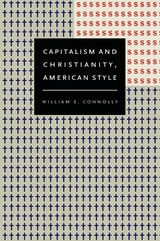
Capitalism and Christianity, American Style
William E. Connolly
Duke University Press, 2008
Connolly describes how the evangelical-capitalist machine works, how its themes resound across class lines, and how it infiltrates numerous aspects of American life. Proposing changes in sensibility and strategy to challenge this machine, Connolly contends that the liberal distinction between secular public and religious private life must be reworked. Traditional notions of unity or solidarity must be translated into drives to forge provisional assemblages comprised of multiple constituencies and creeds. The left must also learn from the political right how power is infused into everyday institutions such as the media, schools, churches, consumption practices, corporations, and neighborhoods. Connolly explores the potential of a “tragic vision” to contest the current politics of existential resentment and political hubris, explores potential lines of connection between it and theistic faiths that break with the evangelical right, and charts the possibility of forging an “eco-egalitarian” economy. Capitalism and Christianity, American Style is William E. Connolly’s most urgent work to date.
Capitalist Humanitarianism
Lucia Hulsether
Duke University Press, 2023
Caring for the Dead in Ancient Israel
Kerry M. Sonia
SBL Press, 2020
A new reconstruction of cultic practices surrounding death in ancient Israel
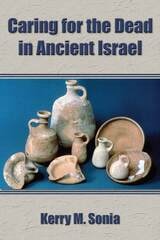
In Caring for the Dead in Ancient Israel, Kerry M. Sonia examines the commemoration and care for the dead in ancient Israel against the broader cultural backdrop of West Asia. This cult of dead kin, often referred to as ancestor cult, comprised a range of ritual practices in which the living provided food and drink offerings, constructed commemorative monuments, invoked the names of the dead, and protected their remains. This ritual care negotiated the ongoing relationships between the living and the dead and, in so doing, helped construct social, political, and religious landscapes in relationship to the past. Sonia explores the nature of this cult of dead kin in ancient Israel, focusing on its role within the family and household as well as its relationship to Israel’s national deity and the Jerusalem temple.
Features:
- A reevaluation of whether burial and necromantic rituals were part of the cult of dead kin
- A portrait of the various roles Israelite women played in the cult of dead kin
- A reassessment of biblical writers’ attitudes toward the cult of dead kin
Catholic Labor Movements in Europe
Paul Misner
Catholic University of America Press, 2015
Catholic Social Teaching
Mary Hobgood
Temple University Press, 1991

Changing Perspectives
Black-Jewish Relations in Houston during the Civil Rights EraAllison E. Schottenstein
University of North Texas Press, 2021
Changing Unjust Laws Justly
Pro-Life Solidarity with "The Last and Least"Colin Harte
Catholic University of America Press, 2005
Channeling Knowledges
Water and Afro-Diasporic Spirits in Latinx and Caribbean WorldsRebeca L. Hey-Colón
University of Texas Press, 2023
2024 Honorable Mention, Isis Duarte Book Prize, Haiti/ Dominican Republic section, Latin American Studies Association
How water enables Caribbean and Latinx writers to reconnect to their pasts, presents, and futures.
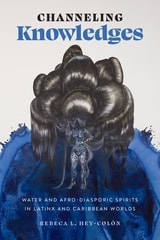
Water is often tasked with upholding division through the imposition of geopolitical borders. We see this in the construction of the Rio Grande/Río Bravo on the US-Mexico border, as well as in how the Caribbean Sea and the Pacific Ocean are used to delineate the limits of US territory. In stark contrast to this divisive view, Afro-diasporic religions conceive of water as a place of connection; it is where spiritual entities and ancestors reside, and where knowledge awaits.
Departing from the premise that water encourages confluence through the sustainment of contradiction, Channeling Knowledges fathoms water’s depth and breadth in the work of Latinx and Caribbean creators such as Mayra Santos-Febres, Rita Indiana, Gloria Evangelina Anzaldúa, and the Border of Lights collective. Combining methodologies from literary studies, anthropology, history, and religious studies, Rebeca L. Hey-Colón’s interdisciplinary study traces how Latinx and Caribbean cultural production draws on systems of Afro-diasporic worship—Haitian Vodou, La 21 División (Dominican Vodou), and Santería/Regla de Ocha—to channel the power of water, both salty and sweet, in sustaining connections between past, present, and not-yet-imagined futures.
Charles Ellis Johnson and the Erotic Mormon Image
Mary Campbell
University of Chicago Press, 2016
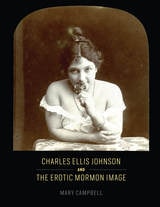
Mary Campbell tells the story of this remarkable religious transformation in Charles Ellis Johnson and the Erotic Mormon Image. One of the church’s favorite photographers, Johnson (1857–1926) spent the 1890s and early 1900s taking pictures of Mormonism’s most revered figures and sacred sites. At the same time, he did a brisk business in mail-order erotica, creating and selling stereoviews that he referred to as his “spicy pictures of girls.” Situating these images within the religious, artistic, and legal culture of turn-of-the-century America, Campbell reveals the unexpected ways in which they worked to bring the Saints into the nation’s mainstream after the scandal of polygamy.
Engaging, interdisciplinary, and deeply researched, Charles Ellis Johnson and the Erotic Mormon Image demonstrates the profound role pictures played in the creation of both the modern Church of Jesus Christ of Latter-day Saints and the modern American nation.
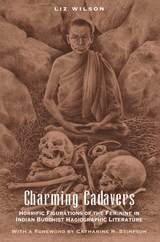
Charming Cadavers
Horrific Figurations of the Feminine in Indian Buddhist Hagiographic LiteratureLiz Wilson
University of Chicago Press, 1996
Liz Wilson investigates first-millennium Buddhist notions of
spirituality. She argues that despite the marginal role women played in
monastic life, they occupied a very conspicuous place in Buddhist
hagiographic literature. In narratives used for the edification of
Buddhist monks, women's bodies in decay (diseased, dying, and after
death) served as a central object for meditation, inspiring spiritual
growth through sexual abstention and repulsion in the immediate world.
Taking up a set of universal concerns connected with the representation
of women, Wilson displays the pervasiveness of androcentrism in Buddhist
literature and practice. She also makes persuasive use of recent
historical work on the religious lives of women in medieval
Christianity, finding common ground in the role of miraculous
afflictions.
This lively and readable study brings provocative new tools and insights
to the study of women in religious life.

Checkpoint, Temple, Church and Mosque
A Collaborative Ethnography of War and PeaceJonathan Spencer, Jonathan Goodhand, Shahul Hasbullah, Bart Klem, Benedikt Korf, and Kalinga Tudor Silva
Pluto Press, 2014
Is religion best seen as only a cause of war, or is it a source of comfort for those caught up in conflict?
Checkpoint, Temple, Church and Mosque is based on fieldwork in Sri Lanka’s most religiously diverse and politically troubled region in the closing years of the civil war. It provides a series of new and provocative arguments about the promise of a religiously based civil society, and the strengths and weaknesses of religious organisations and religious leaders in conflict mediation. It argues that for people trapped in long and violent conflicts, religion plays a contradictory role, often acting as a comforting and stabilising force but also, in certain situations, acting as a source of new conflict. Additionally, war itself can lead to profound changes in religious institutions: Catholic priests engage with Buddhist monks and new Muslim leaders, while Hindu temples and Pentecostal churches offer the promise of healing.
This book will provoke new debate about the role of religious organisations and leaders in situations of extreme conflict and will be of great interest to students of anthropology, development studies, religious studies and peace/conflict studies.
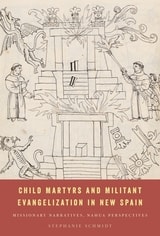
Child Martyrs and Militant Evangelization in New Spain
Missionary Narratives, Nahua PerspectivesStephanie Schmidt
University of Texas Press, 2025
Examines the many iterations of a story of child martyrdom in colonial Mexico.
A cornerstone of the evangelization of early New Spain was the conversion of Nahua boys, especially the children of elites. They were to be emissaries between Nahua society and foreign missionaries, hastening the transmission of the gospel. Under the tutelage of Franciscan friars, the boys also learned to act with militant zeal. They sermonized and smashed sacred objects. Some went so far as to kill a Nahua religious leader. For three boys from Tlaxcala, the reprisals were just as deadly.
In Child Martyrs and Militant Evangelization in New Spain, Stephanie Schmidt sheds light on a rare manuscript about Nahua child converts who were killed for acts of zealotry during the late 1520s. This is the Nahuatl version of an account by an early missionary-friar, Toribio de Benavente Motolinía. To this day, Catholics venerate the slain boys as Christian martyrs who suffered for their piety. Yet Franciscan accounts of the boys’ sacrifice were influenced by ulterior motives, as the friars sought to deflect attention from their missteps in New Spain. Illuminating Nahua perspectives on this story and period, Schmidt leaves no doubt as to who drove this violence as she dramatically expands the knowledgebase available to students of colonial Latin America.
Children and Childhood in American Religions
Browning, Don S
Rutgers University Press, 2009
- How the Catholic Church confronts the tension between its teachings about children and actual practic
- The Oglala Lakota's struggle to preserve their spiritual tradition
- The impact of modernity on Hinduism
Only by discussing the unique challenges faced by all religions, and their followers, can we take the first step toward a greater understanding for all of us.
Children and Childhood in World Religions
Primary Sources and TextsBrowning, Don S
Rutgers University Press, 2009
Each of six chapters, edited by world-class scholars, focuses on one religious tradition and includes an introduction and a selection of primary texts ranging from legal to liturgical and from the ancient to the contemporary. Through both the scholarly introductions and the primary sources, this comprehensive volume addresses a range of topics, from the sanctity of birth to a child's relationship to evil, showing that issues regarding children are central to understanding world religions and raising significant questions about our own conceptions of children today.
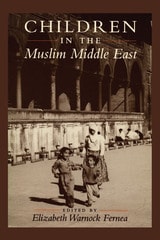
Children in the Muslim Middle East
Edited by Elizabeth Warnock Fernea
University of Texas Press, 1995
Today nearly half of all people in the Middle East are under the age of fifteen. Yet little is known about the new generation of boys and girls who are growing up in a world vastly different from that of their parents, a generation who will be the leaders of tomorrow. This groundbreaking anthology is an attempt to look at the current situation of children by presenting materials by both Middle Eastern and Western scholars. Many of the works have been translated from Arabic, Persian, and French.
The forty-one pieces are organized into sections on the history of childhood, growing up, health, work, education, politics and war, and play and the arts. They are presented in many forms: essays in history and social science, poems, proverbs, lullabies, games, and short stories. Countries represented are Egypt, Jordan, Morocco, Tunisia, Israel/West Bank, Kuwait, Saudi Arabia, Iran, Iraq, Syria, Sudan, Lebanon, Turkey, Yemen, and Afghanistan.
This book complements Elizabeth Fernea's earlier works, Women and the Family in the Middle East and Middle Eastern Muslim Women Speak (coedited with Basima Bezirgan). Like them, it will be important reading for everyone interested in the Middle East and in women's and children's issues.
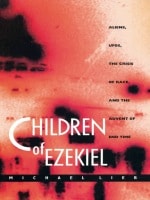
Children of Ezekiel
Aliens, UFOs, the Crisis of Race, and the Advent of End TimeMichael Lieb
Duke University Press, 1998
Beginning with the merkabah chariot literature of Hebrew and Gnostic mysticism, Lieb shows how religiously inspired people concerned with annihilating their heretical enemies seized on Ezekiel’s vision as revealing the technologically superior instrument of God’s righteous anger. He describes how many who seek to know the unknowable that is the power of God conceive it in technological terms—and how that power is associated with political aims and a heralding of the end of time. For Milton, Ezekiel’s chariot becomes the vehicle in which the Son of God does battle with the rebellious angels. In the modern age, it may take the form of a locomotive, tank, airplane, missile, or UFO. Technology itself is seen as a divine gift and an embodiment of God in the temporal world. As Lieb demonstrates, the impetus to produce modern technology arises not merely from the desire for profit or military might but also from religious-spiritual motives.
Including discussions of conservative evangelical Christian movements, Reagan’s ballistic shooting gallery in the sky, and the Nation of Islam’s vision of the “mother plane” as the vehicle of retribution in the war against racial oppression, Children of Ezekiel will enthrall readers who have been captivated, either through religious belief or intellectual interests, by a common thread uniting millennial religious beliefs, racial conflict, and political and militaristic aspirations.

China's Quest for Liberty
A Personal History of FreedomPromise Hsu
St. Augustine's Press, 2014
It is about a world whose dimensions have been basically obscured not only in China but also in the global public square, and walk with this young journalist, step by step, to find, paradoxically, the hope in the depth of hopelessness, the strength in acknowledging weakness, the change in substance by, among other things, keeping the form unchanged for at least a while, the youth in growing up despite growing old, the invisible in the visible, the imperishable in the perishable, the reality in the shadow of numerous fake realities, and the freedom gained not mainly through human efforts but as mercy and grace from the one who created humans and other beings.
As well as digging out the overlooked Christian background in the rise of the sanctity of human life, creative culture, constitutionalism, work as a vocation, modern management, servant leadership, and catchphrases like “the global village” and “The medium is the message”, the author tells of insider observations about the rise of Christianity in China generally and about Shouwang Church in particular. Through sharing these findings, this book aims to show how the one who made the universe rules the world and how this creator sets his creatures free by himself.
China’s Quest for Liberty is a fascinating work of nuance and surprise.
Choose Peace
A Dialogue Between Johan Galtung and Daisaku IkedaJohan Galtung and Daisaku Ikeda
Pluto Press, 1995
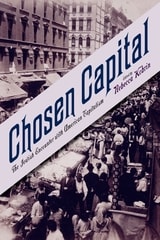
Chosen Capital
The Jewish Encounter with American CapitalismKobrin, Rebecca
Rutgers University Press, 2012
Surveying such diverse topics as Jews’ participation in the real estate industry, the liquor industry, and the scrap metal industry, as well as Jewish political groups and unions bent on reforming American capital, such as the American Labor Party and the International Ladies’ Garment Workers’ Union, contributors to this volume provide a new prism through which to view the Jewish encounter with America. The volume also lays bare how American capitalism reshaped Judaism itself by encouraging the mass manufacturing and distribution of foods like matzah and the transformation of synagogue cantors into recording stars. These essays force us to rethink not only the role Jews played in American economic development but also how capitalism has shaped Jewish life and Judaism over the course of the twentieth century.
Contributors:
Marni Davis, Georgia State University
Phyllis Dillon, independent documentary producer, textile conservator, museum curator
Andrew Dolkart, Columbia University
Andrew Godley, Henley Business School, University of Reading
Jonathan Karp, executive director, American Jewish Historical Society
Daniel Katz, Empire State College, State University of New York
Ira Katznelson, Columbia University
David S. Koffman, New York University
Eli Lederhendler, Hebrew University, Jerusalem
Jonathan Z. S. Pollack, University of Wisconsin—Madison
Jonathan D. Sarma, Brandeis University
Jeffrey Shandler, Rutgers University
Daniel Soyer, Fordham University
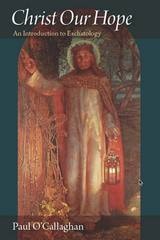
Christ Our Hope
An Introduction to EschatologyPaul O'Callaghan
Catholic University of America Press, 2011
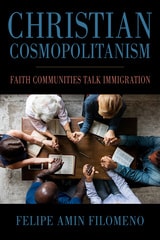
Christian Cosmopolitanism
Faith Communities Talk ImmigrationFelipe Amin Filomeno
Temple University Press, 2024
Christian Cosmopolitanism shows that mutual understanding can result when people share their personal stories, feelings, and thoughts about immigration. They reflect and deliberate on collaborative action to advance common interests and shared values, which can unleash the cosmopolitan potential of the Christian community.
Including practical tools for church leaders, Christian Cosmopolitanism promotes dialogue as a cultural practice that can help diverse communities overcome segregation and become socially cohesive.
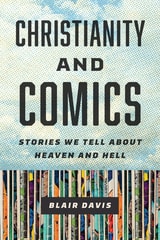
Christianity and Comics
Stories We Tell about Heaven and HellBlair Davis
Rutgers University Press, 2024
Christianity and Comics presents an 80-year history of the various ways that the comics industry has drawn from biblical source material. It explores how some publishers specifically targeted Christian audiences with titles like Catholic Comics, books featuring heroic versions of Oral Roberts and Billy Graham, and special religious-themed editions of Archie. But it also considers how popular mainstream comics like Daredevil, The Sandman, Ghost Rider, and Batman are infused with Christian themes and imagery.
Comics scholar Blair Davis pays special attention to how the medium’s unique use of panels, word balloons, captions, and serialized storytelling have provided vehicles for telling familiar biblical tales in new ways. Spanning the Golden Age of comics to the present day, this book charts how comics have both reflected and influenced Americans’ changing attitudes towards religion.
Christianity and the Mass Media in America
Toward a Democratic AccommodationQuentin J. Schultze
Michigan State University Press, 2003
The mass media and religious groups in America regularly argue about news bias, sex and violence on television, movie censorship, advertiser boycotts, broadcast and film content rating systems, government regulation of the media, the role of mass evangelism in a democracy, and many other issues. In the United States the major disputes between religion and the media usually have involved Christian churches or parachurch ministries, on the one hand, and the so-called secular media, on the other. Often the Christian Right locks horns with supposedly liberal Eastern media elite and Hollywood entertainment companies. When a major Protestant denomination calls for an economic boycott of Disney, the resulting news reports suggest business as usual in the tensions between faith groups and media empires.
Schultze demonstrates how religion and the media in America have borrowed each other’s rhetoric. In the process, they have also helped to keep each other honest, pointing out respective foibles and pretensions. Christian media have offered the public as well as religious tribes some of the best media criticism— better than most of the media criticism produced by mainstream media themselves. Meanwhile, mainstream media have rightly taken particular churches to task for misdeeds as well as offered some surprisingly good depictions of religious life.
The tension between Christian groups and the media in America ultimately is a good thing that can serve the interest of democratic life. As Alexis de Tocqueville discovered in the 1830s, American Christianity can foster the “habits of the heart” that ward off the antisocial acids of radical individualism. And, as John Dewey argued a century later, the media offer some of our best hopes for maintaining a public life in the face of the religious tribalism that can erode democracy from within. Mainstream media and Christianity will always be at odds in a democracy. That is exactly the way it should be for the good of each one.
Christianity, Social Tolerance, and Homosexuality
Gay People in Western Europe from the Beginning of the Christian Era to the Fourteenth CenturyJohn Boswell
University of Chicago Press, 1981
John Boswell's National Book Award-winning study of the history of attitudes toward homosexuality in the early Christian West was a groundbreaking work that challenged preconceptions about the Church's past relationship to its gay members—among them priests, bishops, and even saints—when it was first published twenty-five years ago. The historical breadth of Boswell's research (from the Greeks to Aquinas) and the variety of sources consulted make this one of the most extensive treatments of any single aspect of Western social history. Christianity, Social Tolerance, and Homosexuality, still fiercely relevant today, helped form the disciplines of gay and gender studies, and it continues to illuminate the origins and operations of intolerance as a social force.
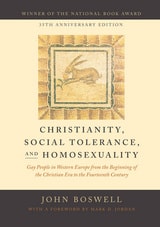
Christianity, Social Tolerance, and Homosexuality
Gay People in Western Europe from the Beginning of the Christian Era to the Fourteenth CenturyJohn Boswell
University of Chicago Press, 2015
John Boswell’s National Book Award–winning study of the history of attitudes toward homosexuality in the early Christian West was a groundbreaking work that challenged preconceptions about the Church’s past relationship to its gay members—among them priests, bishops, and even saints—when it was first published in 1980. The historical breadth of Boswell’s research (from the Greeks to Aquinas) and the variety of sources consulted make this one of the most extensive treatments of any single aspect of Western social history.
This edition offers a new foreword by leading queer and religious studies scholar Mark D. Jordan that reminds current readers, scholars, and students that Christianity, Social Tolerance, and Homosexuality is still fiercely relevant. This landmark book helped form the disciplines of gay and gender studies, and it continues to illuminate the origins and operations of intolerance as a social force.
Citizenship, Faith, and Feminism
Jewish and Muslim Women Reclaim Their RightsJan Feldman
Brandeis University Press, 2011
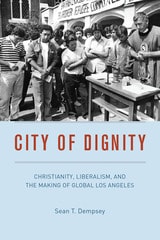
City of Dignity
Christianity, Liberalism, and the Making of Global Los AngelesSean T. Dempsey
University of Chicago Press, 2023
Contemporary Los Angeles is commonly seen as an American bulwark of progressive secular politics, a place that values immigration, equity, diversity, and human rights. But what accounts for the city’s embrace of such staunchly liberal values, which are more hotly contested in other parts of the country? The answer, Sean Dempsey reveals, lies not with those frequent targets of credit and blame—Democrats in Hollywood—but instead with liberal Protestants and other steadfast religious organizations of the postwar era.
As the Religious Right movement emerged in the 1970s, progressive religious activists quietly began promoting an ethical vision that made waves worldwide but saw the largest impact in its place of origin: metropolitan Los Angeles. At the center of this vision lay the concept of human dignity—entwining the integral importance of political and expressive freedom with the moral sanctity of the human condition—which suffused all of the political values that arose from it, whether tolerance, diversity, or equality of opportunity. The work of these religious organizations birthed such phenomena as the Sanctuary Movement—which provided safe haven for refugees fleeing conflict-torn Central America—and advocacy for the homeless, both of which became increasingly fraught issues amid the rising tides of neoliberalism and conservatism. City of Dignity explores how these interwoven spiritual and theological strands found common ground—and made common impacts—in the humanitarian ecosystem of one of America’s largest and most dynamic metro areas.
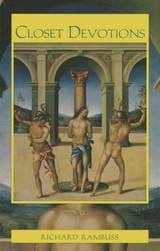
Closet Devotions
Richard Rambuss
Duke University Press, 1998
Through startling rereadings of works ranging from the devotional verse of the metaphysical poets (Donne, Herbert, Crashaw, and Traherne) to photographer Andres Serrano’s controversial “Piss Christ,” from Renaissance religious iconography to contemporary gay porn, Rambuss uncovers the highly charged erotic imagery that suffuses religious devotional art and literature. And he explores one of Christian culture’s most guarded (and literal) closets—the prayer closet itself, a privileged space where the vectors of same-sex desire can travel privately between the worshiper and his or her God.
Elegantly written and theoretically astute, Closet Devotions illuminates the ways in which sacred Christian devotion is homoeroticized, a phenomenon that until now has gone unexplored in current scholarship on religion, the body, and its passions. This book will attract readers across a wide array of disciplines, including gay and lesbian studies, literary theory and criticism, Renaissance studies, and religion.
Cognitive Behavioral Therapy for Christians with Depression
A Practical Tool-Based PrimerMichelle Pearce
Templeton Press, 2016
For anyone in the helping profession, whether as mental health professional or religious leader, this question is bound to arise. Many mental health professionals feel uncomfortable discussing religion. In contrast, many religious leaders feel uncomfortable referring their congregants to professionals who do not know their faith or intent to engage with it.
And yet Michelle Pearce, PhD, assistant professor and clinical psychologist at the Center for Integrative Medicine at the University of Maryland, argues that if religion is essential to a client, religion will be a part of psychotherapy, whether it is discussed or not. Clients cannot check their values at the door more than the professionals who treat them.
To Pearce, the question isn’t really, “does religion belong?” but rather, “how can mental health professionals help their religious clients engage with and use their faith as a healing resource in psychotherapy?”
Cognitive Behavioral Therapy for Christian Clientswith Depression is the answer to that question, as the book’s purpose is to educate mental health professionals and pastoral counselors about religion’s role in therapy, as well as equip them to discuss religious issues and use evidence-based, religiously-integrated tools with Christian clients experiencing depression.
In this book, readers will find the following resources in an easy-to-use format:
- An overview of the scientific benefits of integrating clients’ religious beliefs and practices in psychotherapy
- An organizing therapeutic approach for doing Christian CBT
- Seven tools specific to Christian CBT to treat depression
- Suggested dialogue for therapists to introduce concepts and tools
- Skill-building activity worksheets for clients
- Clinical examples of Christian CBT and the seven tools in action
Cognitive Behavioral Therapy for Christian Clients with Depression is a practical guide for mental health professionals and pastoral counselors who want to learn how to use Christian-specific CBT tools to treat depression in their Christian clients.
Combating Jihadism
American Hegemony and Interstate Cooperation in the War on TerrorismBarak Mendelsohn
University of Chicago Press, 2009
Communicating Faith
John Sullivan
Catholic University of America Press, 2011
Composing Violence
The Limits of Exposure and the Making of MinoritiesMoyukh Chatterjee
Duke University Press, 2023
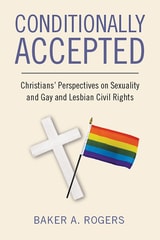
Conditionally Accepted
Christians' Perspectives on Sexuality and Gay and Lesbian Civil RightsBaker A. Rogers
Rutgers University Press, 2020
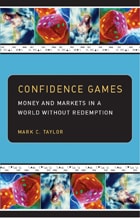
Confidence Games
Money and Markets in a World without RedemptionMark C. Taylor
University of Chicago Press, 2004
In Confidence Games, Mark C. Taylor considers the implications of these developments for our digital and increasingly virtual economy. According to Taylor, money and markets do not exist in a vacuum but grow in a profoundly cultural medium, reflecting and in turn shaping their world. To understand the recent changes in our economy, it is not enough to analyze the impact of politics and technology—one must consider the influence of art, philosophy, and religion as well.
Bringing John Calvin, G. W. F. Hegel, and Adam Smith to Wall Street by way of Las Vegas, Taylor first explores the historical and psychological origins of money, the importance of religious beliefs and practices for the emergence of markets, and the unexpected role of religion and art in the classical understanding of economics. He then moves to an account of economic developments during the past four decades, exploring the dawn of our new information age, the growing virtuality of money and markets, and the complexity of the networks by which monetary value is now negotiated.
Returning full circle to a version of the market first proposed by Adam Smith when he used theology and aesthetics to rethink economics, Confidence Games closes with a plea for a conception of life that embraces uncertainty and insecurity as signs of the openness of the future. Like religion and economics, life is a confidence game in which the challenge is not to find redemption but to learn to live without it.
"Before the global credit system began its collapse in 2007, Mark Taylor had connected the dots between increasingly complex financial instruments and larger cultural forces. Anyone who wants to understand the disappearing foundation of our financial markets needs to read this book immediately."—Michael Lewitt, editor, The HCM Market Letter
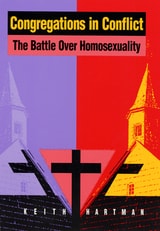
Congregations in Conflict
The Battle over HomosexualityHartman, Keith
Rutgers University Press, 1996
A Methodist church puts its minister on trial after he marches in a gay rights parade. A Quaker meeting struggles to decide whether to marry a lesbian couple. An entire congregation is thrown out of the Southern Baptist Convention for deciding that a gay divinity student had a sincere calling to the ministry, and an order of celibate monks comes out of the closet. An Episcopal priest blesses two same-sex relationships--then a closeted gay lawyer leads the charge to have him fired.
Homosexuality is the most divisive issue facing churches today. Like the issue of slavery 150 years ago, it is a matter that ignites passionate convictions on both sides, a matter that threatens to turn members of the same faith against each other, to divide congregations, and possibly even to fragment several denominations. Like slavery, it is an issue that calls up basic questions about what it means to be a Christian. How does one know right from wrong? Is the Bible fallible? Do good Christians always follow their church's teachings, or are they allowed to think for themselves on moral issues? And to what source does one finally look to determine what God really wants?
While many books have been written analyzing the scriptural and theological dimensions of the conflict, none has yet shown how it is being played out in the pews. Congregations in Conflict examines nine churches that were split by disagreements over gay and lesbian issues, and how the congregations resolved them.
Hartman explores in very readable prose how different denominations have handled their conflicts and what it says about the nature of their faith. He shows some churches coming through their struggles stronger and more unified, while others irrevocably split. Most importantly, he illuminates how people with a passionate clash of beliefs can still function together as a community of faith.
Consolation to Stagirius
Robert G.T. St. John Chrysostom
Catholic University of America Press, 2025

Conspicuous Bodies
Provincial Belief and the Making of Joyce and RushdieJean Kane
The Ohio State University Press, 2014
Conspicuous Bodies presents Joyce as a founder and Rushdie as an inheritor of a distinctive discourse of belief about the importance of physical bodies and knowledge in religious practice. In doing so, it moves the reception of Joyce and Rushdie away from what previous critics have emphasized—away from questions of aesthetics and from a narrow understanding of belief—and instead questions the assumption that belief should be segregated from matters of physicality and knowledge. Kane reintroduces the concept of spiritual embodiment in order to expand our understanding of what counts as spiritual agency in non-western and minority literatures.
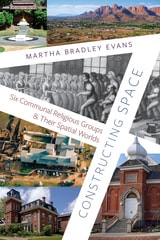
Constructing Space
Six Communal Religious Groups and Their Spatial WorldsMartha Bradley Evans
University of Utah Press, 2025
Religion transforms and inspires specific ways of living in the world. Through architecture and the built environment, members of religious communities communicate intangible beliefs about God, gender and family, the sacred and profane, and more. This captivating volume explores the spatial worlds of six different religious communities— the Latter-day Saints, the Oneida Colony, the Shakers, the Branch Davidians, the FLDS, and Adidam—through the architecture and cultural landscapes they built.
What does the strict order and regularity of a Shaker village tell us about the community’s hierarchies and relationships? How might a temple building site affect an LDS Church member’s daily life? Constructing Space reveals the hidden language of meaning, association, and identity that religious persons speak as they mold their faith into concrete forms, and how they interpret the meanings of those spaces within their practices.
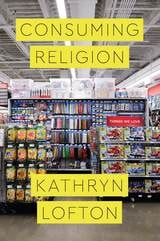
Consuming Religion
Kathryn Lofton
University of Chicago Press, 2017
What are you drawn to like, to watch, or even to binge? What are you free to consume, and what do you become through consumption? These questions of desire and value, Kathryn Lofton argues, are questions for the study of religion. In eleven essays exploring soap and office cubicles, Britney Spears and the Kardashians, corporate culture and Goldman Sachs, Lofton shows the conceptual levers of religion in thinking about social modes of encounter, use, and longing. Wherever we see people articulate their dreams of and for the world, wherever we see those dreams organized into protocols, images, manuals, and contracts, we glimpse what the word “religion” allows us to describe and understand.
With great style and analytical acumen, Lofton offers the ultimate guide to religion and consumption in our capitalizing times.
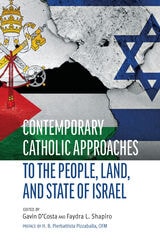
Contemporary Catholic Approaches to the People, State, and Land of Israel
Gavin D'Costa
Catholic University of America Press, 2021
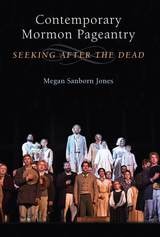
Contemporary Mormon Pageantry
Seeking After the DeadMegan Sanborn Jones
University of Michigan Press, 2018
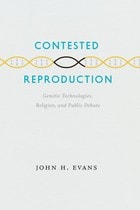
Contested Reproduction
Genetic Technologies, Religion, and Public DebateJohn H. Evans
University of Chicago Press, 2010
Scientific breakthroughs have led us to a point where soon we will be able to make specific choices about the genetic makeup of our offspring. In fact, this reality has arrived—and it is only a matter of time before the technology becomes widespread.
Much like past arguments about stem-cell research, the coming debate over these reproductive genetic technologies (RGTs) will be both political and, for many people, religious. In order to understand how the debate will play out in the United States, John H. Evans conducted the first in-depth study of the claims made about RGTs by religious people from across the political spectrum, and Contested Reproduction is the stimulating result.
Some of the opinions Evans documents are familiar, but others—such as the idea that certain genetic conditions produce a “meaningful suffering” that is, ultimately, desirable—provide a fascinating glimpse of religious reactions to cutting-edge science. Not surprisingly, Evans discovers that for many people opinion on the issue closely relates to their feelings about abortion, but he also finds a shared moral language that offers a way around the unproductive polarization of the abortion debate and other culture-war concerns. Admirably evenhanded, Contested Reproduction is a prescient, profound look into the future of a hot-button issue.
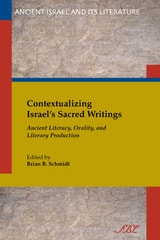
Contextualizing Israel's Sacred Writings
Ancient Literacy, Orality, and Literary ProductionBrian B. Schmidt
SBL Press, 2015
An essential resource exploring orality and literacy in the pre-Hellenistic southern Levant and the Hebrew Bible
Situated historically between the invention of the alphabet, on the one hand, and the creation of ancient Israel's sacred writings, on the other, is the emergence of literary production in the ancient Levant. In this timely collection of essays by an international cadre of scholars, the dialectic between the oral and the written, the intersection of orality with literacy, and the advent of literary composition are each explored as a prelude to the emergence of biblical writing in ancient Israel. Contributors also examine a range of relevant topics including scripturalization, the compositional dimensions of orality and textuality as they engage biblical poetry, prophecy, and narrative along with their antecedents, and the ultimate autonomy of the written in early Israel. The contributors are James M. Bos, David M. Carr, André Lemaire, Robert D. Miller II, Nadav Na'aman, Raymond F. Person Jr., Frank H. Polak, Christopher A. Rollston, Seth L. Sanders, Joachim Schaper, Brian B. Schmidt, William M. Schniedewind, Elsie Stern, and Jessica Whisenant.
Features
- Addresses questions of literacy and scribal activity in the Levant and Negev
- Articles examine memory, oral tradition, and text criticism
- Discussion of the processes of scripturalization
Contraception and Persecution
Charles E. Rice
St. Augustine's Press, 2014
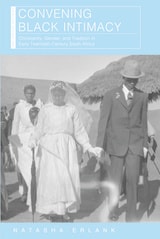
Convening Black Intimacy
Christianity, Gender, and Tradition in Early Twentieth-Century South AfricaNatasha Erlank
Ohio University Press, 2022
An unprecedented study of how Christianity reshaped Black South Africans’ ideas about gender, sexuality, marriage, and family during the first half of the twentieth century.
This book demonstrates that the primary affective force in the construction of modern Black intimate life in early twentieth-century South Africa was not the commonly cited influx of migrant workers but rather the spread of Christianity. During the late nineteenth and early twentieth centuries, African converts developed a new conception of intimate life, one that shaped ideas about sexuality, gender roles, and morality.
Although the reshaping of Black intimacy occurred first among educated Africans who aspired to middle-class status, by the 1950s it included all Black Christians—60 percent of the Black South African population. In turn, certain Black traditions and customs were central to the acceptance of sexual modernity, which gained traction because it included practices such as lobola, in which a bridegroom demonstrates his gratitude by transferring property to his bride’s family. While the ways of understanding intimacy that Christianity informed enjoyed broad appeal because they partially aligned with traditional ways, other individuals were drawn to how the new ideas broke with tradition. In either case, Natasha Erlank argues that what Black South Africans regard today as tradition has been unequivocally altered by Christianity.
In asserting the paramount influence of Christianity on unfolding ideas about family, gender, and marriage in Black South Africa, Erlank challenges social historians who have attributed the key factor to be the migrant labor system. Erlank draws from a wide range of sources, including popular Black literature and the Black press, African church and mission archives, and records of the South African law courts, which she argues have been underutilized in histories of South Africa. The book is sure to attract historians and other scholars interested in the history of African Christianity, African families, sexuality, and the social history of law, especially colonial law.
Cooperation with Evil
Thomistic Tools of AnalysisKevin L. Flannery, SJ
Catholic University of America Press, 2019

Coping With Poverty
Pentecostals and Christian Base Communities in BrazilCecilia Mariz
Temple University Press, 1994
Only by understanding the enduring poverty of Brazil can one hope to understand the recent growth of Protestant evangelical churches there, Cecília Loreto Mariz contends. Her study investigates how religious groups support individualism and encourage the poor to organize. Groups with shared values are then able to develop strategies to cope with poverty and, ultimately, to transform the social structure.
Interviews with members and leaders of religious groups, accounts of meetings, and close readings of religious literature contribute to a realistic account of Christian base communities and Assembly of God churches, folk Catholic tradition, and Afro Brazilian Spiritism.
Covenant of Blood
Circumcision and Gender in Rabbinic JudaismLawrence A. Hoffman
University of Chicago Press, 1995
In the rabbinic system, Hoffman argues, circumcision was neither a birth ritual nor the beginning of the human life cycle, but a rite of covenantal initiation into a male "life line." Although the evolution of the rite was shaped by rabbinic debates with early Christianity, the Rabbis shared with the church a view of blood as providing salvation. Hoffman examines the particular significance of circumcision blood, which, in addition to its salvific role, contrasted with menstrual blood to symbolize the gender dichotomy within the rabbinic system. His analysis of the Rabbis' views of circumcision and menstrual blood sheds light on the marginalization of women in rabbinic law. Differentiating official mores about gender from actual practice, Hoffman surveys women's spirituality within rabbinic society and examines the roles mothers played in their sons' circumcisions until the medieval period, when they were finally excluded.
Creating Ourselves
African Americans and Hispanic Americans on Popular Culture and Religious ExpressionAnthony B. Pinn and Benjamín Valentín, eds.
Duke University Press, 2009
Corresponding to a particular form of popular culture, each section features two essays, one by an African American scholar and one by a Latino/a scholar, as well as a short response by each scholar to the other’s essay. The essays and responses are lively, varied, and often personal. One contributor puts forth a “brown” theology of hip hop that celebrates hybridity, contradiction, and cultural miscegenation. Another analyzes the content of the message transmitted by African American evangelical preachers who have become popular sensations through television broadcasts, video distribution, and Internet promotions. The other essays include a theological reading of the Latina body, a consideration of the “authenticity” of representations of Jesus as white, a theological account of the popularity of telenovelas, and a reading of African American ideas of paradise in one of Toni Morrison’s novels. Creating Ourselves helps to make popular culture available as a resource for theology and religious studies and for facilitating meaningful discussions across racial and ethnic boundaries.
Contributors. Teresa Delgado, James H. Evans Jr., Joseph De León, Cheryl Kirk-Duggan, Angel F. Méndez Montoya, Alexander Nava, Anthony B. Pinn, Mayra Rivera, Suzanne E. Hoeferkamp Segovia, Benjamín Valentín, Jonathan L. Walton, Traci C. West, Nancy Lynne Westfield, Sheila F. Winborne
Creation through Evolution
New Perspectives from Thomistic Theology and PhilosophyNicanor Pier Giorgio Austriaco
Catholic University of America Press, 2025