Results by title
436 books match the query 'Renaissance' and 26 start with c
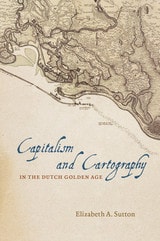
Capitalism and Cartography in the Dutch Golden Age
Elizabeth A. Sutton
University of Chicago Press, 2015
Building her exploration around the central figure of Claes Jansz Vischer, an Amsterdam-based publisher closely tied to the Dutch West India Company, Sutton shows how printed maps of Dutch Atlantic territories helped rationalize the Dutch Republic’s global expansion. Maps of land reclamation projects in the Netherlands, as well as the Dutch territories of New Netherland (now New York) and New Holland (Dutch Brazil), reveal how print media were used both to increase investment and to project a common narrative of national unity. Maps of this era showed those boundaries, commodities, and topographical details that publishers and the Dutch West India Company merchants and governing Dutch elite deemed significant to their agenda. In the process, Sutton argues, they perpetuated and promoted modern state capitalism.
Cartesian Poetics
The Art of ThinkingAndrea Gadberry
University of Chicago Press, 2020
Gadberry’s approach to seventeenth-century writings poses questions urgent for the twenty-first. Bringing literature and philosophy into rich dialogue, Gadberry centers close reading as a method uniquely equipped to manage skepticism, tolerate critical ambivalence, and detect feeling in philosophy. Helping us read classic moments of philosophical argumentation in a new light, this elegant study also expands outward to redefine thinking in light of its poetic formations.
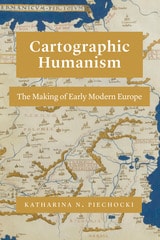
Cartographic Humanism
The Making of Early Modern EuropeKatharina N. Piechocki
University of Chicago Press, 2019
What is “Europe,” and when did it come to be? In the Renaissance, the term “Europe” circulated widely. But as Katharina N. Piechocki argues in this compelling book, the continent itself was only in the making in the fifteenth and sixteenth centuries.
Cartographic Humanism sheds new light on how humanists negotiated and defined Europe’s boundaries at a momentous shift in the continent’s formation: when a new imagining of Europe was driven by the rise of cartography. As Piechocki shows, this tool of geography, philosophy, and philology was used not only to represent but, more importantly, also to shape and promote an image of Europe quite unparalleled in previous centuries. Engaging with poets, historians, and mapmakers, Piechocki resists an easy categorization of the continent, scrutinizing Europe as an unexamined category that demands a much more careful and nuanced investigation than scholars of early modernity have hitherto undertaken. Unprecedented in its geographic scope, Cartographic Humanism is the first book to chart new itineraries across Europe as it brings France, Germany, Italy, Poland, and Portugal into a lively, interdisciplinary dialogue.
Catastrophizing
Materialism and the Making of DisasterGerard Passannante
University of Chicago Press, 2019
Reaching back to the time between the Renaissance and the Enlightenment, Passannante traces a history of catastrophizing through literary and philosophical encounters with materialism—the view that the world is composed of nothing but matter. As artists, poets, philosophers, and scholars pondered the physical causes and material stuff of the cosmos, they conjured up disasters out of thin air and responded as though to events that were befalling them. From Leonardo da Vinci’s imaginative experiments with nature’s destructive forces to the fevered fantasies of doomsday astrologers, from the self-fulfilling prophecies of Shakespeare’s tragic characters to the mental earthquakes that guided Kant toward his theory of the sublime, Passannante shows how and why the early moderns reached for disaster when they ventured beyond the limits of the sensible. He goes on to explore both the danger and the critical potential of thinking catastrophically in our own time.
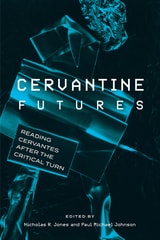
Cervantine Futures
Reading Cervantes after the Critical TurnEdited by Nicholas R. Jones and Paul Michael Johnson
Vanderbilt University Press, 2026
Cervantine Futures places the writings of Miguel de Cervantes into conversation with some of the most pressing issues in cultural studies, critical theory, and sociopolitical discourse of the last decade. Assembling a diverse range of prominent and emerging scholars in the field, this volume stakes a claim for Hispanism’s place in the growing scholarly movement to vindicate pre- and early modernity for its incisive and often singular perspective on race, gender, ability, the body, affect, materialism, and other axes of timely debate.
To date, the writings of Miguel de Cervantes have been oddly sidelined from larger, ongoing scholarly projects to link premodern literature with the most recent analytics of critical theory and cultural studies. Cervantine Futures addresses this conspicuous gap by highlighting creative, forward-looking, and rigorous approaches that situate Cervantes in recent theoretical developments in critical cultural studies. Conceived under the rubric of “futures”—collective and capacious, yet also subjunctive and transtemporal—this book tasks the fields of early modern Iberian and Cervantine studies with adopting a more global approach to the early modern period that surveys the current and historical landscapes while charting new horizons. Crucially, Cervantine Futures reflects upon how early modern texts, cultural modes of expression, and visual ideations from Cervantes’s life and legacy resonate with contemporary debates on gender, race, ability, and other issues. The volume thus includes scholarly provocations that deploy feminist, queer, critical race, disability studies, and new materialist approaches to Cervantes’s oeuvre—tendentiously positioned as “canonical”—with the purpose not only of scrutinizing its sociopolitical meanings, but also of creating new archives that productively reframe and rethink early modernity.

Changing Identities in Early Modern France
Michael Wolfe, ed.
Duke University Press, 1997
After examining the interplay between competing ideologies and public institutions, from the monarchy to the Parlement of Paris to the aristocratic household, the volume explores the dynamics of deviance and dissent, particularly in regard to women’s roles in religious reform movements and such sensationalized phenomena as the witch hunts and infanticide trials. Concluding essays examine how regional and confessional identities reshaped French identity in response to the discovery of the New World and the spectacular spread of Calvinism.
Contributors. Charmarie Blaisdell, William Bouwsma, Lawrence M. Bryant, Denis Crouzet, Robert Descimon, Barbara B. Diefendorf, Richard M. Golden, Sarah Hanley, Mack P. Holt, Donald R. Kelley, Kristen B. Neuschel, J. H. M. Salmon, Zachary Sayre Schiffman, Silvia Shannon, Alfred Soman, Michael Wolfe
Character and the Individual Personality in English Renaissance Drama
Tragedy, History, TragicomedyJohn E. Curran
University of Delaware Press, 2014
Published by University of Delaware Press. Distributed worldwide by Rutgers University Press.
Charity and Children in Renaissance Florence
The Ospedale degli Innocenti, 1410-1536Philip Gavitt
University of Michigan Press, 1991
Alongside the architectural splendor and intellectual brilliance of early Renaissance Florence there existed a second world of poverty, misery, social despair, and child abandonment. The Ospedale degli Innocenti (Hospital of the Innocents), designed and built between 1419 and 1445 by the renowned architect Filippo Brunelleschi, united these disparate worlds. Christian charity and compassion, as well as the humanist commitment to social perfection, family values, and love for children, were intertwined with a civic pride in which charity curried God's favor and invoked God's blessings on the city's fortunes.
Based on a close and attentive reading of archival material from the hospital and from the Florentine State Archives, Charity and Children in Renaissance Florence both chronicles the concerns and ambivalence of parents who abandoned children and follows the lives of the hospital's inhabitants from childhood to death. The book also demonstrates how hospital officials deliberately duplicated the structure and values of the Florentine family within the hospital walls. Gavitt's research shows that early modern foundling hospitals were not charnel houses where parents knowingly and impersonally abandoned their unwanted children to certain death. Charity and Children in Renaissance Florence provokes reflection on the contrast between our own views on the care of homeless children and those of the Italian Renaissance.
Winner of the Society for Italian Historical Studies 1988 Award for Best Unpublished Manuscript.
Class Analysis in Early America and the Atlantic World
Foundations and Future, Volume 1Simon Middleton
Duke University Press, 0
Assembling essays written by three generations of labor historians, each with markedly different approaches to the labor histories of early America and the Atlantic world, this issue offers unique insights into the evolution of class analysis and its shifting place in the field of labor history. In one essay, a renowned member of the first generation of “new social historians” reflects on his work, considering the past and future of class analysis while highlighting some of his current views about class in early America. In other essays, a new generation of scholars enriches scholarship on early America and the Atlantic by incorporating complex and nuanced discussions of race and gender into traditional class analyses. Perhaps signaling the future of the field, another essay discusses the theoretical foundations and implications of a globalized mode of historical class analysis, examining the complicated connections among peoples in Europe, Africa, and North America during the seventeenth and eighteenth centuries and the impact these connections had in shaping early America and the Atlantic world.
Clément Marot's Epistles
Clément Marot
Arizona Center for Medieval and Renaissance Studies, 2021
Clément Marot (1496–1544), a royal poet in Renaissance France who ushered in new verse forms and renewed existing ones, stands as one of the most important literary voices of the first half of the sixteenth century. Clément Marot’s Epistles represents a first attempt to offer a sustained English-language translation and critical edition of what is widely considered his most personal, historically relevant, and crowning verse form. Aiming for integrality and poetic precision, the volume translates and sets to verse all seventy-four of Marot’s epistles, employing the same meter and rhyme scheme used by the poet in the original compositions. Likewise focused on capturing Marot’s poetic voice, thus maintaining idiomatic and literary integrity, the resulting translation is an attempt to relate the playfulness and pathos of Marot’s verse, rendering it accessible to an anglophone public.
Beyond the more traditional verse epistles included in the primary base text, Marot’s authorized complete works from 1538, the volume also offers translations of the introductory prose epistles penned by Marot for his Adolescence clémentine of 1532 and the 1538 edition (Lyon, Dolet), as well as the coq-à-l’âne and other versified satirical epistles, the “artificial epistle” retelling of a popular medieval romance, and more. A robust critical apparatus includes ample footnotes, an extensive introduction, illustrations, a bibliography, a chronological table, and a concordance with the principal modern French-language editions of Marot’s epistles.
The book should appeal to English-speaking historians and literary scholars alike, as well as to poetry lovers, who will appreciate a new acquaintance with this distinctive voice from poetry’s past.
Collected Letters of a Renaissance Feminist
Laura Cereta
University of Chicago Press, 1997
Yet these letters also furnish a detailed portrait of an early modern woman’s private experience, for Cereta addressed many letters to a close circle of family and friends, discussing highly personal concerns such as her difficult relationships with her mother and her husband. Taken together, these letters are a testament both to an individual woman and to enduring feminist concerns.

Commentary and Ideology
Dante in the RenaissanceDeborah Parker
Duke University Press, 1993
Parker begins by tracing the criticism of Dante commentaries from the nineteenth century to the present and then examines the tradition of commentary from the Middle Ages to the Renaissance. She shows how the civic, institutional, and social commitments of commentators shaped their response to the Comedy, and how commentators tried to use the poem as an authoritative source for various kinds of social legitimation. Parker discusses how different commentators dealt with a deeply political section of the poem: the damnation of Brutus and Cassius.
The scope and importance of Commentary and Ideology will command the attention of a broad group of scholars, including Italian specialists on Dante, late medievalists, students and professionals in early modern European literature, bibliographers, critical theorists, historians of literary criticism and theory, and cultural and intellectual historians.
Commercial Visions
Science, Trade, and Visual Culture in the Dutch Golden AgeDániel Margócsy
University of Chicago Press, 2014
Margócsy introduces a number of natural historians, physicians, and curiosi in Amsterdam, London, St. Petersburg, and Paris who, in their efforts to boost their trade, developed modern taxonomy, invented color printing and anatomical preparation techniques, and contributed to philosophical debates on topics ranging from human anatomy to Newtonian optics. These scientific practitioners, including Frederik Ruysch and Albertus Seba, were out to do business: they produced and sold exotic curiosities, anatomical prints, preserved specimens, and atlases of natural history to customers all around the world. Margócsy reveals how their entrepreneurial rivalries transformed the scholarly world of the Republic of Letters into a competitive marketplace.
Margócsy’s highly readable and engaging book will be warmly welcomed by anyone interested in early modern science, global trade, art, and culture.
Comparative Essays on the Poetry and Prose of John Donne and George Herbert
Combined LightsRussell M. Hillier
University of Delaware Press, 2022
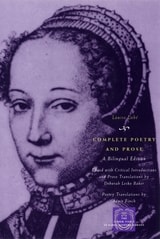
Complete Poetry and Prose
A Bilingual EditionLouise Labé
University of Chicago Press, 2006
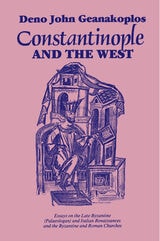
Constantinople and the West
Essays on the Late Byzantine (Palaeologan) and Italian Renaissances and the Byzantine and Roman ChurchesDeno John Geanakoplos
University of Wisconsin Press, 1989
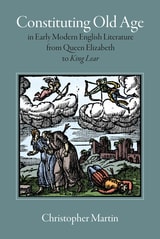
Constituting Old Age in Early Modern English Literature, from Queen Elizabeth to King Lear
Christopher Martin
University of Massachusetts Press, 2012
How did Shakespeare and his contemporaries, whose works mark the last quarter century of Elizabeth I's reign as one of the richest moments in all of English literature, regard and represent old age? Was late life seen primarily as a time of withdrawal and preparation for death, as scholars and historians have traditionally maintained? In this book, Christopher Martin examines how, contrary to received impressions, writers and thinkers of the era—working in the shadow of the kinetic, long-lived queen herself—contested such prejudicial and dismissive social attitudes.
In late Tudor England, Martin argues, competing definitions of and regard for old age established a deeply conflicted frontier between external, socially “constituted” beliefs and a developing sense of an individual's “constitution” or physical makeup, a usage that entered the language in the mid-1500s. This space was further complicated by internal divisions within the opposing camps. On one side, reverence for the elder's authority, rooted in religious and social convention, was persistently challenged by the discontents of an ambitious younger underclass. Simultaneously, the aging subject grounded an enduring social presence and dignity on a bodily integrity that time inevitably threatened. In a historical setting that saw both the extended reign of an aging monarch and a resulting climate of acute generational strife, this network of competition and accommodation uniquely shaped late Elizabethan literary imagination. Through fresh readings of signature works, genres, and figures, Martin redirects critical attention to this neglected aspect of early modern studies.
Contested Canonizations
The Last Medieval Saints, 1482-1523Ronald C. Finucane
Catholic University of America Press, 2011
Conveying the Renaissance
A Tribute to Charles S. RossAngelica Duran
University of Delaware Press, 2027
Conveying the Renaissance: A Tribute to Charles S. Ross provides answers to at once timely and enduring questions: How did literary works convey new, distinctive ideas and dynamics in the Renaissance era? How have Renaissance literary works, in turn, been conveyed into various media through today? By what authorial and authorizing agents and forces—authors and artists, international politics, performers, readers, technologies, and translators—have these works and the ideas and dynamics of the Renaissance era been conveyed? And for what kinds of audiences, imagined and actual? The answers show the vitality of Ludovico Ariosto, Matteo Maria Boiardo, Claudio Monteverdi, Cervantes, Milton, Shakespeare, Tasso, and other Renaissance authors in their immediate contexts and through the centuries in cinema, landscaping, modernist lyric, music, puppetry, TV, and visual art. The eight main chapters are case studies drawing out cultural dynamics, topics, and media that deserve renewed attention or that have received no attention despite their significance.
Courtly Song in Late Sixteenth-Century France
Jeanice Brooks
University of Chicago Press, 2001
Brooks concentrates on a period in which the court's importance in projecting the symbolic centrality of monarchy was growing rapidly and considers the role of the air in defining patronage hierarchies at court and in enhancing courtly visions of masculine and feminine virtue. Her study illuminates the court's relationship to the world beyond its own confines, represented first by Italy, then by the countryside. In addition to the 40 editions of airs de cour printed between 1559 and 1589, Brooks draws on memoirs, literary works, and iconographic evidence to present a rounded vision of French Renaissance culture.
The first book-length examination of the history of air de cour, this work also sheds important new light on a formative moment in French history.
Courts, Jurisdictions, and Law in John Milton and His Contemporaries
Alison A. Chapman
University of Chicago Press, 2020
Surveying Milton’s early pamphlets, divorce tracts, late political tracts, and major prose works in comparison with the writings and cases of some of Milton’s contemporaries—including George Herbert, John Donne, Ben Jonson, and John Bunyan—Chapman reveals the variety and nuance in Milton’s juridical toolkit and his subtle use of competing legal traditions in pursuit of justice.
Crip Authority
Disability and the Art of Consolation in the RenaissanceElizabeth B. Bearden
University of Michigan Press, 2025
Disabled authors include Francesco Petrarca, Teresa de Cartagena, Giovani Paolo Lomazzo, Miguel de Cervantes Saavedra, Robert Burton, and John Milton. They all explore their experiences of disability, but their work has rarely or never been considered from a disability studies perspective. Bearden thus brings today’s models of disability studies and crip theory together with early modern articulations of disability based on ancient and Renaissance models of military, political, biblical, and literary authority. In sum, Crip Authority makes a significant contribution to the growing field of early modern disability studies and invites us to rethink the extent of crip history and the endurance of disability gain.
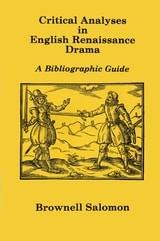
Critical Analyses in English Renaissance Drama
A Bibliographic GuideBrownell Salomon
University of Wisconsin Press, 1979
This bibliographic guide directs the reader to a prize selection of the best modern, analytical studies of every play, anonymous play, masque, pageant, and "entertainment" written by more than two dozen contemporaries of Shakespeare in the years between 1580 and 1642. Together with Shakespeare's plays, these works comprise the most illustrious body of drama in the English language.
Critical Prefaces of the French Renaissance
Bernard Weinberg
Northwestern University Press, 1950
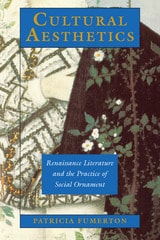
Cultural Aesthetics
Renaissance Literature and the Practice of Social OrnamentPatricia Fumerton
University of Chicago Press, 1991
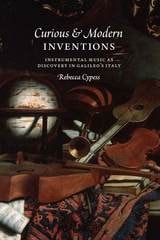
Curious and Modern Inventions
Instrumental Music as Discovery in Galileo's ItalyRebecca Cypess
University of Chicago Press, 2016
Rebecca Cypess shows that early modern thinkers were fascinated with instrumental technologies. The telescope, the clock, the pen, the lute—these were vital instruments for leading thinkers of the age, from Galileo Galilei to Giambattista Marino. No longer used merely to remake an object or repeat a process already known, instruments were increasingly seen as tools for open-ended inquiry that would lead to new knowledge. Engaging with themes from the history of science, literature, and the visual arts, this study reveals the intimate connections between instrumental music and the scientific and artisanal tools that served to mediate between individuals and the world around them.