Results by title
47 books match the query 'Regionalism'
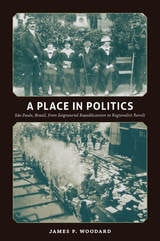
A Place in Politics
São Paulo, Brazil, from Seigneurial Republicanism to Regionalist RevoltJames P. Woodard
Duke University Press, 2009
Woodard’s fine-grained political history proceeds chronologically from the final years of the nineteenth century, when São Paulo’s leaders enjoyed political preeminence within the federal system codified by the Constitution of 1891, through the mass mobilization of 1931–32, in which São Paulo’s people marched, rioted, and eventually took up arms against the national government in what was to be Brazil’s last great regionalist revolt. In taking to the streets in the name of their state, constitutionalism, and the “civilization” that they identified with both, the people of São Paulo were at once expressing their allegiance to elements of a regionally distinct political culture and converging on a broader, more participatory public sphere that had arisen amid the political conflicts of the preceding decades.
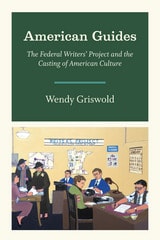
American Guides
The Federal Writers’ Project and the Casting of American CultureWendy Griswold
University of Chicago Press, 2016
Griswold’s subject here is the Project’s American Guides, an impressively produced series that set out not only to direct travelers on which routes to take and what to see throughout the country, but also to celebrate the distinctive characteristics of each individual state. Griswold finds that the series unintentionally diversified American literary culture’s cast of characters—promoting women, minority, and rural writers—while it also institutionalized the innovative idea that American culture comes in state-shaped boxes. Griswold’s story alters our customary ideas about cultural change as a gradual process, revealing how diversity is often the result of politically strategic decisions and bureaucratic logic, as well as of the conflicts between snobbish metropolitan intellectuals and stubborn locals. American Guides reveals the significance of cultural federalism and the indelible impact that the Federal Writers’ Project continues to have on the American literary landscape.
An American Colony
Regionalism and the Roots of Midwestern CultureEdward Watts
Ohio University Press, 2002
The Old Northwest—the region now known as the Midwest—has been largely overlooked in American cultural history, represented as a place smoothly assimilated into the expanding, manifestly-destined nation. An American Colony: Regionalism and the Roots of Midwestern Culture studies the primary texts and principal conflicts of the settlement of the Old Northwest to reveal that its entry into the nation’s culture was not without problems. In fact, Edward Watts argues that it is best understood as a colony of the United States, just as the eastern states were colonies of the British Empire.
Reconsidered as a colony, the Old Northwest becomes a crucible revealing the complex entanglement of local, indigenous, and regional interests with the coercions of racism, nationalism, and imperialism. This conflicted setting, like those of all settlement colonies, was beset by competing views of local identity, especially as they came to contradict writers from the eastern seaboard.
Using postcolonial theories developed to describe other settlement colonies, An American Colony identifies the Old Northwest as a colony and its culture as less than fully participating in either the nation’s or its own writing and identity. This embedded sense of cultural inferiority, Watts argues, haunts Midwestern culture even today.
Asianisms
Regionalist Interactions and Asian IntegrationEdited by Marc Frey and Nicola Spakowski
National University of Singapore Press, 2015
This book investigates the multifarious discursive and material constructions of Asia within the region and in the West. It reconstructs regional constellations, intersections and relations in their national, transnational and global contexts. Moving far beyond the more well-known Japanese Pan-Asianism of the first half of the twentieth century, the chapters investigate visions of Asia that have sought to provide common meanings and political projects in efforts to trace, and construct, Asia as a united and common space of interaction. By tracing the imagination of civil society actors throughout Asia, the volume leaves behind state-centered approaches to regional integration and uncovers the richness and depth of complex identities within a large and culturally heterogeneous space.
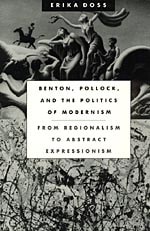
Benton, Pollock, and the Politics of Modernism
From Regionalism to Abstract ExpressionismErika Doss
University of Chicago Press, 1991
"A welcome addition to the growing body of literature that deals with the art and culture of the depression and cold war eras. It is a pioneering work that makes a valuable contribution to our understanding of a puzzling conundrum of American art—the shift from regionalism to abstract expressionism."—M. Sue Kendall, Winterthur Portfolio
"An important scholarly contribution. . . . This book will stand as a step along the way to a better understanding of the most amazing transition in the art of our tumultuous century."—James G. Rogers, Jr., Art Journal
"A valuable and interesting book that restores continuity and political context to the decades of depression and war."—Marlene Park, American Historical Review

Breaking Boundaries
Women'S Regional WritingSherrie A. Inness
University of Iowa Press, 1997
These lively essays reveal the generational continuum of women's regional literature, which has always offered a voice to women and their concerns. By exploring the multiplicity of connections between women and regional writing and the subversive potential of regional writing to put forth social criticisms and correctives, Breaking Boundaries charts some of the major ways in which this literary genre is of particular importance to today's writers.
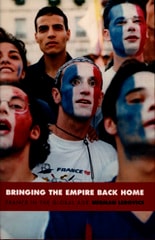
Bringing the Empire Back Home
France in the Global AgeHerman Lebovics
Duke University Press, 2004
In Bringing the Empire Back Home, the inventive cultural historian Herman Lebovics provides a riveting account of how intense disputes about what it means to be French have played out over the past half-century, redefining Paris, the regions, and the former colonies in relation to one another and the world at large. In a narrative populated with peasants, people from the former colonies, museum curators, former colonial administrators, left Christians, archaeologists, anthropologists, soccer players and their teenage fans, and, yes, leading government officials, Lebovics reveals contemporary French society and cultures as perhaps the West’s most important testing grounds of pluralism and assimilation. A lively cultural history, Bringing the Empire Back Home highlights not only the political significance of France’s efforts to synthesize the regional, national, European, ethnic postcolonial, and global but also the chaotic beauty of the endeavor.
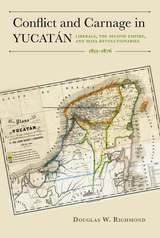
Conflict and Carnage in Yucatán
Liberals, the Second Empire, and Maya Revolutionaries, 1855–1876Douglas W. Richmond
University of Alabama Press, 2015
Synthesizing an extensive and heterogeneous range of sources, Douglas W. Richmond covers three tumultuous political upheavals of this period. First, Mexico’s fledgling republic attempted to impose a liberal ideology at odds with traditional Maya culture on Yucatán; then, the French-backed regime of Emperor Maximilian began to reform Yucatán; and, finally, the republican forces of Benito Juárez restored the liberal hegemony. Many issues spurred resistance to these liberal governments. Instillation of free trade policies, the suppression of civil rights, and persecution of the Roman Catholic Church mobilized white opposition to liberal governors. The Mayas fought the seizure of their communal properties. A long-standing desire for regional autonomy united virtually all Yucatecans. Richmond advances the thought-provoking argument that Yucatán both fared better under Maximilian’s Second Empire than under the liberal republic and would have thrived more had the Second Empire not collapsed.
The most violent and bloody manifestation of these broad conflicts was the Caste War (Guerra de Castas), the longest sustained peasant revolt in Latin American history. Where other scholars have advocated the simplistic position that the war was a Maya uprising designed to reestablish a mythical past civilization, Richmond’s sophisticated recounting of political developments from 1855 to 1876 restores nuance and complexity to this pivotal time in Yucatecan history.
Richmond’s Conflict and Carnage in Yucatán is a welcome addition to scholarship about Mexico and Yucatán as well as about state consolidation, empire, and regionalism.
Defining the National Interest
Conflict and Change in American Foreign PolicyPeter Trubowitz
University of Chicago Press, 1998
Peter Trubowitz offers a new and compelling conception of American foreign policy and the domestic geopolitical forces that shape and animate it. Foreign policy conflict, he argues, is grounded in America's regional diversity. The uneven nature of America's integration into the world economy has made regionalism a potent force shaping fights over the national interest. As Trubowitz shows, politicians from different parts of the country have consistently sought to equate their region's interests with that of the nation. Domestic conflict over how to define the "national interest" is the result. Challenging dominant accounts of American foreign policy-making, Defining the National Interest exemplifies how interdisciplinary scholarship can yield a deeper understanding of the connections between domestic and international change in an era of globalization.
Distant Provinces in the Inka Empire
Toward a Deeper Understanding of Inka ImperialismMichael A. Malpass
University of Iowa Press, 2010
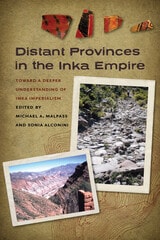
Who was in charge of the widespread provinces of the great Inka Empire of the fifteenth and sixteenth centuries: Inka from the imperial heartland or local leaders who took on the trappings of their conquerors, either by coercion or acceptance? By focusing on provinces far from the capital of Cuzco, the essays in this multidisciplinary volume provide up-to-date information on the strategies of domination asserted by the Inka across the provinces far from their capital and the equally broad range of responses adopted by their conquered peoples.
Contributors to this cutting-edge volume incorporate the interaction of archaeological and ethnohistorical research with archaeobotany, biometrics, architecture, and mining engineering, among other fields. The geographical scope of the chapters—which cover the Inka provinces in Bolivia, in southeast Argentina, in southern Chile, along the central and north coast of Peru, and in Ecuador—build upon the many different ways in which conqueror and conquered interacted. Competing factors such as the kinds of resources available in the provinces, the degree of cooperation or resistance manifested by local leaders, the existing levels of political organization convenient to the imperial administration, and how recently a region had been conquered provide a wealth of information on regions previously understudied. Using detailed contextual analyses of Inka and elite residences and settlements in the distant provinces, the essayists evaluate the impact of the empire on the leadership strategies of conquered populations, whether they were Inka by privilege, local leaders acculturated to Inka norms, or foreign mid-level administrators from trusted ethnicities.
By exploring the critical interface between local elites and their Inka overlords, Distant Provinces in the Inka Empire builds upon Malpass’s 1993 Provincial Inca: Archaeological and Ethnohistorical Assessment of the Impact of the Inca State to support the conclusions that Inka strategies of control were tailored to the particular situations faced in different regions. By contributing to our understanding of what it means to be marginal in the Inka Empire, this book details how the Inka attended to their political and economic goals in their interactions with their conquered peoples and how their subjects responded, producing a richly textured view of the reality that was the Inka Empire.
Ephemeral Territories
Representing Nation, Home, and Identity in CanadaErin Manning
University of Minnesota Press, 2003
Explores questions of identity and belonging through the lens of Canadian cultural production
What does it mean to be at home? In a critical engagement with notions of territory, identity, racial difference, separatism, multiculturalism, and homelessness, this book delves into the question of what it means to belong—in particular, what it means to be at home in Canada. Ephemeral Territories weaves together many narratives and representations of Canadian identity—from political philosophy and cultural theory to art and films such as Srinivas Krishna’s Lulu, Clement Virgo’s Rude, and Charles Biname’s Eldorado—to develop and complicate familiar views of identity and selfhood.
Canadian identity has historically been linked to a dual notion of culture traceable to the French and English strains of Canada’s colonial past. Erin Manning subverts this binary through readings that shift our attention from nationalist constructions of identity and territory to a more radical and pluralizing understanding of the political. As she brings together issues specific to Canada (such as Quebec separatism and Canadian landscape painting) and concerns that are more transnational (such as globalization and immigration), Manning emphasizes the truly cross-cultural nature of the problems of racism, gender discrimination, and homelessness. Thus this impassioned reading of Canadian texts also makes an important contribution to philosophical, cultural, and political discourses across the globe.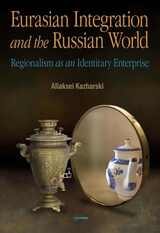
Eurasian Integration and the Russian World
Regionalism as an Identitiary EnterpriseAliaksei Kazharski
Central European University Press, 2019
This volume examines Russian discourses of regionalism as a source of identity construction practices for the country's political and intellectual establishment. The overall purpose of the monograph is to demonstrate that, contrary to some assumptions, the transition trajectory of post-Soviet Russia has not been towards a liberal democratic nation state that is set to emulate Western political and normative standards. Instead, its foreign policy discourses have been constructing Russia as a supranational community which transcends Russia's current legally established borders.
The study undertakes a systematic and comprehensive survey of Russian official (authorities) and semi-official (establishment affiliated think tanks) discourse for a period of seven years between 2007 and 2013. This exercise demonstrates how Russia is being constructed as a supranational entity through its discourses of cultural and economic regionalism. These discourses associate closely with the political project of Eurasian economic integration and the "Russian world" and "Russian civilization" doctrines. Both ideologies, the geoeconomic and culturalist, have gained prominence in the post-Crimean environment. The analysis tracks down how these identitary concepts crystallized in Russia's foreign policies discourses beginning from Vladimir Putin's second term in power.
Expressing New Mexico
Nuevomexicano Creativity, Ritual, and MemoryEdited by Phillip B. Gonzales
University of Arizona Press, 2007
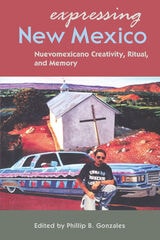
Intertwined with the concept of expressive culture is that of “place” in relation to New Mexico itself. Place is addressed directly by four of the authors in this anthology and is present in some way and in varying degrees among the rest. Place figures prominently in Nuevomexicano “character,” contributors argue. They assert that Nuevomexicanos and Nuevomexicanas construct and develop a sense of self that is shaped by the geography and culture of the state as well as by their heritage.
Many of the articles deal with recent events or with recent reverberations of important historical events, which imbues the collection with a sense of immediacy. Rituals, traditions, community commemorations, self-concepts, and historical revisionism all play key roles. Contributors include both prominent and emerging scholars united by their interest in, and fascination with, the distinctiveness of Nuevomexicano culture.

Finding Higher Ground
A Life Of TravelsCatharine Savage Brosman
University of Nevada Press, 2003
Essayist Catharine Savage Brosman explores the relationship of human beings to their environment, traveling from American deserts to dense European urban settings. Whether sipping wine in a Parisian café, partying with the jet set in Aspen, or contemplating the arid desert West that she loves, Brosman inhabits these settings, and many others, with a sense of adventure and discovery. To read these essays is to enjoy the company of a lively, thoughtful, original mind. Brosman’s "higher ground" is that place we all seek, where we can find and express our own best selves.

Global Politics of Regionalism
Theory and PracticeEdited by Mary Farrell, Bjorn Hettne, and Luk Van Langenhove
Pluto Press, 2005
The book reviews the major theoretical approaches to regional cooperation including perspectives from international relations, political economy, economics and sociology. It is divided into three main sections: theoretical approaches to regionalism; issues of regional cooperation (such as security, monetary issues, identity and integration); and an exploration of specific case studies including the Middle East, Africa, the Americas, China, Europe, Asia and the Pacific.
With an international range of contributors, including Bjorn Hettne, Louise Fawcett and Andrew Hurrell, this in-depth and multi-disciplinary guide will be of interest to students across the social sciences and to the wider policy community.
Global/Local
Cultural Production and the Transnational ImaginaryRob Wilson and Wimal Dissanayake, eds.
Duke University Press, 1996
Ranging across issues involving film, literature, and theory, as well as history, politics, economics, sociology, and anthropology, these deeply interdisciplinary essays explore the interwoven forces of globalism and localism in a variety of cultural settings, with a particular emphasis on the Asia-Pacific region. Powerful readings of the new image culture, transnational film genre, and the politics of spectacle are offered as is a critique of globalization as the latest guise of colonization. Articles that unravel the complex links between the global and local in terms of the unfolding narrative of capital are joined by work that illuminates phenomena as diverse as "yellow cab" interracial sex in Japan, machinic desire in Robocop movies, and the Pacific Rim city. An interview with Fredric Jameson by Paik Nak-Chung on globalization and Pacific Rim responses is also featured, as is a critical afterword by Paul Bové.
Positioned at the crossroads of an altered global terrain, this volume, the first of its kind, analyzes the evolving transnational imaginary—the full scope of contemporary cultural production by which national identities of political allegiance and economic regulation are being undone, and in which imagined communities are being reshaped at both the global and local levels of everyday existence.
Grand Excursions on the Upper Mississippi River
Places, Landscapes, and Regional Identity after 1854Curtis C. & Elizabeth M. Roseman & Roseman
University of Iowa Press, 2004
One hundred and fifty years later, the thirteen essays in this volume examine the activities and environments of the 1854 Grand Excursion and place them in the context of an evolving regional identity for the Upper Mississippi River Valley based on the economy, culture, geography, and history of the area. In a series of “excursions,” the contributors explore the building of the Chicago and Rock Island Railroad, eastern newspaper accounts of the 1854 excursion, steamboating, the area’s pictorial landscape, passenger trains along the scenic river, the genesis and features of river towns, the control of the river for navigation, the development of preserves, parks, and recreation areas, the lumber industry, and commercial fishing. The book concludes by examining the resurgence of river-oriented development, as river towns are once again embracing the Mississippi.
Generously illustrated with maps, engravings, ephemera, and historic and present-day photographs, Grand Excursions on the Upper Mississippi River will be of interest to tourists and residents of the area, river aficionados, railroad and steamboat history buffs, as well as academics interested in the history, geography, and regional development of the area.
Hell of a Vision
Regionalism and the Modern American WestRobert L. Dorman
University of Arizona Press, 2012
The American West has taken on a rich and evocative array of regional identities since the late nineteenth century. Wilderness wonderland, Hispanic borderland, homesteader’s frontier, cattle kingdom, urban dynamo, Native American homeland. Hell of a Vision explores the evolution of these diverse identities during the twentieth century, revealing how Western regionalism has been defined by generations of people seeking to understand the West’s vast landscapes and varied cultures.
Focusing on the American West from the 1890s up to the present, Dorman provides us with a wide-ranging view of the impact of regionalist ideas in pop culture and diverse fields such as geography, land-use planning, anthropology, journalism, and environmental policy-making.
Going well beyond the realm of literature, Dorman broadens the discussion by examining a unique mix of texts. He looks at major novelists such as Cather, Steinbeck, and Stegner, as well as leading Native American writers. But he also analyzes a variety of nonliterary sources in his book, such as government reports, planning documents, and environmental impact studies.
Hell of a Vision is a compelling journey through the modern history of the American West—a key region in the nation of regions known as the United States.
I Say to You
Ethnic Politics and the Kalenjin in KenyaGabrielle Lynch
University of Chicago Press, 2011
Kinship with the Land
Regionalist Thought In Iowa, 1894-1942E. Bradford Burns
University of Iowa Press, 1996
Pioneers moving into Iowa in the nineteenth century created a distinctly rural culture: family, farm, church, and school were its dominant institutions. After decades of settlement, however, several lively and perceptive generations interpreted their political, economic, and cultural environment—their Iowa—much more imaginatively; they offered such abundant insight, understanding, meaning, and mission that they mentally and spiritually recreates Iowa. In Kinship with the Land historian Brad Burns celebrates this intense period of intellectual and cultural development.
Through their novels, short stories, poems, essays, drawings, and paintings, Iowa's regionalists expressed a rich abstraction of people and place. They conferred meaning, imparted understanding, defined the soil and the folk, conveyed a sense of place. Grant Wood in his overalls—the quintessential symbol of sophisticated talent and rural values—clearly represented regionalism's spiritual solidarity with the land and the people who worked it. Burns lets these Iowans speak for themselves, then interprets their distinctive voices to present a cogent case for and an understanding of the rural in an overwhelming urban America.
Kinship with the Land emphasizes the importance of Iowa's intellectual and cultural history and reaffirms the state's identity at the very moment that standardization threatened to eradicate it. By endowing Iowa with vibrant, independent art and literature, regionalists made refreshing sense of their environment. Readers from every state will appreciate their generous legacy.
Look Away!
The U.S. South in New World StudiesJon Smith and Deborah Cohn, eds.
Duke University Press, 2004
Look Away! presents work by respected scholars in comparative literature, American studies, and Latin American studies. The contributors analyze how writers—including the Martinican Edouard Glissant, the Cuban-American Gustavo Pérez Firmat, and the Trinidad-born, British V. S. Naipaul—have engaged with the southern United States. They explore William Faulkner’s role in Latin American thought and consider his work in relation to that of Gabriel García Márquez and Jorge Luis Borges. Many essays re-examine major topics in southern U.S. culture—such as race, slavery, slave resistance, and the legacies of the past—through the lens of postcolonial theory and postmodern geography. Others discuss the South in relation to the U.S.–Mexico border. Throughout the volume,the contributors consistently reconceptualize U.S. southern culture in a way that acknowledges its postcolonial status without diminishing its distinctiveness.
Contributors. Jesse Alemán, Bob Brinkmeyer, Debra Cohen, Deborah Cohn, Michael Dash, Leigh Anne Duck, Wendy Faris, Earl Fitz, George Handley, Steve Hunsaker, Kirsten Silva Gruesz, Dane Johnson, Richard King, Jane Landers, John T. Matthews, Stephanie Merrim, Helen Oakley, Vincent Pérez, John-Michael Rivera, Scott Romine, Jon Smith, Ilan Stavans, Philip Weinstein, Lois Parkinson Zamora
Muddied Waters
Race, Region, and Local History in Colombia, 1846–1948Nancy P. Appelbaum
Duke University Press, 2003
Nineteenth- and twentieth-century Colombian elite intellectuals, Appelbaum contends, mapped race onto their mountainous topography by defining regions in racial terms. They privileged certain places and inhabitants as white and modern and denigrated others as racially inferior and backward. Inhabitants of Riosucio, however, elaborated local narratives about their mestizo and indigenous identities that contested the white mystique of the Coffee Region. Ongoing violent conflicts over land and politics, Appelbaum finds, continue to shape local debates over history and identity. Drawing on archival and published sources complemented by oral history, Muddied Waters vividly illustrates the relationship of mythmaking and racial inequality to regionalism and frontier colonization in postcolonial Latin America.
Nationalism, Devolution and the Challenge to the United Kingdom State
Arthur Aughey
Pluto Press, 2001
Nature and Culture in the Northern Forest
Region, Heritage, and Environment in the Rural NortheastPavel Cenkl
University of Iowa Press, 2010
Nearly 30 million acres of the Northern Forest stretch across New York, Vermont, New Hampshire, and Maine. Within this broad area live roughly a million residents whose lives are intimately associated with the forest ecosystem and whose individual stories are closely linked to the region’s cultural and environmental history. The fourteen engaging essays in Nature and Culture in the Northern Forest effectively explore the relationships among place, work, and community in this complex landscape. Together they serve as a stimulating introduction to the interdisciplinary study of this unique region.
Each of the four sections views through a different lens the interconnections between place and people. The essayists in “Encounters” have their hiking boots on as they focus on personal encounters with flora and fauna of the region. The energizing accounts in “Teaching and Learning” question our assumptions about education and scholarship by proposing invigorating collaborations between teachers and students in ways determined by the land itself, not by the abstractions of pedagogy. With the freshness of Thoreau’s irreverence, the authors in “Rethinking Place” look at key figures in the forest’s literary and cultural development to help us think about the affiliations between place and citizenship. In “Nature as Commodity,” three essayists consider the ways that writers from the nineteenth and early twentieth centuries thought about nature as a product and, thus, how their conclusions bear on the contemporary retailing of place.
The writers in Nature and Culture in the Northern Forest reveal the rich affinities between a specific place and the literature, thought, and other cultural expressions it has nurtured. Their insightful and stimulating connections exemplify adventurous bioregional thinking that encompasses both natural and cultural realities while staying rooted in the particular landscape of some of the Northeast’s wildest forests and oldest settlements.
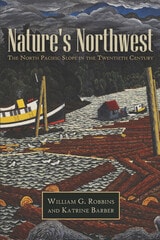
Nature's Northwest
The North Pacific Slope in the Twentieth CenturyWilliam G. Robbins and Katrine Barber
University of Arizona Press, 2011
With an emphasis on the region’s political economy, its environmental history, and its cultural and social heritage, this lively and colorful history of the Pacific Northwest—defined here as Oregon, Washington, Idaho, Montana, and southern British Columbia—places the narrative of this dynamic region within a national and international context.
Embracing both Canadian and American stories in looking at the larger region, renowned historians William Robbins and Katrine Barber offer us a fascinating regional history through the lens of both the environment and society. Understanding the physical landscape of the greater Pacific Northwest—and the watersheds of the Columbia, Fraser, Snake, and Klamath rivers—sets the stage for understanding the development of the area. Examining how this landscape spawned sawmills, fish canneries, railroads, logging camps, agriculture, and shared immigrant and ethnic traditions reveals an intricate portrait of the twentieth-century Northwest.
Impressive in its synthesis of myriad historical facts, this first-rate regional history will be of interest to historians studying the region from a variety of perspectives and an informative read for anyone fascinated by the story of a landscape rich in diversity, natural resources, and Native culture.
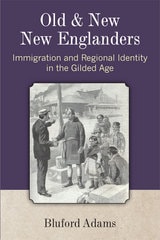
Old and New New Englanders
Immigration and Regional Identity in the Gilded AgeBluford Adams
University of Michigan Press, 2014
In Old and New New Englanders, Bluford Adams provides a reenvisioning of New England’s history and regional identity by exploring the ways the arrival of waves of immigrants from Europe and Canada transformed what it meant to be a New Englander during the Gilded Age. Adams’s intervention challenges a number of long-standing conceptions of New England, offering a detailed and complex portrayal of the relations between New England’s Yankees and immigrants that goes beyond nativism and assimilation. In focusing on immigration in this period, Adams provides a fresh view on New England’s regional identity, moving forward from Pilgrims, Puritans, and their descendants and emphasizing the role immigrants played in shaping the region’s various meanings. Furthermore, many researchers have overlooked the newcomers’ relationship to the regional identities they found here. Adams argues immigrants took their ties to New England seriously. Although they often disagreed about the nature of those ties, many immigrant leaders believed identification with New England would benefit their peoples in their struggles both in the United States and back in their ancestral lands.
Drawing on and contributing to work in immigration history, as well as American, gender, ethnic, and New England studies, this book is broadly concerned with the history of identity construction in the United States while its primary focus is the relationship between regional categories of identity and those based on race and ethnicity. With its interdisciplinary methodology, original research, and diverse chapter topics, the book targets both specialist and nonspecialist readers.
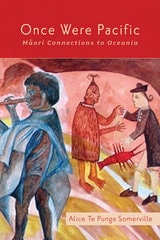
Once Were Pacific
Maori Connections to OceaniaAlice Te Punga Somerville
University of Minnesota Press, 2012
Native identity is usually associated with a particular place. But what if that place is the ocean? Once Were Pacific explores this question as it considers how Māori and other Pacific peoples frame their connection to the ocean, to New Zealand, and to each other through various creative works. Māori scholar Alice Te Punga Somerville shows how and when Māori and other Pacific peoples articulate their ancestral history as migratory seafarers, drawing their identity not only from land but also from water.
Although Māori are ethnically Polynesian, and Aotearoa New Zealand is clearly a part of the Pacific region, in New Zealand the terms “Māori” and “Pacific” are colloquially applied to two distinct communities: Māori are Indigenous, and “Pacific” refers to migrant communities from elsewhere in the region. Asking how this distinction might blur historical and contemporary connections, Te Punga Somerville interrogates the relationship between indigeneity, migration, and diaspora, focusing on texts: poetry, fiction, theater, film, and music, viewed alongside historical instances of performance, journalism, and scholarship.
In this sustained treatment of the Māori diaspora, Te Punga Somerville provides the first critical analysis of relationships between Indigenous and migrant communities in New Zealand.
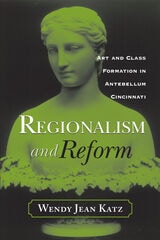
REGIONALISM AND REFORM
ART AND CLASS FORMATION IN ANTEBELLUM CIWENDY JEAN KATZ
The Ohio State University Press, 2002
Regionalism and Rivalry
Japan and the U.S. in Pacific AsiaEdited by Jeffrey A. Frankel and Miles Kahler
University of Chicago Press, 1993
The authors contend that although intraregional trade in East Asia is growing rapidly, a trade bloc is not necessarily forming. They show that the trade increase can be explained entirely by factors independent of discriminatory trading arrangements, such as the rapid growth of East Asian economies. Other chapters look in detail at cases of Japanese direct investment in Southeast Asia and find little evidence of attempts by Japan to use the power of its multinational corporations for political purposes. A third group of papers attempt to gauge Japan's leadership characteristics. They focus on Japan's "technology ideology," its contributions to international public goods, international monetary cooperation, and economic liberalization in East Asia.
Regionalism and the Reading Class
Wendy Griswold
University of Chicago Press, 2008
Wendy Griswold draws on cases from Italy, Norway, and the United States to show that fans of books form their own reading class, with a distinctive demographic profile separate from the general public. This reading class is modest in size but intense in its literary practices. Paradoxically these educated and mobile elites work hard to put down local roots by, among other strategies, exploring regional writing. Ultimately, due to the technological, economic, and political advantages they wield, cosmopolitan readers are able to celebrate, perpetuate, and reinvigorate local culture.
Griswold’s study will appeal to students of cultural sociology and the history of the book—and her findings will be welcome news to anyone worried about the future of reading or the eclipse of place.
Regionalism versus Multilateral Trade Arrangements
Edited by Takatoshi Ito and Anne O. Krueger
University of Chicago Press, 1997
Regionalism without Regions
Reconceptualizing Ukraine's HeterogeneityUlrich Schmid
Central European University Press, 2019
Sum of the Parts
The Mathematics and Politics of Region, Place, and WritingKent C Ryden
University of Iowa Press, 2011

Sweet Air
Modernism, Regionalism, and American Popular SongEdward Comentale
University of Illinois Press, 2013
Territories of Difference
Place, Movements, Life, RedesArturo Escobar
Duke University Press, 2008
Escobar illuminates many interrelated dynamics, including the Colombian government’s policies of development and pluralism that created conditions for the emergence of black and indigenous social movements and those movements’ efforts to steer the region in particular directions. He examines attempts by capitalists to appropriate the rainforest and extract resources, by developers to set the region on the path of modernist progress, and by biologists and others to defend this incredibly rich biodiversity “hot-spot” from the most predatory activities of capitalists and developers. He also looks at the attempts of academics, activists, and intellectuals to understand all of these complicated processes. Territories of Difference is Escobar’s effort to think with Afro-Colombian intellectual-activists who aim to move beyond the limits of Eurocentric paradigms as they confront the ravages of neoliberal globalization and seek to defend their place-based cultures and territories.
The Disappearing South?
Studies in Regional Change and ContinuityRobert P. Steed
University of Alabama Press, 1990
There is widespread agreement that the South has changed dramatically since the end of World War II—the essays in The Disappearing South address the ongoing debate
There is widespread agreement that the South has changed dramatically since the end of World War II. Social, demographic, economic, and political changes have altered significantly the region long considered the nation’s most distinctive. There is less agreement, however, about the extent to which the forces of nationalization have eroded the major elements of Southern distinctiveness. Although this volume does not purport to settle the debate on Southern political change, it does present a variety of recent evidence that helps put this important debate into perspective. In the process it helps clarify the contemporary politics of the South for readers ranging from the scholar to the more casual observer.
The essays in The Disappearing South address the ongoing debate. Contributors, in addition to the editors, include E. Lee Bernick, Earl Black, Merle Black, Lewis Bowman, Edward G. Carmines, Patrick Cotter, Thomas Eamon, Douglas G. Feig, John C. Green, James L. Guth, William E. Hulbary, Anne E. Kelley, Lyman A. Kellstedt, David M. Olson, John Shelton Reed, Harold Stanley, James G. Stovall, John Theilmann, Stephen H. Wainscott, and Allen Wilhite.
The European Union and the Rise of Regionalist Parties
Seth K. Jolly
University of Michigan Press, 2015
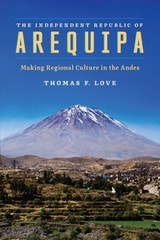
The Independent Republic of Arequipa
Making Regional Culture in the AndesBy Thomas F. Love
University of Texas Press, 2017
Arequipa, Peru’s second largest city, has the most intense regional culture in the central Andes. Arequipeños fiercely conceive of themselves as exceptional and distinctive, yet also broadly representative of the nation’s overall hybrid nature—a blending of coast (modern, “white”) and sierra (traditional, “indigenous”). The Independent Republic of Arequipa investigates why and how this regional identity developed in a boom of cultural production after the War of the Pacific (1879–1884) through the mid-twentieth century.
Drawing on decades of ethnographic fieldwork, Thomas F. Love offers the first anthropological history of southwestern Peru’s distinctive regional culture. He examines both its pre-Hispanic and colonial altiplano foundations (anchored in continuing pilgrimage to key Marian shrines) and the nature of its mid-nineteenth century “revolutionary” identity in cross-class resistance to Lima’s autocratic control of nation-building in the post-Independence state. Love then examines Arequipa’s early twentieth-century “mestizo” identity (an early and unusual case of “browning” of regional identity) in the context of raging debates about the “national question” and the “Indian problem,” as well as the post-WWII development of extravagant displays of distinctive bull-on-bull fighting that now constitute the very performance of regional identity. Love’s research reveals that Arequipa’s “traditional” local culture, symbolically marked by populist, secular, and rural elements, was in fact a project of urban-based, largely middle-class cultural entrepreneurs, invented to counter continuing Limeño autocratic power, marked by nostalgia, and anxious about the inclusion of the nation’s indigenous majority as full modern citizens.
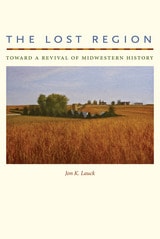
The Lost Region
Toward a Revival of Midwestern HistoryJon K. Lauck
University of Iowa Press, 2013
In addition to outlining the centrality of the Midwest to crucial moments in American history, Jon K. Lauck resurrects the long-forgotten stories of the institutions founded by an earlier generation of midwestern historians, from state historical societies to the Mississippi Valley Historical Association. Their strong commitment to local and regional communities rooted their work in place and gave it an audience outside the academy. He also explores the works of these scholars, showing that they researched a broad range of themes and topics, often pioneering fields that remain vital today.
The Lost Region demonstrates the importance of the Midwest, the depth of historical work once written about the region, the continuing insights that can be gleaned from this body of knowledge, and the lessons that can be learned from some of its prominent historians, all with the intent of once again finding the forgotten center of the nation and developing a robust historiography of the Midwest.
The Regional Roots of Russia's Political Regime
William M. Reisinger and Bryon J. Moraski
University of Michigan Press, 2017
By analyzing successive federal elections, Reisinger and Moraski show that regions that led the way in delivering votes in Putin’s favor were those that had been both more independent and more authoritarian during the Yeltsin era. These authoritarian enclaves under Yeltsin became models of behavior in the Putin regime, which prized deferential election results. Other regions were quick to follow this lead, functioning during Putin’s ascendancy as “swing states.” Still, Russia’s regimes continued to exhibit regime diversity, with democratic enclaves resisting the push to become cogs in the Kremlin’s electoral authoritarian wheel.
While motivated by scholarly questions about authoritarianism, democracy, and the influence of subnational forces on national regime trajectories, Reisinger and Moraski also consider policy-relevant questions.
The Regionalization of the World Economy
Edited by Jeffrey A. Frankel
University of Chicago Press, 1997
Including both empirical and theoretical studies, this volume addresses several important questions: Why do countries adopt FTAs and other regional trading arrangements? To what extent have existing regional arrangements actually affected patterns of trade? What are the welfare effects of such arrangements? Several chapters explore the economic effects of regional arrangements on patterns of trade, either on price differentials or via the gravity model on bilateral trade flows. In addition, this book examines the theoretical foundation of the gravity model. Making extensive use of the gravity model of bilateral trade, several chapters explore the economic effects of regional arrangements. In addition, this book examines the theoretical foundation of the gravity model.
Transatlantic Scots
Edited by Celeste Ray, foreword by James Hunter
University of Alabama Press, 2005
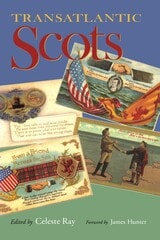
Transatlantic Scots is a multidisciplinary collection that studies the regional organization and varied expressions of the Scottish Heritage movement in the Canadian Maritimes, the Great Lakes, New England, and the American South. From diverse perspectives, authorities in their fields consider the modeling of a Scottish identity that distances heritage celebrants from prevalent visions of whiteness. Considering both hyphenated Scots who celebrate centuries-old transmission of Scottish traditions and those for whom claiming or re-claiming a Scottish identity is recent and voluntary, this book also examines how diaspora themes and Highland imagery repeatedly surface in regional public celebrations and how traditions are continually reinvented through the accumulation of myths. The underlying theoretical message is that ethnicity and heritage survive because of the flexibility of history and tradition.
This work is a lasting contribution to the study of ethnicity and identity, the renegotiation of history and cultural memory into heritage, and the public performance and creation of tradition.
Transformation of the Mormon Culture Region
Ethan R. Yorgason
University of Illinois Press, 2010
Uses Of The Other
“The East” in European Identity FormationIver B. Neumann
University of Minnesota Press, 1998
Examines identity politics in the context of international relations.
The field of international relations has recently witnessed a tremendous growth of interest in the theme of identity and its formation, construction, and deconstruction. In Uses of the Other, Iver B. Neumann demonstrates how thinking about identity in terms of the self and other may prove highly useful in the study of world politics.
Neumann begins by tracing the four different paths along which this thinking has developed during this century-ethnographic, psychological, Continental philosophical, and “Eastern excursion”-and he shows how these blended at the margins of the discipline of international relations at the end of the 1980s. There follow several incisive readings of European identity formations on the all-European, regional, and national levels. The theme that draws these readings together is how “the East” is used as a sign of otherness at all three levels. Whereas previous studies framed this process as part of colonial and postcolonial developments, this book suggests that “Easternness” is also present as a marker in contemporary discourses about Russia, Turkey, Central Europe, and Bashkortostan, among others. Situating his work in contemporary critical debates, Neumann argues that, while the self/other perspective is always of relevance, it is now more in need of being used as a perspective on specific sequences of identity formation than of further embellishment.ISBN: 0-8166-3082-8 Cloth $49.95xxISBN: 0-8166-3083-6 Paper $19.95x248 Pages 5-7/8x9 NovemberBorderlines Series, Volume 9Translation inquiries: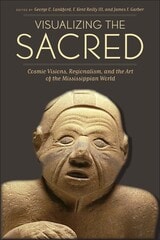
Visualizing the Sacred
Cosmic Visions, Regionalism, and the Art of the Mississippian WorldEdited by George E. Lankford, F. Kent Reilly III, and James F. Garber
University of Texas Press, 2011
The prehistoric native peoples of the Mississippi River Valley and other areas of the Eastern Woodlands of the United States shared a complex set of symbols and motifs that constituted one of the greatest artistic traditions of the pre-Columbian Americas. Traditionally known as the Southeastern Ceremonial Complex, these artifacts of copper, shell, stone, clay, and wood were the subject of the groundbreaking 2007 book Ancient Objects and Sacred Realms: Interpretations of Mississippian Iconography, which presented a major reconstruction of the rituals, cosmology, ideology, and political structures of the Mississippian peoples.
Visualizing the Sacred advances the study of Mississippian iconography by delving into the regional variations within what is now known as the Mississippian Iconographic Interaction Sphere (MIIS). Bringing archaeological, ethnographic, ethnohistoric, and iconographic perspectives to the analysis of Mississippian art, contributors from several disciplines discuss variations in symbols and motifs among major sites and regions across a wide span of time and also consider what visual symbols reveal about elite status in diverse political environments. These findings represent the first formal identification of style regions within the Mississippian Iconographic Interaction Sphere and call for a new understanding of the MIIS as a network of localized, yet interrelated religious systems that experienced both continuity and change over time.

Writing out of Place
Regionalism, Women, and American Literary CultureJudith Fetterley and Marjorie Pryse
University of Illinois Press, 2002
Regionalist writers such as Alice Cary, Mary E. Wilkins Freeman, Sarah Orne Jewett, Grace King, Alice Dunbar–Nelson, Sui Sin Far, and Mary Austin present narrators who serve as cultural interpreters for persons often considered "out of place" by urban readers. Critiquing the approaches to regional subjects characteristic of local color, this book gives contemporary readers a vantage point from which to approach regions and regional people in the global economy of our own time.
Reclaiming the ground of "close" reading for texts that have been insufficiently read, Fetterley and Pryse situate textual analyses within larger questions such as the ideology of form, feminist standpoint epistemology, queer theory, intersections of race and class, and narrative empathy. In its combination of the critical and the visionary, Writing out of Place proposes regionalism as a model for narrative connection between texts and readers that has the potential to transform American literary culture. Arguing the need for other models for human development than those produced in heroic stories about men and boys, the authors offer regionalism as a source of unconventional and counterhegemonic fictions that should be passed on to future generations of readers.
Yankees in Michigan
Brian C. Wilson
Michigan State University Press, 2008
As Brian C. Wilson describes them in this highly readable and entertaining book, Yankees—defined by their shared culture and sense of identity—had a number of distinctive traits and sought to impose their ideas across the state of Michigan.
After the ethnic label of "Yankee" fell out of use, the offspring of Yankees appropriated the term "Midwesterner." So fused did the identities of Yankee and Midwesterner become that understanding the larger story of America's Midwestern regional identity begins with the Yankees in Michigan.