Results by title
116 books match the query 'Social Services & Welfare' and 10 start with c
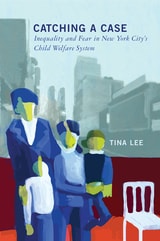
Catching a Case
Inequality and Fear in New York City's Child Welfare SystemLee, Tina
Rutgers University Press, 2016
Child Abuse in the Deep South
Geographical Modifiers of Abuse CharacteristicsLee W. Badger
University of Alabama Press, 1988
A powerful, data-driven investigation into how race, geography, and community shape the reporting and response to child abuse in Alabama.
Child Abuse in the Deep South is a groundbreaking examination of how child maltreatment is reported, confirmed, and understood in Alabama—a state shaped by deep historical, racial, and geographic divides. Drawing on over 7,000 case reports, this study reveals how factors such as race, community size, and regional culture influence the identification and handling of abuse cases. With a focus on both rural and urban settings, the book uncovers patterns of systemic bias, underreporting, and institutional response that have long gone unaddressed.
Through rigorous data analysis and a compassionate lens, this work challenges assumptions about child welfare in the American South and offers critical insights for policymakers, social workers, legal professionals, and scholars. Child Abuse in the Deep South is both a call to action and a vital resource for understanding the intersection of social justice, public policy, and child protection in one of the nation’s most complex regions.
Child Abuse in the Deep South provides a quantitative benchmark that investigators and policy-makers will find invaluable on the path to defining at-risk populations, effective interventions, and treatments.
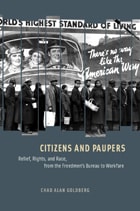
Citizens and Paupers
Relief, Rights, and Race, from the Freedmen's Bureau to WorkfareChad Alan Goldberg
University of Chicago Press, 2008
Citizens and Paupers explores this contentious history by analyzing and comparing three major programs: the Freedmen’s Bureau, the Works Progress Administration, and the present-day system of workfare that arose in the 1990s. Each of these overhauls of the welfare state created new groups of clients, new policies for aiding them, and new disputes over citizenship—conflicts that were entangled in racial politics and of urgent concern for social activists.
This combustible mix of racial tension and social reform continues to influence how we think about welfare, and Citizens and Paupers is an invaluable analysis of the roots of the debate.
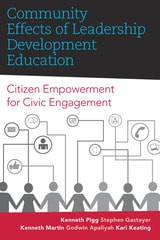
Community Effects of Leadership Development Education
Citizen Empowerment for Civic EngagementKenneth Pigg
West Virginia University Press, 2015
Community leadership development programs are designed to increase the capacity of citizens for civic engagement. These programs fill gaps in what people know about governance and the processes of governance, especially at the local level. The work of many in this field is a response to the recognition that in smaller, rural communities, disadvantaged neighborhoods, or disaster areas, the skills and aptitudes needed for citizens to be successful leaders are often missing or underdeveloped.
Community Effects of Leadership Development Education presents the results of a five-year study tracking community-level effects of community leadership development programs drawn from research conducted in Illinois, Minnesota, Missouri, South Carolina, Ohio, and West Virginia.
As the first book of its kind to seek answers to the question of whether or not the millions of dollars invested each year in community leadership development programs are valuable in the real world, this book challenges researchers, community organizers, and citizens to identify improved ways of demonstrating the link from program to implementation, as well as the way in which programs are conceived and designed.
This text also explores how leadership development programs relate to civic engagement, power and empowerment, and community change, and it demonstrates that community leadership development programs really do produce community change. At the same time, the findings of this study strongly support a relational view of community leadership, as opposed to other traditional leadership models used for program design.
To complement their findings, the authors have developed CENCE, a new model for community leadership development programs, which links leadership development efforts to community development by understanding how Civic Engagement, Networks, Commitment, and Empowerment work together to produce community viability.
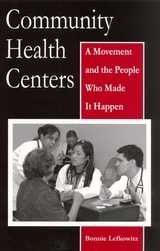
Community Health Centers
A Movement and the People Who Made It HappenLefkowitz, Bonnie
Rutgers University Press, 2007
This book tells the story of one groundbreaking approach to medicine that attacks the problem by focusing on the wellness of whole neighborhoods. Since their creation during the 1960s, community health centers have served the needs of the poor in the tenements of New York, the colonias of Texas, the working class neighborhoods of Boston, and the dirt farms of the South. As products of the civil rights movement, the early centers provided not only primary and preventive care, but also social and environmental services, economic development, and empowerment.
Bonnie Lefkowitz-herself a veteran of community health administration-explores the program's unlikely transformation from a small and beleaguered demonstration effort to a network of close to a thousand modern health care organizations serving nearly 15 million people. In a series of personal accounts and interviews with national leaders and dozens of health care workers, patients, and activists in five communities across the United States, she shows how health centers have endured despite cynicism and inertia, the vagaries of politics, and ongoing discrimination.
Community Organizing and Community Building for Health and Social Equity, 4th edition
Meredith Minkler and Patricia Wakimoto
Rutgers University Press, 2022
Many of the book’s contributors are leaders in their academic fields, from public health and social work, to community psychology and urban and regional planning, and to social and political science. One author was the 44th president of the United States, himself a former community organizer in Chicago, who reflects on his earlier vocation and its importance. Other contributors are inspiring community leaders whose work on-the-ground and in partnership with us “outsiders” highlights both the power of collaboration, and the cultural humility and other skills required to do it well.
Throughout this book, and particularly in the case studies and examples shared, the role of context is critical, and never far from view. Included here most recently are the horrific and continuing toll of the COVID-19 pandemic, and a long overdue, yet still greatly circumscribed, “national reckoning with systemic racism,” in the aftermath of the brutal police killing of yet another unarmed Black person, and then another and another, seemingly without end. In many chapters, the authors highlight different facets of the Black Lives Matter movement that took on new life across the country and the world in response to these atrocities. In other chapters, the existential threat of climate change and grave threats to democracy also are underscored.
View the Table of Contents and introductory text for the supplementary instructor resources. (https://d3tto5i5w9ogdd.cloudfront.net/wp-content/uploads/2022/02/04143046/9781978832176_optimized_sampler.pdf)
Supplementary instructor resources are available on request: https://www.rutgersuniversitypress.org/communityorganizing
Community Organizing and Community Building for Health and Welfare
Edited by Meredith Minkler
Rutgers University Press, 2012
The third edition of Community Organizing and Community Building for Health and Welfare provides new and more established ways to approach community building and organizing, from collaborating with communities on assessment and issue selection to using the power of coalition building, media advocacy, and social media to enhance the effectiveness of such work.
With a strong emphasis on cultural relevance and humility, this collection offers a wealth of case studies in areas ranging from childhood obesity to immigrant worker rights to health care reform. A "tool kit" of appendixes includes guidelines for assessing coalition effectiveness, exercises for critical reflection on our own power and privilege, and training tools such as "policy bingo." From former organizer and now President Barack Obama to academics and professionals in the fields of public health, social work, urban planning, and community psychology, the book offers a comprehensive vision and on-the-ground examples of the many ways community building and organizing can help us address some of the most intractable health and social problems of our times.
Compassion and Responsibility
Readings in the History of Social Welfare Policy in the United StatesFrank R. Breul and Steven J. Diner
University of Chicago Press, 1985

Complicated Lives
Girls, Parents, Drugs, and Juvenile JusticeLopez, Vera
Rutgers University Press, 2017
Complicated Lives focuses on the lives of sixty-five drug-using girls in the juvenile justice system (living in group homes, a residential treatment center, and a youth correctional facility) who grew up in families characterized by parental drug use, violence, and child maltreatment. Vera Lopez situates girls’ relationships with parents who fail to live up to idealized parenting norms and examines how these relationships change over time, and ultimately contribute to the girls’ future drug use and involvement in the justice system.
While Lopez’s subjects express concerns and doubt in their chances for success, Lopez provides an optimistic prescription for reform and improvement of the lives of these young women and presents a number of suggestions ranging from enhanced cultural competency training for all juvenile justice professionals to developing stronger collaborations between youth and adult serving systems and agencies.
Creating Citizens
Liberal Arts, Civic Engagement, and the Land-Grant TraditionEdited by Brigitta R. Brunner
University of Alabama Press, 2016
Creating Citizens is a collection of essays about Community and Civic Engagement (CCE) learning at land-grant universities.
In Creating Citizens, professors and administrators at Auburn University’s College of Liberal Arts recount valuable, first-hand experiences teaching Community and Civic Engagement (CCE). They demonstrate that, contrary to many expectations, CCE instruction both complements the mission of liberal arts curricula and powerfully advances the fundamental mission of American land-grand institutions.
The nine essays in Creating Citizens offer structures for incorporating CCE initiatives into university programs, instructional methods and techniques, and numerous case studies and examples undertaken at Auburn University but applicable at any university. Many contributors describe their own rewarding experiences with CCE and emphasize the ways outreach efforts reinvigorate their teaching or research.
Creating Citizens recounts the foundation of land-grant institutions by the Morrill Act of 1862. Their mission is to instruct in agriculture, military science, and mechanics, but these goals augmented rather than replaced an education in the classics, or liberal arts. Land-grant institutions, therefore, have a special calling to provide a broad spectrum of society with an education that not only enriched the personal lives of their students, but the communities they are a part of. Creating Citizens demonstrates the important opportunities CCE instruction represents to any university but are especially close to the heart of the mission of land-grant colleges.
In open societies, the role and mission of public institutions of higher learning that are supported by public subsidies are perennial subjects of interest and debate. Creating Citizens provides valuable insights of interest to educators, education administrators, students, and policy makers involved in the field of higher education.