Results by title
322 books match the query 'Social change' and 36 start with c

Capital, Class & Technology in Contemporary American Culture
Projecting Post-FordismNick Heffernan
Pluto Press, 2000
He turns to the stories we generate and tell ourselves - via fiction, film journalism, theory - to see how change is registered. By investigating a variety of texts, he observes how structural change affects the way people organise their lives economically, socially and culturally. Case studies include Ridley Scott's Blade Runner, William Gibson's cyberspace trilogy, Thomas Pynchon's The Crying of Lot 49, and Wim Wenders's Until the End of the World.
Using the links between narrative cultural forms and the process of historical understanding, he brings together debates that have so far been conducted largely within the separate domains of political economy, social theory and cultural criticism to provide a compelling analysis of contemporary cultural change. By relocating postmodernism in the context of changing modes of capitalism, Heffernan puts the question of class and class agency back at the centre of the critical agenda.
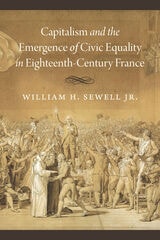
Capitalism and the Emergence of Civic Equality in Eighteenth-Century France
William H. Sewell Jr.
University of Chicago Press, 2021
William H. Sewell Jr. argues that the flourishing of commercial capitalism in eighteenth-century France introduced a new independence, flexibility, and anonymity to French social life. By entering the interstices of this otherwise rigidly hierarchical society, expanded commodity exchange colored everyday experience in ways that made civic equality thinkable, possible, even desirable, when the crisis of the French Revolution arrived. Sewell ties together masterful analyses of a multitude of interrelated topics: the rise of commerce, the emergence of urban publics, the careers of the philosophes, commercial publishing, patronage, political economy, trade, and state finance. Capitalism and the Emergence of Civic Equality in Eighteenth-Century France offers an original interpretation of one of history’s pivotal moments.
Catholicism and Liberal Democracy
Forgotten Roots and Future ProspectsJames Martin Carr
Catholic University of America Press, 2022
Century Of Revolution
Social Movements in IranJohn Foran
University of Minnesota Press, 1994
Provides insight into the political currents that led to the Iranian revolution.
Before late 1978 Iran did not occupy a large place in the public mind, mass media, or academic pursuits. With the massive upheaval of the next few months, all this changed-and the world is still trying to catch up with the dramatic events that brought Iran to its attention. This volume offers a much needed look into the historical, social, and political developments leading up to the Iranian revolution. Bringing together a group of scholars, historians, and social scientists, most of them Iranian in origin, the book documents an extraordinary revolutionary heritage that predates this century.
Each contributor examines a critical moment in Iranian social history-on its own terms as well as within a larger theoretical and comparative context. The topics they take up include: • the Tobacco Rebellion of 1890-91 • the Constitutional Revolution of 1905-11 • the rise of Reza Khan between 1921 and 1925• the autonomy movement in Azerbaijan and Kurdistan after World War II• the oil nationalization movement under Musaddiq between 1951and 1953• the unrest of the 1960-63 period• the Iranian revolution of 1977-79 • the state of Iran since the revolution Thoughout, common themes emerge, especially the heterogeneous bases of Iranian social movements with respect to class, gender, and ethnicity, as well as the diverse discourses-nationalist, Islamic, socialist, populist, and radical-that have animated these movements. Representing a wide variety of perspectives and approaches, this volume provides crucial insight into the widely watched but poorly understood phenomenon of present-day Iran.Contributors: Janet Afary, Purdue University; John Foran, University of California, Santa Barbara; Amir Hassanpour, Uppsala University; Mansoor Moaddel, Eastern Michigan University; Val Moghadam, United Nations University; Misgah Parsa, Dartmouth College; Sussan Siavoshi, Trinity University; Michael Zirinsky, Boise State University
Century of Difference
How America Changed in the Last One Hundred YearsClaude S. Fischer
Russell Sage Foundation, 1976
Change the World Without Taking Power
The Meaning of Revolution TodayJohn Holloway
Pluto Press, 2019
After a century of failed attempts by radical projects, the concept of revolution itself is in crisis. By asking the deepest questions about the nature of humanity, work, capitalism, organisation and resistance, John Holloway looks sharply at modern protest movements and provides tools for creating new strategies.
First published in 2002, this book marked a shift in the understanding of Autonomism, Anarchism and Marxism, addressing the doubts activists had in their own political history and work, and helped form the perspectives of a new generation who are today changing the world.
Changing Lives in Laos
Society, Politics, and Culture in a Post-Socialist StateEdited by Vanina Bouté and Vatthana Pholsena
National University of Singapore Press, 2017
Chicago's Greatest Year, 1893
The White City and the Birth of a Modern MetropolisJoseph Gustaitis
Southern Illinois University Press, 2013
In 1893, the 27.5 million visitors to the Chicago World’s Fair feasted their eyes on the impressive architecture of the White City, lit at night by thousands of electric lights. In addition to marveling at the revolutionary exhibits, most visitors discovered something else: beyond the fair’s 633 acres lay a modern metropolis that rivaled the world’s greatest cities. The Columbian Exposition marked Chicago’s arrival on the world stage, but even without the splendor of the fair, 1893 would still have been Chicago’s greatest year.
An almost endless list of achievements took place in Chicago in 1893. Chicago’s most important skyscraper was completed in 1893, and Frank Lloyd Wright opened his office in the same year. African American physician and Chicagoan Daniel Hale Williams performed one of the first known open-heart surgeries in 1893. Sears and Roebuck was incorporated, and William Wrigley invented Juicy Fruit gum that year. The Field Museum, the Art Institute of Chicago, and the Museum of Science and Industry all started in 1893. The Cubs’ new ballpark opened in this year, and an Austro-Hungarian immigrant began selling hot dogs outside the World’s Fair grounds. His wares became the famous “Chicago hot dog.”
“Cities are not buildings; cities are people,” writes author Joseph Gustaitis. Throughout the book, he brings forgotten pioneers back to the forefront of Chicago’s history, connecting these important people of 1893 with their effects on the city and its institutions today. The facts in this history of a year range from funny to astounding, showcasing innovators, civic leaders, VIPs, and power brokers who made 1893 Chicago about so much more than the fair.
China and the Internet
Using New Media for Development and Social ChangeSong Shi
Rutgers University Press, 2024
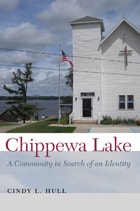
Chippewa Lake
A Community in Search of an IdentityCindy L. Hull
Michigan State University Press, 2012
Chippewa Lake is an idyllic waterfront community in north-central Michigan, popular with retirees and weekenders. The lake is surrounded by a rural farming community, but the area is facing a difficult transition as local demographics shift, and as it transforms from an agriculture-based economy to one that relies on wage labor. As farms have disappeared, local residents have employed a variety of strategies to adapt to a new economic structure. The community, meanwhile, has been indelibly affected by the advent of newcomers and retirees challenging the rural cultural values. An anthropologist with a background in sociology, Cindy L. Hull deftly weaves together oral accounts, historic documents, and participant surveys compiled from her nearly thirty years of living in the area to create a textured portrait of a community in flux.
Christianity, Social Change, and Globalization in the Americas
Peterson, Anna L
Rutgers University Press, 2001
Organized around three central themes-family, youth, and community; democratization, citizenship, and political participation; and immigration and transnationalism-the book argues that, at the local level, religion helps people, especially women and youths, solidify their identities and confront the challenges of the modern world. Religious communities are seen as both peaceful venues for people to articulate their needs, and forums for building participatory democracies in the Americas. Finally, the contributors examine how religion enfranchises poor women, youths, and people displaced by war or economic change and, at the same time, drives social movements that seek to strengthen family and community bonds disrupted by migration and political violence.

Cinema and Social Change in Latin America
Conversations with FilmmakersEdited by Julianne Burton
University of Texas Press, 1986
Since the late 1960s, films from Latin America have won widening audiences in North America and Europe. Until now, no single book has offered an introduction to the diverse personalities and practices that make up this important regional film movement.
In Cinema and Social Change in Latin America, Julianne Burton presents twenty interviews with key figures of Latin American cinema, covering three decades and ranging from Argentina to Mexico. Interviews with pioneers Fernando Birri, Nelson Pereira dos Santos, and Glauber Rocha, renowned feature filmmakers Tomás Gutiérrez Alea and Carlos Diegues, prize-winning documentarists Patricio Guzmán and Helena Solberg-Ladd, among others, endeavor to balance personal achievement against the backdrop of historical, political, social, and economic circumstances that have influenced each director's career. Presented also are conversations that cast light on the related activities of acting, distribution, theory, criticism, and film-based community organizing.
More than their counterparts in other regions of the world, Latin American artists and intellectuals acknowledge the degree to which culture is shaped by history and politics. Since the mid-1950s, a period of rising nationalism and regional consciousness, talented young artists and activists have sought to redefine the uses of the film medium in the Latin American context. Questioning the studio and star systems of the Hollywood industrial model, these innovators have developed new forms, content, and processes of production, distribution, and reception.
The specific approaches and priorities of the New Latin American Cinema are far from monolithic. They vary from realism to expressionism, from observational documentary to elaborate fictional constructs, from "imperfect cinema" to a cinema that emulates the high production values of the developed sectors, from self-reflexive to "transparent" cinematic styles, from highly industrialized modes of production to purely artisanal ones. What does not vary is the commitment to film as a vehicle for social transformation and the expression of national and regional cultural autonomy.
From early alternative cinema efforts in Argentina, Brazil, and Cuba to a contemporary perspective from within the Mexican commercial industry to the emerging cinema and video production from Central America, Cinema and Social Change in Latin America offers the most comprehensive look at Latin American film available today.
Cities and Nature in the American West
Char Miller
University of Nevada Press, 2010
Civic and Uncivic Values in Kosovo
History, Politics, and Value TransformationSabrina P. Ramet
Central European University Press, 2015
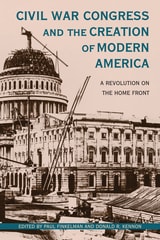
Civil War Congress and the Creation of Modern America
A Revolution on the Home FrontPaul Finkelman
Ohio University Press, 2018
Most literature on the Civil War focuses on soldiers, battles, and politics. But for every soldier in the United States Army, there were nine civilians at home. The war affected those left on the home front in many ways. Westward expansion and land ownership increased. The draft disrupted families while a shortage of male workers created opportunities for women that were previously unknown.
The war also enlarged the national government in ways unimagined before 1861. The Homestead Act, the Land Grant College Act, civil rights legislation, the use of paper currency, and creation of the Internal Revenue Service to collect taxes to pay for the war all illustrate how the war fundamentally, and permanently, changed the nation.
The essays in this book, drawn from a wide range of historical expertise and approaching the topic from a variety of angles, explore the changes in life at home that led to a revolution in American society and set the stage for the making of modern America.
Contributors: Jean H. Baker, Jenny Bourne, Paul Finkelman, Guy Gugliotta, Daniel W. Stowell, Peter Wallenstein, Jennifer L. Weber.
Civilization
Contents, Discontents, Malcontents, and Other Essays in Social TheoryStanford Lyman
University of Arkansas Press, 1990
In order to bring sociology to the recognition of a social world of contingencies and of an obdurate but protean reality that changes shapes as humans define it, Stanford Lyman re-introduces the concept of “civilization,” employing it as both an intellectual resource and a proper topic for sociological investigations.
The fifteen essays in this collection by one of America’s premier sociologists reflect Lyman’s concern with all that is meant by the term civilization. Primarily inspired by his attempts to synthesize the ideas of Erving Goffman, Émile Durkheim, Max Weber, Herbert Blumer, and other social thinkers, the essays reflect the author’s abiding interest in the structures and the processes attending race relations, minority communities, and the constitution of the social self.
1991 Mid-South Sociological Association Book Award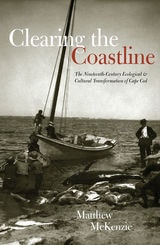
Clearing the Coastline
The Nineteenth-Century Ecological & Cultural Transformations of Cape CodMatthew McKenzie
University Press of New England, 2011
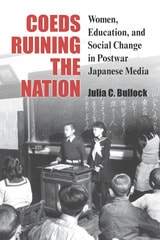
Coeds Ruining the Nation
Women, Education, and Social Change in Postwar Japanese MediaJulia C. Bullock
University of Michigan Press, 2019
This is the first book in English to explore the arguments for and against coeducation as presented in newspaper and magazine articles, cartoons, student-authored school newsletters, and roundtable discussions published in the Japanese press as these reforms were being implemented. It complicates the notion of the postwar years as a moment of rupture, highlighting prewar experiments with coeducation that belied objections that the practice was a foreign imposition and therefore “unnatural” for Japanese culture. It also illustrates a remarkable degree of continuity between prewar and postwar models of femininity, arguing that Occupation-era guarantees of equal educational opportunity were ultimately repurposed toward a gendered division of labor that underwrote the postwar project of economic recovery. Finally, it excavates discourses of gender and sexuality underlying the moral panic surrounding coeducation to demonstrate that claims of rampant sexual deviance and other concerns were employed as disciplinary mechanisms to reinforce an ideology of harmonious gender complementarity and to dissuade women from pursuing conventionally masculine prerogatives.
Collaborating for Change
A Participatory Action Research CasebookSusan D. Greenbaum
Rutgers University Press, 2020
Commemorating and Forgetting
Challenges for the New South AfricaMartin J. Murray
University of Minnesota Press, 2013
When the past is painful, as riddled with violence and injustice as it is in postapartheid South Africa, remembrance presents a problem at once practical and ethical: how much of the past to preserve and recollect and how much to erase and forget if the new nation is to ever unify and move forward? The new South Africa’s confrontation of this dilemma is Martin J. Murray’s subject in Commemorating and Forgetting. More broadly, this book explores how collective memory works—how framing events, persons, and places worthy of recognition and honor entails a selective appropriation of the past, not a mastery of history.
How is the historical past made to appear in the present? In addressing these questions, Murray reveals how collective memory is stored and disseminated in architecture, statuary, monuments and memorials, literature, and art—“landscapes of remembrance” that selectively recall and even fabricate history in the service of nation-building. He examines such vehicles of memory in postapartheid South Africa and parses the stories they tell—stories by turn sanitized, distorted, embellished, and compressed. In this analysis, Commemorating and Forgetting marks a critical move toward recognizing how the legacies and impositions of white minority rule, far from being truly past, remain embedded in, intertwined with, and imprinted on the new nation’s here and now.
Connected Communities
Networks, Identity, and Social Change in the Ancient Cibola WorldMatthew A. Peeples
University of Arizona Press, 2018
In Connected Communities, Matthew A. Peeples examines a period of dramatic social and political transformation in the ancient Cibola region (ca. A.D. 1150–1325). He analyzes archaeological data generated during a century of research through the lens of new and original social theories and methods focused on exploring identity, social networks, and social transformation. In so doing, he demonstrates the value of comparative, synthetic analysis.
The book addresses some of the oldest enduring questions in archaeology: How do large-scale social identities form? How do they change? How can we study such processes using material remains? Peeples approaches these questions using a new set of methods and models from the broader comparative social sciences (relational sociology and social networks) to track the trajectories of social groups in terms of both networks of interactions (relations) and expressions of similarity or difference (categories). He argues that archaeological research has too often conflated these different kinds of social identity and that this has hindered efforts to understand the drivers of social change.
In his strikingly original approach, Peeples combines massive amounts of new data and comparative explorations of contemporary social movements to provide new insights into how social identities formed and changed during this key period.
Constructing Culture and Power in Latin America
Daniel H. Levine, Editor
University of Michigan Press, 1993
Consumption and Violence
Radical Protest in Cold-War West GermanyAlexander Sedlmaier
University of Michigan Press, 2014
Contesting Community
The Limits and Potential of Local OrganizingDeFilippis, James
Rutgers University Press, 2010
Covering dozens of groups, including ACORN, Brooklyn's Fifth Avenue Committee, and the Immigrant Workers Centre in Montreal, and discussing alternative models, this book is at once historical and contemporary, global and local. Contesting Community addresses one of the vital issues of our day--the role and meaning of community in people's lives and in the larger political economy.
Cooperation and Community
Economy and Society in OaxacaBy Jeffrey H. Cohen
University of Texas Press, 2000
In the villages and small towns of Oaxaca, Mexico, as in much of rural Latin America, cooperation among neighbors is essential for personal and community survival. It can take many forms, from godparenting to sponsoring fiestas, holding civic offices, or exchanging agricultural or other kinds of labor. This book examines the ways in which the people of Santa Ana del Valle practice these traditional cooperative and reciprocal relationships and also invent new relationships to respond to global forces of social and economic change at work within their community.
Based on fieldwork he conducted in this Zapotec-speaking community between 1992 and 1996, Jeffrey Cohen describes continuities in the Santañeros' practices of cooperation, as well as changes resulting from transnational migration, tourism, increasing educational opportunities, and improved communications. His nuanced portrayal of the benefits and burdens of cooperation is buttressed by the words of many villagers who explain why and how they participate-or not-in reciprocal family and community networks. This rich ethnographic material offers a working definition of community created in and through cooperative relationships.
Cooperatives, Grassroots Development, and Social Change
Experiences from Rural Latin AmericaEdited by Marcela Vásquez-León, Brian J. Burke, and Timothy J. Finan
University of Arizona Press, 0
Cooperatives, Grassroots Development, and Social Change presents examples from Paraguay, Brazil, and Colombia, examining what is necessary for smallholder agricultural cooperatives to support holistic community-based development in peasant communities. Reporting on successes and failures of these cooperative efforts, the contributors offer analyses and strategies for supporting collective grassroots interests. Illustrating how poverty and inequality affect rural people, they reveal how cooperative organizations can support grassroots development strategies while negotiating local contexts of inequality amid the broader context of international markets and global competition.
The contributors explain the key desirable goals from cooperative efforts among smallholder producers. They are to provide access to more secure livelihoods, expand control over basic resources and commodity chains, improve quality of life in rural areas, support community infrastructure, and offer social spaces wherein small farmers can engage politically in transforming their own communities.
The stories in Cooperatives, Grassroots Development, and Social Change reveal immense opportunities and challenges. Although cooperatives have often been framed as alternatives to the global capitalist system, they are neither a panacea nor the hegemonic extension of neoliberal capitalism. Through one of the most thorough cross-country comparisons of cooperatives to date, this volume shows the unfiltered reality of cooperative development in highly stratified societies, with case studies selected specifically because they offer important lessons regarding struggles and strategies for adapting to a changing social, economic, and natural environment.
Contributors:
Luis Barros
Brian J. Burke
Charles Cox
Luis Alberto Cuéllar Gómez
Miguel Ricardo Dávila Ladrón de Guevara
Elisa Echagüe
Timothy J. Finan
Andrés González Aguilera
Sonia Carolina López Cerón
Joana Laura Marinho Nogueira
João Nicédio Alves Nogueira
Jessica Piekielek
María Isabel Ramírez Anaya
Rodrigo F. Rentería-Valencia
Lilliana Andrea Ruiz Marín
Marcela Vásquez-León
Counterculture Kaleidoscope
Musical and Cultural Perspectives on Late Sixties San FranciscoNadya Zimmerman
University of Michigan Press, 2013
In a bold reconsideration of the late sixties San Francisco counterculture movement, Counterculture Kaleidoscope takes a close look at the cultural and musical practices of that era. Addressing the conventional wisdom that the movement was grounded in rebellion and opposition, the book exposes two myths: first, that the counterculture was an organized social and political movement of progressives with a shared agenda who opposed the mainstream (dubbed "hippies"); and second, that the counterculture was an innocent entity hijacked by commercialism and transformed over time into a vehicle of so-called "hip consumerism."
Seeking an alternative to the now common narrative, Nadya Zimmerman examines primary source material including music, artwork, popular literature, personal narratives, and firsthand historical accounts. She reveals that the San Francisco counterculture wasn't interested in commitments to causes and made no association with divisive issues---that it embraced everything in general and nothing in particular.
"Astute and accessible, Counterculture Kaleidoscope provides thought-provoking insights into the historical, cultural and social context of the San Francisco counter-culture and its music scene, including discussions of Vietnam and student protest, the Haight-Ashbury Diggers, the Grateful Dead, Led Zeppelin, Altamont, and Charlie Manson. A must for students and scholars of socio-musical activity and for all of us to whom music matters."
---Sheila Whiteley, author of The Space Between the Notes: Rock and the Counter-Culture and Too Much Too Young: Popular Music, Age and Gender
"The hippie counterculture has never garnered the scholarly attention accorded the new left and the black freedom struggle. Overviews of the period ritualistically mention it as part and parcel of that apparently incandescent era---the Sixties---but rarely capture its distinctiveness. Counterculture Kaleidoscope is a timely and provocative intervention in Sixties scholarship that significantly deepens our understanding of this important but understudied phenomenon."
—Alice Echols, Associate Professor, University of Southern California, and author of Scars of Sweet Paradise: The Life and Times of Janis Joplin
Crabgrass Catholicism
How Suburbanization Transformed Faith and Politics in Postwar AmericaStephen M. Koeth
University of Chicago Press, 2025
The 1960s in America were a time of revolt against the stifling conformism embodied in the sprawling, uniform suburbs of the 1950s. Typically, the reforms of the Catholic Church’s Second Vatican Council, which aimed to make the Church more modern and accessible, are seen as one result of that broader cultural liberalization. Yet in Crabgrass Catholicism, Stephen M. Koeth demonstrates that the liberalization of the Church was instead the product of the mass suburbanization that began some fifteen years earlier. Koeth argues that postwar suburbanization revolutionized the Catholic parish, the relationship between clergy and laity, conceptions of parochial education, and Catholic participation in US politics, and thereby was a significant factor in the religious disaffiliation that only accelerated in subsequent decades.
A novel exploration of the role of Catholics in postwar suburbanization, Crabgrass Catholicism will be of particular interest to urban historians, scholars of American Catholicism and religious studies, and Catholic clergy and laity.

Crafting History in the Northern Plains
A Political Economy of the Heart River Region, 1400–1750Mark D. Mitchell
University of Arizona Press, 2013
Creating Market Socialism
How Ordinary People Are Shaping Class and Status in ChinaCarolyn L. Hsu
Duke University Press, 2007
Hsu’s ethnographic research, conducted in the city of Harbin in northwestern China, included participant observation at twenty workplaces and interviews with working adults from a range of professions. By analyzing the shared stories about status and class, jobs and careers, and aspirations and hopes that circulate among Harbiners from all walks of life, Hsu reveals the logic underlying the emerging stratification system. In the post-socialist era, Harbiners must confront a fast-changing and bewildering institutional landscape. Their collective narratives serve to create meaning and order in the midst of this confusion. Harbiners collectively agree that “intellectuals” (scientists, educators, and professionals) are the most respected within the new social order, because they contribute the most to Chinese society, whether that contribution is understood in terms of traditional morality, socialist service, or technological and economic progress. Harbiners understand human capital as an accurate measure of a person’s status. Their collective narratives about suzhi shape their career choices, judgments, and child-rearing practices, and therefore the new practices and institutions developing in post-socialist China.

Criticism and Social Change
Frank Lentricchia
University of Chicago Press, 1984
"A profound meditation on relations obtaining among writing, political consciousness, and criticism—this last taken in its most general sense. It is written with passion and grace; it is shot through with learning, intimate knowledge of the critical tradition, and a deep (though by no means uncritical) understanding of the work (as well as social significance) of Kenneth Burke."—Hayden White
Cueva Blanca
Social Change in the Archaic of the Valley of OaxacaKent V. Flannery and Frank Hole
University of Michigan Press, 2019
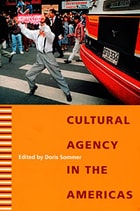
Cultural Agency in the Americas
Doris Sommer, ed.
Duke University Press, 2006
Based in North and South America, scholars from fields including anthropology, performance studies, history, literature, and communications studies explore specific variations of cultural agency across Latin America. Contributors reflect, for example, on the paradoxical programming and reception of a state-controlled Cuban radio station that connects listeners at home and abroad; on the intricacies of indigenous protests in Brazil; and the formulation of cultural policies in cosmopolitan Mexico City. One contributor notes that trauma theory targets individual victims when it should address collective memory as it is worked through in performance and ritual; another examines how Mapuche leaders in Argentina perceived the pitfalls of ethnic essentialism and developed new ways to intervene in local government. Whether suggesting modes of cultural agency, tracking exemplary instances of it, or cautioning against potential missteps, the essays in this book encourage attentiveness to, and the multiplication of, the many extraordinary instantiations of cultural resourcefulness and creativity throughout Latin America and beyond.
Contributors. Arturo Arias, Claudia Briones, Néstor García Canclini, Denise Corte, Juan Carlos Godenzzi, Charles R. Hale, Ariana Hernández-Reguant, Claudio Lomnitz, Jesús Martín Barbero, J. Lorand Matory, Rosamel Millamán, Diane M. Nelson, Mary Louise Pratt, Alcida Rita Ramos, Doris Sommer, Diana Taylor, Santiago Villaveces
Cultural Studies in the Interregnum
Edited by Robert F. Carley, Anne Donlon, Beenash Jafri, Laura J. Kwak, Eero Laine, SAJ, and Chris Alen Sula
Temple University Press, 2025
Covering queer and feminist studies, critical disability studies, and critical race and ethnic studies, the essays in Cultural Studies in the Interregnum reflect on our shared political pasts and futures. Using examples ranging from media and literature to sex work, policing, and university systems, this exciting volume probes what cultural studies means in moments of social transformation.
Contributors include: Sean Johnson Andrews, C.M. Kaliko Baker, Mary Tuti Baker, James Bliss, Jorge E. Cuéllar, John R. Decker, Brian Dolber, Candace Fujikane, Evyn Lê Espiritu Gandhi, Chris Hall, Rachel Lim, Alexis Pauline Gumbs, Anna Karthika, Manu Karuka, Najwa Mayer, Kyle Mays, Andrew Ó Baoill, Yumi Pak, Therí A. Pickens, Sami Schalk, Leanne Betasamosake Simpson, Tia Trafford, and the editors

Culture and Identity in Early Modern Europe (1500-1800)
Essays in Honor of Natalie Zemon DavisBarbara B. Diefendorf and Carla Hesse, Editors
University of Michigan Press, 1993
Cycle of Segregation
Social Processes and Residential StratificationMaria Krysan
Russell Sage Foundation, 2017
Through original analyses of national-level surveys and in-depth interviews with residents of Chicago, Krysan and Crowder find that residential stratification is reinforced through the biases and blind spots that individuals exhibit in their searches for housing. People rely heavily on information from friends, family, and coworkers when choosing where to live. Because these social networks tend to be racially homogenous, people are likely to receive information primarily from members of their own racial group and move to neighborhoods that are also dominated by their group. Similarly, home-seekers who report wanting to stay close to family members can end up in segregated destinations because their relatives live in those neighborhoods. The authors suggest that even absent of family ties, people gravitate toward neighborhoods that are familiar to them through their past experiences, including where they have previously lived, and where they work, shop, and spend time. Because historical segregation has shaped so many of these experiences, even these seemingly race-neutral decisions help reinforce the cycle of residential stratification. As a result, segregation has declined much more slowly than many social scientists have expected.
To overcome this cycle, Krysan and Crowder advocate multi-level policy solutions that pair inclusionary zoning and affordable housing with education and public relations campaigns that emphasize neighborhood diversity and high-opportunity areas. They argue that together, such programs can expand the number of destinations available to low-income residents and help offset the negative images many people hold about certain neighborhoods or help introduce them to places they had never considered. Cycle of Segregation demonstrates why a nuanced understanding of everyday social processes is critical for interrupting entrenched patterns of residential segregation.