Results by title
158 books match the query 'Social justice' and 14 start with c
Campuses of Consent
Sexual and Social Justice in Higher EducationTheresa A. Kulbaga and Leland G. Spencer
University of Massachusetts Press, 2019
Winner of the 2020 OSCLG Outstanding Book Award
This new book for scholars and university administrators offers a provocative critique of sexual justice language and policy in higher education around the concept of consent. Complicating the idea that consent is plain common sense, Campuses of Consent shows how normative and inaccurate concepts about gender, gender identity, and sexuality erase queer or trans students' experiences and perpetuate narrow, regressive gender norms and individualist frameworks for understanding violence.
Theresa A. Kulbaga and Leland G. Spencer prove that consent in higher education cannot be meaningfully separated from larger issues of institutional and structural power and oppression. While sexual assault advocacy campaigns, such as It's On Us, federal legislation from Title IX to the Clery Act, and more recent affirmative-consent measures tend to construct consent in individualist terms, as something “given” or “received” by individuals, the authors imagine consent as something that can be constructed systemically and institutionally: in classrooms, campus communication, and shared campus spaces.

Carceral Liberalism
Feminist Voices against State ViolenceEdited by Shreerekha Pillai. Foreword by Demita Frazier
University of Illinois Press, 2023
One of Ms. Magazine's Most Anticipated Books of 2023
Carceral liberalism emerges from the confluence of neoliberalism, carcerality, and patriarchy to construct a powerful ruse disguised as freedom. It waves the feminist flag while keeping most women still at the margins. It speaks of a post-race society while one in three Black men remain incarcerated. It sings the praises of capital while the dispossessed remain mired in debt.
Shreerekha Pillai edits essays on carceral liberalism that continue the trajectory of the Combahee River Collective and the many people inspired by its vision of feminist solidarity and radical liberation. Academics, activists, writers, and a formerly incarcerated social worker look at feminist resurgence and resistance within, at the threshold of, and outside state violence; observe and record direct and indirect forms of carcerality sponsored by the state and shaped by state structures, traditions, and actors; and critique carcerality. Acclaimed poets like Honorée Fanonne Jeffers and Solmaz Sharif amplify the volume’s themes in works that bookend each section.
Cutting-edge yet historically grounded, Carceral Liberalism examines an American ideological creation that advances imperialism, anti-blackness, capitalism, and patriarchy.
Contributors: Maria F. Curtis, Joanna Eleftheriou, Autumn Elizabeth and Zarinah Agnew and D Coulombe, Jeremy Eugene, Demita Frazier, Honorée Fanonne Jeffers, Alka Kurian, Cassandra D. Little, Beth Matusoff Merfish, Francisco Argüelles Paz y Puente, Shreerekha Pillai, Marta Romero-Delgado, Ravi Shankar, Solmaz Sharif, Shailza Sharma, Tria Blu Wakpa and Jennifer Musial, Javier Zamora

Cardinal in My Window with a Mask on Its Beak
Carlos Aguasaco, Translated by Jennifer Rathbun
University of Arizona Press, 2022
A first-generation immigrant to the United States, Aguasaco embraces his transborder/transnational/intercultural identity by building a bridge across time and distance to unite the great voices of the Renaissance with his lyrical poems. The collection offers bold and fascinating dialogue with Spanish authors such as Juan Boscán, Francisco de Quevedo, Garcilaso de la Vega, and Sor Juana Inés de la Cruz. The poems examine the fundamental liberties inherent to humanity through stunning verse. In a quest for freedom, the poems openly criticize the treatment of immigrants in the United States, drawing poignant parallels with human rights abuses throughout history.
Cardinal in My Window with a Mask on Its Beak brings potent voices of the past to life in poems that critically examine the present and future of the human experience.
Caring and Doing for Others
Social Responsibility in the Domains of Family, Work, and CommunityEdited by Alice S. Rossi
University of Chicago Press, 2001
The book explores the extent to which adults contribute time to caregiving, social support, and financial assistance to family members; the time given to volunteer work and financial contributions to various causes, charities, and organizations; and how these contributions are affected by job obligations. A major focus is on age and gender differences, which shows midlife to be a transitional time when civic activities increase as family obligations decline. All told, the study adds a hopeful new voice to the overwhelmingly negative debate about the current state of our civic and social lives.
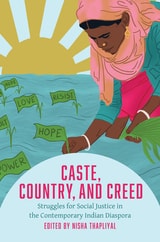
Caste, Country, and Creed
Struggles for Social Justice in the Contemporary Indian DiasporaNisha Thapliyal
Rutgers University Press, 2026
What happens when ancient systems of oppression travel across oceans? How do Indian diaspora communities across five nations challenge centuries-old systems of oppression while building new forms of solidarity? Caste, Country, and Creed: Struggles for Social Justice in the Contemporary Indian Diaspora takes readers inside the dynamic world of contemporary social justice activism spanning Aotearoa New Zealand, Australia, Canada, the United States, and the United Kingdom.
This groundbreaking collection brings together the voices of artists, activists, and scholar-activists who are reshaping conversations about caste discrimination, Islamophobia, and Hindu nationalism beyond India's borders. Through intimate first-person accounts and critical reflections, contributors reveal how diaspora activists are creating powerful counter-narratives and mobilizing collective resistance across local and transnational networks.
The book documents the lived realities of organizing—the values, knowledge traditions, and pivotal moments that spark political protest. Caste, Country, and Creed shows how activists construct alternative knowledge to dissent, build solidarity, and inspire political participation. Contributors offer nuanced insights into the complex relationships and power dynamics that sustain collective action for social justice in the Indian diaspora.
For copyright reasons, this edition is not for sale in India.

Catholicism, Race and Empire
Eugenics in Portugal, 1900-1950Richard Cleminson
Central European University Press, 2014
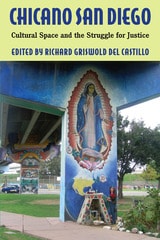
Chicano San Diego
Cultural Space and the Struggle for JusticeRichard Griswold del Castillo
University of Arizona Press, 2008
In chronologically ordered chapters, scholars discuss how Mexican and Chicana/o people have resisted and accommodated the increasingly Anglo-oriented culture of the region. The book’s early chapters recount the historical origins of San Diego and its development through the mid-nineteenth century, describe the “American colonization” that followed, and include examples of Latino resistance that span the twentieth century—from early workers’ strikes to the United Farm Workers movement of the 1960s. Later chapters trace the Chicana/o Movement in the community and in the arts; the struggle against the gentrification of the barrio; and the growth of community organizing (especially around immigrants’ rights) from the perspective of a community organizer.
To tell this sweeping story, the contributors use a variety of approaches. Testimonios retell individual lives, ethnographies relate the stories of communities, and historical narratives uncover what has previously been ignored or discounted. The result is a unique portrait of a marginalized population that has played an important but neglected role in the development of a major American border city.
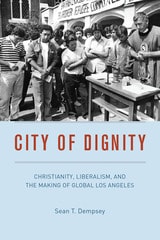
City of Dignity
Christianity, Liberalism, and the Making of Global Los AngelesSean T. Dempsey
University of Chicago Press, 2023
Contemporary Los Angeles is commonly seen as an American bulwark of progressive secular politics, a place that values immigration, equity, diversity, and human rights. But what accounts for the city’s embrace of such staunchly liberal values, which are more hotly contested in other parts of the country? The answer, Sean Dempsey reveals, lies not with those frequent targets of credit and blame—Democrats in Hollywood—but instead with liberal Protestants and other steadfast religious organizations of the postwar era.
As the Religious Right movement emerged in the 1970s, progressive religious activists quietly began promoting an ethical vision that made waves worldwide but saw the largest impact in its place of origin: metropolitan Los Angeles. At the center of this vision lay the concept of human dignity—entwining the integral importance of political and expressive freedom with the moral sanctity of the human condition—which suffused all of the political values that arose from it, whether tolerance, diversity, or equality of opportunity. The work of these religious organizations birthed such phenomena as the Sanctuary Movement—which provided safe haven for refugees fleeing conflict-torn Central America—and advocacy for the homeless, both of which became increasingly fraught issues amid the rising tides of neoliberalism and conservatism. City of Dignity explores how these interwoven spiritual and theological strands found common ground—and made common impacts—in the humanitarian ecosystem of one of America’s largest and most dynamic metro areas.
Collaborating for Change
A Participatory Action Research CasebookSusan D. Greenbaum
Rutgers University Press, 2020
Collaborative Imagination
Earning Activism through Literacy EducationPaul Feigenbaum
Southern Illinois University Press, 2015
Processes of fighting unequal citizenship have historically prioritized literacy education, through which people envision universal first-class citizenship and devise practical methods for enacting this vision. In this important volume, literacy scholar Paul Feigenbaum explores how literacy education can facilitate activism in contemporary contexts in which underserved populations often remain consigned to second-class status despite official guarantees of equal citizenship. By conceiving of education as, in part, a process of understanding and grappling with adaptive and activist rhetorics, Feigenbaum explains, educators can direct people’s imaginations toward activism without running up against the conceptual problems so many scholars associate with critical pedagogy. Over time, this model of education expands people’s imaginations about what it means to be a good citizen, facilitates increased civic participation, and encourages collective destabilization of, rather than adaptation to, the structural inequalities of mainstream civic institutions. Feigenbaum offers detailed analyses of various locations and time periods inside, outside, and across the walls of formal education, including the Citizenship Schools and Freedom Schools rooted in the Civil Rights Movement of the 1950s and 1960s; the Algebra Project, a current practical-literacy network; and the Imagination Federation, a South Florida–based Earth-Literacy network. Considering both the history and the future of community literacy, Collaborative Imagination offers educators a powerful mechanism for promoting activism through their teaching and scholarship, while providing practical ideas for greater civic engagement among students.
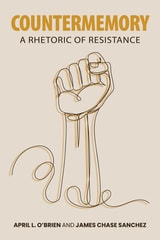
Countermemory
A Rhetoric of ResistanceApril L. O'Brien and James Chase Sanchez
University of Alabama Press, 2025
Investigates the interdisciplinary dimensions of countermemory through a rhetorical lens
Countermemory: A Rhetoric of Resistance by April L. O’Brien and James Chase Sanchez is a groundbreaking monograph that explores the concept of countermemory from an interdisciplinary and rhetorical perspective. The authors define “countermemory” as remembrance that resituates often overlooked or erased narratives of marginalized groups by positioning these memories as equally significant to dominant historical narratives. This work investigates how countermemories emerge in response to public memories, highlighting the tensions and resistance that arise when marginalized voices challenge mainstream historical accounts.
Through a mixed-methodological approach—incorporating site-based analysis, participant observation, textual analysis, and historiography—O’Brien and Sanchez examine countermemory in both physical and digital spaces. From memorial sites and museums to music videos, TV shows, and digital maps, they reveal the various ways countermemory operates and persists. The authors focus particularly on countermemory in the American South, centering on the experiences and histories of Black, Latinx, and Indigenous communities.
Countermemory is essential reading for scholars and students of rhetoric and public memory. The book also offers rich insights to readers who are passionate about addressing issues of racial inequality, people interested in examining their own experiences and the role they can play in promoting social change, and those interested in exploring the ways in which history is constructed and presented, and how marginalized perspectives are often excluded or distorted.
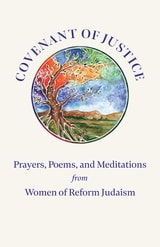
Covenant of Justice
Prayers, Poems, and Meditations from Women of Reform JudaismWomen of Reform Judaism
Central Conference of American Rabbis, 2025
Copublished with Women of Reform Judaism
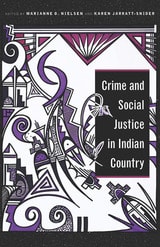
Crime and Social Justice in Indian Country
Edited by Marianne O. Nielsen and Karen Jarratt-Snider
University of Arizona Press, 2018
Crime and Social Justice in Indian Country calls to attention the need for culturally appropriate research protocols and critical discussions of social and criminal justice in Indian Country. The contributors come from the growing wave of Native American as well as non-Indigenous scholars who employ these methods. They reflect on issues in three key areas: crime, social justice, and community responses to crime and justice issues. Topics include stalking, involuntary sterilization of Indigenous women, border-town violence, Indian gaming, child welfare, and juvenile justice. These issues are all rooted in colonization; however, the contributors demonstrate how Indigenous communities are finding their own solutions for social justice, sovereignty, and self-determination.
Thanks to its focus on community responses that exemplify Indigenous resilience, persistence, and innovation, this volume will be valuable to those on the ground working with Indigenous communities in public and legal arenas, as well as scholars and students. Crime and Social Justice in Indian Country shows the way forward for meaningful inclusions of Indigenous peoples in their own justice initiatives.
Contributors
Alisse Ali-Joseph
William G. Archambeault
Cheryl Redhorse Bennett
Danielle V. Hiraldo
Lomayumptewa K. Ishii
Karen Jarratt-Snider
Eileen Luna-Firebaugh
Anne Luna-Gordinier
Marianne O. Nielsen
Linda M. Robyn
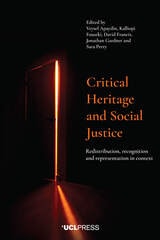
Critical Heritage and Social Justice
Redistribution, Recognition and Representation in ContextEdited by Veysel Apaydin, Kalliopi Fouseki, David Francis, Jonathan Gardner, and Sara Perry
University College London, 2026
The first edited volume in the field of heritage to conceptualize and contextualize social justice in depth, both theoretically and through practical applications.
In this edited volume, scholars and practitioners working across heritage, museums, galleries, and cultural institutions explore how principles of social justice can be embedded within these spaces. Highlighting intersections between critical heritage studies and urgent global challenges, the book seeks to foster inclusive, community-engaged heritage practices. Applying Nancy Fraser’s theory of three-dimensional justice—redistribution, recognition, and representation—within the context of heritage studies, the authors reflect on global social, cultural, political, and environmental issues through an interdisciplinary heritage-focused approach.