Results by title
3027 books match the query 'Sociology' and 240 start with c
C-Unit
Search for Community in PrisonElliot Studt
Russell Sage Foundation, 1968

CANCELED - Notes from Home
Jonna McKone
Rutgers University Press, 2021
Through portraiture, oral history, writing, and family archives, the contributors explore childhood, geography, immigration, education, and family relationships, recovering misunderstood or overlooked moments. In the process of making this work, the group found old family photos, returned to sites of significance, and made new friendships, discovering the transformational potential of this kind of storytelling to reframe hardship, loss, and uncertainty. In the words of one contributor, “I felt like this process was a necessary step that allowed me to acknowledge and comprehend what I was experiencing at the time. It allowed me to create a more coherent understanding that I am who I am because of my past and because I was the one who had control of molding my own, better path.” Each chapter, encompassing one person’s story, is strikingly unique in its vision and approach.
California Dreaming
Boosterism, Memory, and Rural Suburbs in the Golden StatePaul J. P. Sandul
West Virginia University Press, 2014
California Dreaming: Boosterism, Memory, and Rural Suburbs in the Golden State analyzes the growth, promotion, and agricultural colonization that fed this dream during the early 1900s. Through this analysis, Paul J. P. Sandul introduces a newly identified rural-suburban type: the agriburb, a rural suburb deliberately planned, developed, and promoted for profit. Sandul reconceptualizes California’s growth during this time period, establishing the agriburb as a suburban phenomenon that occurred long before the booms of the 1920s and 1950s.
Sandul’s analysis contributes to a new suburban history that includes diverse constituencies and geographies and focuses on the production and construction of place and memory. Boosters purposefully “harvested” suburbs with an eye toward direct profit and metropolitan growth. State boosters boasted of unsurpassable idyllic communities while local boosters bragged of communities that represented the best of the best, both using narratives of place, class, race, lifestyle, and profit to avow images of the rural and suburban ideal.
This suburban dream attracted people who desired a family home, nature, health, culture, refinement, and rural virtue. In the agriburb, a family could live on a small home grove while enjoying the perks of a progressive city. A home located within the landscape of natural California with access to urban amenities provided a good place to live and a way to gain revenue through farming.
To uncover and dissect the agriburb, Sandul focuses on local histories from California’s Central Valley and the Inland Empire of Southern California, including Ontario near Los Angeles and Orangevale and Fair Oaks outside Sacramento. His analysis closely operates between the intersections of history, anthropology, geography, sociology, and the rural and urban, while examining a metanarrative that exposes much about the nature and lasting influence of cultural memory and public history upon agriburban communities.
Call School
Rural Education in the Midwest to 1918Paul Theobald
Southern Illinois University Press, 1995
Paul Theobald chronicles the history of the one-room country schools that were spread throughout the rural Midwest during the nineteenth and early twentieth centuries.
Focusing on the region’s educational history in light of the religious, economic, and political atmosphere, Theobald explores the tight connection between educational preferences and religious views, between the economics of the countryside and the educational experiences of children, and between the politics of local power and the educational prospects of the powerless.
Basing his study on extensive archival research, including findings from eight midwestern states, Theobald neither condemns nor lauds the one-room school experience. Providing an objective evaluation, he examines rural school records, correspondence of early school officers, contemporary texts, and diaries and letters of rural students and teachers.
As he weaves together a contextualized account of the circumstances surrounding and within the one-room country schools of the Midwest, Theobald stresses that religion was of primary importance in nineteenth-century American life. Yet he also looks carefully at the shifting economic environment at work in the countryside, particularly in regard to the development of widespread farm tenancy and the consolidation of agricultural and related industries. He challenges readers to analyze how a national move from an agrarian to an industrial view caused conflict and confusion, thereby introducing irrevocable change into rural American life.
Theobald’s study illuminates the history of education on the plains and sheds light on the social foundations of the period.
Canadian Cultural Studies
A ReaderSourayan Mookerjea, Imre Szeman, and Gail Faurschou, eds.
Duke University Press, 2009
Including essays by anglophone, francophone, and First Nations writers, the reader is divided into three parts, the first of which features essays by scholars who helped set the agenda for cultural and social analysis in Canada and remain important to contemporary intellectual formations: Harold Innis, Marshall McLuhan, and Anthony Wilden in communications theory; Northrop Frye in literary studies; George Grant and Harold Innis in a left-nationalist tradition of critical political economy; Fernand Dumont and Paul-Émile Borduas in Quebecois national and political culture; and Harold Cardinal in native studies.
The volume’s second section showcases work in which contemporary authors address Canada’s problematic and incomplete nationalism; race, difference, and multiculturalism; and modernity and contemporary culture. The final section includes excerpts from federal policy documents that are especially important to Canadians’ conceptions of their social, political, and cultural circumstances. The reader opens with a foreword by Fredric Jameson and concludes with an afterword in which the Quebecois scholar Yves Laberge explores the differences between English-Canadian cultural studies and the prevailing forms of cultural analysis in francophone Canada.
Contributors. Ian Angus, Himani Bannerji, Jody Berland, Paul-Émile Borduas, Harold Cardinal, Maurice Charland, Stephen Crocker, Ioan Davies, Fernand Dumont, Kristina Fagan, Gail Faurschou, Len Findlay, Northrop Frye, George Grant, Rick Gruneau, Harold Innis, Fredric Jameson, Yves Laberge, Jocelyn Létourneau, Eva Mackey, Lee Maracle, Marshall McLuhan, Katharyne Mitchell, Sourayan Mookerjea, Kevin Pask, Rob Shields, Will Straw, Imre Szeman, Serra Tinic, David Whitson, Tony Wilden
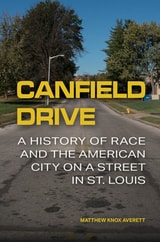
Canfield Drive
A History of Race and the American City on a Street in St. LouisMatthew Knox Averett
University of Missouri Press, 2027
Winner of the 2026 Missouri Conference on History Book Award; the 2026 Missouri History Book Award; and shortlisted for the 2026 ASU Humanities Book Award
On August 9, 2014, Michael Brown and a friend were walking down Canfield Drive, a residential street in the St. Louis suburb of Ferguson. There, they encountered Ferguson Police Officer Darren Wilson. Moments later, Brown was dead on the street—shot by Wilson at least six times. That evening, a memorial appeared on the pavement where he had fallen. In the days that followed, vigils turned into protests, and protests into an Uprising, as police in riot gear faced off with a grieving, outraged community. For nearly two weeks, Ferguson commanded the nation’s attention. The killing of Michael Brown was an outrage and it should not have happened. But Canfield Drive was primed for tragedy long before that fatal encounter because the street was already a place of racial conflict. This was no accident.
Canfield Drive: A History of Race and the American City on a Street in St. Louis uncovers the deeper history behind the street where Brown died, tracing how race and the built environment have long intersected in St. Louis—from the city’s founding to the Ferguson Uprising. The book follows the story of Black space across two centuries: from early Black communities, to the birth of the St. Louis Blues, to the Halcyon days of The Ville, to the destruction of Mill Creek Valley, to the tragedy of Pruitt-Igoe, and to the construction of Canfield Drive. Though Canfield Drive is the first comprehensive history of St. Louis’s Black urban landscape, it is more than just St. Louis's story. Canfield Drive details the racial engineering of the American city. Here is the machinery of American segregation laid bare: occupancy covenants, court decisions, racial steering, white flight, public housing, voucher systems, and predatory policing that combine to transform neighborhoods into traps. Here too are the people who fought back, building community against staggering odds and securing civil rights reforms that transformed America's understanding of government's obligations to its citizens.
Canfield Drive provides a powerful lens on the national story of race and the American city and reveals how Michael Brown's death was not just one officer's deadly decision, but the inevitable outcome of America's built environment—a tragedy centuries in the making, on a street designed for violence. This is how a place becomes a powder keg. This is how history erupts into headlines. This is the story behind the story that America couldn't look away from. This is the story of how a street came to matter, and how it came to stand for something far greater than itself.
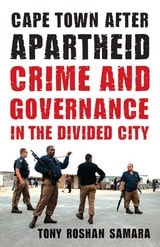
Cape Town after Apartheid
Crime and Governance in the Divided CityTony Roshan Samara
University of Minnesota Press, 2010
Cape Town after Apartheid focuses on urban renewal and urban security policies and practices in the city center and townships as this aspiring world-class city actively pursues a neoliberal approach to development. The city’s attempt to escape its past is, however, constrained by crippling inequalities, racial and ethnic tensions, political turmoil, and persistent insecurity. Samara shows how governance in Cape Town remains rooted in the perceived need to control dangerous populations and protect a somewhat fragile and unpopular economic system. In urban areas around the world, where the affluent minority and poor majority live in relative proximity to each other, aggressive security practices and strict governance reflect and reproduce the divided city.
A critical case for understanding a transnational view of urban governance, especially in highly unequal, majority-poor cities, this closely observed study of postapartheid Cape Town affords valuable insight into how security and governance technologies from the global North combine with local forms to create new approaches to social control in cities across the global South.
Capital Consequences
Families of the Condemned Tell Their StoriesKing, Rachel
Rutgers University Press, 2004
Those who support capital punishment often claim that they do so because it provides justice and closure for the victims’ families. In Capital Consequences, attorney Rachel King reminds us that there are other families and other victims who must be considered in the debate over the death penalty.
Combining a narrative voice with vivid, passionate, and painful accounts of the families of death row inmates, the book demonstrates that crimes that lead to death sentences also devastate the families of those convicted. These families, King argues, are the unseen victims of capital punishment.
King challenges readers to question the morality of a punishment that victimizes families of the condemned and ripples out through future generations. Chapters tell the stories of families that have lost life savings supporting an accused loved one, endured intense public scrutiny, been subjected to harassment by the media, and are struggling to live with the inhumane treatment that their loved ones receive on death row. The author also explores the unique nature of the grief that these families suffer. Because their pain tends to elicit less attention and empathy than that of the crime victims’ families, King shows how it becomes much more desperate and isolating.
On a human level, this book is a powerful reminder that tragic events have tragic consequences that far outreach their immediate victims. At the same time, the accounts illustrate many of the flaws inherent in the judicial system—racial and economic bias, incompetent counsel, prosecutorial misconduct, the execution of juveniles, and wrongful convictions, some of which are only now being overturned because of recent advances in DNA technology.
Regardless of which side of the death penalty issue you are on, this book will lead you to pause and consider that all acts—criminal and retributive—have broader human implications than we are sometimes willing to realize.
Capital of the American Century
The National and International Influence of New York CityMartin Shefter
Russell Sage Foundation, 1993
Capitalism
Peter Saunders
University of Minnesota Press, 1995
Capitalism and Labor
Towards Critical PerspectivesEdited by Klaus Dörre, Nicole Mayer-Ahuja, Dieter Sauer, and Volker Wittke
Campus Verlag, 2012

Capitalism's New Clothes
Enterprise, Ethics and Enjoyment in Times of CrisisColin Cremin
Pluto Press, 2011
Using materialist, psychoanalytic and linguistic approaches, Cremin shows how capitalism, anxiety and desire enter into a mutually supporting relationship. He identifies three ways in which we are tied in to capitalism – through a social imperative for enterprise and competition; through enjoyment and consumption; and through the depoliticisation of ethical debate by government and business.
Capitalism's New Clothes is ideal for students of sociology and for anyone worried about the ethics of capitalism or embarrassed by the enjoyments the system has afforded them.
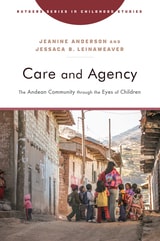
Care and Agency
The Andean Community through the Eyes of ChildrenJeanine Anderson
Rutgers University Press, 2025
Caribbean Pleasure Industry
Tourism, Sexuality, and AIDS in the Dominican RepublicMark Padilla
University of Chicago Press, 2007
In recent years, the economy of the Caribbean has become almost completely dependent on international tourism. And today one of the chief ways that foreign visitors there seek pleasure is through prostitution. While much has been written on the female sex workers who service these tourists, Caribbean Pleasure Industry shifts the focus onto the men. Drawing on his groundbreaking ethnographic research in the Dominican Republic, Mark Padilla discovers a complex world where the global political and economic impact of tourism has led to shifting sexual identities, growing economic pressures, and new challenges for HIV prevention. In fluid prose, Padilla analyzes men who have sex with male tourists, yet identify themselves as “normal” heterosexual men and struggle to maintain this status within their relationships with wives and girlfriends. Padilla’s exceptional ability to describe the experiences of these men will interest anthropologists, but his examination of bisexuality and tourism as much-neglected factors in the HIV/AIDS epidemic makes this book essential to anyone concerned with health and sexuality in the Caribbean or beyond.
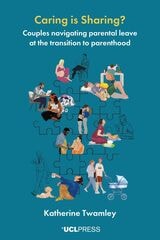
Caring Is Sharing?
Couples Navigating Parental Leave at the Transition to ParenthoodKatherine Twamley
University College London, 2024
Through a longitudinal qualitative comparative analysis of mixed-sex parent couples in England who do (not) share parental leave post birth of their first child, Caring is Sharing? explores how these couples make parental leave decisions during their transition into parenthood, as well as how these decisions shape their work and family care practices during and after leave. The study shows that men's and women’s visions and practices of family life are rooted in ideals of appropriate intimate relations and negotiated with real and imagined reactions from peers, wider family, and colleagues in a highly gendered UK. In so doing, this book highlights the intersections of intimacy and equality, contributing to debates around the stalled gender revolution and using UK parental leave policies to drive effective change in gender relations and family life.
Caring and Doing for Others
Social Responsibility in the Domains of Family, Work, and CommunityEdited by Alice S. Rossi
University of Chicago Press, 2001
The book explores the extent to which adults contribute time to caregiving, social support, and financial assistance to family members; the time given to volunteer work and financial contributions to various causes, charities, and organizations; and how these contributions are affected by job obligations. A major focus is on age and gender differences, which shows midlife to be a transitional time when civic activities increase as family obligations decline. All told, the study adds a hopeful new voice to the overwhelmingly negative debate about the current state of our civic and social lives.
Caring for Each Other
Family Caregiving Across the Generations: Groves Monographs on Marriage and Family (Volume 8)Christine A. Readdick
Michigan Publishing Services, 2023
Caring for Life
A Postdevelopment Politics of Infant HygieneKelly Dombroski
University of Minnesota Press, 2024
The transformational possibilities of everyday hygiene and care practices
In order to mitigate the worst forecasts of climate change, many of us need to make drastic adjustments to how we live and what we consume. For Kelly Dombroski, these changes must also happen in the home: in rethinking routines of care and hygiene that still rely on disposable and plastic products. Caring for Life examines the remarkable evolution in Asia-Pacific hygiene practices and amplifies the creative work of ordinary people guarding human and more-than-human life in their everyday practices of care.
Dombroski develops the concept of “guarding life,” a viewpoint that counters homogenous cultural practices and imposed sanitation standards and instead embraces diverse hygiene practices that are networked across varying wisdoms and bodies. She traces how the Chinese diaper-free infant toilet training practice of baniao has traveled to Australia and New Zealand, and she explores the practice of elimination communication, in which babies learn to communicate to their caregivers when they need to eliminate, thus removing the need for diapers. A mother herself, Dombroski conducted ethnographic research while mothering to examine how collectives of mothers draw on Chinese knowledge and their own embodied practices of childcare to create new hybrid forms of infant care.
Caring for Life is a call to action, a theory of change, and a fascinating account of the transformational possibilities of care practices. It shows how experiments in personal care can lead to collective, widespread change, ultimately providing a practical and hopeful vision for environmental action.
Retail e-book files for this title are screen-reader friendly with images accompanied by short alt text and/or extended descriptions.
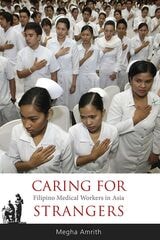
Caring for Strangers
Filipino Medical Workers in AsiaMegah Amrith
National University of Singapore Press, 2017
Caring on the Clock
The Complexities and Contradictions of Paid Care WorkDuffy, Mignon
Rutgers University Press, 2015
Cartographies of Madrid
Contesting Urban Space at the Crossroads of the Global South and Global NorthSilvia Bermudez
Vanderbilt University Press, 2018
Scholars, investigative journalists, political activists, and a filmmaker combine to document the vast array of Madrid's grassroots movements.
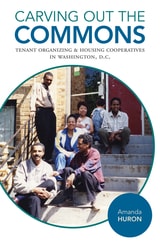
Carving Out the Commons
Tenant Organizing and Housing Cooperatives in Washington, D.C.Amanda Huron
University of Minnesota Press, 2018
An investigation of the practice of “commoning” in urban housing and its necessity for challenging economic injustice in our rapidly gentrifying cities
Provoked by mass evictions and the onset of gentrification in the 1970s, tenants in Washington, D.C., began forming cooperative organizations to collectively purchase and manage their apartment buildings. These tenants were creating a commons, taking a resource—housing—that had been used to extract profit from them and reshaping it as a resource that was collectively owned by them.
In Carving Out the Commons, Amanda Huron theorizes the practice of urban “commoning” through a close investigation of the city’s limited-equity housing cooperatives. Drawing on feminist and anticapitalist perspectives, Huron asks whether a commons can work in a city where land and other resources are scarce and how strangers who may not share a past or future come together to create and maintain commonly held spaces in the midst of capitalism. Arguing against the romanticization of the commons, she instead positions the urban commons as a pragmatic practice. Through the practice of commoning, she contends, we can learn to build communities to challenge capitalism’s totalizing claims over life.
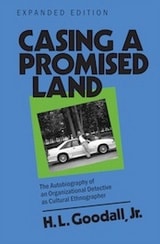
Casing a Promised Land, Expanded Edition
The Autobiography of an Organizational Detective as Cultural EthnographerH.L. Goodall, Jr.
Southern Illinois University Press, 1994
H. L. Goodall’s ground-breaking study of what people do with symbols and what symbols do to people explores the lives led by people in organizations. His narratives take on the form of six detective mysteries in which the narrator figures into the plot of the intrigue and then works out its essential patterns.
In the first mystery, "Notes on a Cultural Evolution: The Remaking of a Software Company," Goodall looks at the transition of a Huntsville regional office of a Boston-based computer software company where the lives and social dramas of the participants reflect the current state of high technology. The second essay and perhaps the most insightful, "The Way the World Ends: Inside Star Wars," penetrates the various defenses of the Star Wars command office in Huntsville to discover its secrets and surprises. Goodall shows how media, technology, fear of relationships, and symbolic images of the future unite into the day-to-day operations of people who believe they are responsible for the outer limits of our nation’s defense.
"Lost in Space: The Layers of Illusion Called Adult Space Camp" illustrates how a supposedly innocent theme park invites participation in rituals and ceremonies designed to influence a future generation of taxpayers. In "Articles of Faith," Goodall enters a super mall in Huntsville, noting how shopping centers provide consumers with far more than places to purchase goods and services. "How I Spent My Summer Vacation" finds Goodall back in an academic environment, at a conference of communication scholars, where he demonstrates the difficult task of translating cultural understandings from one context to another. "The Consultant as Organizational Detective" offers the sobering message that real-life mysteries may surprise even the most accomplished sleuth. A concluding chapter, "Notes on Method," and a new autobiographical afterword round out Goodall’s penetrating look at our symbol-making culture.
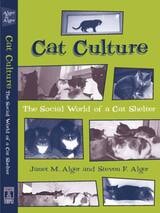
Cat Culture
The Social World Of A Cat ShelterJanet M. Alger and Steven F. Alger
Temple University Press, 2002
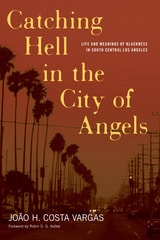
Catching Hell In The City Of Angels
Life And Meanings Of Blackness In South Central Los AngelesJoão H. Costa Vargas
University of Minnesota Press, 2006
Through compelling stories of South Central, including his own experience as an immigrant of color, Vargas presents portraits of four groups. He talks daily with women living in a low-income Watts apartment building; works with activists in a community organization against police brutality; interacts with former gang members trying to maintain a 1992 truce between the Bloods and the Crips; and listens to amateur jazz musicians who perform in a gentrified section of the neighborhood. In each case he describes the worldviews and the definitions of “blackness” these people use to cope with oppression. Vargas finds, in turn, that blackness is a form of racial solidarity, a vehicle for the renewal of African American culture, and a political expression of revolutionary black nationalism.
Vargas reveals that the social fault lines in South Central reflect both contemporary disparities and long-term struggles. In doing so, he shows both the racialized power that makes “blackness” a prized term of identity and the terrible price that African Americans have paid for this emphasis. Ultimately, Catching Hell in the City of Angels tells the story of urban America through the lives of individuals from diverse, overlapping, and vibrant communities.
João H. Costa Vargas is assistant professor in the Center for African and African American Studies and the department of anthropology at the University of Texas, Austin.
Robin D. G. Kelley is the William B. Ransford Professor of Cultural and Historical Studies at Columbia University. He is the author of numerous books, including Yo Mama's Disfunktional: Fighting the Culture Wars in Urban America.
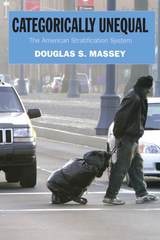
Categorically Unequal
The American Stratification SystemDouglas S. Massey
Russell Sage Foundation, 2007
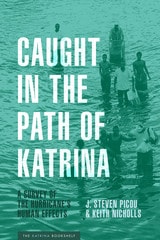
Caught in the Path of Katrina
A Survey of the Hurricane's Human EffectsBy J. Steven Picou and Keith Nicholls
University of Texas Press, 2019
In 2008, three years after Hurricane Katrina cut a deadly path along the northern coast of the Gulf of Mexico, researchers J. Steven Picou and Keith Nicholls conducted a survey of the survivors in Louisiana and Mississippi, receiving more than twenty-five hundred responses, and followed up two years later with their than five hundred of the initial respondents. Showcasing these landmark findings, Caught in the Path of Katrina: A Survey of the Hurricane's Human Effects yields a more complete understanding of the traumas endured as a result of the Storm of the Century.
The authors report on evacuation behaviors, separations from family, damage to homes, and physical and psychological conditions among residents of seven of the parishes and counties that bore the brunt of Katrina. The findings underscore the frequently disproportionate suffering of African Americans and the agonizingly slow pace of recovery. Highlighting the lessons learned, the book offers suggestions for improved governmental emergency management techniques to increase preparedness, better mitigate storm damage, and reduce the level of trauma in future disasters. Multiple major hurricanes have unleashed their destruction in the years since Katrina, making this a crucial study whose importance only continues to grow.

Celebrity Philanthropy
Edited by Elaine Jeffreys and Paul Allatson
Intellect Books, 2015
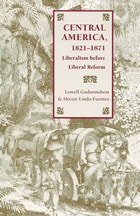
Central America, 1821-1871
Liberalism before Liberal ReformLowell Gudmundson
University of Alabama Press, 1995
Reassessing the foundations of liberalism, nation-building, and economic change in nineteenth-century Central America.
Central America and its ill-fated federation (1824-1839) are often viewed as the archetype of the “anarchy” of early independent Spanish America. This book consists of two interrelated essays dealing with the economic, social, and political changes that took place in Central America, changes that let to both Liberal regime consolidation and export agricultural development after the middle of the last century. The authors provide a challenging reinterpretation of Central American history and the most detailed analysis available in English of this most heterogeneous and obscure of societies. It avoids the dichotomous (Costa Rica versus the rest of Central America) and the centralist (Guatemala as the standard or model) treatments dominant in the existing literature and is required reading for anyone with an interest in 19th century Latin America.
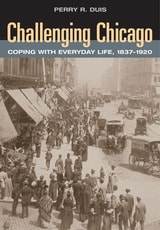
Challenging Chicago
Coping with Everyday Life, 1837-1920Perry R. Duis
University of Illinois Press, 2006
Follow along and encounter some of Chicago’s most infamous citizens--the loathed Traction Baron, high-speed “scorchers,” and peddlers of “swill milk.” Learn about the perils of payday, the lunchtime problems of women, the lure of dime museums, and the fatal attraction of Chicago’s “cruelest place.” Against this bleak backdrop emerged the innovators and institutions that made Chicago the vibrant city it is today. The superbly textured narrative is enhanced by eighty-six historic photographs and illustrations.
Challenging Operations
Medical Reform and Resistance in SurgeryKatherine C. Kellogg
University of Chicago Press, 2011
In 2003, in the face of errors and accidents caused by medical and surgical trainees, the American Council of Graduate Medical Education mandated a reduction in resident work hours to eighty per week. Over the course of two and a half years spent observing residents and staff surgeons trying to implement this new regulation, Katherine C. Kellogg discovered that resistance to it was both strong and successful—in fact, two of the three hospitals she studied failed to make the change. Challenging Operations takes up the apparent paradox of medical professionals resisting reforms designed to help them and their patients. Through vivid anecdotes, interviews, and incisive observation and analysis, Kellogg shows the complex ways that institutional reforms spark resistance when they challenge long-standing beliefs, roles, and systems of authority.
At a time when numerous policies have been enacted to address the nation’s soaring medical costs, uneven access to care, and shortage of primary-care physicians, Challenging Operations sheds new light on the difficulty of implementing reforms and offers concrete recommendations for effectively meeting that challenge.
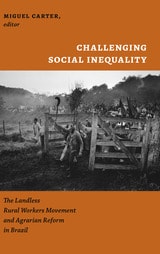
Challenging Social Inequality
The Landless Rural Workers Movement and Agrarian Reform in BrazilMiguel Carter, editor
Duke University Press, 2012
Contributors. José Batista Gonçalves Afonso, Sonia Maria P..P. Bergamasco, Sue Branford, Elena Calvo-González, Miguel Carter, Horacio Martins de Carvalho, Guilherme Costa Delgado, Bernardo Mançano Fernandes, Leonilde Sérvolo de Medeiros, George Mészáros, Luiz Antonio Norder, Gabriel Ondetti, Ivo Poletto, Marcelo Carvalho Rosa, Lygia Maria Sigaud, Emmanuel Wambergue, Wendy Wolford

Challenging Uneven Development
An Urban Agenda for the 1990sNyden, Philip
Rutgers University Press, 1991
The editors and contributors to this volume are not willing to accept what is known as uneven development, where some cities win and some lose. They look at two practical consequences of urban growth: the change in residence patterns as neighborhoods gentrify, and the change in employment patterns, as factory workers lose jobs and white-collar workers gain jobs. The editors' goal is to highlight the alternatives to uneven development and to the growth ideology. They outline and advocate specific policies, including affordable housing, changes in taxation, and direct community participation in planning and zoning decisions.
Challenging Uneven Development begins with a rousing discussion of the pervasiveness of the community redevelopment ideology. The growth machine defines the language of the debate. The next group of chapters examine residence patterns--how communities have organized to fight gentrification, why residential integration is essential for good planning as well as morality, and what strategies can be used to achieve racial diversity. Another chapter emphasizes the role of lenders in regulating the flow of credit within communities. Disinvestment by credit providers causes decline, and opens the way for gentrification, which displaces local residents. The impact of taxes in stimulating the growth machine is also explained.
Later chapters move beyond gentrification issues to examine other problems of economic restructuring. They look at how blacks, Latinos, and women have been affected by the growth of service sector jobs. The final chapter serves as a strategic guide to those who wish to establish a progressive agenda for community-based economic development. The authors call for social change, not unimaginative reform.
The contributors to this volume are leaders or researchers from community organizations, civic groups, government agencies, and universities. In addition to the editors, they are Mel King, Teresa Cordova, Daniel Lauber, Jena Pogge, David Flax-Hatch, Arthur Lyons, Wendy Wintermute, Charles Hicklin, Jeffrey D. Reckinger, David Mosena, Charlotte Chun, Raymndo Flores, Luther Snow, Deborah Bennett, John Betancur, and Patricia Wright. They have presented "state-of-the-art" progressive policy solutions for urban problems.
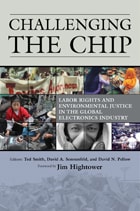
Challenging the Chip
Labor Rights and Environmental Justice in the Global Electronics Industryedited by Ted Smith, David A. Sonnenfeld and David Naguib Pellow, foreword by Jim Hightower
Temple University Press, 2006

Changing Channels
Television and the Struggle for Power in RussiaEllen Mickiewicz
Duke University Press, 1999
Revised and expanded
During the tumultuous 1990s, as Russia struggled to shed the trappings of the Soviet empire, television viewing emerged as an enormous influence on Russian life. The number of viewers who routinely watch the nightly news in Russia matches the number of Americans who tune in to the Super Bowl, thus making TV coverage the prized asset for which political leaders intensely—and sometimes violently—compete. In this revised and expanded edition of Changing Channels, Ellen Mickiewicz provides many fascinating insights, describing the knowing ways in which ordinary Russians watch the news, skeptically analyze information, and develop strategies for dealing with news bias.
Covering the period from the state-controlled television broadcasts at the end of the Soviet Union through the attempted coup against Gorbachev, the war in Chechnya, the presidential election of 1996, and the economic collapse of 1998, Mickiewicz draws on firsthand research, public opinion surveys, and many interviews with key players, including Gorbachev himself. By examining the role that television has played in the struggle to create political pluralism in Russia, she reveals how this struggle is both helped and hindered by the barrage of information, advertisements, and media-created personalities that populate the airwaves. Perhaps most significantly, she shows how television has emerged as the sole emblem of legitimate authority and has provided a rare and much-needed connection from one area of this huge, crisis-laden country to the next.
This new edition of Changing Channels will be valued by those interested in Russian studies, politics, media and communications, and cultural studies, as well as general readers who desire an up-to-date view of crucial developments in Russia at the end of the twentieth century.

Changing Minds or Changing Channels?
Partisan News in an Age of ChoiceKevin Arceneaux and Martin Johnson
University of Chicago Press, 2013
Changing Poverty, Changing Policies
Maria Cancian
Russell Sage Foundation, 2009
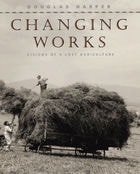
Changing Works
Visions of a Lost AgricultureDouglas Harper
University of Chicago Press, 2001
Changing Works combines Harper's pictures with classic images by photographers such as Gordon Parks, Sol Libsohn, and Charlotte Brooks-men and women whose work during the 1940s documented the mechanization and automation of agricultural practices. Part social history and part analysis of the drive to mass production, Changing Works examines how we farmed a half century ago versus how we do today through pictures new and old and through discussions with elderly farmers who witnessed the makeover. Ultimately, Harper challenges timely ecological and social questions about contemporary agriculture. He shows us how the dissolution of cooperative dairy farming has diminished the safety of the practice, degraded the way we relate to our natural environment, and splintered the once tight-knit communities of rural farmers. Mindful, then, of the advantages of preindustrial agriculture, and heeding the alarming spread of mad cow and foot-and-mouth disease, Changing Works harks back to the benefits of an older system.
Chaos Theory in the Social Sciences
Foundations and ApplicationsL. Douglas Kiel and Euel Elliott, Editors
University of Michigan Press, 1997
Chaos and Governance in the Modern World System
Giovanni Arrighi
University of Minnesota Press, 1999
Chaos of Disciplines
Andrew Abbott
University of Chicago Press, 2000
Chaos of Disciplines uses fractals to explain the patterns of disciplines, and then applies them to key debates that surround the social sciences. Abbott argues that knowledge in different disciplines is organized by common oppositions that function at any level of theoretical or methodological scale. Opposing perspectives of thought and method, then, in fields ranging from history, sociology, and literature, are to the contrary, radically similar; much like fractals, they are each mutual reflections of their own distinctions.
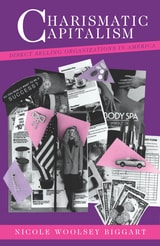
Charismatic Capitalism
Direct Selling Organizations in AmericaNicole Woolsey Biggart
University of Chicago Press, 1990
The first full-scale study of this industry, Charismatic Capitalism, revises the standard contention that the rationalization of social institutions is an inevitable consequence of advanced capitalism. Nicole Woolsey Biggart argues instead that less rational organizations built on social networks may actually be more economically viable.
Charles Horton Cooley
Imagining Social RealityGlenn Jacobs
University of Massachusetts Press, 2006
In surveying Cooley's thought, Jacobs emphasizes the role that the sociologist's own "inner work" played in the development of his idea of the self. Particularly important in this respect was Cooley's deep commitment to the essay tradition, a literary genre distinguished by autobiographical reflection and conversational discourse that he described as "a society of men speaking to each other across the ages." A close reading of the journal that Cooley kept for over forty years reveals how he worked out many of his key concepts and theories in his personal writing. It was through this exercise that he developed his distinct literary-aesthetic perspective, eventually resulting in a methodology that stands out for setting qualitative sociology on an epistemological foundation.
In a chapter devoted to Cooley's qualitative approach, Jacobs analyzes his vivid ethnographic observations of the Lower East Side Jewish ghetto and Hull House in Chicago, as well as his reflections on the death of his daughter and his own impending death in 1929. Another chapter looks at Cooley's little-known writing on economic sociology, focusing on his understanding of the market as an institution.
By examining the full range of Charles Horton Cooley's contributions to belles lettres as well as social science, often allowing him to speak for himself, Jacobs makes a strong case for elevating Cooley's rank among the most influential American sociologists.
Chasing World-Class Urbanism
Global Policy versus Everyday Survival in Buenos AiresJacob Lederman
University of Minnesota Press, 2020
Questions increasingly dominant urban planning orthodoxies and whether they truly serve everyday city dwellers
What makes some cities world class? Increasingly, that designation reflects the use of a toolkit of urban planning practices and policies that circulates around the globe. These strategies—establishing creative districts dedicated to technology and design, “greening” the streets, reinventing historic districts as tourist draws—were deployed to build a globally competitive Buenos Aires after its devastating 2001 economic crisis. In this richly drawn account, Jacob Lederman explores what those efforts teach us about fast-evolving changes in city planning practices and why so many local officials chase a nearly identical vision of world-class urbanism.
Lederman explores the influence of Northern nongovernmental organizations and multilateral agencies on a prominent city of the global South. Using empirical data, keen observations, and interviews with people ranging from urban planners to street vendors he explores how transnational best practices actually affect the lives of city dwellers. His research also documents the forms of resistance enacted by everyday residents and the tendency of local institutions and social relations to undermine the top-down plans of officials. Most important, Lederman highlights the paradoxes of world-class urbanism: for instance, while the priorities identified by international agencies are expressed through nonmarket values such as sustainability, inclusion, and livability, local officials often use market-centric solutions to pursue them. Further, despite the progressive rhetoric used to describe urban planning goals, in most cases their result has been greater social, economic, and geographic stratification.
Chasing World-Class Urbanism is a much-needed guide to the intersections of culture, ideology, and the realities of twenty-first-century life in a major Latin American city, one that illuminates the tension between technocratic aspirations and lived experience.
Cheap Rooms and Restless Hearts
A Study of Formula in the Urban Tales of William Sydney PorterKaren Charmaine Blansfield
University of Wisconsin Press, 1988
Cheaper by the Hour
Temporary Lawyers and the Deprofessionalization of the LawAuthored by Robert A. Brooks
Temple University Press, 2012
Recent law school graduates often work as temporary attorneys, but law firm layoffs and downsizing have strengthened the temporary attorney industry. Cheaper by the Hour is the first book-length account of these workers.
Drawing from participant observation and interviews, Robert A. Brooks provides a richly detailed ethnographic account of freelance attorneys in Washington, DC. He places their document review work in the larger context of the deprofessionalization of skilled labor and considers how professionals relegated to temporary jobs feel diminished, degraded, or demeaned by work that is often tedious, repetitive, and well beneath their abilities.
Brooks documents how firms break a lawyer's work into discrete components that require less skill to realize maximum profits. Moreover, he argues that information technology and efficiency demands are further stratifying the profession and creating a new underclass of lawyers who do low-end commodity work.

Chemical Consequences
Environmental Mutagens, Scientist Activism, and the Rise of Genetic ToxicologyFrickel, Scott
Rutgers University Press, 2004
Hereis the first historical and sociological account of the formation of an interdisciplinary science known as genetic toxicology, and of the scientists’ social movement that created it.
After research geneticists discovered that synthetic chemicals were capable of changing the genetic structure of living organisms, scientists began to explore how these chemicals affected gene structure and function. In the late 1960s, a small group of biologists became concerned that chemical mutagens represented a serious and possibly global environmental threat.
Genetic toxicology is nurtured as much by public culture as by professional practices, reflecting the interplay of genetics research and environmental politics. Drawing on a wealth of resources, Scott Frickel examines the creation of this field through the lens of social movement theory. He reveals how a committed group of scientist-activists transformed chemical mutagens into environmental problems, mobilized existing research networks, recruited scientists and politicians, secured financial resources, and developed new ways of acquiring knowledge. The result is a book that vividly illustrates how science and activism were interwoven to create a discipline that remains a defining feature of environmental health science.

Chemical Heroes
Pharmacological Supersoldiers in the US MilitaryAndrew Bickford
Duke University Press, 2020

Chemically Imbalanced
Everyday Suffering, Medication, and Our Troubled Quest for Self-MasteryJoseph E. Davis
University of Chicago Press, 2020
Chemically Imbalanced is a field report on how ordinary people dealing with common problems explain their suffering, how they’re increasingly turning to the thin and mechanistic language of the “body/brain,” and what these encounters might tell us. Drawing on interviews with people dealing with struggles such as underperformance in school or work, grief after the end of a relationship, or disappointment with how their life is unfolding, Joseph E. Davis reveals the profound revolution in consciousness that is underway. We now see suffering as an imbalance in the brain that needs to be fixed, usually through chemical means. This has rippled into our social and cultural conversations, and it has affected how we, as a society, imagine ourselves and envision what constitutes a good life. Davis warns that what we envision as a neurological revolution, in which suffering is a mechanistic problem, has troubling and entrapping consequences. And he makes the case that by turning away from an interpretive, meaning-making view of ourselves, we thwart our chances to enrich our souls and learn important truths about ourselves and the social conditions under which we live.
Chemically Imbalanced
Everyday Suffering, Medication, and Our Troubled Quest for Self-MasteryJoseph E. Davis
University of Chicago Press, 2020
Everyday suffering—those conditions or feelings brought on by trying circumstances that arise in everyone’s lives—is something that humans have grappled with for millennia. But the last decades have seen a drastic change in the way we approach it. In the past, a person going through a time of difficulty might keep a journal or see a therapist, but now the psychological has been replaced by the biological: instead of treating the heart, soul, and mind, we take a pill to treat the brain.
Chemically Imbalanced is a field report on how ordinary people dealing with common problems explain their suffering, how they’re increasingly turning to the thin and mechanistic language of the “body/brain,” and what these encounters might tell us. Drawing on interviews with people dealing with struggles such as underperformance in school or work, grief after the end of a relationship, or disappointment with how their life is unfolding, Joseph E. Davis reveals the profound revolution in consciousness that is underway. We now see suffering as an imbalance in the brain that needs to be fixed, usually through chemical means. This has rippled into our social and cultural conversations, and it has affected how we, as a society, imagine ourselves and envision what constitutes a good life. Davis warns that what we envision as a neurological revolution, in which suffering is a mechanistic problem, has troubling and entrapping consequences. And he makes the case that by turning away from an interpretive, meaning-making view of ourselves, we thwart our chances to enrich our souls and learn important truths about ourselves and the social conditions under which we live.