Results by title
53 books match the query 'Southwest' and 8 start with c
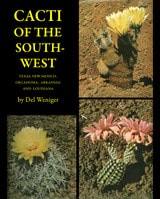
Cacti of the Southwest
Texas, New Mexico, Oklahoma, Arkansas, and LouisianaDel Weniger
University of Texas Press, 0
Del Weniger presents a beautifully illustrated account of all the cacti found in Texas, New Mexico, Oklahoma, Arkansas, and Louisiana. Cactus blossoms often rival the most exotic hothouse plants for delicate beauty. Depending upon the species, they range in color from white through almost the entire spectrum of the rainbow. Nearly every plant in the five-state area is here pictured in color, usually in full bloom.
The cactus was one of the most completely new and different plants encountered by Europeans in the Americas, and the larger species, at least, easily made their presence known to even the most unobservant passerby. To the observant the cactus in its surprising variety of forms has from the beginning exercised a strong fascination. The casual student may easily identify most specimens from these illustrations, and the more serious student will find detailed keys to all of the cacti of the area.
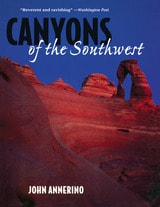
Canyons of the Southwest
A Tour of the Great Canyon Country from Colorado to Northern MexicoJohn Annerino
University of Arizona Press, 1993
The canyons of the southwestern United States and northern Mexico contain some of the most dramatic landscapes in the world. John Annerino's pictorial celebration of this visually rich region is a handsome memento for those who have heard the wind whistling in these haunting canyons, and a beckoning invitation for those who have not yet made the journey.
Annerino has spent much of his adult life exploring this territory—as wilderness runner, adventurer, and photojournalist—and combines his firsthand knowledge with his expertise as a nature photographer and author to create an intimate portrait of these timeless places. Accompanying the photographs are informative essays describing the region's geological and human history.
Capturing Labor
A History of Unfree Work in the SouthwestEdited by Jessica R. Pliley and John Mckiernan-González
University of Texas Press, 2026
A collection of essays grappling with the many, often overlooked, forms of unfree labor in the West.
When Americans think of unfree labor—coerced, extracted from workers unable to freely enter and exit contracts—what comes to mind is Black slavery and peonage in the South. But other forms of unfree labor also built the United States. Collecting a diverse range of sharply argued historical essays, Capturing Labor shares the story of unfree labor in the Southwest, affecting mainly Indigenous people, Mexican Americans, and people of color.
In Texas and elsewhere, state agents developed various methods for directing the movement of workers, seizing their time, and controlling the products of their efforts. Case studies highlight the detention during World War I of Indigenous children and unaccompanied women, who were placed in boarding schools, fined, and obligated to work off the resulting debt. Other essays expose authorities forcing workers to break strikes and jailing Americans who supported labor uprisings in rural Mexico and the United States. Prisons and asylums supplied coerced agricultural workers and musicians who were never compensated for their labor or by the labels that took their recordings.
Editors Jessica Pliley and John Mckiernan-González contend that unfree labor continues to shape American life, and is all around us today. Understanding its history aids us in recognizing and bringing attention to the grim realities of the present.
Collaboration in Practice
Transforming Community-Based Research in the SouthwestFumi Arakawa, Octavius Seowtewa, and Dylan Retzinger
University of Arizona Press, 2026
The book situates this collaboration within the broader historical and political context of archaeology and museology. It critically explores how museums and academic institutions can shift from extractive practices to ones that prioritize Indigenous sovereignty, knowledge systems, and cultural continuity. Through personal narratives, historical context, and methodological insights, the authors highlight the challenges and transformative potential of working collaboratively. They show how true collaboration requires humility, mutual respect, and a commitment to shared authority in both research and representation.
Ultimately, this work charts a path forward for community-based research that centers Indigenous voices and values. It advocates for an archaeology that is not only more inclusive but also more meaningful to the communities whose histories are being studied. A vital resource for scholars, students, and practitioners, this work seeks to engage in ethical, reciprocal, and culturally grounded research in the Southwest and beyond.
Contemporary Archaeologies of the Southwest
William Walker
University Press of Colorado, 2011
Chapters address place-making in Chaco Canyon, recent trends in landscape archaeology, the formation of identities, landscape boundaries, and the movement associated with these aspects of place-making. They address how interaction of peoples with objects brings landscapes to life. Representing a diverse cross section of Southwestern archaeologists, the authors of this volume push the boundaries of archaeological method and theory, building a strong foundation for future Southwest studies.
This book will be of interest to professional and academic archaeologists, as well as students working in the American Southwest.
Coronado's Children
Tales of Lost Mines and Buried Treasures of the SouthwestBy J. Frank Dobie
University of Texas Press, 1978
Written in 1930, Coronado's Children was one of J. Frank Dobie's first books, and the one that helped gain him national prominence as a folklorist. In it, he recounts the tales and legends of those hardy souls who searched for buried treasure in the Southwest following in the footsteps of that earlier gold seeker, the Spaniard Coronado.
"These people," Dobie writes in his introduction, "no matter what language they speak, are truly Coronado's inheritors.... l have called them Coronado's children. They follow Spanish trails, buffalo trails, cow trails, they dig where there are no trails; but oftener than they dig or prospect they just sit and tell stories of lost mines, of buried bullion by the jack load... "
This is the tale-spinning Dobie at his best, dealing with subjects as irresistible as ghost stories and haunted houses.
Creating Outdoor Classrooms
Schoolyard Habitats and Gardens for the SouthwestBy Lauri Macmillan Johnson, with Kim Duffek
University of Texas Press, 2008
Schoolyards have come a long way from the barren playgrounds that many people remember. Today's school campuses often feature gardens in which students can learn about native plants and wildlife, grow vegetables and fruit, explore cultural traditions, practice reading and math skills, and use their imaginations to create fun play spaces. And for a growing number of urban students, these schoolyard gardens offer the best, if not the only, opportunity to experience the natural world firsthand and enjoy its many benefits.
This book is a practical, hands-on guide for creating a variety of learning environments in the arid Southwest. Filled with clear, easy-to-use information and illustrated with photographs, drawings, and plans, the book covers everything necessary to create schoolyard gardens:
- An introduction to schoolyards as outdoor classrooms and several types of habitats, including art gardens, cultural history gardens, ecological gardens, literacy gardens, and vegetable gardens
- Design theory, including a history of garden styles, and design principles and design elements
- Beginning the design process, including identifying participants and writing a design program that sets out goals and requirements
- Conducting site research and synthesizing design elements to arrive at a final design
- Design essentials, including project funding and design features, maintenance, accessibility, safety, and project evaluation and revision
- Wildlife ecology, including elements needed for survival such as food and shelter
- Creating gardens for pollinators and other wildlife, including hummingbirds, butterflies, bees, moths, bats, and flies, as well as pest control
- Lists of native plants for various kinds of habitats and nurseries that sell native plants, as well as books, web sites, and other resources for learning more about native plants and wildlife
This guide will be essential for landscape architects, school personnel, parents, and students. Indeed, its principles can be used in designing schoolyard habitats across the country, while its information on gardening with native plants and wildlife will be useful to homeowners across the Southwest.
Crime Fiction and Film in the Southwest
Bad Boys and Bad Girls in the BadlandsEdited by Steve Glassman and Maurice O'Sullivan
University of Wisconsin Press, 2001
When Joe Leaphorn and Jim Chee, Tony Hillerman’s oddly matched tribal police officers, patrol the mesas and canyons of their Navajo reservation, they join a rich traditon of Southwestern detectives. In Crime Fiction and Film in the Southwest, a group of literary critics tracks the mystery and crime novel from the Painted Desert to Death Valley and Salt Lake City. In addition, the book includes the first comprehensive bibliography of mysteries set in the Southwest and a chapter on Southwest film noir from Humphrey Bogart’s tough hood in The Petrified Forest to Russell Crowe’s hard-nosed cop in L.A. Confidential.