Results by title
828 books match the query 'Study and teaching' and 80 start with c
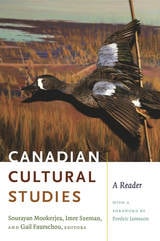
Canadian Cultural Studies
A ReaderSourayan Mookerjea, Imre Szeman, and Gail Faurschou, eds.
Duke University Press, 2009
Including essays by anglophone, francophone, and First Nations writers, the reader is divided into three parts, the first of which features essays by scholars who helped set the agenda for cultural and social analysis in Canada and remain important to contemporary intellectual formations: Harold Innis, Marshall McLuhan, and Anthony Wilden in communications theory; Northrop Frye in literary studies; George Grant and Harold Innis in a left-nationalist tradition of critical political economy; Fernand Dumont and Paul-Émile Borduas in Quebecois national and political culture; and Harold Cardinal in native studies.
The volume’s second section showcases work in which contemporary authors address Canada’s problematic and incomplete nationalism; race, difference, and multiculturalism; and modernity and contemporary culture. The final section includes excerpts from federal policy documents that are especially important to Canadians’ conceptions of their social, political, and cultural circumstances. The reader opens with a foreword by Fredric Jameson and concludes with an afterword in which the Quebecois scholar Yves Laberge explores the differences between English-Canadian cultural studies and the prevailing forms of cultural analysis in francophone Canada.
Contributors. Ian Angus, Himani Bannerji, Jody Berland, Paul-Émile Borduas, Harold Cardinal, Maurice Charland, Stephen Crocker, Ioan Davies, Fernand Dumont, Kristina Fagan, Gail Faurschou, Len Findlay, Northrop Frye, George Grant, Rick Gruneau, Harold Innis, Fredric Jameson, Yves Laberge, Jocelyn Létourneau, Eva Mackey, Lee Maracle, Marshall McLuhan, Katharyne Mitchell, Sourayan Mookerjea, Kevin Pask, Rob Shields, Will Straw, Imre Szeman, Serra Tinic, David Whitson, Tony Wilden
Case for Critical Literacy
A History of Reading in Writing StudiesAlice S. Horning
Utah State University Press, 2024
This book examines how college-level instruction reached this point and provides pedagogical strategies that writing instructors and teachers can use to address the problem. Alice Horning makes the case for the importance of critical reading in the teaching of writing with intentionality and imagination, while sharing glimpses of her own personal history with reading and writing. Horning provides the context for understanding what college faculty face in their classrooms and offers a history of critical literacy that explains why, to date, it has mostly neglected or ignored the diverse statuses of students’ reading challenges.
The Case for Critical Literacy explores actionable options to better meet students’ literacy needs. College and university faculty, especially writing instructors, will benefit from an understanding of what has happened in the field and what needs to change.
Center Will Hold
edited by Michael A. Pemberton & Joyce Kinkead
Utah State University Press, 2003
In The Center Will Hold, Pemberton and Kinkead have compiled a major volume of essays on the signal issues of scholarship that have established the writing center field and that the field must successfully address in the coming decade. The new century opens with new institutional, demographic, and financial challenges, and writing centers, in order to hold and extend their contribution to research, teaching, and service, must continuously engage those challenges.
Appropriately, the editors offer the work of Muriel Harris as a key pivot point in the emergence of writing centers as sites of pedagogy and research. The volume develops themes that Harris first brought to the field, and contributors here offer explicit recognition of the role that Harris has played in the development of writing center theory and practice. But they also use her work as a springboard from which to provide reflective, descriptive, and predictive looks at the field.
Centros y Programas de Escritura en América Latina
Opciones teóricas y pedagógicas para la enseñanza de la escritura disciplinarEstela Inés Moyano
University Press of Colorado, 2023
Changing of Knowledge in Composition
Contemporary PerspectivesLance Massey and Richard C Gephardt
Utah State University Press, 2011
Lance Massey and Richard Gebhardt offer in this collection many signs that composition again faces a moment of precariousness, even as it did in the 1980s—the years of the great divorce from literary studies. The contours of writing in the university again are rapidly changing, making the objects of scholarship in composition again unstable. Composition is poised to move not from modern to postmodern but from process to postprocess, from a service-oriented "field" to a research-driven "discipline." Some would say we are already there. Momentum is building to replace "composition" and the pedagogical imperative long implied in that term with a "writing studies" model devoted to the study of composition as a fundamental tool of, and force within, all areas of human activity.
Appropriately, contributors here use Stephen M. North's 1987 book The Making of Knowledge in Composition to frame and background their discussion, as they look at both the present state of the field and its potential futures. As in North's volume, The Changing of Knowledge in Composition describes a body of research and pedagogy brimming with conflicting claims, methodologies, and politics, and with little consensus regarding the proper subjects and modes of inquiry.
The deep ambivalence within the field itself is evident in this collection. Contributors here envision composition both as retaining its commitment to broad-based, generalized writing instruction and as heading toward content-based vertical writing programs in departments and programs of writing studies. They both challenge and affirm composition's pedagogical heritage. And they sound both sanguine and pessimistic notes about composition's future.
Changing the Subject in English Class
Discourse and the Constructions of DesiresMarshall W. Alcorn Jr.
Southern Illinois University Press, 2002
Drawing on the theoretical work of Jacques Lacan, Marshall W. Alcorn Jr. formulates a systematic explanation of the function and value of desire in writing instruction.
Alcorn argues that in changing the subject matter of writing instruction in order to change student opinions, composition instructors have come to adopt an insufficiently complex understanding of subjectivity. This oversimplification hinders attempts to foster cultural change. Alcorn proposes an alternative mode of instruction that makes effective use of students’ knowledge and desire. The resulting freedom in expression—personal as well as political—engenders the recognition, circulation, and elaboration of desire necessary for both human communication and effective politics.
Responding to James Berlin’s reconception of praxis in the classroom, Theresa Ebert’s espousal of disciplined instructions, and Lester Faigley’s introduction of a postmodern theory of subjectivity, Alcorn follows both Lacan and Slavoj Žižek in insisting desire be given free voice and serious recognition. In composition as in politics, desire is the ground of agency. Competing expressions of desire should generate a dialectic in social-epistemic discourse that encourages enlightenment over cynicism and social development over authoritarian demands.
With clarity and personal voice, Alcorn explains how discourse is rooted in primitive psychological functions of desire and responds to complex cultural needs. In its theoretical scope this book describes a new pedagogy that links thought to emotion and the personal to the social.
Chicano Studies
The Genesis of a DisciplineMichael Soldatenko
University of Arizona Press, 2009
Chicano Studies is a comparatively new academic discipline. Unlike well-established fields of study that long ago codified their canons and curricula, the departments of Chicano Studies that exist today on U.S. college and university campuses are less than four decades old. In this edifying and frequently eye-opening book, a career member of the discipline examines its foundations and early years. Based on an extraordinary range of sources and cognizant of infighting and the importance of personalities, Chicano Studies is the first history of the discipline.
What are the assumptions, models, theories, and practices of the academic discipline now known as Chicano Studies? Like most scholars working in the field, Michael Soldatenko didn't know the answers to these questions even though he had been teaching for many years. Intensely curious, he set out to find the answers, and this book is the result of his labors. Here readers will discover how the discipline came into existence in the late 1960s and how it matured during the next fifteen years-from an often confrontational protest of dissatisfied Chicana/o college students into a univocal scholarly voice (or so it appears to outsiders).
Part intellectual history, part social criticism, and part personal meditation, Chicano Studies attempts to make sense of the collision (and occasional wreckage) of politics, culture, scholarship, ideology, and philosophy that created a new academic discipline. Along the way, it identifies a remarkable cast of scholars and administrators who added considerable zest to the drama.
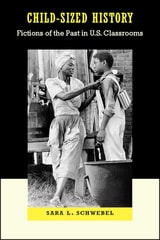
Child-Sized History
Fictions of the Past in U.S. ClassroomsSara L. Schwebel
Vanderbilt University Press, 2011
Books like Johnny Tremain, The Witch of Blackbird Pond, Island of the Blue Dolphins, and Roll of Thunder, Hear My Cry stimulate children's imagination, transporting them into the American past and projecting them into an American future. As works of historical interpretation, however, many are startlingly out of step with current historiography and social sensibilities, especially with regard to race. Unlike textbooks, which are replaced on regular cycles and subjected to public tugs-of-war between the left and right, historical novels have simply--and quietly--endured. Taken individually, many present troubling interpretations of the American past. But embraced collectively, this classroom canon provides a rare pedagogical opportunity: it captures a range of interpretive voices across time and place, a kind of "people's history" far removed from today's state-sanctioned textbooks.
Teachers who employ historical novels in the classroom can help students recognize and interpret historical narrative as the product of research, analytical perspective, and the politics of the time. In doing so, they sensitize students to the ways in which the past is put to moral and ideological uses in the present.
Featuring separate chapters on American Indians, war, and slavery, Child-Sized History tracks the changes in how young readers are taught to conceptualize history and the American nation.
Ciardi Himself
Fifteen Essays in the Reading, Writing, and Teaching of PoetryJohn Ciardi
University of Arkansas Press, 1989
Circulating Literacy
Writing Instruction in American Periodicals, 1880-1910Alicia Brazeau
Southern Illinois University Press, 2016
Brazeau establishes how these magazines shared a common strategy in the construction of literacy identities by connecting a specific identity with a particular set of reading and writing practices. She explores how farm journals were preoccupied with the value of literacy as a tool for shaping community; considers how the Journal and the Bazar deployed distinctly different illustrations of literacy values for women; shows how the Journal and editor Edward Bok cast women as consumers and sellers of literacy; and looks at the ways in which Bazar editors urged readers to adopt habits of reading and writing that emphasized communal relationships among women. In Circulating Literacy, Brazeau speaks to, and connects, the important topics of rural studies, gender, professionalization, and literacy sponsorship and identity, arguing for the value of the study of periodicals as literacy education tools.
Civic Labors
Scholar Activism and Working-Class StudiesEdited by Dennis Deslippe, Eric Fure-Slocum, and John W. McKerley
University of Illinois Press, 2016
Civics in a Digital Republic
A Transformative CurriculumRobert A. Waterson
West Virginia University Press, 2012
This innovative curriculum book provides key materials, resources, and tools to help secondary educators prepare their students to be engaged citizens of their community, state, nation and world. Five complete units of instruction, based on West Virginia Content Standards and Objectives, provide meaningful lessons while being mindful of the transition from tangible text to more digital curricula:
•Rights of the Individual•Freedoms of the Individual
•Responsibilities of the Individual
•Beliefs Concerning Societal Conditions
•Financial Literacy
•4 culminating activities for enrichment opportunities
•A matrix illustrating the West Virginia Content Standards and Objectives covered
•A matrix illustrating compliance with the National Council for the Social Studies Standards
•A curriculum toolbox that provides over 70 engaging web sites to visit and explore.
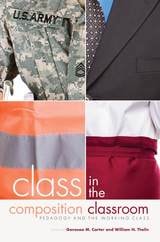
Class in the Composition Classroom
Pedagogy and the Working ClassGenesea M. Carter
Utah State University Press, 2017
Class in the Composition Classroom considers what college writing instructors should know about their working-class students—their backgrounds, experiences, identities, learning styles, and skills—in order to support them in the classroom, across campus, and beyond. In this volume, contributors explore the nuanced and complex meaning of “working class” and the particular values these college writers bring to the classroom.
The real college experiences of veterans, rural Midwesterners, and trade unionists show that what it means to be working class is not obvious or easily definable. Resisting outdated characterizations of these students as underprepared and dispensing with a one-size-fits-all pedagogical approach, contributors address how region and education impact students, explore working-class pedagogy and the ways in which it can reify social class in teaching settings, and give voice to students’ lived experiences.
As community colleges and universities seek more effective ways to serve working-class students, and as educators, parents, and politicians continue to emphasize the value of higher education for students of all financial and social backgrounds, conversations must take place among writing instructors and administrators about how best to serve and support working-class college writers. Class in the Composition Classroom will help writing instructors inside and outside the classroom prepare all their students for personal, academic, and professional communication.
Contributors: Aaron Barlow, Cori Brewster, Patrick Corbett, Harry Denny, Cassandra Dulin, Miriam Eisenstein Ebsworth, Mike Edwards, Rebecca Fraser, Brett Griffiths, Anna Knutson, Liberty Kohn, Nancy Mack, Holly Middleton, Robert Mundy, Missy Nieveen Phegley, Jacqueline Preston, James E. Romesburg, Edie-Marie Roper, Aubrey Schiavone, Christie Toth, Gail G. Verdi
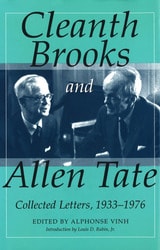
Cleanth Brooks and Allen Tate
Collected Letters, 1933-1976Edited by Alphonse Vinh & Intro by Louis D. Rubin, Jr.
University of Missouri Press, 1998
Offering all of the extant letters exchanged by two of the twentieth century's most distinguished literary figures, Cleanth Brooks and Allen Tate: Collected Letters, 1933-1976 vividly depicts the remarkable relationship, both professional and personal, between Brooks and Tate over the course of their lifelong friendship.
An accomplished poet, critic, biographer, and teacher, Allen Tate had a powerful influence on the literary world of his era. Editor of the Fugitive and the Sewanee Review, Tate greatly affected the lives and careers of his fellow literati, including Cleanth Brooks. Esteemed coeditor of An Approach to Literature and Understanding Poetry, Brooks was one of the principal creators of the New Criticism. His Modern Poetry and the Tradition and The Well Wrought Urn, as well as his two-volume study of Faulkner, remain among the classics read by any serious student of literature. The correspondence between these two gentlemen-scholars, which began in the 1930s, extended over five decades and covered a vast amount of twentieth-century literary history.
In the more than 250 letters collected here, the reader will encounter their shared concerns for and responses to the work of their numerous friends and many prominent writers, including T. S. Eliot, William Faulkner, and Robert Lowell. Their letters offer details about their own developing careers and also provide striking insight into the group dynamics of the Agrarians, the noteworthy community of southern writers who played so influential a role in the literature of modernism.
Brooks once said that Tate treated him like a younger brother, and despite great differences between their personalities and characters, these two figures each felt deep brotherly affection for the other. Whether they contain warm invitations for the one to visit the other, genteel or honest commentaries on their families and friends, or descriptions of the vast array of social, professional, and even political activities each experienced, the letters of Brooks and Tate clearly reveal the personalities of both men and the powerful ties of their strong camaraderie.
Invaluable to both students and teachers of literature, Cleanth Brooks and Allen Tate provides a substantial contribution to the study of twentieth-century American, and particularly southern, literary history.
Clear Grammar 2, 2nd Edition
Keys to Grammar for English Language LearnersKeith S. Folse
University of Michigan Press, 2012
Clear Grammaris a four-level grammar series that features a unique combination of useful grammar information written in clear language with activities that promote more accurate and fluent vocabulary usage, writing, speaking, and reading.
Important features of all four new editions of Clear Grammarinclude:
- More user-friendly charts to accompany grammar explanations
- High-frequency, corpus-based vocabulary related to each grammar point
- Grammar discovery tasks using students’ inductive learning skills
- A greater variety and increased number of activities, including more practice online
- Many more activities at the longer discourse level
- The addition of reading practice at the end of the unit, as well a critical-reading task
- More writing practice, including one on editing student writing and another for original student writing
- Two vocabulary practice activities, including a focus on collocations, in each unit, as well as many one-minute mini lessons showing the connection between grammar and vocabulary
- More speaking practice, with activities that require students to speak and listen to each other while using the target grammar
Support for teachers in the form of indicators that reference how to teach the grammar points in the Clear Grammar series from Keys to Teaching Grammar for English Language Learners by Keith S. Folse (978-0-472-03220-4).
Clear Grammar 2offers students and teachers a solid introduction to low-intermediate grammar.
Clear Grammar 2, 2nd Ed., includes
* Articles
* Past tense of irregular verbs
* Present perfect tense
* Adverbs of frequency
* Nouns used as adjectives
* Object pronouns
* Past progressive tense
* One and Other
* Possessives
*Comparatives and superlatives
*Modals
The book's companion website includes the additional grammar/vocabulary activities that are referenced in the textbook.
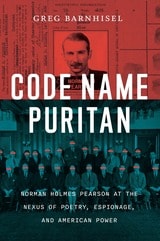
Code Name Puritan
Norman Holmes Pearson at the Nexus of Poetry, Espionage, and American PowerGreg Barnhisel
University of Chicago Press, 2024
Although his impact on twentieth-century American cultural life was profound, few people know the story of Norman Holmes Pearson. Pearson’s life embodied the Cold War alliances among US artists, scholars, and the national-security state that coalesced after World War II. As a Yale professor and editor, he helped legitimize the study of American culture and shaped the public’s understanding of literary modernism—significantly, the work of women poets such as Hilda Doolittle and Gertrude Stein. At the same time, as a spy, recruiter, and cultural diplomat, he connected the academy, the State Department, and even the CIA.
In Code Name Puritan, Greg Barnhisel maps Pearson’s life, from his childhood injury that led to a visible, permanent disability to his wartime counterespionage work neutralizing the Nazis’ spy network to his powerful role in the cultural and political heyday sometimes called the American Century. Written with clarity and informed by meticulous research, Barnhisel’s revelatory portrait of Pearson details how his unique experiences shaped his beliefs about the American character, from the Puritans onward.
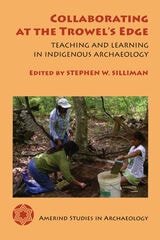
Collaborating at the Trowel's Edge
Teaching and Learning in Indigenous ArchaeologyEdited by Stephen W. Silliman
University of Arizona Press, 2008
Eighteen contributors—many with tribal ties—cover the current state of collaborative indigenous archaeology in North America to show where the discipline is headed. Continent-wide cases, from the Northeast to the Southwest, demonstrate the situated nature of local practice alongside the global significance of further decolonizing archaeology. And by probing issues of indigenous participation with an eye toward method, theory, and pedagogy, many show how the archaeological field school can be retailored to address politics, ethics, and critical practice alongside traditional teaching and research methods.
These chapters reflect the strong link between politics and research, showing what can be achieved when indigenous values, perspectives, and knowledge are placed at the center of the research process. They not only draw on experiences at specific field schools but also examine advances in indigenous cultural resource management and in training Native American and non-native students.
Theoretically informed and practically grounded, Collaborating at the Trowel’s Edge is a virtual guide for rethinking field schools and is an essential volume for anyone involved in North American archaeology—professionals, students, tribal scholars, or avocationalists—as well as those working with indigenous peoples in other parts of the world. It both reflects the rapidly changing landscape of archaeology and charts new directions to ensure the ongoing vitality of the discipline.
Collaborative Imagination
Earning Activism through Literacy EducationPaul Feigenbaum
Southern Illinois University Press, 2015
Processes of fighting unequal citizenship have historically prioritized literacy education, through which people envision universal first-class citizenship and devise practical methods for enacting this vision. In this important volume, literacy scholar Paul Feigenbaum explores how literacy education can facilitate activism in contemporary contexts in which underserved populations often remain consigned to second-class status despite official guarantees of equal citizenship. By conceiving of education as, in part, a process of understanding and grappling with adaptive and activist rhetorics, Feigenbaum explains, educators can direct people’s imaginations toward activism without running up against the conceptual problems so many scholars associate with critical pedagogy. Over time, this model of education expands people’s imaginations about what it means to be a good citizen, facilitates increased civic participation, and encourages collective destabilization of, rather than adaptation to, the structural inequalities of mainstream civic institutions. Feigenbaum offers detailed analyses of various locations and time periods inside, outside, and across the walls of formal education, including the Citizenship Schools and Freedom Schools rooted in the Civil Rights Movement of the 1950s and 1960s; the Algebra Project, a current practical-literacy network; and the Imagination Federation, a South Florida–based Earth-Literacy network. Considering both the history and the future of community literacy, Collaborative Imagination offers educators a powerful mechanism for promoting activism through their teaching and scholarship, while providing practical ideas for greater civic engagement among students.

Collaborative Strategies for Teaching Reading Comprehension
Judi Moreillon
American Library Association, 2007
College Writing and Beyond
A New Framework for University Writing InstructionAnne Beaufort
Utah State University Press, 2007
Composition research consistently demonstrates that the social context of writing determines the majority of conventions any writer must observe. Still, most universities organize the required first-year composition course as if there were an intuitive set of general writing "skills" usable across academic and work-world settings.
In College Writing and Beyond: A New Framework for University Writing Instruction, Anne Beaufort reports on a longitudinal study comparing one student’s experience in FYC, in history, in engineering, and in his post-college writing. Her data illuminate the struggle of college students to transfer what they learn about "general writing" from one context to another. Her findings suggest ultimately not that we must abolish FYC, but that we must go beyond even genre theory in reconceiving it.
Accordingly, Beaufort would argue that the FYC course should abandon its hope to teach a sort of general academic discourse, and instead should systematically teach strategies of responding to contextual elements that impinge on the writing situation. Her data urge attention to issues of learning transfer, and to developmentally sound linkages in writing instruction within and across disciplines. Beaufort advocates special attention to discourse community theory, for its power to help students perceive and understand the context of writing.
Come and Hear
What I Saw in My Seven-and-a-Half-Year Journey through the TalmudAdam Kirsch
Brandeis University Press, 2021
Spurred by a curiosity about Daf Yomi—a study program launched in the 1920s in which Jews around the world read one page of the Talmud every day for 2,711 days, or about seven and a half years—Adam Kirsch approached Tablet magazine to write a weekly column about his own Daf Yomi experience. An avowedly secular Jew, Kirsch did not have a religious source for his interest in the Talmud; rather, as a student of Jewish literature and history, he came to realize that he couldn’t fully explore these subjects without some knowledge of the Talmud. This book is perfect for readers who are in a similar position. Most people have little sense of what the Talmud actually is—how the text moves, its preoccupations and insights, and its moments of strangeness and profundity. As a critic and journalist Kirsch has experience in exploring difficult texts, discussing what he finds there, and why it matters. His exploration into the Talmud is best described as a kind of travel writing—a report on what he saw during his seven-and-a-half-year journey through the Talmud. For readers who want to travel that same path, there is no better guide.
Communication Incompetencies
A Theory of Training Oral Performance BehaviorGerald M. Phillips
Southern Illinois University Press, 1991
Gerald M. Phillips draws on his twenty-five-year, five-thousand-client experience with the Pennsylvania State University Reticence Program to present a new theory of modification of “inept” communication behavior.
That experience has convinced Phillips that communication is arbitrary and rulebound rather than a process of inspiration. He demonstrates that communication problems can be described as errors that can be detected and classified in order to fit a remediation pattern. Regardless of the source of error, the remedy is to train the individual to avoid or eliminate errors—thus, orderly procedure will result in competent performance.
Inept communicators must be made aware of the obligations and constraints imposed by deep structures that require us to achieve a degree of formal order in our language, without which our discourse becomes incomprehensible.
Communication, Pedagogy, and the Gospel of Mark
Elizabeth E. Shively
SBL Press, 2016
Using Mark as a test case, scholars address questions like: How should my research and my approach to the text play out in the classroom? What differences should my academic context and my students' expectations make? How should new approaches and innovations inform interpretation and teaching? This resource enables biblical studies instructors to explore various interpretative approaches and to begin to engage pedagogical issues in our changing world.
Features:
- Ideas that may be adapted for teaching any biblical text
- Diverse perspectives from nine experts in their fields
- Essays include tips, ideas, and lesson plans for the classroom
Communities of Practice
An Alaskan Native Model for Language Teaching and LearningEdited by Patrick E. Marlow and Sabine Siekmann
University of Arizona Press, 2013
In Alaska, the Second Language Acquisition Teacher Education (SLATE) project was designed to enable Indigenous communities and schools to improve the quality of native-language and English-language instruction and assessment by focusing on the elimination of barriers that have historically hindered degree completion for Indigenous and rural teachers. The Guided Research Collaborative (GRC) model, was employed to support the development of communities of practice through near-peer mentoring and mutual scaffolding. Through this important new model, teachers of both the heritage language, in this case Central Yup’ik, and English were able to situate their professional development into a larger global context based on current notions of multilingualism.
In Communities of Practice contributors show how the SLATE program was developed and implemented, providing an important model for improving second-language instruction and assessment. Through an in-depth analysis of the program, contributors show how this project can be successfully adapted in other communities via its commitment to local control in language programming and a model based on community-driven research.
Communities of Practice demonstrates how an initial cohort of Yup’ik- and English-language teachers collaborated to negotiate and ultimately completed the SLATE program. In so doing, these educators enhanced the program and their own effectiveness as teachers through a greater understanding of language learning. It is these understandings that will ultimately allow heritage- and English-language teachers to work together to foster their students’ success in any language.
Community Literacy and the Rhetoric of Public Engagement
Linda Flower
Southern Illinois University Press, 2008
Community Literacy and the Rhetoric of Public Engagement explores the critical practice of intercultural inquiry and rhetorical problem-solving that encourages urban writers and college mentors alike to take literate action. Author Linda Flower documents an innovative experiment in community literacy, the Community Literacy Center in Pittsburgh, and posits a powerful and distinctively rhetorical model of community engagement and pedagogy for both marginalized and privileged writers and speakers. In addition, she articulates a theory of local publics and explores the transformative potential of alternative discourses and counter-public performances.
In presenting a comprehensive pedagogy for literate action, the volume offers strategies for talking and collaborating across difference, forconducting an intercultural inquiry that draws out situated knowledge and rival interpretations of shared problems, and for writing and speaking to advocate for personal and public transformation. Flower describes the competing scripts for social engagement, empowerment, public deliberation, and agency that characterize the interdisciplinary debate over models of social engagement.
Extending the Community Literacy Center’s initial vision of community literacy first published a decade ago, Community Literacy and the Rhetoric of Public Engagement makes an important contribution to theoretical conversations about the nature of the public sphere while providing practical instruction in how all people can speak publicly for values and visions of change.
Winner, 2009 Rhetoric Society of America Book Award
Composing Feminist Interventions
Activism, Engagement, PraxisKristine L. Blair
University Press of Colorado, 2018
Composing Media Composing Embodiment
Kristin L. Arola and Anne Frances Wysocki
Utah State University Press, 2012
“What any body is—and is able to do—cannot be disentangled from the media we use to consume and produce texts.” ---from the Introduction.
Kristin Arola and Anne Wysocki argue that composing in new media is composing the body—is embodiment. In Composing (Media) = Composing (Embodiment), they havebrought together a powerful set of essays that agree on the need for compositionists—and their students—to engage with a wide range of new media texts. These chapters explore how texts of all varieties mediate and thereby contribute to the human experiences of communication, of self, the body, and composing. Sample assignments and activities exemplify how this exploration might proceed in the writing classroom.
Contributors here articulate ways to understand how writing enables the experience of our bodies as selves, and at the same time to see the work of (our) writing in mediating selves to make them accessible to institutional perceptions and constraints. These writers argue that what a body does, and can do, cannot be disentangled from the media we use, nor from the times and cultures and technologies with which we engage.
To the discipline of composition, this is an important discussion because it clarifies the impact/s of literacy on citizens, freedoms, and societies. To the classroom, it is important because it helps compositionists to support their students as they enact, learn, and reflect upon their own embodied and embodying writing.
Composing Research
A Contextualist Paradigm for Rhetoric and CompositionCindy Johanek
Utah State University Press, 2000
Cindy Johanek offers a new perspective on the ideological conflict between qualitative and quantitative research approaches, and the theories of knowledge that inform them. With a paradigm that is sensitive to the context of one's research questions, she argues, scholars can develop less dichotomous forms that invoke the strengths of both research traditions. Context-oriented approaches can lift the narrative from beneath the numbers in an experimental study, for example, or bring the useful clarity of numbers to an ethnographic study.
A pragmatic scholar, Johanek moves easily across the boundaries that divide the field, and argues for contextualist theory as a lens through which to view composition research. This approach brings with it a new focus, she writes. "This new focus will call us to attend to the contexts in which rhetorical issues and research issues converge, producing varied forms, many voices, and new knowledge, indeed reconstructing a discipline that will be simultaneously focused on its tasks, its knowledge-makers, and its students."
Composing Research is a work full of personal voice and professional commitment and will be a welcome addition to the research methods classroom and to the composition researcher's own bookshelf.
2000 Outstanding Scholarship Award from the International Writing Centers Association.
Composition Studies As A Creative Art
Teaching, Writing, Scholarship, AdministrationLynn Z. Bloom
Utah State University Press, 1998
Composition Studies in the New Millennium
Rereading the Past, Rewriting the FutureEdited by Lynn Z. Bloom, Donald A. Daiker, and Edward M. White
Southern Illinois University Press, 2003
A collection of twenty-four essays assessing and challenging the current state of writing instruction, Composition Studies in the New Millennium: Rereading the Past, Rewriting the Future emerges from presentations given at the national Writing Program Administrators conference held at Miami University in Oxford, Ohio, in 2001. Like its acclaimed and widely-used predecessor, Composition in the Twenty-First Century: Crisis and Change, this timely collection by leading scholars in composition studies responds to concerns about the evolution and future of this field of study.
Charting new directions, the contributors grapple with seven distinct questions: What do we mean by composition studies—past, present, and future? What do and should we teach when we teach composition? Where will composition be taught, and who will teach it? What theories and philosophies will undergird our research paradigms, and what will those paradigms be? How will new technologies change composition studies? What languages will our students write, and what will they write about? What political and social issues have shaped composition studies in the past and will shape this field in the future?
In addressing these queries, the essayists approach composition studies from perspectives ranging from rhetorical to cultural, political to economic, administrative to technological; and they do so with a style and organization appropriate for composition instructors, scholars, and administrators at all levels, from teaching assistants to college presidents. The result is an invaluable vision of the future of composition studies in the new millennium.
Composition and Literature
Bridging the GapEdited by Winifred Bryan Horner
University of Chicago Press, 1983
Composition and the Rhetoric of Science
Engaging the Dominant DiscourseMichael J. Zerbe
Southern Illinois University Press, 2007
Composition in the Twenty-First Century
Crisis and ChangeEdited by Lynn Z. Bloom, Donald A. Daiker, and Edward M. White
Southern Illinois University Press, 1997
Despite its pervasiveness and its significance, composition has an unstable status within the curriculum. Writing programs and writing faculty are besieged by academic, political, and financial concerns that have not been well understood or addressed.
At many institutions, composition functions paradoxically as both the gateway to academic success and as the gatekeeper, reducing access to academic work and opportunity for those with limited facility in English. Although writing programs are expected to provide services that range from instruction in correct grammar to assisting—or resisting—political correctness, expanding programs and shrinking faculty get caught in the crossfire. The bottom line becomes the firing line as forces outside the classroom determine funding and seek to define what composition should do.
In search of that definition, the contributors ask and answer a series of specific and salient questions: What implications—intellectual, political, and institutional—will forces outside the classroom have on the quality and delivery of composition in the twenty-first century? How will faculty and administrators identify and address these issues? What policies and practices ought we propose for the century to come?
This book features sixteen position papers by distinguished scholars and researchers in composition and rhetoric; most of the papers are followed by invited responses by other notable compositionists. In all, twenty-five contributors approach composition from a wide variety of contemporary perspectives: rhetorical, historical, social, cultural, political, intellectual, economic, structural, administrative, and developmental. They propose solutions applicable to pedagogy, research, graduate training of composition teachers, academic administration, and public and social policy. In a very real sense, then, this is the only book to offer a map to the future of composition.
Composition, Rhetoric, and Disciplinarity
Rita Malenczyk
Utah State University Press, 2018
Edited by four nationally recognized leaders of composition scholarship, Composition, Rhetoric, and Disciplinarity asks a fundamental question: can Composition and Rhetoric, as a discipline, continue its historical commitment to pedagogy without sacrificing equal attention to other areas, such as research and theory? In response, contributors to the volume address disagreements about what it means to be called a discipline rather than a profession or a field; elucidate tensions over the defined breadth of Composition and Rhetoric; and consider the roles of research and responsibility as Composition and Rhetoric shifts from field to discipline.
Outlining a field with a complex and unusual formation story, Composition, Rhetoric, and Disciplinarity employs several lenses for understanding disciplinarity—theory, history, labor, and pedagogy—and for teasing out the implications of disciplinarity for students, faculty, institutions, and Composition and Rhetoric itself. Collectively, the chapters speak to the intellectual and embodied history leading to this point; to questions about how disciplinarity is, and might be, understood, especially with regard to Composition and Rhetoric; to the curricular, conceptual, labor, and other sites of tension inherent in thinking about Composition and Rhetoric as a discipline; and to the implications of Composition and Rhetoric’s disciplinarity for the future.
Contributors: Linda Adler-Kassner, Elizabeth H. Boquet, Christiane Donahue, Whitney Douglas, Doug Downs, Heidi Estrem, Kristine Hansen, Doug Hesse, Sandra Jamieson, Neal Lerner, Jennifer Helene Maher, Barry Maid, Jaime Armin Mejía, Carolyn R. Miller, Kelly Myers, Gwendolynne Reid, Liane Robertson, Rochelle Rodrigo, Dawn Shepherd, Kara Taczak
Compositional Subjects
Enfiguring Asian/American WomenLaura Hyun Yi Kang
Duke University Press, 2002
The book opens by tracking the jagged emergence of “Asian American women” as a distinct social identity over the past three decades. Kang then directs critical attention to how the attempts to compose them as discrete subjects of consciousness, visibility, and action demonstrate a broader, ongoing tension between socially particularized subjects and disciplinary knowledges. In addition to the shifting meanings and alignments of “Asian,” “American,” and “women,” the book examines the discourses, political and economic conditions, and institutional formations that have produced Asian/American women as generic authors, as visibly desirable and desiring bodies, as excludable aliens and admissible citizens of the United States, and as the proper labor for transnational capitalism. In analyzing how these enfigurations are constructed and apprehended through a range of modes including autobiography, cinematography, historiography, photography, and ethnography, Kang directs comparative attention to the very terms of their emergence as Asian/American women in specific disciplines.
Finally, Kang concludes with a detailed examination of selected literary and visual works by Korean women artists located in the United States and Canada, works that creatively and critically contend with the problematics of identification and representation that are explored throughout the book. By underscoring the forceful and contentious struggles that animate all of these compositional gestures, Kang proffers Asian/American women as a vexing and productive figure for cultural, political and epistemological critique.
Conceding Composition
A Crooked History of Composition's Institutional FortunesRyan Skinnell
Utah State University Press, 2016
Based on extensive archival research conducted at six American universities and using the specific cases of institutional mission, regional accreditation, and federal funding, this study demonstrates that administrators and faculty have introduced, reformed, maintained, threatened, or eliminated composition as part of negotiations related to nondisciplinary institutional exigencies. Viewing composition from this perspective, author Ryan Skinnell raises new questions about why composition exists in the university, how it exists, and how teachers and scholars might productively reconceive first-year composition in light of its institutional functions.
The book considers the rhetorical, political, organizational, institutional, and promotional options conceding composition opened up for institutions of higher education and considers what the first-year course and the discipline might look like with composition’s transience reimagined not as a barrier but as a consummate institutional value.
Conceptions of Literacy
Graduate Instructors and the Teaching of First-Year CompositionMeaghan Brewer
Utah State University Press, 2020
Brewer argues that conceptions of literacy undergird the work of writing instructors and that many of the anxieties around composition studies’ disciplinary status are related to the differences perceived between the field’s conceptions of literacy and those of the graduate instructors and adjuncts who teach the majority of composition courses. Conceptions of Literacy makes practical recommendations for how new graduate instructors can begin to perceive and interrogate their conceptions of literacy, which, while influential, are often too personal to recognize.
Conflict Zone, Comfort Zone
Ethics, Pedagogy, and Effecting Change in Field-Based CoursesAgnieszka Paczynska
Ohio University Press, 2019
By taking students out of their comfort zone, field-based courses—which are increasingly popular in secondary and postsecondary education—have the potential to be deep, transformative learning experiences. But what happens when the field in question is a site of active or recent conflict? In Conflict Zone, Comfort Zone, editors Agnieszka Paczyńska and Susan F. Hirsch highlight new approaches to field-based learning in conflict zones worldwide. As the contributors demonstrate, instructors must leave the comfort zone of traditional pedagogy to meet the challenges of field-based education.
Drawing on case studies in the United States and abroad, the contributors address the ethical considerations of learning in conflict zones, evaluate the effectiveness of various approaches to teaching these courses, and provide guidelines for effecting change. They also explore how the challenges of field-based classes are magnified in conflict and postconflict settings, and outline the dilemmas faced by those seeking to resolve those challenges. Finally, filling a crucial gap in existing literature, the contributors identify best practices that will assist aspiring instructors in developing successful field-based courses in conflict zones.
Contributors: Daniel R. Brunstetter, Alison Castel, Gina M. Cerasani, Alexander Cromwell, Maryam Z. Deloffre, Sandi DiMola, Leslie Dwyer, Eric Hartman, Pushpa Iyer, Allyson M. Lowe, Patricia A. Maulden, rj nickels, Anthony C. Ogden, Jennifer M. Ramos, Lisa E. Shaw, Daniel Wehrenfennig
Confronting AIDS through Literature
The Responsibilities of RepresentationEdited by Judith Laurence Pastore
University of Illinois Press, 1993
Connecting Continents
Archaeology and History in the Indian Ocean WorldKrish Seetah
Ohio University Press, 2018
Winner, Society for American Archaeology Book Award
In recent decades, the vast and culturally diverse Indian Ocean region has increasingly attracted the attention of anthropologists, historians, political scientists, sociologists, and other researchers. Largely missing from this growing body of scholarship, however, are significant contributions by archaeologists and consciously interdisciplinary approaches to studying the region’s past and present.
Connecting Continents addresses two important issues: how best to promote collaborative research on the Indian Ocean world, and how to shape the research agenda for a region that has only recently begun to attract serious interest from historical archaeologists. The archaeologists, historians, and other scholars who have contributed to this volume tackle important topics such as the nature and dynamics of migration, colonization, and cultural syncretism that are central to understanding the human experience in the Indian Ocean basin.
This groundbreaking work also deepens our understanding of topics of increasing scholarly and popular interest, such as the ways in which people construct and understand their heritage and can make use of exciting new technologies like DNA and environmental analysis. Because it adopts such an explicitly comparative approach to the Indian Ocean, Connecting Continents provides a compelling model for multidisciplinary approaches to studying other parts of the globe.
Contributors: Richard B. Allen, Edward A. Alpers, Atholl Anderson, Nicole Boivin, Diego Calaon, Aaron Camens, Saša Čaval, Geoffrey Clark, Alison Crowther, Corinne Forest, Simon Haberle, Diana Heise, Mark Horton, Paul Lane, Martin Mhando, and Alistair Patterson.
Connecting Reading & Writing in Second Language Writing Instruction
Alan Hirvela
University of Michigan Press, 2004
Although the integrated reading-writing model has gained popularity in recent years, many teachers have little more than an intuitive sense of the connections between these skills. As part of the popular Michigan Series on Teaching Multilingual Writers, Connecting Reading and Writing in Second Language Instruction will provide invaluable background knowledge on this issue to ESL teachers in training, as well as teachers who are already practicing.
Connecting Reading & Writing in Second Language Writing Instruction, Second Edition
Alan R. Hirvela
University of Michigan Press, 2016
The new edition features two new chapters. The first is a chapter on assessment because students are now being asked to connect reading and writing in the classroom and on formal assessments like the TOEFL®. The second new chapter is an argument for accounting for transfer elements in the teaching and researching of reading-writing connections.
The goals of this revised volume are to provide: resources for those wishing to pursue reading-writing connections, summaries of the beliefs underlying those connections, ideas for teaching the connections in the classroom, and information about the work others have done to develop this domain of L2 writing.
Considering Students, Teachers, and Writing Assessment, Vol 2
Emerging Theoretical and Pedagogical PracticeDiane Kelly-Riley
University Press of Colorado, 2024
Considering Students, Teachers, and Writing Assessment, Vol. 1
Technical and Political ContextsDiane Kelly-Riley
University Press of Colorado, 2024
Constructing Rhetorical Education
Edited by Marie Secor and Davida Charney
Southern Illinois University Press, 1992
In nineteen essays illustrating its many aspects, this book offers an argument for what it takes to construct a complete rhetorical education.
The editors take an approach that is pragmatic and pluralistic, based as it is on the assumptions that a rhetorical education is not limited to teaching freshman composition (or any specific writing course) and that the contexts in which such an education occurs are not limited to classrooms. This thought-provoking volume stresses that while a rhetorical education results in the growth of writing skills, its larger goal is to foster critical thinking.
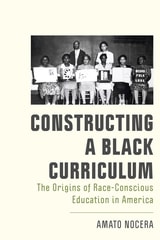
Constructing a Black Curriculum
The Origins of Race-Conscious Education in AmericaAmato Nocera
Rutgers University Press, 2027
Constructing a Black Curriculum reframes how we understand Black Americans’ intellectual and political engagement with education during the first half of the twentieth century. It traces the powerful, diffuse movement created by Black Americans to build what Nocera calls a “Black Curriculum:" a communal effort to represent Black identity, guide racial consciousness, and rebut claims of inferiority. This curriculum first developed as a public educational project in Black learned societies and during the Harlem Renaissance before making its way into schools. The struggle for a Black curriculum was not only a fight against white supremacy, but also an internal debate among Black advocates over the very nature of how race should be represented and taught. This book illuminates this struggle through the work of Black intellectuals (Alexander Crummell, Carter G. Woodson, Hubert Harrison, and Alain Locke) and the intellectual contributions of African American educators (Nannie Burroughs, Jane Dabney Shackelford, and Julia Davis). This essential history provides vital context for contemporary debates over curriculum reform, racial knowledge, and the enduring quest for educational equity.
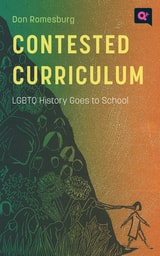
Contested Curriculum
LGBTQ History Goes to SchoolDon Romesburg
Rutgers University Press, 2025
What began in fits and starts in activism and educational materials across the late twentieth century led to the passage of California’s landmark FAIR Education Act in 2011, ensuring that LGBTQ history has a place in the K–12 classroom. Historian Don Romesburg, the lead scholar who worked with advocacy organizations to pass the act, recounts the decades-long struggle to integrate LGBTQ content into history education policy, textbooks, and classrooms. Looking at California and states that followed its lead, he assesses the challenges and opportunities presented by this new way of teaching history. Romesburg’s powerful case for LGBTQ-inclusive education is all the more urgent in this era of anti-gay book bans, regressive legislation, and attempts to diminish the vital role that inclusive and honest history education should play in a democratic nation.
Continuing Cooperative Development
A Discourse Framework for Individuals as ColleaguesJulian Edge
University of Michigan Press, 2002
Controversies in Second Language Writing, Second Edition
Dilemmas and Decisions in Research and InstructionChristine Pearson Casanave
University of Michigan Press, 2017
The second edition is a thorough revision with all chapters updated to refer to works written since the first edition was published. A few chapters have been added: one devoted to writing in a digital era (Chapter 3); one devoted to the debates about English as a lingua franca, "translingual literacy practices," and other hybrid uses of English that have been ongoing in the last ten years (Chapter 4); and one giving special attention to issues related to writing from sources and plagiarism (Chapter 6).
As with the first edition, the second edition of Controversies is not a book that will teach readers how to do things. Rather, it is a book designed to help readers think and to wrestle with issues in L2 writing that are not easily resolved by how-to prescriptions.
Controversies in Second Language Writing
Dilemmas and Decisions in Research and InstructionChristine Pearson Casanave
University of Michigan Press, 2003
To counteract some of the debates, Casanave explores the different sides of the arguments and provides examples of how other teachers have dealt with these issues. The book presents novice and seasoned teachers with thought-provoking issues and questions to consider when determining and reflecting on their own teaching strategies and criteria.
Topics discussed include:
contrastive rhetoric
product vs. process
fluency and accuracy
assessment of student work
audience
plagiarism
politics and ideology.