Results by title
88 books match the query 'Translation' and 7 start with c
Classics in Translation, Volume I
Greek LiteratureEdited by Paul L. MacKendrick and Herbert M. Howe
University of Wisconsin Press, 1959
Here, translated into modern English, are the works of literature, history, science, oratory, and philosophy that constitute the mainstream of classical Greek thought and continue to influence world civilizations. This volume includes:
· Complete translations of Aeschylus’ Agamemnon, Sophocles’ Antigone, Euripides’ Medea, Aristophanes’ Frogs, and The Constitution of Athens by the “Old Oligarch.”
· Abridged translations of Homer’s Iliad and Odyssey, The Homeric Hymn to Hermes, and Plutarch’s Life of Tiberius Gracchus.
· Selections from Hesiod and Lucian; from twenty-eight lyric poets including Sappho, Pindar, and Meleagar; from the histories of Herodotus and Thucydides; and from eight Attic orators, including Isocrates and Demosthenes.
· Selections from the scientific writings of Hippocrates, Archimedes, and Galen.
· Selections from the pre-Socratic philosophers and from Plato, Aristotle, Epicurus, and Epictetus.
Classics in Translation, Volume II
Latin LiteratureEdited by Paul L. MacKendrick and Herbert M. Howe
University of Wisconsin Press, 1959
Here, translated into modern English, are the works of literature, history, science, oratory, and philosophy that constitute the mainstream of Roman thought and continue to influence world civilizations. This volume includes:
· Complete translations of Plautus’ The Haunted House, Terence’s Woman from Andros, Seneca’s Medea, and the Deeds of the Deified Augustus.
· Selections from Vergil’s Georgics and Aeneid, the poems of Catullus, Horace’s Odes, Ovid’s Metamorphoses and Fasti, the Satyricon of Petronius, and the Sixth Satire of Juvenal.
· Selections from Lucretius’ On the Nature of Things, Cicero’s speeches and philosophical works, and Quintilian’s The Training of the Orator.
· Selections from histories by Sallust, Livy’s History of Rome, Tacitus’ Annals and Germania, and letters of Pliny the Younger.
Commentaries on Aristotle's "On Sense and What Is Sensed" and "On Memory and Recollection" (Thomas Aquinas in Translation)
Saint Thomas Aquinas
Catholic University of America Press, 2005
Commentary on the Book of Causes (Thomas Aquinas in Translation)
Saint Thomas Aquinas
Catholic University of America Press, 1996
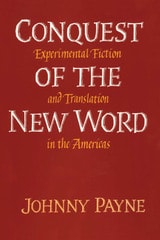
Conquest of the New Word
Experimental Fiction and Translation in the AmericasBy Johnny Payne
University of Texas Press, 1993
Latin American fiction won great acclaim in the United States during the 1960s, when many North American writers and critics felt that our national writing had reached a low ebb. In this study of experimental fiction from both Americas, Johnny Payne argues that the North American reception of the "boom" in Latin American fiction distorted the historical grounding of this writing, erroneously presenting it as mainly an exotic "magical realism." He offers new readings that detail the specific, historical relation between experimental fiction and various authors' careful, deliberate deformations and reformations of the political rhetoric of the modern state.
Payne juxtaposes writers from Argentina and Uruguay with North American authors, setting up suggestive parallels between the diverse but convergent practices of writers on both continents. He considers Nelson Marra in conjunction with Donald Barthelme and Gordon Lish; Teresa Porzecanski with Harry Mathews; Ricardo Piglia with John Barth; Silvia Schmid and Manuel Puig with Fanny Howe and Lydia Davis; and Jorge Luis Borges and Luisa Valenzuela with William Burroughs and Kathy Acker.
With this innovative, dual-continent approach, Conquest of the New Word will be of great interest to everyone working in Latin American literature, women's studies, translation studies, creative writing, and cultural theory.

Continental England
Form, Translation, and Chaucer in the Hundred Years’ WarElizaveta Strakhov
The Ohio State University Press, 2022

Contracting Colonialism
Translation and Christian Conversion in Tagalog Society Under Early Spanish RuleVicente L. Rafael
Duke University Press, 1993