Results by title
28167 books match the query 'History' and 1913 start with c
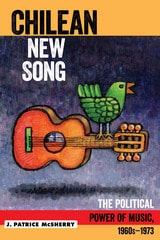
Chilean New Song
The Political Power of Music, 1960s - 1973J Patrice McSherry
Temple University Press, 2015
In Chilean New Song, J. Patrice McSherry deftly combines a political-historical view of Chile with a narrative of its cultural development. She examines the democratizing power of this music and, through interviews with key protagonists, the social roles of politically committed artists who participated in a movement for change. McSherry explores the impact of Chilean New Song and the way this artistic/cultural phenomenon related to contemporary politics to capture the passion, pain, and hope of millions of Chileans.
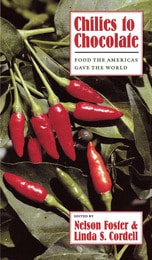
Chilies to Chocolate
Food the Americas Gave the WorldNelson Foster and Linda S. Cordell
University of Arizona Press, 1992
Chilies to Chocolate traces the biological and cultural history of some New World crops that have worldwide economic importance. Drawing on disciplines as diverse as anthropology, ethnobotany, and agronomy, it focuses on the domestication and use of these plants by native peoples and their dispersion into the fields and kitchens of the Old World: tomatoes to Italy, chili peppers throughout Asia, cacao wherever a sweet tooth craves chocolate. Indeed, potatoes and maize now rank with wheat and rice as the world's principal crops.
"The sweetness of corn on the cob is sweeter for knowing the long, winding way by which it has come into one's hands," observe Foster and Cordell. Featuring contributions by Gary Nabhan, Alan Davidson, and others, Chilies to Chocolate will increase readers' appreciation of the foods we all enjoy, of the circuitous routes by which they have become part of our diets, and of the vital role that Native Americans have played in this process.
Chimalpahin and the Kingdoms of Chalco
Susan Schroeder
University of Arizona Press, 1991
"By delineating the concepts and personae that were most salient in Chimalpahin's politically-oriented perspective on the past, Schroeder has advanced our understanding of native Mexican political organization and has made a major contribution toward interpreting the work of this Nahua historian." —Anthropos
"In this well-structured volume, Susan Schroeder synthesizes Chimalpahin's detailed information on the Prehispanic kingdoms of Chalco (located in the southern Valley of Mexico) with particular emphasis on their sociopolitical organization. . . . A valuable contribution." —American Antiquity
"This is an important piece of scholarship which makes more accessible to general historians of colonial Mexico an item of Nahuatl literature." —The Americas

China Forever
The Shaw Brothers and Diasporic CinemaEdited by Poshek Fu
University of Illinois Press, 2007
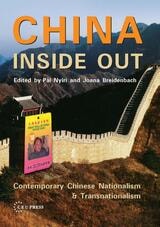
China Inside Out
Contemporary Chinese Nationalism and TransnationalismJoana Breidenbach
Central European University Press, 2005
The authors of this text believe that “areas” as assemblages of social processes requiring distinct, culture-bound explanations cannot be replaced with global theories, but that the meaning of “the area” can be different depending on the question one studies. The study of China and Chinese, in particular, is a good arena to challenge the disciplinary and geographic boundaries of conventional area studies for several reasons. First, because of the wealth of simultaneous processes of rapid political, social, and discursive change in contemporary Chinese society; second, because of the problematic relationship between state, territory, nation, and ethnicity in China; third, because China studies, perhaps more than any other area studies at the moment, is a highly competitive political and academic industry whose internal working must be critically examined. In addition, the subject of China has become one of the primary loci of contesting the meanings of globalization and the universality versus relativity of “values” and modernity.
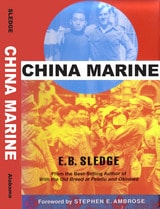
China Marine
E. B. Sledge
University of Alabama Press, 2002
From the respected author of one of the best books on World War II combat, comes an equally captivating saga of battle recovery, healing, and homecoming.
China Marine is the long-awaited sequel to E. B. Sledge’s critically acclaimed memoir, With the Old Breed at Peleliu and Okinawa. Picking up where his previous memoir leaves off, Sledge, a young marine in the First Division, traces his company’s movements and charts his own difficult passage to peace following his horrific experiences in the Pacific. He reflects on his duty in the ancient city of Peiping (now Beijing) and recounts the difficulty of returning to his hometown of Mobile, Alabama, and resuming civilian life haunted by the shadows of close combat.
Distinguished historians have praised Sledge’s first book as the definitive rifleman’s account of World War II, ranking it with the Civil War’s Red Badge of Courage and World War I’s All Quiet on the Western Front. Although With the Old Breed ends with the surrender of Japan, marines in the Pacific were still faced with the mission of disarming the immense Japanese forces on the Asian mainland and reestablishing order. For infantrymen so long engaged in the savage and surreal world of close combat, there remained the personal tasks of regaining normalcy and dealing with suppressed memories, fears, and guilt.
In China Marine, E. B. Sledge completes his story and provides emotional closure to the searing events detailed in his first memoir. He speaks frankly about the real costs of war, emotional and psychological as well as physical, and explains the lifetime loyalties that develop between men who face fear, loss, and horror together. That bond becomes one of the newfound treasures of life after battle.
With his hallmark style of simplicity, directness, and lack of sentimentality, "Sledgehammer" has given us yet another great document of war literature.

China Marine
25th Anniversary EditionE. B. Sledge with a new foreword by John C. McManus and a new preface by John S. Sledge
University of Alabama Press, 2002
From the Pacific’s brutality to China’s uneasy peace—one Marine’s fight to reclaim himself.
In this powerful anniversary edition of China Marine, Eugene B. Sledge—acclaimed author of the classic WWII memoir With the Old Breed—offers an unforgettable portrait of a young Marine navigating the uneasy peace that followed history’s most brutal war. Already celebrated for his visceral honesty and humanity, Sledge deepened his legacy with this rare account of the U.S. occupation of North China, a period as volatile as it was transformative.
Sledge’s memoirs remain enduringly popular because they never flinch from the truth. His reflections resonate across generations, offering readers not only a veteran’s hard-won wisdom but a moving story of survival, friendship, trauma, and the long journey back to ordinary life. His life and words have become part of American cultural memory, featured prominently in both Ken Burns’s PBS series The War and the HBO production The Pacific.
This special anniversary edition honors that legacy with a new preface by his son, bestselling author John Sledge and a new foreword by the eminent military historian John McManus, who together illuminate Sledge’s continued relevance in understanding war and its aftermath.
Intimate, vivid, and deeply human, China Marine stands as a timeless testament to courage, resilience, and the costs of peace after war.
China Pop!
Pop Culture, Propaganda, Pacific Pop-UpsSheng-mei Ma
The Ohio State University Press, 2024
In China Pop! Sheng-mei Ma analyzes the propaganda-laced millennial Chinese pop culture—particularly TV dramas, films, and web novels—that streams online for over one billion Sinophone consumers in China and in diaspora. In part 1, Ma lays bare the “seductive art of propaganda” by reviewing TV series aired during the Chinese Communist Party Centennial in 2021 and the ways pop culture and propaganda are spliced. In part 2, he zeroes in on how the shared traumatic shock of the Cultural Revolution continues to echo. Parts 3 and 4 cross the Pacific to incorporate analysis of media originating outside of China, such as white depictions of revolutionary zeal and Asian American portrayals of immigrant characters that fetishize Asianness and reanimate stereotypes.
With methodological daring, Ma challenges existing scholarship by blending the professional and the personal through a lively and accessible autotheoretical approach. China Pop! walks the East-West cultural tightrope to critique a wide range of pop culture from both sides of the Pacific and sheds new light on the workings of propaganda on its intended audiences and its wider, more subtle reaches in both political and cultural spheres.
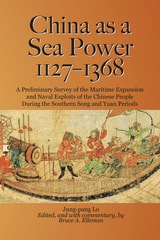
China as a Sea Power, 1127–1368
A Preliminary Survey of the Maritime Expansion and Naval Exploits of the Chinese People During the Southern Song and Yuan PeriodsLo Jung-pang
National University of Singapore Press, 2012
In the early 21st century, a strong and outward looking China is again building up its navy and seeking maritime dominance, with important implications for trade, diplomacy and naval affairs. Events will not necessarily follow the same course as in the past, but Lo Jung-pang's analysis suggests useful questions for the study of events as they unfold and decades to come.

China in Crisis, Volume 2
China's Policies in Asia and America's AlternativesEdited by Tang Tsou and Ping-ti Ho
University of Chicago Press, 1968
China in the World
Culture, Politics, and World VisionBan Wang
Duke University Press, 2022
China's Battler Poetry
Writing Like There's No TomorrowBy Maghiel van Crevel
University of Westminster Press, 2026
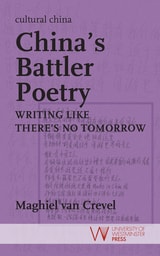
Three hundred million Chinese have left the countryside for the cities since the 1980s, in a flood wave of labor migration that has fueled China’s rise. Known as ‘battlers,’ they belong to a new underclass who face exploitation, discrimination, and harrowing insecurity. And they write poetry.
Battler poetry speaks of being ground down in the factory workshop, of being forced into sex work, of being robbed of your youth. It has made its way into mass media and labor activism, and developed uneasy relations with the literary establishment. It aligns with writing elsewhere in the world that shows the power of poetry as an expression of sociopolitical identity.
Who are China’s battler poets? Where do they find the time and energy, after a 12-hour shift on the assembly line or on a courier moped in big-city traffic? What is their poetry like? Where is it published? Who reads it? What happens when it travels abroad? How has the Chinese state responded? What can battler poetry tell us about the nexus of aesthetics and social experience, in a world where inequality reigns?
China’s Battler Poetry tells the gripping story of an ‘unlikely’ genre. Building on textual and cultural analysis, ethnographic fieldwork, and the collection of underground source material, it sits at the interface of the humanities and social science. It is driven by a desire to understand poetry as both art and social practice, looking at its words through the lifeworlds of its authors and the other way around.
China's Gentry
Essays on Rural-Urban RelationsHsiao-tung Fei
University of Chicago Press, 1980
"The chief interest and charm of this book lie in the fact that it is not directed to the Western reader; these were studies written in Chinese, by an erudite Chinese, for a Chinese public. . . . Mrs. Redfield is to be complimented for her own careful research in preparing this translation for a non-Chinese public."—Robert F. Spencer, American Anthropologist
China's Hidden Children
Abandonment, Adoption, and the Human Costs of the One-Child PolicyKay Ann Johnson
University of Chicago Press, 2016
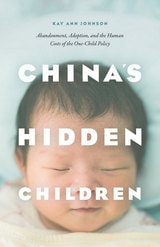
Johnson spent years talking with the Chinese parents driven to relinquish their daughters during the brutal birth-planning campaigns of the 1990s and early 2000s, and, with China’s Hidden Children, she paints a startlingly different picture. The decision to give up a daughter, she shows, is not a facile one, but one almost always fraught with grief and dictated by fear. Were it not for the constant threat of punishment for breaching the country’s stringent birth-planning policies, most Chinese parents would have raised their daughters despite the cultural preference for sons. With clear understanding and compassion for the families, Johnson describes their desperate efforts to conceal the birth of second or third daughters from the authorities. As the Chinese government cracked down on those caught concealing an out-of-plan child, strategies for surrendering children changed—from arranging adoptions or sending them to live with rural family to secret placement at carefully chosen doorsteps and, finally, abandonment in public places. In the twenty-first century, China’s so-called abandoned children have increasingly become “stolen” children, as declining fertility rates have left the dwindling number of children available for adoption more vulnerable to child trafficking. In addition, government seizures of locally—but illegally—adopted children and children hidden within their birth families mean that even legal adopters have unknowingly adopted children taken from parents and sent to orphanages.
The image of the “unwanted daughter” remains commonplace in Western conceptions of China. With China’s Hidden Children, Johnson reveals the complex web of love, secrecy, and pain woven in the coerced decision to give one’s child up for adoption and the profound negative impact China’s birth-planning campaigns have on Chinese families.
China's New Cultural Scene
A Handbook of ChangesClaire Huot
Duke University Press, 2000
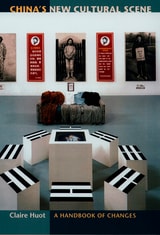
Western observers who were impressed by the bravery of the demonstrators in Tiananmen Square—and stunned at the harshness of their suppression—will learn from this book how that political movement led to changes in cultural conditions and production. Attending to all the major elements of this vast nation’s high and low culture at the end of a landmark decade, Huot’s discussion ranges from the cinematic works of Zhang Yimou, Chen Kaige, and others to emerging musical forms such as rock, punk, and rap. Other topics include television, theater, and avant-garde art, the new electronic media, and subversive trends in both literature and the visual arts.
With a comprehensive index of artists and works, as well as a glossary of Chinese words, China’s New Cultural Scene will enlighten students of Chinese culture and general readers interested in contemporary Asia.
China's Trial by Fire
The Shanghai War of 1932Donald A. Jordan
University of Michigan Press, 2001
Unlike other histories' brief generalizations of the incident, this study traces the war from the initial January 28th Japanese marine raid on Chinese Shanghai. It also studies the roles played by the prevailing Japanese leaders, including the last prewar civilian Prime Minister, Emperor Hirohito, and Admiral Nomura, who was later assigned to pre-Pearl Harbor negotiations.
Not least, the work bridges scholarly boundaries by highlighting the economics of China's leading trade metropolis, Shanghai; the desperate attempts of Chinese politicians and press to manipulate anti-imperialist and anti-Japanese propaganda; and the ways in which the failure of positional trench warfare against Japanese mechanized mobility provided lessons to German observers and the Communists.
Donald Jordan has drawn from as complete a range of primary sources as are available. Both the Nanking and Taipei archives, as well as resources from Tokyo, Settlement Shanghai's police records, Washington, the League of Nations, and London were researched.
Knowing how greatly the Nationalist defense in 1932 influenced the Chinese Communists expands the relevance for scholars of this illustrated study. Others, especially those curious about the U. S. entanglement leading to Pearl Harbor, will find much more than the story of a regional skirmish.
Donald Jordan is Professor of East Asian History, Ohio University.
China's Urban Transition
John Friedmann
University of Minnesota Press, 2005
China
Visions through the AgesEdited by Lisa C. Niziolek, Deborah A. Bekken and Gary M. Feinman
University of Chicago Press, 2018
China’s long history is one of the richest and most complex in the known world, and the Cyrus Tang Hall of China offers visitors a wonderful, comprehensive survey of it through some 350 artifacts on display, spanning from the Paleolithic period to present day. Now, with China: Visions through the Ages, anyone can experience the marvels of this exhibition through the book’s beautifully designed and detailed pages. Readers will gain deeper insight into The Field Museum’s important East Asian collections, the exhibition development process, and research on key aspects of China’s fascinating history. This companion book, edited by the exhibition’s own curatorial team, takes readers even deeper into the wonders of the Cyrus Tang Hall of China and enables them to study more closely the objects and themes featured in the show. Mirroring the exhibition’s layout of five galleries, the volume is divided into five sections. The first section focuses on the Paleolithic and Neolithic periods; the second, the Bronze Age, the first dynasties, and early writing; the third, the imperial system and power; the fourth, religion and performance; and the fifth, interregional trade and the Silk Routes. Each section also includes highlights containing brief stories on objects or themes in the hall, such as the famous Lanting Xu rubbing.
With chapters from a diverse set of international authors providing greater context and historical background, China: Visions through the Ages is a richly illustrated volume that allows visitors, curious readers, and China scholars alike a chance to have an enduring exchange with the objects featured in the exhibition and with their multifaceted histories.
Chinaman's Chance
The Chinese on the Rocky Mountain Mining FrontierLiping Zhu
University Press of Colorado, 2000
Thus, the Chinese portrayed all the stereotypical frontier roles-victors, victims, and villains. Their basic material needs were guaranteed, and many individuals were able to climb up the economic ladder. Frontier justice was used to settle disputes; Chinese-Americans frequently challenged white opponents in the various courts as well as in gun battles.
Interesting and provocative, A Chinaman's Chance not only offers general readers a narrative account of the Rocky Mountain mining frontier, but also introduces a fresh interpretation of the Chinese experience in nineteenth-century America to scholars interested in Asian American studies, immigration history, and ethnicity in the American West.
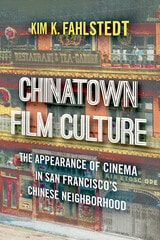
Chinatown Film Culture
The Appearance of Cinema in San Francisco’s Chinese NeighborhoodKim K. Fahlstedt
Rutgers University Press, 2020
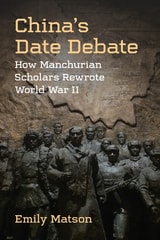
China’s Date Debate
How Manchurian Scholars Rewrote World War IIEmily Matson
University of Michigan Press, 2026
China’s Date Debate is an in-depth investigation of the Chinese Communist Party’s remapping of China’s World War II timeline from eight years (1937–1945) to fourteen years (1931–1945). Instead of the previously accepted starting date of the Marco Polo Bridge Incident on July 7, 1937, the Chinese Communist Party defined the war’s starting date as the Mukden Incident on September 18, 1931, which triggered the Japanese Kwantung Army’s invasion of Manchuria. Since the 1980s, scholars from Manchuria have demanded a fourteen-year war timeline to encompass the invasion of their homeland. By the 1990s, other scholars took notice and started to counter with claims that the eight-year timeline was the more accurate. Subsequently, a fierce “date debate” emerged between the two sides that was only resolved by the 2017 proclamation from the Ministry of Education.
Emily Matson demonstrates that the decision to set China’s World War II timeline at fourteen years was not merely a top-down decision, but was influenced by decades of Manchurian scholarship on the war. China’s Date Debate recenters Manchuria as a region of critical importance for China’s national identity today and the implications of this “date debate” on the Chinese Communist Party’s domestic legitimacy and international image.
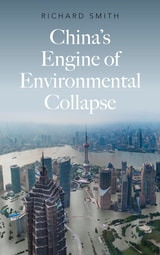
China’s Engine of Environmental Collapse
Richard Smith
Pluto Press, 2020
As the world hurtles towards environmental oblivion, China is leading the charge. The nation's CO2 emissions are more than twice those of the US with a GDP just two-thirds as large. China leads the world in renewable energy yet it is building new coal-fired power plants faster than renewables. The country's lakes, rivers, and farmlands are severely polluted yet China's police state can't suppress pollution, even from its own industries.
This is the first book to explain these contradictions. Richard Smith explains how the country's bureaucratic rulers are driven by nationalist-industrialist tendencies that are even more powerful than the drive for profit under 'normal' capitalism. In their race to overtake the US they must prioritise hyper-growth over the environment, even if this ends in climate collapse and eco-suicide.
Smith contends that nothing short of drastic shutdowns and the scaling back of polluting industries, especially in China and the US, will suffice to slash greenhouse gas emissions enough to prevent climate catastrophe.
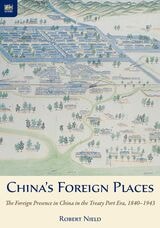
China’s Foreign Places
The Foreign Presence in China in the Treaty Port Era, 1840–1943Robert Nield
Hong Kong University Press, 2015

China’s Politics in Perspective
Harold S. Quigley
University of Minnesota Press, 1962
China's Politics in Perspective was first published in 1962. Minnesota Archive Editions uses digital technology to make long-unavailable books once again accessible, and are published unaltered from the original University of Minnesota Press editions.
In a concise, readable diagnosis of present-day China, this book provides the perspective which is needed for a realistic view of the Chinese situation today.
Professor Quigley introduces the reader to contemporary political, economic, and social conditions on the mainland and on Nationalist-held Taiwan by briefly reviewing the basic tenets of Confucianism and other classical philosophies, the principal aspects of the imperial system, and the domestic and foreign influences which contributed to the collapse of monarchy in 1911. He recalls the revolutionary doctrine of Sun Yat-sen and surveys the nature and conduct of government under the first and second republics and the forces that operated for and against the transfer of liberal ideals from paper to practice. After showing how the Communist leadership gained its foothold and present control, he discusses the ideologies of Mao Tse-tung and Chiang Kai-shek, the structure and administration of their governments and major parties, their economic, social, and foreign policies, the independence movement on Taiwan, the prospects for democracy and the dilemma in which the United States has been placed by the victory of the Communists over a wartime ally.
In addition to being appropriate for general readers and for study groups interested in contemporary affairs, the book is especially suitable for use as a college text.
China’s Revolutions and Intergenerational Relations
Martin K. Whyte, Editor
University of Michigan Press, 2003
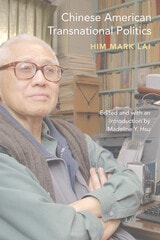
Chinese American Transnational Politics
Him Mark Lai, Edited and with an Introduction by Madeline Y. Hsu
University of Illinois Press, 2010
Born and raised in San Francisco, Lai was trained as an engineer but blazed a trail in the field of Asian American studies. Long before the field had any academic standing, he amassed an unparalleled body of source material on Chinese America and drew on his own transnational heritage and Chinese patriotism to explore the global Chinese experience.
In Chinese American Transnational Politics, Lai traces the shadowy history of Chinese leftism and the role of the Kuomintang of China in influencing affairs in America. With precision and insight, Lai penetrates the overly politicized portrayals of a history shaped by global alliances and enmities and the hard intolerance of the Cold War era. The result is a nuanced and singular account of how Chinese politics, migration to the United States, and Sino-U.S. relations were shaped by Chinese and Chinese American groups and organizations.
Lai revised and expanded his writings over more than thirty years as changing political climates allowed for greater acceptance of leftist activities and access to previously confidential documents. Drawing on Chinese- and English-language sources and echoing the strong loyalties and mobility of the activists and idealists he depicts, Lai delivers the most comprehensive treatment of Chinese transnational politics to date.
Chinese American Transnationalism
The Flow of People, ResourcesSucheng Chan
Temple University Press, 2005
Chinese Americans and the Politics of Race and Culture
Sucheng Chan
Temple University Press, 2008
Sucheng Chan introduces this valuable new anthology with a commanding discussion of the field of Chinese American studies, in which she examines its history and points the way ahead. Here she and Madeline Y. Hsu have brought together leading-edge scholarship from a new generation of thinkers, as useful for scholars as it is for undergraduate readers.
The contributors address a broad range of issues, from the activism of left-wing and Communist Chinese immigrants to the U.S. in the 1920s and early 1930s and humanitarian relief during the Sino-Japanese War to the construction of new Chinese regional identities in New York.
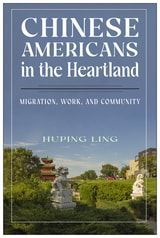
Chinese Americans in the Heartland
Migration, Work, and CommunityHuping Ling
Rutgers University Press, 2022
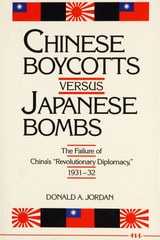
Chinese Boycotts versus Japanese Bombs
The Failure of China's "Revolutionary Diplomacy," 1931-32Donald A. Jordan
University of Michigan Press, 1991
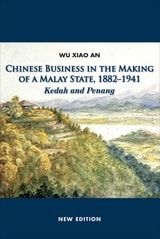
Chinese Business in the Making of a Malay State, 1882-1941
Kedah and PenangWu Xiao An
National University of Singapore Press, 2010
Using Penang and Kedah as a case study, Wu draws on archival sources, family histories and an examination of legal arrangements and the press to show that personal business and business networks were not bound by the territorial borders of traditional or modern states, but extended across much of Southeast Asia and into China. His demonstration of the complexity of interactions involving new migrants, sojourners and settlers, both Chinese and non-Chinese, challenges understandings of state formation and economic growth in colonial Malaya based on ethnic stereotypes and accounts of events limited by fixed political boundaries.
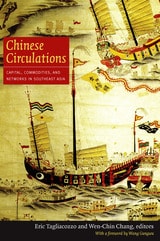
Chinese Circulations
Capital, Commodities, and Networks in Southeast AsiaEric Tagliacozzo and Wen-Chin Chang, eds.
Duke University Press, 2011
Contributors. Leonard Blussé, Wen-Chin Chang, Lucille Chia, Bien Chiang, Nola Cooke, Jean DeBernardi, C. Patterson Giersch, Takeshi Hamashita, Kwee Hui Kian, Li Tana, Lin Man-houng, Masuda Erika, Adam McKeown, Anthony Reid , Sun Laichen, Heather Sutherland, Eric Tagliacozzo, Carl A. Trocki, Wang Gungwu, Kevin Woods, Wu Xiao
Chinese Communist Materials at the Bureau of Investigation Archives, Taiwan
Peter Donovan, Carl E. Dorris, and Lawrence R. Sullivan
University of Michigan Press, 1976
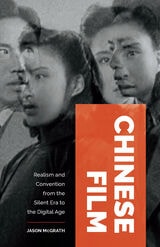
Chinese Film
Realism and Convention from the Silent Era to the Digital AgeJason McGrath
University of Minnesota Press, 2022
A tour de force chronicling the development of realism in Chinese cinema
The history of Chinese cinema is as long and complicated as the tumultuous history of China itself. Be it the silent, the Communist, or the contemporary, each Chinese cinematic era has necessitated its own form in conversation with broader trends in politics and culture.
In Chinese Film, Jason McGrath tells this fascinating story by tracing the varied claims to cinematic realism made by Chinese filmmakers, officials, critics, and scholars. Understanding realism as a historical dynamic that is both enabled and mitigated by aesthetic conventions of the day, he analyzes it across six different types of claims: ontological, perceptual, fictional, social, prescriptive, and apophatic.
Through this method, McGrath makes major claims not just about Chinese cinema but also about realism as an aesthetic form that negotiates between cultural conventions and the ever-evolving real. He comes to envision it as more than just a cinematic question, showing how the struggle for realism is central to the Chinese struggle for modernity itself.
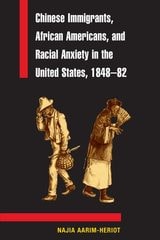
Chinese Immigrants, African Americans, and Racial Anxiety in the United States, 1848-82
Najia Aarim-Heriot
University of Illinois Press, 2003
The “Chinese question” and the “Negro problem” were bound up with one another in nineteenth-century America. Indeed, the negative stereotypes, exclusionary laws, and incendiary rhetoric employed against both populations bore striking similarities.
Najia Aarim-Heriot forcefully demonstrates that the anti-Chinese sentiment behind the passage of the Chinese Exclusion Act of 1882 is inseparable from the racial double standards applied by mainstream white society toward white and nonwhite groups during the same period. Aarim-Heriot argues that previous studies on American Sinophobia have overemphasized the resentment labor organizations felt toward incoming Chinese workers. As a result, scholars have overlooked the broader ways in which the growing nation sought to define and unify itself through the exclusion and oppression of nonwhite peoples.
A challenge to traditional approaches to Chinese American history, Chinese immigrants, African Americans, and Racial Anxiety in the United States, 1848–82 offers a holistic examination of American Sinophobia and the racialization of national immigration policies.
Chinese Marriages in Transition
From Patriarchy to New FamilismXiaoling Shu
Rutgers University Press, 2023
This book is freely available in an open access edition thanks to TOME (Toward an Open Monograph Ecosystem)— a collaboration of the Association of American Universities, the Association of University Presses, and the Association of Research Libraries—and the generous support of the University of California, Davis. Learn more at the TOME website, available at: openmonographs.org.
Download the open access book here.
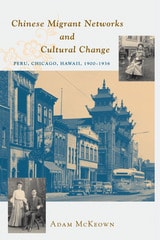
Chinese Migrant Networks and Cultural Change
Peru, Chicago, and Hawaii 1900-1936Adam McKeown
University of Chicago Press, 2001
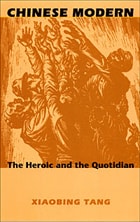
Chinese Modern
The Heroic and the QuotidianXiaobing Tang
Duke University Press, 2000
Tang uncovers crucial clues to modern Chinese literary and cultural practices through readings of Wu Jianren’s 1906 novel The Sea of Regret and works by canonical writers Lu Xun, Ding Ling, and Ba Jin. For the midcentury, he broadens his investigation by considering theatrical, cinematic, and visual materials in addition to literary texts. His reading of the 1963 play The Young Generation reveals the anxiety and terror underlying the exhilarating new socialist life portrayed on the stage. This play, enormously influential when it first appeared, illustrates the utopian vision of China’s lyrical age and its underlying discontents—both of which are critical for understanding late-twentieth-century China. Tang closes with an examination of post–Cultural Revolution nostalgia for the passion of the lyrical age.
Throughout Chinese Modern Tang suggests a historical and imaginative affinity between apparently separate literatures and cultures. He thus illuminates not only Chinese modernity but also the condition of modernity as a whole, particularly in light of the postmodern recognition that the market and commodity culture are both angel and devil.
This elegantly written volume will be invaluable to students of China, Asian studies, literary criticism, and cultural studies, as well as to readers who study modernity.
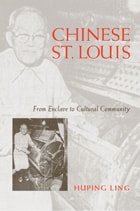
Chinese St Louis
From Enclave To Cultural CommunityHuping Ling
Temple University Press, 2004
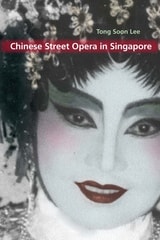
Chinese Street Opera in Singapore
Tong Soon Lee
University of Illinois Press, 2009
Since Singapore declared independence from Malaysia in 1965, Chinese street opera has played a significant role in defining Singaporean identity. Carefully tracing the history of amateur and professional performances in Singapore, Tong Soon Lee reflects on the role of street performance in fostering cultural nationalism and entrepreneurship. He explains that the government welcomes Chinese street opera performances because they combine tradition and modernism and promote a national culture that brings together Singapore's four main ethnic groups--Eurasian, Malay, Chinese, and South Asian.
Chinese Street Opera in Singapore documents the ways in which this politically motivated art form continues to be influenced and transformed by Singaporean politics, ideology, and context in the twenty-first century. By performing Chinese street opera, amateur troupes preserve their rich heritage, underscoring the Confucian mind-set that a learned person engages in the arts for moral and unselfish purposes. Educated performers also control behavior, emotions, and values. They are creative and innovative, and their use of new technologies indicates a modern, entrepreneurial spirit. Their performances bring together diverse ethnic groups to watch and perform, Lee argues, while also encouraging a national attitude focused on both remembering the past and preparing for the future in Singapore.
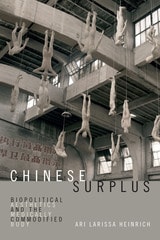
Chinese Surplus
Biopolitical Aesthetics and the Medically Commodified BodyAri Larissa Heinrich
Duke University Press, 2018
Chinese Theories of Theater and Performance from Confucius to the Present
Edited and Translated by Faye Chunfang Fei
University of Michigan Press, 2002
The writings collected here treat the origins, aesthetic principles, and functions of theater. Some are virtual manuals on playwriting and performance techniques; some describe the practices, conditions, and government policies concerning theatrical performance. Many of the selections forcefully dispute the myth that Chinese theater is valuable in performance but lacking in literature--the fact is that there is an equal, if not more prominent, emphasis on theme and content. What emerges from the writings in Chinese Theories of Theater and Performance from Confucius to the Present is a highly evolved and sophisticated aesthetic.
The texts are enhanced by Faye C. Fei's extensive introductions and annotative notes that provide essential background and contextual information. She has provided accurate and engagingly written translations of the texts, making the majority of them available in English for the first time. The anthology will appeal to teachers and students of theater and performance, artists interested in Chinese theater and arts, and scholars and historians of Asia. Literary critics, aestheticians, philosophers, and social scientists will also find the volume of interest, since Chinese conceptions of the theater and performance are closely connected to China's general outlook on the humanities.
Faye C. Fei is Assistant Professor of Dramatic Arts, Macalester College.
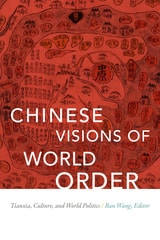
Chinese Visions of World Order
Tianxia, Culture, and World PoliticsBan Wang, editor
Duke University Press, 2017
Contributors. Daniel A. Bell, Chishen Chang, Kuan-Hsing Chen, Prasenjit Duara, Hsieh Mei-yu, Haiyan Lee, Mark Edward Lewis, Lin Chun, Viren Murthy, Lisa Rofel, Ban Wang, Wang Hui, Yiqun Zhou
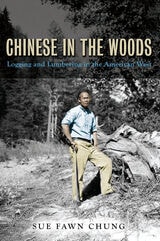
Chinese in the Woods
Logging and Lumbering in the American WestSue Fawn Chung
University of Illinois Press, 2015
Chino
Anti-Chinese Racism in Mexico, 1880-1940Jason Oliver Chang
University of Illinois Press, 2017
Chipped Stone Tools in Formative Oaxaca, Mexico
Their Procurement, Production and UseWilliam J. Parry
University of Michigan Press, 1987
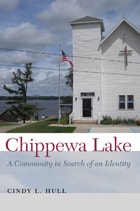
Chippewa Lake
A Community in Search of an IdentityCindy L. Hull
Michigan State University Press, 2012
Chippewa Lake is an idyllic waterfront community in north-central Michigan, popular with retirees and weekenders. The lake is surrounded by a rural farming community, but the area is facing a difficult transition as local demographics shift, and as it transforms from an agriculture-based economy to one that relies on wage labor. As farms have disappeared, local residents have employed a variety of strategies to adapt to a new economic structure. The community, meanwhile, has been indelibly affected by the advent of newcomers and retirees challenging the rural cultural values. An anthropologist with a background in sociology, Cindy L. Hull deftly weaves together oral accounts, historic documents, and participant surveys compiled from her nearly thirty years of living in the area to create a textured portrait of a community in flux.
Chippewa Treaty Rights
The Reserved Rights of Wisconsin's Chippewa Indians in Historical PerspectiveRonald Satz
University of Wisconsin Press, 1996
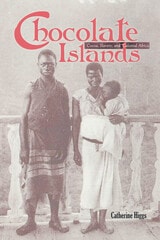
Chocolate Islands
Cocoa, Slavery, and Colonial AfricaCatherine Higgs
Ohio University Press, 2012
In Chocolate Islands: Cocoa, Slavery, and Colonial Africa, Catherine Higgs traces the early-twentieth-century journey of the Englishman Joseph Burtt to the Portuguese colony of São Tomé and Príncipe—the chocolate islands—through Angola and Mozambique, and finally to British Southern Africa. Burtt had been hired by the chocolate firm Cadbury Brothers Limited to determine if the cocoa it was buying from the islands had been harvested by slave laborers forcibly recruited from Angola, an allegation that became one of the grand scandals of the early colonial era. Burtt spent six months on São Tomé and Príncipe and a year in Angola. His five-month march across Angola in 1906 took him from innocence and credulity to outrage and activism and ultimately helped change labor recruiting practices in colonial Africa.
This beautifully written and engaging travel narrative draws on collections in Portugal, the United Kingdom, and Africa to explore British and Portuguese attitudes toward work, slavery, race, and imperialism. In a story still familiar a century after Burtt’s sojourn, Chocolate Islands reveals the idealism, naivety, and racism that shaped attitudes toward Africa, even among those who sought to improve the conditions of its workers.

Chocolate Islands
Cocoa, Slavery, and Colonial AfricaCatherine Higgs
Ohio University Press, 0
This beautifully written and engaging travel narrative draws on collections in Portugal, the United Kingdom, and Africa to explore British and Portuguese attitudes toward work, slavery, race, and imperialism. In a story still familiar a century after Burtt’s sojourn, Chocolate Islands reveals the idealism, naivety, and racism that shaped attitudes toward Africa, even among those who sought to improve the conditions of its workers.