Results by title
28167 books match the query 'History' and 1913 start with c
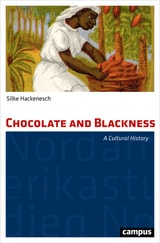
Chocolate and Blackness
A Cultural HistorySilke Hackenesch
Campus Verlag, 2017
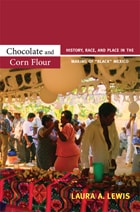
Chocolate and Corn Flour
History, Race, and Place in the Making of "Black" MexicoLaura A. Lewis
Duke University Press, 2012
Drawing on more than a decade of fieldwork, Lewis offers a richly detailed and subtle ethnography of the lives and stories of the people of San Nicolás, including community residents who have migrated to the United States. San Nicoladenses, she finds, have complex attitudes toward blackness—as a way of identifying themselves and as a racial and cultural category. They neither consider themselves part of an African diaspora nor deny their heritage. Rather, they acknowledge their hybridity and choose to identify most deeply with their community.
Chocolate on Trial
Slavery, Politics, and the Ethics of BusinessLowell J. Satre
Ohio University Press, 2005
Chocolate on Trial: Cadbury, Slavery and the Economics of Virtue in Imperial Britain gives a lively and highly readable account of the events surrounding the libel trial in which Cadbury Bros. Ltd. sued the London Standard, following the newspaper's accusation that the firm was hypocritical in its use of slave-grown cocoa. As compelling now as at the turn of the previous century, the issues probed by Lowell J. Satre give invaluable historical background to contemporary issues of business ethics, corporate social responsibility, and globalization. The story Satre tells illuminates what a stubbornly persistent institution slavery was and shows how Cadbury, a company with a well-regarded brand name and logo, endured ethical dilemmas and challenges to its record for social responsibility. Chocolate on Trial brings to life the age-old conflict between economic interests and the value of human life.
Satre illuminates the stubborn persistence of the institution of slavery and shows how Cadbury, a company with a well-regarded brand name from the nineteenth century, faced ethical dilemmas and challenges to its record for social responsibility. Chocolate on Trial brings to life the age-old conflict between economic interests and regard for the dignity of human life.
Chocolate, Strawberry, and Vanilla
A History Of American Ice CreamAnne Cooper Funderburg
University of Wisconsin Press, 1995
Chocolate, Strawberry, and Vanilla traces the evolution of ice cream from a rarity to an everyday indulgence. It covers the genesis of ice cream in America, the invention of the hand-cranked ice cream freezer, the natural ice industry, the beginnings of wholesale ice cream manufacturing, and the origins of the ice cream soda, sundae, cone, sandwich, and bar. It also recounts the histories of many brands, including Dairy Queen, Good Humor, Eskimo Pie, Ben and Jerry's, Baskin-Robbins, and Haagen-Dazs. This history of ice cream reflects and reveals changes in social customs, diet and nutrition, class distinctions, leisure activities, and everyday life.
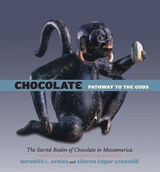
Chocolate
Pathway to the GodsMeredith L. Dreiss and Sharon Edgar Greenhill
University of Arizona Press, 2008
Although it didn’t receive its Western scientific name, Theobroma cacao—“food of the gods”—until the eighteenth century, the cacao tree has been at the center of Mesoamerican mythology for thousands of years. Not only did this “chocolate tree” produce the actual seeds from which chocolate was extracted but it was also symbolically endowed with cosmic powers that enabled a dialogue between humans and their gods. From the pre-Columbian images included in this sumptuous book, we are able to see for ourselves the importance of chocolate to the Maya, Aztecs, Olmecs, Mixtecs, and Zapotecs who grew, produced, traded, and fought over the prized substance.
Through archaeological and other ethnohistoric research, the authors of this fascinating book document the significance of chocolate—to gods, kings, and everyday people—over several millennia. The illustrations allow us to envision the many ancient uses of this magical elixir: in divination ceremonies, in human sacrifices, and even in ball games. And as mythological connections between cacao trees, primordial rainforests, and biodiversity are unveiled, our own quest for ecological balance is reignited. In demonstrating the extraordinary value of chocolate in Mesoamerica, the authors provide new reasons—if any are needed—to celebrate this wondrous concoction.

Choked
Life and Breath in the Age of Air PollutionBeth Gardiner
University of Chicago Press, 2019
Air pollution prematurely kills seven million people every year, including more than one hundred thousand Americans. It is strongly linked to strokes, heart attacks, many kinds of cancer, dementia, and premature birth, among other ailments. In Choked, Beth Gardiner travels the world to tell the story of this modern-day plague, taking readers from the halls of power in Washington and the diesel-fogged London streets she walks with her daughter to Poland’s coal heartland and India’s gasping capital. In a gripping narrative that’s alive with powerful voices and personalities, she exposes the political decisions and economic forces that have kept so many of us breathing dirty air. This is a moving, up-close look at the human toll, where we meet the scientists who have transformed our understanding of pollution’s effects on the body and the ordinary people fighting for a cleaner future.
In the United States, air is far cleaner than it once was. But progress has failed to keep up with the science, which tells us that even today’s lower pollution levels are doing real damage. And as the Trump administration rips up the regulations that have brought us where we are, decades of gains are now at risk. Elsewhere, the problem is far worse, and choking nations like China are scrambling to replicate the achievements of an American agency—the EPA—that until recently was the envy of the world.
Clean air feels like a birthright. But it can disappear in a puff of smoke if the rules that protect it are unraveled. At home and around the world, it’s never been more important to understand how progress happened and what dangers might still be in store. Choked shows us that we hold the power to build a cleaner, healthier future: one in which breathing, life’s most basic function, no longer carries a hidden danger.
Chomsky's Challenge to American Power
A Guide for the Critical ReaderAnthony F. Greco
Vanderbilt University Press, 2013
Chomsky is as controversial as he is influential. Admirers see him as a courageous teller of unpleasant truths about political power and those who wield it in the United States. Critics view him as a propagandist and ideologue who sees only black and white where there are multiple shades of gray. While Chomsky's fans tend to view him uncritically, his critics often don't take him seriously. Unlike any previous work, this book takes Chomsky seriously while treating him critically. The author gives Chomsky credit for valuable contributions to our understanding of the contemporary political world, but spares no criticism of the serious deficiencies he sees in Chomsky's political analyses.
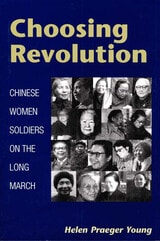
Choosing Revolution
Chinese Women Soldiers on the Long MarchHelen Praeger Young
University of Illinois Press, 2001
Enormously rich in detail, Young's Choosing Revolution reveals the complex interplay between women's experiences and the official, almost mythic version of the Long March. In addition to their riveting stories of the march itself, Young's subjects reveal much about what it meant in China to grow up female and, in many cases, poor during the first decades of the twentieth century. In speaking about the work they did and how they adapted to the demands of being a soldier, these women--both educated individuals who were well-known leaders and illiterate peasants--reveal the Long March as only one of many segments of the revolutionary paths they chose.
Against a background of diverse perspectives on the Long March, Young presents the experiences of four women in detail: one who brought her infant daughter with her on the Long March, one who gave birth during the march, one who was a child participant, and one who attended medical school during the march. Young also includes the stories of three women who did not finish the Long March. Her unique record of ordinary women in revolutionary circumstances reveals the tenacity and resilience that led these individuals far beyond the limits of most Chinese women's lives.
Choosing to Lead
Understanding Congressional Foreign Policy EntrepreneursRalph G. Carter and James M. Scott
Duke University Press, 2009
Carter and Scott combine extensive quantitative analysis, interviews with members of Congress and their staff, and case studies of key foreign policy entrepreneurs, including Frank Church, William Fulbright, Jesse Helms, Edward Kennedy, Pat McCarran, and Curt Weldon. Drawing on their empirical data, the authors identify the key variables in foreign policy entrepreneurship, including membership in the Senate or House, seniority and committee assignments, majority or minority party status, choice of foreign policy issues, and the means used to influence policy. By illuminating the roles and impact of individual members of Congress, Carter and Scott contribute to a more nuanced understanding of the broader U.S. foreign policy-making process.
Chop Suey and Sushi from Sea to Shining Sea
Chinese and Japanese Restaurants in the United StatesBruce Makoto Arnold
University of Arkansas Press, 2018
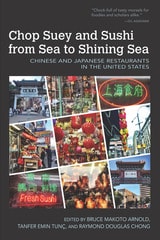
The essays in Chop Suey and Sushi from Sea to Shining Sea fill gaps in the existing food studies by revealing and contextualizing the hidden, local histories of Chinese and Japanese restaurants in the United States.
The writer of these essays show how the taste and presentation of Chinese and Japanese dishes have evolved in sweat and hardship over generations of immigrants who became restaurant owners, chefs, and laborers in the small towns and large cities of America. These vivid, detailed, and sometimes emotional portrayals reveal the survival strategies deployed in Asian restaurant kitchens over the past 150 years and the impact these restaurants have had on the culture, politics, and foodways of the United States.
Some of these authors are family members of restaurant owners or chefs, writing with a passion and richness that can only come from personal investment, while others are academic writers who have painstakingly mined decades of archival data to reconstruct the past. Still others offer a fresh look at the amazing continuity and domination of the “evil Chinaman” stereotype in the “foreign” world of American Chinatown restaurants. The essays include insights from a variety of disciplines, including history, sociology, anthropology, ethnography, economics, phenomenology, journalism, food studies, and film and literary criticism.
Chop Suey and Sushi from Sea to Shining Sea not only complements the existing scholarship and exposes the work that still needs to be done in this field, but also underscores the unique and innovative approaches that can be taken in the field of American food studies.
Choreographing Mexico
Festive Performances and Dancing Histories of a NationManuel R. Cuellar
University of Texas Press, 2022
2023 de la Torre Bueno® First Book Award, Dance Studies Association
The impact of folkloric dance and performance on Mexican cultural politics and national identity.
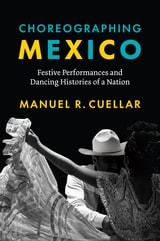
The years between 1910 and 1940 were formative for Mexico, with the ouster of Porfirio Díaz, the subsequent revolution, and the creation of the new state. Amid the upheaval, Mexican dance emerged as a key arena of contestation regarding what it meant to be Mexican. Through an analysis of written, photographic, choreographic, and cinematographic renderings of a festive Mexico, Choreographing Mexico examines how bodies in motion both performed and critiqued the nation.
Manuel Cuellar details the integration of Indigenous and regional dance styles into centennial celebrations, civic festivals, and popular films. Much of the time, this was a top-down affair, with cultural elites seeking to legitimate a hegemonic national character by incorporating traces of indigeneity. Yet dancers also used their moving bodies to challenge the official image of a Mexico full of manly vigor and free from racial and ethnic divisions. At home and abroad, dancers made nuanced articulations of female, Indigenous, Black, and even queer renditions of the nation. Cuellar reminds us of the ongoing political significance of movement and embodied experience, as folklórico maintains an important and still-contested place in Mexican and Mexican American identity today.
Choreographing the Folk
The Dance Stagings of Zora Neale HurstonAnthea Kraut
University of Minnesota Press, 2008
Recovers an important dimension of the work of the renowned African American artist
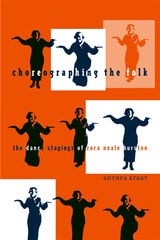
While Zora Neale Hurston and her 1937 novel Their Eyes Were Watching God have become widely celebrated, she was also a prolific stage director and choreographer. In the 1930s Hurston produced theatrical concerts that depicted a day in the life of a railroad work camp in Florida and featured a rousing Bahamian Fire Dance as the dramatic finale. In Choreographing the Folk, Anthea Kraut traces the significance and influence of Hurston’s little-known choreographic work.
Hurston’s concerts were concrete illustrations of the “real Negro art theatre” she was eager to establish, and they compellingly demonstrate how she used the arena of performance to advance a nuanced understanding of the black diaspora. Her version of the Fire Dance was staged in a variety of venues during the 1930s. In its multiple representations, Kraut asserts, the dance raised critical issues about ownership, artistry, and authenticity. Choreographing the Folk argues for the significance of Hurston’s choreography, and with perceptiveness, sensitivity, and originality, Kraut illuminates the important and often-contested place of black folk dance in American culture.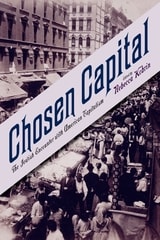
Chosen Capital
The Jewish Encounter with American CapitalismKobrin, Rebecca
Rutgers University Press, 2012
Surveying such diverse topics as Jews’ participation in the real estate industry, the liquor industry, and the scrap metal industry, as well as Jewish political groups and unions bent on reforming American capital, such as the American Labor Party and the International Ladies’ Garment Workers’ Union, contributors to this volume provide a new prism through which to view the Jewish encounter with America. The volume also lays bare how American capitalism reshaped Judaism itself by encouraging the mass manufacturing and distribution of foods like matzah and the transformation of synagogue cantors into recording stars. These essays force us to rethink not only the role Jews played in American economic development but also how capitalism has shaped Jewish life and Judaism over the course of the twentieth century.
Contributors:
Marni Davis, Georgia State University
Phyllis Dillon, independent documentary producer, textile conservator, museum curator
Andrew Dolkart, Columbia University
Andrew Godley, Henley Business School, University of Reading
Jonathan Karp, executive director, American Jewish Historical Society
Daniel Katz, Empire State College, State University of New York
Ira Katznelson, Columbia University
David S. Koffman, New York University
Eli Lederhendler, Hebrew University, Jerusalem
Jonathan Z. S. Pollack, University of Wisconsin—Madison
Jonathan D. Sarma, Brandeis University
Jeffrey Shandler, Rutgers University
Daniel Soyer, Fordham University
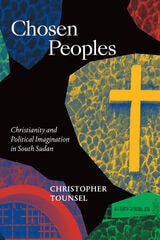
Chosen Peoples
Christianity and Political Imagination in South SudanChristopher Tounsel
Duke University Press, 2021
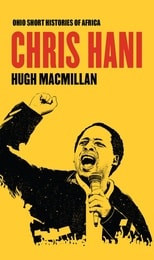
Chris Hani
Hugh Macmillan
Ohio University Press, 2021

Christ and Spirituality in St. Thomas Aquinas
Jean-Pierre Torrell
Catholic University of America Press, 2011
Christian America and the Kingdom of God
Richard T. Hughes
University of Illinois Press, 2012
Christian America and the Kingdom of God
White Christian Nationalism from the Puritans through January 6, 2021Richard T. Hughes and Christina Littlefield
University of Illinois Press, 2025
A timely new edition of the acclaimed work, Christian America and the Kingdom of God spotlights how the centuries-long pursuit of a Christian America has bred an aggressive white Christian nationalism that twists faith, unleashes unchristian behavior, and threatens the nation.
Christian Circulations
Global Christianity and the Local Church in Penang and Singapore, 1819-2000Jean DeBernardi
National University of Singapore Press, 2020
Christian Converts and Social Protests in Meiji Japan
Irwin Scheiner
University of Michigan Press, 2002
Christian Demonology and Popular Mythology
Éva Pócs
Central European University Press, 2006
Christian Humanism in Shakespeare
A Study in Religion and LiteratureLee Oser
Catholic University of America Press, 2022
Christian Instruction; Admonition and Grace; The Christian Combat; Faith, Hope and Charity
Saint Augustine
Catholic University of America Press, 1950

Christian Internationalism and German Belonging
The Salvation Army from Imperial Germany to NazismRebecca Carter-Chand
University of Wisconsin Press, 2025
In this groundbreaking reevaluation, Rebecca Carter-Chand argues that the Salvation Army was able to emphasize different aspects of its identity to bolster and repair its reputation as needed in varied political contexts, highlighting the variability of Nazi practices of inclusion and exclusion. In that way, the organization was similar to other Christian groups in Germany. Counter to common hypotheses that minority religious groups are more likely to show empathy to other minorities, dynamics within Nazi Germany reveal that many religious minorities sought acceptance from the state in an effort to secure self-preservation.
Christian Metaphysics and Neoplatonism
Albert Camus, Translated & Intro by Ronald D. Srigley
University of Missouri Press, 2007
Contemporary scholarship tends to view Albert Camus as a modern, but he himself was conscious of the past and called the transition from Hellenism to Christianity “the true and only turning point in history.” For Camus, modernity was not fully comprehensible without an examination of the aspirations that were first articulated in antiquity and that later received their clearest expression in Christianity. These aspirations amounted to a fundamental reorientation of human life in politics, religion, science, and philosophy.
Understanding the nature and achievement of that reorientation became the central task of Christian Metaphysics and Neoplatonism. Primarily known through its inclusion in a French omnibus edition, ithas remained one of Camus’ least-read works, yet it marks his first attempt to understand the relationship between Greek philosophy and Christianity as he charted the movement from the Gospels through Gnosticism and Plotinus to what he calls Augustine’s “second revelation” of the Christian faith.
Ronald Srigley’s translation of this seminal document helps illuminate these aspects of Camus’ work. His freestanding English edition exposes readers to an important part of Camus’ thought that is often overlooked by those concerned primarily with the book’s literary value and supersedes the extant McBride translation by retaining a greater degree of literalness.
Srigley has fully annotated Christian Metaphysics to include nearly all of Camus’ original citations and has tracked down many poorly identified sources. When Camus cites an ancient primary source, whether in French translation or in the original language, Srigley substitutes a standard English translation in the interest of making his edition accessible to a wider range of readers. His introduction places the text in the context of Camus’ better-known later work, explicating its relationship to those mature writings and exploring how its themes were reworked in subsequent books.
Arguing that Camus was one of the great critics of modernity through his attempt to disentangle the Greeks from the Christians, Srigley clearly demonstrates the place of Christian Metaphysics in Camus’ oeuvre. As the only stand-alone English version of this important work—and a long-overdue critical edition—his fluent translation is an essential benchmark in our understanding of Camus and his place in modern thought.
Christian Networks in the Ottoman Empire
A Transnational HistoryYura Konstantinova
Central European University Press, 2024
Observers and historians continue to marvel at the diversity and complexity of the Ottoman Empire. This book explores the significant and multifaceted role that Orthodox Christian networks played in the sultan’s realm from the 17th century until WWI. These multi-ethnic, multi-lingual, and multi-confessional formations contributed fundamentally to the political, economic, social, and cultural development of the Empire as well as to its gradual disintegration.
Bringing together scholars from most Balkan countries, Christian Networks in the Ottoman Empire describes the variety of Orthodox Christian networks under Ottoman rule. The examples examined include commercial relations, intellectual networks, educational systems, religious dynamics, consular activities, and revolutionary movements, and involve Muslims and Christians, Romanians and Serbs, Bulgarians and Greeks, Albanians and Turks. The contributions show that the Christian populations and their elites were an integral part of Ottoman society.
The geographical spread of the formal and informal networks enriches our understanding of the terms ‘center’ and ‘periphery.’ They were either centered within the official Ottoman borders and extended their activities to other states and empires, or vice versa, located elsewhere, but also active in the Ottoman Empire. A common feature of these formations is their constant fluctuation, which enables a dynamic understanding of Ottoman history.
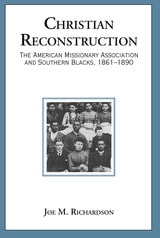
Christian Reconstruction
The American Missionary Association and Southern Blacks, 1861-1890Joe M. Richardson
University of Alabama Press, 2008
"Joe Richardson's Christian Reconstruction is a solid addition to historical scholarship on the work of Yankee missionaries among the freedmen during the Civil War and Reconstruction. . . . Without question, this is the most comprehensive history of the American Missionary Association (AMA), and no one has uncovered as much detailed information on any other Northern aid society. Rich in detail and strongly recommended, the book argues that the AMA struggled to prepare the liberated slaves for civil and political equality by freeing them of the shackles of ignorance, superstition and sin.This book ought to be read by all those interested in Northern educational and social reformers in the Reconstruction South."
--The Journal of American History
"In an extraordinarily balanced study Richardson has synthesized a wealth of sources and research to produce a thoroughly convincing interpretation of the AMA and southern blacks. Besides exploring relations between the two, his main objective has been to assess the AMA's effectiveness in bringing blacks into the American mainstream. Because of his successful labors, we now have a much-needed comprehensive study of that most influential missionary organization. Whether addressing conflicts between the AMA and the US military over the treatment of contrabands, charges of racism among black and white missionaries, or the quality of association colleges, Richardson does not allow his obvious admiration for the AMA to interfere. . . . With bold logic and considerable subtlety Richardson has made an impressive contribution.
--The Journal of Southern History
Christian Wolff
Michael Hicks and Christian Asplund
University of Illinois Press, 2012
Christianity and Education in Modern China
Edited by Man Kong Wong and George Kam Wah Mak
Hong Kong University Press, 2025
In Christianity and Education in Modern China, the contributors demonstrate how Christianity served as a driving force in the development of modern education in China. Each essay offers new insights into Christian influence on education in modern China while examining how Christian missionaries and Chinese Christian educators interacted with China's social, cultural, and political contexts. They also explore how the legacies of Christian higher education affected higher education in mainland China, Taiwan, and Asia at large. On the whole, this volume compares the Western missionary and Chinese Christian perspectives with rich historiographical acumen by offering original case studies to examine Christianity’s impact on education in modern China.
Christianity and European Culture (Selections from the Work of Christopher Dawson)
Christopher Dawson
Catholic University of America Press, 1998
Christianity and Modernity in Eastern Europe
Bruce R. Berglund
Central European University Press, 2010
Christianity and Philosophical Culture in the Fifth Century
The controversy about the Human Soul in the WestErnest Fortin
St. Augustine's Press, 2019
Christianity and Public Culture in Africa
Harri Englund
Ohio University Press, 2011
Christianity and Public Culture in Africa takes readers beyond familiar images of religious politicians and populations steeped in spirituality. It shows how critical reason and Christian convictions have combined in surprising ways as African Christians confront issues such as national constitutions, gender relations, and the continuing struggle with HIV/AIDS.
The wide-ranging essays included here explore rural Africa and the continent’s major cities, colonial and missionary legacies, and mass media images in the twenty-first century. They also reveal the diversity of Pentecostalism in Africa and highlight the region’s remarkable denominational diversity. Scholars and students alike will find these essays timely and impressive.
The contributors demonstrate how the public significance of Christianity varies across time and place. They explore rural Africa and the continent’s major cities, and colonial and missionary situations, as well as mass-mediated ideas and images in the twenty-first century. They also reveal the plurality of Pentecostalism in Africa and keep in view the continent’s continuing denominational diversity. Studentsand scholars will find these topical studies to be impressive in scope.
Contributors: Barbara M. Cooper, Harri Englund, Marja Hinfelaar, Nicholas Kamau-Goro, Birgit Meyer, Michael Perry Kweku Okyerefo, Damaris Parsitau, Ruth Prince, James A. Pritchett, Ilana van Wyk
Christianity and Race in the American South
A HistoryPaul Harvey
University of Chicago Press, 2016
Harvey chronicles the diversity and complexity in the intertwined histories of race and religion in the South, dating back to the first days of European settlement. He presents a history rife with strange alliances, unlikely parallels, and far too many tragedies, along the way illustrating that ideas about the role of churches in the South were critically shaped by conflicts over slavery and race that defined southern life more broadly. Race, violence, religion, and southern identity remain a volatile brew, and this book is the persuasive historical examination that is essential to making sense of it.
Christianity, Social Tolerance, and Homosexuality
Gay People in Western Europe from the Beginning of the Christian Era to the Fourteenth CenturyJohn Boswell
University of Chicago Press, 1981
John Boswell's National Book Award-winning study of the history of attitudes toward homosexuality in the early Christian West was a groundbreaking work that challenged preconceptions about the Church's past relationship to its gay members—among them priests, bishops, and even saints—when it was first published twenty-five years ago. The historical breadth of Boswell's research (from the Greeks to Aquinas) and the variety of sources consulted make this one of the most extensive treatments of any single aspect of Western social history. Christianity, Social Tolerance, and Homosexuality, still fiercely relevant today, helped form the disciplines of gay and gender studies, and it continues to illuminate the origins and operations of intolerance as a social force.
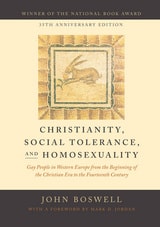
Christianity, Social Tolerance, and Homosexuality
Gay People in Western Europe from the Beginning of the Christian Era to the Fourteenth CenturyJohn Boswell
University of Chicago Press, 2015
John Boswell’s National Book Award–winning study of the history of attitudes toward homosexuality in the early Christian West was a groundbreaking work that challenged preconceptions about the Church’s past relationship to its gay members—among them priests, bishops, and even saints—when it was first published in 1980. The historical breadth of Boswell’s research (from the Greeks to Aquinas) and the variety of sources consulted make this one of the most extensive treatments of any single aspect of Western social history.
This edition offers a new foreword by leading queer and religious studies scholar Mark D. Jordan that reminds current readers, scholars, and students that Christianity, Social Tolerance, and Homosexuality is still fiercely relevant. This landmark book helped form the disciplines of gay and gender studies, and it continues to illuminate the origins and operations of intolerance as a social force.
Christians and Muslims in Early Islamic Egypt
Lajos Berkes, Editor
University of Michigan Press, 2022
This volume collects studies exploring the relationship of Christians and Muslims in everyday life in Early Islamic Egypt (642–10th c.) focusing mainly, but not exclusively on administrative and social history. The contributions concentrate on the papyrological documentation preserved in Greek, Coptic, and Arabic. By doing so, this book transcends traditional disciplinary boundaries and offers results based on a holistic view of the documentary material. The articles of this volume discuss various aspects of change and continuity from Byzantine to Islamic Egypt and offer also the (re)edition of 23 papyrus documents in Greek, Coptic, and Arabic. The authors provide a showcase of recent papyrological research on this under-studied, but dynamically evolving field.
After an introduction by the editor of the volume that outlines the most important trends and developments of the period, the first two essays shed light on Egypt as part of the Caliphate. The following six articles, the bulk of the volume, deal with the interaction and involvement of the Egyptian population with the new Muslim administrative apparatus. The last three studies of the volume focus on naming practices and language change.
Christina Rossetti and Illustration
A Publishing HistoryLorraine Janzen Kooistra
Ohio University Press, 2002
Readers do not always take into account how books that combine image and text make their meanings. But for the Pre-Raphaelite poet Christina Rossetti, such considerations were central.
Christina Rossetti and Illustration maps the production and reception of Rossetti’s illustrated poetry, devotional prose, and work for children, both in the author’s lifetime and in posthumous twentieth-century reprints.
Lorraine Janzen Kooistra’s reading of Rossetti’s illustrated works reveals for the first time the visual-verbal aesthetic that was fundamental to Rossetti’s poetics. Her exhaustive archival research brings to light new information on how Rossetti’s commitment to illustration and attitudes to copyright and control influenced her transactions with publishers and the books they produced. Janzen Kooistra also tracks the poet’s reception in the twentieth century through a complex web of illustrated books produced for a wide range of audiences.
Analyzing an impressive array of empirical data, Janzen Kooistra shows how Rossetti’s packaging for commodity consumption—by religious presses, publishers of academic editions and children’s picture books, and makers of erotica and collectibles—influenced the reception of her work and her place in literary history.
Christmas in Nevada
Patricia D. Cafferata
University of Nevada Press, 2014
• Includes a story from each of the state’s seventeen counties
• Illustrated with 57 historic photographs, many previously unpublished
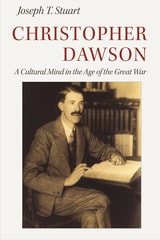
Christopher Dawson
A Cultural Mind in the Age of the Great WarJoseph T. Stuart
Catholic University of America Press, 2022
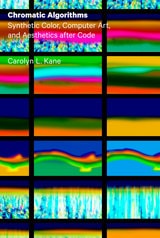
Chromatic Algorithms
Synthetic Color, Computer Art, and Aesthetics after CodeCarolyn L. Kane
University of Chicago Press, 2014
Chromatic Algorithms reveals the fascinating history behind digital color, tracing it from the work of a few brilliant computer scientists and experimentally minded artists in the late 1960s and early ‘70s through to its appearance in commercial software in the early 1990s. Mixing philosophy of technology, aesthetics, and media analysis, Carolyn Kane shows how revolutionary the earliest computer-generated colors were—built with the massive postwar number-crunching machines, these first examples of “computer art” were so fantastic that artists and computer scientists regarded them as psychedelic, even revolutionary, harbingers of a better future for humans and machines. But, Kane shows, the explosive growth of personal computing and its accompanying need for off-the-shelf software led to standardization and the gradual closing of the experimental field in which computer artists had thrived.
Even so, the gap between the bright, bold presence of color onscreen and the increasing abstraction of its underlying code continues to lure artists and designers from a wide range of fields, and Kane draws on their work to pose fascinating questions about the relationships among art, code, science, and media in the twenty-first century.
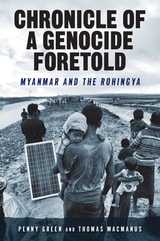
Chronicle of a Genocide Foretold
Myanmar and the RohingyaPenny Green
Rutgers University Press, 2027
Chronicle of a Genocide Foretold is a powerful account of one of the most devastating human crises of the 21st century. Drawing on firsthand research conducted in Burma (Myanmar) and neighboring countries, the book uncovers how the Rohingya Muslims have been systematically isolated, impoverished, and targeted in a state-led genocidal campaign. Through more than 150 interviews with survivors, local officials, religious leaders, and international actors, the authors reveal how discrimination, mass displacement, and organized brutality have created conditions that meet the legal, criminological, and moral definition of genocide. The book also challenges the silence and complicity of the international community. Accessible and grounded in rigorous research, this book speaks to scholars, activists, policymakers, and anyone concerned with justice, human rights, and the global failure to prevent genocide.
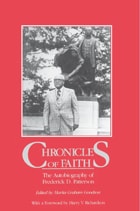
Chronicles Of Faith
The Autobiography of Frederick D. PattersonFrederick D. Patterson, edited by Martia Graham Goodson
University of Alabama Press, 1991
From Tuskegee to the United Negro College Fund, one man's legacy changed American education.
Chronicles of Faith: The Autobiography of Frederick D. Patterson, edited by Martia Graham Goodson, presents the remarkable life story of one of the most influential educators and institutional leaders in twentieth-century America. Based on Patterson's personal recollections, the autobiography traces his journey from a childhood marked by adversity to a distinguished career as a veterinarian, educator, college president, and visionary advocate for higher education.
Best known as president of Tuskegee Institute and founder of the United Negro College Fund, Patterson played a pivotal role in expanding educational opportunities for African Americans during an era of segregation and limited resources. The narrative chronicles his leadership in strengthening historically Black colleges and universities, promoting professional education, and developing innovative fundraising models that transformed the future of Black higher education.
Interwoven with accounts of personal determination, faith, and public service, the book offers valuable insight into the challenges and achievements that shaped American educational history. Patterson's story is both an inspiring autobiography and an important historical document, revealing the vision and perseverance required to create lasting institutional change. Essential for understanding the evolution of higher education in the United States, this volume will be especially valuable to students, scholars, educators, historians, and readers interested in African American leadership, HBCUs, philanthropy, and social progress.
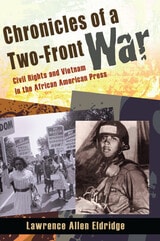
Chronicles of a Two-Front War
Civil Rights and Vietnam in the African American PressLawrence Allen Eldridge
University of Missouri Press, 2011
Eldridge reveals how the black press not only reported the war but also weighed its significance in the context of the civil rights movement.
Eldridge examines not only the role of reporters during the war, but also those of editors, commentators, and cartoonists. Especially enlightening is the research drawn from extensive oral histories by prominent journalist Ethel Payne, the first African American woman to receive the title of war correspondent. She described a widespread practice in black papers of reworking material from major white papers without providing proper credit, as the demand for news swamped the small budgets and limited staffs of African American papers. The author analyzes both the strengths of the black print media and the weaknesses in their coverage.
The black press ultimately viewed the Vietnam War through the lens of African American experience, blaming the war for crippling LBJ’s Great Society and the War on Poverty. Despite its waning hopes for an improved life, the black press soldiered on.

Chronologies in Old World Archaeology
Third EditionEdited by Robert W. Ehrich
University of Chicago Press, 1992
Chuco Punk
Sonic Insurgency in El PasoTara López
University of Texas Press, 2024
2025 Al Lowman Memorial Prize, Texas State Historical Association
An immersive study of the influential and predominantly Chicanx punk rock scene in El Paso, Texas.
Punk rock is known for its daring subversion, and so is the West Texas city of El Paso. In Chuco Punk, Tara López dives into the rebellious sonic history of the city, drawing on more than seventy interviews with punks, as well as unarchived flyers, photos, and other punk memorabilia. Connecting the scene to El Paso's own history as a borderland, a site of segregation, and a city with a long lineage of cultural and musical resistance, López throws readers into the heat of backyard punx shows, the chaos of riots in derelict mechanic shops, and the thrill of skateboarding on the roofs of local middle schools. She reveals how, in this predominantly Chicanx punk rock scene, women forged their own space, sound, and community. Covering the first roots of Chuco punk in the late 1970s through the early 2000s, López moves beyond the breakout bands to shed light on how the scene influenced not only the contours of sound and El Paso but the entire topography of punk rock.
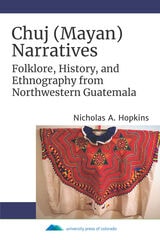
Chuj (Mayan) Narratives
Folklore, History, and Ethnography from Northwestern GuatemalaNicholas A. Hopkins
University Press of Colorado, 2020
The book illustrates the broad range of stories people tell each other, from mythological and legendary topics to procedural discussions and stories borrowed from European and African societies. Hopkins provides context for the narratives by introducing the reader to Chuj culture and history, conveying important events as described by indigenous participants. These events include customs and practices related to salt production as well as the beginnings of the disastrous civil war of the last century, which resulted in the destruction of several villages from which the narratives in this study originated. Hopkins also provides an analytical framework for the strategies of the storytellers and presents the narratives with Chuj text and English translation side-by-side.
Chuj (Mayan) Narratives analyzes the strategies of storytelling in an innovative framework applicable to other corpora and includes sufficient grammatical information to function as an introduction to the Chuj language. The stories illustrate the persistence of Classic Maya themes in contemporary folk literature, making the book significant to Mesoamericanists and Mayanists and an essential resource for students and scholars of Maya linguistics and literary traditions, storytelling, and folklore.

Church Courts and the People in Seventeenth-Century England
Ecclesiastical Justice in Peril at Winchester, Worcester and WellsAndrew Thomson
University College London, 2022
Religion meant far more in early modern England than church on Sundays, a baptism, a funeral, or a wedding ceremony. The Church was fully enmeshed in the everyday lives of the people, their morals, and religious observance. It imposed comprehensive regulations on its flock focused on such issues as sex before marriage, adultery, and receiving the sacrament, and it employed an army of informers and bureaucrats, headed by a diocesan chancellor, to enable its courts to enforce the rules. Church courts lay, thus, at the very intersection of Church and people. This book offers a detailed survey of three dioceses across the whole of the century, examining key aspects such as attendance at court, completion of business, and, crucially, the scale of guilt to test the performance of the courts. For students and researchers of the seventeenth century, it provides a full account of court operations, measuring the extent of control, challenging orthodoxies about ex-communication, penance, and juries, contextualizing ecclesiastical justice within major societal issues of the times, and, ultimately, presents powerful evidence for a “church in danger” by the end of the century.
Church History in an Age of Uncertainty
Historiographical Patterns in the United States, 1906 - 1990Henry Warner Bowden
Southern Illinois University Press, 1991
Essential to Catholic, Protestant, and even secular scholars of American religious history this is the first historiographical analysis of the work of Henry K. Rowe, James H. Nichols, Leonard J. Trinterud, H. Shelton Smith, John T. McNeill, Herbert W. Schneider, Robert T. Handy, John T. Ellis, and Jaroslav Pelikan.
Aware that every generation rewrites history, Bowden bases his investigation of major twentieth-century church historians on two questions: Why are young historians dissatisfied with earlier treatments? What leads them to believe their version is better?
Henry Warner Bowden’s extensive bibliography includes A Century of Church History: The Legacy of Philip Schaff.
Church Mother
The Writings of a Protestant Reformer in Sixteenth-Century GermanyKatharina Schütz Zell
University of Chicago Press, 2006
Though a commoner, Schütz Zell participated actively in public life and wrote prolifically, including letters of consolation, devotional writings, biblical meditations, catechetical instructions, a sermon, and lengthy polemical exchanges with male theologians. The complete translations of her extant publications, except for her longest, are collected here in Church Mother, offering modern readers a rare opportunity to understand the important work of women in the formation of the early Protestant church.