Results by title
8812 books match the query 'Political Science' and 698 start with c
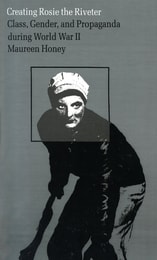
Creating Rosie the Riveter
Class, Gender, and Propaganda during World War IIMaureen Honey
University of Massachusetts Press, 1984
Creating Worlds Otherwise
Art, Collective Action, and (Post)ExtractivismPaula Serafini
Vanderbilt University Press, 2022
Extractivism has increasingly become the ground on which activists and scholars in Latin America frame the dynamics of ecological devastation, accumulation of wealth, and erosion of rights. These maladies are the direct consequences of long-standing extraction-oriented economies, and more recently from the expansion of the extractive frontier and the implementation of new technologies in the extraction of fossil fuels, mining, and agriculture. But the fields of sociology, political ecology, anthropology, and geography have largely ignored the role of art and cultural practices in studies of extractivism and post-extractivism.
The field of art theory, on the other hand, has offered a number of texts that put forward insightful analyses of artwork addressing extraction, environmental devastation, and the climate crisis. However, an art theory perspective that does not engage firsthand and in depth with collective action remains limited and fails to provide an account of the role, processes, and politics of art in anti- and post-extractivist movements.
Creating Worlds Otherwise examines the narratives that subaltern groups generate around extractivism, and how they develop, communicate, and mobilize these narratives through art and cultural practices. It reports on a six-year project on creative resistance to extractivism in Argentina and builds on long-term engagement working on environmental justice projects and campaigns in Argentina and the UK.
It is an innovative contribution to the fields of Latin American studies, political ecology, cultural studies, and art theory, and addresses pressing questions regarding what post-extractivist worlds might look like as well as how such visions are put into practice.
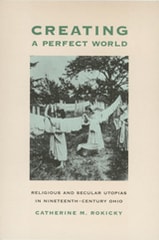
Creating a Perfect World
Religious and Secular Utopias in Nineteenth-Century OhioCatherine M. Rokicky
Ohio University Press, 2002
Powerful currents of religious revival and political and social reform swept nineteenth-century America. Many people expressed their radical religious and social ideals by creating or joining self-contained utopian communities. These utopianists challenged the existing social and economic order with alternative notions about religion, marriage, family, sexuality, property ownership, and wage labor.
Between 1787 and 1919, approximately 270 utopian communities existed in the United States. Due to its unique location on the young nation’s frontier, the state of Ohio was the site of much of this activity.
Creating a Perfect World examines Ohio’s utopian movements, both religious and secular. These include the United Society of Believers in Christ’s Second Coming, or Shakers; the Society of Separatists at Zoar; the Mormons, who stopped in the state for several years on their way west; and several societies based on the philosophies of European social reformers Robert Owen and Charles Fourier.
In this detailed account of a unique and fascinating chapter in Ohio’s history, Catherine M. Rokicky profiles these communities and explores their ideals, how and why they were established, their leaders, and their members’ reasons for joining and sometimes leaving. She also examines the roles men and women played, their approaches to communal living and community property, their economic activities, their relations with surrounding communities and the state, and the various reasons for their success or failure.
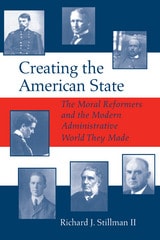
Creating the American State
The Moral Reformers and the Modern Administrative World They MadeRichard Stillman
University of Alabama Press, 1998
In this illuminating and provocative study, Stillman provides a new understanding of the foundation of the American state.
Whether renewing a driver's license, traveling on an airplane, or just watching in fascination as a robot probes Mars, we all participate in the everyday workings of the modern administrative state. As Stillman demonstrates in this study, however, we have not, until now, fully investigated or appreciated this administrative stateÕs origins or its evolution into the entity that so affects our lives today.
Stillman reveals that this modern enterprise emerged from a complex foundation of ideas and ideals rather than as a result of a simple, rational plan or cataclysmic event, as previously contended. In fact, he finds that the basis for our current administrative state lies in the lives of the seven individuals who, during the late 19th and early 20th centuries, invented its various elements.
Stillman also finds that although they lived at different times, these seven founders-George William Curtis, Charles Francis Adams, Jr., Emory Upton, Jane Addams, Frederick W. Taylor, Richard Childs, and Louis Brownlow-had much in common: all were products of intensely Protestant, small-town America, and all were motivated by strong moral idealism. Indeed, Stillman finds that state making in the United States has been a continuation of the Protestant goal to "protest and purify."
Some names are more recognizable than others, but all, through remarkable moral fervor and exceptional leadership skills, invented the administrative practices and procedures so familiar today.
Creating the Hudson River Park
Environmental and Community Activism, Politics, and GreedTom Fox
Rutgers University Press, 2024
The 4-mile-long, 550-acre Hudson River Park is nearing completion and is the largest park built in Manhattan since Central Park opened more than 150 years ago. It has transformed a derelict waterfront, protected the Hudson River estuary, preserved commercial maritime activities, created new recreational opportunities for millions of New Yorkers, enhanced tourism, stimulated redevelopment in adjacent neighborhoods, and set a precedent for waterfront redevelopment. The Park attracts seventeen million visitors annually. Creating the Hudson River Park is a first-person story of how this park came to be. Working together over three decades, community groups, civic and environmental organizations, labor, the real estate and business community, government agencies, and elected officials won a historic victory for environmental preservation, the use and enjoyment of the Hudson River, and urban redevelopment. However, the park is also the embodiment of a troubling trend toward the commercialization of America’s public parks.
After the defeat of the $2.4 billion Westway plan to fill 234 acres of the Hudson in 1985, the stage was set for the revitalization of Manhattan’s West Side waterfront. Between 1986 and 1998 the process focused on the basics like designing an appropriate roadway, removing noncompliant municipal and commercial activities from the waterfront, implementing temporary improvements, developing the Park’s first revenue-producing commercial area at Chelsea Piers, completing the public planning and environmental review processes, and negotiating the 1998 Hudson River Park Act that officially created the Park. From 1999 to 2009 planning and construction were funded with public money and focused on creating active and passive recreation opportunities on the Tribeca, Greenwich Village, Chelsea, and Hell’s Kitchen waterfronts.
However, initial recommendations to secure long term financial support for the Park from the increase in adjacent real estate values that resulted from the Park’s creation were ignored. City and state politicians had other priorities and public funding for the Park dwindled. The recent phase of the project, from 2010 to 2021, focused on “development” both in and adjacent to the Park. Changes in leadership, and new challenges provide an opportunity to return to a transparent public planning process and complete the redevelopment of the waterfront for the remainder of the 21st-century. Fox’s first-person perspective helps to document the history of the Hudson River Park, recognizes those who made it happen and those who made it difficult, and provides lessons that may help private citizens and public servants expand and protect the public parks and natural systems that are so critical to urban well-being.
Creating the Land of Lincoln
The History and Constitutions of Illinois, 1778-1870Frank Cicero Jr.
University of Illinois Press, 2018

Creating the Witness
Documenting Genocide on Film, Video, and the InternetLeshu Torchin
University of Minnesota Press, 2012
Since the beginning of the conflict in 2003, more than 300,000 lives have been lost in Darfur. Players of the video game Darfur Is Dying learn this sobering fact and more as they work to ensure the survival of a virtual refugee camp. The video game not only puts players in the position of a struggling refugee, it shows them how they can take action in the real world.
Creating the Witness examines the role of film and the Internet in creating virtual witnesses to genocide over the last one hundred years. The book asks, how do visual media work to produce witnesses—audiences who are drawn into action? The argument is a detailed critique of the notion that there is a seamless trajectory from observing an atrocity to acting in order to intervene. According to Leshu Torchin, it is not enough to have a camera; images of genocide require an ideological framework to reinforce the messages the images are meant to convey. Torchin presents wide-ranging examples of witnessing and genocide, including the Armenian genocide, the Holocaust (engaging film as witness in the context of the Nuremburg trials), and the international human rights organization WITNESS and its sustained efforts to use video to publicize human rights advocacy and compel action.
From a historical and comparative approach, Torchin’s broad survey of media and the social practices around it investigates the development of popular understandings of genocide to achieve recognition and response—both political and judicial—ultimately calling on viewers to act on behalf of human rights.

Creative Dissent
Alternative Cultures during SocialismKatalin Cseh-Varga
Central European University Press, 2027
Creative Dissent argues that the region was teeming with alternative cultures: emerging practices and expressions that actively challenged the dominant social code and reshaped the reality of the people’s democracies.
The book explores how ordinary people, intellectuals, and cultural players across socialist Europe responded to state repression and comprehensive control with ingenuity and defiance. By examining how these dissenting voices circumvented or even penetrated official spaces, this collection illuminates the complex heterogeneity of life behind the Iron Curtain.
Structured around four key areas—communities, markets, media, and spaces—this work offers a necessary, nuanced understanding of cultural resistance and the limits of authoritarian control.
Creative Politics
Taxes and Public Goods in a Federal SystemGlenn Beamer
University of Michigan Press, 2000

Creative Spaces
Urban Culture and Marginality in Latin AmericaEdited by Niall Geraghty and Adriana Laura Massidda
University of London Press, 2019
Cries of Crisis
Rethinking the Health Care DebateRobert B. Hackey
University of Nevada Press, 2015
In Cries of Crisis, Robert B. Hackey analyzes media coverage, political speeches, films, and television shows to demonstrate the role that language and symbolism have played in framing the health care debate, shaping policy making, and influencing public perceptions of problems in the health care system. He demonstrates that the idea of crisis now means so many different things to so many different groups that it has ceased to have any shared meaning at all. He argues that the ceaseless talk of “crisis,” without a commonly accepted definition of that term, has actually impeded efforts to diagnose and treat the chronic problems plaguing the American health care system. Instead, he contends, reformers must embrace a new rhetorical strategy that links proposals to improve the system with deeply held American values like equality and fairness.

Crime and Justice, Volume 15
Modern PolicingEdited by Michael Tonry and Norval Morris
University of Chicago Press Journals, 1993
Crime and Justice, Volume 20
An Annual Review of ResearchEdited by Michael Tonry
University of Chicago Press Journals, 1996
Crime and Justice, Volume 24
Youth ViolenceEdited by Michael Tonry and Mark H. Moore
University of Chicago Press Journals, 1998
Featuring articles by leading American and European scholars from many fields, Youth Violence provides a reliable, up-to-date, authoritative and comprehensive overview of policy issues and research developments concerning crime and violence among the young.
Crime and Justice, Volume 25
An Annual Review of ResearchEdited by Michael Tonry
University of Chicago Press Journals, 1999
Crime and Justice, Volume 9
Prediction and Classification in Criminal Justice Decision MakingEdited by Don M. Gottfredson and Michael Tonry
University of Chicago Press Journals, 1988
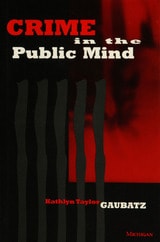
Crime in the Public Mind
Kathlyn Taylor Gaubatz
University of Michigan Press, 1995
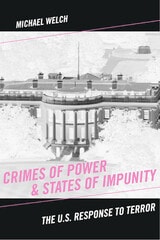
Crimes of Power & States of Impunity
The U.S. Response to TerrorWelch, Michael
Rutgers University Press, 2009
Welch continues the work he began in Scapegoats of September 11th and argues that current U.S. policies, many enacted after the attacks, undermine basic human rights and violate domestic and international law. He recounts these offenses and analyzes the system that sanctions them, offering fresh insight into the complex relationship between power and state crime. Welch critically examines the unlawful enemy combatant designation, Guantanamo Bay, recent torture cases, and collateral damage relating to the war in Iraq. This book transcends important legal arguments as Welch strives for a broader sociological interpretation of what transpired early this century, analyzing the abuses of power that jeopardize our safety and security.
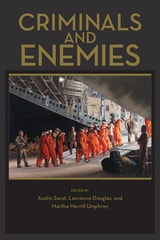
Criminals and Enemies
Austin Sarat
University of Massachusetts Press, 2019
The editors' introduction situates criminals and enemies in a theoretical context, focusing on the work of Thomas Hobbes and Carl Schmitt, while other essays consider topics ranging from Germany's denazification project to South Africa's pre- and post-apartheid legal regime to the complicating factors introduced by the war on terror. In addition to the editors, the contributors include Stephen Clingman, Jennifer Daskal, Sara Kendall, Devin Pendas, and Annette Weinke.
Criminology and Public Policy
Putting Theory to WorkHugh Barlow
Temple University Press, 2009
In applying theories to real world issues—such as reducing crime and violence, prisoner reentry policies, gang behavior, and treatment courts—the contributors take both a macro and micro level approach. They find, too, that it is often difficult to turn theory into practice. Still, the very attempt pushes the criminal justice system toward workable solutions rather than ideological approaches, an orientation the editors believe will lead to greater progress in combating one of our society’s greatest difficulties.
Contributors include: Robert Agnew, Ronald L. Akers, Gordon Bazemore, Ronald V. Clarke, J. Heith Copes, Frank Cullen, Marcus Felson, Marie Griffin, Scott Jacques, David Kauzlarich, Jean McGloin, Steven Messner, Alex Piquero, Nicole Leeper Piquero, Nancy Rodriguez, Richard B. Rosenfeld, Dawn Rothe, Andrea Schoepfer, Neal Shover, Cassia Spohn, Katherine Tellis, Charles Tittle, Richard Wright, and the editors.
Criminology and Public Policy
Putting Theory to WorkScott H. Decker and Kevin A. Wright
Temple University Press, 2018
In the field of criminal justice, public policy is designed to address the problems brought on by criminal behavior and the response to that behavior. However, too often, the theories carefully developed in the academy fail to make their way into programs and policy. The editors and contributors to this second edition of Criminology and Public Policy highlight the recent development of “translational criminology” to address the growing movement in criminology to use the results of criminological research and theory to better inform policy and practice.
The essays in Criminology and Public Policy propose an in-depth look at both theory and practice and how they are integrated across a number of key criminal justice problems—from racial and environmental concerns to gun control and recidivism rates as well as police use of force and mass incarceration. The end result is an essential volume that blends both theory and practice in an effort to address the critical problems in explaining, preventing, responding to, and correcting criminal behavior.
Contributors include: Robert K. Ax, Michelle N. Block, Anthony A. Braga, Rod K. Brunson, Jennifer Carlson, Ronald V. Clarke, Shea Cronin, Megan Denver, Kevin M. Drakulich, Grant Duwe, Amy Farrell, Cheryl Jonson, Charis E. Kubrin, Justin Kurland, Megan Kurlychek, Shannon Magnuson, Daniel P. Mears, Robert D. Morgan, Kathleen Powell, Danielle Rudes, Cassia Spohn, Cody Telep, Natalie Todak, Glenn Trager, Jillian J. Turanovic, Sara Wakefield, Patricia Warren, David Weisburd, Michael D. White, Rob White, Lauren Wilson and the editors
Crippled Justice
The History of Modern Disability Policy in the WorkplaceRuth O'Brien
University of Chicago Press, 2001
O'Brien shows how the remnants of postwar cultural values bogged down the rights-oriented policy in the 1970s and how they continue to permeate judicial interpretations of provisions under the Americans with Disabilities Act. In effect, O'Brien argues, these decisions have created a lose/lose situation for the very people the act was meant to protect. Covering developments up to the present, Crippled Justice is an eye-opening story of government officials and influential experts, and how our legislative and judicial institutions have responded to them.
Crisis Bargaining and the State
The Domestic Politics of International ConflictSusan Peterson
University of Michigan Press, 1996
Peterson offers a comprehensive analysis of the domestic politics of crisis bargaining. She uses differences in state structure to explain variations in foreign policy processes and outcomes. By introducing domestic structure as a crucial intervening variable between the international environment and a state's foreign policy during an acute conflict, Peterson shows how existing cognitive and bureaucratic approaches provide complementary, not competing, explanations of crisis bargaining.
Crisis Bargaining and the State: The Domestic Politics of International Conflict applies recent research in the field of international political economy on the relationship between ideas, institutions, and the international environment to the issue of crisis bargaining. It will appeal to students, scholars, and policymakers interested in crisis bargaining, international security, and international relations.
Susan Peterson is Assistant Professor, Department of Government, The College of William & Mary.
Crisis Vision
Race and the Cultural Production of SurveillanceTom Monahan
Duke University Press, 2022

Crisis in Korea
America, China and the Risk of WarTim Beal
Pluto Press, 2011
The South Korean warship Cheonan was sunk in mysterious circumstances on 26 March 2010. The remarkable events that followed are analysed by Tim Beal and woven into a larger study of the increasingly volatile relations between North and South Korea and US concern about the rise of China.
South Korea's stance towards the North has hardened significantly since the new conservative government came to power. Beal argues that the South moved quickly to use the sinking of the Cheonan to put international pressure on the North, even before the cause of the sinking had been established. The US followed suit by attempting to pressurise China into condemning North Korea. The media reports at the time presented an open and shut case of unprovoked North Korean aggression, but the evidence points towards the accidental triggering of a South Korean mine as the cause and South Korean fabrication to incriminate the North.
With the South bent on forcing the fall of the North's regime with US help and China unlikely to stand idly by, this book offers an essential guide to the key factors behind the crisis and possible solutions.
Crisis of Conscience
Arkansas Methodists and the Civil Rights StruggleJames T. Clemons
Butler Center for Arkansas Studies, 2007
Crisis of the House Divided
An Interpretation of the Issues in the Lincoln-Douglas Debates, 50th Anniversary EditionHarry V. Jaffa
University of Chicago Press, 2009
The definitive account of the Lincoln-Douglas debates and their importance to American history
A lasting classic, Crisis of the House Divided offers an unparalleled account of the Lincoln-Douglas debates. Harry Jaffa provides the definitive analysis of the political principles that guided Lincoln from his reentry into politics in 1854 through his Senate campaign against Douglas in 1858.
Critical Dialogues of Urban Governance, Development and Activism
London and TorontoEdited by Susannah Bunce, Nicola Livingstone, Loren March, Susan Moore, and Alan Walks
University College London, 2020
Critical Geopolitics
The Politics of Writing Global SpaceGearoid O'Tuathail
University of Minnesota Press, 1996
Critical Perspectives in International Studies
Frank P. Harvey and Michael Brecher, Editors
University of Michigan Press, 2002
Critical Theories of the State
Marxist, Neomarxist, PostmarxistClyde W. Barrow
University of Wisconsin Press, 1993
Critical Theories of the State is a clear and accessible survey of radical perspectives on the modern state. By focusing on Marxist theory and its variations, particularly as applied to advanced industrial societies and contemporary welfare states, Clyde W. Barrow provides a more extensive and thorough treatment than is available in any other work.
Barrow divides the methodological assumptions and key hypotheses of Marxist, Neo-Marxist, and Post-Marxist theories into five distinct approaches: instrumentalist, structuralist, derivationist, systems-analytic, and organizational realist. He categorizes the many theorists discussed in the book, including such thinkers as Elmer Altvater, G. William Domhoff, Fred Block, Claus Offe, and Theda Skocpol according to their concepts of the state’s relationship to capital and their methodological approach to the state. Based on this survey, Barrow elaborates a compelling typology of radical state theories that identifies with remarkable clarity crucial points of overlap and divergence among the various theories.
Scholars conducting research within the rubric of state theory, political development, and policy history will find Critical Theories of the State an immensely valuable review of the literature. Moreover, Barrow’s work will make an excellent textbook for undergraduate and graduate courses in political science and sociology, and can also be used by those teaching theory courses in international relations, history, and political economy.
Critical Theory and Authoritarian Populism
Jeremiah Morelock
University of Westminster Press, 2018
Critique of Exotica
Music, Politics and the Culture IndustryJohn Hutnyk
Pluto Press, 2000
Critique of Freedom
The Central Problem of ModernityOtfried Höffe
University of Chicago Press, 2020
Neither rejecting nor defending freedom and modernity, he instead explores both from a Kantian point of view, looking closely at the facets of freedom’s role and the fundamental position it has taken at the heart of modern life. Expanding beyond traditional philosophy, Critique of Freedom develops the building blocks of a critical theory of technology, environmental protection, economics, politics, medicine, and education. With a sophisticated yet straightforward style, Höffe draws on a range of disciplines in order to clearly distinguish and appreciate the many meanings of freedom and the indispensable role they play in liberal society.
Cross-Border Commemorations
Celebrating Swedish Settlement in AmericaAdam Hjorthén
University of Massachusetts Press, 2018
Focusing on two celebrations of Swedish settlement in America—the 1938 New Sweden Tercentenary and the 1948 Swedish Pioneer Centennial—Hjorthén examines a wide variety of sources to demonstrate how cultural leaders, politicians, and businessmen used these events to promote international relations between the United States and Sweden during times of great geopolitical transformation. Cross-Border Commemorations argues that scholarship on public commemoration should expand beyond national borders and engage the shared and contested meanings of history across local, national, and transnational contexts.
Cross-Cultural Exchange and the Colonial Imaginary
Global Encounters via Southeast AsiaEdited by H. Hazel Hahn
National University of Singapore Press, 2019
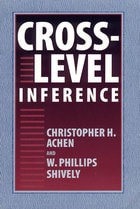
Cross-Level Inference
Christopher H. Achen and W. Phillips Shively
University of Chicago Press, 1995
Experts in statistical analysis of aggregate data, Christopher H. Achen and W. Philips Shively contend that cross-level inference makes unusually strong demands on substantive knowledge, so that no one method, such as Goodman's ecological regression, will fit all situations. Criticizing Goodman's model and some recent attempts to replace it, the authors argue for a range of alternate techniques, including estensions of cross-tabular, regression analysis, and unobservable variable estimators.
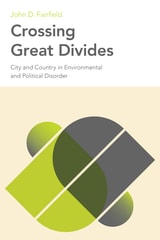
Crossing Great Divides
City and Country in Environmental and Political DisorderJohn D. Fairfield
Temple University Press, 2024
Conventional urban environmental reform has made modern city life possible, but it has done little to limit the despoliation of distant places. Nevertheless, the successes of urban environmental reform remind us of what is possible.
John Fairfield concludes with a case study of Phoenix, Arizona to demonstrate this dysfunctional relationship between city and country while developing a sympathetic critique of the Green New Deal. He suggests how we might bridge the “great divide” as we face the daunting challenges the twenty-first century is pressing upon us.
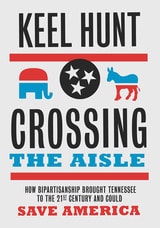
Crossing the Aisle
How Bipartisanship Brought Tennessee to the Twenty-First Century and Could Save AmericaKeel Hunt
Vanderbilt University Press, 2018
The Tennessee story, as the Pulitzer Prize–winning author Jon Meacham observes in his foreword to this book, offers striking examples of bipartisan cooperation on many policy fronts—and a mode of governing that provides lessons for America in this frustrating era of partisan stalemate.
For more on Crossing the Aisle and author Keel Hunt, visit KeelHunt.com.
Crossing the Aisle
How Bipartisanship Brought Tennessee to the Twenty-First Century and Could Save AmericaKeel Hunt
Vanderbilt University Press, 2018
The Tennessee story, as the Pulitzer Prize–winning author Jon Meacham observes in his foreword to this book, offers striking examples of bipartisan cooperation on many policy fronts—and a mode of governing that provides lessons for America in this frustrating era of partisan stalemate.
For more on Crossing the Aisle and author Keel Hunt, visit KeelHunt.com.
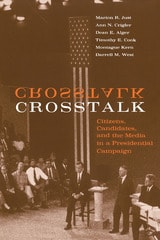
Crosstalk
Citizens, Candidates, and the Media in a Presidential CampaignMarion R. Just, Ann N. Crigler, Dean E. Alger, Timothy E. Cook, Montague Kern, a
University of Chicago Press, 1996
Examining political advertisements, news coverage, ad watches, and talk shows in Los Angeles, Boston, Winston-Salem, and Fargo/Moorhead, the authors chart the impact of different information environments on citizens and show how people developed images of candidates over the course of the campaign. Crosstalk presents persuasive evidence that campaigns do matter, that citizens are active participants in the campaign process, and their perceptions of a candidate's character is the central factor in the voting process.
This innovative study contributes significantly to our understanding of the 1992 presidential campaign and of campaigns in general, and shows how election campaigns can play an important role in the long-term vitality of democracy.
Crucible For Survival
Environmental Security and Justice in the Indian Ocean RegionDoyle, Timothy
Rutgers University Press, 2008
Cruelty as Citizenship
How Migrant Suffering Sustains White DemocracyCristina Beltrán
University of Minnesota Press, 2020
Why are immigrants from Mexico and Latin America such an affectively charged population for political conservatives?
More than a decade before the election of Donald Trump, vitriolic and dehumanizing rhetoric against migrants was already part of the national conversation. Situating the contemporary debate on immigration within America’s history of indigenous dispossession, chattel slavery, the Mexican-American War, and Jim Crow, Cristina Beltrán reveals white supremacy to be white democracy—a participatory practice of racial violence, domination, and exclusion that gave white citizens the right to both wield and exceed the law. Still, Beltrán sees cause for hope in growing movements for migrant and racial justice.
Forerunners is a thought-in-process series of breakthrough digital works. Written between fresh ideas and finished books, Forerunners draws on scholarly work initiated in notable blogs, social media, conference plenaries, journal articles, and the synergy of academic exchange. This is gray literature publishing: where intense thinking, change, and speculation take place in scholarship.
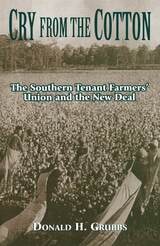
Cry from the Cotton
The Southern Tenant Farmers' Union and the New DealDonald Grubbs
University of Arkansas Press, 2000
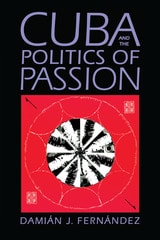
Cuba and the Politics of Passion
By Damián J. Fernández
University of Texas Press, 2000
Cuban politics has long been remarkable for its passionate intensity, and yet few scholars have explored the effect of emotions on political attitudes and action in Cuba or elsewhere. This book thus offers an important new approach by bringing feelings back into the study of politics and showing how the politics of passion and affection have interacted to shape Cuban history throughout the twentieth century.
Damián Fernández characterizes the politics of passion as the pursuit of a moral absolute for the nation as a whole. While such a pursuit rallied the Cuban people around charismatic leaders such as Fidel Castro, Fernández finds that it also set the stage for disaffection and disconnection when the grand goal never fully materialized. At the same time, he reveals how the politics of affection-taking care of family and friends outside the formal structures of government-has paradoxically both undermined state regimes and helped them remain in power by creating an informal survival network that provides what the state cannot or will not.
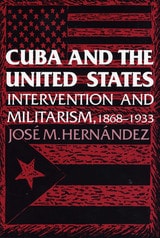
Cuba and the United States
Intervention and Militarism, 1868-1933By Jose M. Hernández
University of Texas Press, 1993
When Cuba threw off the yoke of Spanish rule at the end of the nineteenth century, it did so with the help of another foreign power, the United States. Thereafter, the United States became involved in Cuban affairs, intervening twice militarily (1898-1902 and 1906-1909). What was the effect of U.S. intervention?
Conventional wisdom indicates that U.S. intervention hindered the rise of militarism in Cuba in the early years of statehood. This pathfinding study, however, takes just the opposite view. Jose M. Hernández argues that while U.S. influence may have checked the worst excesses of the Independence-war veterans who assumed control of Cuba's government, it did not completely deter them from resorting to violence. Thus, a tradition of using violence as a method for transferring power developed in Cuba that often made a mockery of democratic processes.
In substantiating this innovative interpretation, Hernández covers a crucial phase in Cuban history that has been neglected by most recent U.S. historians. Correcting stereotypes and myths, he takes a fresh and dispassionate look at Cuba's often romanticized struggle for political emancipation, describing and analyzing in persuasive detail civilmilitary relations throughout the period. This puts national hero Jose Martí's role in the 1895-1898 war of independence in an unusual perspective and sets in bold relief the historical forces that went underground in 1898-1902, only to resurface a few years later.
This study will be of interest to all students of hemispheric relations. It presents not only a more accurate picture of the Cuba spawned by American intervention, but also the Cuban side of a story that too frequently has been told solely from the U.S. point of view.
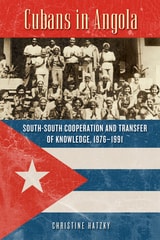
Cubans in Angola
South-South Cooperation and Transfer of Knowledge, 1976–1991Christine Hatzky
University of Wisconsin Press, 2015
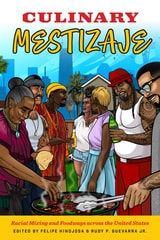
Culinary Mestizaje
Racial Mixing and Foodways across the United StatesEdited by Felipe Hinojosa and Rudy P. Guevarra Jr.
University of Texas Press, 2025
2026 Gold Medal for the Victor Villaseñor Best Latino Focused Nonfiction Book Award – English, Conference on Latin American History (CLAH)
How cross-racial and ethnic communities have created new culinary traditions and food cultures in the United States.
Culinary Mestizaje is about food, cooking, and community, but it’s also about how immigrant labor and racial mixing are transforming established US food cultures from Hawai’i to the coast of Maine, South Philadelphia to the Pacific Northwest. This collection of essays asks what it means that Chamorro cooking is now considered a regional specialty of the Bay Area, and that a fusion like brisket tacos registers as “native” to Houston, while pupusas are the pride of Atlanta.
Combining community scholarly insights, cooking tips, and recipes, the pieces assembled here are interested in how the blending of culinary traditions enables marginalized people to thrive in places fraught with racial tension, anti-immigrant sentiment, and the threat of gentrification. Chefs and entrepreneurs matter in these stories, but so do dishwashers, farm laborers, and immigrants doing the best they can with the ingredients they have. Their best, it turns out, is often delicious and creative, sparking culinary evolutions while maintaining ancestral connections. The result is that cooking under the weight of colonial rule and white supremacy has, in revealing ways, created American food.
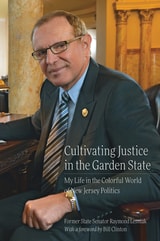
Cultivating Justice in the Garden State
My Life in the Colorful World of New Jersey PoliticsRaymond Lesniak
Rutgers University Press, 2022
He recounts the many causes he championed in his forty years as a state legislator, from the landmark Environmental Cleanup Responsibility Act to bills concerning animal protections, marriage equality, women’s reproductive rights, and the abolition of the death penalty. He also delves into his experiences on the national stage as a key advisor for Bill Clinton and Al Gore’s presidential campaigns. With refreshing candor, Lesniak describes both his greatest achievements and his moments of failure, including his unsuccessful 2017 gubernatorial run.
Cultivating Justice in the Garden State is both a gripping American success story and a must-read for anyone seeking to understand the inner workings of our political system. It offers an insider’s perspective on the past fifty years of New Jersey politics, while presenting a compelling message about what leaders and citizens can do to improve the state’s future.