Results by title
18293 books match the query 'United States' and 1260 start with c

Coming Out Republican
A History of the Gay RightNeil J. Young
University of Chicago Press, 2024
One of the most maligned, misunderstood, and even mocked constituencies in American politics, gay Republicans regularly face condemnation from both the LGBTQ+ community and their own political party. Yet they’ve been active and influential for decades. Gay conservatives were instrumental, for example, in ending “Don’t Ask, Don’t Tell” and securing the legalization of same-sex marriage—but they also helped lay the groundwork for the rise of Donald Trump.
In Coming Out Republican, political historian and commentator Neil J. Young provides the first comprehensive history of the gay Right. From the 1950s up to the present day, Young excavates the multifarious origins, motivations, and evolutions of LGBTQ+ people who found their way to the institutions and networks of modern conservatism. Many on the gay Right have championed conservative values—like free markets, a strong national defense, and individual liberty—and believed that the Republican Party therefore offered LGBTQ+ people the best pathway to freedom. Meanwhile, that same party has actively and repeatedly demonized them. With his precise and provocative voice, Young details the complicated dynamics of being in—and yet never fully accepted into—the Republican Party.
Coming Out Republican provides striking insight into who LGBTQ+ conservatives are, what they want, and why many of them continue to align with a party whose rank and file largely seem to hate them. As the Republican Party renews its assaults on LGBTQ+ rights, understanding the significant history of the gay Right has never been more critical.

Coming Out Swiss
In Search of Heidi, Chocolate, and My Other LifeAnne Herrmann
University of Wisconsin Press, 2014
In a work that is part memoir, part history and travelogue, Herrmann explores all our Swiss clichés (chocolate, secret bank accounts, Heidi, Nazi gold, neutrality, mountains, Swiss Family Robinson) and also scrutinizes topics that may surprise (the “invention” of the Alps, the English Colony in Davos, Switzerland’s role during World War II, women students at the University of Zurich in the 1870s). She ponders, as well, marks of Swissness that have lost their identity in the diaspora (Sutter Home, Helvetica, Dadaism) and the enduring Swiss American community of New Glarus, Wisconsin. Coming Out Swiss will appeal not just to the Swiss diaspora but also to those drawn to multi-genre writing that blurs boundaries between the personal and the historical.
Coming Out of War
Poetry, Grieving, and the Culture of the World WarsJanis P. Stout
University of Alabama Press, 2005
World War I is widely considered “the Great War” and World War II, “the Good War.” Janis Stout thinks of them as two parts of a whole that continues to engage historians and literary scholars searching for an understanding of both the actual war experiences and the modern culture of grief they embody. In Coming Out of War: Poetry, Grieving, and the Culture of the World Wars Stout argues that poetry, of all the arts, most fully captures and conveys those cultural responses.
While probing the work of such well known war poets as Rupert Brooke, Wilfred Owen, and Randall Jarrell, Stout also highlights the impact of the wars on lesser studied, but equally compelling, sources such as the music of Charles Ives and Cole Porter, Aaron Copland and Irving Berlin. She challenges the commonplace belief that war poetry came only from the battlefield and was written only by men by examining the wartime writings of women poets such as Rose Macaulay, Marianne Moore, Elizabeth Bishop, and Gwendolyn Brooks. She also challenges the assumption that World War II did not produce poetry of distinction by studying the work of John Ciardi, Karl Shapiro, Louis Simpson, Robert Frost, and Wallace Stevens. While emphasizing aesthetic continuity between the wars, Stout stresses that the poetry that emerged from each displays a greater variety than is usually recognized.
A final chapter considers Benjamin Britten’s War Requiem as a culmination and embodiment of the anti-war tradition in 20th-century poetry and music, and speculates on the reasons why, despite their abundance and eloquence, these expressions of grief and opposition to war have effected so little change.
Coming Out, Moving Forward
Wisconsin's Recent Gay HistoryR. Richard Wagner
Wisconsin Historical Society Press, 2020
In this volume, R. Richard Wagner draws on historical research and materials from his extensive personal archive to not only chronicle an important movement, but also to tell the stories of the state’s LGBT pioneers—from legislators and elected officials to activists, businesspeople, and everyday citizens. Coming Out, Moving Forward documents the rich history of Wisconsin’s LGBT individuals and communities as they pushed back against injustice and found ways to live openly and proudly as themselves.
Coming Out, Moving Forward is a continuation to the first volume in this series, We’ve Been Here All Along.
Coming Out, Moving Forward
Wisconsin’s Recent Gay HistoryR. Richard Wagner
Wisconsin Historical Society Press, 2020
In this volume, R. Richard Wagner draws on historical research and materials from his extensive personal archive to not only chronicle an important movement, but also to tell the stories of the state’s LGBT pioneers—from legislators and elected officials to activists, businesspeople, and everyday citizens. Coming Out, Moving Forward documents the rich history of Wisconsin’s LGBT individuals and communities as they pushed back against injustice and found ways to live openly and proudly as themselves.
Coming Out, Moving Forward is a continuation to the first volume in this series, We’ve Been Here All Along.
Coming Through Fire
George Armstrong Custer and Chief Black KettleDuane Schultz
Westholme Publishing, 2012
The cold dawn of November 27, 1868, was the moment George Armstrong Custer had longed for ever since the Civil War ended three years before. It was also the moment Black Kettle of the Cheyenne nation had feared ever since he had survived the deadly attack on his people at Sand Creek, Colorado Territory. Custer, who gloried in battle, was no longer the national hero, the celebrity he had been in wartime. He was a forgotten man who had failed in his first Indian campaign the year before. He needed a resounding victory to resurrect the attention he craved, and the sleepy Cheyenne village along the banks of the Washita River—ironically near present-day Cheyenne, Oklahoma—proved irresistible. Custer led his 7th U.S. Cavalry in an early morning charge that wiped out the encampment, killing those who resisted and some of those who fled. Black Kettle’s Cheyenne had signed documents of peace with the U.S. Government as they had done before Sand Creek, but once again that did not protect them. Custer ordered his troops to capture women and children and traveled with these prisoners as a way to shield his column from a retaliatory strike on their way back to their post. Called both a massacre and a battle, the action at the Washita River returned Custer to national prominence as the “greatest Indian fighter of all.”
Coming Through Fire: George Armstrong Custer and Chief Black Kettle tells the converging stories of a Civil War hero and a native warrior who met along the Washita River. Black Kettle had given up fighting—he had “come through the fire”— and made his mark on treaty after treaty to try to save the Cheyenne and their way of life from the encroachments of the U.S. government and white settlers. He watched the government breach the terms of each treaty, yet he continued to work for a compromise, knowing that negotiations were the only way his people could survive. But the flood of wagon trains and settlements, the killing of the great buffalo herds, the new diseases and broken promises, political ambition, naked greed, and continuing restrictions on land, food, and shelter persisted. As the U.S. Army, including Custer, continued to attack and forceably move Indians to reservations despite treaties indicating otherwise, Black Kettle’s dreams of peace were shattered. He ended his life face down in the freezing waters of the Washita River, shot by one of Custer’s troopers. The “greatest Indian fighter” would not survive the Indian Wars either, cut down near the Little Big Horn River, in part for his actions against Black Kettle and the Cheyenne.
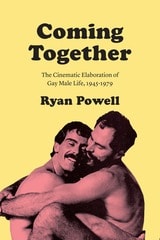
Coming Together
The Cinematic Elaboration of Gay Male Life, 1945-1979Ryan Powell
University of Chicago Press, 2019

Coming after Oprah
Cultural Fallout in the Age of the TV Talk ShowVicki Abt and Leonard Mustazza
University of Wisconsin Press, 1997
More than just a commentary on the aesthetics of the genre, this book looks at the evolution and cultural significance of these programs, disputing claims that they are nothing more than harmless entertainment. In the work’s revealing first half, Vicki Abt and Leonard Mustazza uncover the mechanics of the talk-show game. The second half examines the behind-the-scenes economic games and their implications, revealing a web of complex commercial and political interests that influence their production. A detailed description of the corporate players and the revenues they are generating is also provided. The study concludes with suggestions for what we as a culture might do to protect ourselves from its inherent deceptions and misinformation.

Coming of Age in Jewish America
Bar and Bat Mitzvah ReinterpretedPatricia Keer Munro
Rutgers University Press, 2016

Coming of Age in the Other America
Stefanie DeLuca
Russell Sage Foundation, 2016
Recent research on inequality and poverty has shown that those born into low-income families, especially African Americans, still have difficulty entering the middle class, in part because of the disadvantages they experience living in more dangerous neighborhoods, going to inferior public schools, and persistent racial inequality. Coming of Age in the Other America shows that despite overwhelming odds, some disadvantaged urban youth do achieve upward mobility. Drawing from ten years of fieldwork with parents and children who resided in Baltimore public housing, sociologists Stefanie DeLuca, Susan Clampet-Lundquist, and Kathryn Edin highlight the remarkable resiliency of some of the youth who hailed from the nation’s poorest neighborhoods and show how the right public policies might help break the cycle of disadvantage.
Coming of Age in the Other America illuminates the profound effects of neighborhoods on impoverished families. The authors conducted in-depth interviews and fieldwork with 150 young adults, and found that those who had been able to move to better neighborhoods—either as part of the Moving to Opportunity program or by other means—achieved much higher rates of high school completion and college enrollment than their parents. About half the youth surveyed reported being motivated by an “identity project”—or a strong passion such as music, art, or a dream job—to finish school and build a career.
Yet the authors also found troubling evidence that some of the most promising young adults often fell short of their goals and remained mired in poverty. Factors such as neighborhood violence and family trauma put these youth on expedited paths to adulthood, forcing them to shorten or end their schooling and find jobs much earlier than their middle-class counterparts. Weak labor markets and subpar postsecondary educational institutions, including exploitative for-profit trade schools and under-funded community colleges, saddle some young adults with debt and trap them in low-wage jobs. A third of the youth surveyed—particularly those who had not developed identity projects—were neither employed nor in school. To address these barriers to success, the authors recommend initiatives that help transform poor neighborhoods and provide institutional support for the identity projects that motivate youth to stay in school. They propose increased regulation of for-profit schools and increased college resources for low-income high school students.
Coming of Age in the Other America presents a sensitive, nuanced account of how a generation of ambitious but underprivileged young Baltimoreans has struggled to succeed. It both challenges long-held myths about inner-city youth and shows how the process of “social reproduction”—where children end up stuck in the same place as their parents—is far from inevitable.
Coming of Age with the New Republic, 1938-1950
Merrill D. Peterson
University of Missouri Press, 1999
In this absorbing memoir, Merrill D. Peterson traces his progress from a young Kansas Republican to a "Left Liberal," Democrat by reconstructing how the New Republic singularly influenced his intellectual development and academic career during some of the most turbulent years in American history—the final years of the Great Depression through World War II and the beginnings of the Cold War. Peterson recalls how, as a young man, he was guided to intellectual maturity by such extraordinary individuals as Max Lerner, Archibald MacLeish, Vincent Sheean, Alfred Kazin, Lewis Mumford, and Malcolm Cowley—all contributors to this important magazine. We look back, with Peterson, and see how their views are inextricably reflected in his own developing worldview.
Peterson was introduced to this liberal weekly by one of his teachers during his senior year of high school (1938-1939). For the next ten years, the magazine served as his principal guide to the politics and culture of the times. Now, at seventy-eight years of age, Peterson revisits the magazine that he read so eagerly during those early, impressionable years. With considerable skill and charm, Peterson weaves together the fresh reading, the history of the country during the 1940s, and his own personal history to give us the heart of the book. In addition, he includes brief essays on Vernon L. Parrington, Lewis Mumford, and Max Lerner, the three American writers and intellectuals he believes had the most influence on him.
Peterson discusses several turning points in his young life, but he focuses primarily on his education and the role the magazine played in it. The book concludes when Peterson, with a Ph.D. in the history of American civilization, accepts his first academic appointment, at Brandeis University, and approaches the publication of his first book. Thus, a critical chapter in his life comes to a close.

Coming of Age(ncy) on the Migrant Trail
Adolescent Journeys in Contemporary Latinx Young Adult LiteratureSusana S. Martínez
The Ohio State University Press, 2025

Coming of Industrial Order
Town and Factory Life in Rural Massachusetts, 1810-1860Jonathan Prude
University of Massachusetts Press, 1999

Coming of Political Age
American Schools and the Civic Development of Immigrant YouthRebecca M. Callahan
Russell Sage Foundation, 2013

Coming through the Fire
Surviving Race and Place in AmericaC. Eric Lincoln
Duke University Press, 1996
Coming through the Fire, with its fiercely intelligent, passionate, and clear-eyed view of race and class conflict, makes a major contribution to understanding—and thereby healing—the terrible rift that has opened up in the heart of America. Lincoln explores the nature of biracial relationships, the issue of transracial adoption, violence—particularly black-on-black violence—the “endangered” black male, racism as power, the relationship between Blacks and Jews, our multicultural melting pot, and Minister Louis Farrakhan.Without sidestepping painful issues, or sacrificing a righteous anger, the author argues for “no-fault reconciliation,” for mutual recognition of the human endowment we share regardless of race, preparing us as a nation for the true multiculture tomorrow will demand.
Readers familiar with Lincoln’s earlier groundbreaking work on the Black Muslims and on the black church will be eagerly awaiting the publication of Coming through the Fire. Others will simply find C. Eric Lincoln’s personal story and his exploration of survival and race in America to be absorbing and compelling reading.

Coming to Light
American Women Poets in the Twentieth CenturyDiane Wood Middlebrook and Marilyn Yalom, Editors
University of Michigan Press, 1985

Coming to My Senses
One Woman's Cochlear Implant JourneyClaire H. Blatchford
Gallaudet University Press, 2014

Commager on Tocqueville
Henry Steele Commager
University of Missouri Press, 1993
Commager on Tocqueville is Henry Steele Commager's masterful interpretation of Alexis de Tocqueville's Democracy in America. Using Tocqueville's classic as a vehicle for discussing such contemporary issues as the environment, civil rights, and the military-industrial complex, Commager calls for a new vision of American leadership that trascends nationalism.
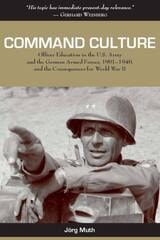
Command Culture
Officer Education in the U.S. Army and the German Armed Forces, 1901-1940, and the Consequences for World War IIJörg Muth
University of North Texas Press, 2011

Command of the Waters
Iron Triangles, Federal Water Development, and Indian WaterDaniel C. McCool
University of Arizona Press, 1994

Commentary In American Life
edited by Murray Friedman
Temple University Press, 2005
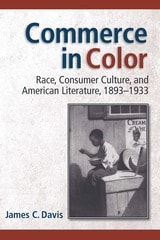
Commerce in Color
Race, Consumer Culture, and American Literature, 1893-1933James C. Davis
University of Michigan Press, 2010
Commerce in Color exploresthe juncture of consumer culture and race by examining advertising, literary texts, mass culture, and public events in the United States from 1893 to 1933. James C. Davis takes up a remarkable range of subjects—including the crucial role publishers Boni and Liveright played in the marketing of Harlem Renaissance literature, Henry James’s critique of materialism in The American Scene, and the commodification of racialized popular culture in James Weldon Johnson’s The Autobiography of anEx-Colored Man—as he argues that racial thinking was central to the emergence of U.S. consumerism and, conversely, that an emerging consumer culture was a key element in the development of racial thinking and the consolidation of racial identity in America. By urging a reassessment of the familiar rubrics of the “culture of consumption” and the “culture of segregation,” Dawson poses new and provocative questions about American culture and social history.
Both an influential literary study and an absorbing historical read, Commerce in Color proves that—in America—advertising, publicity, and the development of the modern economy cannot be understood apart from the question of race.
“A welcome addition to existing scholarship, Davis’s study of the intersection of racial thinking and the emergence of consumer culture makes connections very few scholars have considered.”
—James Smethurst, University of Massachusetts
James C. Davis is Assistant Professor of English at Brooklyn College.
Commercial Cinema
The History of the Advertising Film in the United StatesMartin L. Johnson
University of Illinois Press, 2026
An advertising film placed promotional content into movies presented as travelogues, educational shorts, industrial films, or scenes of daily life. Business and government, meanwhile, built systems to distribute the films to unsuspecting audiences in schools, churches, civic groups, and universities. Through experimentation, corporations honed sophisticated tools of persuasion that used moving images to influence the public. What they learned reshaped notions of storytelling, technology, and corporate communication while setting the stage for advertising’s symbiotic relationship with television.
Persuasive and expert, Commercial Cinema illuminates the changing fortunes and eventual fate of a film genre in disguise.
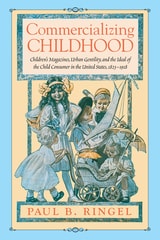
Commercializing Childhood
Children's Magazines, Urban Gentility, and the Ideal of the Child Consumer in the United States, 1823-1918Paul B. Ringel
University of Massachusetts Press, 2015
In this deeply researched and engaging book, Paul B. Ringel combines an analysis of the stories in nineteenth-century American children's magazines with the backstories of their authors, editors, and publishers to explain how this hugely successful industry trained generations of American children to become genteel consumers. Ringel demonstrates how these publications, which were read in hundreds of thousands of homes, played to two conflicting impulses within American families: to shield children from commercial influences by offering earnest and moral entertainment and to help children learn how to prosper in an increasingly market-driven society.

Commissioners and Commodores
The East India Squadron and American Diplomacy in ChinaCurtis T. Henson
University of Alabama Press, 1982
Committees and the Decline of Lawmaking in Congress
Jonathan Lewallen
University of Michigan Press, 2020
He finds that because party leaders have more control over the legislative agenda, committees have spent more of their time conducting oversight instead. Partisanship alone does not explain this trend; changes in institutional rules and practices that empowered party leaders have created more uncertainty for committees and contributed to a shift in their policy activities. The shift toward oversight at the committee level combined with party leader control over the voting agenda means that many members of Congress are effectively cut out of many of the institution’s policy decisions. At a time when many, including Congress itself, are considering changes to modernize the institution and keep up with a stronger executive branch, the findings here suggest that strengthening Congress will require more than running different candidates or providing additional resources.

Commodity & Propriety
Competing Visions of Property in American Legal Thought, 1776-1970Gregory S. Alexander
University of Chicago Press, 1997
In demonstrating how the understanding of property as a private basis for the public good has competed with the better-known market-oriented conception, Alexander radically rewrites the history of property, with significant implications for current political debates and recent Supreme Court decisions.

Common Ground At The Nexus Of Information Literacy And
Merinda Hensley
Assoc of College & Research Libraries, 2013
Common Ground
The Japanese American National Museum and the Culture of CollaborationsAkemi Kikumura-Yano
University Press of Colorado, 2005
Current scholarship in museum studies is generally limited to interpretations by scholars and curators. Common Ground brings descriptive data to the intellectual canon and illustrates how museum institutions must be transformed and recreated to suit the needs of the twenty-first century.

Common Sense Police Review
Douglas Perez
Temple University Press, 1995
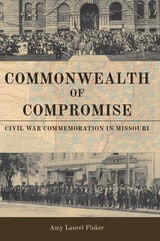
Commonwealth of Compromise
Civil War Commemoration in MissouriAmy Laurel Fluker
University of Missouri Press, 2020
Acts of Civil War commemoration have long been controversial and were never undertaken for objective purposes, but instead served to transmit particular values to future generations. Understanding this process lends informative context to contemporary debates about Civil War memory.
Commonwealth of Toil
Chapters in the History of Massachusetts Workers and Their UnionsThomas Juravich
University of Massachusetts Press, 1996
Over the past two centuries, Massachusetts workers have fought for many important advances that would later be enjoyed by other Americans. The right to organize, restrictions on work hours and child labor, and workers' compensation were all pioneered in the Commonwealth. From the 1825 strike of Boston carpenters for a ten-hour day to recent victories in hospitals and universities, Massachusetts workers and their unions have been in the forefront of the battle for dignity and justice.
This book tells their story. In eighteen chapters, beginning with the first industrial workers in the nation—the Lowell “mill girls”—the authors describe the struggles of working men and women to improve their lives. In the process, the book provides a valuable perspective on the development of the American labor movement.

Communicating Professionally
A How-To-Do-It Manual for LibrariansCatherine Sheldrick Ross
American Library Association, 2013

Communication Convergence in Contemporary China
International Perspectives on Politics, Platforms, and ParticipationPatrick Shaou-Whea Dodge
Michigan State University Press, 2020

Communication and Litigation
Case Studies of Famous TrialsJanice Schuetz
Southern Illinois University Press, 1988
Examination of seven famous trials, each concluding with an evaluation of the trial by a lawyer, judge, law professor, or communication scholar.
The Washington Post coverage of the John Hinckley case preceding the trial demonstrates the effects media may have on a trial. The Haymarket riot trial serves as an example of opening statements in a storytelling form.
By analyzing the trial of Bruno Richard Hauptmann, Schuetz and Snedaker explain direct examination according to its purpose, legal rules, ordering of witnesses, verbal and nonverbal techniques of interrogation, and tactics for introducing evidence.
The cross-examination in the Sacco-Vanzetti case shows how advocates enhance or decrease their persuasiveness by adopting communication maneuvers. Closing arguments in the Rosenberg trial took the form of a refutative story with a dual persuasive and instructional content.
The Supreme Court appeal in the Sam Sheppard case demonstrates the procedures, form, content, and style of arguments of appellate briefs. The Chicago Eight trial is an example of trial as theatre.
Communists and Community
Activism in Detroit's Labor Movement, 1941-1956Ryan S. Pettengill
Temple University Press, 2020
Communists and Community seeks to reframe the traditional chronology of the Communist Party in the United States as a means to better understand the change that occurred in community activism in the mid-twentieth century. Ryan Pettengill argues that Popular Front activism continued to flourish throughout the war years and into the postwar period. In Detroit, where there was a critical mass of heavy industry, Communist Party activists mobilized support for civil rights and affordable housing, brought attention to police brutality, sought protection for the foreign-born, and led a movement for world peace.
Communists and Community demonstrates that the Communist Party created a social space where activists became effective advocates for the socioeconomic betterment of a multiracial work force. Pettengill uses Detroit as a case study to examine how communist activists and their sympathizers maintained a community to enhance the quality of life for the city’s working class. He investigates the long-term effects of organized labor’s decision to force communists out of the unions and abandon community-based activism. Communists and Community recounts how leftists helped workers, people of color, and other under-represented groups became part of the mainstream citizenry in America.
Communists in Harlem during the Depression
Mark Naison
University of Illinois Press, 2004
Winner of the Ralph Bunche Award, American Political Science Association
No socialist organization has ever had a more profound effect on black life than the Communist Party did in Harlem during the Depression. Mark Naison describes how the party won the early endorsement of such people as Adam Clayton Powell Jr. and how its support of racial equality and integration impressed black intellectuals, including Richard Wright, Langston Hughes, and Paul Robeson.
This meticulously researched work, largely based on primary materials and interviews with leading black Communists from the 1930s, is the first to fully explore this provocative encounter between whites and blacks. It provides a detailed look at an exciting period of reform, as well as an intimate portrait of Harlem in the 1920s and 30s, at the high point of its influence and pride.
Communities of Death
Whitman, Poe, and the American Culture of MourningAdam C. Bradford
University of Missouri Press, 2014
Communities of Journalism
A History of American Newspapers and Their ReadersDavid Paul Nord
University of Illinois Press, 2006
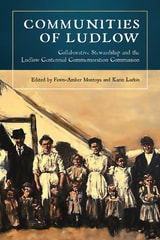
Communities of Ludlow
Collaborative Stewardship and the Ludlow Centennial Commemoration CommissionFawn-Amber Montoya
University Press of Colorado, 2021
The history of the Ludlow Massacre encompasses the stories of immigrant groups, women, the working-class, and people of color as much as the story of that tragedy, and the continued relevance of these issues creates a need for remembrance and discussion of how to make the events of the Ludlow Massacre available to contemporary society. The book outlines recent efforts to remember and commemorate this important historical event, documenting the unique collaborations in public scholarship and outreach among the diverse group of people involved in marking the 100-year anniversary of the Ludlow Massacre. The chapters relate the tales of the stewards of the Ludlow Massacre—the various communities that rallied together to keep this history alive and show its relevance, including lineal descendants, members of the United Mine Workers of America, historians, archaeologists, scholars, artists, interpreters, authors, playwrights, and politicians. The book also offers tips, strategies, and cautionary tales for practicing engaged public scholarship.
The history of the Ludlow Massacre has been told as a tragedy of striking miners in the West that occurred during a turbulent time in US labor relations, but it is so much more than that. Communities of Ludlow explores the intersections of public scholarship, advocacy, and personal experience, weaving these perspectives together with models for practicing public scholarship to illustrate the power of creating spaces for sharing ideas and information in an environment that encourages creativity, open dialogue, public outreach, political action, and alternative narratives.
Contributors: Robert Butero, Robin Henry, Michael Jacobson, Elizabeth Jameson, Linda Linville, Matthew Maher, Yolanda Romero
Communities of Work
Rural Restructuring in Local and Global ContextsWilliam W. Falk
Ohio University Press, 2003
The image of rural America portrayed in this illuminating study is one that is vibrant, regionally varied, and sometimes heroic. Communities of Work focuses on the ways in which rural people and places are affected by political, social, and economic forces far outside their control and how they sustain themselves and their communities in response.
Bringing together the two fundamental concepts of community—where the relationships and practices of daily life occur—and work, in which an elementary exchange occurs, Communities of Work bridges several fields of study. Presented here is the contextual and embedded nature of social relations and the complexity involved in understanding them. Through the use of multiple case studies, the authors apply diverse theories and methods in seeking an integrated outcome, one captured by “communities of work.”
Beginning with a description of the broad changes in work and economic activities across the United States, ranging from the Ohio River Valley to a western boomtown, the book shifts its focus to the interplay of work, family, and local networks in time and place. Activities range from fishing in the Mississippi Delta to farming and family life in the Midwest. The authors then highlight how rural people and places respond to extra-local, increasingly global forces in settings as diverse as rural South Carolina and Wisconsin.
A certain communitarian theme runs through Communities of Work. It is about people and communities not merely reacting, but instead responding in ways that reflect their local culture, while being cognizant of the larger world within which they live.

Community Health Centers
A Movement and the People Who Made It HappenLefkowitz, Bonnie
Rutgers University Press, 2007
This book tells the story of one groundbreaking approach to medicine that attacks the problem by focusing on the wellness of whole neighborhoods. Since their creation during the 1960s, community health centers have served the needs of the poor in the tenements of New York, the colonias of Texas, the working class neighborhoods of Boston, and the dirt farms of the South. As products of the civil rights movement, the early centers provided not only primary and preventive care, but also social and environmental services, economic development, and empowerment.
Bonnie Lefkowitz-herself a veteran of community health administration-explores the program's unlikely transformation from a small and beleaguered demonstration effort to a network of close to a thousand modern health care organizations serving nearly 15 million people. In a series of personal accounts and interviews with national leaders and dozens of health care workers, patients, and activists in five communities across the United States, she shows how health centers have endured despite cynicism and inertia, the vagaries of politics, and ongoing discrimination.
Community Is the Way
Engaged Writing and Designing for Transformative Changeby Aimée Knight
University Press of Colorado, 2022

Community Technology Projects
Making Them WorkMargaret Heller
American Library Association, 2019
Community and Organization in the New Left, 1962-1968
The Great RefusalBreines, Wini
Rutgers University Press, 1989
Wini Breines traces the evolution of the New Left movement through the Free Speech Movement, Students for a Democratic Society (SDS), and SDS's community organization projects. For Breines, the movement's goal of participatory decision-making, even when it was not achieved, made up for its failure to take practical and direct action. By the late 1960s, antiwar activism contributed to the decline of the New Left, as the movement was flooded with new participants who did not share the founding generation's political experiences or values.
Originally published in 1982, Wini Breines's classic work now includes a new preface in which she reassesses, and for the most part affirms, her initial views of the movement. She argues that the movement remains effective in the midst of radical changes in activist movements. Breines also summarizes and evaluates the new and growing scholarship on the 1960s. Her provocative analysis of the New Left remains important today.
Community without Consent
New Perspectives on the Stamp ActEdited by Zachary McLeod Hutchins
Dartmouth College Press, 2016

Company Men
The Invention of Shareholder Value and the Splintering of the American EconomySean Delehanty
University of Chicago Press, 2025
How an esoteric economic theory—and its most devout believers—changed the world forever.
In the modern economy, stock price is king. The value of a corporation is measured in how it enriches its shareholders, even when doing so subtracts from long-term growth or social good. Greed, in the last half-century of corporate practice, has become very good. Company Men is a sweeping intellectual history of how shareholder value rose from the lesser-known edges of academic theory to the vanguard of corporate practice.
Historian Sean Delehanty marshals archival resources to reveal how a group of motivated consultants, activist investors, and academic economists successfully branded shareholder value as the antidote to problems of management and economic stagnation in the 1970s. In their success, they created a class of well-heeled managers who executed shareholder-value theory as an everyday practice—and at the expense of most everything else. Delehanty’s history of the modern American corporation is a sobering account of the business regime that would rule the world and produce no shortage of regrets—even amongst those who championed it. Company Men is intellectual history at its most vital, offering a surprising origin story of our economy’s discontents.
Company Towns
Industry Power and the Historical Foundations of Public MistrustElizabeth Mitchell Elder
University of Chicago Press, 2026
Reveals the deep, historical roots of public distrust in former mining areas in the US, shedding new light on the corrosive feedback loops that persist today.
In Company Towns, Elizabeth Mitchell Elder examines the long-lasting political legacies of mining-company dominance in the Midwest and Appalachia. While the economic consequences of deindustrialization are well-known, Elder shifts the focus to a more insidious problem: the political dysfunction that took root long before the mines shut down.
Drawing on historical and administrative data, Elder shows that the coal industry hindered the growth of local government capacity in the places where it was dominant. Mining companies also engaged in outright corruption to shape local governments, practices which local elites then carried forward. When mining companies withdrew, they left behind not just economic decline, but local governments ill-equipped to govern.
These patterns have had enduring consequences for public life. Elder shows how these historical experiences have fueled a broader cynicism toward government, in which citizens expect little from public institutions and doubt the usefulness of elections. Company Towns underscores the consequences of corporate dominance for state capacity, public opinion, and democratic accountability today.
Compassion and Responsibility
Readings in the History of Social Welfare Policy in the United StatesFrank R. Breul and Steven J. Diner
University of Chicago Press, 1985
Compassionate Confinement
A Year in the Life of Unit CAbrams, Laura S.
Rutgers University Press, 2013
Received an Honorable Mention for the 2015 Society for Social Work and Research Outstanding Social Work Book Award
To date, knowledge of the everyday world of the juvenile correction institution has been extremely sparse. Compassionate Confinement brings to light the challenges and complexities inherent in the U.S. system of juvenile corrections. Building on over a year of field work at a boys’ residential facility, Laura S. Abrams and Ben Anderson-Nathe provide a context for contemporary institutions and highlight some of the system’s most troubling tensions.
This ethnographic text utilizes narratives, observations, and case examples to illustrate the strain between treatment and correctional paradigms and the mixed messages regarding gender identity and masculinity that the youths are expected to navigate. Within this context, the authors use the boys’ stories to show various and unexpected pathways toward behavior change. While some residents clearly seized opportunities for self-transformation, others manipulated their way toward release, and faced substantial challenges when they returned home.
Compassionate Confinement concludes with recommendations for rehabilitating this notoriously troubled system in light of the experiences of its most vulnerable stakeholders.