Results by title
28167 books match the query 'History' and 1913 start with c
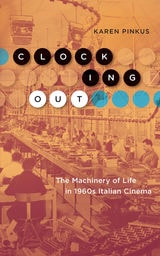
Clocking Out
The Machinery of Life in 1960s Italian CinemaKaren Pinkus
University of Minnesota Press, 2020
An original reflection on Italy’s postwar boom considers potentials for resistance in today’s neoliberal (dis)order
What can 1960s Italian cinema teach us about how to live and work today? Clocking Out challenges readers to think about labor, cinema, and machines as they are intertwined in complex ways in Italian cinema of the early ’60s. Drawing on critical theory and archival research, this book asks what kinds of fractures we might exploit for living otherwise, for resisting traditional narratives, and for anticapitalism.
Italy in the 1960s was a place where the mass-producing factory was the primary mode of understanding what it meant to work, but it was also a time when things might have gone another way. This thinking and living differently appears in the cracks, lapses, or moments of film. Clocking Out is organized into scenes from an obscure 1962 Italian comedy (Renzo e Luciana, from Boccaccio 70). Reconsidering the origins of paradigms such as clocking in and out, “society is a factory,” and the gendered division of labor, Karen Pinkus challenges readers to think through cinema, enabling us to see gaps and breakdowns in the postwar order. She focuses on the Olivetti typewriter company and a little-known film from an Italian anthology movie, thinking with cinema about the power of the Autonomia movement, the refusal to work, and the questions of wages, paternalism, and sexual difference.
Alternating microscopic attention to details and zooming outward, Pinkus examines rituals of production, automation, repetition, and fractures in a narrative of labor that begins in the 1960s and extends to the present—the age of the precariat, right-wing resentment, and nostalgia for an order that was probably never was.
Close Encounters of Empire
Writing the Cultural History of U.S.-Latin American RelationsGilbert M. Joseph, Catherine C. LeGrand, and Ricardo D. Salvatore, eds.
Duke University Press, 1998
Exploring a variety of nineteenth- and twentieth-century encounters in Latin America, these theoretically engaged essays by distinguished U.S. and Latin American historians and anthropologists illuminate a wide range of subjects. From the Rockefeller Foundation’s public health initiatives in Central America to the visual regimes of film, art, and advertisements; these essays grapple with new ways of conceptualizing public and private spheres of empire. As such, Close Encounters of Empire initiates a dialogue between postcolonial studies and the long-standing scholarship on colonialism and imperialism in the Americas as it rethinks the cultural dimensions of nationalism and development.
Close Writing
Kathy Acker, Cookie Mueller, and Love-in-PiecesAlice Butler
Duke University Press, 2026
Closely Watched Trains
Bohumil Hrabal
Northwestern University Press, 1995
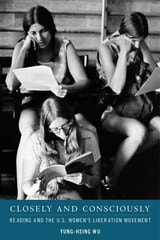
Closely and Consciously
Reading and the US Women's Liberation MovementYung-Hsing Wu
University of Massachusetts Press, 2024
The significant archive of writing that came out of the women’s liberation movement in the United States, from 1965 to 1980, speaks to the value activists placed on reading as an act that is at once personal and yet also about the collective good. Yung-Hsing Wu examines the importance of reading—personal, professional, vocational, aesthetic, and always political—and how the act itself brought a host of women, each with their own history with the movement, into relation, and into a belief in that relation. The value given to reading can be seen in the ways feminists pursued media representation; in consciousness-raising (CR) groups including shared reading in their meetings; in women opening bookstores, developing newsletters, establishing journals, and starting presses; and in corporate publishers pursuing feminist fiction.
Closely and Consciously crisscrosses distinct print spheres, including newsletters and periodicals produced by feminist cells and consciousness-raising groups, feminist presses seeking to articulate their visions for women’s writing, the emergence of feminist literary criticism in first-time monographs and newly established journals, personal and editorial correspondence, press records, and the publishing histories of bestsellers that testified to the increasingly broad popularity of women’s writing. Uniting all these disparate activists and media outlets, and providing crucial relationality, was reading. With a mix of close readings and archival research, Wu unpacks and interprets this central act of reading and why it matters during a crucial moment of feminist history.
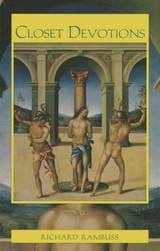
Closet Devotions
Richard Rambuss
Duke University Press, 1998
Through startling rereadings of works ranging from the devotional verse of the metaphysical poets (Donne, Herbert, Crashaw, and Traherne) to photographer Andres Serrano’s controversial “Piss Christ,” from Renaissance religious iconography to contemporary gay porn, Rambuss uncovers the highly charged erotic imagery that suffuses religious devotional art and literature. And he explores one of Christian culture’s most guarded (and literal) closets—the prayer closet itself, a privileged space where the vectors of same-sex desire can travel privately between the worshiper and his or her God.
Elegantly written and theoretically astute, Closet Devotions illuminates the ways in which sacred Christian devotion is homoeroticized, a phenomenon that until now has gone unexplored in current scholarship on religion, the body, and its passions. This book will attract readers across a wide array of disciplines, including gay and lesbian studies, literary theory and criticism, Renaissance studies, and religion.

Closet Writing/Gay Reading
The Case of Melville's PierreJames Creech
University of Chicago Press, 1994
In Closet Writing/Gay Reading, Creech shows how a literary critic can be receptive to implicit and closeted sexual content. Forcefully advocating a tactic of identification and projection in literary analysis, he lends renewed currency to the kind of "sentimental" response to literature that continental theory—particularly deconstruction—has sought to discredit.
In the second half of his book, Creech sets out to analyze what he considers the exemplary novel of the nineteenth-century closet, Melville's Pierre, or: The Ambiguities. By approaching Pierre as the gay man Melville longed to have as its reader, Creech is able to decipher the novel's "encrypted erotics" and to reveal that Melville's apparent tale of incest is actually a homosexual novel in disguise. The closeted "address" to queer-sensitive readers that Pierre disseminates finally receives a critical reading that strives to be explicit, shareable, and public.
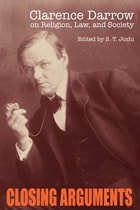
Closing Arguments
Clarence Darrow on Religion, Law, and SocietyClarence Darrow
Ohio University Press, 2005
Clarence Darrow, son of a village undertaker and coffinmaker, rose to become one of America’s greatest attorneys—and surely its most famous. The Ohio native gained renown for his central role in momentous trials, including his 1924 defense of Leopold and Loeb and his defense of Darwinian principles in the 1925 Scopes “Monkey Trial.” Some have traced Darrow’s lifelong campaign against capital punishment to his boyhood terror at seeing a Civil War soldier buried—and no client of Darrow’s was ever executed, not even black men who were accused of murder for killing members of a white mob.
Closing Arguments: Clarence Darrow on Religion, Law, and Society collects, for the first time, Darrow’s thoughts on his three main preoccupations, revealing a carefully conceived philosophy expressed with delightful pungency and clarity. His thoughts on social issues, especially on the dangers of religious fundamentalism, are uncannily prescient. A dry humor infuses his essays, and his reflections on himself and his philosophy reveal a quiet dignity at the core of a man better known for provoking Americans during an era of unprecedented tumult. From the wry “Is the Human Race Getting Anywhere?” to the scornful “Patriotism” and his elegiac summing up, “At Seventy-two,” Darrow’s writing still stimulates, pleases and challenges.
A rebel who always sided intellectually and emotionally with the minority, Darrow remains a figure to contend with sixty-seven years after his death. “Inside every lawyer is the wreck of a poet,” Darrow once said. Closing Arguments demonstrates that, in his case, that statement is true.
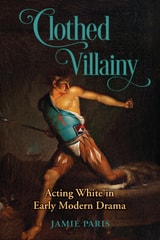
Clothed Villainy
Acting White in Early Modern DramaJamie Paris
University of Alabama Press, 2026
Examines how centuries-old stagecraft shaped modern racial politics—and why the performance of whiteness still commands the spotlight.
From Shakespearean blackface to the alt-right’s khaki-clad protests, Clothed Villainy: Acting White in in Early Modern Drama by Jamie Paris confronts the uncomfortable truths of racial performance across centuries. Paris argues that whiteness is not a fixed identity but a precarious and performative construct—shaped and sustained through actions, appearances, and cultural scripts.
Drawing on critical race theory, performance studies, and Indigenous scholarship, Clothed Villainy traces how racial scripts—whether “playing Black,” “playing Indian,” or especially “playing white”—have been used to uphold white supremacy and erase marginalized identities. By examining the costuming and characterization of white actors portraying Black villains on the early modern stage, Paris reveals how these theatrical traditions continue to echo in contemporary racial politics.
Written with bold clarity and personal insight, this book opens space for reimagining race, history, and identity through a more critical and inclusive lens. Clothed Villainy is essential reading for scholars, students, and anyone seeking to understand the deep-rooted performance of race in society and how we might reimagine it for a more equitable future.
Clothed in Meaning
Literature, Labor, and Cotton in Nineteenth-Century AmericaSylvia Jenkins Cook
University of Michigan Press, 2020
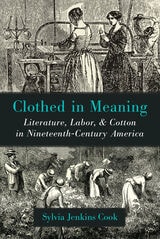
Cloth and clothing provide potent tropes not only for physical but also for intellectual forms of self-expression. Drawing on sources ranging from fugitive slave narratives, newspapers, manifestos, and mill workers’ magazines to fiction, poetry, and autobiographies, Clothed in Meaning examines the significant part played by mill workers and formerly enslaved people, many of whom still worked picking cotton, in this revolution of literary self-expression. They created a new literature from their palpable daily intimacy with cotton, cloth, and clothing, as well as from their encounters with grimly innovative modes of work. In the materials of their labor they discovered vivid tropes for formulating their ideas and an exotic and expert language for articulating them. The harsh conditions of their work helped foster in their writing a trenchant irony toward the demeaning reduction of human beings to “hands” whose minds were unworthy of interest. Ultimately, Clothed in Meaning provides an essential examination of the intimate connections between oppression and luxury as recorded in the many different voices of nineteenth-century labor.

Clothing Goes to War
Creativity Inspired by Scarcity in World War IINan Turner
Intellect Books, 2021
Manufacturing for civilians across the globe nearly stopped at the outset of World War II, as outfitting troops took precedence over nonmilitary production. Raw materials were prioritized for the armed forces and the majority of nonmilitary factories were shifted to war work, resulting in shortages and rationing of consumer products. Civilians, especially women, responded to the resulting scarcity of goods by using ingenuity and creativity to “make do.” In Clothing Goes to War, Nan Turner offers a critical look at some of the resourceful results of this period as necessity paved the way for fashionable invention.
Clothing Matters
Dress and Identity in IndiaEmma Tarlo
University of Chicago Press, 1996
Clothes have been used to assert power, challenge authority, and instigate social change throughout Indian society. During the struggle for independence, members of the Indian elite incorporated elements of Western style into their clothes, while Gandhi's adoption of the loincloth symbolized the rejection of European power and the contrast between Indian poverty and British wealth. Similar tensions are played out today, with urban Indians adopting "ethnic" dress as villagers seek modern fashions.
Illustrated with photographs, satirical drawings, and magazine advertisements, this book shows how individuals and groups play with history and culture as they decide what to wear.
Clothing and Difference
Embodied Identities in Colonial and Post-Colonial AfricaHildi Hendrickson, ed.
Duke University Press, 1996
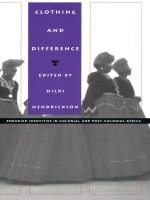
Grounded in the insights of anthropology and history and influenced by developments in cultural studies, these essays investigate the relations between the personal and the public, and between ideas about the self and those about the family, gender, and national groups. They explore the bodily and material creation of the changing identities of women, spirits, youths, ancestors, and entrepreneurs through a consideration of topics such as fashion, spirit possession, commodity exchange, hygiene, and mourning.
By taking African societies as its focus, Clothing and Difference demonstrates that factors considered integral to Western social development—heterogeneity, migration, urbanization, transnational exchange, and media representation—have existed elsewhere in different configurations and with different outcomes. With significance for a wide range of fields, including gender studies, cultural studies, art history, performance studies, political science, semiotics, economics, folklore, and fashion and textile analysis/design, this work provides alternative views of the structures underpinning Western systems of commodification, postmodernism, and cultural differentiation.
Contributors. Misty Bastian, Timothy Burke, Hildi Hendrickson, Deborah James, Adeline Masquelier, Elisha Renne, Johanna Schoss, Brad Weiss
Clotilda
The History and Archaeology of the Last Slave ShipJames P. Delgado, Deborah E. Marx, Kyle Lent, Joseph Grinnan, and Alexander DeCaro
University of Alabama Press, 2023
Documents the maritime historical research and archaeological fieldwork used to identify the wreck of the notorious schooner Clotilda
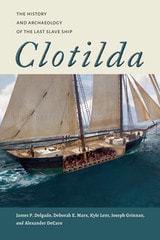
Clotilda: The History and Archaeology of the Last Slave Ship is the first definitive work to examine the maritime historical and archaeological record of one of the most infamous ships in American history. Clotilda was owned by Alabama businessman Timothy Meaher, who, on a dare, equipped it to carry captured Africans from what is now Benin and bring them to Alabama in 1860—some fifty years after the import of captives to be enslaved was banned. To hide the evidence, Clotilda was set afire and sunk.
What remained was a substantially intact, submerged, and partially buried shipwreck located in a backwater of the Mobile River. The site of the wreck was an open secret to some people who knew Meaher, but its identity remained unknown for more than a century as various surveys through the years failed to locate the ship.
This volume, authored by the archaeological team who conducted a comprehensive, systematic survey of a forgotten “ship graveyard,” details the exhaustive forensic work that conclusively identified the wreck, as well as the stories and secrets that have emerged from the partly burned hulk. James P. Delgado and his coauthors discuss the various searches for Clotilda, sharing the forensic data and other analyses showing how those involved concluded that this wreck was indeed Clotilda. Additionally, they offer physical evidence not previously shared that situates the schooner and its voyage in a larger context of the slave trade.
Clotilda: The History and Archaeology of the Last Slave Ship serves as a nautical biography of the ship as well. After reviewing the maritime trade in and out of Mobile Bay, this account places Clotilda within the larger landscape of American and Gulf of Mexico schooners and chronicles its career before being used as a slave ship. All of its voyages had a link to slavery, and one may have been another smuggling voyage in violation of federal law. The authors have also painstakingly reconstructed Clotilda’s likely appearance and characteristics.
Cloud Ethics
Algorithms and the Attributes of Ourselves and OthersLouise Amoore
Duke University Press, 2020
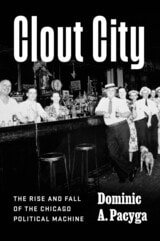
Clout City
The Rise and Fall of the Chicago Political MachineDominic A. Pacyga
University of Chicago Press, 2025
Unearths the religious and cultural roots of a powerful political machine that empowered some everyday Chicagoans but ruled all of the city for decades.
In politics, clout is essential. Too often, it determines whether insider access is granted or denied, favors are given or withheld, and payoffs are made or received. But Chicago clout, as we know it today, is even more potent than that—it’s the absolute currency of a social, cultural, and political order that is self-reinforcing and self-dealing. Or, at least, it was.
In Clout City, award-winning historian Dominic A. Pacyga reveals how cultural, ethnic, and religious forces created this distinctive system—and ultimately led to its collapse. Tracing clout’s origins in the Irish Catholic–dominated working-class neighborhood of Bridgeport, shaped by De La Salle Institute and home to the legendary Daley family, Pacyga shows how communal ties can be a force for good and also the deepest wellspring of corruption. He maps Chicago’s unique politics to its remarkable history, from the Great Fire of 1871 through its rise and decline as an industrial center to its emergence as a global city in the early twenty-first century. With deep research and firsthand experience from a lifetime in the city, Pacyga argues that Chicago’s politics is understood best as a mixture of cultural and religious influences and more worldly pursuits, exploring how both Jewish and Catholic communalism played central roles in the creation and sustenance of the Chicago machine.
Chicago’s politics today aren’t as defined by its distinctive brand of clout. But they are shaped by clout’s decline and the ghost of the machine. Pacyga’s tour of the city’s multilayered past is an indispensable guide to its present and future.
Clout City
The Rise and Fall of the Chicago Political MachineDominic A. Pacyga
University of Chicago Press, 2025
This is an auto-narrated audiobook version of this book.
Unearths the religious and cultural roots of a powerful political machine that empowered some everyday Chicagoans but ruled all of the city for decades.
In politics, clout is essential. Too often, it determines whether insider access is granted or denied, favors are given or withheld, and payoffs are made or received. But Chicago clout, as we know it today, is even more potent than that—it’s the absolute currency of a social, cultural, and political order that is self-reinforcing and self-dealing. Or, at least, it was.
In Clout City, award-winning historian Dominic A. Pacyga reveals how cultural, ethnic, and religious forces created this distinctive system—and ultimately led to its collapse. Tracing clout’s origins in the Irish Catholic–dominated working-class neighborhood of Bridgeport, shaped by De La Salle Institute and home to the legendary Daley family, Pacyga shows how communal ties can be a force for good and also the deepest wellspring of corruption. He maps Chicago’s unique politics to its remarkable history, from the Great Fire of 1871 through its rise and decline as an industrial center to its emergence as a global city in the early twenty-first century. With deep research and firsthand experience from a lifetime in the city, Pacyga argues that Chicago’s politics is understood best as a mixture of cultural and religious influences and more worldly pursuits, exploring how both Jewish and Catholic communalism played central roles in the creation and sustenance of the Chicago machine.
Chicago’s politics today aren’t as defined by its distinctive brand of clout. But they are shaped by clout’s decline and the ghost of the machine. Pacyga’s tour of the city’s multilayered past is an indispensable guide to its present and future.

Clowns to the Left of Me, Jokers to the Right
American Life in ColumnsMichael A. Smerconish
Temple University Press, 2020
Opinionated talk show host and columnist Michael Smerconish has been chronicling local, state, and national events for the Philadelphia Daily News and the Philadelphia Inquirer for more than 15 years. He has sounded off on topics as diverse as the hunt for Osama bin Laden and what the color of your Christmas lights says about you. In this collection of 100 of his most memorable columns, Smerconish reflects on American political life with his characteristic feistiness. A new Afterword for each column provides updates on both facts and feelings, indicating how the author has evolved over the years, moving from a reliable Republican voter to a political Independent.
Clowns to the Left of Me, Jokers to the Right covers the post-9/11 years, Barack Obama’s ascension, and the rise of Donald Trump. Smerconish describes meeting Ronald Reagan, having dinner with Fidel Castro, barbequing with the band YES in his backyard, spending the same night with Pete Rose and Ted Nugent, drinking champagne from the Stanley Cup, and conducting Bill Cosby’s only pretrial interview. He also writes about local Philadelphia culture, from Sid Mark to the Rizzo statue.
Smerconish’s outlook as expressed in these impassioned opinion pieces goes beyond “liberal” or “conservative.” His thought process continues to evolve and change, and as it does, he aims to provoke readers to do the same.
All author proceeds benefit the Children’s Crisis Treatment Center, a Philadelphia- based, private, nonprofit agency that provides behavioral health services to children and their families.
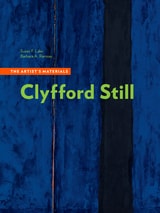
Clyfford Still
The Artist’s MaterialsSusan F. Lake
J. Paul Getty Trust, The, 2022
Among the most radical of the great American Abstract Expressionist painters, Clyfford Still has also long been among the least studied. Still severed ties with the commercial art world in the early 1950s, and his estate at the time of his death in 1980 comprised some 3,125 artworks—including more than 800 paintings—that were all but unknown to the art world. Susan F. Lake and Barbara A. Ramsay were granted access to this collection by the estate and by the Clyfford Still Museum in Denver, which houses this immense corpus today.
This volume, based on the authors’ materials research and enriched by their unprecedented access to Still’s artworks, paints, correspondence, studio records, and personal library, provides the first detailed account of his materials, working methods, and techniques. Initial chapters provide an engaging and erudite overview of the artist's life. Subsequent chapters trace the development of his visionary style, offer in-depth materials analysis of selected works from each decade of his career, and suggest new approaches to the care and conservation of his paintings. There is also a series of technical appendices as well as a full bibliography.
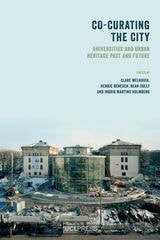
Co-Curating the City
Universities and Urban Heritage Past and FutureEdited by Clare Melhuish, Henric Benesch, Dean Sully, and Ingrid Martins Holmberg
University College London, 2022
Co-Curating the City explores the role of universities in the construction and mobilization of heritage discourses in urban development and regeneration processes, with a focus on six case study sites ranging from Sweden to Brazil. The book expands the field of critical heritage studies in the urban domain, arguing that universities should position themselves as significant institutions in the development of urban heritage narratives and heavily influence urban development. The case studies investigate how universities, as mixed communities of interest dispersed across buildings and urban sites, utilize strategies of engagement with local people and neighborhoods and ask how this could contribute to a reshaping of ideas, narratives, and lived experience of urban heritage in which universities have a distinctive agency.
Co-Motion
Re-Thinking Power, Subjects, and Feminist and Queer AlliancesPaola Bacchetta
Duke University Press, 2026
Co. Aytch, or a Side Show of the Big Show
A New Edition Introduced and Annotated by Philip LeighSam Watkins
Westholme Publishing, 2013
Co. Aytch, or a Side Show of the Big Show is perhaps the finest memoir of an ordinary Confederate soldier. According to Margaret Mitchell, “a better book there never was.” Sam Watkins served in Company H of the First Tennessee Infantry for the duration of the Civil War. Remarkably, he survived some of the most intense battles of the war, including Shiloh, Chickamauga, Kennesaw Mountain, Atlanta, and Franklin. He was one of only seven of the original members of Company H when it surrendered in April 1865. Watkins’s memoir was written in the winter of 1882–83. The humor and depth of writing at times rises to a level resembling Mark Twain; thus, twenty-first-century readers can still discover the everlasting treasures of Private Sam Watkins’s story just as it was. It is this reason that excerpts were featured frequently in Ken Burns’s documentary on the Civil War. However, since most of Sam’s original readers—or some of their family members—actually lived through the Civil War, much of the context for the narrative was common knowledge. But what was once received history has gradually disappeared, and presently only specialists can fully understand and appreciate Sam’s tale.
The chief aim for this new annotated edition of Co. Aytch—the first of its kind—is to amplify the experience for today’s readers by providing the missing context. Over 240 annotations clarify the situational backgrounds, personalities, and terminology that might not be familiar to most readers. The annotations also identify and explain errors mostly resulting from Sam’s occasionally faulty memory or limited perspective. Similarly, twentyfour battlefield and war theater maps enable readers to track Sam’s combat participation as well as his journeys while marching with the army. Finally fifteen photographs and prints illustrate some of the battles, people, towns, buildings, tools of war, and ruins that Sam witnessed. As someone once cleverly observed, “It’s not an adventure until something goes wrong.” If nothing else, Sam’s memoir is a foot soldier’s view of the resulting horrors, heroics, and healing humor when war planning routinely goes awry.

Coach Royal
Conversations with a Texas Football LegendBy Darrell Royal, with John Wheat
University of Texas Press, 2005
Many legendary men have been associated with University of Texas football, but for most fans one man will always be "Coach"—Darrell K Royal. One of the most successful coaches in college football, Royal led the Longhorns to three national championships and eleven Southwest Conference titles during his twenty years (1956-1976) as UT's head coach. He coached some of the Horns' best players, including future Heisman Trophy winner Earl Campbell, and was named NCAA Coach of the Year three times. In 1969, an ABC-TV poll of sportswriters called Royal the Coach of the Decade. In 1996 UT recognized his unrivalled contribution to Longhorn football when it designated Memorial Stadium the Darrell K Royal-Texas Memorial Stadium in his honor.
Now, for the first time, Darrell Royal tells his life story in his own words. He remembers growing up poor in Hollis, Oklahoma, during the Great Depression, and describes playing college football for the University of Oklahoma and then coaching a succession of college teams and one pro team before settling in at UT for the rest of his career. He gives a fascinating, behind-the-scenes look at Longhorn football during his time-recruiting strategies, coaching techniques, the famous wishbone offense, unforgettable wins and losses, and his impressions of rival teams and coaches, including Bear Bryant of Texas A&M and Alabama and Frank Broyles of Arkansas.
Proving that he's still the same straight shooter as always, Darrell Royal even discusses some of the controversies he's dealt with, including early charges of racism in the UT football program, the impact of Title IX on college athletics, his association with Jim Bob Moffett and the Freeport-MacMoRan Corporation, his longtime friendship with Willie Nelson, and his decision to retire from coaching. But whether he's describing the tough times he's faced professionally and personally or the rewards of being UT's most beloved coach and goodwill ambassador, Royal maintains the same plainspoken honesty and sense of honor that—as much as the winning seasons—have made him a legend to so many people.
Coal Country
The Meaning and Memory of Deindustrialization in Postwar ScotlandEwan Gibbs
University of London Press, 2022
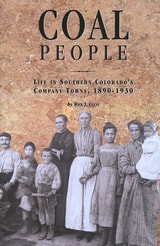
Coal People
Life in Southern Colorado's Company Towns, 1890-1930Rick J. Clyne
University Press of Colorado, 1999
Clyne reveals that a strong sense of community and tolerance existed in the camps, into which families journeyed from such far-flung locales as eastern and southern Europe to carve out a living. The shared immigrant experience—and the shared risks of mining—more often than not strengthened the bonds between both miners and families.
Coal People contains historic images of coal-town life culled from the collections of the Colorado Historical Society, as well as the author's own photographs of how several of these camps appear today.
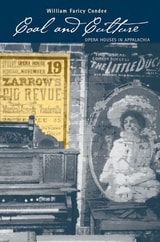
Coal and Culture
Opera Houses in AppalachiaWilliam Faricy Condee
Ohio University Press, 2005
Opera houses were fixtures of Appalachian life from the end of the Civil War through the 1920s. Most towns and cities had at least one opera house during this golden age. Coal mining and railroads brought travelers, money, and change to the region. Many aspects of American life converged in the opera house.
Coal and Culture: Opera Houses in Appalachia is a critical appreciation of the opera house in the coal-mining region of Appalachia from the mid-1860s to the early 1930s. Author William Faricy Condee demonstrates that these were multipurpose facilities that were central to the life of their communities. In the era before radio, movies, television, and malls, these buildings were essential. They housed little, if any, opera, but were used for almost everything else, including traveling theater, concerts, religious events, lectures, commencements, boxing matches, benefits, union meetings, and—if the auditorium had a flat floor—skating and basketball.
The only book on opera houses that stresses their cultural context, Condee’s unique study will interest cultural geographers, scholars of Appalachian studies, and all those who appreciate the gaudy diversity of the American scene.
Coal in our Veins
A Personal JourneyErin Ann Thomas
Utah State University Press, 2012
In Coal in Our Veins, Erin Thomas employs historical research, autobiography, and journalism to intertwine the history of coal, her ancestors' lives mining coal, and the societal and environmental impacts of the United States' dependency on coal as an energy source. In the first part of her book, she visits Wales, native ground of British coal mining and of her emigrant ancestors. The Thomases' move to the coal region of Utah—where they witnessed the Winter Quarters and Castle Gate mine explosions, two of the worst mining disasters in American history—and the history of coal development in Utah form the second part.
Then Thomas investigates coal mining and communities in West Virginia, near her East Coast home, looking at the Sago Mine collapse and more widespread impacts of mining, including population displacement, mountain top removal, coal dust dispersal, and stream pollution, flooding, and decimation. The book's final part moves from Washington D.C.—and an examination of coal, CO2, and national energy policy—back to Utah, for a tour of a coal mine, and a consideration of the Crandall Canyon mine cave-in, back to Wales and the closing of the oldest operating deep mine in the world and then to a look at energy alternatives, especially wind power, in West Virginia and Pennsylvania.
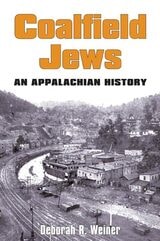
Coalfield Jews
An Appalachian HistoryDeborah R. Weiner
University of Illinois Press, 2006
The stories of vibrant eastern European Jewish communities in the Appalachian coalfields
Coalfield Jews explores the intersection of two simultaneous historic events: central Appalachia’s transformative coal boom (1880s-1920), and the mass migration of eastern European Jews to America. Traveling to southern West Virginia, eastern Kentucky, and southwestern Virginia to investigate the coal boom’s opportunities, some Jewish immigrants found success as retailers and established numerous small but flourishing Jewish communities.
Deborah R. Weiner’s Coalfield Jews provides the first extended study of Jews in Appalachia, exploring where they settled, how they made their place within a surprisingly receptive dominant culture, how they competed with coal company stores, interacted with their non-Jewish neighbors, and maintained a strong Jewish identity deep in the heart of the Appalachian mountains. To tell this story, Weiner draws on a wide range of primary sources in social, cultural, religious, labor, economic, and regional history. She also includes moving personal statements, from oral histories as well as archival sources, to create a holistic portrayal of Jewish life that will challenge commonly held views of Appalachia as well as the American Jewish experience.

Coast Lines
How Mapmakers Frame the World and Chart Environmental ChangeMark Monmonier
University of Chicago Press, 2008
Whether for sailing charts or property maps, Monmonier shows, coastlines challenge mapmakers to capture on paper a highly irregular land-water boundary perturbed by tides and storms and complicated by rocks, wrecks, and shoals. Coast Lines is peppered with captivating anecdotes about the frustrating effort to expunge fictitious islands from nautical charts, the tricky measurement of a coastline’s length, and the contentious notions of beachfront property and public access.
Combing maritime history and the history of technology, Coast Lines charts the historical progression from offshore sketches to satellite images and explores the societal impact of coastal cartography on everything from global warming to homeland security. Returning to the form of his celebrated Air Apparent, Monmonier ably renders the topic of coastal cartography accessible to both general readers and historians of science, technology, and maritime studies. In the post-Katrina era, when the map of entire regions can be redrawn by a single natural event, the issues he raises are more important than ever.
Coastal Ecosystems and Economic Strategies at Cerro Azul, Peru
The Study of a Late Intermediate KingdomEdited by Joyce Marcus
University of Michigan Press, 2016
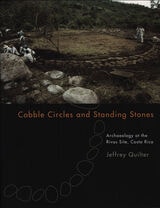
Cobble Circles and Standing Stones
Archaeology at the Rivas Site, Costa RicaJeffrey Quilter
University of Iowa Press, 2004
Writing in the first person with a balance between informal language and academic theory, Quilter concludes that Rivas was a ceremonial center for mortuary rituals to bury chiefly elite on the Panteón. Through use of his narrative technique, he provides the reader with accounts of discoveries as they occurred in fieldwork and the development of interpretations to explain the ancient refuse and cobble architecture his team uncovered. As his story progresses amid the enchantment of the Costa Rican landscape, research plans are adjusted and sometimes completely overturned as new discoveries, often serendipitous ones, are made. Such changing circumstances lead to new insights into the rise and fall of the people who built the cobble circles and raised the standing stones at Rivas, a thousand years ago.
The only book in English that focuses on a single archaeological site in Costa Rica, which continues to develop as a destination for archaeological tourism, Cobble Stones and Standing Circles will appeal to laypeople and professionals alike.
Coca Prohibition in Peru
The Historical DebatesJoseph A. Gagliano
University of Arizona Press, 1994
Coca-Cola Socialism
Americanization of Yugoslav Culture in the SixtiesRadina Vucetic
Central European University Press, 2018
This book is about the Americanization of Yugoslav culture and everyday life during the nineteen-sixties. After falling out with the Eastern bloc, Tito turned to the United States for support and inspiration. In the political sphere the distance between the two countries was carefully maintained, yet in the realms of culture and consumption the Yugoslav regime was definitely much more receptive to the American model. For Titoist Yugoslavia this tactic turned out to be beneficial, stabilising the regime internally and providing an image of openness in foreign policy.
Coca-Cola Socialism addresses the link between cultural diplomacy, culture, consumer society and politics. Its main argument is that both culture and everyday life modelled on the American way were a major source of legitimacy for the Yugoslav Communist Party, and a powerful weapon for both USA and Yugoslavia in the Cold War battle for hearts and minds.
Radina Vučetić explores how the Party used American culture in order to promote its own values and what life in this socialist and capitalist hybrid system looked like for ordinary people who lived in a country with communist ideology in a capitalist wrapping. Her book offers a careful reevaluation of the limits of appropriating the American dream and questions both an uncritical celebration of Yugoslavia’s openness and an exaggerated depiction of its authoritarianism.
Cocaine
From Coca Fields to the StreetsEnrique Desmond Arias and Thomas Grisaffi, editors
Duke University Press, 2021
Contributors. Enrique Desmond Arias, Lilian Bobea, Philippe Bourgois, Anthony W. Fontes, Robert Gay, Paul Gootenberg, Romain Le Cour Grandmaison, Thomas Grisaffi, Laurie Kain Hart, Annette Idler, George Karandinos, Fernando Montero, Dennis Rodgers, Taniele Rui, Cyrus Veeser, Autumn Zellers-León
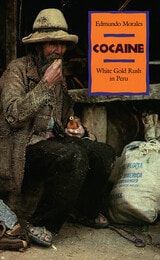
Cocaine
White Gold Rush in PeruEdmundo Morales
University of Arizona Press, 1989
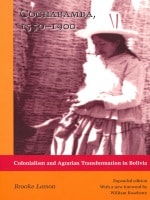
Cochabamba, 1550-1900
Colonialism and Agrarian Transformation in BoliviaBrooke Larson
Duke University Press, 1998
This study of Bolivia uses Cochabamba as a laboratory to examine the long-term transformation of native Andean society into a vibrant Quechua-Spanish-mestizo region of haciendas and smallholdings, towns and villages, peasant markets and migratory networks caught in the web of Spanish imperial politics and economics. Combining economic, social, and ethnohistory, Brooke Larson shows how the contradictions of class and colonialism eventually gave rise to new peasant, artisan, and laboring groups that challenged the evolving structures of colonial domination. Originally published in 1988, this expanded edition includes a new final chapter that explores the book’s implications for understanding the formation of a distinctive peasant political culture in the Cochabamba valleys over the eighteenth and nineteenth centuries.
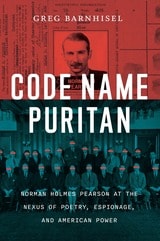
Code Name Puritan
Norman Holmes Pearson at the Nexus of Poetry, Espionage, and American PowerGreg Barnhisel
University of Chicago Press, 2024
Although his impact on twentieth-century American cultural life was profound, few people know the story of Norman Holmes Pearson. Pearson’s life embodied the Cold War alliances among US artists, scholars, and the national-security state that coalesced after World War II. As a Yale professor and editor, he helped legitimize the study of American culture and shaped the public’s understanding of literary modernism—significantly, the work of women poets such as Hilda Doolittle and Gertrude Stein. At the same time, as a spy, recruiter, and cultural diplomat, he connected the academy, the State Department, and even the CIA.
In Code Name Puritan, Greg Barnhisel maps Pearson’s life, from his childhood injury that led to a visible, permanent disability to his wartime counterespionage work neutralizing the Nazis’ spy network to his powerful role in the cultural and political heyday sometimes called the American Century. Written with clarity and informed by meticulous research, Barnhisel’s revelatory portrait of Pearson details how his unique experiences shaped his beliefs about the American character, from the Puritans onward.
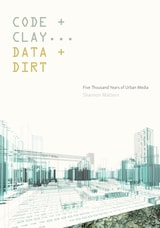
Code and Clay, Data and Dirt
Five Thousand Years of Urban MediaShannon Mattern
University of Minnesota Press, 2017
For years, pundits have trumpeted the earthshattering changes that big data and smart networks will soon bring to our cities. But what if cities have long been built for intelligence, maybe for millennia? In Code and Clay, Data and Dirt Shannon Mattern advances the provocative argument that our urban spaces have been “smart” and mediated for thousands of years.
Offering powerful new ways of thinking about our cities, Code and Clay, Data and Dirt goes far beyond the standard historical concepts of origins, development, revolutions, and the accomplishments of an elite few. Mattern shows that in their architecture, laws, street layouts, and civic knowledge—and through technologies including the telephone, telegraph, radio, printing, writing, and even the human voice—cities have long negotiated a rich exchange between analog and digital, code and clay, data and dirt, ether and ore.
Mattern’s vivid prose takes readers through a historically and geographically broad range of stories, scenes, and locations, synthesizing a new narrative for our urban spaces. Taking media archaeology to the city’s streets, Code and Clay, Data and Dirt reveals new ways to write our urban, media, and cultural histories.
Code of Peace
Ethics and Security in the World of the Warlord StatesDorothy V. Jones
University of Chicago Press, 1991
Jones focuses on the progressive development of international law to disclose an underlying code of ethics that enjoys broad support in the world community. Unlike studies that concentrate on what others think that states ought to do, Code of Peace analyzes what states themselves consider proper behavior. Using history as both narrative and argument, Jones shows how the existing ethical code has evolved cumulatively since World War I from a complex interplay between theory and practice. More than an abstract treatise or a merely technical analysis, Jones's study is grounded in the circumstances of war and peace in this century. Treaties and agreements, she argues, are forging a consensus on such principles as human rights, self-determination, and cooperation between states. Jones shows how leaders and representatives of nations, drawing on a rich heritage of philosophical thoughts as well as on their own experiences in a violent world of self-interested conflict, have shaped their thought to the taming of that world in the cause of peace. That is the striking thing about this code: states whose relations are marked by so frequent a recourse to war that they can fairly be called "warlords" have created and pledged themselves to a code of peace.
The implications of Code of Peace for establishing a normative foundation for peace are profound. Historically sound and timely, impeccably researched and elegantly written, the book will be of immediate and lasting value to anyone concerned with the stability of the modern world.

Code of the Quipu
A Study in Media, Mathematics, and CultureMarcia Ascher and Robert Ascher
University of Michigan Press, 0
This book explores Inca use of knotted cords to transmit information and the problem of interpreting artifacts from distant cultures.

Code
From Information Theory to French TheoryBernard Dionysius Geoghegan
Duke University Press, 2022

Coded Encounters
Writing, Gender, and Ethnicity in Colonial Latin AmericaFrancisco Javier Cevallos
University of Massachusetts Press, 1994

Codes of Misconduct
Regulating Prostitution in Late Colonial BombayAshwini Tambe
University of Minnesota Press, 2009
Against the backdrop of the industrial growth of Bombay, Codes of Misconduct examines the relationship between lawmaking, law enforcement, and sexual commerce. Ashwini Tambe challenges linear readings of how laws create effects and demonstrates that the regulation and criminalization of prostitution were not contrasting approaches to prostitution but different modes of state coercion. By analyzing legal prohibitions as productive forces, she also probes the pornographic imagination of the colonial state, showing how regulations made sexual commerce more visible but rendered the prostitute silent.
Codes of Misconduct engages with debates on state control of sex work and traces how a colonial legacy influences contemporary efforts to contain the spread of HIV and decriminalize sex workers in India today. In doing so, Tambe’s work not only adds to our understanding of empire, sexuality, and the law, it also sheds new light on the long history of Bombay’s transnational links and the social worlds of its underclasses.
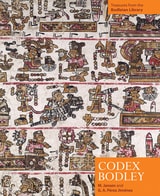
Codex Bodley
A Painted Chronicle from the Mixtec Highlands, MexicoMaarten Jansen and Gabina Aurora Pérez Jiménez
Bodleian Library Publishing, 2005
Codex Bodley explores the enormous wealth of information contained in the manuscript, which documents precolonial Mixtec genealogical relationships and historical events spanning from 900 AD to 1521. Maarten Jansen and Gabina Aurora Pérez Jiménez provide insightful and expert commentary on the manuscript, explaining its history as they consider key characteristics of Mixtec pictography. They then provide an engaging and masterful interpretation of the manuscript's narrative, with a detailed explanatory reading of its pictograms and their significance. Accompanied by vivid and colorful illustrations, Codex Bodley is an invaluable text for scholars of precolonial Mexican history, art, and culture.
Codex Chimalpopoca
The Text in Nahuatl with a Glossary and Grammatical NotesJohn Bierhorst
University of Arizona Press, 2011
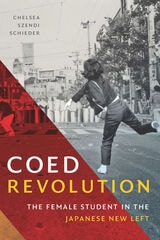
Coed Revolution
The Female Student in the Japanese New LeftChelsea Szendi Schieder
Duke University Press, 2021
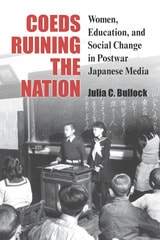
Coeds Ruining the Nation
Women, Education, and Social Change in Postwar Japanese MediaJulia C. Bullock
University of Michigan Press, 2019
This is the first book in English to explore the arguments for and against coeducation as presented in newspaper and magazine articles, cartoons, student-authored school newsletters, and roundtable discussions published in the Japanese press as these reforms were being implemented. It complicates the notion of the postwar years as a moment of rupture, highlighting prewar experiments with coeducation that belied objections that the practice was a foreign imposition and therefore “unnatural” for Japanese culture. It also illustrates a remarkable degree of continuity between prewar and postwar models of femininity, arguing that Occupation-era guarantees of equal educational opportunity were ultimately repurposed toward a gendered division of labor that underwrote the postwar project of economic recovery. Finally, it excavates discourses of gender and sexuality underlying the moral panic surrounding coeducation to demonstrate that claims of rampant sexual deviance and other concerns were employed as disciplinary mechanisms to reinforce an ideology of harmonious gender complementarity and to dissuade women from pursuing conventionally masculine prerogatives.
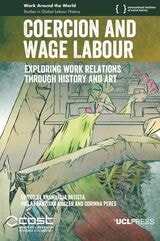
Coercion and Wage Labour
Exploring Work Relations through History and ArtEdited by Anamarija Batista, Viola Müller, and Corinna Peres
University College London, 2023
Broad in scope, Coercion and Wage Labour examines diverse areas of work including textile production, war industries, civil service, and domestic labor, in contexts from the Middle Ages to the present day. This book demonstrates that wages have consistently shaped working people’s experiences and failed to protect workers from coercion. Instead, wages emerge as versatile tools to bind, control, and exploit workers. Remuneration mirrors the distribution of power in labor relations, often separating employers physically and emotionally from their employees and disguising coercion.
The book makes historical narratives accessible to interdisciplinary audiences. Most chapters are preceded by illustrations by artists invited to visually conceptualize the book’s key messages and to emphasize the presence of the body and landscape in the realm of work. In turn, the chapter texts reflect back on the artworks, creating an intense intermedial dialogue that offers mutually relational “translations” and narrations of labor coercion. Other contributions written by art scholars discuss how coercion in remunerated labor is constructed and reflected in artistic practice. The collection serves as an innovative and creative tool for teaching and raises awareness that narrating history is always contingent on the medium chosen and its inherent constraints and possibilities.
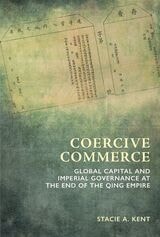
Coercive Commerce
Global Capital and Imperial Governance at the End of the Qing EmpireStacie A. Kent
Hong Kong University Press, 2025
In 1842, the Qing Empire signed a watershed commercial treaty with Great Britain, beginning a century-long period in which geopolitical and global economic entanglements intruded on Qing territory and governance. Previously understood as an era of “semi-colonialism,” Stacie A. Kent reframes this century of intervention by shedding light on the generative force of global capital.
Based on extensive research, conducted with British and Chinese government archives, Coercive Commerce shows how commercial treaties and the regulatory regime that grew out of them catalyzed a revised arts of governance in Qing-administered China. Capital, which had long been present in Chinese merchants’ pocketbooks, came to shape and even govern Chinese statecraft during the “treaty era.” This book contends that Qing administrators alternately resisted and adapted to this new reality through taxation systems such as transit passes and the Imperial Maritime Customs Service by reorganizing Chinese territory into a space where global circuits of capital could circulate and reproduce at an ever greater scale.
Offering a deep dive into the coercive nature of capitalism and the historically specific ways global capital reproduction took root in Qing China, Coercive Commerce will interest historians of capital and modern China alike.
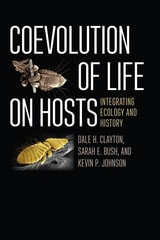
Coevolution of Life on Hosts
Integrating Ecology and HistoryDale H. Clayton, Sarah E. Bush, and Kevin P. Johnson
University of Chicago Press, 2015
Following an introduction to coevolutionary concepts, the authors combine experimental and comparative host-parasite approaches for testing coevolutionary hypotheses to explore the influence of ecological interactions and coadaptation on patterns of diversification and codiversification among interacting species. Ectoparasites—a diverse assemblage of organisms that ranges from herbivorous insects on plants, to monogenean flatworms on fish, and feather lice on birds—are powerful models for the study of coevolution because they are easy to observe, mark, and count. As lice on birds and mammals are permanent parasites that spend their entire lifecycles on the bodies of their hosts, they are ideally suited to generating a synthetic overview of coevolution—and, thereby, offer an exciting framework for integrating the concepts of coadaptation and codiversification.