Results by title
1272 books match the query 'Asia' and 112 start with c
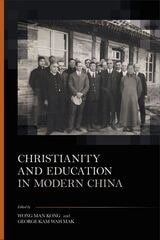
Christianity and Education in Modern China
Edited by Man Kong Wong and George Kam Wah Mak
Hong Kong University Press, 2025
In Christianity and Education in Modern China, the contributors demonstrate how Christianity served as a driving force in the development of modern education in China. Each essay offers new insights into Christian influence on education in modern China while examining how Christian missionaries and Chinese Christian educators interacted with China's social, cultural, and political contexts. They also explore how the legacies of Christian higher education affected higher education in mainland China, Taiwan, and Asia at large. On the whole, this volume compares the Western missionary and Chinese Christian perspectives with rich historiographical acumen by offering original case studies to examine Christianity’s impact on education in modern China.
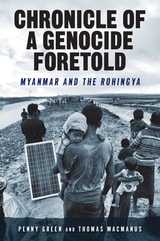
Chronicle of a Genocide Foretold
Myanmar and the RohingyaPenny Green
Rutgers University Press, 2027
Chronicle of a Genocide Foretold is a powerful account of one of the most devastating human crises of the 21st century. Drawing on firsthand research conducted in Burma (Myanmar) and neighboring countries, the book uncovers how the Rohingya Muslims have been systematically isolated, impoverished, and targeted in a state-led genocidal campaign. Through more than 150 interviews with survivors, local officials, religious leaders, and international actors, the authors reveal how discrimination, mass displacement, and organized brutality have created conditions that meet the legal, criminological, and moral definition of genocide. The book also challenges the silence and complicity of the international community. Accessible and grounded in rigorous research, this book speaks to scholars, activists, policymakers, and anyone concerned with justice, human rights, and the global failure to prevent genocide.
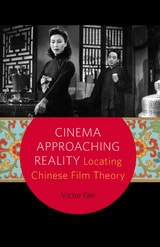
Cinema Approaching Reality
Locating Chinese Film TheoryVictor Fan
University of Minnesota Press, 2015
In Cinema Approaching Reality, Victor Fan brings together, for the first time, Chinese and Euro-American film theories and theorists to engage in critical debates about film in Shanghai and Hong Kong from the 1920s through 1940s. His point of departure is a term popularly employed by Chinese film critics during this period, bizhen, often translated as “lifelike” but best understood as “approaching reality.” What these Chinese theorists mean, in Fan’s reading, is that the cinematographic image is not a form of total reality, but it can allow spectators to apprehend an effect as though they had been there at the time when an event actually happened.
Fan suggests that the phrase “approaching reality” can help to renegotiate an aporia (blind spot) that influential French film critic André Bazin wrestled with: the cinematographic image is a trace of reality, yet reality is absent in the cinematographic image, and the cinema makes present this absence as it reactivates the passage of time. Fan enriches Bazinian cinematic ontology with discussions on cinematic reality in Republican China and colonial Hong Kong, putting Western theorists—from Bazin and Kracauer to Baudrillard, Agamben, and Deleuze—into dialogue with their Chinese counterparts. The result is an eye-opening exploration of the potentialities in approaching cinema anew, especially in the photographic materiality following its digital turn.

Cinema and the Cosmopolitan City
Colonial Encounters in Shanghai, 1900–1930Qiliang He
University of Michigan Press, 2027
In early twentieth-century Shanghai, cinema was more than entertainment—it reshaped the city itself. As movie theaters appealed to city dwellers of all backgrounds, colonial authorities struggled to manage this new public space and introduced new safety rules, censorship, and anti-crime measures. Movie theaters unintentionally brought the unofficial way of racial segregation to an end. Moreover, imported films, though emblematic of Western modernity, paradoxically eroded the myth of Western civilizational superiority. These films revealed social ills in Euro-American societies, exposed Hollywood’s racist depictions of Chinese people, and galvanized anti-imperialist and nationalist sentiments among local audiences.
Cinema and the Cosmopolitan City adopts a “cinema off-screen” approach—stitching together urban history and film studies and foregrounding circulation, consumption, and spatial practice. Qiliang He draws on municipal archives, police records, censorship reports, trade journals, film reviews, and news stories to reconstruct the regulatory regimes imposed by the Shanghai Municipal Council and Shanghai Municipal Police, which was targeting both Bolshevism and “immoral” content. This book reveals how cinema didn’t just reflect modern life—it actively changed urban governance, fueled anticolonial feelings, and linked cosmopolitan culture with rising nationalism in China.
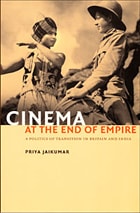
Cinema at the End of Empire
A Politics of Transition in Britain and IndiaPriya Jaikumar
Duke University Press, 2006
In addition to close readings of British and Indian films of the late colonial era, Jaikumar draws on a wealth of historical and archival material, including parliamentary proceedings, state-sponsored investigations into colonial filmmaking, trade journals, and intra- and intergovernmental memos regarding cinema. Her wide-ranging interpretations of British film policies, British initiatives in colonial film markets, and genres such as the Indian mythological film and the British empire melodrama reveal how popular film styles and controversial film regulations in these politically linked territories reconfigured imperial relations. With its innovative examination of the colonial film archive, this richly illustrated book presents a new way to track historical change through cinema.
Cinema under National Reconstruction
State Censorship and South Korea’s Cold War Film CultureHye Seung Chung
Rutgers University Press, 2025
Cities Surround The Countryside
Urban Aesthetics in Postsocialist ChinaRobin Visser
Duke University Press, 2010
In the 1980s, writers, filmmakers, and artists began to probe the contradictions in China’s urbanization policies and rhetoric. Powerful neorealist fiction, cinema, documentaries, paintings, photographs, performances, and installations contrasted forms of glittering urban renewal with the government’s inattention to a livable urban infrastructure. Narratives and images depicting the melancholy urban subject came to illustrate ethical quandaries raised by urban life. Visser relates her analysis of this art to major transformations in urban planning under global neoliberalism, to the development of cultural studies in the Chinese academy, and to ways that specific cities, particularly Beijing and Shanghai, figure in the cultural imagination. Despite the environmental and cultural destruction caused by China’s neoliberal policies, Visser argues for the emergence of a new urban self-awareness, one that offers creative resolutions for the dilemmas of urbanism through new forms of intellectual engagement in society and nascent forms of civic governance.
City of Screens
Imagining Audiences in Manila's Alternative Film CultureJasmine Nadua Trice
Duke University Press, 2021
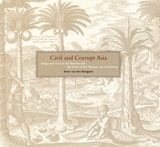
Civil and Corrupt Asia
Image and Text in the Itinerario and the Icones of Jan Huygen Van LinschotenErnst van den Boogaart
University of Chicago Press, 2003
Divine and Spoiled Asia reproduces these engravings and their captions (in English), together with an extensive analysis of them by historian Ernst van den Boogaart. In addition to providing unparalleled insights into early modern European views of the East, the engravings also contain valuable depictions of the peoples, customs, and flora and fauna of late sixteenth-century India and neighboring countries.
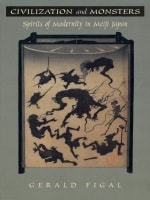
Civilization and Monsters
Spirits of Modernity in Meiji JapanGerald Figal
Duke University Press, 2000
After discussing the role of the fantastic in everyday Japan at the eve of the Meiji period, Figal draws new connections between folklorists, writers, educators, state ideologues, and policymakers, all of whom crossed paths in a contest over supernatural terrain. He shows the ways in which a determined Meiji state was engaged in a battle to suppress, denigrate, manipulate, or reincorporate folk belief as part of an effort toward the consolidation of a modern national culture. Modern medicine and education, functioning as a means for the state to exercise its power, redefined folk practices as a source of evil. Diverse local spirits were supplanted by a new Japanese Spirit, embodied by the newly constituted emperor, the supernatural source of the nation’s strength. The monsters of folklore were identified, catalogued, and characterized according to a new regime of modern reason. But whether engaged to support state power and forge a national citizenry or to critique the arbitrary nature of that power, the fantastic, as Figal maintains, is the constant condition of Japanese modernity in all its contradictions. Furthermore, he argues, modernity in general is born of fantasy in ways that have scarcely been recognized.
Bringing unexplored and provocative new ideas to the Japan specialist, Civilization and Monsters will also appeal to readers concerned with issues of modernity in general.
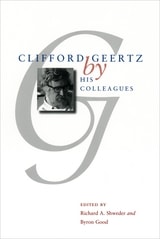
Clifford Geertz by His Colleagues
Edited by Richard A. Shweder and Byron Good
University of Chicago Press, 2005
As part of the American Anthropological Association's centennial celebration, the executive board sponsored a presidential session honoring Geertz. Clifford Geertz by His Colleagues compiles the twelve speeches given then by a distinguished panel of social scientists along with a concluding piece by Geertz in which he responds to each speaker and reflects on his own career. These edited speeches cover a broad range of topics, including Geertz's views on morality, cultural critique, interpretivism, time and change, Islam, and violence.
A fitting tribute to one of the great thinkers of our age, this collection will be enjoyed by anthropologists as well as students of psychology, history, and philosophy.
Climatic Media
Transpacific Experiments in Atmospheric ControlYuriko Furuhata
Duke University Press, 2022

Codes of Misconduct
Regulating Prostitution in Late Colonial BombayAshwini Tambe
University of Minnesota Press, 2009
Against the backdrop of the industrial growth of Bombay, Codes of Misconduct examines the relationship between lawmaking, law enforcement, and sexual commerce. Ashwini Tambe challenges linear readings of how laws create effects and demonstrates that the regulation and criminalization of prostitution were not contrasting approaches to prostitution but different modes of state coercion. By analyzing legal prohibitions as productive forces, she also probes the pornographic imagination of the colonial state, showing how regulations made sexual commerce more visible but rendered the prostitute silent.
Codes of Misconduct engages with debates on state control of sex work and traces how a colonial legacy influences contemporary efforts to contain the spread of HIV and decriminalize sex workers in India today. In doing so, Tambe’s work not only adds to our understanding of empire, sexuality, and the law, it also sheds new light on the long history of Bombay’s transnational links and the social worlds of its underclasses.
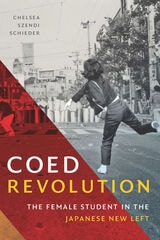
Coed Revolution
The Female Student in the Japanese New LeftChelsea Szendi Schieder
Duke University Press, 2021
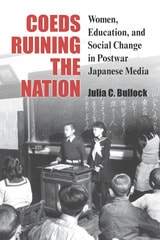
Coeds Ruining the Nation
Women, Education, and Social Change in Postwar Japanese MediaJulia C. Bullock
University of Michigan Press, 2019
This is the first book in English to explore the arguments for and against coeducation as presented in newspaper and magazine articles, cartoons, student-authored school newsletters, and roundtable discussions published in the Japanese press as these reforms were being implemented. It complicates the notion of the postwar years as a moment of rupture, highlighting prewar experiments with coeducation that belied objections that the practice was a foreign imposition and therefore “unnatural” for Japanese culture. It also illustrates a remarkable degree of continuity between prewar and postwar models of femininity, arguing that Occupation-era guarantees of equal educational opportunity were ultimately repurposed toward a gendered division of labor that underwrote the postwar project of economic recovery. Finally, it excavates discourses of gender and sexuality underlying the moral panic surrounding coeducation to demonstrate that claims of rampant sexual deviance and other concerns were employed as disciplinary mechanisms to reinforce an ideology of harmonious gender complementarity and to dissuade women from pursuing conventionally masculine prerogatives.
Coercive Commerce
Global Capital and Imperial Governance at the End of the Qing EmpireStacie A. Kent
Hong Kong University Press, 2025
In 1842, the Qing Empire signed a watershed commercial treaty with Great Britain, beginning a century-long period in which geopolitical and global economic entanglements intruded on Qing territory and governance. Previously understood as an era of “semi-colonialism,” Stacie A. Kent reframes this century of intervention by shedding light on the generative force of global capital.
Based on extensive research, conducted with British and Chinese government archives, Coercive Commerce shows how commercial treaties and the regulatory regime that grew out of them catalyzed a revised arts of governance in Qing-administered China. Capital, which had long been present in Chinese merchants’ pocketbooks, came to shape and even govern Chinese statecraft during the “treaty era.” This book contends that Qing administrators alternately resisted and adapted to this new reality through taxation systems such as transit passes and the Imperial Maritime Customs Service by reorganizing Chinese territory into a space where global circuits of capital could circulate and reproduce at an ever greater scale.
Offering a deep dive into the coercive nature of capitalism and the historically specific ways global capital reproduction took root in Qing China, Coercive Commerce will interest historians of capital and modern China alike.
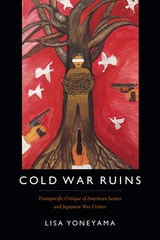
Cold War Ruins
Transpacific Critique of American Justice and Japanese War CrimesLisa Yoneyama
Duke University Press, 2016
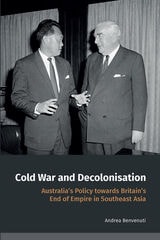
Cold War and Decolonisation
Australia's Policy towards Britain's End of Empire in Southeast AsiaAndrea Benvenuti
National University of Singapore Press, 2017
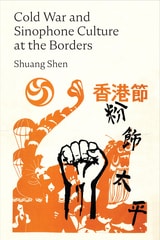
Cold War and Sinophone Culture at the Borders
Shuang Shen
University of Michigan Press, 2027
Cold War and Sinophone Culture at the Borders examines Sinophone literary and cultural production in relation to the politics of the global Cold War and decolonization in Hong Kong, Singapore, and Malaysia. As we reckon with the historical and contemporary geopolitical standoffs in the Cold War–divided territories, Shuang Shen draws attention to the diasporic communities outside Chinese sovereign territories and shows that these supposedly peripheral locations were in fact significant cultural and political hot spots.
Shen demonstrates how Cold War borders exerted geo-power over strategic hot spots, organized global flows of populations and cultures, hardened the boundaries of aesthetic debates, and managed interracial relationships and plurilingual exchange. The multifold bordering effect in turn complicates the common perception of the border as a mechanism of territorial division. Cold War and Sinophone Culture at the Borders proposes that a critical examination of borders—not just territorial divisions, but also social, political, and aesthetic boundaries––can tap into different structures of power without needing to incorporate them into a single binary framework of the metropole versus colony.
Collisions With History
Latin American Fiction and Social Science from “El Boom” to the New World OrderFrederick M. Nunn
Ohio University Press, 2001
Latin American intellectuals have traditionally debated their region’s history, never with so much agreement as in the fiction, commentary, and scholarship of the late twentieth century. Collisions with History shows how “fictional histories” of discovery and conquest, independence and early nationhood, and the recent authoritarian past were purposeful revisionist collisions with received national versions. These collisions occurred only because of El Boom, thus making Latin America’s greatest literary movement a historical phenomenon as well. Frederick M. Nunn discusses the cataclysmic view of history conveyed in Boom novels and examines the thought and self-perception of selected authors whose political activism enhanced the appeal of their works—historical and otherwise: Alejo Carpentier, Carlos Fuentes, Gabriel García Márquez, and Augusto Roa Bastos; Julio Cortázar, Isabel Allende, Mario Vargas Llosa, and Darcy Ribeiro.
Collisions with History demonstrates how their commentary on history, literature, politics, and international affairs reveals a conscious sense of purpose. From between the lines of their nonfiction emerges a consensus that outside forces have defined as well as controlled Latin America’s history.
Professor Nunn also suggests that, with novelists now no longer very interested in colliding with history, it may fall to social scientists to speak for what remains of the region’s past in the New World Order.
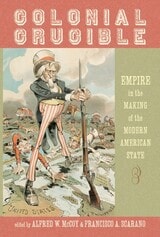
Colonial Crucible
Empire in the Making of the Modern American StateEdited by Alfred W. McCoy and Francisco A. Scarano
University of Wisconsin Press, 2009
Moving well beyond theory, this volume takes the next step, adding a fine-grained, empirical texture to the study of U.S. imperialism by analyzing its specific consequences. Across a broad range of institutions—policing and prisons, education, race relations, public health, law, the military, and environmental management—this formative experience left a lasting institutional imprint. With each essay distilling years, sometimes decades, of scholarship into a concise argument, Colonial Crucible reveals the roots of a legacy evident, most recently, in Washington’s misadventures in the Middle East.
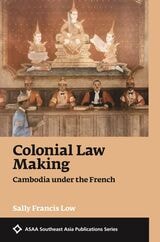
Colonial Law Making
Cambodia under the FrenchSally Frances Low
National University of Singapore Press, 2023
Covering a previously neglected area of Cambodian history, Colonial Law Making explores the structural forces and contingent exchanges that shaped colonial law in Cambodia and examines its post-independence colonial legacy.
The court of King Norodom and the temples of Angkor Wat became orientalist icons in the French colonial imagination, perpetuating an image of the Protectorate (1863–1953) as special and worthy of preservation. This contributed to exceptionalism in the way the Kingdom was colonized, including through law. Drawing on previously unexamined archival material, Sally Low presents a comparative case study of French approaches to colonial law, jurisdiction, and protection. Although the voices of non-elite Cambodians are largely absent from the archives, their influence on colonial law is evident as they resisted efforts to regulate their lives and their land. Low argues that the result was a set of state legal institutions and an indigenous jurisdiction that blended Cambodian and French notions of patronage and royal power as the source and authority for law.
This work is a case study of colonial law as an instrument of control and administration in an indirectly ruled colony. It adds depth to our understanding of the impact of European colonial law and the significance of different forms of colonial rule—direct, indirect, and unofficial. It is easily accessible for non-lawyers and is a must-read for those interested in the recent past of Southeast Asia and the countries that were previously colonized as French Indochina.
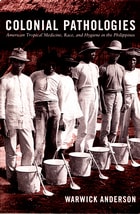
Colonial Pathologies
American Tropical Medicine, Race, and Hygiene in the PhilippinesWarwick Anderson
Duke University Press, 2006
A vivid sense of a colonial culture characterized by an anxious and assertive white masculinity emerges from Anderson’s description of American efforts to treat and discipline allegedly errant Filipinos. His narrative encompasses a colonial obsession with native excrement, a leper colony intended to transform those considered most unclean and least socialized, and the hookworm and malaria programs implemented by the Rockefeller Foundation in the 1920s and 1930s. Throughout, Anderson is attentive to the circulation of intertwined ideas about race, science, and medicine. He points to colonial public health in the Philippines as a key influence on the subsequent development of military medicine and industrial hygiene, U.S. urban health services, and racialized development regimes in other parts of the world.
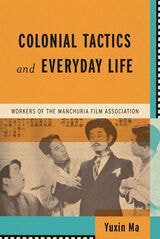
Colonial Tactics and Everyday Life
Workers of the Manchuria Film AssociationYuxin Ma
University of Wisconsin Press, 2023
By focusing on the daily challenges and experiences of the Chinese workers at the corporation, Ma examines how life was actually lived by people navigating between practical and ideological concerns. She illustrates how the inhabitants of Manchukuo navigated social opportunities, economic depression, educational reforms, fascist rule, commercial interests, practical daily needs, and more—and reveals ways in which these conflicting preoccupations sometimes manifested as tension and ambiguity on screen. In the battle between repression and expression, these Chinese actors, directors, writers, and technicians adopted defensive and opportunistic tactics. They did so in colonial spaces, often rejecting modernist representations of Manchukuo in favor of venerating traditional Chinese culture and values. The expertise, skills, and professional networks they developed extended well beyond the occupation into the postwar period, and may individuals reestablished themselves as cinema professionals in the socialist era.
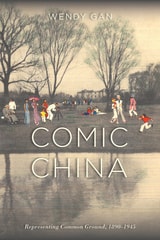
Comic China
Representing Common Ground, 1890-1945Wendy Gan
Temple University Press, 2018
Wendy Gan’s Comic China investigates the circumstances and motivations of cross-cultural humor. How do works that trade in laughter shape our understanding of Western discourses about China? Is humor meant to be inclusive or exclusive? Does it protect or challenge the status quo? Gan suggests that the simple, straightforward laugh may actually be a far more intricate negotiation of power relations.
Gan unpacks texts by authors who had little real contact with China as well as writers whose proximity to China influenced their representations. Looking beyond the familiar canon of serious modernist texts and the Yellow Peril classics of popular fiction, Gan analyzes turn-of-the-twentieth-century musical comedies set in the Far East, Ernest Bramah’s chinoiserie-inspired tales, and interwar travel writing. She also considers the comic works of the missionary Arthur Henderson Smith, the former Maritime Customs Officer J.O.P. Bland, and the Shanghai journalist and advertising man Carl Crow.
Though it includes humor that is less than complimentary to the Chinese, Comic China reminds us that laughter is tied to our common humanity. Gan navigates the humor used in comic depictions ultimately to find, not superiority or ridicule, but common ground.

Coming Together
Singapore and the Idea of the EntrepotJeff Khoo
National University of Singapore Press, 2027
Explores the circumstances and elements that make for a successful Southeast Asian entrepôt.
What made modern Singapore and fifteenth-century Malacca so exceptional in their success in trade, and why did so many other attempts fail to coalesce? Coming Together recasts the founding of modern Singapore as the culmination of a long tradition of alliance-building within the “straits and peninsula,” that sliver of maritime Southeast Asia that connects the Indian Ocean with the China Seas. From abortive Franco-Siamese projects in the 1680s, through lonely failure at Poulo Condor and stubborn frustration on the Burmese “Eastern Coast,” to the persistent enterprise of Bugis and Malay rulers during the 1770s and 1780s, Coming Together follows an evolving cast of princes, captains, merchants, and missionaries drawn together by a powerful idea: that the trade of Asia could be concentrated at a single and wildly prosperous place.
Long-neglected French archival materials illuminate events long distorted by colonial historiography, revealing the entrepôt as a transcultural project sustained by tributary diplomacy, treaty-making, and the pragmatic exchange of protection for commercial privilege. The result is a fundamental reinterpretation of the origins of Penang and Singapore—and of the alliance-building that lies at the core of modern Singapore.
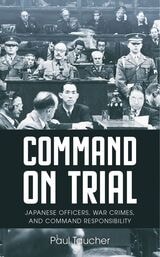
Command on Trial
Japanese Officers, War Crimes, and Command ResponsibilityPaul Taucher
Hong Kong University Press, 2026
An examination of how the legal doctrine of command responsibility was applied during military tribunals for Japanese war criminals, often inconsistently and ineffectively.
Between 1945 and 1951, the Allied powers prosecuted over 5,700 suspected Japanese war criminals across the Asia-Pacific region before one international and many national tribunals using a new legal doctrine known as command responsibility. Command responsibility holds officers criminally liable for the crimes of their subordinates even if they did not order the crimes to occur. Allied authorities believed that the structure of the Japanese military had allowed the crimes to occur and that pursuing guilt for war crimes should extend beyond enlisted soldiers who were the direct perpetrators of war crimes to those who had been in a position of command.
Command on Trial shows that the application of command responsibility in the courtroom was highly unstable and open to manipulation, especially in the trials of lower-ranking officers, resulting in outcomes that were legally, morally, and philosophically inconsistent. A clear illustration of the pitfalls of command responsibility, this book shows that the trials—and command responsibility—did not achieve comprehensive justice and left unanswered the question of who was actually responsible for many of the war crimes that were perpetrated.
Commissioners and Commodores
The East India Squadron and American Diplomacy in ChinaCurtis T. Henson
University of Alabama Press, 1982

Communism, Religion, and Revolt in Banten in the Early Twentieth Century
Mis Sea#86Michael Williams
Ohio University Press, 1990
Twice in this century popular revolts against colonial rule have occured in the Banten district of West Java. These revolts, conducted largely under an Islamic leadership, also proclaimed themselves Communist. Islamic Communism is seemingly a paradox. This is especially the case when one considers that probably no religion has proved more resistant to Communist ideology than Islam.
Michael Williams here details the complicated history of the Bantenese revolts in the twentieth century and probes the ideological riddle of Islamic Communism. Modern history is replete with examples of regions with a long history of organizing themselves politically to resist intrusion on their territory, resources, and people. This book establishes that in Indonesia, the Bantenese were among the most practiced exponents of resistance.
Compadre Colonialism
Studies in the Philippines under American RuleNorman G. Owen, Editor
University of Michigan Press, 1971
Composing Japanese Musical Modernity
Bonnie C. Wade
University of Chicago Press, 2013
Wade examines the short history of the composer in Japanese society, looking at the creative and economic opportunities that have sprung up around them—or that they forged—during Japan’s astonishingly fast modernization. She shows that modernist Japanese composers have not bought into the high modernist concept of the autonomous artist, instead remaining connected to the people. Articulating Japanese modernism in this way, Wade tells a larger story of international musical life, of the spaces in which tradition and modernity are able to meet and, ultimately, where modernity itself has been made.
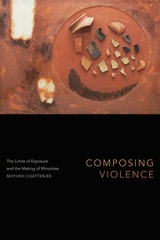
Composing Violence
The Limits of Exposure and the Making of MinoritiesMoyukh Chatterjee
Duke University Press, 2023
Conflicting Counsels to Confuse the Age
A Documentary Study of Political Economy in Qing China, 1644–1840Helen Dunstan
University of Michigan Press, 1996
Conjugations
Marriage and Form in New Bollywood CinemaSangita Gopal
University of Chicago Press, 2011
Bollywood movies have been long known for their colorful song-and-dance numbers and knack for combining drama, comedy, action-adventure, and music. But when India entered the global marketplace in the early 1990s, its film industry transformed radically. Production and distribution of films became regulated, advertising and marketing created a largely middle-class audience, and films began to fit into genres like science fiction and horror. In this bold study of what she names New Bollywood, Sangita Gopal contends that the key to understanding these changes is to analyze films’ evolving treatment of romantic relationships.
Conquest and Community
The Afterlife of Warrior Saint Ghazi MiyanShahid Amin
University of Chicago Press, 2016
Conquest and Community is Shahid Amin's answer. Covering more than eight hundred years of history, the book centers on the enduringly popular saint Ghazi Miyan, a youthful soldier of Islam whose shrines are found all over India. Amin details the warrior saint’s legendary exploits, then tracks the many ways he has been commemorated in the centuries since. The intriguing stories, ballads, and proverbs that grew up around Ghazi Miyan were, Amin shows, a way of domesticating the conquest—recognizing past conflicts and differences but nevertheless bringing diverse groups together into a community of devotees. What seems at first glance to be the story of one mythical figure becomes an allegory for the history of Hindu-Muslim relations over an astonishingly long period of time, and a timely contribution to current political and historical debates.

Constructing China
Clashing Views of the People's RepublicMobo Gao
Pluto Press, 2018
Constructing China presents a detailed examination of the means through which our knowledge of China is created. Rejecting the supposed objectivity of empirical statistics and challenging the assumption of a dichotomy between Western liberal democracy and Chinese authoritarianism, Mobo Gao dissects the political agenda and conceptual framework of commentators on China and urges those on the right and the left alike to be carefully critical of their own views on the nation’s politics, economics, and history.
Contemporary Asian American Communities
Intersections And Divergencesedited by Linda Trinh Võ and Rick Bonus
Temple University Press, 2002
Contesting Malayness
Malay Identity Across BoundariesEdited by Timothy P. Barnard
National University of Singapore Press, 2014
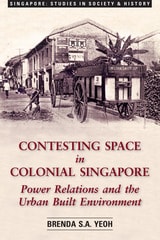
Contesting Space in Colonial Singapore
Power Relations and the Urban Built EnvironmentBrenda S.A. Yeoh
National University of Singapore Press, 2003
Contracting Colonialism
Translation and Christian Conversion in Tagalog Society Under Early Spanish RuleVicente L. Rafael
Duke University Press, 1993
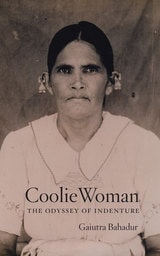
Coolie Woman
The Odyssey of IndentureGaiutra Bahadur
University of Chicago Press, 2013
Shunned by society, and sometimes in mortal danger, many coolie women were either runaways, widows, or outcasts. Many of them left husbands and families behind to migrate alone in epic sea voyages—traumatic “middle passages”—only to face a life of hard labor, dismal living conditions, and, especially, sexual exploitation. As Bahadur explains, however, it is precisely their sexuality that makes coolie women stand out as figures in history. Greatly outnumbered by men, they were able to use sex with their overseers to gain various advantages, an act that often incited fatal retaliations from coolie men and sometimes larger uprisings of laborers against their overlords. Complex and unpredictable, sex was nevertheless a powerful tool.
Examining this and many other facets of these remarkable women’s lives, Coolie Woman is a meditation on survival, a gripping story of a double diaspora—from India to the West Indies in one century, Guyana to the United States in the next—that is at once a search for one’s roots and an exploration of gender and power, peril and opportunity.
Crafting Selves
Power, Gender, and Discourses of Identity in a Japanese WorkplaceDorinne K. Kondo
University of Chicago Press, 1990
"Kondo's work is significant because she goes beyond disharmony, insisting on complexity. Kondo shows that inequalities are not simply oppressive-they are meaningful ways to establish identities."—Nancy Rosenberger, Journal of Asian Studies
Creating with Roots
Contemporary Chinese National Folk Dance ChoreographyRui Xu
University of Michigan Press, 2025
Creating with Roots offers a detailed breakdown of key terms and concepts necessary for understanding Chinese national folk dance and analyzes 37 examples of choreography dating from the 1940s to 2000. The author situates these explanations within the longer history of cultural practice and theory in China and in relation to the international dance discourses of the former Soviet Union, Eastern Europe, Western Europe, and North America.
Creative Belonging
The Qiang and Multiethnic Imagination in Modern ChinaYanshuo Zhang
University of Michigan Press, 2026
China is a multicultural country home to fifty-five ethnic minority groups, yet due to linguistic and cultural barriers many of these groups remain understudied or unknown in the West. The Qiang, one of modern China’s officially recognized ethnic minorities, is also China’s longest-standing ethnoracial identity marker that has existed since the earliest recorded history of China. Creative Belonging investigates the formation and evolution of the Qiang as a people, a concept, and a cultural history in China. It further examines how the contemporary Qiang ethnic group interacts strategically with mainstream Chinese society, challenging the historically entrenched hierarchies between the sociocultural “centers” of China and its ethnic “peripheries.”
This book is based on years of ethnographic and textual-archival research in the Himalayan regions of southwest China, where the contemporary Qiang group resides. Drawing on a diverse range of official and local political discourses and previously unstudied literary, historiographical, and cinematic works, Yanshuo Zhang illuminates how the Qiang have carved out spaces of “creative belonging” within the parameters of multiculturalism in contemporary China. Rooted in ethnographic and textual-archival research, the book presents original materials produced by Qiang indigenous writers, scholars, artists, grassroots village cultural activists, and entrepreneurs at both the local and the global levels. Creative Belonging invites readers to rethink ethnicity and national belonging in China by centering minority groups’ efforts to expand the meanings and implications of “Chinese culture.”

Creativity and Academic Activism
Instituting Cultural StudiesMeaghan Morris and Mette Hjort, eds.
Duke University Press, 0
This book also investigates the impact of managerialism, marketization, and globalization on university cultures, asking what critical cultural scholarship can do in such increasingly adversarial conditions. Experiments in Asian universities are emphasized as exemplary of what can or could be achieved in other contexts of globalized university policy.
Contributors. Tony Bennett, Stephen Ching-Kiu Chan, Kuan-Hsing Chen, Douglas Crimp, Dai Jinhua, John Nguyet Erni, Mette Hjort, Josephine Ho, Koichi Iwabuchi, Meaghan Morris, Tejaswini Niranjana, Wang Xiaoming, Audrey Yue
Creativity and Academic Activism
Instituting Cultural StudiesMeaghan Morris and Mette Hjort, eds.
Duke University Press, 0
This book also investigates the impact of managerialism, marketization, and globalization on university cultures, asking what critical cultural scholarship can do in such increasingly adversarial conditions. Experiments in Asian universities are emphasized as exemplary of what can or could be achieved in other contexts of globalized university policy.
Contributors. Tony Bennett, Stephen Ching-Kiu Chan, Kuan-Hsing Chen, Douglas Crimp, Dai Jinhua, John Nguyet Erni, Mette Hjort, Josephine Ho, Koichi Iwabuchi, Meaghan Morris, Tejaswini Niranjana, Wang Xiaoming, Audrey Yue
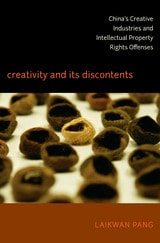
Creativity and Its Discontents
China's Creative Industries and Intellectual Property Rights OffensesLaikwan Pang
Duke University Press, 2012
Creole Kingdoms in Southeast Asia
Slave-Gathering Warfare and Cultural Exchange in Burma, Siam, and ManipurBryce G. Beemer
National University of Singapore Press, 2027
Examines the cultural consequences of slave-gathering warfare.
Long-distance slave-gathering warfare reshuffled the populations of mainland Southeast Asia between the eighteenth and nineteenth centuries. In this lightly populated region, people were power, and warfare between kingdoms was dedicated to the enslavement and forced relocation of defeated peoples. In the Southeast Asian context, war slaves were often valued and exploited for native talents and knowledge. In Upper Burma, for example, captured artisans, performers, pundits, weavers, and elephant trainers were made the king’s property and incorporated into a vast and tightly organized force of coerced laborers.
The enslaved became critical agents in the transmission of artistic practices, knowledge, religious beliefs, and exotic skills and talents. Using the concept of creolization as a conceptual anchor, Creole Kingdoms offers new insights into the many ways that war slaves and their descendants creatively built, popularized, and consolidated cultural practices across the cosmopolitan kingdoms of mainland Southeast Asia.
Creole Kingdoms opens up new terrain for both future generations of Southeast Asian scholars and general readers from the mainland who want to explore the cultural history of their home.
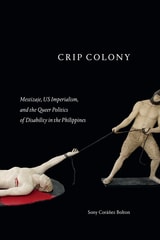
Crip Colony
Mestizaje, US Imperialism, and the Queer Politics of Disability in the PhilippinesSony Coráñez Bolton
Duke University Press, 2023
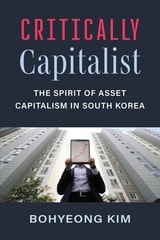
Critically Capitalist
The Spirit of Asset Capitalism in South KoreaBohyeong Kim
University of Michigan Press, 2025
Drawing on multi-sited ethnography and in-depth interviews with a broad community of aspiring millionaires, Critically Capitalist illuminates how contemporary capitalism thrives by channeling discontent into financial and real estate markets, which in turn has cemented critical capitalism as the cultural and affective backbone of South Korea’s economy.