Results by title
1726 books match the query 'Film' and 147 start with c

Cinema and the Cosmopolitan City
Colonial Encounters in Shanghai, 1900–1930Qiliang He
University of Michigan Press, 2027
In early twentieth-century Shanghai, cinema was more than entertainment—it reshaped the city itself. As movie theaters appealed to city dwellers of all backgrounds, colonial authorities struggled to manage this new public space and introduced new safety rules, censorship, and anti-crime measures. Movie theaters unintentionally brought the unofficial way of racial segregation to an end. Moreover, imported films, though emblematic of Western modernity, paradoxically eroded the myth of Western civilizational superiority. These films revealed social ills in Euro-American societies, exposed Hollywood’s racist depictions of Chinese people, and galvanized anti-imperialist and nationalist sentiments among local audiences.
Cinema and the Cosmopolitan City adopts a “cinema off-screen” approach—stitching together urban history and film studies and foregrounding circulation, consumption, and spatial practice. Qiliang He draws on municipal archives, police records, censorship reports, trade journals, film reviews, and news stories to reconstruct the regulatory regimes imposed by the Shanghai Municipal Council and Shanghai Municipal Police, which was targeting both Bolshevism and “immoral” content. This book reveals how cinema didn’t just reflect modern life—it actively changed urban governance, fueled anticolonial feelings, and linked cosmopolitan culture with rising nationalism in China.
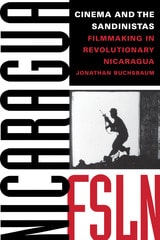
Cinema and the Sandinistas
Filmmaking in Revolutionary NicaraguaBy Jonathan Buchsbaum
University of Texas Press, 2003
Following the Sandinista Revolution in 1979, young bohemian artists rushed to the newly formed Nicaraguan national film institute INCINE to contribute to "the recovery of national identity" through the creation of a national film project. Over the next eleven years, the filmmakers of INCINE produced over seventy films—documentary, fiction, and hybrids—that collectively reveal a unique vision of the Revolution drawn not from official FSLN directives, but from the filmmakers' own cinematic interpretations of the Revolution as they were living it.
This book examines the INCINE film project and assesses its achievements in recovering a Nicaraguan national identity through the creation of a national cinema. Using a wealth of firsthand documentation—the films themselves, interviews with numerous INCINE personnel, and INCINE archival records—Jonathan Buchsbaum follows the evolution of INCINE's project and situates it within the larger historical project of militant, revolutionary filmmaking in Latin America. His research also raises crucial questions about the viability of national cinemas in the face of accelerating globalization and technological changes which reverberate far beyond Nicaragua's experiment in revolutionary filmmaking.
Cinema as Infrastructure
Visuality, Power, and the Latin American SouthAdriana Michele Campos Johnson
University of Texas Press, 2027
Examining the interplay of visuality and infrastructure in Latin American films.
Images do far more than we realize. They do not simply represent or depict; they run our world. Surveillance cameras and drones, medical imaging, social media platforms, market-data visualization––these and other technologies make the image an infrastructure of power, a tool for organizing and governing, impressing labor and extracting value.
Adriana Johnson draws on the medium of film to sensitize us to the logics of visuality as a technology of power. In particular, Latin American cinema presents a key site for both crystallizing and retreating from these logics. Through close readings of Argentine, Paraguayan, and Brazilian movies—including the documentary Bus 174, the dystopian sci-fi The Aerial,and the farcical The Gold Bug—Johnson shows how filmmakers can amplify or attenuate the infrastructural reach of visuality. They also reveal visuality’s otherwise-submerged power, and even engage in something like piracy: hacking into, rerouting, and deconstituting the workings of visual infrastructures. A deeply insightful and theoretically rich account, Cinema as Infrastructure reframes the political stakes of filmmaking in an era when visual forms have become means of production and order.
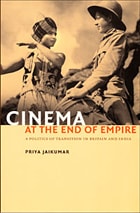
Cinema at the End of Empire
A Politics of Transition in Britain and IndiaPriya Jaikumar
Duke University Press, 2006
In addition to close readings of British and Indian films of the late colonial era, Jaikumar draws on a wealth of historical and archival material, including parliamentary proceedings, state-sponsored investigations into colonial filmmaking, trade journals, and intra- and intergovernmental memos regarding cinema. Her wide-ranging interpretations of British film policies, British initiatives in colonial film markets, and genres such as the Indian mythological film and the British empire melodrama reveal how popular film styles and controversial film regulations in these politically linked territories reconfigured imperial relations. With its innovative examination of the colonial film archive, this richly illustrated book presents a new way to track historical change through cinema.
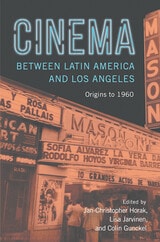
Cinema between Latin America and Los Angeles
Origins to 1960Horak, Jan-Christopher
Rutgers University Press, 2019
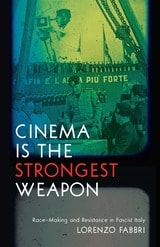
Cinema is the Strongest Weapon
Race-Making and Resistance in Fascist ItalyLorenzo Fabbri
University of Minnesota Press, 2023
A deep dive into Italian cinema under Mussolini’s regime and the filmmakers who used it as a means of antifascist resistance
Looking at Italy’s national film industry under the rule of Benito Mussolini and in the era that followed, Cinema Is the Strongest Weapon examines how cinema was harnessed as a political tool by both the reigning fascist regime and those who sought to resist it. Covering a range of canonical works alongside many of their neglected contemporaries, this book explores film’s mutable relationship to the apparatuses of state power and racial capitalism.
Exploiting realism’s aesthetic, experiential, and affective affordances, Mussolini’s biopolitical project employed cinema to advance an idealized vision of life under fascism and cultivate the basis for a homogenous racial identity. In this book, Lorenzo Fabbri crucially underscores realism’s susceptibility to manipulation from diametrically opposed political perspectives, highlighting the queer, Communist, Jewish, and feminist filmmakers who subverted Mussolini’s notion that “cinema is the regime’s strongest weapon” by developing film narratives and film forms that challenged the prevailing ethno-nationalist ideology.
Focusing on an understudied era of film history and Italian cultural production, Fabbri issues an important recontextualization of Italy’s celebrated neorealist movement and the structural ties it shares with its predecessor. Drawing incisive parallels to contemporary debates around race, whiteness, authoritarianism, and politics, he presents an urgent examination into the broader impact of visual media on culture and society.
Retail e-book files for this title are screen-reader friendly with images accompanied by short alt text and/or extended descriptions.

Cinema of Actuality
Japanese Avant-Garde Filmmaking in the Season of Image PoliticsYuriko Furuhata
Duke University Press, 2013
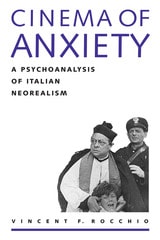
Cinema of Anxiety
A Psychoanalysis of Italian NeorealismBy Vincent F. Rocchio
University of Texas Press, 1999
The "new" realism of Italian cinema after World War II represented and in many ways attempted to contain the turmoil of a society struggling to rid itself of Fascism while fighting off the threat of radical egalitarianism at the same time. In this boldly revisionist book, Vincent F. Rocchio combines Lacanian psychoanalysis with narratology and Marxist critical theory to examine the previously neglected relationship between Neorealist films and the historical spectators they address.
Rocchio builds his analysis around case studies of the films Rome: Open City, Bicycle Thieves, La Terra Trema, Bitter Rice, and Senso. Through the lens of psychoanalysis, he challenges the traditional understanding of Neorealism as a progressive cinema and instead reveals the anxieties it encodes: a society in political turmoil, an economic system in collapse, and a national cinema in ruins; while war, occupation, collaboration, and retaliation remain a part of everyday life.
These case studies demonstrate how Lacanian psychoanalysis can play a key role in analyzing the structure of cinematic discourse and its strategies of containment. As one of the first books outside of feminist film theory to bring the ideas of Lacan to theories of cinema, this book offers innovative methods that reinvigorate film analysis. Clear and detailed insights into both Italian culture and the films under investigation will make this engaging reading for anyone interested in film and cultural studies.
Cinema of Confinement
Thomas J. Connelly
Northwestern University Press, 2019
In this book, Thomas J. Connelly draws on a number of key psychoanalytic concepts from the works of Jacques Lacan, Slavoj Žižek, Joan Copjec, Michel Chion, and Todd McGowan to identify and describe a genre of cinema characterized by spatial confinement. Examining classic films such as Alfred Hitchcock's Rope and Stanley Kubrick's The Shining, as well as current films such as Room, Green Room, and 10 Cloverfield Lane, Connelly shows that the source of enjoyment of confined spaces lies in the viewer's relationship to excess.
Cinema of Confinement offers rich insights into the appeal of constricted filmic spaces at a time when one can easily traverse spatial boundaries within the virtual reality of cyberspace.
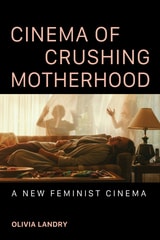
Cinema of Crushing Motherhood
A New Feminist CinemaOlivia Landry
University of Illinois Press, 2025
Cinema of Sincerity
Soviet Films and Culture During the ThawViktoria Paranyuk
University of Wisconsin Press, 2025
Using both theory and close readings of specific films produced in the Soviet Union during the Thaw, a period known for its relative political and cultural liberalization, Cinema of Sincerity treats sincerity as both a concept and an aesthetic strategy. Viktoria Paranyuk argues that Soviet cinema’s use of sincerity was a reworking of a trend in global cinema that sought to bridge the gap between reality and the filmed image. This period saw increased accessibility to world cinematic traditions, new voices in criticism, and, above all, the multigenerational effort in filmmaking that developed and thrived in centers outside Moscow. Paranyuk demonstrates how these changes allowed Soviet cinema to renew its visual language and use film as a space for collective self-examination.
Cinema of Solitude
A Critical Study of Mexican Film, 1967-1983By Charles Ramírez Berg
University of Texas Press, 1992
La crisis, a period of political and economic turmoil in Mexico that began in the late 1960s, spawned a new era in Mexican cinema. Known as el Nuevo Cine (the New Cinema), these films presented alienated characters caught in a painful transition period in which old family, gender, and social roles have ceased to function without being replaced by viable new ones. These are the films explored by Charles Ramírez Berg in Cinema of Solitude, the first book-length critical study of Mexican cinema in English.
Berg discusses the major films and filmmakers of el Nuevo Cine in depth. He analyzes dozens of commercial movies, from popular comedies and adventures to award-winning films. Introductory chapters address the issue of mexicanidad (Mexican national identity) and outline Mexican history, the history of film as popular culture and as a leading national industry, and the ideological dynamics of Mexican cinema.
In thematically arranged chapters, Berg investigates the images of women, men, and social structures portrayed in New Cinema films. He finds that women characters have begun to reject traditional stereotypes for more positive images, while male characters have grown ambiguous and undefined as machismo is abandoned. Other chapters trace the continuing marginalization of Indians in Mexican culture, the changes in male dominance within the family, and the disruptive social and economic effects caused by migration.
For everyone interested in Mexican culture as reflected in its major cinematic productions, as well as students of film theory and national cinemas, this book will be important reading.
Cinema under National Reconstruction
State Censorship and South Korea’s Cold War Film CultureHye Seung Chung
Rutgers University Press, 2025

Cinema without Reflection
Jacques Derrida’s Echopoiesis and Narcissim AdriftAkira Mizuta Lippit
University of Minnesota Press, 2016
Cinema without Reflection traces an implicit film theory in Jacques Derrida’s oeuvre, especially in his frequent invocation of the myth of Echo and Narcissus. Derrida’s reflections on the economies of image and sound that reverberate in this story, along with the spectral dialectics of love, mirrors, and poiesis, serve as the basis for a theory of cinema that Derrida perhaps secretly imagined.
Following Derrida’s interventions on Echo and Narcissus across his thought on the visual arts, Akira Mizuta Lippit seeks to return to a theory of cinema adrift in Derrida’s philosophy.
Forerunners is a thought-in-process series of breakthrough digital works. Written between fresh ideas and finished books, Forerunners draws on scholarly work initiated in notable blogs, social media, conference plenaries, journal articles, and the synergy of academic exchange. This is gray literature publishing: where intense thinking, change, and speculation take place in scholarship.
Cinema's Bodily Illusions
Flying, Floating, and HallucinatingScott C. Richmond
University of Minnesota Press, 2016
Do contemporary big-budget blockbuster films like Gravity move something in us that is fundamentally the same as what avant-garde and experimental films have done for more than a century? In a powerful challenge to mainstream film theory, Cinema’s Bodily Illusions demonstrates that this is the case.
Scott C. Richmond bridges genres and periods by focusing, most palpably, on cinema’s power to evoke illusions: feeling like you’re flying through space, experiencing 3D without glasses, or even hallucinating. He argues that cinema is, first and foremost, a technology to modulate perception. He presents a theory of cinema as a proprioceptive technology: cinema becomes art by modulating viewers’ embodied sense of space. It works primarily not at the level of the intellect but at the level of the body. Richmond develops his theory through examples of direct perceptual illusion in cinema: hallucinatory flicker phenomena in Tony Conrad’s The Flicker, eerie depth effects in Marcel Duchamp’s Anémic Cinéma, the illusion of bodily movement through onscreen space in Stanley Kubrick’s 2001, Godfrey Reggio’s Koyaanisqatsi, and Alfonso Cuarón’s Gravity. In doing so he combines insights from Maurice Merleau-Ponty’s phenomenology of perception and James J. Gibson’s ecological approach to perception. The result is his distinctive ecological phenomenology, which allows us to refocus on the cinema’s perceptual, rather than representational, power.
Arguing against modernist habits of mind in film theory and aesthetics, and the attendant proclamations of cinema’s death or irrelevance, Richmond demonstrates that cinema’s proprioceptive aesthetics make it an urgent site of contemporary inquiry.
Cinema's Original Sin
D.W. Griffith, American Racism, and the Rise of Film CulturePaul McEwan
University of Texas Press, 2022
For over a century, cinephiles and film scholars have had to grapple with an ugly artifact that sits at the beginnings of film history. D. W. Griffith’s profoundly racist epic, The Birth of a Nation, inspired controversy and protest at its 1915 release and was defended as both a true history of Reconstruction (although it was based on fiction) and a new achievement in cinematic art. Paul McEwan examines the long and shifting history of its reception, revealing how the film became not just a cinematic landmark but also an influential force in American aesthetics and intellectual life.
In every decade since 1915, filmmakers, museums, academics, programmers, and film fans have had to figure out how to deal with this troublesome object, and their choices have profoundly influenced both film culture and the notion that films can be works of art. Some critics tried to set aside the film’s racism and concentrate on the form, while others tried to relegate that racism safely to the past. McEwan argues that from the earliest film retrospectives in the 1920s to the rise of remix culture in the present day, controversies about this film and its meaning have profoundly shaped our understandings of film, race, and art.
Cinema, Colonialism, Postcolonialism
Perspectives from the French and Francophone WorldsEdited by Dina Sherzer
University of Texas Press, 1996
In this first major study of French colonial and postcolonial cinema, Dina Sherzer compiles essays by some of the foremost scholars on the subject who interrogate and analyze the realities behind the images of the nation's past and present. Through an examination of France and its colonies, multiethnic contemporary France, and cinematic discourses which have been and are being produced about France's colonial past, these authors explore how the images relay underlying assumptions and their relation to historical and political facts. A variety of subjects and viewpoints inform these studies, which cover the entire range of films on that topic.
The authors expound upon the role French and Francophone films are currently playing in reconstructing and imagining France's colonial past. Not only do the essays examine how French cinema has represented the encounter of French citizens with individuals from former colonies during the colonial era; they examine how French cinema has portrayed and has come to terms with the immigration of former colonial subjects to France. In addition, the book features another postcolonial facet by analyzing films of directors from the former colonies who give their own representation of colonialism and presentation of their culture.
This study is a major contribution to postcolonial research. Race, gender, and geography are central themes throughout this book that presents innovative material that contributes to the history of French cinema and emphasizes how cinema participates in and is a part of national culture.
Cinema, Slavery, and Brazilian Nationalism
By Richard A. Gordon
University of Texas Press, 2015
A unique contribution to film studies, Richard Gordon’s Cinema, Slavery, and Brazilian Nationalism is the first full-length book on Brazilian films about slavery. By studying Brazilian films released between 1976 and 2005, Gordon examines how the films both define the national community and influence viewer understandings of Brazilianness. Though the films he examines span decades, they all communicate their revised version of Brazilian national identity through a cinematic strategy with a dual aim: to upset ingrained ways of thinking about Brazil and to persuade those who watch the films to accept a new way of understanding their national community.
By examining patterns in this heterogeneous group of films, Gordon proposes a new way of delineating how these films attempt to communicate with and change the minds of audience members. Gordon outlines five key aspects that each film incorporates, which describe their shared formula for and role in constructing social identity. These elements include the ways in which the films attempt to create links between the past and the viewers’ present and their methods of encouraging viewers to identify with their protagonists, who are often cast as a prototype for the nation. By aligning themselves with this figure, viewers arrive at a definition of their national identity that, while Afrocentric, also promotes racial and ethnic inclusiveness. Gordon’s innovative analysis transcends the context of his work, and his conclusions can be applied to questions of national identity and film across cultures.
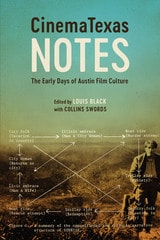
CinemaTexas Notes
The Early Days of Austin Film CultureEdited by Louis Black, with Collins Swords
University of Texas Press, 2018
Austin’s thriving film culture, renowned for international events such as SXSW and the Austin Film Festival, extends back to the early 1970s when students in the Department of Radio-Television-Film at the University of Texas at Austin ran a film programming unit that screened movies for students and the public. Dubbed CinemaTexas, the program offered viewers a wide variety of films—old and new, mainstream, classic, and cult—at a time when finding and watching films after their first run was very difficult and prohibitively expensive. For each film, RTF graduate students wrote program notes that included production details, a sampling of critical reactions, and an original essay that placed the film and its director within context and explained the movie’s historical significance. Over time, CinemaTexas Program Notes became more ambitious and were distributed around the world, including to luminaries such as film critic Pauline Kael.
This anthology gathers a sampling of CinemaTexas Program Notes, organized into four sections: “USA Film History,” “Hollywood Auteurs,” “Cinema-Fist: Renegade Talents,” and “America’s Shadow Cinema.” Many of the note writers have become prominent film studies scholars, as well as leading figures in the film, TV, music, and video game industries. As a collection, CinemaTexas Notes strongly contradicts the notion of an effortlessly formed American film canon, showing instead how local film cultures—whether in Austin, New York, or Europe—have forwarded the development of film studies as a discipline.
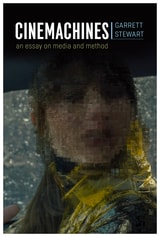
Cinemachines
An Essay on Media and MethodGarrett Stewart
University of Chicago Press, 2020
Engaging in fresh ways with revelatory special effects in the history of cinematic storytelling—from Buster Keaton’s breaching of the film screen in Sherlock Jr. to the pixel disintegration of a remotely projected hologram in Blade Runner 2049—Stewart’s book puts unprecedented emphasis on technique in moving image narrative. Complicating and revising the discourse on historical screen processes, Cinemachines will be crucial reading for anyone interested in the evolution of the movies from a celluloid to a digital medium.
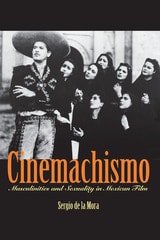
Cinemachismo
Masculinities and Sexuality in Mexican FilmBy Sergio de la Mora
University of Texas Press, 2006
After the modern Mexican state came into being following the Revolution of 1910, hyper-masculine machismo came to be a defining characteristic of "mexicanidad," or Mexican national identity. Virile men (pelados and charros), virtuous prostitutes as mother figures, and minstrel-like gay men were held out as desired and/or abject models not only in governmental rhetoric and propaganda, but also in literature and popular culture, particularly in the cinema. Indeed, cinema provided an especially effective staging ground for the construction of a gendered and sexualized national identity.
In this book, Sergio de la Mora offers the first extended analysis of how Mexican cinema has represented masculinities and sexualities and their relationship to national identity from 1950 to 2004. He focuses on three traditional genres (the revolutionary melodrama, the cabaretera [dancehall] prostitution melodrama, and the musical comedy "buddy movie") and one subgenre (the fichera brothel-cabaret comedy) of classic and contemporary cinema. By concentrating on the changing conventions of these genres, de la Mora reveals how Mexican films have both supported and subverted traditional heterosexual norms of Mexican national identity. In particular, his analyses of Mexican cinematic icons Pedro Infante and Gael García Bernal and of Arturo Ripstein's cult film El lugar sin límites illuminate cinema's role in fostering distinct figurations of masculinity, queer spectatorship, and gay male representations. De la Mora completes this exciting interdisciplinary study with an in-depth look at how the Mexican state brought about structural changes in the film industry between 1989 and 1994 through the work of the Mexican Film Institute (IMCINE), paving the way for a renaissance in the national cinema.
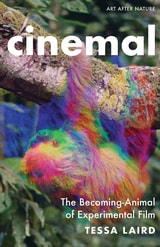
Cinemal
The Becoming-Animal of Experimental FilmTessa Laird
University of Minnesota Press, 2025
A foray through the wilds where experimental films and animals collide
Like the flash of a tropical bird’s iridescent wing, cinema can be furtive and intensely beautiful—and it can leave a viewer craving more. Cinemal is Tessa Laird’s passionate inquiry into the ways that films mimic the majesty, mystery, and movements of animals,her field notes from countless hair-raising encounters with films in their natural habitat.
Part of a growing focus on nonhuman animals in film, Cinemal ventures to the “furry underbelly” of global experimental film practice, focusing on films from New Zealand, Australia, and South America. Laird examines how animals are depicted in film and analyzes the various animal qualities of cinema, like scratching and sniffing, vibrant colors, and voices (barking, howling, or echolocation). Burrowing into the work of filmmakers such as Arthur and Corinne Cantrill, Sriwhana Spong, and Ana Vaz, Laird’s energetic prose embodies the films she discusses, seamlessly combining personal anecdotes with art theory and philosophy to spread a wide sensory buffet.
Lively and optimistic, Laird uses cinematic animal tropes to encourage readers to rethink what it means to be human. She argues that, in a time of ecological collapse, such an impulse is a necessary means of imagining other, healthier ways of being in this world. Connecting us with the more-than-human, Cinemal lures us toward the beastly becomings of film and, ultimately, our own animal natures.
Retail e-book files for this title are screen-reader friendly.
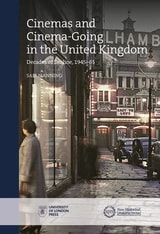
Cinemas and Cinema-Going in the United Kingdom
Decades of Decline, 1945–1965Sam Manning
University of London Press, 2020
Cinema attendance fell in all regions, but the speed, nature, and extent of this decline varied widely across the United Kingdom. By presenting detailed case studies of two similarly-sized industrial cities, Belfast and Sheffield, this book adds nuance and detail to the discussion of regional variations in film exhibition and audience habits. Using a wide range of sources, such as oral testimony, box-office data, newspapers, and trade journals, Cinemas and Cinema-Going in the United Kingdom conveys the diverse and ever-changing nature of the cinema industry.
Cinemas in Transition in Central and Eastern Europe after 1989
Catherine Portuges
Temple University Press, 2013
The contributors and editors of this exciting volume examine the interrelations between thematic, aesthetic, and infrastructural changes; the globalization of the international cinema marketplace; and the problems and promises arising from the privatization of national cinemas.
Cinemas in Transition in Central and Eastern Europe after 1989 also addresses the strategies employed for preserving national cinemas and cultures through an analysis of films from the Czech and Slovak republics, the former German Democratic Republic, Hungary, Poland, Romania, Ukraine, and the former Yugoslavia. The study provides a picture of Eastern European cinema at a critical juncture as well as its connections to the emergent world of transnational media.
Contributors include Barton Byg, Alexandra Foamente, Andrew Horton, Dina Iordanova, Ewa Mazierska, Bohdan Y. Nebesio, and Bogdan Stefanescu,
Cinematic Body
Steven Shaviro
University of Minnesota Press, 1993
In The Cinematic Body, Steven Shaviro proposes a radical new approach to film viewing. Moving between Jerry Lewis and Andy Warhol, between Fassbinder’s gay sex icons and George Romero’s flesh-eating zombies, The Cinematic Body cuts across disciplinary boundaries and seeks to engage new currents in critical thought.
Shaviro radically critiques the Lacanian model currently popular in film theory and film studies, arguing against that model’s obsessive emphasis on the phallus, castration anxiety, sadistic master, ideology, and the structure of the signifier. In this groundbreaking volume, Shaviro effectively communicates a sense of the inescapable ambivalence and intensities of contemporary culture, ultimately affirming a thoroughly postmodern sensibility.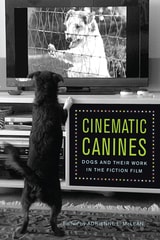
Cinematic Canines
Dogs and Their Work in the Fiction FilmMcLean, Adrienne L
Rutgers University Press, 2014
The representation and visualization of dogs in cinema, as of other animals, has influenced our understanding of what dogs “should” do and be, for us and with us. Adrienne L. McLean expertly shepherds these original essays into a coherent look at “real” dogs in live-action narrative films, from the stars and featured players to the character and supporting actors to those pooches that assumed bit parts or performed as extras. Who were those dogs, how were they trained, what were they made to do, how did they participate as characters in a fictional universe? These are a just a few of the many questions that she and the outstanding group of scholars in this book have addressed.
Often dogs are anthropomorphized in movies in ways that enable them to reason, sympathize, understand and even talk; and our shaping of dogs into furry humans has had profound effects on the lives of dogs off the screen. Certain breeds of dog have risen in popularity following their appearance in commercial film, often to the detriment of the dogs themselves, who rarely correspond to their idealized screen versions. In essence, the contributors in Cinematic Canines help us think about and understand the meanings of the many canines that appear in the movies and, in turn, we want to know more about those dogs due in no small part to the power of the movies themselves.
Cinematic Encounters 2
Portraits and PolemicsJonathan Rosenbaum
University of Illinois Press, 2019
Rosenbaum takes on filmmakers like Chantal Akerman, Richard Linklater, Manoel De Oliveira, Mark Rappaport, Elaine May, and Béla Tarr. He also engages, implicitly and explicitly, with other writers, arguing with Pauline Kael—and Wikipedia—over Jacques Demy, with the Hollywood Reporter and Variety reviewers of Jarmusch’s The Limits of Control, with David Thomson about James L. Brooks, and with many American and English film critics about misrepresented figures from Jerry Lewis to Yasujiro Ozu to Orson Welles. Throughout, Rosenbaum mines insights, pursues pet notions, and invites readers to join the fray.
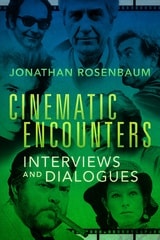
Cinematic Encounters
Interviews and DialoguesJonathan Rosenbaum
University of Illinois Press, 2018
Cinematic Encounters collects more than forty years of interviews that embrace Rosenbaum's vision of film criticism as a collaboration involving multiple voices. Rosenbaum accompanies Orson Welles on a journey back to Heart of Darkness, the unmade film meant to be Welles's Hollywood debut. Jacques Tati addresses the primacy of décor and soundtrack in his comedic masterpiece PlayTime, while Jim Jarmusch explains the influence of real and Hollywoodized Native Americans in Dead Man. By arranging the chapters chronologically, Rosenbaum invites readers to pursue thematic threads as if the discussions were dialogues between separate interviews. The result is a rare gathering of filmmakers trading thoughts on art and process, on great works and false starts, and on actors and intimate moments.
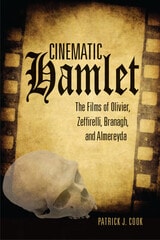
Cinematic Hamlet
The Films of Olivier, Zeffirelli, Branagh, and AlmereydaPatrick J. Cook
Ohio University Press, 2011
Hamlet has inspired four outstanding film adaptations that continue to delight a wide and varied audience and to offer provocative new interpretations of Shakespeare’s most popular play. Cinematic Hamlet contains the first scene-by-scene analysis of the methods used by Laurence Olivier, Franco Zeffirelli, Kenneth Branagh, and Michael Almereyda to translate Hamlet into highly distinctive and remarkably effective films.
Applying recent developments in neuroscience and psychology, Patrick J. Cook argues that film is a medium deploying an abundance of devices whose task it is to direct attention away from the film’s viewing processes and toward the object represented. Through careful analysis of each film’s devices, he explores the ways in which four brilliant directors rework the play into a radically different medium, engaging the viewer through powerful instinctive drives and creating audiovisual vehicles that support and complement Shakespeare’s words and story.
Cinematic Hamlet will prove to be indispensable for anyone wishing to understand how these films rework Shakespeare into the powerful medium of film.
Cinematic Prophylaxis
Globalization and Contagion in the Discourse of World HealthKirsten Ostherr
Duke University Press, 2005
Ostherr presents the first in-depth analysis of the public health films produced between World War II and the 1960s that popularized the ideals of world health and taught viewers to imagine the presence of invisible contaminants all around them. She considers not only the content of specific films but also their techniques for making invisible contaminants visible. By identifying the central aesthetic strategies in films produced by the World Health Organization, the Centers for Disease Control, and other institutions, she reveals how ideas about racial impurity and sexual degeneracy underlay messages ostensibly about world health. Situating these films in relation to those that preceded and followed them, Ostherr shows how, during the postwar era, ideas about contagion were explicitly connected to the global circulation of bodies. While postwar public health films embraced the ideals of world health, they invoked a distinct and deeply anxious mode of representing the spread of disease across national borders.

Cinematic Uses of the Past
Marcia Landy
University of Minnesota Press, 1996
Cinematic Uses of the Past was first published in 1996. Minnesota Archive Editions uses digital technology to make long-unavailable books once again accessible, and are published unaltered from the original University of Minnesota Press editions.
From the first, cinema has sustained a romance with the past. The nature of this attachment, and what it reveals about our culture, is the subject of Marcia Landy's book. Cinematic Uses of the Past looks at British, American, Italian, and African films for what they can tell us about popular history and our cultural investment in certain images of the past.
Landy peruses six different moments in the history of cinema, employing the theories of Nietzsche and Gramsci. Her reading of these films explores their investments in history and memory in relation to ideas of nation, sexuality, gender, and race. Among the films she discusses are A Fistful of Dynamite, The Scarlet Empress, Dance with a Stranger, Holocaust, Schindler's List, Le camp de Thiaroye, Guelwaar, The Leopard, and Veronika Voss.
A thoroughly compelling reading of these emblematic films, Cinematic Uses of the Past is also a revealing interpretation of popular history, exposing the fragmentary, tentative, and invested nature of cultural memory.
Marcia Landy is professor of literature and film studies at the University of Pittsburgh. She is the author of several books, including Film, Politics, and Gramsci (Minnesota, 1995).
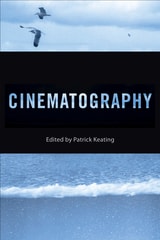
Cinematography
Keating, Patrick
Rutgers University Press, 2014
The essays in this volume introduce us to the visual conventions of the Hollywood style, explaining how these first arose and how they have subsequently been challenged by alternative aesthetics. In order to frame this fascinating history, the contributors employ a series of questions about technology (how did new technology shape cinematography?), authorship (can a cinematographer develop styles and themes over the course of a career?), and classicism (how should cinematographers use new technology in light of past practice?). Taking us from the hand-cranked cameras of the silent era to the digital devices used today, the collection of original essays explores how the art of cinematography has been influenced not only by technological advances, but also by trends in the movie industry, from the rise of big-budget blockbusters to the spread of indie films.
The book also reveals the people behind the camera, profiling numerous acclaimed cinematographers from James Wong Howe to Roger Deakins. Lavishly illustrated with over 50 indelible images from landmark films, Cinematography offers a provocative behind-the-scenes look at the profession and a stirring celebration of the art form. Anyone who reads this history will come away with a fresh eye for what appears on the screen because of what happens behind it.
Cinephilia and the Adventure for Existential Health
Recomposing Subjectivity at the CinemaAdam Szymanski
Northwestern University Press, 2025
Exploring how art cinema cultivates existential health through the films of Olivier Assayas
This book proposes that cinephilia can facilitate existential health, which makes palpable the potential for subjectivity to be recomposed through meaningful encounters with cinema. Adam Szymanskidraws on the ethos of psychoanalyst Félix Guattari and thinks with select films from director Olivier Assayas—including Clouds of Sils Maria and Personal Shopper—to theorize how the cinema can be invested with therapeutic value. Cinephilia and the Adventure for Existential Health engages the history of psychoanalytic film theory, excavates its long-standing concern with the production of spectatorial subjectivity, and challenges pathologizing understandings of cinema spectatorship couched in identification, fetishism, and voyeurism. By embracing the indeterminacy of the cinematic experience and the adventurous disposition of cinephilia, the book allies itself to the pursuit of collective health and challenges the logic of medical power.
Citizen Spielberg
Lester D. Friedman
University of Illinois Press, 2010
In Citizen Spielberg, Lester D. Friedman fills that void with a systematic analysis of the various genres in which the director has worked, including science fiction (E.T.), adventure (Raiders trilogy), race films (The Color Purple, Amistad), and war films (Saving Private Ryan, Schindler’s List). Friedman concludes that Spielberg’s films present a sustained artistic vision combined with a technical flair matched by few other filmmakers, and makes a compelling case for Spielberg to be considered as a major film artist.
Citizen Spielberg
Lester D. Friedman
University of Illinois Press, 2022
This new edition of Citizen Spielberg expands Friedman’s original analysis to include films of the 2010s like Lincoln and Ready Player One. Breaking down the works by genre, Friedman looks at essential aspects of Spielberg’s art, from his storytelling concerns and worldview to the uncanny connection with audiences that has powered his longtime influence as a cultural force. Friedman's examination reveals a sustained artistic vision--a vision that shows no sign of exhausting itself or audiences after Spielberg's nearly fifty years as a high-profile filmmaker.
Incisive and discerning, Citizen Spielberg offers a career-spanning appraisal of a moviemaking icon.
City That Never Sleeps
New York and the Filmic ImaginationPomerance, Murray
Rutgers University Press, 2007
The glittering skyscrapers of such films as On the Town have shadowed the characteristic seedy streets in which desperate, passionate stories have played out-as in Scandal Sheet and The Pawnbroker. In other films, the city is a cauldron of bright lights, technology, empire, egotism, fear, hunger, and change--the scenic epitome of America in the modern age.
From Street Scene and Breakfast at Tiffany's to Rosemary's Baby, The Warriors, and 25th Hour, the sixteen essays in this book explore the cinematic representation of New York as a city of experience, as a locus of ideographic characters and spaces, as a city of moves and traps, and as a site of allurement and danger. Contributors consider the work of Woody Allen, Blake Edwards, Alfred Hitchcock, Gregory La Cava, Spike Lee, Sidney Lumet, Vincente Minnelli, Roman Polanski, Martin Scorsese, Andy Warhol, and numerous others.
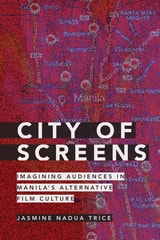
City of Screens
Imagining Audiences in Manila's Alternative Film CultureJasmine Nadua Trice
Duke University Press, 2021
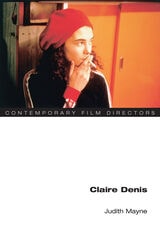
Claire Denis
Judith Mayne
University of Illinois Press, 2005
Widely regarded as one of the most innovative and passionate filmmakers working in France today, Claire Denis has continued to make beautiful and challenging films since the 1988 release of her first feature, Chocolat. Judith Mayne's comprehensive study traces Denis's career and discusses her major feature films in rich detail.
Born in Paris but raised in West Africa, Denis explores in her films the legacies of French colonialism and the complex relationships between sexuality, gender, and race. From the adult woman who observes her past as a child in Cameroon to the Lithuanian immigrant who arrives in Paris and watches a serial killer to the disgraced French Foreign Legionnaire attempting to make sense of his past, the subjects of Denis's films continually revisit themes of watching, bearing witness, and making contact, as well as displacement, masculinity, and the migratory subject.
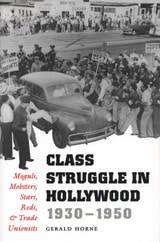
Class Struggle in Hollywood, 1930-1950
Moguls, Mobsters, Stars, Reds, and Trade UnionistsBy Gerald Horne
University of Texas Press, 2001
As World War II wound down in 1945 and the cold war heated up, the skilled trades that made up the Conference of Studio Unions (CSU) began a tumultuous strike at the major Hollywood studios. This turmoil escalated further when the studios retaliated by locking out CSU in 1946. This labor unrest unleashed a fury of Red-baiting that allowed studio moguls to crush the union and seize control of the production process, with far-reaching consequences.
This engrossing book probes the motives and actions of all the players to reveal the full story of the CSU strike and the resulting lockout of 1946. Gerald Horne draws extensively on primary materials and oral histories to document how limited a "threat" the Communist party actually posed in Hollywood, even as studio moguls successfully used the Red scare to undermine union clout, prevent film stars from supporting labor, and prove the moguls' own patriotism.
Horne also discloses that, unnoticed amid the turmoil, organized crime entrenched itself in management and labor, gaining considerable control over both the "product" and the profits of Hollywood. This research demonstrates that the CSU strike and lockout were a pivotal moment in Hollywood history, with consequences for everything from production values, to the kinds of stories told in films, to permanent shifts in the centers of power.
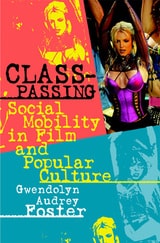
Class-Passing
Social Mobility in Film and Popular CultureGwendolyn Audrey Foster
Southern Illinois University Press, 2005
Oprah Winfrey, Donald Trump, Roseanne Barr, Martha Stewart, and Britney Spears typify class-passers—those who claim different socioeconomic classes as their own—asserts Gwendolyn Audrey Foster in Class-Passing: Social Mobility in Film and Popular Culture. According to new rules of social standing in American popular culture, class is no longer defined by wealth, birth, or education. Instead, today’s notion of class reflects a socially constructed and regulated series of performed acts and gestures rooted in the cult of celebrity.
In examining the quest for class mobility, Foster deftly traces class-passing through the landscape of popular films, reality television shows, advertisements, the Internet, and video games. She deconstructs the politics of celebrity, fashion, and conspicuous consumerism and analyzes class-passing as it relates to the American Dream, gender, and marriage.
Class-Passing draws on dozens of examples from popular culture, from old movie classics and contemporary films to print ads and cyberspace, to illustrate how flagrant displays of wealth that were once unacceptable under the old rules of behavior are now flaunted by class-passing celebrities. From the construction worker in Who Wants to Marry a Millionaire? to the privileged socialites Paris Hilton and Nicole Richie of The Simple Life, Foster explores the fantasy of contact between the classes. She also refers to television class-passers from The Apprentice, Queer Eye for the Straight Guy, and Survivor and notable class-passing achievers Warren Buffet, Bill Gates, and P. Diddy.
Class-Passing is a notable examination of the historical, social, and ideological shifts in expressions of class. The first serious book of its kind, Class-Passing is fresh, innovative, and invaluable for students and scholars of film, television, and popular culture.
Classic Hollywood
Lifestyles and Film Styles of American Cinema, 1930-1960Veronica Pravadelli
University of Illinois Press, 2015
Pravadelli sets her analysis apart by paying particular attention to the gendered desires and identities exemplified in the films. Availing herself of the significant advances in film theory and modernity studies that have taken place since similar surveys first saw publication, she views Hollywood through strategies as varied as close textural analysis, feminism, psychoanalysis, film style and study of cinematic imagery, revealing the inconsistencies and antithetical traits lurking beneath Classic Hollywood's supposed transparency.
Classical Film Violence
Designing and Regulating Brutality in Hollywood Cinema, 1930-1968Prince, Stephen
Rutgers University Press, 2003
Prince shows that many choices about camera position, editing, and blocking of the action and sound were functional responses by filmmakers to regulatory constraints, necessary for approval from the PCA and then in surviving scrutiny by state and municipal censor boards.
This book is the first stylistic history of American screen violence that is grounded in industry documentation. Using PCA files, Prince traces the negotiations over violence carried out by filmmakers and officials and shows how the outcome left its traces on picture and sound in the films.
Almost everything revealed by this research is contrary to what most have believed about Hollywood and film violence. With chapters such as "Throwing the Extra Punch" and "Cruelty, Sadism, and the Horror Film," this book will become the defining work on classical film violence and its connection to the graphic mayhem of today's movies.

Classical Hollywood Narrative
The Paradigm WarsJane Gaines, ed.
Duke University Press, 1992
Significantly expanded from a special issue of South Atlantic Quarterly (Spring 1989), these essays confront the extent to which formalism has continued to dominate film theory, reexamine the role of melodrama in cinematic development, revise notions of "patriarchal cinema," and assert the importance of television and video to cinema studies. A range of topics are discussed, from the films of D. W. Griffith to sexuality in avant-garde film to television's Dynasty.
Contributors. Rick Altman, Richard Dienst, Jane Feuer, Jane Gaines, Christine Gledhill, Miriam Hansen, Norman N. Holland, Fredric Jameson, Bill Nichols, Janey Staiger, Chris Straayer, John O. Thompson

Classics in Film and Fiction
Edited by Deborah Cartmell, Heidi Kaye, I. Q. Hunter, and Imelda Whelehan
Pluto Press, 2000
Classics in Film and Fiction looks at a wide range of texts and their adaptations. Authors discussed are Shakespeare, Charlotte Bronte, Henry James, Franz Kafka, Thomas Mann, Virginia Woolf, Nathaniel Hawthorne, Arthur Miller, Truman Capote and Lewis Carroll. Book to film adaptations analysed include Jane Eyre, The Crucible, The Tempest and Alice in Wonderland. The collection also evaluates the term 'classic' in a wider context, including a comparison of Joyce's Ulysses with Hitchcock's Rear Window. Throughout, the contributors challenge the dichotomy between high culture and pop culture.
Climate Trauma
Foreseeing the Future in Dystopian Film and FictionKaplan, E. Ann
Rutgers University Press, 2015
Drawing from recent scholarship that analyzes climate change as a form of “slow violence” that humans are inflicting on the environment, Climate Trauma theorizes that such violence is accompanied by its own psychological condition, what its author terms “Pretraumatic Stress Disorder.” Examining a variety of films that imagine a dystopian future, renowned media scholar E. Ann Kaplan considers how the increasing ubiquity of these works has exacerbated our sense of impending dread. But she also explores ways these films might help us productively engage with our anxieties, giving us a seemingly prophetic glimpse of the terrifying future selves we might still work to avoid becoming.
Examining dystopian classics like Soylent Green alongside more recent examples like The Book of Eli, Climate Trauma also stretches the limits of the genre to include features such as Blindness, The Happening, Take Shelter, and a number of documentaries on climate change. These eclectic texts allow Kaplan to outline the typical blind-spots of the genre, which rarely depicts climate catastrophe from the vantage point of women or minorities. Lucidly synthesizing cutting-edge research in media studies, psychoanalytic theory, and environmental science, Climate Trauma provides us with the tools we need to extract something useful from our nightmares of a catastrophic future.
Clint Eastwood, Actor and Director
New PerspectivesLeonard Engel
University of Utah Press, 2007
The contributors to this volume revisit and examine his career as an actor and director, and are part of a growing critical evaluation of Eastwood's films. A common thread, however, is their respect for his cinematic storytelling. They examine how he put his individual stamp on particular genres, while extending and enriching our understanding of his achievements.
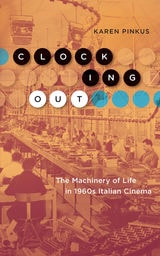
Clocking Out
The Machinery of Life in 1960s Italian CinemaKaren Pinkus
University of Minnesota Press, 2020
An original reflection on Italy’s postwar boom considers potentials for resistance in today’s neoliberal (dis)order
What can 1960s Italian cinema teach us about how to live and work today? Clocking Out challenges readers to think about labor, cinema, and machines as they are intertwined in complex ways in Italian cinema of the early ’60s. Drawing on critical theory and archival research, this book asks what kinds of fractures we might exploit for living otherwise, for resisting traditional narratives, and for anticapitalism.
Italy in the 1960s was a place where the mass-producing factory was the primary mode of understanding what it meant to work, but it was also a time when things might have gone another way. This thinking and living differently appears in the cracks, lapses, or moments of film. Clocking Out is organized into scenes from an obscure 1962 Italian comedy (Renzo e Luciana, from Boccaccio 70). Reconsidering the origins of paradigms such as clocking in and out, “society is a factory,” and the gendered division of labor, Karen Pinkus challenges readers to think through cinema, enabling us to see gaps and breakdowns in the postwar order. She focuses on the Olivetti typewriter company and a little-known film from an Italian anthology movie, thinking with cinema about the power of the Autonomia movement, the refusal to work, and the questions of wages, paternalism, and sexual difference.
Alternating microscopic attention to details and zooming outward, Pinkus examines rituals of production, automation, repetition, and fractures in a narrative of labor that begins in the 1960s and extends to the present—the age of the precariat, right-wing resentment, and nostalgia for an order that was probably never was.
Close Encounters between Bible and Film
An Interdisciplinary EngagementLaura Copier
SBL Press, 2016
Explore new routes into the burgeoning field of biblical literature and film theory
The present collection of essays is a sequel to the groundbreaking Semeia 74 issue, published in 1996, entitled Biblical Glamour and Hollywood Glitz. These new essays showcase the divergent approaches from film studies and cultural studies that can be used in the visual analysis of biblical and religious themes, narratives, and characters in cinema. It is the first volume that specifically addresses issues of methodology, theory, and analysis in the study between bible and film. As such, this collection is of interest to scholars in film studies and theology/religion/biblical studies, who are invested in doing interdisciplinary research in the expanding field of religion and film.
Features
- Specific focus on methods of film analysis, rather than the more common focus on thematic analysis in the study of religion, Bible, and film.
- Visual analysis in the encounter between Bible and film
- Fourteen essays and an introduction by top scholars in the field
Close Encounters
Film, Feminism, and Science FicitonConstance Penley, Elisabeth Lyon, Lynn Spigel, and Janet Bergstrom, Editors
University of Minnesota Press, 1991
Close Encounters was first published in 1991. Minnesota Archive Editions uses digital technology to make long-unavailable books once again accessible, and are published unaltered from the original University of Minnesota Press editions.
Offers new critical approaches to science fiction as represented in film, television, fan culture, and other non-literary media. Addresses the way conventional notions of sexual difference are reworked by science fiction film. Includes the complete script of Peter Wollen's 1987 film Friendship's Death.
Contributors: Raymond Bellour, Janet Bergstrom, Roger Dadoun, Harvey R. Greenberg, M.D., Henry Jenkins III, Enno Patalas, Constance Penley, Vivian Sobchak, Lynn Spigel, and Peter Wollen.
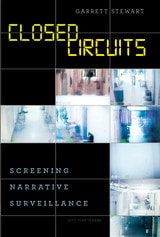
Closed Circuits
Screening Narrative SurveillanceGarrett Stewart
University of Chicago Press, 2015
In Closed Circuits, Garrett Stewart analyzes a broad spectrum of films, from M and Rear Window through The Conversation to Déjà Vu, Source Code, and The Bourne Legacy, in which cinema has articulated—and performed—the drama of inspection’s unreturned look. While mainstays of the thriller, both the act and the technology of surveillance, Stewart argues, speak to something more foundational in the very work of cinema. The shared axis of montage and espionage—with editing designed to draw us in and make us forget the omnipresence of the narrative camera—extends to larger questions about the politics of an oversight regime that is increasingly remote and robotic. To such a global technopticon, one telltale response is a proliferating mode of digitally enhanced “surveillancinema.”