Results by title
1947 books match the query 'Music' and 103 start with c
Coming of Age
Teaching and Learning Popular Music in AcademiaEdited by Carlos Rodriguez
Michigan Publishing Services, 2017
This book is a collection of essays originally presented at Ann Arbor Symposium IV, Teaching and Learning Popular Music, at the University of Michigan. Organized into four sections of similar-themed writings, the essays trace numerous discourses, principles, methods, and prospects for popular music education in academia. Additionally, the book contains several features that are useful for modern-day scholars and their institutions. First, it acknowledges the gradual liquidation of traditional disciplinary boundaries, signaling the likely future dominance of interdisciplinary research and collaborations. Second, it values international perspectives of music teaching and learning. Third, the selected topics, methodologies, and predictions provide a working agenda for the future development and success of popular music teaching and learning.
Commentaries on the Cantatas of Johann Sebastian Bach
A Selective GuideHans-Joachim Schulze. Translated by James A. Brokaw II
University of Illinois Press, 2024
The University of Illinois Press has paired the volume with a special web-based companion overseen by the translator and hosted by the Illinois Open Publishing Network. This online resource includes Brokaw’s translations of all 225 of Schulze’s essays alongside digital tools for searching, sorting, and bundling the commentaries according to date of composition, position within the liturgical church year sequence, and librettist.
Comparative Musicology and Anthropology of Music
Essays on the History of EthnomusicologyEdited by Bruno Nettl and Philip V. Bohlman
University of Chicago Press, 1991
"This is a useful and enriching collection of articles of interest to musicologists and ethnomusicologists. . . . The authors manage to cover much ground, presenting fascinating insights into the history of the discipline while also exploring new directions in both theory and analysis. . . . the most sweeping work of this kind to be published since the 1960s."—L. D. Loeb, University of Utah, for Choice

Composed Theatre
Aesthetics, Practices, ProcessesEdited by Matthias Rebstock and David Roesner
Intellect Books, 2012
A unique contribution to an emerging field, Composed Theatre explores musical strategies of organization as viable alternative means of organizing theatrical work. In addition to insightful essays by a stellar group of international contributors, this volume also includes interviews with important practitioners, shedding light on historical and theoretical aspects of composed theatre.
Composing Capital
Classical Music in the Neoliberal EraMarianna Ritchey
University of Chicago Press, 2019
Composing Capital
Classical Music in the Neoliberal EraMarianna Ritchey
University of Chicago Press, 2019
This is an auto-narrated audiobook edition of this book.
Composing Japanese Musical Modernity
Bonnie C. Wade
University of Chicago Press, 2013
Wade examines the short history of the composer in Japanese society, looking at the creative and economic opportunities that have sprung up around them—or that they forged—during Japan’s astonishingly fast modernization. She shows that modernist Japanese composers have not bought into the high modernist concept of the autonomous artist, instead remaining connected to the people. Articulating Japanese modernism in this way, Wade tells a larger story of international musical life, of the spaces in which tradition and modernity are able to meet and, ultimately, where modernity itself has been made.
Composing Music
A New ApproachWilliam Russo
University of Chicago Press, 1988
Composing Music is the perfect introduction to writing music of all sorts for engaged beginners.
Composing for the Jazz Orchestra
William Russo
University of Chicago Press, 1961
Computing Taste
Algorithms and the Makers of Music RecommendationNick Seaver
University of Chicago Press, 2022
The people who make music recommender systems have lofty goals: they want to broaden listeners’ horizons and help obscure musicians find audiences, taking advantage of the enormous catalogs offered by companies like Spotify, Apple Music, and Pandora. But for their critics, recommender systems seem to embody all the potential harms of algorithms: they flatten culture into numbers, they normalize ever-broadening data collection, and they profile their users for commercial ends. Drawing on years of ethnographic fieldwork, anthropologist Nick Seaver describes how the makers of music recommendation navigate these tensions: how product managers understand their relationship with the users they want to help and to capture; how scientists conceive of listening itself as a kind of data processing; and how engineers imagine the geography of the world of music as a space they care for and control.
Computing Taste rehumanizes the algorithmic systems that shape our world, drawing attention to the people who build and maintain them. In this vividly theorized book, Seaver brings the thinking of programmers into conversation with the discipline of anthropology, opening up the cultural world of computation in a wide-ranging exploration that travels from cosmology to calculation, myth to machine learning, and captivation to care.
Conductor Willem Mengelberg, 1871-1951
Acclaimed and AccusedFrits Zwart
Amsterdam University Press, 2018
Conjuring Freedom
Music and Masculinity in the Civil War's “Gospel Army”Johari Jabir
The Ohio State University Press, 2017
Reflecting the structure of the ring shout—the counterclockwise song, dance, drum, and story in African American history and culture—Conjuring Freedom offers three new concepts to cultural studies in order to describe the practices, techniques, and implications of the troop’s performance: (1) Black Communal Conservatories, borrowing from Robert Farris Thompson’s “invisible academies” to describe the structural but spontaneous quality of black music-making, (2) Listening Hermeneutics, which accounts for the generative and material affects of sound on meaning-making, and (3) Sonic Politics, which points to the political implications of music’s use in contemporary representations of race and history.
Connecting Metal to Culture
Unity in DisparityEdited by Mika Elovaara and Bryan Bardine
Intellect Books, 2017
Consent Practices in Performing Arts Education
Edited by Elaine DiFalco Daugherty and Heather Trommer-Beardslee
Intellect Books, 2024
This book explores consent as a foundational principle to guide practices and policies in university-level performing arts education. It includes descriptions of the structural power dynamics present in educational spaces and provides tools for mitigating them. It adapts the consent protocols that are foundational to theatrical intimacy direction and applies them to classroom and rehearsal spaces across performing arts disciplines.
The book discusses consent, opening lines of communication, personal boundaries, and modeling behaviors that respect those boundaries. Additionally, contributors use experiential reflections to address the real-world challenges that teachers face as they work to reshape their teaching habits and processes to include consent practices.
Contemporary Carioca
Technologies of Mixing in a Brazilian Music SceneFrederick Moehn
Duke University Press, 2012
Contemporary Opera in Flux
Edited by Yayoi U. Everett
University of Michigan Press, 2024
Contemporary Opera in Flux bridges the gaps between expanding literature on opera, theater, new music, postmodern dramaturgy, and posthuman aesthetics, while also confronting larger questions of identity, representation, and narrative agency that are at the forefront of contemporary music scholarship. This collection of essays engages critically with the past out of a conviction that, amid general public perceptions of opera as anachronistic or elitist, contemporary opera has emerged as an artistic incubator for experimentation.
Contingent Encounters
Improvisation in Music and Everyday LifeDan DiPiero
University of Michigan Press, 2022
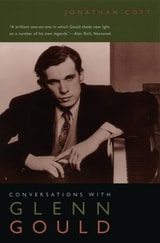
Conversations with Glenn Gould
Jonathan Cott
University of Chicago Press, 2005
Jonathan Cott, a prolific author and poet praised by Larry McMurtry as "the ideal interviewer," was one of the very few people to whom Gould ever granted an interview. Cott spoke with Gould in 1974 for Rolling Stone and published the transcripts in two long articles; after Gould's death, Cott gathered these interviews in Conversations with Glenn Gould, adding an introduction, a selection of photographs, a list of Gould's recorded repertoire, a filmography, and a listing of Gould's programs on radio and TV. A brilliant one-on-one in which Gould discusses his dislike of Mozart's piano sonatas, his partiality for composers such as Orlando Gibbons and Richard Strauss, and his admiration for the popular singer Petula Clark (and his dislike of the Beatles), among other topics, Conversations with Glenn Gould is considered by many, including the subject, to be the best interview Gould ever gave and one of his most remarkable performances.
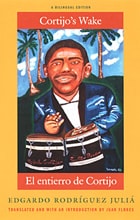
Cortijo's Wake / El entierro de Cortijo
Edgardo Rodríguez Juliá
Duke University Press, 2004
Winding through the streets of working-class San Juan with Cortijo’s funeral procession, Rodríguez Juliá’s autobiographical chronicle provides a rare portrait of the impoverished society from which Cortijo’s music emerged. Along with detailed renderings of grief-stricken mourners—including Cortijo’s childhood friend and fellow musician, the celebrated singer Ismael ("Maelo") Rivera—Rodríguez Juliá records his feelings as he, a light-skinned, middle-class writer, confronts the world of poor black Puerto Ricans. The author’s masterful shifting of linguistic registers, his acute sensitivity to Puerto Rican social codes, his broad knowledge of popular music, and his sardonic ruminations on death and immortality make this one of the most widely read books of modern Puerto Rican literature. Well-known critic and cultural historian Juan Flores has provided a scrupulous translation of Rodríguez Juliá’s text and an introduction situating the book in relation to Puerto Rican music and culture and the careers of Cortijo and Rodríguez Juliá.
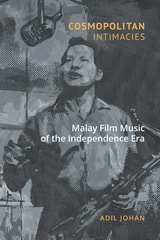
Cosmopolitan Intimacies
Malay Film Music of the Independence EraAdil Johan
National University of Singapore Press, 2018
Drawing on analyses of lyrics and music, interviews with musicians, and the content of Malay entertainment magazines, in an approach that spans ethnomusicology and cultural studies, he reveals this body of work to be a product of a musical and cultural cosmopolitanism in the service of a nation-making process based on ideas of Malay ethnonationalism, initially fluid but increasingly homogenized over time. Malay film music of the period covertly expressed radical sentiments despite being produced within a commercialized film industry.
Written in a lively style and illustrated with musical examples, the book will satisfy ethnomusicologists, composers, and film studies scholars interested in Southeast Asia and the Malay world. It will equally be of interest to scholars interested in the role of culture in nation-making more broadly.
Così fan tutte, An Opera of Mimetic Revelation
Isabel Díaz-Morlán
Michigan State University Press, 2025
Counterculture Kaleidoscope
Musical and Cultural Perspectives on Late Sixties San FranciscoNadya Zimmerman
University of Michigan Press, 2013
In a bold reconsideration of the late sixties San Francisco counterculture movement, Counterculture Kaleidoscope takes a close look at the cultural and musical practices of that era. Addressing the conventional wisdom that the movement was grounded in rebellion and opposition, the book exposes two myths: first, that the counterculture was an organized social and political movement of progressives with a shared agenda who opposed the mainstream (dubbed "hippies"); and second, that the counterculture was an innocent entity hijacked by commercialism and transformed over time into a vehicle of so-called "hip consumerism."
Seeking an alternative to the now common narrative, Nadya Zimmerman examines primary source material including music, artwork, popular literature, personal narratives, and firsthand historical accounts. She reveals that the San Francisco counterculture wasn't interested in commitments to causes and made no association with divisive issues---that it embraced everything in general and nothing in particular.
"Astute and accessible, Counterculture Kaleidoscope provides thought-provoking insights into the historical, cultural and social context of the San Francisco counter-culture and its music scene, including discussions of Vietnam and student protest, the Haight-Ashbury Diggers, the Grateful Dead, Led Zeppelin, Altamont, and Charlie Manson. A must for students and scholars of socio-musical activity and for all of us to whom music matters."
---Sheila Whiteley, author of The Space Between the Notes: Rock and the Counter-Culture and Too Much Too Young: Popular Music, Age and Gender
"The hippie counterculture has never garnered the scholarly attention accorded the new left and the black freedom struggle. Overviews of the period ritualistically mention it as part and parcel of that apparently incandescent era---the Sixties---but rarely capture its distinctiveness. Counterculture Kaleidoscope is a timely and provocative intervention in Sixties scholarship that significantly deepens our understanding of this important but understudied phenomenon."
—Alice Echols, Associate Professor, University of Southern California, and author of Scars of Sweet Paradise: The Life and Times of Janis Joplin
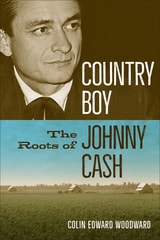
Country Boy
The Roots of Johnny CashColin Edward Woodward
University of Arkansas Press, 2022
Winner, 2023 J. G. Ragsdale Book Award from the Arkansas Historical Association
Because Johnny Cash cut his classic singles at Sun Records in Memphis and reigned for years as country royalty from his Nashville-area mansion, people tend to associate the Man in Black with Tennessee. But some of Cash’s best songs—including classics like “Pickin’ Time,” “Big River,” and “Five Feet High and Rising”—sprang from his youth in the sweltering cotton fields of northeastern Arkansas.
In Country Boy, Colin Woodward combines biography, history, and music criticism to illustrate how Cash’s experiences in Arkansas shaped his life and work. The grip of the Great Depression on Arkansas’s small farmers, the comforts and tragedies of family, and a bedrock of faith all lent his music the power and authenticity that so appealed to millions. Though Cash left Arkansas as an eighteen-year-old, he often returned to his home state, where he played some of his most memorable and personal concerts. Drawing upon the country legend’s songs and writings, as well as the accounts of family, fellow musicians, and chroniclers, Woodward reveals how the profound sincerity and empathy so central to Cash’s music depended on his maintaining a deep connection to his native Arkansas—a place that never left his soul.
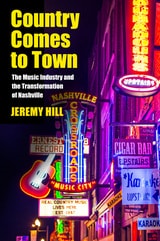
Country Comes to Town
The Music Industry and the Transformation of NashvilleJeremy Hill
University of Massachusetts Press, 2016
Country music evokes a simple, agrarian past, with images of open land and pickup trucks. While some might think of the genre as a repository of nostalgia, popular because it preserves and reveres traditional values, Jeremy Hill argues that country music has found such expansive success because its songs and its people have forcefully addressed social and cultural issues as well as geographic change. Hill demonstrates how the genre and its fans developed a flexible idea of “country,” beyond their rural roots, and how this flexibility allowed fans and music to “come to town,” to move into and within urban spaces, while retaining a country “character.”
To understand how the genre has become the far-reaching commercial phenomenon that it is today, Hill explores how various players within the country music fold have grappled with the notion of place. He shows both how the industry has transformed the city of Nashville and how country music—through song lyrics, imagery associated with the music, and branding—has reshaped ideas about the American landscape and character. As the genre underwent significant change in the last decades of the twentieth century, those who sought to explain its new styles and new locations relied on a traditional theme: “You can take the boy out of the country, but you can't take the country out of the boy.” Hill demonstrates how this idea—that you can still be “country” while no longer living in a rural place—has been used to expand country's commercial appeal and establish a permanent home in the urban space of Nashville.
Country Music Humorists and Comedians
Loyal Jones
University of Illinois Press, 2008
Q: Is he afraid of work?
A: No, he can lie down beside it and go to sleep.
This volume is an encyclopedia of the many country music performers who made comedy a central part of their careers. Loyal Jones offers an informative biographical sketch of each performer and many entries include a sample of the artist's humor, a recording history, and amusing anecdotal tidbits. Starting with vaudeville and radio barn dance figures like the Skillet Lickers and the Weaver Brothers and Elviry, Jones moves on to the regulars on Hee Haw and the Grand Old Opry and present-day comedians from the Austin Lounge Lizards to Jeff Foxworthy.
Jones's introductory essay discusses such topics as stock comic figures, venues for comedic performance, and benchmark performers. Throughout the volume, he places each performer squarely in the context of the country music community, its performing traditions, and each artist's place in the larger cultural milieu.
Country Music USA
50th Anniversary EditionBy Bill C. Malone and Tracey E. W. Laird
University of Texas Press, 2018
“Fifty years after its first publication, Country Music USA still stands as the most authoritative history of this uniquely American art form. Here are the stories of the people who made country music into such an integral part of our nation’s culture. We feel lucky to have had Bill Malone as an indispensable guide in making our PBS documentary; you should, too.”
—Ken Burns and Dayton Duncan, Country Music: An American Family Story
From reviews of previous editions:
“Considered the definitive history of American country music.”
—Los Angeles Times
“If anyone knows more about the subject than [Malone] does, God help them.”
—Larry McMurtry, from In a Narrow Grave
“With Country Music USA, Bill Malone wrote the Bible for country music history and scholarship. This groundbreaking work, now updated, is the definitive chronicle of the sweeping drama of the country music experience.”
—Chet Flippo, former editorial director, CMT: Country Music Television and CMT.com
“Country Music USA is the definitive history of country music and of the artists who shaped its fascinating worlds.”
—William Ferris, University of North Carolina at Chapel Hill, former chairman of the National Endowment for the Humanities and coeditor of the Encyclopedia of Southern Culture
Since its first publication in 1968, Bill C. Malone’s Country Music USA has won universal acclaim as the definitive history of American country music. Starting with the music’s folk roots in the rural South, it traces country music from the early days of radio into the twenty-first century. In this fiftieth-anniversary edition, Malone, the featured historian in Ken Burns’s 2019 documentary on country music, has revised every chapter to offer new information and fresh insights. Coauthor Tracey Laird tracks developments in country music in the new millennium, exploring the relationship between the current music scene and the traditions from which it emerged.
Country and Midwestern
Chicago in the History of Country Music and the Folk RevivalMark Guarino
University of Chicago Press, 2023
Chicago is revered as a musical breeding ground, having launched major figures like blues legend Muddy Waters, gospel soul icon Mavis Staples, hip-hop firebrand Kanye West, and the jazz-rock band that shares its name with the city. Far less known, however, is the vital role Chicago played in the rise of prewar country music, the folk revival of the 1950s and 1960s, and the contemporary offspring of those scenes.
In Country and Midwestern, veteran journalist Mark Guarino tells the epic century-long story of Chicago’s influence on sounds typically associated with regions further south. Drawing on hundreds of interviews and deep archival research, Guarino tells a forgotten story of music, migration, and the ways that rural culture infiltrated urban communities through the radio, the automobile, and the railroad. The Midwest’s biggest city was the place where rural transplants could reinvent themselves and shape their music for the new commercial possibilities the city offered. Years before Nashville emerged as the commercial and spiritual center of country music, major record labels made Chicago their home and recorded legendary figures like Bill Monroe, The Carter Family, and Gene Autry. The National Barn Dance—broadcast from the city’s South Loop starting in 1924—flourished for two decades as the premier country radio show before the Grand Ole Opry. Guarino chronicles the makeshift niche scenes like “Hillbilly Heaven” in Uptown, where thousands of relocated Southerners created their own hardscrabble honky-tonk subculture, as well as the 1960s rise of the Old Town School of Folk Music, which eventually brought national attention to local luminaries like John Prine and Steve Goodman. The story continues through the end of the twentieth century and into the present day, where artists like Jon Langford, The Handsome Family, and Wilco meld contemporary experimentation with country traditions.
Featuring a foreword from Grammy-nominated singer-songwriter Robbie Fulks and casting a cross-genre net that stretches from Bob Dylan to punk rock, Country and Midwestern rediscovers a history as sprawling as the Windy City—celebrating the creative spirit that modernized American folk idioms, the colorful characters who took them into new terrain, and the music itself, which is still kicking down doors even today.
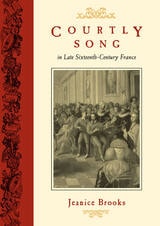
Courtly Song in Late Sixteenth-Century France
Jeanice Brooks
University of Chicago Press, 2001
Brooks concentrates on a period in which the court's importance in projecting the symbolic centrality of monarchy was growing rapidly and considers the role of the air in defining patronage hierarchies at court and in enhancing courtly visions of masculine and feminine virtue. Her study illuminates the court's relationship to the world beyond its own confines, represented first by Italy, then by the countryside. In addition to the 40 editions of airs de cour printed between 1559 and 1589, Brooks draws on memoirs, literary works, and iconographic evidence to present a rounded vision of French Renaissance culture.
The first book-length examination of the history of air de cour, this work also sheds important new light on a formative moment in French history.

Crate Missions
The Art and Archive of Hip Hop Beat-MakingJason D. Rawls
University of Michigan Press, 2027
Crate Missions takes readers inside the world of Hip Hop producers, where dusty record stores, forgotten albums, and decades-old recordings become the raw materials for new musical creation. Drawing on qualitative research, autoethnography, and oral history, Crate Missions combines the author’s more than twenty-five years of experience as a producer and DJ with interviews conducted with influential Hip Hop practitioners, including Pete Rock, Diamond D, Buckwild, Ski Beatz, K-Def, Mr. Walt and Evil Dee of the Beatminerz, and Breakbeat Lou. The online audio component allows readers to hear three new beats created by Rawls for this project, as well as “producer’s commentaries” in which Rawls walks listeners through his inspiration and process. Together, the text and audio reveal how crate digging is far more than collecting records—it is a form of historical discovery, cultural preservation, and creative expression.
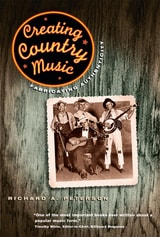
Creating Country Music
Fabricating AuthenticityRichard A. Peterson
University of Chicago Press, 1997
"[Peterson] restores to the music a sense of fun and diversity and possibility that more naive fans (and performers) miss. Like Buck Owens, Peterson knows there is no greater adventure or challenge than to 'act naturally.'"—Ken Emerson, Los Angeles Times Book Review
"A triumphal history and theory of the country music industry between 1920 and 1953."—Robert Crowley, International Journal of Comparative Sociology
"One of the most important books ever written about a popular music form."—Timothy White, Billboard Magazine
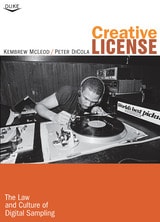
Creative License
The Law and Culture of Digital SamplingKembrew McLeod and Peter DiCola
Duke University Press, 2011
Interviewees include David Byrne, Cee Lo Green, George Clinton, De La Soul, DJ Premier, DJ Qbert, Eclectic Method, El-P, Girl Talk, Matmos, Mix Master Mike, Negativland, Public Enemy, RZA, Clyde Stubblefield, T.S. Monk.
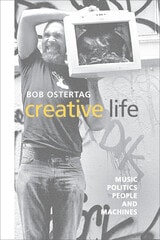
Creative Life
Music, Politics, People, and MachinesBob Ostertag
University of Illinois Press, 2008
Drawing on his intimate engagement with political conflict in Latin America and the Balkans, Ostertag identifies an art of "insurgent politics" that struggles to expand the parameters of the physical and social world. He also discusses his innovative collaborations with major modern performers, filmmakers, and artists around the world. Part memoir, part journalism, and part aesthetic manifesto, Creative Life is a dazzling set of writings from a musical artist who has worked on the cutting edge of new music for thirty years.
Creatures of the Air
Music, Atlantic Spirits, Breath, 1817–1913J. Q. Davies
University of Chicago Press, 2023
Often experienced as universal and incorporeal, music seems an innocent art form. The air, the very medium by which music constitutes itself, shares with music a claim to invisibility. In Creatures of the Air, J. Q. Davies interrogates these claims, tracing the history of music’s elemental media system in nineteenth-century Atlantic worlds. He posits that air is a poetic domain, and music is an art of that domain.
From West Central African ngombi harps to the European J. S. Bach revival, music expressed elemental truths in the nineteenth century. Creatures of the Air tells these truths through stories about suffocation and breathing, architecture and environmental design, climate strife, and racial turmoil. Contributing to elemental media studies, the energy humanities, and colonial histories, Davies shows how music, no longer just an innocent luxury, is implicated in the struggle for control over air as a precious natural resource. What emerges is a complex political ecology of the global nineteenth century and beyond.
Creolized Aurality
Guadeloupean Gwoka and Postcolonial PoliticsJérôme Camal
University of Chicago Press, 2019
Creolizing Contradance in the Caribbean
Peter Manuel
Temple University Press, 2011
The contradance and quadrille, in their diverse forms, were the most popular, widespread, and important genres of creole caribbean music and dance in the nineteenth century. Throughout the region they constituted sites for interaction of musicians and musical elements of different racial, social, and ethnic origins, and they became crucibles for the evolution of genres like the Cuban danzón and son, the Dominican merengue, and the Haitian mereng.
Creolizing Contradance in the Caribbean is the first book to explore this phenomenon in detail and with a pan-regional perspective. Individual chapters by respected area experts discuss the Spanish, French, and English-speaking Caribbean. For each area they cover the musical and choreographic features, social dynamics, historical development and significance, and discuss them in relation to the broader Caribbean historical context. This groundbreaking text fills a significant gap in studies of Caribbean cultural history and of social dance.
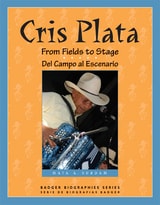
Cris Plata
From Fields to Stage // Del Campo al EscenarioMaia Surdam
Wisconsin Historical Society Press, 2014
This dual language book shares the Plata’s family story of migrant farming, music, and family amid the constant change and uncertainty of migrant life. While hardships—from poor working conditions and low wages to racial prejudice—were constant in Cris Plata’s upbringing, so too was the music that bonded and uplifted his family. After long days in the fields, Cris’s family spent their small amount of free time playing and singing songs from Mexico and South Texas. Cris learned to play the guitar, accordion, and mandolin, beginning to strum when he was just five years old. Today, he writes his own music, performs songs in English and Spanish, and records albums with his band, Cris Plata with Extra Hot.
Following Cris Plata’s journey from farm fields to musical stages, the story explores how a migrant, and the son of an immigrant, decided to make Wisconsin his home.
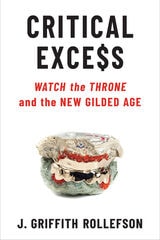
Critical Excess
Watch the Throne and the New Gilded AgeJ. Griffith Rollefson
University of Michigan Press, 2021
Critical Questions
On Music and Letters, Culture and Biography, 1940-1980Jacques Barzun
University of Chicago Press, 1982
For anyone unfamiliar with Barzun's work, Critical Questions will serve as a valuable introduction to one of the most important cultural historians of our time. Others will be glad to have these pieces—most of them no longer easily available—brought together in a single volume. Uniformly insightful, provocative, and a pleasure to read, they show the consistency of Barzun's thought even as they exhibit diversity.

Critique of Exotica
Music, Politics and the Culture IndustryJohn Hutnyk
Pluto Press, 2000
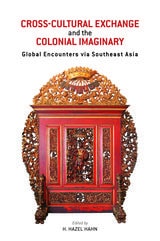
Cross-Cultural Exchange and the Colonial Imaginary
Global Encounters via Southeast AsiaEdited by H. Hazel Hahn
National University of Singapore Press, 2019
Crossings
Nietzsche and the Space of TragedyJohn Sallis
University of Chicago Press, 1991
The Birth of Tragedy is a rethinking of art at the
limit of metaphysics. His close reading focuses on the
complexity of the Apollinian/Dionysian dyad and on the
crossing of these basic art impulses in tragedy.
"Sallis effectively calls into question some commonly
accepted and simplistic ideas about Nietzsche's early
thinking and its debt to Schopenhauer, and proposes
alternatives that are worth considering."—Richard
Schacht, Times Literary Supplement
Crowe on the Banjo
The Music Life of J.D. CroweMarty Godbey
University of Illinois Press, 2011
Cuban Music from A to Z
Helio Orovio
Duke University Press, 2004
The life’s work of Cuban historian and musician Helio Orovio, Cuban Music from A to Z presents the people, genres, and history of Cuban music. Arranged alphabetically and cross-referenced, the entries span from Abakuá music and dance to Eddy Zervigón, a Cuban bandleader based in New York City. They reveal an extraordinary fusion of musical elements, evident in the unique blend of African and Spanish traditions of the son musical genre and in the integration of jazz and rumba in the timba style developed by bands like Afrocuba, Chucho Valdés’s Irakeke, José Luis Cortés’s ng La Banda, and the Buena Vista Social Club. Folk and classical music, little-known composers and international superstars, drums and string instruments, symphonies and theaters—it’s all here.
Cuban Underground Hip Hop
Black Thoughts, Black Revolution, Black ModernityBy Tanya L. Saunders
University of Texas Press, 2015
Honorable Mention, Barbara T. Christian Literary Award, Caribbean Studies Association, 2017
In the wake of the 1959 Cuban Revolution, a key state ideology developed: racism was a systemic cultural issue that ceased to exist after the Revolution, and any racism that did persist was a result of contained cases of individual prejudice perpetuated by US influence. Even after the state officially pronounced the end of racism within its borders, social inequalities tied to racism, sexism, and homophobia endured, and, during the economic liberalization of the 1990s, widespread economic disparities began to reemerge.
Cuban Underground Hip Hop focuses on a group of self-described antiracist, revolutionary youth who initiated a social movement (1996–2006) to educate and fight against these inequalities through the use of arts-based political activism intended to spur debate and enact social change. Their “revolution” was manifest in altering individual and collective consciousness by critiquing nearly all aspects of social and economic life tied to colonial legacies. Using over a decade of research and interviews with those directly involved, Tanya L. Saunders traces the history of the movement from its inception and the national and international debates that it spawned to the exodus of these activists/artists from Cuba and the creative vacuum they left behind. Shedding light on identity politics, race, sexuality, and gender in Cuba and the Americas, Cuban Underground Hip Hop is a valuable case study of a social movement that is a part of Cuba’s longer historical process of decolonization.
Cultural Considerations
Essays on Readers, Writers, and Musicians in Postwar AmericaJoan Shelley Rubin
University of Massachusetts Press, 2013
Focusing on aspects of American literary and musical culture in the decades after World War II, Rubin examines the contests between critics and their readers over the authority to make aesthetic judgments; the effort of academics to extend the university outward by bringing the humanities to a wide public; the politics of setting poetic texts to music; the role of ideology in the practice of commissioning and performing choral works; and the uses of reading in the service of both individualism and community. Specific topics include the 1957 attack by the critic John Ciardi on the poetry of Anne Morrow Lindbergh in the Saturday Review; the radio broadcasts of the classicist Gilbert Highet; Dwight Macdonald's vitriolic depiction of the novelist James Gould Cozzens as a pernicious middlebrow; the composition and reception of Howard Hanson's "Song of Democracy"; the varied career of musician Gunther Schuller; the liberal humanism of America's foremost twentieth-century choral conductor, Robert Shaw; and the place of books in the student and women's movements of the 1960s.
What unites these essays is the author's ongoing concern with cultural boundaries, mediation, and ideology--and the contradictions they frequently entail.
Cultural Sustainabilities
Music, Media, Language, AdvocacyEdited by Timothy J. Cooley
University of Illinois Press, 2019
Culture and the Course of Human Evolution
Gary Tomlinson
University of Chicago Press, 2018
Tomlinson offers a new model for understanding this period in our emergence, one based on analysis of advancing human cultures in an evolution that was simultaneously cultural and biological—a biocultural evolution. He places front and center the emergence of culture and the human capacities to create it, in a fashion that expands the conceptual framework of recent evolutionary theory. His wide-ranging vision encompasses arguments on the development of music, modern technology, and metaphysics. At the heart of these developments, he shows, are transformations in our species’ particular knack for signmaking. With its innovative synthesis of humanistic and scientific ideas, this book will be an essential text.
Cumbia!
Scenes of a Migrant Latin American Music GenreHéctor Fernández L Hoeste and Pablo Vila, eds.
Duke University Press, 2013
Contributors. Cristian Alarcón, Jorge Arévalo Mateus, Leonardo D'Amico, Héctor Fernández L'Hoeste, Alejandro L. Madrid, Kathryn Metz, José Juan Olvera Gudiño, Cathy Ragland, Pablo Semán, Joshua Tucker, Matthew J. Van Hoose, Pablo Vila
Curious and Modern Inventions
Instrumental Music as Discovery in Galileo's ItalyRebecca Cypess
University of Chicago Press, 2016
Rebecca Cypess shows that early modern thinkers were fascinated with instrumental technologies. The telescope, the clock, the pen, the lute—these were vital instruments for leading thinkers of the age, from Galileo Galilei to Giambattista Marino. No longer used merely to remake an object or repeat a process already known, instruments were increasingly seen as tools for open-ended inquiry that would lead to new knowledge. Engaging with themes from the history of science, literature, and the visual arts, this study reveals the intimate connections between instrumental music and the scientific and artisanal tools that served to mediate between individuals and the world around them.
Current Thought in Musicology
Edited by John W. Grubbs
University of Texas Press, 1976
Current Thought in Musicology covers a variety of topics, ranging from the Middle Ages to the present and touching on all the major disciplines of musicology: music history, theory and composition, music education, and performance. Taken together, the nine papers constitute a broad overview of the direction of music scholarship in the 1970s.
In “Tractatus Esthetico-Semioticus: Model of the Systems of Human Communication,” Charles Seeger presents a model of the situations in which the study of humanistic art may best be conducted. Charles Hamm writes in “The Ecstatic and the Didactic: A Pattern in American Music” of the pattern of conflicting points of view in music history and theory. American composer Elliott Carter, in his chapter titled “Music and the Time Screen,” presents a lucid explanation of his compositional process, including his concept of musical time. In “Instruments and Voices in the Fifteenth-Century Chanson,” Howard Mayer Brown suggests the nature of fifteenth-century performance, drawn from iconography and various musical sources. “Nottebohm Revisited,” by Lewis Lockwood, reexamines Beethoven’s sketchbooks, showing the extent to which performing editions of his work must be updated. Daniel Heartz’s article, “The Chanson in the Humanist Era,” is multidisciplinary and will interest a variety of scholars, including French historians and French literary historians. Gilbert Chase applies structuralism to musicological studies in his chapter, “Musicology, History, and Anthropology: Current Thoughts.” The concluding essays, “The Prospects for Research in Medieval Music in the 1970’s,” by Gilbert Reaney, and “The Library of the Mind: Observations on the Relationship between Musical Scholarship and Bibliography,” by Vincent Duckles, provide a unique view of the opportunities for further work in these areas.
The volume also includes an introduction by the editor, notes on the contributors, and an index. Current Thought in Musicology is the result of a symposium held at the University of Texas at Austin in 1971.