Results by title
1861 books match the query 'Social life and customs' and 133 start with c
City Dreams, Country Schemes
Community and Identity in the American WestKathleen A. Brosnan
University of Nevada Press, 2011
The American West, from the beginning of Euro-American settlement, has been shaped by diverse ideas about how to utilize physical space and natural environments to create cohesive, sometimes exclusive community identities. When westerners developed their towns, they constructed spaces and cultural identities that reflected alternative understandings of modern urbanity. The essays in City Dreams, Country Schemes utilize an interdisciplinary approach to explore the ways that westerners conceptualized, built, and inhabited urban, suburban, and exurban spaces in the twentieth century.
The contributors examine such topics as the attractions of open space and rural gentrification in shaping urban development; the role of tourism in developing national parks, historical sites, and California's Napa Valley; and the roles of public art, gender, and ethnicity in shaping urban centers. City Dreams, Country Schemes reveals the values and expectations that have shaped the West and the lives of the people who inhabit it.
City Watch
Discovering The Uncommon ChicagoJon Anderson
University of Iowa Press, 2000
In forty-five years as one of Chicago's liveliest journalists for Time, Life, and the Chicago Tribune, Jon Anderson has established a reputation for picking up on what someone once called "the beauty of the specific fact." Part "Talk of the Town," part On the Road with Charles Kuralt, Anderson's twice-a-week "City Watch" columns in the Chicago Tribune seek out interesting and unexpected people and places from the everyday life of what the author calls the "most typical American big city." In the process he discovers the joys and triumphs of ordinary people.
Anderson writes with wit and insight about those who find themselves inspired or obsessed with alternative ways of viewing life or getting through the day. Like the man who started with one light pole, then painted all the poles in his southside neighborhood. Or the founder of Cats-Are-Purrsons-Too, a nun who lives with sixty-seven cats. Or the philosopher who, with no financial success, still publishes a newsletter called "The Meaning of Life." After years of hunting down moments of everyday life that have drama and meaning, Anderson offers a book that has curious power, because all of its stories are true.
Drawn from the best of Anderson's columns, City Watch introduces readers to an eclectic mix of social clubs, subcultures, and minor celebrities. From Foraging Friends, a group of penniless ecologists who forage for wild foods in a county forest preserve, to the annual Dumpster Diver fashion show, from the Oakton Elementary School chess team to a group that calls itself Some Chicago Anarchists, readers will discover the characters and events that define Chicago's local color.
City and the Saloon
Denver, 1858-1916Thomas J. Noel
University Press of Colorado, 1996

City in a Park
A History of Philadelphia's Fairmount Park SystemLynn Miller
Temple University Press, 2015
Fairmount Park is the municipal park system of Philadelphia, Pennsylvania. It consists of more than one hundred parks, squares, and green spaces totaling about 11,000 acres, and is one of the largest landscaped urban park systems in the world. In City in a Park, James McClelland and Lynn Miller provide an affectionate and comprehensive history of this 200-year-old network of parks.
Originated in the nineteenth century as a civic effort to provide a clean water supply to Philadelphia, Fairmount Park also furnished public pleasure grounds for boat races and hiking, among other activities. Millions travel to the city to view its eighteenth-century villas, attend boat races on the Schuylkill River, hike the Wissahickon Creek, visit the Philadelphia Zoo, hear concerts in summer, stroll the city’s historic squares and the Benjamin Franklin Parkway, and enjoy its enormous collection of public art. Green initiatives flower today; Philadelphia lives amidst its parks.
Filled with nearly 150 gorgeous full-color photographs, City in a Park chronicles the continuing efforts to create what founder William Penn desired: a “greene countrie town.”
City of Neighborhoods
Memory, Folklore, and Ethnic Place in BostonAnthony Bak Buccitelli
University of Wisconsin Press, 2016
Digging into the ever-shifting terrain of American ethnicity and urban spaces, Anthony Bak Buccitelli investigates folk practices, social memory, and local histories in three Boston-area neighborhoods. He looks at the ways locals represent their neighborhoods and themselves via events, symbols, stories, and landmarks, from the shamrock to the Chinese flag, whether the St. Patrick’s Day parade in Southie or the Columbus Day parade in East Boston, from urban graffiti and websites to the Dorchester Heights Monument. City of Neighborhoods exposes the processes of selection and emphasis that produce, sustain, challenge, and change understandings of urban spaces as ethnic places.
Honorable mention, Wayland Hand Prize for Folklore and History, American Folklore Society
City of Noise
Sound and Nineteenth-Century ParisAimee Boutin
University of Illinois Press, 2015
Aimée Boutin tours the sonic space that orchestrated the different, often conflicting sound cultures that defined the street ambience of Paris. Mining accounts that range from guidebooks to verse, Boutin braids literary, cultural, and social history to reconstruct a lost auditory environment. Throughout, impressions of street noise shape writers' sense of place and perception of modern social relations. As Boutin shows, the din of the Cris contrasted economic abundance with the disparities of the capital, old and new traditions, and the vibrancy of street commerce with an increasing bourgeois demand for quiet. In time, peddlers who provided the soundtrack for Paris's narrow streets yielded to modernity, with its taciturn shopkeepers and wide-open boulevards, and the fading songs of the Cris became a dirge for the passing of old ways.
Ciulirnerunak Yuuyaqunak/Do Not Live Without an Elder
The Subsistence Way of Life in Southwest AlaskaEdited by Ann Fienup-Riordan
University of Alaska Press, 2016
This book gathers the men’s stories for the current generation and those to come. Taken together, they become more than simply oral histories—rather, they testify to the importance of transmitting memories and culture and of preserving knowledge of vanishing ways of life.
Civic Engagement in the Wake of Katrina
Amy Koritz and George J. Sanchez, editors
University of Michigan Press, 2009
"Civic engagement has been underrated and overlooked. Koritz and Sanchez illuminate the power of what community engagement through art and culture revitalization can do to give voice to the voiceless and a sense of being to those displaced."
---Sonia BasSheva Mañjon, Wesleyan University
"This profound and eloquent collection describes and assesses the new coalitions bringing a city back to life. It's a powerful call to expand our notions of culture, social justice, and engaged scholarship. I'd put this on my 'must read' list."
---Nancy Cantor, Syracuse University
"Civic Engagement in the Wake of Katrina is a rich and compelling text for thinking about universities and the arts amid social crisis. Americans need to hear the voices of colleagues who were caught in Katrina's wake and who responded with commitment, creativity, and skill."
---Peter Levine, CIRCLE (The Center for Information & Research on Civic Learning & Engagement)
This collection of essays documents the ways in which educational institutions and the arts community responded to the devastation wrought by Hurricane Katrina. While firmly rooted in concrete projects, Civic Engagement in the Wake of Katrina also addresses the larger issues raised by committed public scholarship. How can higher education institutions engage with their surrounding communities? What are the pros and cons of "asset-based" and "outreach" models of civic engagement? Is it appropriate for the private sector to play a direct role in promoting civic engagement? How does public scholarship impact traditional standards of academic evaluation? Throughout the volume, this diverse collection of essays paints a remarkably consistent and persuasive account of arts-based initiatives' ability to foster social and civic renewal.
Amy Koritz is Director of the Center for Civic Engagement and Professor of English at Drew University.
George J. Sanchez is Professor of American Studies and Ethnicity and History at the University of Southern California.
Front and rear cover designs, photographs, and satellite imagery processing by Richard Campanella.
digitalculturebooks is an imprint of the University of Michigan Press and the Scholarly Publishing Office of the University of Michigan Library dedicated to publishing innovative and accessible work exploring new media and their impact on society, culture, and scholarly communication. Visit the website at www.digitalculture.org.
Claiming Place
On the Agency of Hmong WomenChia Youyee Vang
University of Minnesota Press, 2016
Countering the idea of Hmong women as victims, the contributors to this pathbreaking volume demonstrate how the prevailing scholarly emphasis on Hmong culture and men as the primary culprits of women’s subjugation perpetuates the perception of a Hmong premodern status and renders unintelligible women’s nuanced responses to patriarchal strategies of domination both in the United States and in Southeast Asia.
Claiming Place expands knowledge about the Hmong lived reality while contributing to broader conversations on sexuality, diaspora, and agency. While these essays center on Hmong experiences, activism, and popular representations, they also underscore the complex gender dynamics between women and men and address the wider concerns of gendered status of the Hmong in historical and contemporary contexts, including deeply embedded notions around issues of masculinity.
Organized to highlight themes of history, memory, war, migration, sexuality, selfhood, and belonging, this book moves beyond a critique of Hmong patriarchy to argue that Hmong women have been and continue to be active agents not only in challenging oppressive societal practices within hierarchies of power but also in creating alternative forms of belonging.
Contributors: Geraldine Craig, Kansas State U; Leena N. Her, Santa Rosa Junior College; Julie Keown-Bomar, U of Wisconsin–Extension; Mai Na M. Lee, U of Minnesota; Prasit Leepreecha, Chiang Mai U; Aline Lo, Allegheny College; Kong Pha; Louisa Schein, Rutgers U; Cathy J. Schlund-Vials, U of Connecticut; Bruce Thao; Ka Vang, U of Wisconsin–Eau Claire.

Clambake
A History and Celebration of an American TraditionKatherine D. Neustadt
University of Massachusetts Press, 1992
An appreciative examination of the New England clambake, Neustadt divides her study into three parts: historical (social, economic, political, regional, and cultural) influences on the clambake; a close focus on the Allen's Neck clambake as a cultural phenomenon in its own right; and a critical examination of the central elements of the clambaking tradition—food, ritual, and festival.
The author views the clambake as a unique American folk tradition with interesting connections and rich resonances with other aspects of American culture and history.
Class Acts
Young Men and the Rise of LifestyleMary Rizzo
University of Nevada Press, 2015
Mary Rizzo traces the development of the concept of lifestyle marketing, showing how marketers disconnected class identity from material reality, focusing instead on a person’s attitudes, opinions, and behaviors. The book includes discussions of the rebel of the 1950s, the hippie of the 1960s, the white suburban hip-hop fan of the 1980s, and the poverty chic of the 1990s. Class Acts illuminates how the concept of “lifestyle,” particularly as expressed through fashion, has disconnected social class from its material reality and diffused social critique into the opportunity to simply buy another identity. The book will appeal to scholars and other readers who are interested in American cultural history, youth culture, fashion, and style.

Clothing Matters
Dress and Identity in IndiaEmma Tarlo
University of Chicago Press, 1996
Clothes have been used to assert power, challenge authority, and instigate social change throughout Indian society. During the struggle for independence, members of the Indian elite incorporated elements of Western style into their clothes, while Gandhi's adoption of the loincloth symbolized the rejection of European power and the contrast between Indian poverty and British wealth. Similar tensions are played out today, with urban Indians adopting "ethnic" dress as villagers seek modern fashions.
Illustrated with photographs, satirical drawings, and magazine advertisements, this book shows how individuals and groups play with history and culture as they decide what to wear.
Co-wives and Calabashes
Sally Price
University of Michigan Press, 1984

Coffee House Positano
A Bohemian Oasis in Malibu, 1957–1962Jay Ruby
University Press of Colorado, 2013
As an ethnographer analyzing his own culture, author Jay Ruby uses a unique ethnographic method known as “studying sideways.” He combines the exploration of self and others with the theoretical framework of anthropology to provide deep insight into the counterculture of late 1950s and early 1960s America. He shares his connection to Positano, where he lived and worked from 1957 to 1959 and again in 1963, and reflects on Positano in the context of US counterculture and the greater role of countercultures in society.
This intimate and significant work will be of interest to anthropologists as well as scholars and the general reader interested in California history, Beat culture, and countercultural movements.

Cold Comfort
Life at the Top of the MapBarton Sutter
University of Minnesota Press, 2000
A whimsical look at the pleasures and challenges of living in the far north-now in paperback!
A whimsical look at the pleasures and challenges of living in the far north-now in paperback!
"Sutter knows Duluth and the hinterlands to the North the way Garrison Keillor knows Lake Wobegon and the prairies. With a nimble wit and a roving eye for detail, Sutter goes beneath the veneer of the North Country to expose its attraction, its quirks, and its characters. There isn’t a clinker in the collection, and even if you’ve lived your entire life in Duluth or the North Country, you’ll see your home place with new insight after reading Cold Comfort." Duluth News-Tribune"Mostly whimsical, sometimes meditative, but most often warmhearted, these essays explore Lake Superior, its neighboring rivers and streams, duck hunting, cross-country skiing, bridges, cider-pressing parties, and camping out in the family car. Sutter’s prose is clean, straightforward, and sometimes mirthful." Chicago New City "An oddly brilliant and lovely little book. . . . Resonant, evocative, and splendidly written." Jim HarrisonTemperatures that dive to forty degrees below zero are only part of life in northern Minnesota, according to award-winning writer Barton Sutter. Cold Comfort is his temperamental tribute to the city of Duluth, Minnesota, where bears wander the streets and canoe racks are standard equipment. Winner of a 1998 Northeast Minnesota Book AwardWinner of a 1998 Minnesota Book Award for Creative Nonfiction
College Football and American Culture in the Cold War Era
Kurt Edward Kemper
University of Illinois Press, 2009
The Cold War era spawned a host of anxieties in American society, and in response, Americans sought cultural institutions that reinforced their sense of national identity and held at bay their nagging insecurities. They saw football as a broad, though varied, embodiment of national values. College teams in particular were thought to exemplify the essence of America: strong men committed to hard work, teamwork, and overcoming pain. Toughness and defiance were primary virtues, and many found in the game an idealized American identity.
In this book, Kurt Kemper charts the steadily increasing investment of American national ideals in the presentation and interpretation of college football, beginning with a survey of the college game during World War II. From the Army-Navy game immediately before Pearl Harbor, through the gradual expansion of bowl games and television coverage, to the public debates over racially integrated teams, college football became ever more a playing field for competing national ideals. Americans utilized football as a cultural mechanism to magnify American distinctiveness in the face of Soviet gains, and they positioned the game as a cultural force that embodied toughness, discipline, self-deprivation, and other values deemed crucial to confront the Soviet challenge.
Americans applied the game in broad strokes to define an American way of life. They debated and interpreted issues such as segregation, free speech, and the role of the academy in the Cold War. College Football and American Culture in the Cold War Era offers a bold new contribution to our understanding of Americans' assumptions and uncertainties regarding the Cold War.
Colonial Habits
Convents and the Spiritual Economy of Cuzco, PeruKathryn Burns
Duke University Press, 1999
Based on unprecedented archival research, Colonial Habits demonstrates how nuns became leading guarantors of their city’s social order by making loans, managing property, containing “unruly” women, and raising girls. Coining the phrase “spiritual economy” to analyze the intricate investments and relationships that enabled Cuzco’s convents and their backers to thrive, Burns explains how, by the late 1700s, this economy had faltered badly, making convents an emblem of decay and a focal point for intense criticism of a failing colonial regime. By the nineteenth century, the nuns had retreated from their previous roles, marginalized in the construction of a new republican order.
Providing insight that can be extended well outside the Andes to the relationships articulated by convents across much of Europe, the Americas, and beyond, Colonial Habits will engage those interested in early modern economics, Latin American studies, women in religion, and the history of gender, class, and race.
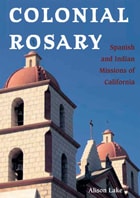
Colonial Rosary
The Spanish and Indian Missions of CaliforniaAlison Lake
Ohio University Press, 2006
California would be a different place today without the imprint of Spanish culture and the legacy of Indian civilization. The colonial Spanish missions that dot the coast and foothills between Sonoma and San Diego are relics of a past that transformed California’s landscape and its people.
In a spare and accessible style, Colonial Rosary looks at the complexity of California’s Indian civilization and the social effects of missionary control. While oppressive institutions lasted in California for almost eighty years under the tight reins of royal Spain, the Catholic Church, and the government of Mexico, letters and government documents reveal the missionaries’ genuine concern for the Indian communities they oversaw for their health, spiritual upbringing, and material needs.
With its balanced attention to the variety of sources on the mission period, Colonial Rosary illuminates ongoing debates over the role of the Franciscan missions in the settlement of California.
By sharing the missions’ stories of tragedy and triumph, author Alison Lake underlines the importance of preserving these vestiges of California’s prestatehood period. An illustrated tour of the missions as well as a sensitive record of their impact on California history and culture, Colonial Rosary brings the story of the Spanish missions of California alive.

Colorado Day by Day
Derek Everett
University Press of Colorado, 2019
Colorado Day by Day is an engaging, this-day-in-history approach to the key figures and forces that have shaped Colorado from ancient times to the present. Historian Derek R. Everett presents a vignette for each day of the calendar year, exploring Colorado’s many facets through distilled tales of people, places, events, and trends.
Entries incorporate tales from each of the state’s sixty-four counties and feature both well-known and obscure cultural moments, including events in Native American, African American, Asian American, Hispano, and women’s history. Allowing the reader to explore the state’s heritage as individual threads or as part of the greater tapestry, Colorado Day by Day recovers much lost history and will be an entertaining and useful source of lore for anyone who enjoys or is curious about Colorado history.
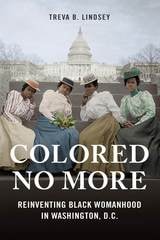
Colored No More
Reinventing Black Womanhood in Washington, D.C.Treva B. Lindsey
University of Illinois Press, 2017
Treva B. Lindsey presents New Negro womanhood as a multidimensional space that included race women, blues women, mothers, white collar professionals, beauticians, fortune tellers, sex workers, same-gender couples, artists, activists, and innovators. Drawing from these differing but interconnected African American women's spaces, Lindsey excavates a multifaceted urban and cultural history of struggle toward a vision of equality that could emerge and sustain itself. Upward mobility to equal citizenship for African American women encompassed challenging racial, gender, class, and sexuality status quos. Lindsey maps the intersection of these challenges and their place at the core of New Negro womanhood.

Coming Out Swiss
In Search of Heidi, Chocolate, and My Other LifeAnne Herrmann
University of Wisconsin Press, 2014
In a work that is part memoir, part history and travelogue, Herrmann explores all our Swiss clichés (chocolate, secret bank accounts, Heidi, Nazi gold, neutrality, mountains, Swiss Family Robinson) and also scrutinizes topics that may surprise (the “invention” of the Alps, the English Colony in Davos, Switzerland’s role during World War II, women students at the University of Zurich in the 1870s). She ponders, as well, marks of Swissness that have lost their identity in the diaspora (Sutter Home, Helvetica, Dadaism) and the enduring Swiss American community of New Glarus, Wisconsin. Coming Out Swiss will appeal not just to the Swiss diaspora but also to those drawn to multi-genre writing that blurs boundaries between the personal and the historical.
Coming of Age in Jewish America
Bar and Bat Mitzvah ReinterpretedPatricia Keer Munro
Rutgers University Press, 2016
Coming of Age in New Jersey
College and American CultureMoffatt, Michael
Rutgers University Press, 1989
Commoner Ritual and Ideology in Ancient Mesoamerica
Nancy Gonlin
University Press of Colorado, 2016
This volume explores the ritual life of Mesoamerica's common citizens, inside and outside of the domestic sphere, from Formative through Postclassic periods. Building from the premise that ritual and ideological expression inhered at all levels of society in Mesoamerica, the contributors demonstrate that ideology did not emanate solely from exalted individuals and that commoner ritual expression was not limited to household contexts. Taking an empirical approach to this under-studied and under-theorized area, contributors use material evidence to discover how commoner status conditioned the expression of ideas and values.
Revealing complex social hierarchies that varied across time and region, this volume offers theoretical approaches to commoner ideology, religious practice, and sociopolitical organization and builds a framework for future study of the correlation of ritual and ideological expression with social position for Mesoamericanists and archaeologists worldwide.
Conceiving Cultures
Reproducing People and Places on Nuakata, Papua New GuineaShelley Mallett
University of Michigan Press, 2003
Shelley Mallett is Research Fellow at the Key Centre for Women's Health in Society at Melbourne University.

Confessions of a Horseshoer
Ron Tatum
University of North Texas Press, 2012
Congo's Dancers
Women and Work in KinshasaLesley Nicole Braun
University of Wisconsin Press, 2023
In Congo’s Dancers, Lesley Nicole Braun uses the prism of the Congolese danseuse to examine the politics of control and the ways in which notions of visibility, virtue, and socio-economic opportunity are interlinked in this urban African context. The work of the danseuse highlights the fact that public visibility is necessary to build the social networks required for economic independence, even as this visibility invites social opprobrium for women. The concert dancer therefore exemplifies many of the challenges that women face in Kinshasa as they navigate the public sphere, and she illustrates the gendered differences of local patronage politics that shape public morality. As an ethnographer, Braun had unusual access to the world she documents, having been invited to participate as a concert dancer herself.
Constituting Central American–Americans
Transnational Identities and the Politics of DislocationCárdenas, Maritza E
Rutgers University Press, 2018
Constructing Community
The Archaeology of Early Villages in Central New MexicoAlison E. Rautman
University of Arizona Press, 2014
Rautman tackles a very broad topic: how archaeologists use material evidence to infer and imagine how people lived in the past, how they coped with everyday decisions and tensions, and how they created a sense of themselves and their place in the world. Using several different lines of evidence, she reconstructs what life was like for the Ancestral Pueblo people of Salinas, and identifies some of the specific strategies that they used to develop and sustain their villages over time.
Examining evidence of each site’s construction and developing spatial layout, Rautman traces changes in community organization across the architectural transitions from pithouses to jacal structures to unit pueblos, and finally to plaza-oriented pueblos. She finds that, in contrast to some other areas of the American Southwest, early villagers in Salinas repeatedly managed their built environment to emphasize the coherence and unity of the village as a whole. In this way, she argues, people in early farming villages across the Salinas region actively constructed and sustained a sense of social community.
Constructing Medieval Sexuality
Karma Lochrie
University of Minnesota Press, 1997
A groundbreaking examination of sexuality in the Middle Ages.
This collection is the first to be devoted entirely to medieval sexuality informed by current theories of sexuality and gender. It brings together essays from various disciplinary perspectives-literary, theological, philosophical, medical, historical, and art historical-to consider how the Middle Ages defined, regulated, and represented sexual practices and desires.
Always considering sexuality in relation to gender, the body, and identity, the essays explore medieval sexuality as a historical construction produced by and embedded in the cultures and institutions of that period. Examining a range of medieval texts and images, the contributors explore the medieval understanding of sodomy, the historical construction of heterosexuality, the polymorphous erotics of female mysticism, and the intersections of sexuality with race, gender, and religion. This work not only offers new perspectives on the ways in which queer theory might inform our views of sexuality in medieval Europe, but also suggests that medieval constructions of sexuality may offer important contributions to both queer theory and the history of sexuality.These essays, situated in the context of current debates, linger over various definitions of medieval sexuality; they speak to each other in their differences and their similarities to further productive thinking about the sometimes conflicting and always fascinating ways in which the Middle Ages regarded sex and sexuality. Contributors: E. Jane Burns, U of North Carolina; Joan Cadden, U of California, Davis; Michael Camille, U of Chicago; Dyan Elliott, Indiana U; Louise O. Fradenburg, U of California, Santa Barbara; Mark D. Jordan, U of Notre Dame; Steven F. Kruger, CUNY.
Consuming Modernity
Public Culture in a South Asian WorldCarol A. Breckenridge
University of Minnesota Press, 1995
Consuming Modernity illustrates that what is distinctive of any particular society is not the fact of its modernity, but rather its own unique debates about modernity. Behind the embattled arena of culture in India, for example, lie particular social and political interests such as the growing middle class; the entrepreneurs and commercial institutions; and the state.
The contributors address the roles of these various intertwined interests in the making of India's public culture, each examining different sites of consumption. The sites they explore include cinema, radio, cricket, restaurants, and tourism. Consuming Modernity also makes clear the differences among public, mass, and popular culture.Contributors include Arjun Appadurai, University of Chicago; Frank F. Conlon, University of Washington; Sara Dickey, Bowdoin College; Paul Greenough, University of Iowa; David Lelyveld, Columbia University; Barbara N. Ramusack, University of Cincinnati; Rosie Thomas, University of Westminster; and Phillip B. Zarrilli, University of Wisconsin, Madison.
Contemporary Maya Spirituality
The Ancient Ways Are Not LostBy Jean Molesky-Poz
University of Texas Press, 2006
Since the mid-1980s, when Guatemala returned to civilian rule and achieved relative peace and stability, the Maya have begun openly expressing their spiritual beliefs and practices. Jean Molesky-Poz draws on in-depth dialogues with Maya Ajq'ijab' (keepers of the ritual calendar), her own participant observation, and inter-disciplinary resources to offer a comprehensive, innovative, and well-grounded understanding of contemporary Maya spirituality and its theological underpinnings. She reveals significant continuities between contemporary and ancient Maya worldviews and spiritual practices.
Molesky-Poz opens with a discussion of how the public emergence of Maya spirituality is situated within the religious political history of the Guatemalan highlands, particularly the recent pan-Maya movement. She investigates Maya cosmovision and its foundational principles, as expressed by Ajq'ijab'. At the heart of this work, Ajq'ijab' interpret their obligation, lives, and spiritual work. In subsequent chapters, Molesky-Poz explores aspects of Maya spirituality—sacred geography (the reciprocal relationship between the earth and humans, sacred places, and the significance of the cross or quatrefoil map), sacred time (how the 260-day sacred calendar is "the heart of the wisdom of the Maya," the matrix of Maya culture), and ritual practice (the distinct way and method of ancestral study, with special attention to fire ceremonialism). She confirms contemporary Maya spirituality as a faith tradition with elaborate historical roots that has significance for individual, collective, and historical lives, reaffirming its own public space and legal right to be practiced.
Contemporary Short Stories from Central America
Edited by Enrique Jaramillo Levi and Leland H. Chambers
University of Texas Press, 1993
This volume collects some of the best short fiction from the six Spanish-speaking countries of Central America—Guatemala, Honduras, El Salvador, Nicaragua, Costa Rica, and Panama. Selected from stories written between 1963 and 1988, it is a broad representation of active Central American writers.
Many of the stories are quite sophisticated and utilize elements of the absurd or techniques of magical realism. Some stories deal with war—the unending struggle against dictators and military power that engrosses Central Americans. Others explore the realm of the writer's imagination. Some of the writers included are Augusto Monterroso (Guatemala), Carmen Naranjo and Samuel Rovinski (Costa Rica), Rosa María Britton and Jaime García Saucedo (Panama), and Alfonso Quijada Urías (El Salvador).
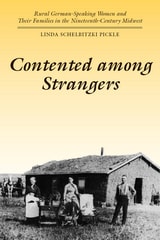
Contented among Strangers
Rural German-Speaking Women and Their Families in the Nineteenth-Century MidwestLinda Schelbitzki Pickle
University of Illinois Press, 1995
German-Americans make up one of the largest ethnic groups in the United States, yet their very success at assimilating has also made them one of the least visible. Contented among Strangers examines the central role German-speaking women in rural areas of the Midwest played in preserving their ethnic and cultural identity. Even while living far from their original homelands, these women applied traditional European patterns of rural family life and values to their new homes in Illinois, Iowa, Kansas, Missouri, and Nebraska. As a result they were more content with their modest lives than were their Anglo-American counterparts. Through personal recollections--including interesting diary material translated by the author, church and community documents, and migration and census data--Pickle reveals the diversity and richness of the women's experiences.

Continuities in Popular Culture
The Present in the Past and the Past in the Present and FutureEdited by Ray B. Brown and Ronald J. Ambrosetti
University of Wisconsin Press, 1993
Contraband Cultures
Reframing Smuggling across Latin America and the CaribbeanEdited by Jennifer Cearns and Charles Beach
University College London, 2024
Contraband Cultures reframes smuggling activities across Latin America (including the Caribbean) and its diasporas through the lenses of kinship, political movements, economic exchange, and resistance to capitalist state hegemony, countering the popular representations of smuggling in the region as chaotic, lawless, violent, and exotic.
This book includes a broad range of chapters from social science and humanities scholars, and it uses various methodologies, theoretical traditions, and analytic approaches to explore the efficacy and valence of smuggling as a lens to examine personhood, materiality, statehood, and political (dis)connection across Latin America. Its combination of historic documentation and contemporary ethnographic research highlights the development of these cultural practices while grounding them in the capitalist and colonial refashioning of the entire region since the sixteenth century.

Control and Order in French Colonial Louisbourg, 1713-1758
A.J.B. Johnston
Michigan State University Press, 2001
Control and Order in French Colonial Louisbourg, 1713-1758 is the culmination of nearly a quarter century of research and writing on 18th-century Louisbourg by A. J. B. Johnston. The author uses a multitude of primary archival sources-official correspondence, court records, parish registries, military records, and hundreds of maps and plans-to put together a detailed analysis of a distinctive colonial society. Located on Cape Breton Island (then known as Île Royale), the seaport and stronghold of Louisbourg emerged as one of the most populous and important settlements in all of New France. Its economy was based on fishing and trade, and the society that developed there had little or nothing to do with the fur trade, or the seigneurial regime that characterized the Canadian interior. Johnston traces the evolution of a broad range of controlling measures that were introduced and adapted to achieve an ordered civil and military society at Louisbourg. Town planning, public celebrations, diversity in the population, use of punishments, excessive alcohol consumption, the criminal justice system, and sexual abuse are some of the windows that reveal attempts to control and regulate society. A. J. B. Johnston's Control and Order in French Colonial Louisbourg offers both a broad overview of the colony's evolution across its half-century of existence, and insightful analyses of the ways in which control was integrated into the mechanisms of everyday life.
Controlling Corporeality
The Body and the Household in Ancient IsraelBerquist, Jon L.
Rutgers University Press, 2002
Human bodily existence is at the core of the Torah and the rest of the Hebrew Scriptures—from birth to death. From God’s creation of Adam out of clay, to the narratives of priests and kings whose regulations governed bodily practices, the Hebrew Bible focuses on the human body. Moreover, ancient Israel’s understanding of the human body has greatly influenced both Judaism and Christianity. Despite this pervasive influence, ancient Israel’s view of the human body has rarely been studied and, until now, has been poorly understood.
In this beautifully written book, Jon L. Berquist guides the reader through the Hebrew Bible, examining ancient Israel’s ideas of the body, the unstable roles of gender, the deployment of sexuality, and the cultural practices of the time. Conducting his analysis with reference to contemporary theories of the body, power, and social control, Berquist offers not only a description and clarification of ancient Israelite views of the body, but also an analysis of how these views belong to the complex logic of ancient social meanings. When this logic is understood, the familiar Bible becomes strange and opens itself to a wide range of new interpretations.
Convening Black Intimacy
Christianity, Gender, and Tradition in Early Twentieth-Century South AfricaNatasha Erlank
Ohio University Press, 2022
An unprecedented study of how Christianity reshaped Black South Africans’ ideas about gender, sexuality, marriage, and family during the first half of the twentieth century.
This book demonstrates that the primary affective force in the construction of modern Black intimate life in early twentieth-century South Africa was not the commonly cited influx of migrant workers but rather the spread of Christianity. During the late nineteenth and early twentieth centuries, African converts developed a new conception of intimate life, one that shaped ideas about sexuality, gender roles, and morality.
Although the reshaping of Black intimacy occurred first among educated Africans who aspired to middle-class status, by the 1950s it included all Black Christians—60 percent of the Black South African population. In turn, certain Black traditions and customs were central to the acceptance of sexual modernity, which gained traction because it included practices such as lobola, in which a bridegroom demonstrates his gratitude by transferring property to his bride’s family. While the ways of understanding intimacy that Christianity informed enjoyed broad appeal because they partially aligned with traditional ways, other individuals were drawn to how the new ideas broke with tradition. In either case, Natasha Erlank argues that what Black South Africans regard today as tradition has been unequivocally altered by Christianity.
In asserting the paramount influence of Christianity on unfolding ideas about family, gender, and marriage in Black South Africa, Erlank challenges social historians who have attributed the key factor to be the migrant labor system. Erlank draws from a wide range of sources, including popular Black literature and the Black press, African church and mission archives, and records of the South African law courts, which she argues have been underutilized in histories of South Africa. The book is sure to attract historians and other scholars interested in the history of African Christianity, African families, sexuality, and the social history of law, especially colonial law.

Cooking Texas Style
Traditional Recipes from the Lone Star StateBy Candy Wagner and Sandra Marquez
University of Texas Press, 2013
Just remembering the crispy fried chicken and luscious peach cobblers a grandmother or aunt used to make can set your mouth watering. And since remembering is no substitute for eating, cooks across the country have turned to Cooking Texas Style to find recipes for the comfort foods we love best. Thirty years after its first publication, popular acclaim has made this collection of favorite family recipes the standard source for traditional Texas cooking.
Here are over three hundred tasty recipes from the kitchens of Candy Wagner and Sandra Marquez. You’ll find classic Texas dishes such as chicken-fried steak, barbecue, chili, guacamole, and cornbread hot with jalapeños, as well as novel, exciting ways to prepare old favorites such as Tortilla Soup, Fajitas, and Chicken and Dumplings. Organized for easy reference, all the recipes are clearly explained, simple to prepare, and simply delicious. Cooking Texas Style is an invaluable addition to the kitchen bookshelf of anyone interested in cooking—and eating—Texas style.
Cooperation and Community
Economy and Society in OaxacaBy Jeffrey H. Cohen
University of Texas Press, 2000
In the villages and small towns of Oaxaca, Mexico, as in much of rural Latin America, cooperation among neighbors is essential for personal and community survival. It can take many forms, from godparenting to sponsoring fiestas, holding civic offices, or exchanging agricultural or other kinds of labor. This book examines the ways in which the people of Santa Ana del Valle practice these traditional cooperative and reciprocal relationships and also invent new relationships to respond to global forces of social and economic change at work within their community.
Based on fieldwork he conducted in this Zapotec-speaking community between 1992 and 1996, Jeffrey Cohen describes continuities in the Santañeros' practices of cooperation, as well as changes resulting from transnational migration, tourism, increasing educational opportunities, and improved communications. His nuanced portrayal of the benefits and burdens of cooperation is buttressed by the words of many villagers who explain why and how they participate-or not-in reciprocal family and community networks. This rich ethnographic material offers a working definition of community created in and through cooperative relationships.
Copts in Michigan
Eliot Dickinson
Michigan State University Press, 2008
The Copts, or Egyptian Christians, are a relatively small and tight-knit ethno-religious group, numbering perhaps three thousand people and living mostly in the Detroit metropolitan area. Since they began immigrating to Michigan in the mid-1960s, their community has grown exponentially.
Granted exceptional access to the Coptic community, Eliot Dickinson provides the first in- depth profile of this unique and remarkably successful immigrant group. Drawing on personal interviews to infuse the book with warmth and depth. Copts in Michigan offers readers a compelling view into this vibrant community.
Corbett Mack
The Life of a Northern PaiuteMichael Hittman
University of Nevada Press, 2013
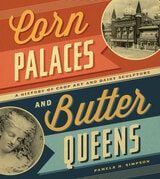
Corn Palaces and Butter Queens
A History of Crop Art and Dairy SculpturePamela H. Simpson
University of Minnesota Press, 2012
Teddy Roosevelt’s head sculpted from butter. The Liberty Bell replicated in oranges. The Sioux City Corn Palace of 1891 encased with corn, grains, and grasses and stretching for two city blocks—with a trolley line running down its center. Between 1870 and 1930, from county and state fairs to the world’s fairs, large exhibition buildings were covered with grains, fruits, and vegetables to declare in no uncertain terms the rich agricultural abundance of the United States. At the same fairs—but on a more intimate level—ice-cooled cases enticed fairgoers to marvel at an array of butter sculpture models including cows, buildings, flowers, and politicians, all proclaiming the rich bounty and unending promise held by the region.
Often viewed as mere humorous novelties—fun and folksy, but not worthy of serious consideration—these lively forms of American art are described by Pamela H. Simpson in a fascinating and comprehensive history. From the pioneering cereal architecture of Henry Worrall at the Philadelphia Centennial Exposition to the vast corn palaces displayed in Sioux City, Iowa, and elsewhere between 1877 and 1891, Simpson brings to life these dazzling large-scale displays in turn-of-the-century American fairs and festivals. She guides readers through the fascinating forms of crop art and butter sculpture, as they grew from state and regional fairs to a significant place at the major international exhibitions. The Minnesota State Fair’s Princess Kay of the Milky Way contest, Lillian Colton’s famed pictorial seed art, and the work of Iowa’s “butter cow lady,” Norma “Duffy” Lyon, are modern versions of this tradition.
Beautifully illustrated with a bounty of never-before-seen archival images, Corn Palaces and Butter Queens is an accessible history of one of America’s most unique and beguiling Midwestern art forms—an amusing and peculiar phenomenon that profoundly affected the way Americans saw themselves and their country’s potential during times of drought and great depression.
Cornish in Michigan
Russell M. Magnaghi
Michigan State University Press, 2007
Several ethnic groups have come to Michigan from the British Isles. Each group of immigrants from this region—the Cornish, English, Irish, and Welsh—has played a significant role in American history.
Historic records show that some early nineteenth-century Cornish immigrants were farmers and settled in the Lower Peninsula of Michigan. However, the majority of early Cornish immigrants were miners, and much of their influence was felt in the Upper Peninsula of the state. Many of the underground miners from Cornwall got their start in this region before they migrated to other mining regions throughout the United States.
Hard-working families came from throughout the peninsula of Cornwall, bringing their history, recipes, songs, religions, and other traditions to Michigan’s northern mining country. This nineteenth-century migration brought them to new homes in Keweenaw County, Houghton County, Copper Harbor, Eagle Harbor, and Presque Isle. In the 1830s, newly arrived immigrants also settled in the lower parts of Michigan, in Macomb, Washtenaw, Lenawee, and Oakland counties. The automobile boom of the 1920s sent many of these immigrants and their children to Metro Detroit from the Upper Peninsula, where their traditions are perpetuated today.
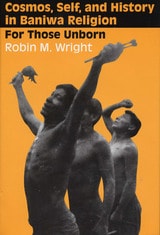
Cosmos, Self, and History in Baniwa Religion
For Those UnbornBy Robin M. Wright
University of Texas Press, 1998
The Baniwa Indians of the Northwest Amazon have engaged in millenarian movements since at least the middle of the nineteenth century. The defining characteristic of these movements is usually a prophecy of the end of this present world and the restoration of the primordial, utopian world of creation. This prophetic message, delivered by powerful shamans, has its roots in Baniwa myths of origin and creation.
In this ethnography of Baniwa religion, Robin M. Wright explores the myths of creation and how they have been embodied in religious movements and social action—particularly in a widespread conversion to evangelical Christianity. He opens with a discussion of cosmogony, cosmology, and shamanism, and then goes on to explain how Baniwa origin myths have played an active role in shaping both personal and community identity and history. He also explores the concepts of death and eschatology and shows how the mythology of destruction and renewal in Baniwa religion has made the Baniwa people receptive to both Catholic and Protestant missionaries.
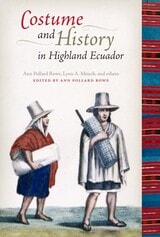
Costume and History in Highland Ecuador
Edited by Ann Pollard Rowe
University of Texas Press, 2011
The traditional costumes worn by people in the Andes—women's woolen skirts, men's ponchos, woven belts, and white felt hats—instantly identify them as natives of the region and serve as revealing markers of ethnicity, social class, gender, age, and so on. Because costume expresses so much, scholars study it to learn how the indigenous people of the Andes have identified themselves over time, as well as how others have identified and influenced them.
Costume and History in Highland Ecuador assembles for the first time for any Andean country the evidence for indigenous costume from the entire chronological range of prehistory and history. The contributors glean a remarkable amount of information from pre-Hispanic ceramics and textile tools, archaeological textiles from the Inca empire in Peru, written accounts from the colonial period, nineteenth-century European-style pictorial representations, and twentieth-century textiles in museum collections. Their findings reveal that several garments introduced by the Incas, including men's tunics and women's wrapped dresses, shawls, and belts, had a remarkable longevity. They also demonstrate that the hybrid poncho from Chile and the rebozo from Mexico diffused in South America during the colonial period, and that the development of the rebozo in particular was more interesting and complex than has previously been suggested. The adoption of Spanish garments such as the pollera (skirt) and man's shirt were also less straightforward and of more recent vintage than might be expected.
Counterculture Kaleidoscope
Musical and Cultural Perspectives on Late Sixties San FranciscoNadya Zimmerman
University of Michigan Press, 2013
In a bold reconsideration of the late sixties San Francisco counterculture movement, Counterculture Kaleidoscope takes a close look at the cultural and musical practices of that era. Addressing the conventional wisdom that the movement was grounded in rebellion and opposition, the book exposes two myths: first, that the counterculture was an organized social and political movement of progressives with a shared agenda who opposed the mainstream (dubbed "hippies"); and second, that the counterculture was an innocent entity hijacked by commercialism and transformed over time into a vehicle of so-called "hip consumerism."
Seeking an alternative to the now common narrative, Nadya Zimmerman examines primary source material including music, artwork, popular literature, personal narratives, and firsthand historical accounts. She reveals that the San Francisco counterculture wasn't interested in commitments to causes and made no association with divisive issues---that it embraced everything in general and nothing in particular.
"Astute and accessible, Counterculture Kaleidoscope provides thought-provoking insights into the historical, cultural and social context of the San Francisco counter-culture and its music scene, including discussions of Vietnam and student protest, the Haight-Ashbury Diggers, the Grateful Dead, Led Zeppelin, Altamont, and Charlie Manson. A must for students and scholars of socio-musical activity and for all of us to whom music matters."
---Sheila Whiteley, author of The Space Between the Notes: Rock and the Counter-Culture and Too Much Too Young: Popular Music, Age and Gender
"The hippie counterculture has never garnered the scholarly attention accorded the new left and the black freedom struggle. Overviews of the period ritualistically mention it as part and parcel of that apparently incandescent era---the Sixties---but rarely capture its distinctiveness. Counterculture Kaleidoscope is a timely and provocative intervention in Sixties scholarship that significantly deepens our understanding of this important but understudied phenomenon."
—Alice Echols, Associate Professor, University of Southern California, and author of Scars of Sweet Paradise: The Life and Times of Janis Joplin
Courtesans and Fishcakes
The Consuming Passions of Classical AthensJames N. Davidson
University of Chicago Press, 2011
As any reader of the Symposium knows, the ancient Greek philosopher Socrates conversed over lavish banquets, kept watch on who was eating too much fish, and imbibed liberally without ever getting drunk. In other words, James Davidson writes, he reflected the culture of ancient Greece in which he lived, a culture of passions and pleasures, of food, drink, and sex before—and in concert with—politics and principles. Athenians, the richest and most powerful of the Greeks, were as skilled at consuming as their playwrights were at devising tragedies. Weaving together Greek texts, critical theory, and witty anecdotes, this compelling and accessible study teaches the reader a great deal, not only about the banquets and temptations of ancient Athens, but also about how to read Greek comedy and history.

Courtly Song in Late Sixteenth-Century France
Jeanice Brooks
University of Chicago Press, 2001
Brooks concentrates on a period in which the court's importance in projecting the symbolic centrality of monarchy was growing rapidly and considers the role of the air in defining patronage hierarchies at court and in enhancing courtly visions of masculine and feminine virtue. Her study illuminates the court's relationship to the world beyond its own confines, represented first by Italy, then by the countryside. In addition to the 40 editions of airs de cour printed between 1559 and 1589, Brooks draws on memoirs, literary works, and iconographic evidence to present a rounded vision of French Renaissance culture.
The first book-length examination of the history of air de cour, this work also sheds important new light on a formative moment in French history.