Results by title
18284 books match the query 'United States' and 1260 start with c
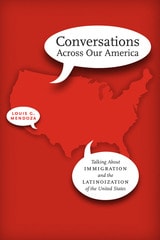
Conversations Across Our America
Talking About Immigration and the Latinoization of the United StatesBy Louis G. Mendoza
University of Texas Press, 2012
In the summer of 2007, Louis G. Mendoza set off on a bicycle trip across the United States with the intention of conducting a series of interviews along the way. Wanting to move beyond the media’s limited portrayal of immigration as a conflict between newcomers and “citizens,” he began speaking with people from all walks of life about their views on Latino immigration. From the tremendous number of oral histories Mendoza amassed, the resulting collection offers conversations with forty-three different people who speak of how they came to be here and why they made the journey. They touch upon how Latino immigration is changing in this country, and how this country is being changed by Latinoization. Interviewees reflect upon the concerns and fears they’ve encountered about the transformation of the national culture, and they relate their own experiences of living and working as “other” in the United States.
Mendoza’s collection is unique in its vastness. His subjects are from big cities and small towns. They are male and female, young and old, affluent and impoverished. Many are political, striving to change the situation of Latina/os in this country, but others are “everyday people,” reflecting upon their lives in this country and on the lives they left behind. Mendoza’s inclusion of this broad swath of voices begins to reflect the diverse nature of Latino immigration in the United States today.

Convictions of the Heart
Jim Corbett and the Sanctuary MovementMiriam Davidson
University of Arizona Press, 1988
Corbett first worked within the law to help refugees process applications for asylum, but the U.S. Immigration and Naturalization Service soon began a program of arrests; then he began to smuggle refugees from the Mexican border to the homes of citizens willing to provide shelter, making hundreds of trips over the next two years; finally he enlisted the support of the Tucson Ecumenical Council and persuaded John Fife, pastor of the Southside Presbyterian Church, to open that building as a refuge. When legal action against Corbett and the others seemed imminent, Southside became, on March 24, 1982, the first of two hundred churches in the country to declare itself a sanctuary.
Convictions of the Heart takes readers inside the santuary movement to reveal its founders' motives and underlying beliefs, and inside the courtroom to describe the government's efforts to stop it. Although the book addresses many points of view, its primary focus is on the philosophy of Jim Corbett. Rooted in the nonviolence of Gandhi, the Society of Friends, and Martin Luther King, Corbett's beliefs challenged individuals and communities of faith across the country to examine the strength of their commitment to the needs and rights of others.
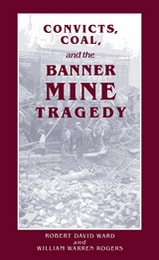
Convicts, Coal, and the Banner Mine Tragedy
Robert David Ward
University of Alabama Press, 1987
In the late 1870s, Jefferson County, Alabama, and the town of Elyton (near the future Birmingham) became the focus of a remarkable industrial and mining revolution. Together with the surrounding counties, the area was penetrated by railroads. Surprisingly large deposits of bituminous coal, limestone, and iron ore—the exact ingredients for the manufacture of iron and, later, steel—began to be exploited. Now, with transportation, modern extractive techniques, and capital, the region’s geological riches began yielding enormous profits.
This book is about the men who worked involuntarily in the Banner Coal Mine, owned by the Pratt Consolidated Coal Company. And it is about the repercussions and consequences that followed an explosion at the mine in the spring of 1911 that killed 128 convict miners.
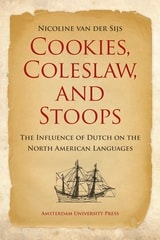
Cookies, Coleslaw, and Stoops
The Influence of Dutch on the North American LanguagesNicoline van der Sijs
Amsterdam University Press, 2010
From Santa Claus (after the Dutch folklore saint Sinterklaas) and his sleigh (the pronunciation of the Dutch slee is almost identical) to a dumbhead talking poppycock, the contributions of the Dutch language to American English are indelibly embedded to some of our most vernacular terms and expressions. The menu in most of our restaurants sports some originally Dutch names, and even our dollar is named after a Dutch coin (daalder). In this captivating volume, the renowned linguist Nicoline van der Sijs glosses over 300 Dutch loan words like these that travelled to the New World on board the Dutch ship the Halve Maan, captained by Henry Hudson, which dropped anchor in Manhattan more than 400 years ago. Surprisingly, the Dutch also gave several Native American languages words for everyday things like “pants”, “cat” and “turkey”. Lively and accessible, the information presented in this volume charts the journey of these words into the American territory and languages, from more obscure uses which maybe have survived in only regional dialects to such ubiquitous contributions to our language like Yankee, cookie, and dope. Each entry marks the original arrival of its term into American English and adds up-to-date information on its evolving meaning, etymology, and regional spread. Not to be missed by anyone with a passion for the history behind our everyday expressions, Cookies, Coleslaw and Stoops is the perfect gift for the linguistic adventurer in us all.

Cooking Up a Storytime
Mix-and-Match Menus for Easy ProgrammingSusan Anderson-Newham
American Library Association, 2014
Cooperation without Submission
Indigenous Jurisdictions in Native Nation–US EngagementsJustin B. Richland
University of Chicago Press, 2021
It is well-known that there is a complicated relationship between Native American Tribes and the US government. Relations between Tribes and the federal government are dominated by the principle that the government is supposed to engage in meaningful consultations with the tribes about issues that affect them.
In Cooperation without Submission, Justin B. Richland, an associate justice of the Hopi Appellate Court and ethnographer, closely examines the language employed by both Tribes and government agencies in over eighty hours of meetings between the two. Richland shows how Tribes conduct these meetings using language that demonstrates their commitment to nation-to-nation interdependency, while federal agents appear to approach these consultations with the assumption that federal law is supreme and ultimately authoritative. In other words, Native American Tribes see themselves as nations with some degree of independence, entitled to recognition of their sovereignty over Tribal lands, while the federal government acts to limit that authority. In this vital book, Richland sheds light on the ways the Tribes use their language to engage in “cooperation without submission.”
Coordination and Information
Historical Perspectives on the Organization of EnterpriseEdited by Naomi R. Lamoreaux and Daniel M. G. Raff
University of Chicago Press, 1995
In an ideal world, the market would be the optimal provider of coordination, but in the real world of incomplete information, some activities are better coordinated in other ways. Divided into three parts, this book addresses coordination within firms, at the borders of firms, and outside firms, providing a picture of the overall incidence and logic of economic coordination. The case studies—drawn from the late nineteenth and early twentieth century, when the modern business enterprise was evolving, address such issues as the relationship between coordination mechanisms and production techniques, the logic of coordination in industrial districts, and the consequences of regulation for coordination.
Continuing the work on information and organization presented in the influential Inside the Business Enterprise, this book provides material for business historians and economists who want to study the development of the dissemination of information and the coordination of economic activity within and between firms.
Cop Knowledge
Police Power and Cultural Narrative in Twentieth-Century AmericaChristopher P. Wilson
University of Chicago Press, 2000
Christopher P. Wilson explores these questions by examining narratives of police power in crime news, popular fiction, and film, showing how they both reflect and influence the real strategies of law enforcement on the beat, in the squad room, and in urban politics. He takes us from Theodore Roosevelt's year of reform with the 1890s NYPD to the rise of "community policing," from the classic "police procedural" film The Naked City to the bestselling novels of LAPD veteran Joseph Wambaugh. Wilson concludes by demonstrating the ways in which popular storytelling about police power has been intimately tied to the course of modern liberalism, and to the rising tide of neoconservatism today.
"A thorough, brilliant blend that crosses disciplines."—Choice
"[S]ophisticated, highly theoretical and ambitious. . . . Connects the history of policing to cultural representations of crime, criminals and cops."—Times Literary Supplement
"[A] deeply satisfying approach to the crime narrative. . . . [Wilson] focuses, ultimately, on the role of police power in cultural storytelling."—American Quarterly
Coping With Poverty
The Social Contexts of Neighborhood, Work, and Family in the African-American CommunitySheldon Danziger and Ann Chih Lin, Editors
University of Michigan Press, 2000

Coping with Blindness
Personal Tales of Blindness RehabilitationAlvin Roberts
Southern Illinois University Press, 1998
Currently, 1.7 million Americans are either blind or are in the process of losing their vision. Sightless himself and a veteran of four decades of helping people cope with blindness as well as with the possibility of blindness, Alvin Roberts decided that telling stories drawn from the community of the blind and from his fellow rehabilitation workers was the best way to reassure others—especially the elderly, who are most at risk of becoming visually impaired—that "blindness need not be the end of active life, but rather the beginning of a life in which [people] will depend on their residual senses to continue full, active living."
Through good stories well told, then, Roberts offers reassurance that competent help exists for the visually impaired. He chooses stories that demonstrate to those facing blindness that they, too, can learn to cope because others have done so. Yet that is only part of his message. Seeing humor as a great facilitator for successfully reentering mainstream society, Roberts also dispels the commonly held belief that blind people are a somber lot and that those who help them encounter little humor. Many of these stories are frankly funny, and blind people and those in the rehabilitation field certainly are not above practical jokes.
Roberts’s personal experiences and conversations with colleagues have provided a wealth of incidents on which to base stories of rehabilitation workers with the blind going about their daily tasks. He paints a positive picture of what it is like to be blind, replacing fear, dread, and myth with reality.
Copper for America
The United States Copper Industry from Colonial Times to the 1990sCharles K. Hyde
University of Arizona Press, 1998
An extensively documented chronicle of the rise and fall of individual mines, companies, and regions, Copper for America will prove an essential resource for economic and business historians, historians of technology and mining, and western historians.
Cops, Teachers, Counselors
Stories from the Front Lines of Public ServiceSteven Maynard-Moody and Michael Musheno
University of Michigan Press, 2003
Steven Maynard-Moody is Director of the Policy Research Institute and Professor of Public Administration at the University of Kansas.
Michael Musheno is Professor of Justice and Policy Studies at Lycoming College and Professor Emeritus of Justice Studies, Arizona State University.
Cops, Teachers, Counselors
Stories from the Front Lines of Public ServiceSteven Maynard-Moody and Michael Musheno
University of Michigan Press, 2022
The new edition of Cops, Teachers, Counselors furthers the exploration of forces that shape the contours of frontline work. This line of inquiry is at the heart of street-level bureaucracy research, a field of study cutting across disciplines, including public administration, political science, social work, law and society, education, and criminal justice. The oft-cited 2003 edition pioneered a qualitative method of inquiry using workers’ own voices and storytelling about fairness in the delivery of services. This NSF-supported field research reveals the ways workers engage in moral judgments, more than implementing laws and policies, to account for their decisions and actions.
The new edition wraps an expanded framing around the original chapters, while maintaining a lively, approachable presentation style. It takes on a more enriched perspective of legality than the original, while retaining a focus on frontline work as a powerful source of cultural ordering. In addition to examining workers’ stories of encounters, attention is given to the agency of the governed during interactional moments, the power dynamics in play during both interpersonal and group encounters, and patterns of practice that converge across distinctive service domains. The original edition describes two narratives that shape frontline workers’ decisional judgments and the interplay between legality and morality: the state-agent and citizen-agent narratives. This edition adds the knowledge-agent narrative that stresses the importance of professional and field learning to decisional judgments.
The book examines routine encounters of cops, teachers, and counselors with diverse publics when questions of justice and fairness are at play. This new edition speaks to contemporary issues at a time when frontline workers gained broad recognition for their heroic contributions to communities during the Covid 19 pandemic, as well as sustained condemnation for their embodiment of the brutal expression of racialized state power in police actions. The authors conclude with a focus on the significance of place and trust in building social inclusion on the frontlines of public service.
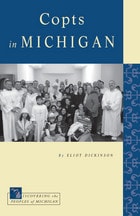
Copts in Michigan
Eliot Dickinson
Michigan State University Press, 2008
The Copts, or Egyptian Christians, are a relatively small and tight-knit ethno-religious group, numbering perhaps three thousand people and living mostly in the Detroit metropolitan area. Since they began immigrating to Michigan in the mid-1960s, their community has grown exponentially.
Granted exceptional access to the Coptic community, Eliot Dickinson provides the first in- depth profile of this unique and remarkably successful immigrant group. Drawing on personal interviews to infuse the book with warmth and depth. Copts in Michigan offers readers a compelling view into this vibrant community.

Copyright Conversations
Rights Literacy in a Digital WorldSara Benson
Assoc of College & Research Libraries, 2019
Copyright Essentials for Librarians and Educators
American Library Association, 2000
Copyright Law for Librarians and Educators
Creative Strategies and Practical SolutionsKenneth D. Crews
American Library Association, 2020
Copyright law never sleeps, making it imperative to keep abreast of the latest developments. Declared “an exemplary text that seals the standards for such books” (Managing Information), this newly revised and updated edition by respected copyright authority Crews offers timely insights and succinct guidance for LIS students, librarians, and educators alike. Readers will
- learn basic copyright definitions and key exceptions for education and library services;
- find information quickly with “key points” sidebars, legislative citations, and cross-references;
- get up to speed on fresh developments, such as how the recently signed Marrakesh Treaty expands access for people with disabilities and why the latest ruling in the Georgia State University case makes developing a fair use policy so important;
- understand the concept of fair use, with fresh interpretations of its many gray areas that will aid decision making;
- learn the current state of affairs regarding mass digitization, Creative Commons, classroom use and distance education, the Digital Millennium Copyright Act, and other important topics;
- receive guidance on setting up on a copyright service at a library, college, or university; and
- find many helpful checklists for navigating copyright in various situations.
This straightforward, easy-to-use guide provides the tools librarians and educators need to take control of their rights and responsibilities as copyright owners and users.
Copyright Law for Librarians and Educators
Creative Strategies and Practical SolutionsKenneth D. Crews
American Library Association, 2012
Copyright for Academic Librarians and Professionals
Rebecca P. Butler
American Library Association, 2014
Copyright for Teachers and Librarians in the 21st Century
Rebecca P. Butler
American Library Association, 2011

Copyright, Fair Use, and the Challenge for Universities
Promoting the Progress of Higher EducationKenneth D. Crews
University of Chicago Press, 1993
In the first large-scale study of its kind, Kenneth D. Crews surveys the copyright policies of ninety-eight American research universities. His analysis reveals a variety of ways in which universities have responded to—and how they could better manage—the conflicting goals of copyright policies: avoiding infringements while promoting lawful uses that serve teaching and research. He explains in detail the background of copyright law and congressional guidelines affecting familiar uses of photocopies, videotapes, software, and reserve rooms. Crews concludes that most universities are overly conservative in their interpretation of copyright and often neglect their own interests, adding unnecessary costs and obstacles to the lawful dissemination of information.
Copyright, Fair Use, and the Challenge for Universities provides administrators, instructors, lawyers, librarians, and educational leaders a much-needed exegesis of copyright and how it can better serve higher education.

Cordelia Harvey
Civil War AngelBob Kann
Wisconsin Historical Society Press, 2011
Cordelia Harvey: Civil War Angel includes sidebars on medical care, early nursing, and military prisons. A timeline, glossary of terms, and suggestions for activities and discussion round out this spirited narrative.

Core Samples
A Climate Scientist's Experiments in Politics and MotherhoodAnna Farro Henderson
University of Minnesota Press, 2024
People live by their stories—how can we use them to accelerate action on climate change?
Climate scientist and policy expert Anna Farro Henderson embarks on a remarkable narrative journey in Core Samples, exploring how science is done, discussed, legislated, and imagined. Through stories both raucous and poignant—of far-flung expeditions, finding artistic inspiration in research, and traversing the systemic barriers women and mothers face in science and politics—she brings readers into the daily rhythms and intimacies of scientific research and political negotiation.
Grounded in her experiences as a climate scientist, an environmental policy advisor to Minnesota Senator Al Franken and Governor Mark Dayton, and a constant juggler of the many roles and responsibilities of professional moms, Henderson’s eclectic, unconventional essays range from observations, confessions, and meditations on lab and fieldwork to a packing list for a trip to the State Capitol and a lactation diary. Readers are invited on voyages as far afield as the Trinity nuclear test site in New Mexico, the Juneau Icefield in Alaska, and a meteor crater in Ghana—and as close to home as a town hall meeting in America’s corn belt.
A love letter to science and a bracing (and sometimes hilarious) portrait of the many obstacles women, mothers, and people digging for truth navigate, Core Samples illuminates the messy, contradictory humanity of our scientific and political institutions. Bringing us behind the closed doors of discovery and debate, Henderson exposes the flaws in research institutions, the halls of government, and the role of science in policy, yet she shows how each crack is also an invitation for camaraderie, creativity, and change.
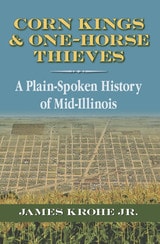
Corn Kings and One-Horse Thieves
A Plain-Spoken History of Mid-IllinoisJames Krohe Jr.
Southern Illinois University Press, 2017
In Corn Kings and One-Horse Thieves, James Krohe Jr. presents an engaging history of an often overlooked region, filled with fascinating stories and surprising facts about Illinois’s midsection.
Krohe describes in lively prose the history of mid-Illinois from the Woodland period of prehistory until roughly 1960, covering the settlement of the region by peoples of disparate races and religions; the exploitation by Euro-Americans of forest, fish, and waterfowl; the transformation of farming into a high-tech industry; and the founding and deaths of towns. The economic, cultural, and racial factors that led to antagonism and accommodation between various people of different backgrounds are explored, as are the roles of education and religion in this part of the state. The book examines remarkable utopian experiments, social and moral reform movements, and innovations in transportation and food processing. It also offers fresh accounts of labor union warfare and social violence directed against Native Americans, immigrants, and African Americans and profiles three generations of political and government leaders, sometimes extraordinary and sometimes corrupt (the “one-horse thieves” of the title). A concluding chapter examines history’s roles as product, recreation, and civic bond in today’s mid-Illinois.
Accessible and entertaining yet well-researched and informative, Corn Kings and One-Horse Thieves draws on a wide range of sources to explore a surprisingly diverse section of Illinois whose history is America in microcosm.
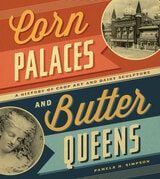
Corn Palaces and Butter Queens
A History of Crop Art and Dairy SculpturePamela H. Simpson
University of Minnesota Press, 2012
Teddy Roosevelt’s head sculpted from butter. The Liberty Bell replicated in oranges. The Sioux City Corn Palace of 1891 encased with corn, grains, and grasses and stretching for two city blocks—with a trolley line running down its center. Between 1870 and 1930, from county and state fairs to the world’s fairs, large exhibition buildings were covered with grains, fruits, and vegetables to declare in no uncertain terms the rich agricultural abundance of the United States. At the same fairs—but on a more intimate level—ice-cooled cases enticed fairgoers to marvel at an array of butter sculpture models including cows, buildings, flowers, and politicians, all proclaiming the rich bounty and unending promise held by the region.
Often viewed as mere humorous novelties—fun and folksy, but not worthy of serious consideration—these lively forms of American art are described by Pamela H. Simpson in a fascinating and comprehensive history. From the pioneering cereal architecture of Henry Worrall at the Philadelphia Centennial Exposition to the vast corn palaces displayed in Sioux City, Iowa, and elsewhere between 1877 and 1891, Simpson brings to life these dazzling large-scale displays in turn-of-the-century American fairs and festivals. She guides readers through the fascinating forms of crop art and butter sculpture, as they grew from state and regional fairs to a significant place at the major international exhibitions. The Minnesota State Fair’s Princess Kay of the Milky Way contest, Lillian Colton’s famed pictorial seed art, and the work of Iowa’s “butter cow lady,” Norma “Duffy” Lyon, are modern versions of this tradition.
Beautifully illustrated with a bounty of never-before-seen archival images, Corn Palaces and Butter Queens is an accessible history of one of America’s most unique and beguiling Midwestern art forms—an amusing and peculiar phenomenon that profoundly affected the way Americans saw themselves and their country’s potential during times of drought and great depression.

Cornerstone on College Hill
An Illustrated History of the University of Alaska FairbanksTerrence Cole
University of Alaska Press, 1994

Cornerstones of Peace
Jewish Identity Politics and Democratic TheoryBrettschneider, Marla
Rutgers University Press, 1996
Throughout the seventies, the idea of being “pro-Israel” was traditionally equated with support for the Israeli government and was central to an understanding of American Jewish identity. It was so central, argues Marla Brettschneider, that even committed activists who took issue with such a monolithic stance were silenced by mainstream Jewish organizations. But during the 1980s, a change took place. An explosion of new Jewish groups intent on challenging the dominant definition of the pro-Israel attitude transformed an increasingly closed Jewish community into one more democratic and inclusive.
In Cornerstones of Peace, Marla Brettschneider skillfully combines a lucid review of contemporary Liberal political theory and its understanding of the role of groups in the political process, a sophisticated analysis of Hobbesian philosophy, and a rich history of “alternative” Jewish activist groups like Breira and Americans for Peace Now (APN) to ask: What can we learn about identity and democratic theory from the changes that have taken place in the Jewish community? Through an insightful exploration of how small, activist groups have reclaimed pro-Israel identity politics as a collective multilayered process, Brettschneider adds her voice to the growing number of political theorists envisioning a pro-diversity alternative to Liberal political thought. She theorizes about a new democratic theory, showing theorists and activists how to envision and enact more vibrant, inclusive democratic politics.
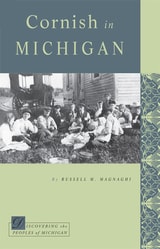
Cornish in Michigan
Russell M. Magnaghi
Michigan State University Press, 2007
Several ethnic groups have come to Michigan from the British Isles. Each group of immigrants from this region—the Cornish, English, Irish, and Welsh—has played a significant role in American history.
Historic records show that some early nineteenth-century Cornish immigrants were farmers and settled in the Lower Peninsula of Michigan. However, the majority of early Cornish immigrants were miners, and much of their influence was felt in the Upper Peninsula of the state. Many of the underground miners from Cornwall got their start in this region before they migrated to other mining regions throughout the United States.
Hard-working families came from throughout the peninsula of Cornwall, bringing their history, recipes, songs, religions, and other traditions to Michigan’s northern mining country. This nineteenth-century migration brought them to new homes in Keweenaw County, Houghton County, Copper Harbor, Eagle Harbor, and Presque Isle. In the 1830s, newly arrived immigrants also settled in the lower parts of Michigan, in Macomb, Washtenaw, Lenawee, and Oakland counties. The automobile boom of the 1920s sent many of these immigrants and their children to Metro Detroit from the Upper Peninsula, where their traditions are perpetuated today.
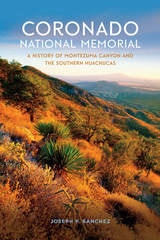
Coronado National Memorial
A History of Montezuma Canyon and the Southern HuachucasJoseph P. Sánchez
University of Nevada Press, 2017
Sánchez is the foremost historian of the area, and he shifts through and decodes a number of key Spanish and English language documents from different archives that tell the story of an historical drama of epic proportions. He combines the regional and the global, starting with the prehistory of the area. He covers Spanish colonial contact, settlement missions, the Mexican Territorial period, land grants, and the ultimate formation of the international border that set the stage for the creation of the Coronado National Memorial in 1952.
Much has been written about southwestern Arizona and northeastern Sonora, and in many ways this book complements those efforts and delivers details about the region’s colorful past.
Coronado's Children
Tales of Lost Mines and Buried Treasures of the SouthwestBy J. Frank Dobie
University of Texas Press, 1978
Written in 1930, Coronado's Children was one of J. Frank Dobie's first books, and the one that helped gain him national prominence as a folklorist. In it, he recounts the tales and legends of those hardy souls who searched for buried treasure in the Southwest following in the footsteps of that earlier gold seeker, the Spaniard Coronado.
"These people," Dobie writes in his introduction, "no matter what language they speak, are truly Coronado's inheritors.... l have called them Coronado's children. They follow Spanish trails, buffalo trails, cow trails, they dig where there are no trails; but oftener than they dig or prospect they just sit and tell stories of lost mines, of buried bullion by the jack load... "
This is the tale-spinning Dobie at his best, dealing with subjects as irresistible as ghost stories and haunted houses.
Coronado's Well-Equipped Army
The Spanish Invasion of the American SouthwestJohn M. Hutchins
Westholme Publishing, 2023
Winner of Two Colorado Book Awards
The historic 1540–1542 expedition of Captain-General Francisco Vasquez de Coronado is popularly remembered as a luckless party of exploration which wandered the American Southwest and then blundered onto the central Great Plains of Texas, Oklahoma, and Kansas. The expedition, as historian John M. Hutchins relates in Coronado’s Well-Equipped Army: The Spanish Invasion of the American Southwest, was a military force of about 1,500 individuals, made up of Spanish soldiers, Indian warrior allies, and camp followers. Despite the hopes for a peaceful conquest of new lands—including those of a legendary kingdom of Cibola—the expedition was obliged to fight a series of battles with the natives in present-day Sonora, California, Arizona, and New Mexico. The final phase of the invasion was less warlike, as the members of the expedition searched the Great Plains in vain for a wealthy civilization called Quivira.While much has been written about the march of Coronado and his men, this is the first book to address the endeavor as a military campaign of potential conquest like those conducted by other conquistadors. This helps to explain many of the previously misunderstood activities of the expedition. In addition, new light is cast on the non-Spanish participants, including Mexican Indian allies and African retainers, as well as the important roles of women.
Corporal Rhetoric
Regulating Reproduction in the Progressive EraBarbara Schneider
University of Alabama Press, 2021
Examines public discourse from the Progressive Era over the state’s right to regulate women’s bodies and their reproduction
When Justice Oliver Wendell Holmes determined in 1927 that sterilization was a legitimate means of safeguarding the nation’s health, he was asserting the state’s right to regulate the production of the national body. His opinion represented a culmination of arguments about reproduction and immigration that had been circulating for years but that intensified during the Progressive Era. Arguments about reproductive and immigration practices surged to the foreground, and tectonic shifts in the conceptual schemes and practices of reproduction in the United States followed.
Drawing on feminist historiography and genre studies, Corporal Rhetoric: Regulating Reproduction in the Progressive Era explores the rhetoric of medical research, new technologies, and material practices that shifted the idea of childbirth as an act of God or Nature to a medical procedure enacted by male physicians on the bodies of women made passive by both drugs and discourse. Barbara Schneider considers how efficiency, the hallmark of scientific management, was raised to a cardinal virtue by its inclusions in the powerful mediums of presidential speeches, national educational policies, and eugenics discourse to reclassify babies, long regarded as gifts, as either valuable assets or defective products.
Schneider shows how the legal system drew upon medicine, scientific management, and the emerging discipline of sociology to restrict women’s labor in order to preserve reproductive capacity, categorized by Supreme Court opinions as a public good rather than a private capacity. Throughout, she ties the arguments developed during this era to current debates about mothering rhetorics, reproductive rights, immigration, and conceptions of the nation.
By weaving together medical research reports, clinical practices, case studies, legal opinions and legislative acts, and the epistemology of scientific management, Schneider illuminates the network that women such as Margaret Sanger, Jane Addams, Lillian Gilbreth and multiple others negotiated as they sought to give women room to exercise their reproductive capacity. Through her analysis of the machinery of these discourses and the material uptake of their genres in the daily practices of reproductive bodies, Schneider offers a provisional theory of corporal rhetoric that begins to answer the call for a new material theory of the body.
Corporate Bodies and Guilty Minds
The Failure of Corporate Criminal LiabilityWilliam S. Laufer
University of Chicago Press, 2006
In this timely work, William S. Laufer argues that even with recent legal reforms, corporate criminal law continues to be ineffective. As evidence, Laufer considers the failure of courts and legislatures to fashion liability rules that fairly attribute blame for organizations. He analyzes the games that corporations play to deflect criminal responsibility. And he also demonstrates how the exchange of cooperation for prosecutorial leniency and amnesty belies true law enforcement. But none of these factors, according to Laufer, trumps the fact that there is no single constituency or interest group that strongly and consistently advocates the importance and priority of corporate criminal liability. In the absence of a new standard of corporate liability, the power of regulators to keep corporate abuses in check will remain insufficient.
Corporate Capital Structures in the United States
Edited by Benjamin M. Friedman
University of Chicago Press, 1985

Corporate Crops
Biotechnology, Agriculture, and the Struggle for ControlBy Gabriela Pechlaner
University of Texas Press, 2012
Biotechnology crop production area increased from 1.7 million hectares to 148 million hectares worldwide between 1996 to 2010. While genetically modified food is a contentious issue, the debates are usually limited to health and environmental concerns, ignoring the broader questions of social control that arise when food production methods become corporate-owned intellectual property. Drawing on legal documents and dozens of interviews with farmers and other stakeholders, Corporate Crops covers four case studies based around litigation between biotechnology corporations and farmers. Pechlaner investigates the extent to which the proprietary aspects of biotechnologies—from patents on seeds to a plethora of new rules and contractual obligations associated with the technologies—are reorganizing crop production.
The lawsuits include patent infringement litigation launched by Monsanto against a Saskatchewan canola farmer who, in turn, claimed his crops had been involuntarily contaminated by the company’s GM technology; a class action application by two Saskatchewan organic canola farmers launched against Monsanto and Aventis (later Bayer) for the loss of their organic market due to contamination with GMOs; and two cases in Mississippi in which Monsanto sued farmers for saving seeds containing its patented GM technology. Pechlaner argues that well-funded corporate lawyers have a decided advantage over independent farmers in the courts and in creating new forms of power and control in agricultural production. Corporate Crops demonstrates the effects of this intersection between the courts and the fields where profits, not just a food supply, are reaped.

Corporate Dreams
Big Business in American Democracy from the Great Depression to the Great RecessionHoopes, James
Rutgers University Press, 2011
Public trust in corporations plummeted in the wake of the 2008 financial crisis, when “Lehman Brothers” and “General Motors” became dirty words for many Americans. In Corporate Dreams, James Hoopes argues that Americans still place too much faith in corporations and, especially, in the idea of “values-based leadership” favored by most CEOs. The danger of corporations, he suggests, lies not just in their economic power, but also in how their confused and undemocratic values are infecting Americans’ visions of good governance.
Corporate Dreams proposes that Americans need to radically rethink their relationships with big business and the government. Rather than buying into the corporate notion of “values-based leadership,” we should view corporate leaders with the same healthy suspicion that our democratic political tradition teaches us to view our political leaders. Unfortunately, the trend is moving the other way. Corporate notions of leadership are invading our democratic political culture when it should be the reverse.
To diagnose the cause and find a cure for our toxic attachment to corporate models of leadership, Hoopes goes back to the root of the problem, offering a comprehensive history of corporate culture inAmerica, from the Great Depression to today’s Great Recession. Combining a historian’s careful eye with an insider’s perspective on the business world, this provocative volume tracks changes in government economic policy, changes in public attitudes toward big business, and changes in how corporate executives view themselves.
Whether examining the rise of Leadership Development programs or recounting JFK’s Pyrrhic victory over U.S. Steel, Hoopes tells a compelling story of how America lost its way, ceding authority to the policies and values of corporate culture. But he also shows us how it’s not too late to return to our democratic ideals—and that it’s not too late to restore the American dream.
Corporate Takeovers
Causes and ConsequencesEdited by Alan J. Auerbach
University of Chicago Press, 1988
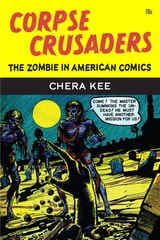
Corpse Crusaders
The Zombie in American ComicsChera Kee
University of Michigan Press, 2024
Using archival research into Golden Age comics and extended analyses of comics from the 1940s to today, Corpse Crusaders explores the profound influence early action/adventure and superheroic generic conventions had on shaping comic book zombies. It takes the reader from the 1940s superhero, the Purple Zombie, through 1950s revenge-from-the-grave zombies, to the 1970s anti-hero, Simon Garth (“The Zombie”) and the gruesome heroes-turned-zombies of Marvel Zombies. In becoming immersed in superheroic logics early on, the zombie in comics became a figure that, unlike the traditional narrative uses of other monsters, actually served to defend the status quo. This continuing trend not only provides insight into the overwhelming influence superheroes have had on the comic book medium, but it also provides a unique opportunity to explore the ways in which zombiism and superheroism parallel each other. Corpse Crusaders explores the ways that truth, justice, and the American way have influenced the undead in comics and turned what is often a rebellious figure into one that works to save the day.
Corpse Magic
Echoes Active in the Slayer-Slain NexusMichael Taussig
University of Chicago Press, 2025
Corpse Magic is a response to the global ubiquity of violence. In this bracing new work, the influential anthropologist Michael Taussig puts killings in Colombia, by gangs and guerrillas, police and the military, and agents of agribusiness, in conversation with mass shootings and police killings, disproportionately of Black people, in the United States. In both contexts, he examines the effects of violent killing on its victims, its perpetrators, and those who witness and relive it through media footage.
Drawing from literature, religion, philosophy, and anthropology, Taussig traces the idea that the act of killing “infects” the killer and spreads outward, then connects this concept of contagion to beliefs in Colombia and elsewhere that the souls of the slain possess those of their slayers and that magic can be used to empower or thwart corpses as agents of vengeance. In this powerful and imaginative work, Taussig asks what kind of power the dead continue to have; what kinds of magic can manage that power; and what, if anything, can stop seemingly endless cycles of violence.
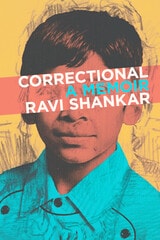
Correctional
Ravi Shankar
University of Wisconsin Press, 2021
Shankar’s bold and complex self-portrait—and portrait of America—challenges us to rethink our complicity in the criminal justice system and mental health policies that perpetuate inequity and harm. Correctional dives into the inner workings of his mind and heart, framing his unexpected encounters with law and order through the lenses of race, class, privilege, and his bicultural upbringing as the first and only son of South Indian immigrants. Vignettes from his early life set the scene for his spectacular fall and subsequent struggle to come to terms with his own demons. Many of them, it turns out, are also our own.
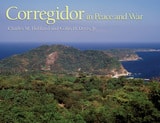
Corregidor in Peace and War
Charles M. Hubbard & Collis H. Davis, Jr.
University of Missouri Press, 2007
A picturesque island strategically located at the entrance of Manila Bay, Corregidor has had military significance since the days of the Spanish galleon trade. Although its dramatic role in the defense of the Philippines during World War II is well documented, relatively little is known about its history apart from military involvement. This richly illustrated book tells the story of the island and sheds new light on the geopolitical forces that shaped its destiny.
Corregidor in Peace and War is a biography of a mysterious island known simply as “the Rock.” It traces the buildup of armaments and fortifications on the island after the American occupation of the Philippines in 1898, then chronicles clandestine military preparations for an expected war with Imperial Japan. It vividly documents aspects of island life before World War II—including the enviable lifestyle of the American officer corps stationed there, the development of the island’s rail system using imported American streetcars, and the creation of the Philippine Scouts coastal artillery units—and then records its loss and recapture during the struggle with Japan. The final chapter reviews the island’s history since the war.
More than 150 illustrations include maps and photos from both the Spanish and American periods up to the present day—some photographs published more than a century ago and impeccably restored, many never before seen in print. Interweaving new and old photos with informative text, Charles Hubbard and Collis Davis, Jr., provide a guided tour that captures the natural beauty of an island once enjoyed by early residents but subsequently decimated by cannon fire and aerial bombardment. Brilliant color images evoke a place where flora and wildlife coexist alongside abandoned fortifications, documenting stark reminders from times of war. Other photographs show the majestic “suicide cliffs” where Japanese soldiers are said to have jumped to their deaths rather than become prisoners.
Now a tourist destination and historic monument, Corregidor remains a formidable island worthy of its nickname. Corregidor in Peace and War uncovers its many unknown facets and singularly reflects the experiences of both a place and a people that deserve a prominent place in history.
Correspondence Course
An Epistolary History of Carolee Schneemann and Her CircleKristine Stiles, ed.
Duke University Press, 2010
Kristine Stiles selected, edited, annotated, and wrote the introduction to the letters, assembling them so that readers can follow the development of Schneemann’s art, thought, and private and public relationships. The correspondence chronicles a history of energy and invention, joy and sorrow, and charged personal and artistic struggles. It sheds light on the internecine aesthetic politics and mundane activities that constitute the exasperating vicissitudes of making art, building an artistic reputation, and negotiating an industry as unpredictable and demanding as the art world in the mid- to late twentieth century.
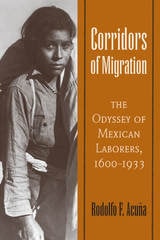
Corridors of Migration
The Odyssey of Mexican Laborers, 1600-1933Rodolfo F. Acuña
University of Arizona Press, 2007
In the San Joaquin Valley Cotton Strike of 1933, frenzied cotton farmers murdered three strikers, intentionally starved at least nine infants, wounded dozens of people, and arrested more. While the story of this incident has been recounted from the perspective of both the farmers and, more recently, the Mexican workers, this is the first book to trace the origins of the Mexican workers’ activism through their common experience of migrating to the United States.
Rodolfo F. Acuña documents the history of Mexican workers and their families from seventeenth-century Chihuahua to twentieth-century California, following their patterns of migration and describing the establishment of communities in mining and agricultural regions. He shows the combined influences of racism, transborder dynamics, and events such as the industrialization of the Southwest, the Mexican Revolution, and World War I in shaping the collective experience of these people as they helped to form the economic, political, and social landscapes of the American Southwest in their interactions with agribusiness and absentee copper barons.
Acuña follows the steps of one of the murdered strikers, Pedro Subia, reconstructing the times and places in which his wave of migrants lived. By balancing the social and geographic trends in the Mexican population with the story of individual protest participants, Acuña shows how the strikes were in fact driven by choices beyond the Mexican workers’ control. Their struggle to form communities graphically retells how these workers were continuously uprooted and their organizations destroyed by capital. Corridors of Migration thus documents twentieth-century Mexican American labor activism from its earliest roots through the mines of Arizona and the Great San Joaquin Valley cotton strike.
From a founding scholar of Chicano studies and the author of fifteen books comes the culmination of three decades of dedicated research into the causes and effects of migration and labor activism. The narrative documents how Mexican workers formed communities against all odds.
Corruption and Reform in the Teamsters Union
David Witwer
University of Illinois Press, 2002
Almost since its creation, recurring problems with corruption bedeviled the Teamsters Union. David Witwer provides the first in-depth historical study of the forces that contributed to the Teamsters' troubled past and the mechanisms the union employed--from top-down directives to grassroots measures--to combat corruption.
Witwer draws on the perspectives of rank-and-file members, union leaders, and the criminal element to explain the processes that allowed organized crime to seize power inside the union. His account includes the infamous links between the Mafia and union head Jimmy Hoffa, but he also tells the little-known story of the McClellan Committee investigation that first brought those links to light. Witwer also examines how anti-labor forces used the Teamsters' unsavory reputation to influence popular and legislative opinion in a broad attack on workers' rights.
Corruption and Reform
Lessons from America's Economic HistoryEdited by Edward L. Glaeser and Claudia Goldin
University of Chicago Press, 2006
Contributors to this volume address the measurement and consequences of fraud and corruption and the forces that ultimately led to their decline within the United States. They show that various approaches to reducing corruption have met with success, such as deregulation, particularly “free banking,” in the 1830s. In the 1930s, corruption was kept in check when new federal bureaucracies replaced local administrations in doling out relief. Another deterrent to corruption was the independent press, which kept a watchful eye over government and business. These and other facets of American history analyzed in this volume make it indispensable as background for anyone interested in corruption today.
Cosella Wayne
Or, Will and DestinyCora Wilburn, edited and introduced by Jonathan D. Sarna
University of Alabama Press, 2019
Published serially in the spiritualist journal Banner of Light in 1860, Cosella Wayne: Or, Will and Destiny is the first coming-of-age novel, written and published in English by an American Jewish woman, to depict Jews in the United States and transforms what we know about the history of early American Jewish literature. The novel never appeared in book form, went unmentioned in Jewish newspapers of the day, and studies of nineteenth-century American Jewish literature ignore it completely. Yet the novel anticipates many central themes of American Jewish writing: intermarriage, generational tension, family dysfunction, Jewish-Christian relations, immigration, poverty, the place of women in Jewish life, the nature of romantic love, and the tension between destiny and free will.
The narrative recounts a relationship between an abusive Jewish father and the rebellious daughter he molested as well as that daughter’s struggle to find a place in the complex social fabric of nineteenth-century America. It is also unique in portraying such themes as an unmarried Jewish woman’s descent into poverty, her forlorn years as a starving orphaned seamstress, her apostasy and return to Judaism, and her quest to be both Jewish and a spiritualist at one and the same time.
Jonathan Sarna, who introduces the volume, discovered Cosella Wayne while pursuing research at the Israel Institute for Advanced Studies in Jerusalem. This edition is supplemented with selections from Cora Wilburn’s recently rediscovered diary, which are reprinted in the appendix. Together, these materials help to situate Cosella Wayne within the life and times of one of nineteenth-century American Jewry’s least known and yet most prolific female authors.
Cosmodernism
American Narrative, Late Globalization, and the New Cultural ImaginaryChristian Moraru
University of Michigan Press, 2010
"Christian Moraru is an especially dynamic and brilliant scholar who works at a high level of critical and theoretical sophistication. I've never seen anything quite so exhaustive, so magisterial. Readers of Cosmodernism will think of the Keats line about an astronomer's exhilaration when a new planet swims into his ken."
---David Cowart, University of South Carolina
"Cosmodernism has the potential to become foundational for the study of a whole period. Christian Moraru undertakes here to establish a new basis for thinking about the era of cultural history in which we have found ourselves, in the United States but also around the world, since the end of the Cold War. The strength of Moraru's work lies in its intellectual ambition and scope; its polymathic range and breadth of learning; its confident mastery of a variety of disciplinary discourses; its fresh and thoughtful selection of texts for discussion; the sharpness and insight of its textual analyses; and, animating everything, its fervent commitment to a new and better way of understanding our relationship to others and the world at large."
---Brian McHale, The Ohio State University
A sweeping inquiry into post–Cold War American literature and theory, Cosmodernism argues, cautiously but persuasively, for the rise of a new cultural paradigm against the backdrop of accelerating globalization. Moraru calls this paradigm "cosmodern." He uses the term to account for what seems to be gradually challenging the postmodern over the last twenty-odd years. Not so much a well-structured movement yet, cosmodernism is chiefly a critical construct enabling Moraru to articulate representative literary-theoretical interventions of the past two decades into a reasonably coherent model. The coherence inheres, he shows, in a certain "relational" imaginary, which the critic canvasses by placing a wide range of authors and works in, across, and against the material-conceptual networks of globalization, cosmopolitanism, modernism, postmodernism, postcolonialism, multiculturalism, and other areas of contemporary U.S. intellectual history.
Christian Moraru is Professor of English at the University of North Carolina, Greensboro. His latest books include Rewriting: Postmodern Narrative and Cultural Critique in the Age of Cloning (2001), Memorious Discourse: Reprise and Representation in Postmodernism (2005), and the edited collection Postcommunism, Postmodernism, and the Global Imagination (2009).
Cover art: Earth, oil and acrylic on canvas, 48" × 36", 2008. Painting courtesy of Rebecca Darlington.
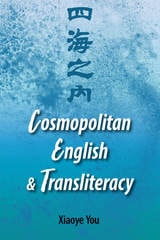
Cosmopolitan English and Transliteracy
Xiaoye You
Southern Illinois University Press, 2016
Despite the vast number of multilingual speakers in the United States and the pervasive influence of globalization, writing studies in this country is still inextricably linked to a nationalistic, monolingual English ideology. In Cosmopolitan English and Transliteracy, Xiaoye You addresses this issue by proposing that writing studies programs adopt a cosmopolitan perspective. Emphasizing local and global forms of citizenship and identification, You merges a humanistic vision with the rigor of social science, arguing that linguistic and cultural differences can be explored to recover human connections normally severed by geographical and semiotic borders.
You examines several areas of writing affected by globalization. He then turns to the composition classroom, highlighting the challenges and possibilities of crossing cultural boundaries in academic discourse before introducing a pedagogy aimed at fostering American students’ translingual and transcultural sensibilities. Included is a model for training writing teachers in the context of globalization, which aims to help instructors gain practical knowledge about the needs and resources of multilingual writers through communication technologies and cross-cultural partnerships.
By introducing cosmopolitan perspectives into the composition classroom, You challenges traditional assumptions about language, identity, and literacy as they relate to writing studies. Innovative and provocative, Cosmopolitan English and Transliteracy charts a new way forward for writing programs, with a call to focus on global rather than national identity.
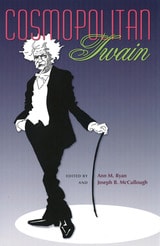
Cosmopolitan Twain
Edited by Ann M. Ryan and Joseph B. McCullough
University of Missouri Press, 2008

Cosmopolitanism and Solidarity
Studies in Ethnoracial, Religious, and Professional Affiliation in the United StatesDavid A. Hollinger
University of Wisconsin Press, 2006
Building on many of the topics in his highly acclaimed earlier work, these essays treat a number of contentious issues, many of them deeply embedded in America's past and present political polarization. Essays include "Amalgamation and Hypodescent," "Enough Already: Universities Do Not Need More Christianity," "Cultural Relativism," "Why Are Jews Preeminent in Science and Scholarship: The Veblen Thesis Reconsidered," and "The One Drop Rule and the One Hate Rule." Hollinger is at his best in his judicious approach to America's controversial history of race, ethnicity, and religion, and he offers his own thoughtful prescriptions as Americans and others throughout the world struggle with the pressing questions of identity and solidarity.