Results by title
18284 books match the query 'United States' and 1260 start with c

Cosmopolitans and Parochials
Modern Orthodox Jews in AmericaSamuel C. Heilman and Steven M. Cohen
University of Chicago Press, 1989
Heilman and Cohen reveal that American Jewish Orthodoxy is not a monolith by distinguishing its three broad varieties: the "traditionalists," the "centrists," and the "nominally" orthodox. To illuminate this full spectrum of orthodoxy the authors focus on the "centrists," taking us through the dimensions of their ritual observances, religious beliefs, community life, and their social, political, and sexual attitudes. Both parochial and cosmopolitan, orthodox and liberal, these Jews are characterized by their dualism, by their successful involvement in both the modern Western world and in traditional Jewish culture. In painting this provocative and fascinating portrait of what Jewish Orthodoxy has become in America today, Heilman and Cohen's study also sheds light on the larger picture of the persistence of religion in the modern world.

Cosmos And Hearth
A Cosmopolite’s ViewpointYi-Fu Tuan
University of Minnesota Press, 1999
In a volume that represents the culmination of his life’s work in considering the relationship between culture and landscape, eminent scholar Yi-Fu Tuan argues that “cosmos” and “hearth” are two scales that anchor what it means to be fully and happily human. Illustrating this contention with examples from both his native China and his home of the past forty years, the United States, Tuan proposes a revised conception of culture, one thoroughly grounded in one’s own society but also embracing curiosity about the world. Optimistic and deeply human, this important volume lays out a path to being “at home in the cosmos.”
Hardcover:In this moving meditation on the difficult choices facing humanity in the next millennium, celebrated scholar Yi-Fu Tuan reaffirms his faith in the value of a cosmopolitan worldview. In a volume that represents the culmination of his life's work in considering the relationship between culture and landscape, Tuan argues that “cosmos” and “hearth” are two scales that anchor what it means to be fully and happily human. Hearth is our house and neighborhood, family and kinfolk, habit and custom. Cosmos, by contrast, is the larger reality-world, civilization, and humankind. Tuan addresses the extraordinary revival of interest in the hearth in recent decades, examining both the positive and negative effects of this renewed concern. Among the beneficent outcomes has been a revival of ethnic culture and sense of place. Negative repercussions abound, however, manifested as an upsurge in superstition, excessive pride in ancestry and custom, and a constricted worldview that when taken together can inflame local passions, leading at times to violent conflict-from riots in American cities to wars in the Balkans. In Cosmos and Hearth, Tuan takes the position that we need to embrace both the sublime and the humble, drawing what is valuable from each. Illustrating the importance of both cosmos and hearth with examples from his country of birth, China, and from his home of the past forty years, the United States, Tuan proposes a revised conception of culture, the “cosmopolitan hearth,” that has the coziness but not the narrowness and bigotry of the traditional hearth. Tuan encourages not only being thoroughly grounded in one’s own culture but also the embracing of curiosity about the world. Optimistic and deeply human, Cosmos and Hearth lays out a path to being “at home in the cosmos.” Born in China and educated in Australia, the Philippines, England, and the United States, Yi-Fu Tuan is professor of geography at the University of Wisconsin, Madison, and the author of Space and Place: The Perspective of Experience (Minnesota, 1977), Landscapes of Fear (Minnesota, 1982), The Good Life (1986), and Passing Strange and Wonderful: Aesthetics, Nature, and Culture (1993). Excerpt: “Thinking yields a twofold gain: although it isolates us from our immediate group it can link us both seriously and playfully to the cosmos-to strangers in other places and times; and it enables us to accept a human condition that we have always been tempted by fear and anxiety to deny, namely, the impermanence of our state wherever we are, our ultimate homelessness. A cosmopolite is one who considers the gain greater than the loss. Having seen something of the splendid spaces, he or she will not want to return, permanently, to the ambiguous safeness of the hearth.”
Costs of Occupational Injuries and Illnesses
J. Paul Leigh, Steven Markowitz, Marianne Fahs, and Philip Landrigan
University of Michigan Press, 2000
The incidence and mortality of occupational injury and illness were assessed by reviewing data from national surveys and applied an attributable-risk-proportion method. Costs were assessed using the human capital method that decomposes costs into direct categories such as medical costs and insurance administration expenses, as well as indirect categories such as lost earnings and lost fringe benefits. The total is estimated to be $155 billion and is likely to be low as it does not include costs associated with pain and suffering or of home care provided by family members.
Invaluable as an aid in the analysis of policy issues, Costs of Occupational Injuryand Illness will serve as a resource and reference for economists, policy analysts, public health researchers, insurance administrators, labor unions and labor lawyers, benefits managers, and environmental scientists, among others.
J. Paul Leigh is Professor in the School of Medicine, Department of Epidemiology and Preventive Medicine, University of California, Davis. Stephen Markowitz, M.D., is Professor in the Department of Community Health and Social Medicine, City University of New York Medical School. Marianne Fahs is Director of the Health Policy Research Center, Milano Graduate School of Management and Urban Policy, New School University. Philip Landrigan, M.D., is Wise Professor and Chair of the Department of Community Medicine, Mount Sinai Medical Center, New York.
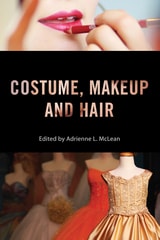
Costume, Makeup, and Hair
McLean, Adrienne L
Rutgers University Press, 2016
From the acclaimed Behind the Silver Screen series, Costume, Makeup, and Hair charts the development of these three crafts in the American film industry from the 1890s to the present. Each chapter examines a different era in film history, revealing how the arts of cinematic costume, makeup, and hair, have continually adapted to new conditions, making the transitions from stage to screen, from monochrome to color, and from analog to digital. Together, the book’s contributors give us a remarkable glimpse into how these crafts foster creative collaboration and improvisation, often fashioning striking looks and ingenious effects out of limited materials.
Costume, Makeup, and Hair not only considers these crafts in relation to a wide range of film genres, from sci-fi spectacles to period dramas, but also examines the role they have played in the larger marketplace for fashion and beauty products. Drawing on rare archival materials and lavish color illustrations, this volume provides readers with both a groundbreaking history of film industry labor and an appreciation of cinematic costume, makeup, and hairstyling as distinct art forms.
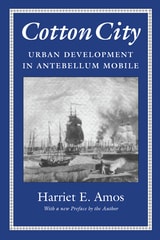
Cotton City
Urban Development in Antebellum MobileHarriet E. Amos Doss
University of Alabama Press, 2001
The exploration of the North-South relationship and the growth of of antebellum Mobile.
Cotton City offers a compelling exploration of Mobile, Alabama’s transformation into a thriving urban center during the antebellum period. Historian Harriet E. Amos examines how economic ambition, civic planning, and the cotton trade shaped the city’s development between 1819 and 1861. Through detailed archival research, Amos reveals how Mobile’s leaders sought to modernize infrastructure, expand commerce, and assert the city’s regional importance—all while navigating the tensions of slavery, class, and Southern identity.
This richly contextualized study highlights the interplay between urban growth and the broader forces of the Southern economy, making Cotton City a vital contribution to the histories of the American South, urbanization, and antebellum society.
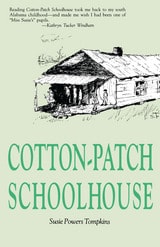
Cotton Patch Schoolhouse
Susie Powers Tompkins
University of Alabama Press, 1992
Step back into 1920s Alabama, where grit, laughter, and the red clay roads of the Black Belt shape one young woman’s unforgettable first year of teaching
Cotton-Patch Schoolhouse follows 18‑year‑old Susie Powers Tompkins as she takes on a one-room school with eight children, zero experience, and a Model T that’s always one mud puddle away from disaster. With warmth and wit, she discovers that the real curriculum is written not in textbooks—but in the faces, fears, and fierce hopes of her students.
In a world of cotton fields, nature walks, homemade art supplies, and potbellied stoves, Susie learns that teaching is as much about heart as it is about lessons. She navigates runaway love affairs, surprise pets (including an opinionated mouse), the hardships of rural poverty, and the extraordinary generosity of neighbors who have little but give much.
As contemporary readers grapple with educational inequities, rural depopulation, and renewed conversations about community, Cotton-Patch Schoolhouse feels strikingly fresh. It reminds us that creativity blooms under constraint, that relationships matter more than resources, and that small schools can make a big difference. Tompkins' memoir will delight lovers of Southern history, educators, memoir readers, rural studies enthusiasts, and anyone who enjoys heartfelt stories of resilience, community, and the transformative power of teaching

Cotton and Capital
Boston Businessmen and Antislavery Reform, 1854-1868Richard H. Abbott
University of Massachusetts Press, 1991

Count Those Buzzards! Stamp Those Grey Mules!
Superstitions Remembered from a Southern ChildhoodKathryn Tucker Windham with a preface by Dilcy Hilley Windham and a foreword by Emily Blejwas
University of Alabama Press, 2026
A nostalgic journey through the beliefs, customs, sayings, superstitions, and folk wisdom of a Southern childhood
Count Those Buzzards! Stamp Those Grey Mules! is a warm and engaging celebration of the folklore, superstitions, and everyday wisdom that once shaped life across the rural South. Drawing on her Alabama childhood, beloved storyteller Kathryn Tucker Windham recounts the sayings, rituals, beliefs, and customs passed from generation to generation long before information was instantly available at the touch of a screen.
With humor, affection, and a keen eye for the memorable details of ordinary life, Windham introduces readers to a world where bottle trees repelled evil spirits, rabbit’s feet promised good fortune, and signs and omens guided daily decisions. Her stories capture not only the traditions themselves but also the families and communities that kept them alive.
Part memoir and part folklore treasury, this enduring classic preserves a rich cultural inheritance while offering a vivid portrait of twentieth-century Southern life. Featuring a new introduction by Dilcy Windham and a foreword by Emily Blejwas, this edition invites readers to rediscover a fascinating world of memory, myth, and tradition.
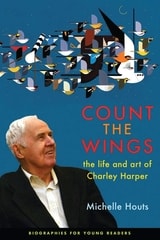
Count the Wings
The Life and Art of Charley HarperMichelle Houts
Ohio University Press, 2018
When you look at a bird, do you see feathers and a beak? Or do you see circles and triangles? Artist Charley Harper spent his life reducing subjects to their simplest forms, their basic lines and shapes. This resulted in what he called minimal realism and the style that would become easily recognized as Charley Harper’s. Art fans and nature lovers around the world fell in love with Harper’s paintings, which often featured bright colors and intriguing nature subjects.
Harper’s love of painting and drawing led him from the hills of West Virginia to the bombed-out villages of Europe, to the streets of New York City, and to the halls of the Art Academy of Cincinnati. How did the farm boy who didn’t know a single artist become one of America’s most recognized midcentury modern painters? The answer is simple. He did it by counting the wings.
Count the Wings is the first book for middle-grade readers about Harper’s life and work. Author Michelle Houts worked closely with the Harper estate to include full-color illustrations, plentiful supplemental materials, and discussion questions that will intrigue and engage young readers. Count the Wings is part of our acclaimed Biographies for Young Readers series, which brings smart, expertly researched books about often overlooked but exceptional individuals to school-age readers.

Countdown to a New Library
Jeannette Woodward
American Library Association, 2000
Countdown to a New Library
Managing the Building ProjectJeannette Woodward
American Library Association, 2010

Counted Out
Same-Sex Relations and Americans' Definitions of FamilyBrian Powell
Russell Sage Foundation, 2011
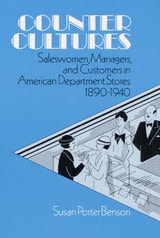
Counter Cultures
Saleswomen, Managers, and Customers in American Department Stores, 1890-1940Susan Porter Benson
University of Illinois Press, 1986
Countercultural Conservatives
American Evangelicalism from the Postwar Revival to the New Christian RightAxel R. Schäfer
University of Wisconsin Press, 2012
In the mid-twentieth century, far more evangelicals supported such “liberal” causes as peace, social justice, and environmental protection. Only gradually did the conservative evangelical faction win dominance, allying with the Republican Party of Ronald Reagan and, eventually, George W. Bush.
In Countercultural Conservatives Axel Schäfer traces the evolution of a diffuse and pluralistic movement into the political force of the New Christian Right. In forging its complex theological and political identity, evangelicalism did not simply reject the ideas of 1960s counterculture, Schäfer argues. For all their strict Biblicism and uncompromising morality, evangelicals absorbed and extended key aspects of the countercultural worldview.
Carefully examining evangelicalism’s internal dynamics, fissures, and coalitions, this book offers an intriguing reinterpretation of the most important development in American religion and politics since World War II.
Counterculture Kaleidoscope
Musical and Cultural Perspectives on Late Sixties San FranciscoNadya Zimmerman
University of Michigan Press, 2013
In a bold reconsideration of the late sixties San Francisco counterculture movement, Counterculture Kaleidoscope takes a close look at the cultural and musical practices of that era. Addressing the conventional wisdom that the movement was grounded in rebellion and opposition, the book exposes two myths: first, that the counterculture was an organized social and political movement of progressives with a shared agenda who opposed the mainstream (dubbed "hippies"); and second, that the counterculture was an innocent entity hijacked by commercialism and transformed over time into a vehicle of so-called "hip consumerism."
Seeking an alternative to the now common narrative, Nadya Zimmerman examines primary source material including music, artwork, popular literature, personal narratives, and firsthand historical accounts. She reveals that the San Francisco counterculture wasn't interested in commitments to causes and made no association with divisive issues---that it embraced everything in general and nothing in particular.
"Astute and accessible, Counterculture Kaleidoscope provides thought-provoking insights into the historical, cultural and social context of the San Francisco counter-culture and its music scene, including discussions of Vietnam and student protest, the Haight-Ashbury Diggers, the Grateful Dead, Led Zeppelin, Altamont, and Charlie Manson. A must for students and scholars of socio-musical activity and for all of us to whom music matters."
---Sheila Whiteley, author of The Space Between the Notes: Rock and the Counter-Culture and Too Much Too Young: Popular Music, Age and Gender
"The hippie counterculture has never garnered the scholarly attention accorded the new left and the black freedom struggle. Overviews of the period ritualistically mention it as part and parcel of that apparently incandescent era---the Sixties---but rarely capture its distinctiveness. Counterculture Kaleidoscope is a timely and provocative intervention in Sixties scholarship that significantly deepens our understanding of this important but understudied phenomenon."
—Alice Echols, Associate Professor, University of Southern California, and author of Scars of Sweet Paradise: The Life and Times of Janis Joplin
Counterfeiting Labor's Voice
William A. A. Carsey and the Shaping of American Reform PoliticsMark A. Lause
University of Illinois Press, 2024
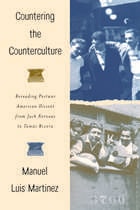
Countering the Counterculture
Rereading Postwar American Dissent from Jack Kerouac to Tomás RiveraManuel Luis Martinez
University of Wisconsin Press, 2003
Rebelling against bourgeois vacuity and taking their countercultural critique on the road, the Beat writers and artists have long symbolized a spirit of freedom and radical democracy. Manuel Martinez offers an eye-opening challenge to this characterization of the Beats, juxtaposing them against Chicano nationalists like Raul Salinas, Jose Montoya, Luis Valdez, and Oscar Acosta and Mexican migrant writers in the United States, like Tomas Rivera and Ernesto Galarza.
In an innovative rereading of American radical politics and culture of the 1950s and 1960s, Martinez uncovers reactionary, neoromantic, and sometimes racist strains in the Beats’ vision of freedom, and he brings to the fore the complex stances of Latinos on participant democracy and progressive culture. He analyzes the ways that Beats, Chicanos, and migrant writers conceived of and articulated social and political perspectives. He contends that both the Beats’ extreme individualism and the Chicano nationalists’ narrow vision of citizenship are betrayals of the democratic ideal, but that the migrant writers presented a distinctly radical and inclusive vision of democracy that was truly countercultural.
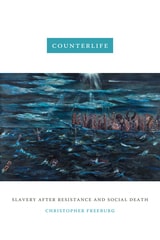
Counterlife
Slavery after Resistance and Social DeathChristopher Freeburg
Duke University Press, 2021
Countermemory
A Rhetoric of ResistanceApril L. O'Brien and James Chase Sanchez
University of Alabama Press, 2025
Investigates the interdisciplinary dimensions of countermemory through a rhetorical lens
Countermemory: A Rhetoric of Resistance by April L. O’Brien and James Chase Sanchez is a groundbreaking monograph that explores the concept of countermemory from an interdisciplinary and rhetorical perspective. The authors define “countermemory” as remembrance that resituates often overlooked or erased narratives of marginalized groups by positioning these memories as equally significant to dominant historical narratives. This work investigates how countermemories emerge in response to public memories, highlighting the tensions and resistance that arise when marginalized voices challenge mainstream historical accounts.
Through a mixed-methodological approach—incorporating site-based analysis, participant observation, textual analysis, and historiography—O’Brien and Sanchez examine countermemory in both physical and digital spaces. From memorial sites and museums to music videos, TV shows, and digital maps, they reveal the various ways countermemory operates and persists. The authors focus particularly on countermemory in the American South, centering on the experiences and histories of Black, Latinx, and Indigenous communities.
Countermemory is essential reading for scholars and students of rhetoric and public memory. The book also offers rich insights to readers who are passionate about addressing issues of racial inequality, people interested in examining their own experiences and the role they can play in promoting social change, and those interested in exploring the ways in which history is constructed and presented, and how marginalized perspectives are often excluded or distorted.
Countermobilization
Policy Feedback and Backlash in a Polarized AgeEric M. Patashnik
University of Chicago Press, 2023
An essential look at how and why backlash movements are inherent to US policymaking.
The most successful policies not only solve problems. They also build supportive coalitions. Yet, sometimes, policies trigger backlash and mobilize opposition. Although backlash is not a new phenomenon, today’s political landscape is distinguished by the frequency and pervasiveness of backlash in nearly every area of US policymaking, from abortion rights to the Affordable Care Act.
Eric M. Patashnik develops a policy-centered theory of backlash that illuminates how policies stimulate backlashes by imposing losses, overreaching, or challenging existing arrangements to which people are strongly attached. Drawing on case studies of issues from immigration and trade to healthcare and gun control, Countermobilization shows that backlash politics is fueled by polarization, cultural shifts, and negative feedback from the activist government itself. It also offers crucial insights to help identify and navigate backlash risks.
Counting Down to Kindergarten
A Complete Guide to Creating a School Readiness Program for Your CommunityR. Lynn Baker
American Library Association, 2015
The public library is in the perfect position as a community resource to help bridge the gap between preschool and kindergarten; however, starting from scratch can feel daunting. In this guide, Baker combines her background in early childhood education with her experience as a youth services programming specialist to present a school readiness program that can be tailored for any public library. Based on the successful framework of her tried and tested original program, this book offers everything that a public library needs in order to get started, including
- A six-week schedule of detailed lesson plans which combine the best practices of the Every Child Ready to Read® (ECRR) Second Edition (talking, singing, reading, writing, playing) with nationally identified school readiness skills
- A six-month family calendar with activities to help parents engage their children in activities that foster early literacy and school readiness skills at home
- Tips for maintaining a collaborative relationship with early childhood stakeholders and policymakers to help maintain a program that fits the school readiness needs of the local community
- Specific examples of successful school readiness programs and partnerships from public library systems across the country
Baker's guide will help public libraries ensure that young children are ready for school from day one.
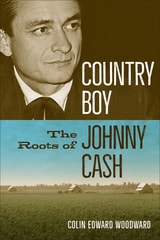
Country Boy
The Roots of Johnny CashColin Edward Woodward
University of Arkansas Press, 2022
Winner, 2023 J. G. Ragsdale Book Award from the Arkansas Historical Association
Because Johnny Cash cut his classic singles at Sun Records in Memphis and reigned for years as country royalty from his Nashville-area mansion, people tend to associate the Man in Black with Tennessee. But some of Cash’s best songs—including classics like “Pickin’ Time,” “Big River,” and “Five Feet High and Rising”—sprang from his youth in the sweltering cotton fields of northeastern Arkansas.
In Country Boy, Colin Woodward combines biography, history, and music criticism to illustrate how Cash’s experiences in Arkansas shaped his life and work. The grip of the Great Depression on Arkansas’s small farmers, the comforts and tragedies of family, and a bedrock of faith all lent his music the power and authenticity that so appealed to millions. Though Cash left Arkansas as an eighteen-year-old, he often returned to his home state, where he played some of his most memorable and personal concerts. Drawing upon the country legend’s songs and writings, as well as the accounts of family, fellow musicians, and chroniclers, Woodward reveals how the profound sincerity and empathy so central to Cash’s music depended on his maintaining a deep connection to his native Arkansas—a place that never left his soul.
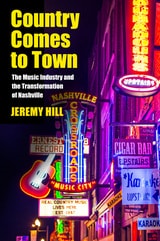
Country Comes to Town
The Music Industry and the Transformation of NashvilleJeremy Hill
University of Massachusetts Press, 2016
Country music evokes a simple, agrarian past, with images of open land and pickup trucks. While some might think of the genre as a repository of nostalgia, popular because it preserves and reveres traditional values, Jeremy Hill argues that country music has found such expansive success because its songs and its people have forcefully addressed social and cultural issues as well as geographic change. Hill demonstrates how the genre and its fans developed a flexible idea of “country,” beyond their rural roots, and how this flexibility allowed fans and music to “come to town,” to move into and within urban spaces, while retaining a country “character.”
To understand how the genre has become the far-reaching commercial phenomenon that it is today, Hill explores how various players within the country music fold have grappled with the notion of place. He shows both how the industry has transformed the city of Nashville and how country music—through song lyrics, imagery associated with the music, and branding—has reshaped ideas about the American landscape and character. As the genre underwent significant change in the last decades of the twentieth century, those who sought to explain its new styles and new locations relied on a traditional theme: “You can take the boy out of the country, but you can't take the country out of the boy.” Hill demonstrates how this idea—that you can still be “country” while no longer living in a rural place—has been used to expand country's commercial appeal and establish a permanent home in the urban space of Nashville.
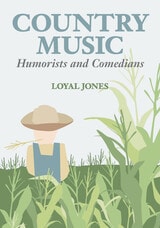
Country Music Humorists and Comedians
Loyal Jones
University of Illinois Press, 2008
Q: Is he afraid of work?
A: No, he can lie down beside it and go to sleep.
This volume is an encyclopedia of the many country music performers who made comedy a central part of their careers. Loyal Jones offers an informative biographical sketch of each performer and many entries include a sample of the artist's humor, a recording history, and amusing anecdotal tidbits. Starting with vaudeville and radio barn dance figures like the Skillet Lickers and the Weaver Brothers and Elviry, Jones moves on to the regulars on Hee Haw and the Grand Old Opry and present-day comedians from the Austin Lounge Lizards to Jeff Foxworthy.
Jones's introductory essay discusses such topics as stock comic figures, venues for comedic performance, and benchmark performers. Throughout the volume, he places each performer squarely in the context of the country music community, its performing traditions, and each artist's place in the larger cultural milieu.
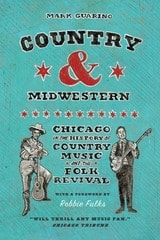
Country and Midwestern
Chicago in the History of Country Music and the Folk RevivalMark Guarino
University of Chicago Press, 2023
Chicago is revered as a musical breeding ground, having launched major figures like blues legend Muddy Waters, gospel soul icon Mavis Staples, hip-hop firebrand Kanye West, and the jazz-rock band that shares its name with the city. Far less known, however, is the vital role Chicago played in the rise of prewar country music, the folk revival of the 1950s and 1960s, and the contemporary offspring of those scenes.
In Country and Midwestern, veteran journalist Mark Guarino tells the epic century-long story of Chicago’s influence on sounds typically associated with regions further south. Drawing on hundreds of interviews and deep archival research, Guarino tells a forgotten story of music, migration, and the ways that rural culture infiltrated urban communities through the radio, the automobile, and the railroad. The Midwest’s biggest city was the place where rural transplants could reinvent themselves and shape their music for the new commercial possibilities the city offered. Years before Nashville emerged as the commercial and spiritual center of country music, major record labels made Chicago their home and recorded legendary figures like Bill Monroe, The Carter Family, and Gene Autry. The National Barn Dance—broadcast from the city’s South Loop starting in 1924—flourished for two decades as the premier country radio show before the Grand Ole Opry. Guarino chronicles the makeshift niche scenes like “Hillbilly Heaven” in Uptown, where thousands of relocated Southerners created their own hardscrabble honky-tonk subculture, as well as the 1960s rise of the Old Town School of Folk Music, which eventually brought national attention to local luminaries like John Prine and Steve Goodman. The story continues through the end of the twentieth century and into the present day, where artists like Jon Langford, The Handsome Family, and Wilco meld contemporary experimentation with country traditions.
Featuring a foreword from Grammy-nominated singer-songwriter Robbie Fulks and casting a cross-genre net that stretches from Bob Dylan to punk rock, Country and Midwestern rediscovers a history as sprawling as the Windy City—celebrating the creative spirit that modernized American folk idioms, the colorful characters who took them into new terrain, and the music itself, which is still kicking down doors even today.
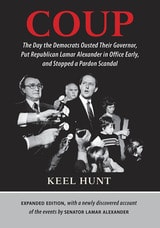
Coup
The Day the Democrats Ousted Their Governor, Put Republican Lamar Alexander in Office Early, and Stopped a Pardon ScandalKeel Hunt
Vanderbilt University Press, 2017
On January 17, 1979, driven by new information that some of the worst criminals in the state's penitentiaries were about to be released (and fears that James Earl Ray might be one of them), a small bipartisan group chose to take charge. Senior Democratic leaders, friends of the sitting governor, together with the Republican governor-elect Lamar Alexander (now US Senator from Tennessee), agreed to oust Blanton from office before another night fell. It was a maneuver unique in American political history.
Expanded edition, with a newly discovered account of the events by Senator Lamar Alexander:
"In December 2015 something unexpected happened. Keel [Hunt] delivered to my Nashville office a brown three-ring binder. He had only recently discovered it in a box that had been in storage for thirty years." —Senator Lamar Alexander
This binder contained the forgotten typescript, written in 1985, of Alexander's recollections of the events leading up to his early inauguration on January 17, 1979. In this expanded edition of Coup, the Senator's 22,000-word text has been added as a lost footnote to Hunt's definitive account.
From the foreword by John L. Seigenthaler:
"The individual stories of those government officials involved in the coup—each account unique, but all of them intersecting—were scattered like disconnected pieces of a jigsaw puzzle on the table of history until the author conceived this book. Perhaps because it happened so quickly, and without major disagreement, protest, or dissent, this truly historic moment has been buried in the public mind. In unearthing the drama in gripping detail, Keel Hunt assures that the 'dark day' will be remembered as a bright one in which conflicted politicians came together in the public interest."
Courting Failure
How Competition for Big Cases Is Corrupting the Bankruptcy CourtsLynn Lopucki
University of Michigan Press, 2006
-Douglas Baird, University of Chicago Law School
"This book is smart, shocking and funny. This story has everything-professional greed, wrecked companies, and embarrassed judges. Insiders are already buzzing."
-Elizabeth Warren, Leo Gottlieb Professor of Law, Harvard Law School
"LoPucki provides a scathing attack on reorganization practice. Courting Failure recounts how lawyers, managers and judges have transformed Chapter 11. It uses empirical data to explore how the interests of the various participants have combined to create a system markedly different from the one envisioned by Congress. LoPucki not only questions the wisdom of these changes but also the free market ideology that supports much of the general regulation of the corporate sector."
-Robert Rasmussen, University of Chicago Law School
A sobering chronicle of our broken bankruptcy-court system, Courting Failure exposes yet another American institution corrupted by greed, avarice, and the thirst for power.
Lynn LoPucki's eye-opening account of the widespread and systematic decay of America's bankruptcy courts is a blockbuster story that has yet to be reported in the media. LoPucki reveals the profound corruption in the U.S. bankruptcy system and how this breakdown has directly led to the major corporate failures of the last decade, including Enron, MCI, WorldCom, and Global Crossing.
LoPucki, one of the nation's leading experts on bankruptcy law, offers a clear and compelling picture of the destructive power of "forum shopping," in which corporations choose courts that offer the most favorable outcome for bankruptcy litigation. The courts, lured by big money and prestige, streamline their requirements and lower their standards to compete for these lucrative cases. The result has been a series of increasingly shoddy reorganizations of major American corporations, proposed by greedy corporate executives and authorized by case-hungry judges.
Courting History
A Supreme Court Historian Reflects on His Life and CareerJames F. Simon
University of Texas Press, 2025
A Supreme Court historian’s memoir places court events in the larger context of American history.
Legal scholar James F. Simon has written many acclaimed books on the history of the US Supreme Court, but in this memoir, he turns his attention to a more personal subject: himself. Simon, a native of Fort Worth, details what it was like growing up in segregated Texas. He left home for college and law school at Yale, interspersed with travels abroad to build a schoolhouse in Ghana, work at an Israeli kibbutz, and spend a year on a fellowship in India.
Simon worked as a legal journalist for Time magazine before embarking on a career as a Supreme Court historian. He later was appointed professor of constitutional law and served as dean of New York Law School. Meanwhile, he continued his work on what became his specialty, well-researched books on the history of the Supreme Court that place events at the court in the larger context of American history. Much of this research is included in his papers, which are now housed at the Briscoe Center for American History.
In this engaging memoir, Simon describes the challenges of interviewing Supreme Court justices and researching constitutional history for his books and juggling his law school and family responsibilities, all the while reflecting on changing American perspectives on civil rights and liberties.
Courting the Community
Legitimacy and Punishment in a Community CourtChristine Zozula
Temple University Press, 2019
Community Courts are designed to handle a city’s low-level offenses and quality-of-life crimes, such as littering, loitering, or public drunkenness. Court advocates maintain that these largely victimless crimes jeopardize the well-being of residents, businesses, and visitors. Whereas traditional courts might dismiss such cases or administer a small fine, community courts aim to meaningfully punish offenders to avoid disorder escalating to apocalyptic decline.
Courting the Community is a fascinating ethnography that goes behind the scenes to explore how quality-of-life discourses are translated into court practices that marry therapeutic and rehabilitative ideas. Christine Zozula shows how residents and businesses participate in meting out justice—such as through community service, treatment, or other sanctions—making it more emotional, less detached, and more legitimate in the eyes of stakeholders. She also examines both “impact panels,” in which offenders, residents, and business owners meet to discuss how quality-of-life crimes negatively impact the neighborhood, as well as strategic neighborhood outreach efforts to update residents on cases and gauge their concerns.
Zozula’s nuanced investigation of community courts can lead us to a deeper understanding of punishment and rehabilitation and, by extension, the current state of the American court system.

Courts Liberalism And Rights
Gay Law And Politics In The United States and CanadaJason Pierceson
Temple University Press, 2005
At a time when most gay and lesbian politics focuses only on the issue of gay marriage, Courts, Liberalism, and Rights guides readers through a nuanced discussion of liberalism, court rulings on sodomy laws and same-sex marriage, and the comparative progress gays and lesbians have made via the courts in Canada.
As debates continue about the ability of courts to affect social change, Jason Pierceson argues that this is possible. He claims that the greatest opportunity for reform via the judiciary exists when a judiciary with broad interpretive powers encounters a political culture that endorses a form of liberalism based on broadly conceived individual rights; not a negative set of rights to be held against the state, but a set of rights that recognizes the inherent dignity and worth of every individual.
Courts and Bureaucracies
Renewing the Rule of Law in Our TimesRobert P. Burns
University of Chicago Press, 2027
A novel meditation on how courts and bureaucracies function today and how they can be made better.
We live in a highly bureaucratic society, so much so that we often don’t even see it. Although we think of bureaucracies and courtrooms as different kinds of institutions, as Robert P. Burns argues in Courts and Bureaucracies, their functions and everyday operations often blur together. Today, courts are being used to address numerous social problems that the government is unable or unwilling to tackle, and consequently, the courts frequently emphasize bureaucratic goals—such as efficiency and social control—over the adjudicatory functions that they are supposed to embody.
Drawing on social theory, philosophy, public administration, and law, Burns clarifies the role of courts in today’s bureaucratic society and considers the distinctive contributions that specifically legal procedures can bring. After exploring the competing first principles of adjudication, Burns then examines our current administrative, civil, and criminal processes and describes new and looming changes to rules and practices that should affect our thinking about the rule of law and the role of the courts.
A broad reassessment—both philosophical and practical—of how criminal, civil, and administrative practices differ from one another and what benefits each bestows, Courts and Bureaucracies offers concrete suggestions for how we can better achieve the ideals already implicit in our judicial traditions and practices.
Courts and Kids
Pursuing Educational Equity through the State CourtsMichael A. Rebell
University of Chicago Press, 2009
Over the past thirty-five years, federal courts have dramatically retreated from actively promoting school desegregation. In the meantime, state courts have taken up the mantle of promoting the vision of educational equity originally articulated in Brown v. Board of Education. Courts and Kids is the first detailed analysis of why the state courts have taken on this active role and how successful their efforts have been.
Since 1973, litigants have challenged the constitutionality of education finance systems in forty-five states on the grounds that they deprive many poor and minority students of adequate access to a sound education. While the plaintiffs have won in the majority of these cases, the decisions are often branded “judicial activism”—a stigma that has reduced their impact. To counter the charge, Michael A. Rebell persuasively defends the courts’ authority and responsibility to pursue the goal of educational equity. He envisions their ideal role as supervisory, and in Courts and Kids he offers innovative recommendations on how the courts can collaborate with the executive and legislative branches to create a truly democratic educational system.

Covering Accident Costs
Insurance, Liability, and Tort ReformsMark C. Rahdert
Temple University Press, 1995
Over the past century, tort law and insurance have developed deeply intertwined legal and economic roots. Insurance usually determines whether tort cases are brought to trial, whom plaintiffs sue, how much they claim, who provides the defense, how the case gets litigated, the dynamics of the settlement, and how much plaintiffs ultimately recover. But to what extent should liability rules be influenced by insurance? In this study, Mark Rahdert identifies the leading arguments both in favor of and against what he terms the "insurance rationale"—the idea that tort law should be structured to facilitate victim access to assured compensation.
The insurance rationale has been a leading force in the development of product liability law and, as a component of accident compensation, has significantly influenced pro-plaintiff advances in principal areas of tort law. However, the insurance rationale is also the source of great controversy. Critics charge that liability rules deliberately set to maximize plaintiffs' access to insurance funds have corrupted the system, causing insurance costs to spiral upward uncontrollably. Considering the strengths and weaknesses of both sides of the current debate, Rahdert develops a modified version of the insurance rationale that can become a tool for evaluating future tort reform proposals.
Covering America
A Narrative History of a Nation's JournalismChristopher B. Daly
University of Massachusetts Press, 2018
In this revised and expanded edition, Daly updates his narrative with new stories about legacy media like the New York Times and the Washington Post, and the digital natives like the Huffington Post and Buzzfeed. A new final chapter extends the study of the business crisis facing journalism by examining the "platform revolution" in media, showing how Facebook, Twitter, and other social media are disrupting the traditional systems of delivering journalism to the public. In an era when the factual basis of news is contested and when the government calls journalists "the enemy of the American people" or "the opposition party," Covering America brings history to bear on the vital issues of our times.
Covering America
A Narrative History of a Nation's JournalismChristopher B. Daly
University of Massachusetts Press, 2018
In this revised and expanded edition, Daly updates his narrative with new stories about legacy media like the New York Times and the Washington Post, and the digital natives like the Huffington Post and Buzzfeed. A new final chapter extends the study of the business crisis facing journalism by examining the "platform revolution" in media, showing how Facebook, Twitter, and other social media are disrupting the traditional systems of delivering journalism to the public. In an era when the factual basis of news is contested and when the government calls journalists "the enemy of the American people" or "the opposition party," Covering America brings history to bear on the vital issues of our times.
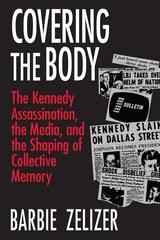
Covering the Body
The Kennedy Assassination, the Media, and the Shaping of Collective MemoryBarbie Zelizer
University of Chicago Press, 1992
Covering the Body (the title refers to the charge given journalists to follow a president) is a powerful reassessment of the media's role in shaping our collective memory of the assassination—at the same time as it used the assassination coverage to legitimize its own role as official interpreter of American reality. Of the more than fifty reporters covering Kennedy in Dallas, no one actually saw the assassination. And faced with a monumentally important story that was continuously breaking, most journalists had no time to verify leads or substantiate reports. Rather, they took discrete moments of their stories and turned them into one coherent narrative, blurring what was and was not "professional" about their coverage.
Through incisive analyses of the many accounts and investigations in the years since the shooting, Zelizer reveals how journalists used the assassination not just to relay the news but to address the issues they saw as central to the profession and to promote themselves as cultural authorities. Indeed, argues Zelizer, these motivations are still alive and are at the core of the controversy surrounding Oliver Stone's movie, JFK.
At its heart, Covering the Body raises serious questions about the role of the media in defining our reality, and shaping our myths and memories. In tracing how journalists attempted to answer questions that still trouble most Americans, Zelizer offers a fascinating analysis of the role of the media as cultural authorities.
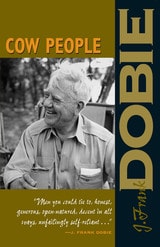
Cow People
By J. Frank Dobie
University of Texas Press, 1981
Cow People records the fading memories of a bygone Texas, the reminiscences of the cow people themselves. These are the Texans of the don't-fence-me-in era, their faces pinched by years of squinting into the desert glare, tanned by the sun and coarsened by the dust of the Chisholm Trail. Their stories are often raucous but just as often quiet as hot plains under a pale Texan sky.
A native Texan, J. Frank Dobie had an inborn knowledge of the men and customs of the trail camps. Cattlemen were as various as the country was big. Ab Blocker was a tall, quiet man who belonged totally to the cattle and the silent plains. But big men often had big lungs. "Shanghai Pierce was the loudest man in the country. He would sit at one end of a day coach and in normal voice hold conversation with some man at the other end of the coach, who of course had to yell, while the train was clanking along. He knew everybody, yelled at everybody he saw."
Texas bred tall men and taller stories. There was Findlay Simpson, who played havoc with fact but whiled away the drivers' long, lonely evenings with his tales. Old Findlay told of a country so wet that it bogged down the shadow of a buzzard, and of cattle that went into hibernation during rugged winters; he once spun yarns for three days straight, outlasting his listeners in a marathon of endurance.
All real cow people—from the cattle drivers to the cattle owners—lived by a simple code based on the individual's integrity. Bothering anyone else's poke or business uninvited was strictly forbidden, and enforcement of this unwritten law was as easy as pulling a trigger. Honesty was taken for granted, and a cowman's name on a check made it negotiable currency.
Yet Texas had its "bad guys"—the crooks, the thieves, even the tightwads. "A world big enough to hold a rattlesnake and a purty woman is big enough for all kinds of people," wrote Dobie. This is the world whose vast and various population the reader will find in Cow People.
Cowboy Apostle
The Diaries of Anthony W. Ivins, 1875-1932Anthony W. Ivins
Signature Books, 2013
Anthony W. Ivins (1852-1934) migrated to St. George, Utah, at age nine where he later became an influential civic and ecclesiastical leader. He married Elizabeth A. Snow, daughter of apostle Erastus F. Snow. Ivins was a first cousin of Heber J. Grant, and served as his counselor while Grant was LDS president. Ivins filled several Mormon missions to Mexico and presided as the Juarez, Mexico stake president where he performed post-manifesto marriages. He was appointed by the U.S. government as an Indian agent, and was warmly acquainted with Porfirio Diaz, president of Mexico. Involved in politics in St. George, Ivins held aspirations of running as a Democrat for governor of Utah. In 1907, he was ordained an apostle and later advanced to the First Presidency. Tone, as he called himself, was an accomplished horseman who worked with, and invested in, livestock. He was a game-hunting cowboy who became a statesman for both his country and his expanding religious community.
Though in his correspondence Ivins expressed paramount concern for members of his family, he rarely mentions them in his journals. Rather, his diaries chronicle his business and religious observations including meetings with the Quorum of the Twelve and others. He records meetings of the apostles where decisions were made to remove Church leaders from office who had entered into polygamy after 1904, and details the Church’s dealings with the Mexican government to safeguard the Mormon colonists. There are also discussions where doctrinal principles were clarified. For example, in 1912, Ivins reported that President Joseph F. Smith addressed Brigham Young’s Adam God teachings and affirmed that it was “not a doctrine of the Church.” Ivins clearly loved the ruggedness of outdoor life, as evidenced in his passion for hunting, but was also intrigued with the curiosities at the Utah State Fair, the entertaining showmanship of Buffalo Bill, and the refinement of the theater. Tragedy became commonplace as he recorded vigilante-like justice against Indians and Mexicans who were killed for stealing food, and witnessing the execution of John D. Lee, a once favored son of Mormonism. Appendices of Cowboy Apostle include Ivins Record Book of Marriage and an essay by Ivins son, H. Grant Ivins titled “Polygamy in Mexico as Practiced by the Mormon Church, 1895-1905.”
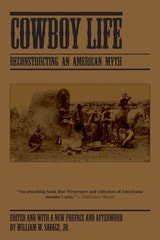
Cowboy Life
Reconstructing an American MythWilliam W. Savage, Jr.
University Press of Colorado, 1993
The central figure in American mythology, the cowboy can be seen everywhere: in films, novels, advertisements, TV, sports, and music. Though his image holds little resemblance to the historical cowboy, it is important because it represents many qualities with which Americans identify, including bravery, honor, chivalry, and individualism.
Accounts by Joseph G. McCoy, Richard Irving Dodge, Charles A. Siringo, and many others detail the daily trials and tribulations of cowboy life on the southern Great Plains-particularly Texas, Indian Territory, and Kansas-from the 1860s to around 1900. And in a new Afterword, editor William W. Savage, Jr. discusses the directions the cowboy myth has taken in the past two decades, as well as the impact the "new Western history" and films such as Lonesome Dove have had on popular culture.
This edition contains a new preface and afterword by the author.
Cowboy in Caracas
A North American's Memoir of Venezuela's Democratic RevolutionCharles Hardy
Northwestern University Press, 2007
No president today is more controversial than Venezuela's Hugo Chávez Frías. Elected in a landslide in 1998, he promised a peaceful revolution. That peaceful dream became a nightmare when Chávez was overthrown in a coup d'état in 2002. Surprisingly, he was brought back to power by his supporters, mostly barrio dwellers, within forty-eight hours. Although Chávez continues to be dogged by controversy, he stays in power because of these supporters who see themselves as active participants in a democratic revolution.
As a former Catholic priest who has lived in Venezuela for the past twenty years and spent eight of those years in a cardboard-and-tin shack in one of Caracas' barrios, Charles Hardy is in a unique position to explain what is taking place. Cowboy in Caracas: A North American's Memoir of Venezuela's Democratic Revolution gives the reader insight into the Venezuelan reality, using an anecdotal presentation drawn from the writer's personal experiences.
Cowboy is a Verb
Notes from a Modern-day RancherRichard Collins
University of Nevada Press, 2019
A born storyteller with a flair for words, Collins breathes life into the geology, history, and interdependency of land, water, and native and introduced plants and animals. He conjures indelible portraits of the hardworking, dedicated people he comes to know. With both humor and humility, he recounts the day-to-day challenges of ranch life such as how to build a productive herd, distribute your cattle evenly across a rough and rocky landscape, and establish a grazing system that allows pastures enough time to recover. He also intimately recounts a battle over the endangered Gila topminnow and how he and his neighbors worked with university range scientists, forest service conservationists, and funding agencies to improve their ranches as well as the ecological health of the Redrock Canyon watershed.
Ranchers who want to stay in the game don’t dominate the landscape; instead, they have to continually study the land and the animals it supports. Collins is a keen observer of both. He demonstrates that patience, resilience, and a common-sense approach to conservation and range management are what counts, combined with an enduring affection for nature, its animals, and the land. Cowboy is a Verb is not a romanticized story of cowboy life on the range, rather it is a complex story of the complicated work involved with being a rancher in the twenty-first-century West.
Cowboys As Cold Warriors
The Western And U S HistoryStanley Corkin
Temple University Press, 2004
Films discussed include: My Darling Clementine, Red River, Duel in the Sun, Pursued, Fort Apache, Broken Arrow, The Gunfighter, High Noon, Shane, The Searchers, Gunfight at the OK Corral, The Magnificent Seven, The Alamo, Lonely Are the Brave, Ride the High Country, and The Man Who Shot Liberty Valance.
Coyote Nation
Sexuality, Race, and Conquest in Modernizing New Mexico, 1880-1920Pablo Mitchell
University of Chicago Press, 2005
Coyote Nation considers these questions as it explores how New Mexicans evaluated and categorized racial identities through bodily practices. Where ethnic groups were numerous and—in the wake of miscegenation—often difficult to discern, the ways one dressed, bathed, spoke, gestured, or even stood were largely instrumental in conveying one's race. Even such practices as cutting one's hair, shopping, drinking alcohol, or embalming a deceased loved one could inextricably link a person to a very specific racial identity.
A fascinating history of an extraordinarily plural and polyglot region, Coyote Nation will be of value to historians of race and ethnicity in American culture.
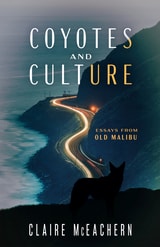
Coyotes and Culture
Essays from Old MalibuClaire McEachern
University of Nevada Press, 2025
This unique collection of essays offers a gripping exploration of the precarious beauty and peril of California’s iconic coastline. Through essays blending personal narrative, cultural analysis, and history, author Claire McEachern takes us behind the scenes of surf and celebrities to paint a vivid portrait of life on the edge —both literally and metaphorically. From the rugged Santa Monica Mountains to the shimmering Pacific, this work captures the paradoxes of Old Malibu: a place of luxury and risk, natural splendor and ecological vulnerability.
As an East Coast academic married to a fifth-generation Californian cowboy, McEachern brings a wry yet tender lens to the modern American story, delving into what happens to love and community in a land of both devastating wildfires and extravagant wildflowers. Her reflections weave together questions of beauty, resilience, and humanity’s uneasy relationship with nature, creating an unforgettable narrative of place and survival. Readers drawn to the drama of human stories set against larger cultural and environmental forces will find this book both thought-provoking and deeply moving.
Crabgrass Catholicism
How Suburbanization Transformed Faith and Politics in Postwar AmericaStephen M. Koeth
University of Chicago Press, 2025
The 1960s in America were a time of revolt against the stifling conformism embodied in the sprawling, uniform suburbs of the 1950s. Typically, the reforms of the Catholic Church’s Second Vatican Council, which aimed to make the Church more modern and accessible, are seen as one result of that broader cultural liberalization. Yet in Crabgrass Catholicism, Stephen M. Koeth demonstrates that the liberalization of the Church was instead the product of the mass suburbanization that began some fifteen years earlier. Koeth argues that postwar suburbanization revolutionized the Catholic parish, the relationship between clergy and laity, conceptions of parochial education, and Catholic participation in US politics, and thereby was a significant factor in the religious disaffiliation that only accelerated in subsequent decades.
A novel exploration of the role of Catholics in postwar suburbanization, Crabgrass Catholicism will be of particular interest to urban historians, scholars of American Catholicism and religious studies, and Catholic clergy and laity.
Cracked Coverage
Television News, The Anti-Cocaine Crusade, and the Reagan LegacyJimmie L. Reeves and Richard Campbell
Duke University Press, 1994
The authors persuasively argue, for example, that powder cocaine in the early Reagan years was understood and treated very differently on television and by the state than was crack cocaine, which was discovered by the news media in late 1985. In their critical analysis of 270 news stories broadcast between 1981 and 1988, Reeves and Campbell demonstrate a disturbing disparity between the earlier presentation of the middle- and upper-class "white" drug offender, for whom therapeutic recovery was an available option, and the subsequent news treatment of the inner-city "black" drug delinquent, often described as beyond rehabilitation and subject only to intensified strategies of law and order. Enlivened by provocative discussions of Nancy Reagan’s antidrug activism, the dramatic death of basketball star Len Bias, and the myth of the crack baby, the book argues that Reagan’s war on drugs was at heart a political spectacle that advanced the reactionary agenda of the New and Religious Right—an agenda that dismissed social problems grounded in economic devastation as individual moral problems that could simply be remedied by just saying "no."
Wide ranging and authoritative, Cracked Coverage: Television News, the Anti-Cocaine Crusade, and the Reagan Legacy is a truly interdisciplinary work that will attract readers across the humanities and social sciences in addition to students, scholars, journalists, and policy makers interested in the media and drug-related issues.
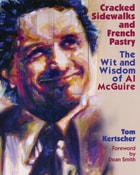
Cracked Sidewalks and French Pastry
The Wit and Wisdom of Al McGuireTom Kertscher
University of Wisconsin Press, 2002
Al McGuire was the Mark Twain of college basketball. Never was there a figure in the game so quoted and so quotable, on sports and on the human condition. This book collects more than a hundred of McGuire’s most colorful quotations, plus photographs from his life and career, in a tribute that is funny, poignant, and brimming with his streetwise sagacity.
McGuire, a brash and fiery New Yorker who grew up working in his parents’ saloon, played a rough and tumble game of basketball at St. John’s University and briefly in the NBA before entering the coaching ranks. He reached the pinnacle of his profession and gained national fame at Marquette University in Milwaukee, where in thirteen seasons he compiled a 295-80 record, appeared in nine NCAA tournaments, and won eighty-one home games in a row. He was a fine coach who cared deeply about his players and was beloved by his teams and fans alike, but his flamboyance and his mouth sometimes got him into trouble. The end of his coaching career captivated the nation: McGuire wept on the bench as his Marquette Warriors won the national title.
McGuire then began a ground-breaking career in network broadcasting, adding a zest and unconventionality that the college game had never seen. His sometimes bizarre and always entertaining commentary kept viewers tuned in even after the outcome of a lopsided game was a foregone conclusion. When Al McGuire died of leukemia in 2001, the sports world lost a true original.
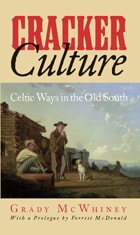
Cracker Culture
Celtic Ways in the Old SouthGrady McWhiney
University of Alabama Press, 1989
Cracker Culture is a provocative study of social life in the Old South that probes the origin of cultural differences between the South and the North throughout American history.
Among Scotch-Irish settlers the term “Cracker” initially designated a person who boasted, but in American usage the word has come to designate poor whites. McWhiney uses the term to define culture rather than to signify an economic condition. Although all poor whites were Crackers, not all Crackers were poor whites; both, however, were Southerners.
The author insists that Southerners and Northerners were never alike. American colonists who settled south and west of Pennsylvania during the 17th and 18th centuries were mainly from the “Celtic fringe” of the British Isles. The culture that these people retained in the New World accounts in considerable measure for the difference between them and the Yankees of New England, most of whom originated in the lowlands of the southeastern half of the island of Britain. From their solid base in the southern backcountry, Celts and their “Cracker” descendants swept westward throughout the antebellum period until they had established themselves and their practices across the Old South. Basic among those practices that determined their traditional folkways, values, norms, and attitudes was the herding of livestock on the open range, in contrast to the mixed agriculture that was the norm both in southeastern Britain and in New England. The Celts brought to the Old South leisurely ways that fostered idleness and gaiety. Like their Celtic ancestors, Southerners were characteristically violent; they scorned pacifism; they considered fights and duels honorable and consistently ignored laws designed to control their actions. In addition, family and kinship were much more important in Celtic Britain and the antebellum South than in England and the Northern United States. Fundamental differences between Southerners and Northerners shaped the course of antebellum American history; their conflict in the 1860s was not so much brother against brother as culture against culture.
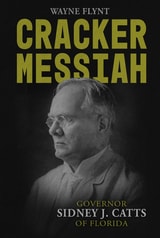
Cracker Messiah
Governor Sidney J. Catts of FloridaWayne Flynt
University of Alabama Press, 1977
The definitive biography of Sidney J. Catts—Florida’s fiery governor who fused pulpit rhetoric with populist politics in the early twentieth century.
Cracker Messiah by Wayne Flynt is a riveting portrait of Sidney J. Catts, one of the most controversial figures in Southern political history. Catts rose from Baptist pulpits and Chautauqua stages to Florida’s governor’s mansion in 1916, riding a wave of rural populism, prohibition fervor, and anti-Catholic rhetoric. His fiery oratory and outsider persona electrified “Florida crackers” at a time when industrial and urban forces were reshaping the South. Yet Catts was more than a demagogue. His administration championed progressive reforms—good roads, penal improvements, vocational education, and even women’s political participation—while his career oscillated between idealism and opportunism.
Wayne Flynt’s meticulously documented biography illuminates this complicated politician, tracing Catts’s battles with the Democratic establishment, his failed Senate bid, and his later flirtations with gambling and real estate during Florida’s boom years. Drawing on interviews, archival sources, and legislative records, Cracker Messiah illuminates the tensions between nativism and reform, faith and hypocrisy, populism and progressivism in the early twentieth-century South. This new edition will appeal to readers of Southern history, political biography, and Progressive Era studies, as well as anyone interested in the roots of American populism and the enduring complexities of cultural and political identity in the Deep South.
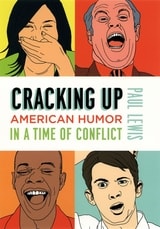
Cracking Up
American Humor in a Time of ConflictPaul Lewis
University of Chicago Press, 2006
What do Jon Stewart, Freddy Krueger, Patch Adams, and George W. Bush have in common? As Paul Lewis shows in Cracking Up, they are all among the ranks of joke tellers who aim to do much more than simply amuse. Exploring topics that range from the sadistic mockery of Abu Ghraib prison guards to New Age platitudes about the healing power of laughter, from jokes used to ridicule the possibility of global climate change to the heartwarming performances of hospital clowns, Lewis demonstrates that over the past thirty years American humor has become increasingly purposeful and embattled.
Navigating this contentious world of controversial, manipulative, and disturbing laughter, Cracking Up argues that the good news about American humor in our time—that it is delightful, relaxing, and distracting—is also the bad news. In a culture that both enjoys and quarrels about jokes, humor expresses our most nurturing and hurtful impulses, informs and misinforms us, and exposes as well as covers up the shortcomings of our leaders. Wondering what’s so funny about a culture determined to laugh at problems it prefers not to face, Lewis reveals connections between such seemingly unrelated jokers as Norman Cousins, Hannibal Lecter, Rush Limbaugh, Garry Trudeau, Jay Leno, Ronald Reagan, Beavis and Butt-Head, and Bill Clinton. The result is a surprising, alarming, and at times hilarious argument that will appeal to anyone interested in the ways humor is changing our cultural and political landscapes.