Results by title
22279 books match the query 'Social Science' and 1700 start with c

Consumer Culture
Lury, Celia
Rutgers University Press, 1996
This book is written as a survey for students who are interested in the nature and role of consumer culture in modern societies. Drawing on a wide range of studies and disciplines, Celia Lury examines the rise of consumer culture and the changing relations between the production and consumption of cultural goods. Rejecting the Marxist principle of production as the lone economic determinant in capitalist society, Lury presents consumerism as an equally active player in the free market. Rather than existing as opposites, production and consumerism are seen as complements, feeding off each other in an endless cycle. As the author writes, “the use or appropriation of an object is more often than not both a moment of consumption and production, of undoing and doing, of destruction and construction.”
Lury weaves unique arguments over the expansive nature of consumption, including explanations as to how poorer segments of society do in fact contribute to consumer culture and how a commodity moves beyond its function and assumes a cultural and symbolic meaning. Not only does the author explore the way an individual’s position in social groups structured by class, gender, race and age affects the nature of his or her participation in consumer culture, but also how this culture itself is instrumental in the defining of social and political groups and the forming of an individual’s self-identity.
Clearly written and well illustrated, Consumer Culture is a lively and engaging introduction to a topic which is of growing importance in media and cultural studies and in the sociology of culture. It will enable readers to understand and ultimately to have better control over the means of consumption.

Consumer Culture
Selected EssaysEdited by Gjoko Muratovski
Intellect Books, 2016
Consumer Identities
Agency, Media and Digital CultureEdited by Candice Roberts and Myles Ethan Lascity
Intellect Books, 2019
Consumers And Citizens
Globalization and Multicultural ConflictsNestor Garcia Canclini
University of Minnesota Press, 2001
An essential analysis of the ways consumerism and globalization intersect with political power.
In Consumers and Citizens, Néstor García Canclini, the best-known and most innovative cultural studies scholar in Latin America, maps the critical effects of urban sprawl and global media and commodity markets on citizens-and shows at the same time that the complex results mean not only a shrinkage of certain traditional rights (particularly those of the welfare or client state) but also new openings for expanding citizenship.
García Canclini focuses on the diverse ways in which democratic societies recognize markets of citizen opinions, however heterogeneous and dissonant, as in the fashion and entertainment industries. He shows how identity issues, brought to the fore by the aligning of citizenship and consumption, can no longer be understood strictly within the purview of territory or nation. Rather, the postmodern citizen-consumer inhabits a transterritorial and multilingual space, structured more along the lines of markets than states. Defining this space, García Canclini seeks to formulate a participatory and critical approach to consumption in which national culture, far from being extinguished, is reconstituted in transnational, cultural interactions.
Consuming Catastrophe
Mass Culture in America's Decade of DisasterTimothy Recuber
Temple University Press, 2016
Horrified, saddened, and angered: That was the American people’s reaction to the 9/11 attacks, Hurricane Katrina, the Virginia Tech shootings, and the 2008 financial crisis. In Consuming Catastrophe, Timothy Recuber presents a unique and provocative look at how these four very different disasters took a similar path through public consciousness. He explores the myriad ways we engage with and negotiate our feelings about disasters and tragedies—from omnipresent media broadcasts to relief fund efforts and promises to “Never Forget.”
Recuber explains how a specific and “real” kind of emotional connection to the victims becomes a crucial element in the creation, use, and consumption of mass mediation of disasters. He links this to the concept of “empathetic hedonism,” or the desire to understand or feel the suffering of others.
The ineffability of disasters makes them a spectacular and emotional force in contemporary American culture. Consuming Catastrophe provides a lively analysis of the themes and meanings of tragedy and the emotions it engenders in the representation, mediation and consumption of disasters.
Consuming Grief
Compassionate Cannibalism in an Amazonian SocietyBy Beth A. Conklin
University of Texas Press, 2001
Mourning the death of loved ones and recovering from their loss are universal human experiences, yet the grieving process is as different between cultures as it is among individuals. As late as the 1960s, the Wari' Indians of the western Amazonian rainforest ate the roasted flesh of their dead as an expression of compassion for the deceased and for his or her close relatives. By removing and transforming the corpse, which embodied ties between the living and the dead and was a focus of grief for the family of the deceased, Wari' death rites helped the bereaved kin accept their loss and go on with their lives.
Drawing on the recollections of Wari' elders who participated in consuming the dead, this book presents one of the richest, most authoritative ethnographic accounts of funerary cannibalism ever recorded. Beth Conklin explores Wari' conceptions of person, body, and spirit, as well as indigenous understandings of memory and emotion, to explain why the Wari' felt that corpses must be destroyed and why they preferred cannibalism over cremation. Her findings challenge many commonly held beliefs about cannibalism and show why, in Wari' terms, it was considered the most honorable and compassionate way of treating the dead.
Consuming Modernity
Public Culture in a South Asian WorldCarol A. Breckenridge
University of Minnesota Press, 1995
Consuming Modernity illustrates that what is distinctive of any particular society is not the fact of its modernity, but rather its own unique debates about modernity. Behind the embattled arena of culture in India, for example, lie particular social and political interests such as the growing middle class; the entrepreneurs and commercial institutions; and the state.
The contributors address the roles of these various intertwined interests in the making of India's public culture, each examining different sites of consumption. The sites they explore include cinema, radio, cricket, restaurants, and tourism. Consuming Modernity also makes clear the differences among public, mass, and popular culture.Contributors include Arjun Appadurai, University of Chicago; Frank F. Conlon, University of Washington; Sara Dickey, Bowdoin College; Paul Greenough, University of Iowa; David Lelyveld, Columbia University; Barbara N. Ramusack, University of Cincinnati; Rosie Thomas, University of Westminster; and Phillip B. Zarrilli, University of Wisconsin, Madison.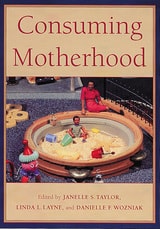
Consuming Motherhood
Taylor, Janelle S
Rutgers University Press, 2004
Consuming Motherhood addresses the provocative question of how motherhood and consumption—as ideologies and as patterns of social action—mutually shape and constitute each other in contemporary North American and European social life. Ideologically, motherhood and consumption are often constructed in opposition to each other, with motherhood standing in as a naturalized social relation that is thought to be uniquely free of the calculating instrumentality that dominates commercial relations. Yet, in social life, motherhood and consumption are inseparable. Whether shopping for children’s clothing or childbirth services, or making decisions about adopting children, becoming a mother (and maternal practice more generally) is deeply influenced by consumption. How can the relationship between motherhood and consumption be revealed, and critically analyzed? Consuming Motherhood brings together a group of sociologists, anthropologists, and religious studies scholars to address this question through carefully grounded ethnographic studies. This insightful book reveals how mothers negotiate the contradictory forces that position them as both immune from and the target of consumerist tendencies in contemporary global society.
Consuming Religion
Kathryn Lofton
University of Chicago Press, 2017
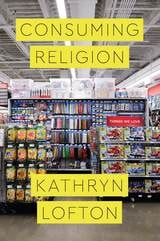
What are you drawn to like, to watch, or even to binge? What are you free to consume, and what do you become through consumption? These questions of desire and value, Kathryn Lofton argues, are questions for the study of religion. In eleven essays exploring soap and office cubicles, Britney Spears and the Kardashians, corporate culture and Goldman Sachs, Lofton shows the conceptual levers of religion in thinking about social modes of encounter, use, and longing. Wherever we see people articulate their dreams of and for the world, wherever we see those dreams organized into protocols, images, manuals, and contracts, we glimpse what the word “religion” allows us to describe and understand.
With great style and analytical acumen, Lofton offers the ultimate guide to religion and consumption in our capitalizing times.
Consuming Religion
Kathryn Lofton
University of Chicago Press, 2017
What are you drawn to like, to watch, or even to binge? What are you free to consume, and what do you become through consumption? These questions of desire and value, Kathryn Lofton argues, are questions for the study of religion. In eleven essays exploring soap and office cubicles, Britney Spears and the Kardashians, corporate culture and Goldman Sachs, Lofton shows the conceptual levers of religion in thinking about social modes of encounter, use, and longing. Wherever we see people articulate their dreams of and for the world, wherever we see those dreams organized into protocols, images, manuals, and contracts, we glimpse what the word “religion” allows us to describe and understand.
With great style and analytical acumen, Lofton offers the ultimate guide to religion and consumption in our capitalizing times.
Consuming Russia
Popular Culture, Sex, and Society since GorbachevAdele Marie Barker, ed.
Duke University Press, 1999
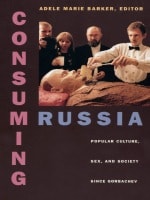
The contributors examine how the people of Russia reconcile prerevolutionary elite culture—as well as the communist legacy—with the influx of popular influences from the West to build a society that no longer relies on a single dominant discourse and embraces the multiplicities of both public and private Russian life. Barker brings together Russian and American scholars from anthropology, history, literature, political science, sociology, and cultural studies. These experts fuse theoretical analysis with ethnographic research to analyze the rise of popular culture, covering topics as varied as post-Soviet rave culture, rock music, children and advertising, pyramid schemes, tattooing, pets, and spectator sports. They consider detective novels, anecdotes, issues of feminism and queer sexuality, nostalgia, the Russian cinema, and graffiti. Discussions of pornography, religious cults, and the deployment of Soviet ideological symbols as post-Soviet kitsch also help to demonstrate how the rebuilding of Russia’s political and economic infrastructure has been influenced by its citizens’ cultural production and consumption.
This volume will appeal to those engaged with post-Soviet studies, to anyone interested in the state of Russian society, and to readers more generally involved with the study of popular culture.
Contributors. Adele Marie Barker, Eliot Borenstein, Svetlana Boym, John Bushnell, Nancy Condee, Robert Edelman, Laurie Essig, Julia P. Friedman, Paul W. Goldschmidt, Judith Deutsch Kornblatt, Anna Krylova, Susan Larsen, Catharine Theimer Nepomnyaschy, Theresa Sabonis-Chafee, Tim Scholl, Adam Weiner, Alexei Yurchak, Elizabeth Kristofovich Zelensky
Consuming Work
Youth Labor in AmericaYasemin Besen-Cassino
Temple University Press, 2014
Consumption Intensified
The Politics of Middle-Class Daily Life in BrazilMaureen O'Dougherty
Duke University Press, 2002
With the supports of middle-class living threatened—job security, quality education, home ownership, savings, ease of consumption—the means and meaning of “middle class” were thrown into question. The sector thus redefined itself through both class- and race-based claims of moral and cultural superiority and through privileged consumption, a definition the media underscored by continually addressing middle-class Brazilians as consumers—or rather, as consumers denied. In these times, adults became more flexible in employment, and put stakes in their children’s expensive private education. They engaged in elaborate comparison shopping, stockpiling of goods, and financial strategizing. Ongoing desire for distinction and “first- world” modernity prompted these Brazilians to buy foreign goods through contraband, thereby defying state protectionist policy. Discontented with the constraints of the national economy, they welcomed neoliberalism.
By uncovering connections between culture and politics, O’Dougherty complicates understandings of the middle class as a social group and category. Illuminating the intricate relation between identity and local and global consumption, her work will be welcomed by students and scholars in anthropology and Latin American studies, and those interested in consumption, popular culture, politics, and globalization.
Contacts Desired
Gay and Lesbian Communications and Community, 1940s-1970sMartin Meeker
University of Chicago Press, 2006
Martin Meeker here argues that over the course of the twentieth century, a series of important innovations occurred in the networks that linked individuals to a larger social knowledge of homosexuality. He points to three key innovations in particular: the emergence of the homophile movement in the 1950s; the mass media treatments of homosexuals in the late 1950s and early 1960s; and the popularization of do-it-yourself publishing from the late 1940s to the 1970s, which offered bar guides, handmade magazines, and other materials that gay men and lesbians could use to seek one another out. In the process, Meeker unearths a treasure trove of archival materials that reveals how homosexuals played a crucial role in transforming the very structure of communications and urban communities since the postwar era.
Contagions
Nationalism, Populism, and the Pandemic at Europe’s EdgeJosip Glaurdic
Central European University Press, 2026
Contagious
Cultures, Carriers, and the Outbreak NarrativePriscilla Wald
Duke University Press, 2008
Wald traces how changing ideas about disease emergence and social interaction coalesced in the outbreak narrative. She returns to the early years of microbiology—to the identification of microbes and “Typhoid Mary,” the first known healthy human carrier of typhoid in the United States—to highlight the intertwined production of sociological theories of group formation (“social contagion”) and medical theories of bacteriological infection at the turn of the twentieth century. Following the evolution of these ideas, Wald shows how they were affected by—or reflected in—the advent of virology, Cold War ideas about “alien” infiltration, science-fiction stories of brainwashing and body snatchers, and the HIV/AIDS pandemic. Contagious is a cautionary tale about how the stories we tell circumscribe our thinking about global health and human interactions as the world imagines—or refuses to imagine—the next Great Plague.
Containing the Poor
The Mexico City Poor House, 1774-1871Silvia Marina Arrom
Duke University Press, 2001
For a nation that had traditionally regarded the needy as having the undisputed right to receive alms and whose affluent citizens felt duty-bound to dispense them, the experiment was doomed from the start, explains Arrom. She uses deep archival research to reveal that—much to policymakers’ dismay—the Poor House became an orphanage largely because the government had underestimated the embeddedness of this moral economy of begging. While tracing the course of an eventful century that also saw colonialism give way to republicanism in Mexico, Arrom links the Poor House’s transformation with other societal factors as well, such as Mexican women’s increasing impact on social welfare policies.
With poverty, begging, and homelessness still rampant in much of Latin America today, this study of changing approaches to social welfare will be particularly valuable to student and scholars of Mexican and Latin American society and history, as well as those engaged in the study of social and welfare policy.
Containment Culture
American Narratives, Postmodernism, and the Atomic AgeAlan Nadel
Duke University Press, 1995
Examining a broad sweep of American culture, from the work of George Kennan to Playboy Magazine, from the movies of Doris Day and Walt Disney to those of Cecil B. DeMille and Alfred Hitchcock, from James Bond to Holden Caulfield, Nadel discloses the remarkable pervasiveness of the containment narrative. Drawing subtly on insights provided by contemporary theorists, including Baudrillard, Foucault, Jameson, Sedgwick, Certeau, and Hayden White, he situates the rhetoric of the Cold War within a gendered narrative powered by the unspoken potency of the atom. He then traces the breakdown of this discourse of containment through such events as the Bay of Pigs invasion and the Free Speech Movement at Berkeley, and ties its collapse to the onset of American postmodernism, typified by works such as Catch–22 and The Man Who Shot Liberty Valence.
An important work of cultural criticism, Containment Culture links atomic power with postmodernism and postwar politics, and shows how a multifarious national policy can become part of a nation’s cultural agenda and a source of meaning for its citizenry.
Containment and Condemnation
Law and the Oppression of the Urban PoorDavid Ray Papke
Michigan State University Press, 2019
Contemporary African Screen Worlds
Lindiwe Dovey, Añulika Agina, and Michael W. Thomas, editors
Duke University Press, 2025
Contributors. Moradewun Adejunmobi, Añulika Agina, Alexander Bud, Lindiwe Dovey, Femi Eromosele, Pier Paolo Frassinelli, Alexandra Grieve, Jonathan Haynes, Joe Jackson, Alessandro Jedlowski, Dennis-Brook Prince Lotsu, Alison MacAulay, Elastus Mambwe, Asteway M. Woldemichael, Nedine Moonsamy, Elizabeth Olayiwola, Temitayo Olofinlua, Rashida Resario, Estrella Sendra, Robin Steedman, Michael W. Thomas, Stefanie Van de Peer, Solomon Waliaula
Contemporary Archaeologies of the Southwest
William Walker
University Press of Colorado, 2011
Chapters address place-making in Chaco Canyon, recent trends in landscape archaeology, the formation of identities, landscape boundaries, and the movement associated with these aspects of place-making. They address how interaction of peoples with objects brings landscapes to life. Representing a diverse cross section of Southwestern archaeologists, the authors of this volume push the boundaries of archaeological method and theory, building a strong foundation for future Southwest studies.
This book will be of interest to professional and academic archaeologists, as well as students working in the American Southwest.
Contemporary Art and the Display of Ancient Egypt
Alice Stevenson
University College London, 2025
Contemporary art installations in Egyptian galleries are often framed as dialogues between past and present—but what if they are, instead, shaped by the museum itself? Contemporary Art and the Display of Ancient Egypt argues that both contemporary and ancient works are mediated through the structures and ideologies of the museum space. In this seminal work, Alice Stevenson examines how artists’ work influences museum discourse and public engagement with ancient artifacts.
Drawing on case studies from the British Museum, the Egyptian Museum in Turin, and the State Museum of Egyptian Art in Munich, this book assesses the motivations behind these interventions and their lasting impact. Through an evidence-based approach, Stevenson offers new insights into how curators, scholars, and artists can collaborate to create more meaningful and politically engaged museum experiences. Of particular interest to Egyptologists, museum professionals, and contemporary art scholars, this work redefines the role of artistic intervention in shaping our understanding of ancient cultures.
Contemporary Asian American Communities
Intersections And Divergencesedited by Linda Trinh Võ and Rick Bonus
Temple University Press, 2002
Contemporary Black Women Filmmakers and the Art of Resistance
Christina N. Baker
The Ohio State University Press, 2018
Analyzing the cultural texts of filmmakers such as Ava DuVernay, Tanya Hamilton, Kasi Lemmons, Gina Prince-Bythewood, and Dee Rees—and including interviews she conducted with three of the filmmakers—Baker emphasizes the importance of applying an intersectional perspective that centers on the shared experiences of Black women and the role of film as a form of artistic expression and a tool of social resistance.
Contemporary Carioca
Technologies of Mixing in a Brazilian Music SceneFrederick Moehn
Duke University Press, 2012
Contemporary Chinese America
Immigration, Ethnicity, and Community TransformationMin Zhou, foreword by Alejandro Portes
Temple University Press, 2009
Contemporary Chinese America is the most comprehensive sociological investigation of the experiences of Chinese immigrants to the United States—and of their offspring—in the late twentieth and early twenty-first centuries. The author, Min Zhou, is a well-known sociologist of the Chinese American experience. In this volume, she collects her original research on a range of subjects, including the causes and consequences of emigration from China, demographic trends of Chinese Americans, patterns of residential mobility in the U.S., Chinese American "ethnoburbs," immigrant entrepreneurship, ethnic enclave economies, gender and work, Chinese language media, Chinese schools, and intergenerational relations. The concluding chapter, "Rethinking Assimilation," ponders the future for Chinese Americans. Also included are an extensive bibliography and a list of recommended documentary films.
While the book is particularly well-suited for college courses in Chinese American studies, ethnic studies, Asian studies, and immigration studies, it will interest anyone who wants to more fully understand the lived experience of contemporary Chinese Americans.
Contemporary Colonialities
Kurds and KashmirisDibyesh Anand and Nitasha Kaul
University of Westminster Press, 2025
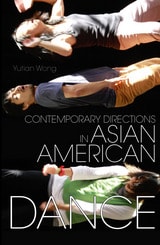
Contemporary Directions in Asian American Dance
Edited by Yutian Wong
University of Wisconsin Press, 2018
The contributors to this volume address such topics as the role of the 1960s Asian American Movement in creating Japanese American taiko groups, and the experience of internment during World War II influencing butoh dance in Canada. Essays about artists such as Jay Hirabayashi, Alvin Tolentino, Shen Wei, Kun-Yang Lin, Yasuko Yokoshi, Eiko & Koma, Sam Kim, Roko Kawai, and Denise Uyehara look closely at the politics of how Asian aesthetics are set into motion and marketed. The volume includes first-person narratives, interviews, ethnography, cultural studies, performance studies, and comparative ethnic studies.
Contemporary Europe in the Historical Imagination
Edited by Darcy Buerkle and Skye Doney
University of Wisconsin Press, 2023
George L. Mosse (1918–99) was one of the most influential cultural and intellectual historians of modern Europe. A refugee from Nazi Germany, he was an early leader in the study of fascism and the history of sexuality and masculinity, authoring more than two dozen books. In Contemporary Europe in the Historical Imagination, an international assembly of leading scholars explore Mosse’s enduring methodologies in German studies and modern European cultural history. Considering Mosse’s life and work historically and critically, the book begins with his intellectual biography and goes on to reread his writings in light of historical developments since his death, and to use, extend, and contend with Mosse’s legacy in new contexts he may not have addressed or even foreseen.
The volume wrestles with intertwined questions that continue to emerge from Mosse’s pioneering research, including: What role do sexual and racial stereotypes play in European political culture before and after 1945? How are gender and Nazi violence bound together? And what does commemoration reveal about national culture? Importantly, the contributors pose questions that are inspired by Mosse’s work but that he did not directly examine. For example, to what extent were Nazism and Italian Fascism colonial projects? How have popular radical right parties reinforced and reimagined ethnonationalism and nativism? And how did Nazi perpetrators construct a moral system that accommodated genocide? Much like Mosse’s own work, the chapters in this book inspire new interventions into the history of gender and sexuality, Jewish identity during the rise of the Third Reich, and the many reincarnations of fascist pageantry and mass politics.
Contributors: Adi Armon, Steven E. Aschheim, Aleida Assmann, Darcy Buerkle, Skye Doney, Arie M. Dubnov, Rebekka Grossmann, David Harrisville, Meike Hoffmann, Andreas Huyssen, Elissa Mailänder, Frank Mecklenburg, Mary Nolan, Stefanie Schüler-Springorum, Roger Strauch, Enzo Traverso, Marc Volovici, Elisabeth Wagner, Sarah Wobick-Segev, Robert Zwarg
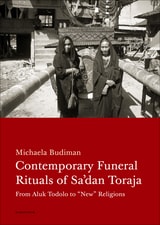
Contemporary Funeral Rituals of Sa'dan Toraja
From Aluk Todolo to "New" ReligionsMichaela Budiman
Karolinum Press, 2013
Contemporary German Editorial Theory
Hans Walter Gabler, George Bornstein, and Gillian Borland Pierce, Editors
University of Michigan Press, 1995
Contemporary Immigrant Writing and Black America
Mirmotahari, Emad
University of Iowa Press, 2026
Contemporary Immigrant Writing and Black America addresses how minoritized communities in the United States find each other, make sense of each other, and come together to confront the many guises of racism and racist practices. This book probes the life and writings of Korean immigrants, Indian immigrants, and various African immigrants for insights into the ways that they experience and express their new lives in the United States. More specifically, this book shows how immigrant communities come to understand their relationship with the Black American community; the relation that is key to finding their own voice about race, culture, and power in the United States.

Contemporary Lithic Analysis in the Southeast
Problems, Solutions, and InterpretationsPhilip J. Carr
University of Alabama Press, 2012
William Andrefsky Jr. / Andrew P. Bradbury / Philip J. Carr / CarolynConklin /
Contemporary Marriage
Kingsley Davis
Russell Sage Foundation, 1985
Contemporary Maya Spirituality
The Ancient Ways Are Not LostBy Jean Molesky-Poz
University of Texas Press, 2006
Since the mid-1980s, when Guatemala returned to civilian rule and achieved relative peace and stability, the Maya have begun openly expressing their spiritual beliefs and practices. Jean Molesky-Poz draws on in-depth dialogues with Maya Ajq'ijab' (keepers of the ritual calendar), her own participant observation, and inter-disciplinary resources to offer a comprehensive, innovative, and well-grounded understanding of contemporary Maya spirituality and its theological underpinnings. She reveals significant continuities between contemporary and ancient Maya worldviews and spiritual practices.
Molesky-Poz opens with a discussion of how the public emergence of Maya spirituality is situated within the religious political history of the Guatemalan highlands, particularly the recent pan-Maya movement. She investigates Maya cosmovision and its foundational principles, as expressed by Ajq'ijab'. At the heart of this work, Ajq'ijab' interpret their obligation, lives, and spiritual work. In subsequent chapters, Molesky-Poz explores aspects of Maya spirituality—sacred geography (the reciprocal relationship between the earth and humans, sacred places, and the significance of the cross or quatrefoil map), sacred time (how the 260-day sacred calendar is "the heart of the wisdom of the Maya," the matrix of Maya culture), and ritual practice (the distinct way and method of ancestral study, with special attention to fire ceremonialism). She confirms contemporary Maya spirituality as a faith tradition with elaborate historical roots that has significance for individual, collective, and historical lives, reaffirming its own public space and legal right to be practiced.

Contemporary Northern Irish Society
An IntroductionColin Coulter
Pluto Press, 1999
Contemporary Opera in Flux
Edited by Yayoi U. Everett
University of Michigan Press, 2024
Contemporary Opera in Flux bridges the gaps between expanding literature on opera, theater, new music, postmodern dramaturgy, and posthuman aesthetics, while also confronting larger questions of identity, representation, and narrative agency that are at the forefront of contemporary music scholarship. This collection of essays engages critically with the past out of a conviction that, amid general public perceptions of opera as anachronistic or elitist, contemporary opera has emerged as an artistic incubator for experimentation.
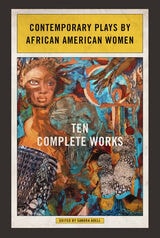
Contemporary Plays by African American Women
Ten Complete WorksEdited by Sandra Adell
University of Illinois Press, 2015
Selections: Blue Door, by Tanya Barfield; Levee James, by S. M. Shephard-Massat; Hoodoo Love, by Katori Hall; Carnaval, by Nikkole Salter; Single Black Female, by Lisa B. Thompson; Fabulation, or The Re-Education of Undine, by Lynn Nottage; BlackTop Sky, by Christina Anderson; Voyeurs de Venus, by Lydia Diamond; Fedra, by J. Nicole Brooks; and Uppa Creek: A Modern Anachronistic Parody in the Minstrel Tradition, by Keli Garrett.
Contemporary Social Constructionism
Key ThemesDarin Weinberg
Temple University Press, 2015
In Contemporary Social Constructionism, Darin Weinberg provides a detailed, critical overview of the key themes of this school of thought, which explains how phenomena and ways of thinking develop in their social contexts. Weinberg traces the multiple roots of social constructionism, and shows how it has been used, critiqued, and refined within the social and human sciences.
Contemporary Social Constructionism illuminates how constructionist social science developed in relation to positivism, critical and hermeneutic philosophy, and feminism and then goes on to distinguish the concept from postmodernism and deconstructionism. In addition, Weinberg shows how social constructionists have contributed to our understanding of biology, the body, self-knowledge, and social problems.
The result is a contemporary statement of social constructionism that shores up its scientific veracity and demonstrates its analytic power, promise, and influence. The book concludes with a look toward the future of the concept and its use.
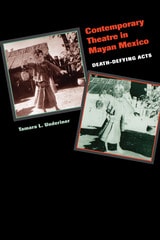
Contemporary Theatre in Mayan Mexico
Death-Defying ActsBy Tamara L. Underiner
University of Texas Press, 2004
From the dramatization of local legends to the staging of plays by Shakespeare and other canonical playwrights to the exploration of contemporary sociopolitical problems and their effects on women and children, Mayan theatre is a flourishing cultural institution in southern Mexico. Part of a larger movement to define Mayan self-identity and reclaim a Mayan cultural heritage, theatre in Mayan languages has both reflected on and contributed to a growing awareness of Mayans as contemporary cultural and political players in Mexico and on the world's stage.
In this book, Tamara Underiner draws on fieldwork with theatre groups in Chiapas, Tabasco, and Yucatán to observe the Maya peoples in the process of defining themselves through theatrical performance. She looks at the activities of four theatre groups or networks, focusing on their operating strategies and on close analyses of selected dramatic texts. She shows that while each group works under the rubric of Mayan or indigenous theatre, their works are also in constant dialogue, confrontation, and collaboration with the wider, non-Mayan world. Her observations thus reveal not only how theatre is an agent of cultural self-definition and community-building but also how theatre negotiates complex relations among indigenous communities in Mayan Mexico, state governments, and non-Mayan artists and researchers.

Content Machines
Reading and Writing in the Platform EraSarah Brouillette
Duke University Press, 2026
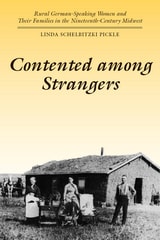
Contented among Strangers
Rural German-Speaking Women and Their Families in the Nineteenth-Century MidwestLinda Schelbitzki Pickle
University of Illinois Press, 1995
German-Americans make up one of the largest ethnic groups in the United States, yet their very success at assimilating has also made them one of the least visible. Contented among Strangers examines the central role German-speaking women in rural areas of the Midwest played in preserving their ethnic and cultural identity. Even while living far from their original homelands, these women applied traditional European patterns of rural family life and values to their new homes in Illinois, Iowa, Kansas, Missouri, and Nebraska. As a result they were more content with their modest lives than were their Anglo-American counterparts. Through personal recollections--including interesting diary material translated by the author, church and community documents, and migration and census data--Pickle reveals the diversity and richness of the women's experiences.
Contentious Citizenship
Salvadoran Activism and Belonging Across BordersArely M. Zimmerman
University of Arizona Press, 2026
Drawing on nearly fifty interviews with activists who fled El Salvador, Zimmerman traces how political refugees carried with them strategies of resistance and community organizing that shaped social justice movements in the United States. The book addresses the political turmoil and grassroots mobilizations in El Salvador, the sanctuary movement of the 1980s, contemporary activism, and the impact of women’s strategies and forms of resistance.
Essential reading for scholars and students of migration, Central American studies, and political movements, Contentious Citizenship is a bold intervention into contemporary debates on identity, legality, and resistance. Zimmerman’s work honors the ingenuity and resilience of Salvadoran activists and invites readers to consider what it means to belong.
Contentious City
The Politics of Recovery in New York CityJohn Mollenkopf
Russell Sage Foundation, 2005
Contentious Lives
Two Argentine Women, Two Protests, and the Quest for RecognitionJavier Auyero
Duke University Press, 2003
Auyero reconstructs Nana’s and Laura’s biographies through oral histories and diaries. Drawing on interviews with many other protesters, newspaper articles, judicial records, government reports, and video footage, he provides sociological and historical context for their stories. The women’s accounts reveal the frustrations of lives overwhelmed by gender domination, the deprivations brought about by hyper-unemployment and the withering of the welfare component of the state, and the achievements and costs of collective action. Balancing attention to large-scale political and economic processes with acknowledgment of the plurality of meanings emanating from personal experiences, Contentious Lives is an insightful, penetrating, and timely contribution to discussions of popular resistance and the combined effects of globalization, neoliberal economic policies, and political corruption in Argentina and elsewhere.
Contested Citizenship
Immigration and Cultural Diversity in EuropeRuud Koopmans
University of Minnesota Press, 2005
Revealing striking cross-national differences in how immigration and diversity are contended by different national governments, these authors find that how citizenship is constructed is the key variable defining the experience of Europe’s immigrant populations. Contested Citizenship provides nuanced policy recommendations and challenges the truism that multiculturalism is always good for immigrants. Even in an age of European integration and globalization, the state remains a critical actor in determining what points of view are sensible and realistic—and legitimate—in society.
Ruud Koopmans is professor of sociology at Free University, Amsterdam. Paul Statham is reader in political communications at the University of Leeds. Marco Giugni is a researcher and teacher of political science at the University of Geneva. Florence Passy is assistant professor of political science at the University of Lausanne, Switzerland.
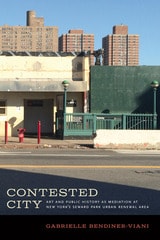
Contested City
Art and Public History as Mediation at New York's Seward Park Urban Renewal AreaGabrielle Bendiner-Viani
University of Iowa Press, 2018
2020 Brendan Gill Prize finalist
For forty years, as New York’s Lower East Side went from disinvested to gentrified, residents lived with a wound at the heart of the neighborhood, a wasteland of vacant lots known as the Seward Park Urban Renewal Area (SPURA). Most of the buildings on the fourteen-square-block area were condemned in 1967, displacing thousands of low-income people of color with the promise that they would soon return to new housing—housing that never came.
Over decades, efforts to keep out affordable housing sparked deep-rooted enmity and stalled development, making SPURA a dramatic study of failed urban renewal, as well as a microcosm epitomizing the greatest challenges faced by American cities since World War II.
Artist and urban scholar Gabrielle Bendiner-Viani was invited to enter this tense community to support a new approach to planning, which she accepted using collaboration, community organizing, public history, and public art. Having engaged her students at The New School in a multi-year collaboration with community activists, the exhibitions and guided tours of her Layered SPURA project provided crucial new opportunities for dialogue about the past, present, and future of the neighborhood.
Simultaneously revealing the incredible stories of community and activism at SPURA, and shedding light on the importance of collaborative creative public projects, Contested City bridges art, design, community activism, and urban history. This is a book for artists, planners, scholars, teachers, cultural institutions, and all those who seek to collaborate in new ways with communities.
Contested City
Municipal Politics and the Rise of Nazism in Altona, 1917-1937Anthony McElligott
University of Michigan Press, 1998
Contested City
Municipal Politics and the Rise of Nazism in Altona, 1917-1937Anthony McElligott
University of Michigan Press, 1998
Contested Communities
Class, Gender, and Politics in Chile’s El Teniente Copper Mine, 1904-1951Thomas Miller Klubock
Duke University Press, 1998
Klubock shows how a militant working-class community was established through the interplay between capitalist development, state formation, and the ideologies of gender. In describing how the North American copper company attempted to reconfigure and reform the work and social-cultural lives of men and women who migrated to the mine, Klubock demonstrates how struggles between labor and capital took place on a gendered field of power and reconstituted social constructions of masculinity and femininity. As a result, Contested Communities describes more accurately than any previous study the nature of grassroots labor militancy, working-class culture, and everyday politics of gender relations during crucial years of the Chilean Popular Front in the 1930s and 1940s.