Results by title
4030 books match the query 'Language Arts & Disciplines' and 283 start with c
Color and Cognition in Mesoamerica
Constructing Categories as VantagesBy Robert E. MacLaury
University of Texas Press, 1996
More than 100 indigenous languages are spoken in Mexico and Central America. Each language partitions the color spectrum according to a pattern that is unique in some way. But every local system of color categories also shares characteristics with the systems of other Mesoamerican languages and of languages elsewhere in the world.
This book presents the results of the Mesoamerican Color Survey, which Robert E. MacLaury conducted in 1978-1981. Drawn from interviews with 900 speakers of some 116 Mesoamerican languages, the book provides a sweeping overview of the organization and semantics of color categorization in modern Mesoamerica.
Extensive analysis and MacLaury's use of vantage theory reveal complex and often surprising interrelationships among the ways languages categorize colors. His findings offer valuable cross-cultural data for all students of Mesoamerica. They will also be of interest to all linguists and cognitive scientists working on theories of categorization more generally.
Color and Color Perception
A Study in Anthropocentric RealismDavid R. Hilbert
CSLI, 1987
Comic Books, Special Collections, and the Academic Library
Brian Flota
Assoc of College & Research Libraries, 2023
Comic Books, Special Collections, and the Academic Library collects best practices for the acquisition, preservation, storage, and cataloging of comics, particularly single-issue (or floppy) comics, within the special collections units of academic library collections. Four sections answer:
- Why Should Your Institution Collect Comics?
- Your Library Collects or Wants to Collect Comics. Now What?
- How Do You Engage in Library Instruction and Outreach with Your Comics Collection?
- How Can Comics Be Used as Primary and Secondary Source Material by Students and Faculty?
Coming To Terms
A Theory of Writing AssessmentPatricia Lynne
Utah State University Press, 2004
In a provocative book-length essay, Patricia Lynne argues that most programmatic assessment of student writing in U.S. public and higher education is conceived in the terms of mid-20th century positivism. Since composition as a field had found its most compatible home in constructivism, she asks, why do compositionists import a conceptual frame for assessment that is incompatible with composition theory?
By casting this as a clash of paradigms, Lynne is able to highlight the ways in which each theory can and cannot influence the shape of assessment within composition. She laments, as do many in composition, that the objectively oriented paradigm of educational assessment theory subjugates and discounts the very social constructionist principles that empower composition pedagogy. Further, Lynne criticizes recent practice for accommodating the big business of educational testing—especially for capitulating to the discourse of positivism embedded in terms like "validity" and "reliability." These terms and concepts, she argues, have little theoretical significance within composition studies, and their technical and philosophical import are downplayed by composition assessment scholars.
There is a need, Lynne says, for terms of assessment that are native to composition. To open this needed discussion within the field, she analyzes cutting-edge assessment efforts, including the work of Broad and Haswell, and she advances a set of alternate terms for evaluating assessment practices, a set of terms grounded in constructivism and composition.
Coming to Terms is ambitious and principled, and it takes a controversial stand on important issues. This strong new volume in assessment theory will be of serious interest to assessment specialists and their students, to composition theorists, and to those now mounting assessments in their own programs.
Coming of Age with the New Republic, 1938-1950
Merrill D. Peterson
University of Missouri Press, 1999
In this absorbing memoir, Merrill D. Peterson traces his progress from a young Kansas Republican to a "Left Liberal," Democrat by reconstructing how the New Republic singularly influenced his intellectual development and academic career during some of the most turbulent years in American history—the final years of the Great Depression through World War II and the beginnings of the Cold War. Peterson recalls how, as a young man, he was guided to intellectual maturity by such extraordinary individuals as Max Lerner, Archibald MacLeish, Vincent Sheean, Alfred Kazin, Lewis Mumford, and Malcolm Cowley—all contributors to this important magazine. We look back, with Peterson, and see how their views are inextricably reflected in his own developing worldview.
Peterson was introduced to this liberal weekly by one of his teachers during his senior year of high school (1938-1939). For the next ten years, the magazine served as his principal guide to the politics and culture of the times. Now, at seventy-eight years of age, Peterson revisits the magazine that he read so eagerly during those early, impressionable years. With considerable skill and charm, Peterson weaves together the fresh reading, the history of the country during the 1940s, and his own personal history to give us the heart of the book. In addition, he includes brief essays on Vernon L. Parrington, Lewis Mumford, and Max Lerner, the three American writers and intellectuals he believes had the most influence on him.
Peterson discusses several turning points in his young life, but he focuses primarily on his education and the role the magazine played in it. The book concludes when Peterson, with a Ph.D. in the history of American civilization, accepts his first academic appointment, at Brandeis University, and approaches the publication of his first book. Thus, a critical chapter in his life comes to a close.
Commentary for Academic Writing for Graduate Students, 2d ed.
Essential Tasks and SkillsJohn M. Swales and Christine B. Feak
University of Michigan Press, 2004
Like its predecessor, this edition of Academic Writing for Graduate Students
"explains understanding the intended audience, the purpose of the paper, and academic genres.
"includes the use of task-based methodology, analytic group discussion, and genre consciousness-raising.
"shows how to write summaries and critiques.
"features "language focus" sections that address linguistic elements as they affect the wider rhetorical objectives.
"helps students position themselves as junior scholars in their academic communities.
Commentary for Academic Writing for Graduate Students, 3rd Ed.
Essential Tasks and SkillsJohn M. Swales & Christine B. Feak
University of Michigan Press, 2012
The Commentary for the third edition of this successful guide to writing has been revised and expanded in many ways to provide more support for instructors; this includes additional tasks for Units Two and Four to supplement the main text. However, the collegial tone established in previous Commentaries between Swales & Feak and instructors has been retained.
This volume contains commentaries on each of the eight units plus the two appendixes. The format for each unit includes
- a summary of the main points of the unit along with a list of topics covered.
- a synopsis of activities, divided into Language Focus sections and description of tasks.
- some general notes designed to capture the character of the unit, to indicate alternative activities, or to anticipate problems that may arise.
- detailed commentary and discussion of individual tasks, including model or sample answers where possible.
Commentary for Academic Writing for Graduate Students
Essential Tasks and SkillsChristine B. Feak and John M. Swales
University of Michigan Press, 2027
Now in its 4th edition, the Commentary for Academic Writing for Graduate Students remains an important companion text. Useful for instructors as well as students and scholars using Academic Writing for Graduate Students for self-study, the Commentary includes a synopsis of what each unit attempts to achieve, further discussion of certain points, and sample responses to the more controlled tasks. Many of the responses or model texts come directly from class discussion or from submitted homework, which students generously offered for inclusion. In response to numerous requests, the authors have expanded the number of teaching suggestions included at the end of each unit for this edition.
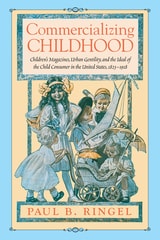
Commercializing Childhood
Children's Magazines, Urban Gentility, and the Ideal of the Child Consumer in the United States, 1823-1918Paul B. Ringel
University of Massachusetts Press, 2015
In this deeply researched and engaging book, Paul B. Ringel combines an analysis of the stories in nineteenth-century American children's magazines with the backstories of their authors, editors, and publishers to explain how this hugely successful industry trained generations of American children to become genteel consumers. Ringel demonstrates how these publications, which were read in hundreds of thousands of homes, played to two conflicting impulses within American families: to shield children from commercial influences by offering earnest and moral entertainment and to help children learn how to prosper in an increasingly market-driven society.

Common Ground At The Nexus Of Information Literacy And
Merinda Hensley
Assoc of College & Research Libraries, 2013
Common Ground at the Nexus of Information Literacy and Scholarly Communication
Stephanie Davis-Kahl
Assoc of College & Research Libraries, 2013
Communicating Professionally
A How-To-Do-It Manual for LibrariansCatherine Sheldrick Ross
American Library Association, 2013
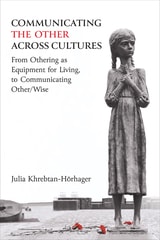
Communicating the Other across Cultures
From Othering as Equipment for Living, to Communicating Other/WiseDr. Julia Khrebtan-Hörhager
University of Michigan Press, 2023
Communicating the Other across Cultures uses examples from the United States, Western Europe, and Russia to demonstrate historical patterns of Othering people, as well as how marginalized people fight back against dominant powers that seek to silence or erase them. Deeply ingrained in our society, cultural Othering affects information in history books, children’s education, and the values upheld in our society. By taking a closer look at historical and modern instances of Othering, Julia Khrebtan-Hörhager shows examples of how different societies created ideas of social and cultural superiority or inferiority, and how deeply they are ingrained in our current society. In everyday life—the cash in your pocket, the movies shown at your local theater, museum exhibits, or politician's speeches—certain cultural ideologies are consistently upheld, while others are silenced. By exposing the communicative patterns of those in power, Khrebtan-Hörhager then suggests alternative ways of thinking, communicating, and eventually being, that offer transformative solutions for global problems.
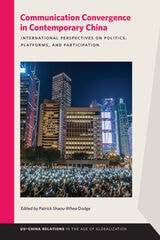
Communication Convergence in Contemporary China
International Perspectives on Politics, Platforms, and ParticipationPatrick Shaou-Whea Dodge
Michigan State University Press, 2020
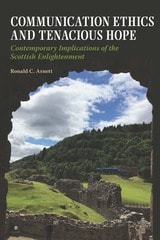
Communication Ethics and Tenacious Hope
Contemporary Implications of the Scottish EnlightenmentRonald C. Arnett with Foreword by Thomas M. Lessl
Southern Illinois University Press, 2022
Tenacious hope, the heart of a just and free society
During the Enlightenment, Scottish intellectuals and administrators met the demands of profit and progress while shepherding concerns for self and other, individual and community, and family and work. Communication Ethics and Tenacious Hope captures the “unity of contraries,” offering the Scottish Enlightenment as an exemplar of tenacious hope countering the excesses of individualism. Ronald C. Arnett reveals two stories: the struggle between optimism and tenacious hope, and optimism’s ultimate triumph in the exclusion of difference and the reification of progress as an ultimate good.
In chapters that detail the legacies of Lord Provost George Drummond, Adam Smith, David Hume, Thomas Reid, George Campbell, Adam Ferguson, and Sir Walter Scott, Arnett highlights the problematic nature of optimism and the ethical agency of tenacious hope. Arnett illustrates the creative union of education and administration, the ability to accept doubt within systems of knowledge and imagination, and an abiding connection to local soil. As principles of progress, free will, and capitalism swept Europe, proponents of optimism envisioned a world of consumerism and absolutes. In contrast, practitioners of tenacious hope embraced uncertainty and compassion as pragmatic necessities.
This work continues Arnett’s scholarship, articulating the vital importance of communication ethics. Those seeking to discern and support a temporal sense of the good in this historical moment will find in this timely work the means to pursue, hold, and nourish tenacious hope. This insightful theorization of the Scottish Enlightenment distills the substance of a just and free society for meeting dangerous and uncertain times.
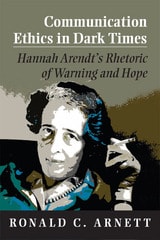
Communication Ethics in Dark Times
Hannah Arendt's Rhetoric of Warning and HopeRonald C. Arnett
Southern Illinois University Press, 2013
Renowned in the disciplines of political theory and philosophy, Hannah Arendt’s searing critiques of modernity continue to resonate in other fields of thought decades after she wrote them. In Communication Ethics in Dark Times: Hannah Arendt’s Rhetoric of Warning and Hope, author Ronald C. Arnett offers a groundbreaking examination of fifteen of Arendt’s major scholarly works, considering the German writer’s contributions to the areas of rhetoric and communication ethics for the first time.
Arnett focuses on Arendt’s use of the phrase “dark times” to describe the mistakes of modernity, defined by Arendt as the post-Enlightenment social conditions, discourses, and processes ruled by principles of efficiency, progress, and individual autonomy. These principles, Arendt argues, have led humanity down a path of folly, banality, and hubris. Throughout his interpretive evaluation, Arnett illuminates the implications of Arendt’s persistent metaphor of “dark times” and engages the question, How might communication ethics counter the tenets of dark times and their consequences? A compelling study of Hannah Arendt’s most noteworthy works and their connections to the fields of rhetoric and communication ethics, Communication Ethics in Dark Times provides an illuminating introduction for students and scholars of communication ethics and rhetoric, and a tool with which experts may discover new insights, connections, and applications to these fields.
Top Book Award for Philosophy of Communication Ethics by Communication Ethics Division of the National Communication Association, 2013
Communication Incompetencies
A Theory of Training Oral Performance BehaviorGerald M. Phillips
Southern Illinois University Press, 1991
Gerald M. Phillips draws on his twenty-five-year, five-thousand-client experience with the Pennsylvania State University Reticence Program to present a new theory of modification of “inept” communication behavior.
That experience has convinced Phillips that communication is arbitrary and rulebound rather than a process of inspiration. He demonstrates that communication problems can be described as errors that can be detected and classified in order to fit a remediation pattern. Regardless of the source of error, the remedy is to train the individual to avoid or eliminate errors—thus, orderly procedure will result in competent performance.
Inept communicators must be made aware of the obligations and constraints imposed by deep structures that require us to achieve a degree of formal order in our language, without which our discourse becomes incomprehensible.
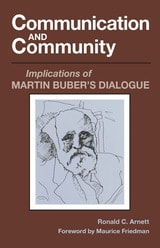
Communication and Community
Implications of Martin Buber's DialogueRonald C. Arnett. Foreword by Maurice Friedman
Southern Illinois University Press, 1986
Martin Buber’s work suggests that real life begins with two individuals engaged in dialogue, not just taking care of one’s own needs as described in social Darwinism.
Arnett argues that the end of the age of abundance demands that we give up the communicative strategies of the past and seek to work together in the midst of limited resources and an uncertain future. Today’s situation calls for an unwavering commitment to Buber’s “narrow ridge” concern for both self and community.
Arnett illustrates the narrow ridge definition of interpersonal communication with rich examples. His vignettes demonstrate effective and ineffective approaches to human community. An effective approach, he makes clear, incorporates not only openness to others’ points of view but also a willingness to be persuaded.

Communication and Litigation
Case Studies of Famous TrialsJanice Schuetz
Southern Illinois University Press, 1988
Examination of seven famous trials, each concluding with an evaluation of the trial by a lawyer, judge, law professor, or communication scholar.
The Washington Post coverage of the John Hinckley case preceding the trial demonstrates the effects media may have on a trial. The Haymarket riot trial serves as an example of opening statements in a storytelling form.
By analyzing the trial of Bruno Richard Hauptmann, Schuetz and Snedaker explain direct examination according to its purpose, legal rules, ordering of witnesses, verbal and nonverbal techniques of interrogation, and tactics for introducing evidence.
The cross-examination in the Sacco-Vanzetti case shows how advocates enhance or decrease their persuasiveness by adopting communication maneuvers. Closing arguments in the Rosenberg trial took the form of a refutative story with a dual persuasive and instructional content.
The Supreme Court appeal in the Sam Sheppard case demonstrates the procedures, form, content, and style of arguments of appellate briefs. The Chicago Eight trial is an example of trial as theatre.
Communication and the Human Condition
W. Barnett Pearce
Southern Illinois University Press, 1989
Starting with the premise that we live in communication (rather than standing outside communication and using it for secondary purposes), Pearce claims that people who live in various cultures and historical epochs not only communicate differently but experience different ways of being human because they communicate differently.
This century, he notes, ushered in the "communication revolution," the discovery that communication is far more important and central to the human condition than ever before realized. Essential to the communication revolution is the recognition that multiple forms of discourse exist in contemporary human society. Further, these forms of discourse are not benign; they comprise alternative ways of being human.
Thus communication theory must encompass all that it "means to live a life, the shape of social institutions and cultural traditions, the pragmatics of social action, and the poetics of social order."
Communities of Journalism
A History of American Newspapers and Their ReadersDavid Paul Nord
University of Illinois Press, 2006
Community Action and Organizational Change
Image, Narrative, IdentityBrenton D. Faber
Southern Illinois University Press, 2002
Brenton D. Faber’s spirited account of an academic consultant’s journey through banks, ghost towns, cemeteries, schools, and political campaigns explores the tenuous relationships between cultural narratives and organizational change.
Blending Faber’s firsthand experiences in the study and implementation of change with theoretical discussions of identity, agency, structure, and resistance within contexts of change, this innovative bookis among the first such communications studies to profile a scholar who is also a full participant in the projects. Drawing on theories of Michel Foucault, Anthony Giddens, and Pierre Bourdieu, Faber notes that change takes place in the realm of narrative, in the stories people tell.
Faber argues that an organization’s identity is created through internal stories. When the organization’s internal stories are consistent with its external stories, the organization’s identity is consistent and productive. When internal stories contradict the external stories, however, the organization’s identity becomes discordant. Change is the process of realigning an organization’s discordant narratives.
Faber discusses the case studies of a change management plan he wrote for a city-owned cemetery, a cultural change project he created for a downtown trade school, and a political campaign he assisted that focused on creating social change. He also includes detailed reflections on practical ways academics can become more involved in their communities as agents of progressive social change. Featuring six illustrations, Faber’s unique study demonstrates in both style and substance how stories work as agents of change.
Community Is the Way
Engaged Writing and Designing for Transformative Changeby Aimée Knight
University Press of Colorado, 2022
Community Is the Way
Engaged Writing and Designing for Transformative Changeby Aimée Knight
University Press of Colorado, 2022
Community Listening
Stories, Hauntings, PossibilitiesJenn Fishman
University Press of Colorado, 2025
Community Literacy and the Rhetoric of Public Engagement
Linda Flower
Southern Illinois University Press, 2008
Community Literacy and the Rhetoric of Public Engagement explores the critical practice of intercultural inquiry and rhetorical problem-solving that encourages urban writers and college mentors alike to take literate action. Author Linda Flower documents an innovative experiment in community literacy, the Community Literacy Center in Pittsburgh, and posits a powerful and distinctively rhetorical model of community engagement and pedagogy for both marginalized and privileged writers and speakers. In addition, she articulates a theory of local publics and explores the transformative potential of alternative discourses and counter-public performances.
In presenting a comprehensive pedagogy for literate action, the volume offers strategies for talking and collaborating across difference, forconducting an intercultural inquiry that draws out situated knowledge and rival interpretations of shared problems, and for writing and speaking to advocate for personal and public transformation. Flower describes the competing scripts for social engagement, empowerment, public deliberation, and agency that characterize the interdisciplinary debate over models of social engagement.
Extending the Community Literacy Center’s initial vision of community literacy first published a decade ago, Community Literacy and the Rhetoric of Public Engagement makes an important contribution to theoretical conversations about the nature of the public sphere while providing practical instruction in how all people can speak publicly for values and visions of change.
Winner, 2009 Rhetoric Society of America Book Award
Community Technology Projects
Making Them WorkMargaret Heller
American Library Association, 2019
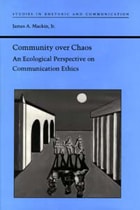
Community over Chaos
An Ecological Perspective on Communication EthicsJames A. Mackin
University of Alabama Press, 1997
This ecology of ethics seeks to balance the needs of the individual and those of the various levels of community.
As James A. Mackin, Jr., shows, both modernism and postmodernism have undermined the traditional foundations for ethics. Using an ecological model, however, Community over Chaos develops a common ground for ethical judgments about communication, thus countering the current theoretical climate of pessimistic cynicism toward the very possibility of ethics.
This theoretical pessimism is not merely an academic problem. The general public is becoming more and more disillusioned about the possibility of ethical communication. We are unable to teach principles of communicative ethics in our primary and secondary schools because we cannot agree on a common ground for those principles. Instead, we teach a narrow form of competence that is concerned primarily with short-term, individual success. Because our communities are built on our communicative practices, our inability to justify communicative ethics must ultimately lead to the disintegration of our communities.
Mackin's ecological model assumes that each of us is a communicative system operating within larger communicative systems that together form our communicative ecosystem. Virtues of the ecological approach are practical wisdom, based in fuzzy logic, and communicative openness and honesty.
Mackin recognizes the importance of both chaos and community in our communicative ecosystems. Chaos, as the source of originality and creativity, can contribute to growth and development; community provides the source of regularity and nurture that makes chaos endurable.
Compact Copyright
Quick Answers to Common QuestionsSara R. Benson
American Library Association, 2021
Included in Choice's Top 75 Titles and Resources for Community College Libraries
Faculty, students, and colleagues come to you with copyright questions, both simple and complex. And they all want reliable answers—as fast as you can get them. With this guide, designed for ready access, you’ll be prepared to deliver. Lawyer, copyright librarian, and iSchool instructor Benson presents succinct explanations ideal for both on-the-fly reference and staff training. Copyright specialists will appreciate excerpts from the law itself alongside tools and resources for digging deeper. Practical discussions of key legal concepts, illustrated using 52 scenarios, will lead you to fast, accurate answers on a range of topics, such as
- barriers to using the TEACH Act provisions in content for online teaching;
- showing a full-length movie in a university class;
- public domain and the 1998 Sonny Bono Copyright Term Extension Act;
- your legal options when receiving a DMCA take-down notice;
- court interpretations of fair use in three key recent cases;
- Creative Commons licenses, complete with a quick reference chart;
- library rights to license photographs in a digital collection;
- using letters under copyright in a special collections display case;
- a grad student’s right to use in a thesis writing published in their professor’s journal article;
- applying the implied license option to post historical student dissertations in institutional repositories;
- the Marrakesh Treaty provision supporting transfer of accessible works internationally; and
- limiting factors for interlibrary loan.

Compact Copyright
Quick Answers to Common Questions, Second EditionSara R. Benson
American Library Association, 2026
When faculty, students, and colleagues come to you with legal questions and you suddenly find yourself in the thick of a copyright conundrum, you don’t need pages of historical background information and long-winded legal explanations — you need answers, fast. Previously included in Choice's Top 75 Titles and Resources for Community College Libraries, this bestselling book gives you just that, succinctly addressing common head-scratchers and scenarios in a way that you will lead you to accurate answers quickly. Ideal for on-the-fly reference, staff training, and LIS instruction, Benson’s guide provides excerpts from the law itself alongside tools and suggested additional resources for digging deeper. Compact Copyright
- skillfully explains legal principles in plain language for more than 50 of the most common real-life scenarios library workers face;
- includes new chapters on cutting-edge developments such as AI, separability, and copyright and data;
- provides a primer on contracts and licensing basics, including Creative Commons licensing;
- explores key topics like the First Sale doctrine, Fair Use, public domain, making copies for preservation, the TEACH Act, interlibrary loan, sovereign immunity, and the Digital Millennium Copyright Act (DCMA);
- offers pointers on access to copyrighted material for patrons with disabilities and other concepts related to accessibility;
- discusses select international copyright library issues; and
- includes a Fair Use checklist, copyright and film screening best practices, and additional recommended reading and materials.
Compelled to Write
Alternative Rhetoric in Theory and PracticeDavid L. Wallace
Utah State University Press, 2011
David Wallace argues that any understanding of writing studies must include the conception of discourse as an embodied force with real consequences for real people. Informed in important ways by queer theory, Wallace calls to account users of dominant discourses and at the same time articulates a theory base from which to interpret "alternative rhetoric."
To examine the practice of writing from varied margins of society, Compelled to Write offers careful readings of four exemplar American writers, each of whom felt compelled within their own time and place to write in response to systemic injustices in American society.
Sarah Grimké, a privileged white woman advocating for abolition, is forced to defend her right to speak as a woman; Frederick Douglass begins his public career almost as a curiosity (the articulate ex-slave) and ends it as one of the most important rhetors in American history; Gloria Anzaldúa writes not only in multiple languages and dialects but from marginalized positions related to gender, race, class, sexual identity, and physical abled-ness; David Sedaris uses his privileged position as a middle-class white male humorist to speak unabashedly of his sexuality, his addictions, and obsessive-compulsive personality disorder.
Through these writers, Wallace explores a range of strategies that comprise alternative rhetorical practice, and demonstrates how such practice is inflected by social constraints on rhetorical agency and by how writers employ alternative discourses to resist those constraints. Grounding and personalizing Compelled to Write with rich material from his own teaching and his own experience, Wallace considers a number of implications for teachers of writing.

Competency-Based Career Planning for Reference and User Services Professionals
Jo Bell Whitlatch
American Library Association, 2020
Reference and user services librarians need to be in charge of their own careers. And when it comes to their own professional development, that means being proactive. This resource will enable professionals at every stage of their careers to honestly assess their skills and knowledge. Utilizing the RUSA (Reference and User Services Association) Professional Competencies as a framework for reflecting on strengths as well as gaps in expertise, it guides readers through developing strategies to enhance their professional standing and potential, thereby leading to a more satisfying career. In this book former RUSA president Whitlatch, who chaired the initial committee establishing the Competencies, teams up with expert trainer Woodard to
- introduce the seven categories of the RUSA Professional Competencies, explaining the ways in which each is important to both practitioner and institution;
- demonstrate how to create a personal development plan that focuses on development priorities;
- discuss the Association for Talent Development (ATD) Competency Development Model and other action plans;
- offer guidance for setting goals and measuring progress;
- share information on a variety of development activities that readers can undertake to maintain and enhance professional competencies, including formal training opportunities, on-the-job experiences, and self-directed initiatives; and
- provide recommended self-evaluation techniques such as writing up notes from group discussions, exercises, short verbal and written reports, crafting presentations on a topic, and sharing concrete examples of how skills were applied in the workplace.
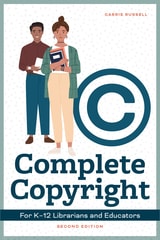
Complete Copyright for K12 Librarians and Educators
Carrie Russell
American Library Association, 2023
- the reasons librarians and teachers have so many misconceptions about copyright, and why understanding copyright is a process, not a one-time event;
- recent legislative and policy developments that impact schools and libraries;
- situations often encountered by educators, such as using copyrighted material in class assignments, digital lesson plans, bulletin board displays, social media, school plays, and band performances and talent shows;
- the use of licensed content in a variety of settings;
- what constitutes "fair use," so that you can be empowered by knowing exactly what's possible within the law; and
- guidance on making long-term strategic decisions and developing copyright policies.
Complete Copyright for K–12 Librarians and Educators
Carrie Russell
American Library Association, 2012
Complex Predicates
Edited by Alex Alsina, Joan Bresnan, and Peter Sells
CSLI, 1996
Complex Predicates and Information Spreading in LFG
Avery D. Andrews and Christopher D. Manning
CSLI, 1999
Complex Predicates in Japanese
A Syntactic and Semantic Study of the Notion 'Word'Yo Matsumoto
CSLI, 1996
Complex Words, Causatives, Verbal Periphrases and the Gerund
Romance Languages versus Czech (A Parallel Corpus-Based Study)Edited by Petr Cermák, Dana Kratochvílová, Olga Nadvornikova, and Pavel Štichauer
Karolinum Press, 2020
Composing Feminist Interventions
Activism, Engagement, PraxisKristine L. Blair
University Press of Colorado, 2018
Composing Media Composing Embodiment
Kristin L. Arola and Anne Frances Wysocki
Utah State University Press, 2012
“What any body is—and is able to do—cannot be disentangled from the media we use to consume and produce texts.” ---from the Introduction.
Kristin Arola and Anne Wysocki argue that composing in new media is composing the body—is embodiment. In Composing (Media) = Composing (Embodiment), they havebrought together a powerful set of essays that agree on the need for compositionists—and their students—to engage with a wide range of new media texts. These chapters explore how texts of all varieties mediate and thereby contribute to the human experiences of communication, of self, the body, and composing. Sample assignments and activities exemplify how this exploration might proceed in the writing classroom.
Contributors here articulate ways to understand how writing enables the experience of our bodies as selves, and at the same time to see the work of (our) writing in mediating selves to make them accessible to institutional perceptions and constraints. These writers argue that what a body does, and can do, cannot be disentangled from the media we use, nor from the times and cultures and technologies with which we engage.
To the discipline of composition, this is an important discussion because it clarifies the impact/s of literacy on citizens, freedoms, and societies. To the classroom, it is important because it helps compositionists to support their students as they enact, learn, and reflect upon their own embodied and embodying writing.
Composing Place
Digital Rhetorics for a Mobile WorldJacob Greene
Utah State University Press, 2022
Greene identifies three emerging “modalities” through which mobile technologies are being used by digital writers. First, to counter dominant discourses in contested spaces; second, to historicize entrenched narratives in iconic spaces; and third, to amplify marginalized voices in mundane spaces. Through these modalities, Greene employs Indigenous philosophies and theories that upend the ways that the discipline has centered placed-based rhetorics, offering digital writers better strategies for using mobile media as a platform for civic deliberation, social advocacy, and political action.
Composing Place offers close analyses of mobile media experiences created by various artists and digital media practitioners, as well as detailed overviews of Greene’s own projects (also accessible through the companion website: www.composingplace.com). These projects include a digital “countertour” of SeaWorld that demonstrates the ways in which the attraction is driven by capitalism; an augmented reality tour of Detroit’s Woodward Avenue; and a mobile advocacy project in Jacksonville, Florida, that demonstrates the inequitable effects of car-centric public infrastructure. Ultimately, by engaging with these theoretical frameworks, rhetorical design principles, and pedagogical practices of mobile writing, readers can utilize the unique affordances of mobile media in various teaching and research contexts.
Composing Research
A Contextualist Paradigm for Rhetoric and CompositionCindy Johanek
Utah State University Press, 2000
Cindy Johanek offers a new perspective on the ideological conflict between qualitative and quantitative research approaches, and the theories of knowledge that inform them. With a paradigm that is sensitive to the context of one's research questions, she argues, scholars can develop less dichotomous forms that invoke the strengths of both research traditions. Context-oriented approaches can lift the narrative from beneath the numbers in an experimental study, for example, or bring the useful clarity of numbers to an ethnographic study.
A pragmatic scholar, Johanek moves easily across the boundaries that divide the field, and argues for contextualist theory as a lens through which to view composition research. This approach brings with it a new focus, she writes. "This new focus will call us to attend to the contexts in which rhetorical issues and research issues converge, producing varied forms, many voices, and new knowledge, indeed reconstructing a discipline that will be simultaneously focused on its tasks, its knowledge-makers, and its students."
Composing Research is a work full of personal voice and professional commitment and will be a welcome addition to the research methods classroom and to the composition researcher's own bookshelf.
2000 Outstanding Scholarship Award from the International Writing Centers Association.
Composition Commons
Writing a New Idea of the UniversityJessica Yood
Utah State University Press, 2024
Jessica Yood traces the century-long origins of a writing-centered idea of the American university and tracks the resurgence of this idea today. Drawing on archival and classroom evidence from public colleges and universities and written in a lively autoethnographic voice, Yood names “genres of the commons”: intimate, informal writing activities that create peer-to-peer knowledge networks. She shows how these unique genres create collectivity—an academic commons—and calls on scholars to invest in composition as a course cultivating reflective, emergent, shared knowledge. Yood departs from movements that divest from the first-year composition classroom and details how an increasingly diverse student population composes complex, evolving cultural literacies that forge social bonds and forward innovation and intellectual and civic engagement.
The Composition Commons reclaims the commons as critical idea and writing classroom activities as essential practices for remaking higher education in the United States.
Composition Studies As A Creative Art
Teaching, Writing, Scholarship, AdministrationLynn Z. Bloom
Utah State University Press, 1998
Composition Studies in the New Millennium
Rereading the Past, Rewriting the FutureEdited by Lynn Z. Bloom, Donald A. Daiker, and Edward M. White
Southern Illinois University Press, 2003
A collection of twenty-four essays assessing and challenging the current state of writing instruction, Composition Studies in the New Millennium: Rereading the Past, Rewriting the Future emerges from presentations given at the national Writing Program Administrators conference held at Miami University in Oxford, Ohio, in 2001. Like its acclaimed and widely-used predecessor, Composition in the Twenty-First Century: Crisis and Change, this timely collection by leading scholars in composition studies responds to concerns about the evolution and future of this field of study.
Charting new directions, the contributors grapple with seven distinct questions: What do we mean by composition studies—past, present, and future? What do and should we teach when we teach composition? Where will composition be taught, and who will teach it? What theories and philosophies will undergird our research paradigms, and what will those paradigms be? How will new technologies change composition studies? What languages will our students write, and what will they write about? What political and social issues have shaped composition studies in the past and will shape this field in the future?
In addressing these queries, the essayists approach composition studies from perspectives ranging from rhetorical to cultural, political to economic, administrative to technological; and they do so with a style and organization appropriate for composition instructors, scholars, and administrators at all levels, from teaching assistants to college presidents. The result is an invaluable vision of the future of composition studies in the new millennium.
Composition and Cornel West
Notes toward a Deep DemocracyKeith Gilyard
Southern Illinois University Press, 2008
Composition and Cornel West: Notes toward a Deep Democracy identifies and explains key aspects of the work of Cornel West—the highly regarded scholar of religion, philosophy, and African American studies—as they relate to composition studies, focusing especially on three rhetorical strategies that West suggests we use in our questioning lives as scholars, teachers, students, and citizens.
In this study, author Keith Gilyard examines the strategies of Socratic Commitment (a relentless examination of received wisdom), Prophetic Witness (an abiding concern with justice and the plight of the oppressed), and Tragicomic Hope (a keep-on-pushing sensibility reflective of the African American freedom struggle). Together, these rhetorical strategies comprise an updated form of cultural criticism that West calls prophetic pragmatism.
This volume, which contains the only interview in which Cornel West directly addresses the field of composition,sketches the development of Cornel West’s theories of philosophy, political science, religion, and cultural studies and restates the link between Deweyan notions of critical intelligence and the notion of critical literacy developed by Ann Berthoff, Ira Shor, and Henry Giroux. Gilyard provides examples from the classroom to illustrate the possibilities of Socratic Commitment as part of composition pedagogy, shows the alignment of Prophetic Witness with traditional aims of critical composition, and in his chapter on Tragicomic Hope, addresses African American expressive culture with an emphasis on music and artists such as Curtis Mayfield, Marvin Gaye, Aretha Franklin, and Kanye West.
The first book to comprehensively connect the ideas of one of America's premier scholars of religion, philosophy and African American studies with composition theory and pedagogy, Composition and Cornel West will be valuable to scholars, teachers, and students interested in race, class, critical literacy, and the teaching of writing.
Composition and Literature
Bridging the GapEdited by Winifred Bryan Horner
University of Chicago Press, 1983
Composition and Rhetoric in Contentious Times
Rachel McCabe
Utah State University Press, 2023
Editors Rachel McCabe and Jennifer Juszkiewicz consider how educators can respond to multiple current crises relating to composition and rhetoric with generosity and cautious optimism; in the process, they address the current concerns about the longevity of the humanities. By engaging with social constructivist, critical race, socioeconomic, and activist pedagogies, each chapter provides an answer to the question, How can our courses help students become stronger writers while contending with current social, environmental, and ethical questions posed by the world around them? The contributors consider this question from numerous perspectives, recognizing the important ways that power and privilege affect our varying means of addressing this question.
Relying on both theory and practice, Composition and Rhetoric in Contentious Times engages the future of composition and rhetoric as a discipline shaped by recent and current global events. This text appeals to early-career writing program administrators, writing center directors, and professional specialists, as well as Advanced Placement high school instructors, graduate students, and faculty teaching graduate-level pedagogy courses.
Composition and the Rhetoric of Science
Engaging the Dominant DiscourseMichael J. Zerbe
Southern Illinois University Press, 2007
Composition in the Age of Austerity
Nancy Welch
Utah State University Press, 2016
In the face of the gradual saturation of US public education by the logics of neoliberalism, educators often find themselves at a loss to respond, let alone resist. Through state defunding and many other “reforms” fueled by austerity politics, a majority of educators are becoming casual labor in US universities while those who hang onto secure employment are pressed to act as self-supporting entrepreneurs or do more with less. Focusing on the discipline of writing studies, this collection addresses the sense of crisis that many educators experience in this age of austerity.
The chapters in this book chronicle how neoliberal political economy shapes writing assessments, curricula, teacher agency, program administration, and funding distribution. Contributors also focus on how neoliberal political economy dictates the direction of scholarship, because the economic and political agenda shaping the terms of work, the methods of delivery, and the ways of valuing and assessing writing also shape the primary concerns and directions of scholarship.
Composition in the Age of Austerity offers critical accounts of how the restructuring of higher education is shaping the daily realities of composition programs. The book documents the effects and implications of the current restructuring, examines how cherished rhetorical ideals actually leave the field unprepared to respond effectively to defunding and corporatizing trends, and establishes points of departure for collective response.