Results by title
1927 books match the query 'Technology & Engineering' and 164 start with c

Computer Control of Real-Time Processes
S. Bennett
The Institution of Engineering and Technology, 1990
Comstock Women
The Making Of A Mining CommunityRonald M. James
University of Nevada Press, 1997
Concepts, Methodologies and Technologies for Domestic Retrofit
William Swan
The Institution of Engineering and Technology, 2026
Concrete Futures
Technology and Decolonization in Modern MoroccoDaniel Williford
University of Chicago Press, 2026
Struggles over critical urban technologies during and after Morocco’s French Protectorate reveal a fundamental conflict over the nature of decolonization in the country.
Concrete Futures is a history of concrete that complicates our view of the building material, revealing it as a site of contestation over resources and authority in twentieth-century Morocco. Beginning with the French protectorate period between 1912 and 1956 and continuing into the post-independence era, Daniel Williford uses debates surrounding concrete building technologies as a conduit through which to explore struggles over colonization, modernization, and decolonization. The half-finished cinder block buildings found in cities all over Morocco, he shows, are a product of the system that colonial engineers and officials developed to deal with labor disputes, contests over knowledge, and anticolonial unrest.
By exploring concrete and its uses, Williford discloses how conflicts between experts, workers, and residents over construction and urban renewal—from the introduction of reinforced concrete to strategies of slum clearance—shaped the meaning and the trajectory of decolonization in Morocco.
Concrete Leviathan
The Interstate Highway System and State Building in Modern AmericaTeal Arcadi
University of Chicago Press, 2026
Offers an insightful new way to understand the construction and consequences of the US interstate highway system, expanding and revising the common story.
In Concrete Leviathan, historian Teal Arcadi denaturalizes the interstate highway system, interrogating the ideologies, fiscal mechanisms, and legal tools that led to the construction of a vast and permanent physical infrastructure—and then made it all but impossible to change course. Arcadi argues that the US interstate highway system was built by an unaccountable regime of law and political economy that systematically created and insulated structures of governance. The power of these administrative and physical structures has been such that even when people have mobilized to oppose or try to change them, their protests have tended only to reveal the extent and power of the infrastructural state.
At the same time, Concrete Leviathan shows how resistance to this infrastructure’s inequities generated new democratic ideas and practices, pointing toward more participatory structures of government and more equitable models of state building.
Concrete Revolution
Large Dams, Cold War Geopolitics, and the US Bureau of ReclamationChristopher Sneddon
University of Chicago Press, 2015
Founded in 1902, the Bureau became enmeshed in the US State Department’s push for geopolitical power following World War II, a response to the Soviet Union’s increasing global sway. By offering technical and water resource management advice to the world’s underdeveloped regions, the Bureau found that it could not only provide them with economic assistance and the United States with investment opportunities, but also forge alliances and shore up a country’s global standing in the face of burgeoning communist influence. Drawing on a number of international case studies—from the Bureau’s early forays into overseas development and the launch of its Foreign Activities Office in 1950 to the Blue Nile investigation in Ethiopia—Concrete Revolution offers insights into this historic damming boom, with vital implications for the present. If, Sneddon argues, we can understand dams as both technical and political objects rather than instruments of impartial science, we can better participate in current debates about large dams and river basin planning.
Condition Assessment of High Voltage Insulation in Power System Equipment
R.E. James
The Institution of Engineering and Technology, 2008
Condition Monitoring of Rotating Electrical Machines
Peter Tavner
The Institution of Engineering and Technology, 2008
Condition Monitoring of Rotating Electrical Machines
Peter Tavner
The Institution of Engineering and Technology, 2020
Condition Monitoring of Rotating Electrical Machines
Peter Tavner
The Institution of Engineering and Technology, 2026
Conduction and Induction Heating
E.J. Davies
The Institution of Engineering and Technology, 1990

Connected
Or What It Means To Live In The Network SocietySteven Shaviro
University of Minnesota Press, 2003
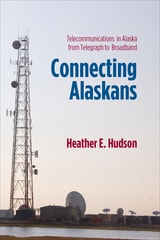
Connecting Alaskans
Telecommunications in Alaska from Telegraph to BroadbandHeather E. Hudson
University of Alaska Press, 2015
Connecting Alaskans tells the unique history of providing radio, television, phone, and Internet services to more than six hundred thousand square miles. It is a history of a place where military needs often trumped civilian ones, where ham radios offered better connections than telephone lines, and where television shows aired an entire day later than in the rest of the country.
Heather E. Hudson covers more than a century of successes while clearly explaining the connection problems still faced by remote communities today. Her comprehensive history is perfect for anyone interested in telecommunications technology and history, and she provides an important template for policy makers, rural communities, and developing countries struggling to develop their own twenty-first-century infrastructure.

Consumed
Food for a Finite PlanetSarah Elton
University of Chicago Press, 2013

Contested Airwaves
American Radio at Home and Abroad, 1914-1946Michael A. Krysko
University of Illinois Press, 2025
Controversial American-led radio initiatives sparked a kaleidoscope of conflicts and rivalries from the medium’s earliest days through the end of World War II. Michael A. Krysko explores how the medium engaged the knowledge, assumptions, and prejudices that fueled listeners’ and policymakers’ objections to foreign and unwelcome radio content.
Krysko considers Americans’ antagonism toward non-English language broadcasting; issues of identity, geography, and sovereignty that propelled opposition to Mexico’s “border blaster” stations; how a project aimed at helping Cajun-speaking listeners became a French-only celebration of Acadian culture; a failed initiative to teach English to Latin Americans via shortwave broadcasting; enduring US-Panamanian conflicts over the control of radio in and around the Panama Canal; and how farmers from across the Southwest protested a radio treaty’s perceived preferential treatment of Cuba. Paying particular attention to the act of listening, Krysko shows how these initiatives illuminated and solidified divisions rooted in identity, nationalism, and prejudice.
Clear and wide-ranging, Contested Airwaves reveals early radio’s place at the nexus of public programming, transnational relations, and its own evolution as a communication medium.
Continuing Professional Development
A practical approachJohn Lorriman
The Institution of Engineering and Technology, 1997
Continuous Time Controller Design
R. Balasubramanian
The Institution of Engineering and Technology, 1989
Control Circuits in Power Electronics
Practical issues in design and implementationMiguel Castilla
The Institution of Engineering and Technology, 2016
Control Engineering Solutions
A practical approachP. Albertos
The Institution of Engineering and Technology, 1997
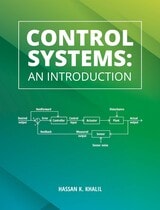
Control Systems
An IntroductionHassan K. Khalil
Michigan Publishing Services, 2023
Control Techniques Drives and Controls Handbook
Bill Drury
The Institution of Engineering and Technology, 2001

Control Theory
J.R. Leigh
The Institution of Engineering and Technology, 2004
Control Theory
A guided tourJames Ron Leigh
The Institution of Engineering and Technology, 2012
Control and Estimation of Dynamical Nonlinear and Partial Differential Equation Systems
Theory and applicationsGerasimos Rigatos
The Institution of Engineering and Technology, 2022
Control of Mechatronic Systems
Levent Güvenç
The Institution of Engineering and Technology, 2017
Control of Permanent Magnet Actuators for Robotics Applications
Chao Gong
The Institution of Engineering and Technology, 2025
Control of Prosthetic Hands
Challenges and emerging avenuesKianoush Nazarpour
The Institution of Engineering and Technology, 2021
Control, Communication, Monitoring and Protection of Smart Grids
Bidyadhar Subudhi
The Institution of Engineering and Technology, 2024
Control, Learning, and Optimization with Applications in Connected and Autonomous Vehicles
Weinan Gao
The Institution of Engineering and Technology, 2026

Control-Based Operating System Design
Alberto Leva
The Institution of Engineering and Technology, 2013
Control-oriented Modelling and Identification
Theory and practiceMarco Lovera
The Institution of Engineering and Technology, 2015

Convair B-58 Hustler
cold war nuclear bomberNico Braas
Amsterdam University Press, 2023
However, problems occurred during the development process and costs risings went so out of control that the whole project was almost cancelled a few times. Strategic Air Command was initially against ordering the B-58 for service, not only because of its complexity but also since they saw no advantage of a Mach 2 bomber over other types. Despite this the B-58 entered service at S.A.C. in 1960. It would have a relatively short operational career.
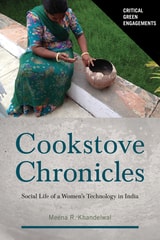
Cookstove Chronicles
Social Life of a Women’s Technology in IndiaMeena R. Khandelwal
University of Arizona Press, 2024
Based on anthropological research in Rajasthan, Cookstove Chronicles argues that the supposedly obsolete chulha persists because it offers women control over the tools needed to feed their families. Their continued use of old stoves alongside the new is not a failure to embrace new technologies but instead a strategy to maximize flexibility and autonomy. The chulha is neither the villain nor hero of this story. It produces particulate matter that harms people’s bodies, leaves soot on utensils and walls, and accelerates glacial melting and atmospheric warming. Yet it also depends on renewable biomass fuel and supports women’s autonomy as a local, do-it-yourself technology.
Meena Khandelwal, a feminist anthropologist, describes her collaboration with engineers, archaeologists, and others. She employs critical social theory and reflections from fieldwork to bring together research from a range of fields, including history, geography, anthropology, energy and environmental studies, public health, and science and technology studies (STS). In so doing she not only demystifies multidisciplinary research but also highlights the messy reality of actual behavior.
Cookstove Chronicles critically examines why, despite extensive development efforts, use of the chulha persists. It offers an important new framework for looking at development, technology, environmental change, and human behavior.
Cooling of Rotating Electrical Machines
Fundamentals, modelling, testing and designDavid Staton
The Institution of Engineering and Technology, 2022
Cooperative Intelligent Transport Systems
Towards high-level automated drivingMeng Lu
The Institution of Engineering and Technology, 2019
Coordination of Distributed Energy Resources in Microgrids
Optimisation, control, and hardware-in-the-loop validationYan Xu
The Institution of Engineering and Technology, 2022
Copying Machines
Taking Notes for the AutomatonCatherine Liu
University of Minnesota Press, 2000
Explores literary theory’s fear of and fascination with the mechanical.
Anxieties about fixing the absolute difference between the human being and the mechanical replica, the automaton, are as old as the first appearance of the machine itself. Exploring these anxieties and the efforts they prompted, this book opens a window on one of the most significant, if subtle, ideological battles waged on behalf of the human against the machine since the Enlightenment—one that continues in the wake of technological and conceptual progress today.
A sustained examination of the automaton as early modern machine and as a curious ancestor of the twentieth-century robot, Copying Machines offers extended readings of mechanistic images in the eighteenth century through the prism of twentieth-century commentary. In readings of texts by Lafayette, Molière, Laclos, and La Bruyère—and in a chapter on the eighteenth-century inventor of automatons, Jacques Vaucanson—Catherine Liu provides a fascinating account of ways in which the automaton and the preindustrial machine haunt the imagination of ancien régime France and structure key moments of the canonical literature and criticism of the period.Corrugated Horns for Microwave Antennas
P.J.B. Clarricoats
The Institution of Engineering and Technology, 1984
Creating Smart and Safe Manufacturing Environments
The role of innovation and safety managementWai Yie Leong
The Institution of Engineering and Technology, 2025
Creating a Vigorous Online Course
A Step-by-Step GuideBerlin Fang
Bridwell Press, 2026
Creating a Vigorous Online Course by Berlin Fang is a comprehensive, step-by-step guide for educators looking to build meaningful, engaging, and structurally sound online learning experiences. Drawing on decades of instructional design expertise and educational research, Fang bridges the gap between conceptual pedagogy and real-world teaching practices. The book is uniquely structured to walk educators through the entire course creation process—from planning and tool selection to assessment design, interaction strategies, and multimedia integration.
Unlike many overly technical or abstract resources, this book offers platform-agnostic guidance enriched with clear tasks, practical tips, checklists, and real examples. It emphasizes principles such as granularity, modular design, reusability, accessibility, and equivalence to in-person learning—all while respecting instructors' time and creativity.
Fang’s conversational tone and thoughtful analogies (like course design as translation or architecture) make complex ideas approachable, and his deep respect for both teachers and students is evident throughout. Whether you're teaching fully online, hybrid, HyFlex, or simply looking to digitize parts of your course, this book provides actionable strategies to craft student-centered experiences without sacrificing academic rigor.
An invaluable companion for K-12 educators, higher ed faculty, and instructional designers alike, Creating a Vigorous Online Course transforms course design from a technical burden into an empowering, iterative, and creative endeavor.
Critical Infrastructure Studies and Digital Humanities
Alan Liu
University of Minnesota Press, 2026
How digital humanities can shape and be shaped by the infrastructures that sustain our world
Critical Infrastructure Studies and Digital Humanities reimagines the digital humanities (DH) through the expanding field of critical infrastructure studies. Featuring voices from around the globe, this volume explores how DH builds on and extends theories and technologies of infrastructure that affect society, culture, and knowledge in different national and regional contexts. Examining DH’s own infrastructural genealogy, the contributors offer readers critical reflections and bold visions for the future as they address issues of environmentalism, decolonization, Indigenous sovereignty, multilingualism, labor justice, feminism, national development, and beyond from a variety of disciplinary perspectives embedded in concrete digital systems. Including innovative “infrastructure manifests,” the essays in this book illuminate how DH can both study and shape the systems that sustain culture, scholarship, and connection.
Contributors: Anne Beaulieu, U of Groningen; Kyle Booten, U of Connecticut; Ann Borda, U of Melbourne; Susan Brown, U of Guelph; Toby Burrows, U of Western Australia; Ashley Caranto Morford, Weber State U; Javier Cha, U of Hong Kong; Jing Chen, Nanjing U; Arianna Ciula, King’s College London; Maya Dodd, FLAME U, Pune, India; Martin Paul Eve, Birkbeck, U of London; Allan Gomez, Philly Community Wireless; Matthew N. Hannah, Purdue U; Matthew Hockenberry, Fordham U; Arun Jacob, U of Toronto; Mike Jones, U of Tasmania; Lucie Kolb, Basel Academy of Art and Design FHNW; Ian M. Miller, St. John’s U, New York; Sylvia K. Miller, Duke U; Sarah Montoya, Mellon Humanities Postdoctoral Fellow; Saumyaa Naidu, independent researcher; Sharika Parmar, FLAME U, Pune, India; Kush Patel, Srishti Manipal Academy of Higher Education, Bengaluru; Miriam Posner, UCLA; Puthiya Purayil Sneha, International Institute of Information Technology, Hyderabad; Paul Spence, King’s College London; Lik Hang Tsui, City U of Hong Kong; Deb Verhoeven, U of Alberta; Miguel Vieira, King’s College London; Devren Washington, Philly Community Wireless; Alex Wermer-Colan, Temple U and Philly Community Wireless; Darren Wershler, Concordia U; Grant Wythoff, Princeton U and Philly Community Wireless.
Retail e-book files for this title are screen-reader friendly with images accompanied by short alt text and/or extended descriptions.
Critique and the Digital
Edited by Erich Hörl, Nelly Y. Pinkrah, and Lotte Warnsholdt
Diaphanes, 2020
Critiquing Communication Innovation
New Media in a Multipolar WorldRolien Hoyng
Michigan State University Press, 2022
Cross-Layer Reliability of Computing Systems
Giorgio Di Natale
The Institution of Engineering and Technology, 2020
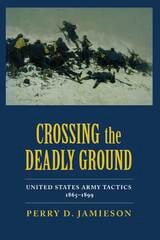
Crossing the Deadly Ground
United States Army Tactics, 1865–1899Perry D. Jamieson
University of Alabama Press, 2004
Attempts to answer difficult questions about battle tactics employed by the United States Army
Weapons improved rapidly after the Civil War, raising difficult questions about the battle tactics employed by the United States Army. The most fundamental problem was the dominance of the tactical defensive, when defenders protected by fieldworks could deliver deadly fire from rifles and artillery against attackers advancing in close-ordered lines. The vulnerability of these offensive forces as they crossed the so-called "deadly ground" in front of defensive positions was even greater with the improvement of armaments after the Civil War.
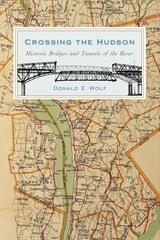
Crossing the Hudson
Historic Bridges and Tunnels of the RiverWolf, Donald
Rutgers University Press, 2010
Crossing the Hudson continues this story soon after the end of the war, in 1805, when the first bridge was completed. Donald E. Wolf simultaneously tracks the founding of the towns and villages along the water's edge and the development of technologies such as steam and internal combustion that demanded new ways to cross the river. As a result, innovative engineering was created to provide for these resources.
From hybrid, timber arch, and truss bridges on stone piers to long-span suspension and cantilevered bridges, railroad tunnels, and improvements in iron and steel technology, the construction feats that cross the Hudson represent technical elegance and physical beauty. Crossing the Hudson reveals their often multileveled stories--a history of where, why, when, and how these structures were built; the social, political, and commercial forces that influenced decisions to erect them; the personalities of the planners and builders; the unique connection between a builder and his bridge; and the design and construction techniques that turned mythical goals into structures of utility and beauty.

Cruiser HNLMS Tromp
Jantinus Mulder
Amsterdam University Press, 2023
Cryptography for Intelligent Healthcare Systems
Foundations and emerging architectures, Volume 1Agbotiname Lucky Imoize
The Institution of Engineering and Technology, 2026
Cryptography for Intelligent Healthcare Systems
Privacy, governance and deployment, Volume 2Agbotiname Lucky Imoize
The Institution of Engineering and Technology, 2026
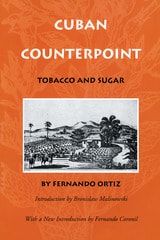
Cuban Counterpoint
Tobacco and SugarFernando Ortiz
Duke University Press, 1995
Ortiz presents his understanding of Cuban history in two complementary sections written in contrasting styles: a playful allegorical tale narrated as a counterpoint between tobacco and sugar and a historical analysis of their development as the central agricultural products of the Cuban economy. Treating tobacco and sugar both as agricultural commodities and as social characters in a historical process, he examines changes in their roles as the result of transculturation. His work shows how transculturation, a critical category Ortiz developed to grasp the complex transformation of cultures brought together in the crucible of colonial and imperial histories, can be used to illuminate not only the history of Cuba, but, more generally, that of America as well.
This new edition includes an introductory essay by Fernando Coronil that provides a contrapuntal reading of the relationship between Ortiz’s book and its original introduction by the renowned anthropologist Bronislaw Malinowski. Arguing for a distinction between theory production and canon formation, Coronil demonstrates the value of Ortiz’s book for anthropology as well as Cuban, Caribbean, and Latin American studies, and shows Ortiz to be newly relevant to contemporary debates about modernity, postmodernism, and postcoloniality.