Results by title
28167 books match the query 'History' and 1913 start with c
Cross and Creation
A Theological Introduction to Origen of AlexandriaMark E. Therrien
Catholic University of America Press, 2022
Cross and Cruciform in the Anglo-Saxon World
Studies to Honor the Memory of Timothy ReuterSARAH LARRATT KEEFER
West Virginia University Press, 2010
Cross and Cruciform in the Anglo-Saxon World: Studies to Honor the Memory of Timothy Reuter is edited by Sarah Larratt Keefer, Karen Louise Jolly, and Catherine E. Karkov and is the third and final volume of an ambitious research initiative begun in 1999 concerned with the image of the cross, showing how its very material form cuts across both the culture of a society and the boundaries of academic disciplines—history, archaeology, art history, literature, philosophy, and religion—providing vital insights into how symbols function within society. The flexibility, portability, and adaptability of the Anglo-Saxon understanding of the cross suggest that, in pre-Conquest England, at least, the linking of word, image, and performance joined the physical and spiritual, the temporal and eternal, and the earthly and heavenly in the Anglo-Saxon imaginative landscape.
This volume is divided into three sections. The first section of the collection focuses on representations of “The Cross: Image and Emblem,” with contributions by Michelle P. Brown, David A. E. Pelteret, and Catherine E. Karkov. The second section, “The Cross: Meaning and Word,” deals in semantics and semeology with essays by Éamonn Ó Carragáin, Helen Damico, Rolf Bremmer, and Ursula Lenker. The third section of the book, “The Cross: Gesture and Structure,” employs methodologies drawn from archaeology, new media, and theories of rulership to develop new insights into subjects as varied as cereal production, the little-known Nunburnholme Cross, and early medieval concepts of political power.
Cross and Cruciform in the Anglo-Saxon World: Studies to Honor the Memory of Timothy Reuter is a major collection of new research, completing the publication series of the Sancta Crux/Halig Rod project. Cross and Culture in Anglo-Saxon England: Studies in Honor of George Hardin Brown, Volume 2 in this series, remains available from West Virginia University Press.
Cross and Culture in Anglo-Saxon England
Studies in Honor of George Hardin BrownKAREN L. JOLLY
West Virginia University Press, 2008
As Volume One in the Sancta Crux/Halig Rod series, this collection of new research offers fascinating glimpses into how the way the cross, the central image of Christianity in the Anglo-Saxon period, was textualized, reified, visualized, and performed. The cross in early medieval England was so ubiquitous it became invisible to the modern eye, and yet it played an innovative role in Anglo-Saxon culture, medicine, and popular practice. It represented one of the most powerful relics, emblems, and images in medieval culture because it could be duplicated in many forms and was accessible to every layer of society. The volume speaks to critical issues of cultural interpretation for Anglo-Saxonists, medievalists of all disciplines, and those interested in cultural studies in general.
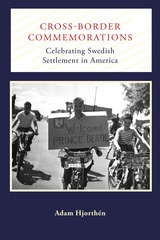
Cross-Border Commemorations
Celebrating Swedish Settlement in AmericaAdam Hjorthén
University of Massachusetts Press, 2018
Focusing on two celebrations of Swedish settlement in America—the 1938 New Sweden Tercentenary and the 1948 Swedish Pioneer Centennial—Hjorthén examines a wide variety of sources to demonstrate how cultural leaders, politicians, and businessmen used these events to promote international relations between the United States and Sweden during times of great geopolitical transformation. Cross-Border Commemorations argues that scholarship on public commemoration should expand beyond national borders and engage the shared and contested meanings of history across local, national, and transnational contexts.
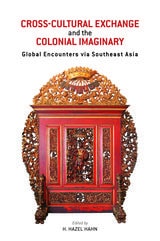
Cross-Cultural Exchange and the Colonial Imaginary
Global Encounters via Southeast AsiaEdited by H. Hazel Hahn
National University of Singapore Press, 2019
Crosscurrents Along the Colorado
The Impact of Government Policy on the Quechan IndiansRobert L. Bee
University of Arizona Press, 1981
This intriguing book, original published in 1981, considers the Quechans as a case history of the frequent discrepancy between benevolently phrased national intention and exploitative local action. The story of their changing life is traced through the anti-poverty programs of the 1960s and '70s—showing how the implementation of these programs was affected by features of community life that had evolved over preceding decades—and culminates in the Quechans’ forging a self-sustaining though fragile economy despite their status as Federal wards.
This book is more than a product of archival research. Author Robert Bee attended Quechan public gatherings, canvassed the community, and conducted intensive interviews over a thirteen-year period to attain an intimate understanding of this people’s perseverance in the face of age-old frustration. In presenting their story, Bee focuses on the behavior and actions of individuals thrust into key decision-making roles to provide more than just abstract analysis. What emerges is not only a unique ethnohistorical approach to economic development, but a model history of a modern tribe.
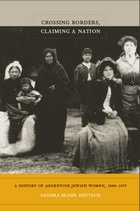
Crossing Borders, Claiming a Nation
A History of Argentine Jewish Women, 1880–1955Sandra McGee Deutsch
Duke University Press, 2010
Drawing on extensive archival research and original oral histories, Deutsch tells the stories of individual women, relating their sentiments and experiences as both insiders and outsiders to state formation, transnationalism, and cultural, political, ethnic, and gender borders in Argentine history. As agricultural pioneers and film stars, human rights activists and teachers, mothers and doctors, Argentine Jewish women led wide-ranging and multifaceted lives. Their community involvement—including building libraries and secular schools, and opposing global fascism in the 1930s and 1940s—directly contributed to the cultural and political lifeblood of a changing Argentina. Despite their marginalization as members of an ethnic minority and as women, Argentine Jewish women formed communal bonds, carved out their own place in society, and ultimately shaped Argentina’s changing pluralistic culture through their creativity and work.
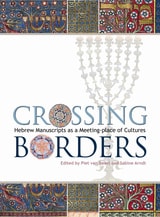
Crossing Borders
Hebrew Manuscripts as a Meeting-place of CulturesEdited by Piet van Boxel and Sabine Arndt
Bodleian Library Publishing, 2010
Crossing Borders tells the intriguing but largely unfamiliar story of the exchange of culture and knowledge between Jews and non-Jews in the Muslim and Christian worlds during the late Middle Ages as part of the preparation of Hebrew manuscripts. The book is composed of ten narratives, each of which brings to light a different aspect of Jewish life in a non-Jewish medieval society—highlighting the practical cooperation, social interaction, and religious toleration that was surprisingly common between the groups involved in the early enterprise of book production.
Alongside the narratives, Crossing Borders is beautifully illustrated with images from the Hebrew holdings at the Bodleian Library—one of the largest and most important collections of Hebrew manuscripts worldwide. The art includes Christian codex fragments from the third century, a copy of Moses Maimonides’ Mishneh Torah signed by Maimonides himself, a thirteenth century German Jewish prayer book, and lavishly illuminated Spanish Bible manuscripts from the fifteenth century. This exquisitely illustrated book takes a fascinating look at the often-ignored role of Jews in the written transmission of culture and science throughout medieval Europe.
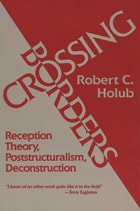
Crossing Borders
Reception Theory, Poststructuralism, DeconstructionRobert C. Holub
University of Wisconsin Press, 1992
Robert C. Holub critically investigates the histories of reception theory, poststructuralism, and deconstruction in postwar Germany and the United States. He looks at how imported theories assume a place in the political discourse of a country, and how indigenous intellectual traditions and prejudices affect, modify, or even distort foreign theories.
Holub addresses many timely questions: Why did reception theory, so prominent in Germany in the 1960s and 1970s, fail to have an impact on American academics until the 1980s? Why did postructuralism, and specifically the writings of Michel Foucault, fail to find a home in German academia while becoming an important theoretical voice in the United States? How did deconstruction, originally considered by American scholars as merely a sophisticated tool for analysis, get taken up by leftists who argued for an affinity between the critique of language and the critique of capitalism? And finally, how have American intellectuals responded to revelations of fascism in the pasts of Paul de Man and Martin Heidegger?
Crossing Borders effectively demonstrates the extent to which theoretical work needs to be understood in cultural, intellectual, and institutional contexts. Holub argues that the praxis of theories is determined not only by their content and style, but also by the environment in which they must function. The success of a transplanted theory, he contends, is due less to its inherent merits than to the hospitability of the environment on to which it is grafted.
Crossing Cultures
Essays in the Displacement of Western CivilizationDaniel Segal
University of Arizona Press, 1992
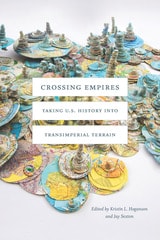
Crossing Empires
Taking U.S. History into Transimperial TerrainKristin L. Hoganson and Jay Sexton, editors
Duke University Press, 2020
Contributors. Ikuko Asaka, Oliver Charbonneau, Genevieve Clutario, Anne L. Foster, Julian Go, Michel Gobat, Julie Greene, Kristin L. Hoganson, Margaret D. Jacobs, Moon-Ho Jung, Marc-William Palen, Nicole M. Phelps, Jay Sexton, John Soluri, Stephen Tuffnell

Crossing Great Divides
City and Country in Environmental and Political DisorderJohn D. Fairfield
Temple University Press, 2024
Conventional urban environmental reform has made modern city life possible, but it has done little to limit the despoliation of distant places. Nevertheless, the successes of urban environmental reform remind us of what is possible.
John Fairfield concludes with a case study of Phoenix, Arizona to demonstrate this dysfunctional relationship between city and country while developing a sympathetic critique of the Green New Deal. He suggests how we might bridge the “great divide” as we face the daunting challenges the twenty-first century is pressing upon us.
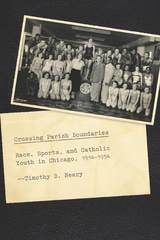
Crossing Parish Boundaries
Race, Sports, and Catholic Youth in Chicago, 1914-1954Timothy B. Neary
University of Chicago Press, 2016
In this book, Timothy B. Neary reveals the history of Bishop Bernard Sheil’s Catholic Youth Organization (CYO), which brought together thousands of young people of all races and religions from Chicago’s racially segregated neighborhoods to take part in sports and educational programming. Tens of thousands of boys and girls participated in basketball, track and field, and the most popular sport of all, boxing, which regularly filled Chicago Stadium with roaring crowds. The history of Bishop Sheil and the CYO shows a cosmopolitan version of American Catholicism, one that is usually overshadowed by accounts of white ethnic Catholics aggressively resisting the racial integration of their working-class neighborhoods. By telling the story of Catholic-sponsored interracial cooperation within Chicago, Crossing Parish Boundaries complicates our understanding of northern urban race relations in the mid-twentieth century.
Crossing Segregated Boundaries
Remembering Chicago School DesegregationDionne Danns
Rutgers University Press, 2021
Crossing Waters, Crossing Worlds
The African Diaspora in Indian CountryTiya Miles and Sharon P. Holland, eds.
Duke University Press, 2006
Essays range from a close reading of the 1838 memoirs of a black and Native freewoman to an analysis of how Afro-Native intermarriage has impacted the identities and federal government classifications of certain New England Indian tribes. One contributor explores the aftermath of black slavery in the Choctaw and Chickasaw nations, highlighting issues of culture and citizenship. Another scrutinizes the controversy that followed the 1998 selection of a Miss Navajo Nation who had an African American father. A historian examines the status of Afro-Indians in colonial Mexico, and an ethnographer reflects on oral histories gathered from Afro-Choctaws. Crossing Waters, Crossing Worlds includes evocative readings of several of Toni Morrison’s novels, interpretations of plays by African American and First Nations playwrights, an original short story by Roberta J. Hill, and an interview with the Creek poet and musician Joy Harjo. The Native American scholar Robert Warrior develops a theoretical model for comparative work through an analysis of black and Native intellectual production. In his afterword, he reflects on the importance of the critical project advanced by this volume.
Contributors. Jennifer D. Brody, Tamara Buffalo, David A. Y. O. Chang, Robert Keith Collins, Roberta J. Hill, Sharon P. Holland, ku'ualoha ho’omnawanui, Deborah E. Kanter, Virginia Kennedy, Barbara Krauthamer, Tiffany M. McKinney, Melinda Micco, Tiya Miles, Celia E. Naylor, Eugene B. Redmond, Wendy S. Walters, Robert Warrior
Crossing over the Line
Legislating Morality and the Mann ActDavid J. Langum
University of Chicago Press, 1994
This book is the first history of the Mann Act's often bizarre career, from its passage to the amendment that finally laid it low. In David J. Langum's hands, the story of the Act becomes an entertaining cautionary tale about the folly of legislating private morality.
Langum recounts the colorful details of numerous court cases to show how enforcement of the Act mirrored changes in America's social attitudes. Federal prosecutors became masters in the selective use of the Act: against political opponents of the government, like Charlie Chaplin; against individuals who eluded other criminal charges, like the Capone mobster "Machine Gun" Jack McGurn; and against black men, like singer Chuck Berry and boxer Jack Johnson, who dared to consort with white women. The Act engendered a thriving blackmail industry and was used by women like Frank Lloyd Wright's wife to extort favorable divorce settlements.
"Crossing over the Line is a work of scholarship as wrought by a civil libertarian, and the text . . . sizzles with the passion of an ardent believer in real liberty under reasonable laws."—Jonathan Kirsch, Los Angeles Times
Crossing the Aisle
How Bipartisanship Brought Tennessee to the Twenty-First Century and Could Save AmericaKeel Hunt
Vanderbilt University Press, 2018
The Tennessee story, as the Pulitzer Prize–winning author Jon Meacham observes in his foreword to this book, offers striking examples of bipartisan cooperation on many policy fronts—and a mode of governing that provides lessons for America in this frustrating era of partisan stalemate.
For more on Crossing the Aisle and author Keel Hunt, visit KeelHunt.com.
Crossing the Aisle
How Bipartisanship Brought Tennessee to the Twenty-First Century and Could Save AmericaKeel Hunt
Vanderbilt University Press, 2018
The Tennessee story, as the Pulitzer Prize–winning author Jon Meacham observes in his foreword to this book, offers striking examples of bipartisan cooperation on many policy fronts—and a mode of governing that provides lessons for America in this frustrating era of partisan stalemate.
For more on Crossing the Aisle and author Keel Hunt, visit KeelHunt.com.
Crossing the Border
A Free Black Community in CanadaSharon A. Roger Hepburn
University of Illinois Press, 2007
How formerly enslaved people found freedom and built community in Ontario
In 1849, the Reverend William King and fifteen once-enslaved people he had inherited founded the Canadian settlement of Buxton on Ontario land set aside for sale to Blacks. Though initially opposed by some neighboring whites, Buxton grew into a 700-person agricultural community that supported three schools, four churches, a hotel, a lumber mill, and a post office.
Sharon A. Roger Hepburn tells the story of the settlers from Buxton’s founding of through its first decades of existence. Buxton welcomed Black men, woman, and children from all backgrounds to live in a rural setting that offered benefits of urban life like social contact and collective security. Hepburn’s focus on social history takes readers inside the lives of the people who built Buxton and the hundreds of settlers drawn to the community by the chance to shape new lives in a country that had long represented freedom from enslavement.
Crossing the Borders
New Methods and Techniques in the Study of Archaeological Materials from the CaribbeanEdited by Corinne L. Hofman, Menno Hoogland, and Annelou L. van Gijn
University of Alabama Press, 2008
Crossing the Boundaries of Life
Günter Blobel and the Origins of Molecular Cell BiologyKarl S. Matlin
University of Chicago Press, 2022
The difficulty of reconciling chemical mechanisms with the functions of whole living systems has plagued biologists since the development of cell theory in the nineteenth century. As Karl S. Matlin argues in Crossing the Boundaries of Life, it is no coincidence that this longstanding knot of scientific inquiry was loosened most meaningfully by the work of a cell biologist, the Nobel laureate Günter Blobel. In 1975, using an experimental setup that did not contain any cells at all, Blobel was able to target newly made proteins to cell membrane vesicles, enabling him to theorize how proteins in the cell distribute spatially, an idea he called the signal hypothesis. Over the next twenty years, Blobel and other scientists were able to dissect this mechanism into its precise molecular details. For elaborating his signal concept into a process he termed membrane topogenesis—the idea that each protein in the cell is synthesized with an "address" that directs the protein to its correct destination within the cell—Blobel was awarded the Nobel Prize in Physiology or Medicine in 1999.
Matlin argues that Blobel’s investigative strategy and its subsequent application addressed a fundamental unresolved dilemma that had bedeviled biology from its very beginning—the relationship between structure and function—allowing biology to achieve mechanistic molecular explanations of biological phenomena. Crossing the Boundaries of Life thus uses Blobel’s research and life story to shed light on the importance of cell biology for twentieth-century science, illustrating how it propelled the development of adjacent disciplines like biochemistry and molecular biology.
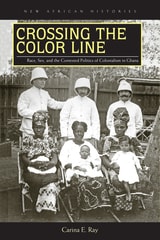
Crossing the Color Line
Race, Sex, and the Contested Politics of Colonialism in GhanaCarina E. Ray
Ohio University Press, 2015
Winner of the 2017 Aidoo-Snyder Book Prize
Winner of the 2016 American Historical Association’s Wesley-Logan Prize in African diaspora
Finalist for the 2016 Fage and Oliver Prize from the African Studies Association of the UK
Interracial sex mattered to the British colonial state in West Africa. In Crossing the Color Line, Carina E. Ray goes beyond this fact to reveal how Ghanaians shaped and defined these powerfully charged relations. The interplay between African and European perspectives and practices, argues Ray, transformed these relationships into key sites for consolidating colonial rule and for contesting its hierarchies of power. With rigorous methodology and innovative analyses, Ray brings Ghana and Britain into a single analytic frame to show how intimate relations between black men and white women in the metropole became deeply entangled with those between black women and white men in the colony in ways that were profoundly consequential.
Based on rich archival evidence and original interviews, the book moves across different registers, shifting from the micropolitics of individual disciplinary cases brought against colonial officers who “kept” local women to transatlantic networks of family, empire, and anticolonial resistance. In this way, Ray cuts to the heart of how interracial sex became a source of colonial anxiety and nationalist agitation during the first half of the twentieth century.
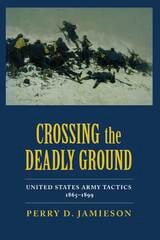
Crossing the Deadly Ground
United States Army Tactics, 1865–1899Perry D. Jamieson
University of Alabama Press, 2004
Attempts to answer difficult questions about battle tactics employed by the United States Army
Weapons improved rapidly after the Civil War, raising difficult questions about the battle tactics employed by the United States Army. The most fundamental problem was the dominance of the tactical defensive, when defenders protected by fieldworks could deliver deadly fire from rifles and artillery against attackers advancing in close-ordered lines. The vulnerability of these offensive forces as they crossed the so-called "deadly ground" in front of defensive positions was even greater with the improvement of armaments after the Civil War.
Crossing the Divide
Representations of Deafness in BiographyRachel M. Hartig
Gallaudet University Press, 2006
This remarkable volume examines the process by which three deaf, French biographers from the 19th and 20th centuries attempted to cross the cultural divide between deaf and hearing worlds through their work. The very different approach taken by each writer sheds light on determining at what point an individual’s assimilation into society endanger his or her sense of personal identity.
Author Hartig begins by assessing the publications of Jean-Ferdinand Berthier (1803-1886). Berthier wrote about Auguste Bébian, Abbé de l’Epée, and Abbé Sicard, all of whom taught at the National Institute for the Deaf in Paris. Although Berthier presented compelling portraits of their entire lives, he paid special attention to their political and social activism, his main interest.
Yvonne Pitrois (1880-1937) pursued her particular interest in the lives of deaf-blind people. Her biography of Helen Keller focused on her subject’s destiny in conjunction with her unique relationship with Anne Sullivan. Corinne Rocheleau-Rouleau (1881-1963) recounted the historical circumstances that led French-Canadian pioneer women to leave France. The true value of her work resides in her portraits of these pioneer women: maternal women, warriors, religious women, with an emphasis on their lives and the choices they made.
Crossing the Divide reveals clearly the passion these biographers shared for narrating the lives of those they viewed as heroes of an emerging French deaf community. All three used the genre of biography not only as a means of external exploration but also as a way to plumb their innermost selves and to resolve ambivalence about their own deafness.
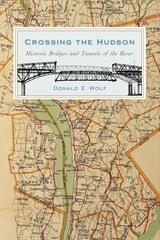
Crossing the Hudson
Historic Bridges and Tunnels of the RiverWolf, Donald
Rutgers University Press, 2010
Crossing the Hudson continues this story soon after the end of the war, in 1805, when the first bridge was completed. Donald E. Wolf simultaneously tracks the founding of the towns and villages along the water's edge and the development of technologies such as steam and internal combustion that demanded new ways to cross the river. As a result, innovative engineering was created to provide for these resources.
From hybrid, timber arch, and truss bridges on stone piers to long-span suspension and cantilevered bridges, railroad tunnels, and improvements in iron and steel technology, the construction feats that cross the Hudson represent technical elegance and physical beauty. Crossing the Hudson reveals their often multileveled stories--a history of where, why, when, and how these structures were built; the social, political, and commercial forces that influenced decisions to erect them; the personalities of the planners and builders; the unique connection between a builder and his bridge; and the design and construction techniques that turned mythical goals into structures of utility and beauty.
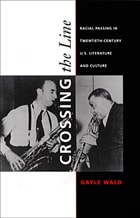
Crossing the Line
Racial Passing in Twentieth-Century U.S. Literature and CultureGayle Wald
Duke University Press, 2000
Wald begins her reading of twentieth-century passing narratives by analyzing works by African American writers James Weldon Johnson, Jessie Fauset, and Nella Larsen, showing how they use the “passing plot” to explore the negotiation of identity, agency, and freedom within the context of their protagonists' restricted choices. She then examines the 1946 autobiography Really the Blues, which details the transformation of Milton Mesirow, middle-class son of Russian-Jewish immigrants, into Mezz Mezzrow, jazz musician and self-described “voluntary Negro.” Turning to the 1949 films Pinky and Lost Boundaries, which imagine African American citizenship within class-specific protocols of race and gender, she interrogates the complicated representation of racial passing in a visual medium. Her investigation of “post-passing” testimonials in postwar African American magazines, which strove to foster black consumerism while constructing “positive” images of black achievement and affluence in the postwar years, focuses on neglected texts within the archives of black popular culture. Finally, after a look at liberal contradictions of John Howard Griffin’s 1961 auto-ethnography Black Like Me, Wald concludes with an epilogue that considers the idea of passing in the context of the recent discourse of “color blindness.”
Wald’s analysis of the moral, political, and theoretical dimensions of racial passing makes Crossing the Line important reading as we approach the twenty-first century. Her engaging and dynamic book will be of particular interest to scholars of American studies, African American studies, cultural studies, and literary criticism.
Crossing the Postmodern Divide
Albert Borgmann
University of Chicago Press, 1993
"[This] thoughtful book is the first remotely realistic map out of the post modern labyrinth."—Joseph Coates, The Chicago Tribune
"Rather astoundingly large-minded vision of the nature of humanity, civilization and science."—Kirkus Reviews
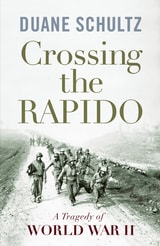
Crossing the Rapido
A Tragedy of World War IIDuane Schultz
Westholme Publishing, 2010
The True Story of an Impossible Mission During the Liberation of Italy
"World War II history writing at its best.” —Dallas Morning News
“Schultz convey stories of individual courage and fear. He presents the Rapido crossing as part of an experience that changed lives utterly.” —Publishers Weekly
“Well written, superbly documented and containing many helpful illustrations and maps, this fine book will appeal to military history enthusiasts of all ages.” —Read@MPL (Milwaukee Public Library)
“Duane Schultz has written another powerful account of the Second World War.” —Daily News, Iron Mountain, Michigan
“A fast-paced, dramatic account of World War II combat.”—Global War StudiesThe Rapido River was the last natural barrier between General Mark W. Clark’s Fifth U.S. Army and Rome. Ignoring intelligence reports that the Germans had significant forces protecting the opposite side of the river, Clark ordered the 36th Division to make a nighttime crossing on January 20, 1944. The division, already coming through some of the heaviest fighting in Italy, knew they could not succeed: they had to cross a fast-flowing river at night in bitter cold and face one of the strongest, most formidable German defensive lines in Europe, full of minefields, veteran troops, and withering artillery and mortar fire. Once in the water, men in full field gear were borne away by the current or vanished in massive explosions. The few who managed to reach the other side found themselves pinned down unable to move. Soldiers died by the hundreds, yet the stunned survivors who fell back to the launch site were ordered to attack again, this time in daylight. Of the 4,000 men who attempted the crossing, more than half did not return. General Clark never accepted blame for ordering the assault despite the numerous warnings he received from both British and American commanders. Although they were decimated, the division went on to lead a key surprise attack that opened Rome to Allied forces, and ultimately fought in France, where they had the distinction of capturing Hermann Goering and Field Marshal Gerd von Rundstedt.
In Crossing the Rapido: A Tragedy of World War II, Duane Schultz follows the action at the ground level using survivors’ interviews and army documents to tell the story of one division’s sacrifice in war. In doing so, he demonstrates that the American soldier will face the greatest odds without protest, but expects those in command to share any failure or success.“Those of us who were present will always remember the men of the 36th, climbing silently in the night behind the enemy, armed with little but their American competence and a personal faith in their quiet, retiring general who had never let them down. If Generals Alexander and Clark received the key to the city of Rome, it was General Walker who turned the key and handed it to them.” —Eric Sevareid, reporting from Italy during World War II
“I have never seen so many dead as on that day.” —John Huston, Academy Award winning director during his wartime filming of The Battle of San Pietro
Crossing the Rift
Resources, Settlements Patterns and Interaction in the Wadi ArabahP. Bienkwoski
Council for British Research in the Levant, 2006
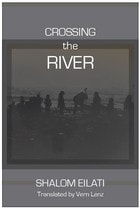
Crossing the River
Shalom Eilati
University of Alabama Press, 2009
A child’s journey through war, memory, and survival—told with haunting clarity and poetic grace.
Crossing the River is a personal memoir—and more. Against the backdrop of Lithuania’s occupation—first by the Red Army, next by the Germans, and then again by the Russians—it is a story reflected through the prism of a sharp-eyed young child, Shalom Eilati. His story starts in the occupied Kovno Ghetto and ends with his flight across the Soviet border, through Poland and Germany and finally, his arrival in Palestine.
The adult survivor, while recalling the terrorized child that he was and how he then perceived the adult world, also takes stock of his present life. Throughout the memoir, Eilati attempts to reconcile his present life as a husband, father, scientist, and writer, with the images, feelings, and thoughts from the past that have left an indelible mark on his life and that continue to haunt him.
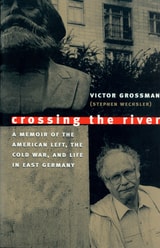
Crossing the River
A Memoir of the American Left, the Cold War, and Life in East GermanyVictor Grossman
University of Massachusetts Press, 2003
What could possibly impel a relatively privileged twenty-four-year-old American-serving in the U.S. Army in Germany in 1952 to swim across the Danube River to what was then referred to as the Soviet Zone? How are we to understand his decision to forsake the land of his birth and build a new life in the still young German Democratic Republic? These are the questions at the core of this memoir by Victor Grossman, who was born Stephen Wechsler but changed his name after defecting to the GDR.
A child of the Depression, Grossman witnessed firsthand the dislocations wrought by the collapse of the U.S. economy during the 1930s. Widespread unemployment and poverty, CIO sit-down strikes, and the fight to save Republican Spain from fascism-all made an indelible impression as he grew up in an environment that nurtured a commitment to left-wing causes. He continued his involvement with communist activities as a student at Harvard in the late 1940s and after graduation, when he took jobs in two factories in Buffalo, New York, and tried to organize their workers.
Fleeing McCarthyite America and potential prosecution, Grossman worked in the GDR with other Western defectors and eventually became, as he notes, the “only person in the world to attend Harvard and Karl Marx universities.” Later, he was able to establish himself as a freelance journalist, lecturer, and author. Traveling throughout East Germany, he evaluated the failures as well as the successes of the GDR's “socialist experiment.” He also recorded his experiences, observations, and judgments of life in East Berlin after reunification, which failed to bring about the post-Communist paradise so many had expected.
Written with humor as well as candor, Crossing the River provides a rare look at the Cold War from the other side of the ideological divide.
Mark Solomon, a distinguished historian of the American left, provides a historical afterword that places Grossman's experiences in a larger Cold War context.

Crossing the Street in Hanoi
Teaching and Learning About VietnamCarol Wilder
Intellect Books, 2013
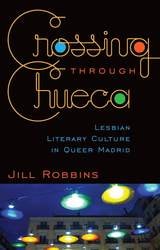
Crossing through Chueca
Lesbian Literary Culture in Queer MadridJill Robbins
University of Minnesota Press, 2010
Jill Robbins traverses the various literary spaces of the city associated with queer culture, in particular the gay barrio of Chueca, revealing how it is a product of interrelations—a site crisscrossed by a multiplicity of subjects who constitute it as a queer space through the negotiation of their sexual, racial, gender, and class identities. Robbins recognizes Chueca as a political space as well, a refuge from homophobia. She also shows how the spatial and literary practices of Chueca relate to economic issues.
In examining how women’s sexual identities have become visible in and through the Chueca phenomenon, this work is a revealing example of transnational queer studies within the broader Western discussion on gender and sexuality.

Crossings in Text and Textile
Katherine Joslin
University of New Hampshire Press, 2015
A true “state of the field” work, Crossings in Text and Textile charts new scholarly ground at the nexus between fashion, textiles, and literature, appealing to a broad interdisciplinary audience of scholars and students.
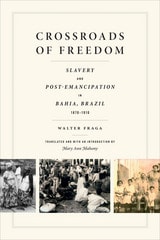
Crossroads of Freedom
Slaves and Freed People in Bahia, Brazil, 1870-1910Walter Fraga
Duke University Press, 2016

Crow's Range
An Environmental History Of The Sierra NevadaDavid Beesley
University of Nevada Press, 2007
John Muir called it the "Range of Light, the most divinely beautiful of all the mountain chains I’ve ever seen." The Sierra Nevada—a single unbroken mountain range stretching north to south over four hundred miles, best understood as a single ecosystem but embracing a number of environmental communities—has been the site of human activity for millennia. From the efforts of ancient Native Americans to encourage game animals by burning brush to create meadows to the burgeoning resort and residential development of the present, the Sierra has endured, and often suffered from, the efforts of humans to exploit its bountiful resources for their own benefit. Historian David Beesley examines the history of the Sierra Nevada from earliest times, beginning with a comprehensive discussion of the geologic development of the range and its various ecological communities. Using a wide range of sources, including the records of explorers and early settlers, scientific and government documents, and newspaper reports, Beesley offers a lively and informed account of the history, environmental challenges, and political controversies that lie behind the breathtaking scenery of the Sierra. Among the highlights are discussions of the impact of the Gold Rush and later mining efforts, as well as the supporting industries that mining spawned, including logging, grazing, water-resource development, market hunting, urbanization, and transportation; the politics and emotions surrounding the establishment of Yosemite and other state and national parks; the transformation of the Hetch Hetchy into a reservoir and the desertification of the once-lush Owens Valley; the roles of the Forest Service, Park Service, and other regulatory agencies; the consequences of the fateful commitment to wildfire suppression in Sierran forests; and the ever-growing impact of tourism and recreational use. Through Beesley’s wide-ranging discussion, John Muir’s "divinely beautiful" range is revealed in all its natural and economic complexity, a place that at the beginning of the twenty-first century is in grave danger of being loved to death. Available in hardcover and paperback.
Crow-Omaha
New Light on a Classic Problem of Kinship AnalysisEdited by Thomas R. Trautmann and Peter M. Whiteley
University of Arizona Press, 2012
This volume examines the Crow-Omaha problem from a variety of perspectives—historical, linguistic, formalist, structuralist, culturalist, evolutionary, and phylogenetic. It focuses on the regions where Crow-Omaha systems occur: Native North America, Amazonia, West Africa, Northeast and East Africa, aboriginal Australia, northeast India, and the Tibeto-Burman area. The international roster of authors includes leading experts in their fields.
The book offers a state-of-the-art assessment of Crow-Omaha kinship and carries forward the work of the landmark volume Transformations of Kinship, published in 1998. Intended for students and scholars alike, it is composed of brief, accessible chapters that respect the complexity of the ideas while presenting them clearly. The work serves as both a new benchmark in the explanation of kinship systems and an introduction to kinship studies for a new generation of students.
Series Note: Formerly titled Amerind Studies in Archaeology, this series has recently been expanded and retitled Amerind Studies in Anthropology to incorporate a high quality and number of anthropology titles coming in to the series in addition to those in archaeology.
Crowfield (Af Hj-31)
A Unique Paleoindian Fluted Point Site from Southwestern OntarioD. Brian Deller and Christopher J. Ellis with contributions by James R. Keron and Roger H. King and a foreword by Henry T. Wright
University of Michigan Press, 2011
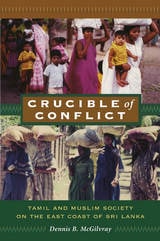
Crucible of Conflict
Tamil and Muslim Society on the East Coast of Sri LankaDennis B. McGilvray
Duke University Press, 2008
McGilvray explores the densely populated farming and fishing settlements in this coastal zone, focusing on the Tamil and Muslim inhabitants of an agricultural town in the Ampara District. Drawing on fieldwork conducted over more than thirty years as well as on Tamil and Dutch historical sources, he describes the regional dominance of a non-Brahmin matrilineal caste of thirteenth-century Kerala origin. The Muslims, who acquired dowry lands and matrilineal family patterns through local intermarriages, have in the twentieth century emerged from Hindu caste domination and are now the Tamil Hindus’ political and economic equals. Crucible of Conflict offers a uniquely detailed account of Muslim kinship and community organization in eastern Sri Lanka, as well as a comparison of Tamil and Muslim practices and institutions. McGilvray concludes with an analysis of the interethnic tensions and communal violence that have intensified in recent years.
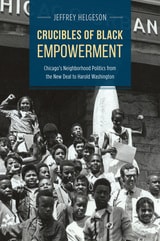
Crucibles of Black Empowerment
Chicago's Neighborhood Politics from the New Deal to Harold WashingtonJeffrey Helgeson
University of Chicago Press, 2014
In Crucibles of Black Empowerment, Jeffrey Helgeson recounts the rise of African American political power and activism from the 1930s onward, revealing how it was achieved through community building. His book tells stories of the housewives who organized their neighbors, building tradesmen who used connections with federal officials to create opportunities in a deeply discriminatory employment sector, and the social workers, personnel managers, and journalists who carved out positions in the white-collar workforce. Looking closely at black liberal politics at the neighborhood level in Chicago, Helgeson explains how black Chicagoans built the networks that eventually would overthrow the city’s seemingly invincible political machine.
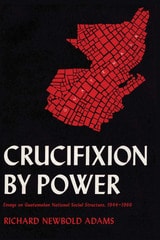
Crucifixion by Power
Essays on Guatemalan National Social Structure, 1944–1966By Richard Newbold Adams
University of Texas Press, 1970
"Quite the contrary of old generals, nations do not fade away; they have to be killed."
Richard Adams' view of the nation as a basic social unit is central to this pioneering study in social anthropology. The result of many years of research in Guatemala, this volume utilizes the author's fieldwork as well as that of his colleagues and students to construct a set of concepts explaining how Guatemala reached the difficult circumstances in which it found itself in the 1960s—and still finds itself today.
With the breakup of the great colonial empires after the Second World War, the curtain that had been drawn around Marx by Western social scientists fell away; countries once called "primitive" began to be seen as "underdeveloped," while those once thought to be stable and advanced began to appear predatory and conflict ridden. The theme of Mr. Adams' book is that, in the world as a whole, there is a structural escalation of power concentration.
The author believes that Guatemala, as a small nation within the general domain of the United States, is caught in the developmental hinterland of that powerful neighbor and that the United States, within its own capitalistic development pattern and in competition with other leading world powers, cannot allow the smaller nation to resolve its own political and social problems. Thus Guatemala, he declares, finds itself crucified by unyielding and uncontrollable power plays beyond its national borders.
As a background for the study of specific sectors in Guatemalan society, the author discusses the theoretical nature of complex societies. He shows the cohesive force of a nation to be its power structure and then examines mechanisms whereby this structure is kept intact in Guatemala. Special emphasis is given to the lack of access to power by the poor, the development of the military, the organization of power within the Catholic Church, and the expansion of upper-sector interest groups.
While there was important growth in the power of upper-sector Guatemalan society over the two decades of the study, there was no comparable increase in distribution; the position of the lower sectors within the power structure has therefore changed very slightly. "Development," then, in Guatemala was principally in terms of what was advantageous to the major powers.
Crude Chronicles
Indigenous Politics, Multinational Oil, and Neoliberalism in EcuadorSuzana Sawyer
Duke University Press, 2004
Through her rich ethnography of indigenous marches, demonstrations, occupations, and negotiations, Sawyer tracks the growing sophistication of indigenous politics as Indians subverted, re-deployed, and, at times, capitulated to the dictates and desires of a transnational neoliberal logic. At the same time, she follows the multiple maneuvers and discourses that the multinational corporation and the Ecuadorian state used to circumscribe and contain indigenous opposition. Ultimately, Sawyer reveals that indigenous struggles over land and oil operations in Ecuador were as much about reconfiguring national and transnational inequality—that is, rupturing the silence around racial injustice, exacting spaces of accountability, and rewriting narratives of national belonging—as they were about the material use and extraction of rain-forest resources.
Cruel Destiny and The White Negress
Two Novels by Cléante Desgraves ValcinAdam Nemmers
Rutgers University Press, 2024
Cruel Destiny (1929) tells the tragic love story of Armand and Adeline, drawn together by a magnetic attraction, yet kept apart by a dark family secret. Depicting the heavy expectations placed upon women in Haiti’s elite society, it also explores the troubled and twisted relationships between the Haitians and their former colonial masters, the French.
In The White Negress (1934), a Frenchwoman moves to Haiti and is torn between two very different men, a Black Haitian lawyer, and a white American carpetbagger. Putting a fresh spin on the tired tragic mulatta trope, Valcin reveals the racial prejudices, class tensions, and anti-colonial resentments of an island under American occupation.
Together, these two novels expand our understanding of Caribbean literature, as well as the political struggles and artistic triumphs of Black women in the Americas.
Cruel Modernity
Jean Franco
Duke University Press, 2013
Franco draws on human-rights documents, memoirs, testimonials, novels, and films, as well as photographs and art works, to explore not only cruel acts but the discriminatory thinking that made them possible, their long-term effects, the precariousness of memory, and the pathos of survival.

Cruel and Unusual
Punishment and U.S. CultureBrian Jarvis
Pluto Press, 2004
In the post-Vietnam era, the prison population has increased tenfold and the death penalty has enjoyed a renaissance. Few subjects in contemporary US society provoke as much controversy as punishment. In this context, Cruel and Unusual aims to offer the first comprehensive exploration of the history of punishment as it has been mediated in American culture.
Grounding his analysis in Marxist theory, psychoanalysis and Foucault’s influential work on discipline, Brian Jarvis examines a range of cultural texts, from seventeenth century execution sermons to twenty-first century prison films, to uncover the politics, economics and erotics of punishment.
This wide-ranging and interdisciplinary survey constructs a genealogy of cruelty through close reading of novels by Hawthorne and Melville, fictional accounts of the Rosenberg execution by Coover and Doctorow, slave narratives and prison writings by African Americans and the critically neglected genre of American prison films.
In the process, Cruel and Unusual unmasks a fundamental conflict between legends of liberty in the Land of the Free and the secret, silenced histories of sadomasochistic desire, punishment for profit and social control.
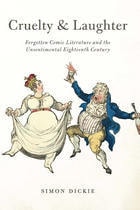
Cruelty and Laughter
Forgotten Comic Literature and the Unsentimental Eighteenth CenturySimon Dickie
University of Chicago Press, 2011
Eighteenth-century British culture is often seen as polite and sentimental—the creation of an emerging middle class. Simon Dickie disputes these assumptions in Cruelty and Laughter, a wildly enjoyable but shocking plunge into the forgotten comic literature of the age. Beneath the surface of Enlightenment civility, Dickie uncovers a rich vein of cruel humor that forces us to recognize just how slowly ordinary human sufferings became worthy of sympathy.
Delving into an enormous archive of comic novels, jestbooks, farces, variety shows, and cartoons, Dickie finds a vast repository of jokes about cripples, blind men, rape, and wife-beating. Epigrams about syphilis and scurvy sit alongside one-act comedies about hunchbacks in love. He shows us that everyone—rich and poor, women as well as men—laughed along. In the process, Dickie also expands our understanding of many of the century’s major authors, including Samuel Richardson, Lady Mary Wortley Montagu, Tobias Smollett, Frances Burney, and Jane Austen. He devotes particular attention to Henry Fielding’s Joseph Andrews, a novel that reflects repeatedly on the limits of compassion and the ethical problems of laughter. Cruelty and Laughter is an engaging, far-reaching study of the other side of culture in eighteenth-century Britain.
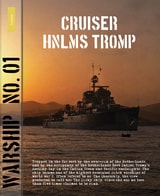
Cruiser HNLMS Tromp
Jantinus Mulder
Amsterdam University Press, 2023

Cruising Guide To N J Waters
Launer, Donald
Rutgers University Press, 1995
This revised edition contains updated information about on-shore facilities, marinas, restaurants, stores, sites of interest, docking fees, bridge heights, maritime service stations, weather, navigation, and safety, as well as post-September 11 regulations in the waters around New York city. The book also includes a wealth of photographs and sea charts.
Cruising the Dead River
David Wojnarowicz and New York's Ruined WaterfrontFiona Anderson
University of Chicago Press, 2019
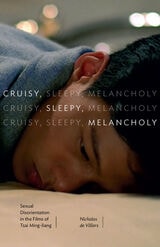
Cruisy, Sleepy, Melancholy
Sexual Disorientation in the Films of Tsai Ming-liangNicholas de Villiers
University of Minnesota Press, 2022
A brilliant approach to the queerness of one of Taiwan’s greatest auteurs
A critical figure in queer Sinophone cinema—and the first director ever commissioned to create a film for the permanent collection of the Louvre—Tsai Ming-liang is a major force in Taiwan cinema and global moving image art. Cruisy, Sleepy, Melancholy offers a fascinating, systematic method for analyzing the queerness of Tsai’s films.
Nicholas de Villiers argues that Tsai expands and revises the notion of queerness by engaging with the sexuality of characters who are migrants, tourists, diasporic, or otherwise displaced. Through their lack of fixed identities, these characters offer a clear challenge to the binary division between heterosexuality and homosexuality, as well as the Orientalist binary division of Asia versus the West. Ultimately, de Villiers explores how Tsai’s films help us understand queerness in terms of spatial, temporal, and sexual disorientation.
Conceiving of Tsai’s cinema as an intertextual network, Cruisy, Sleepy, Melancholy makes an important addition to scholarly work on Tsai in English. It draws on extensive interviews with the director, while also offering a complete reappraisal of Tsai’s body of work. Contributing to queer film theory and the aesthetics of displacement, Cruisy, Sleepy, Melancholy reveals striking connections between sexuality, space, and cinema.