4531 books match the query 'Cultural & Ethnic Studies' and 342 start with c
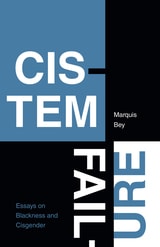
cover of Cistem Failure: Essays on Blackness and Cisgender

Cistem Failure

Essays on Blackness and Cisgender

Marquis Bey

Duke University Press, 2022
In Cistem Failure Marquis Bey meditates on the antagonistic relationship between blackness and cisgender. Bey asks, What does it mean to have a gender that “matches” one’s sex---that is, to be cisgender---when decades of feminist theory have destroyed the belief that there is some natural way to be a sex? Moving from the The Powerpuff Girls to the greeting “How ya mama’n’em?” to their own gender identity, Bey finds that cisgender is too flat as a category to hold the myriad ways that people who may or may not have undergone gender-affirmative interventions depart from gender alignment. At the same time, blackness, they contend, strikes at the heart of cisgender’s invariable coding as white: just as transness names a non-cis space, blackness implies a non-cis space. By showing how blackness opens up a way to subvert the hegemonic power of the gender binary, Bey makes a case for an antiracist gender abolition project that rejects cisgender as a regulatory apparatus.
[more]
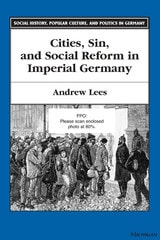
cover of Cities, Sin, and Social Reform in Imperial Germany

Cities, Sin, and Social Reform in Imperial Germany

Andrew Lees

University of Michigan Press, 2002

Cities, Sin, and Social Reform in Imperial Germany breaks new ground in the history of social thought and action in Imperial Germany, focusing on socially liberal efforts to counteract perceived problems in the area of moral behavior.
Thematically and methodologically wide-ranging and innovative, this volume considers a broad spectrum of responses not only to the supposed breakdown of social cohesion but also to specific forms of deviant behavior. It draws on large numbers of writings from the period by clergymen, jurists, medical doctors, educators, social workers, and others. This literature illuminates the histories not only of urbanization and cities but also of sexuality and Christianity, crime and criminology, leisure and education, youth and women, charity and social work, and the welfare state as well as local government.
Focusing on positive instead of escapist responses to the challenges that inhered in urban society, this work can be read as part of an ongoing reassessment of the German Empire that points away from the idea that Germans were traveling an antimodernist Sonderweg, or special path, that led inevitably to National Socialism and the Third Reich. Although intended primarily for scholars and students of modern Germany, this book should speak to a variety of readers, among them anyone who cares about the history of cities, deviant behavior, or social reform.
Andrew Lees is Professor of History, Rutgers University.
[more]
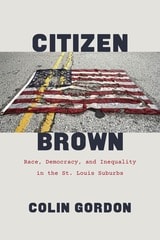
cover of Citizen Brown: Race, Democracy, and Inequality in the St. Louis Suburbs

Citizen Brown

Race, Democracy, and Inequality in the St. Louis Suburbs

Colin Gordon

University of Chicago Press, 2019

The 2014 killing of Michael Brown in Ferguson, Missouri, ignited nationwide protests and brought widespread attention police brutality and institutional racism. But Ferguson was no aberration. As Colin Gordon shows in this urgent and timely book, the events in Ferguson exposed not only the deep racism of the local police department but also the ways in which decades of public policy effectively segregated people and curtailed citizenship not just in Ferguson but across the St. Louis suburbs.

Citizen Brown uncovers half a century of private practices and public policies that resulted in bitter inequality and sustained segregation in Ferguson and beyond. Gordon shows how municipal and school district boundaries were pointedly drawn to contain or exclude African Americans and how local policies and services—especially policing, education, and urban renewal—were weaponized to maintain civic separation. He also makes it clear that the outcry that arose in Ferguson was no impulsive outburst but rather an explosion of pent-up rage against long-standing systems of segregation and inequality—of which a police force that viewed citizens not as subjects to serve and protect but as sources of revenue was only the most immediate example. Worse, Citizen Brown illustrates the fact that though the greater St. Louis area provides some extraordinarily clear examples of fraught racial dynamics, in this it is hardly alone among American cities and regions.

Interactive maps and other companion resources to Citizen Brown are available at the 
book website.
[more]
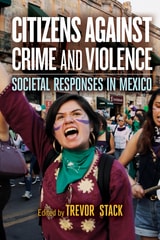
cover of Citizens against Crime and Violence: Societal Responses in Mexico

Citizens against Crime and Violence

Societal Responses in Mexico

Trevor Stack

Rutgers University Press, 2022
Mexico has become notorious for crime-related violence, and the efforts of governments and national and international NGOs to counter this violence have proven largely futile. Citizens against Crime and Violence studies societal responses to crime and violence within one of Mexico’s most affected regions, the state of Michoacán. Based on comparative ethnography conducted over twelve months by a team of anthropologists and sociologists across six localities of Michoacán, ranging from the most rural to the most urban, the contributors consider five varieties of societal responses: local citizen security councils that define security and attempt to influence its policing, including by self-defense groups; cultural activists looking to create safe 'cultural' fields from which to transform their social environment; organizations in the state capital that combine legal and political strategies against less visible violence (forced disappearance, gender violence, anti-LGBT); church-linked initiatives bringing to bear the church’s institutionality, including to denounce 'state capture'; and women’s organizations creating 'safe' networks allowing to influence violence prevention.
[more]
cover of Citizens and Groups in Contemporary China

Citizens and Groups in Contemporary China

Victor C. Falkenheim, Editor

University of Michigan Press, 1987
Citizens and Groups in Contemporary China began with two symposia held in 1977 and 1978. The first, a workshop on “The Pursuit of Interest in China,” was held in August 1977 at the University of Michigan, and was organized by Michel Oksenberg and Richard Baum. It was supported by a grant from the Joint Committee on Contemporary China of the Social Science Research Council and the American Council of Learned Societies, using funds provided by the Andrew Mellon Foundation. Its principal goal was to use detailed case studies to explore the relevance of interest group approaches to the study of Chinese politics. The second, a panel organized by the editor for the 1978 Chicago meeting of the Association of Asian Studies, sought to apply participatory approaches to the role of social groups in the Chinese political process. The striking degree of overlap in the focus, methodology, and participants in both meetings suggested to a number of the paper writers that there was a need for a more eclectic approach which would focus simultaneously on individual and group actors. The recognition that a volume based on such an approach might serve the needs of students and scholars seeking to examine the dynamics of informal influence and power in China was the stimulus for publishing the studies presented here in book form. [ix]
[more]
cover of Citizens of Fear: Urban Violence in Latin America

Citizens of Fear

Urban Violence in Latin America

Rotker, Susana

Rutgers University Press, 2004
Citizens in Latin American cities live in constant fear, amidst some of the most dangerous conditions on earth. In that vast region, 140 thousand people die violently each year, and one out of three citizens have been directly or indirectly victimized by violence. In Venezuela, adults are on average targets of crime seventeen crimes in their lifetimes, four of which are violent. In Mexico, 97 percent of all reported crimes go unpunished. Crime, in effect, is an undeclared war. Citizens of Fear, in part, assembles survey results of social scientists who document the pervasiveness of violence. But the numbers tell only part of the story. Other contributors present moving testimonials by the victimized and by journalists covering the scene. A third group of essayists explores the implications of the resulting fear for both thought and behavior. As Susana Rotker writes, "The city has been transformed into a space of vulnerability and danger...What I am interested in narrating here is...the generalized sensation of insecurity that taints the Latin American capitals, the sensation that has changed the ways people relate to urban space, to other human beings, to the state, and to the very concept of citizenship. "
[more]
cover of Citizens of Memory: Affect, Representation, and Human Rights in Postdictatorship Argentina

Citizens of Memory

Affect, Representation, and Human Rights in Postdictatorship Argentina

Silvia R. Tandeciarz

Bucknell University Press, 2026

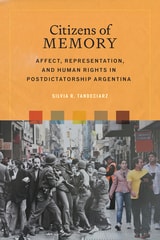
Citizens of Memory explores efforts at recollection in post-dictatorship Argentina and the hoped-for futures they set in motion. The sites, images, narratives, and practices it analyzes address the dark years of state repression (1976-1983) while engaging ongoing debates about how this traumatic past should be transmitted to future generations. This insightful study approaches cultural recall via two theoretical principles—the first understands memory as a social construct that is as much about the past as it is of the present, and the second observes that what distinguishes memory from history is affect. Understanding recollection and storytelling as practices that can help constitute communities of belonging, Tandeciarz suggests that by inciting deep reflection and an active engagement with the legacies of state violence, interventions like those studied here may advance transitional justice and contribute to the construction of less violent futures.

Published by Bucknell University Press. Distributed worldwide by Rutgers University Press.
[more]
cover of Citizenship, Politics, Difference: Perspectives from Sub-Saharan Signed Language Communities

Citizenship, Politics, Difference

Perspectives from Sub-Saharan Signed Language Communities

Audrey C. Cooper

Gallaudet University Press, 2015

Sub-Saharan Africa is one of the most linguistically, culturally, and geographically diverse regions of the world, home to more than 2,000 languages. As in the rest of the world, Deaf people live throughout the widely varying sub-Saharan communities, equally rich in their signed languages. An emergent body of scholarly research on sub-Saharan signed languages (SSSL) and related Deaf community organizing has created the opportunity to gather together the informed perspectives presented in this revolutionary collection. Drawing examples from all regions of sub-Saharan Africa—Western, Eastern, Central, and Southern—16 contributors join the volume editors in illuminating the circumstances pertaining to cross-border, cross-regional, and global engagements in sub-Saharan Deaf communities.

       This collection centers upon two interrelated purposes: to examine sub-Saharan African deaf people’s perspectives on citizenship, politics, and difference in relation to SSSL practices, and to analyze SSSL practices in relation to sociopolitical histories and social change interests (including addressing aspects of culture, gender, language usage, race, ethnicity, sexuality, and ability). The editors have organized these themes under three main sections, Sub-Saharan Signed Languages and Deaf Communities, The Politics of Mobilizing Difference, and Citizenship. Such wide-ranging subjects as the ethics of studying Kenyan signed language, sign language and Deaf communities in Eritrea, and overcoming cultural and linguistic barriers to HIV/AIDS education drive home the importance of the unique and varied research in this collection.
[more]
cover of City of Men: Masculinities and Everyday Morality on Public Transport

City of Men

Masculinities and Everyday Morality on Public Transport

Romit Chowdhury

Rutgers University Press, 2023
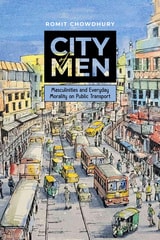
In South Asian urban landscapes, men are everywhere. And yet we do not seem to know very much about precisely what men do in the city as men. How do men experience gender in city spaces? What are the interactional dynamics between different groups of men on city streets? How do men adjudicate between good and bad conduct in urban spaces? Through ethnographic descriptions of copresence on public transport in Kolkata, India, this book brings into sight the gendered logics of cooperation and everyday morality through which masculinities take up space in cities. It follows the labor geographies of auto-rickshaw and taxi operators and their interactions with traffic police and commuters to argue that the gendered fabric of urban life needs to be understood as a product of situational forms of cooperation between different social groups. Such an orientation sheds light on the part played by everyday morality and provisional support in upholding male privilege in the city.
[more]
cover of City of Neighborhoods: Memory, Folklore, and Ethnic Place in Boston

City of Neighborhoods

Memory, Folklore, and Ethnic Place in Boston

Anthony Bak Buccitelli

University of Wisconsin Press, 2016

East Boston has long been known as an Italian neighborhood and Southie as an Irish one, while nearby North Quincy has seen in recent decades an influx of Chinese Americans and immigrants. Such urban spaces in America can become intimately intertwined with ethnic identities (Little Italy, Greektown, Chinatown, Little Havana). Yet local residents often readily acknowledge an underlying diversity—both historically and as a result of more recent changes—that complicates such stereotypes.
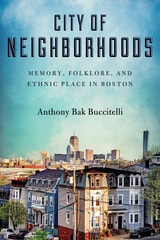
            Digging into the ever-shifting terrain of American ethnicity and urban spaces, Anthony Bak Buccitelli investigates folk practices, social memory, and local histories in three Boston-area neighborhoods. He looks at the ways locals represent their neighborhoods and themselves via events, symbols, stories, and landmarks, from the shamrock to the Chinese flag, whether the St. Patrick’s Day parade in Southie or the Columbus Day parade in East Boston, from urban graffiti and websites to the Dorchester Heights Monument. City of Neighborhoods exposes the processes of selection and emphasis that produce, sustain, challenge, and change understandings of urban spaces as ethnic places.

Honorable mention, Wayland Hand Prize for Folklore and History, American Folklore Society
[more]
cover of Civic Intimacies: Black Queer Improvisations on Citizenship

Civic Intimacies

Black Queer Improvisations on Citizenship

Niels van Doorn

Temple University Press, 2019

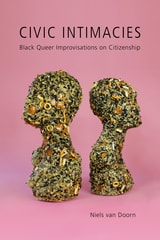
Black queer lives often exist outside conventional civic institutions and therefore have to explore alternative intimacies to experience a sense of belonging. Civic Intimacies examines how—and to what extent—these different forms of intimacy catalyze the values, aspirations, and collective flourishing of Black queer denizens of Baltimore. Niels van Doorn draws on 18 months of immersive ethnographic fieldwork for his innovative cross-disciplinary analysis of contemporary debates in political and cultural theory. 

Van Doorn describes the way that these systematically marginalized communities improvise on citizenship not just to survive but also to thrive despite the proliferation of violence and insecurity in their lives. By reimagining citizenship as the everyday reparative work of building support structures, Civic Intimacies highlights the extent to which sex, kinship, memory, religious faith, and sexual health are rooted in collective practices that are deeply political. These systems sustain the lives of Black queer Baltimoreans who find themselves stuck in a city they cannot give up on—even though it has in many ways given up on them.

[more]
cover of Civil Obedience: An Oral History of School Desegregation in Fayetteville, Arkansas, 1954–1965

Civil Obedience

An Oral History of School Desegregation in Fayetteville, Arkansas, 1954–1965

Julianne Lewis Adams

University of Arkansas Press, 1994

Among the many changes that have occurred in our country in the last forty years, few have been as significant as those heralded by the Supreme Court's decision in the Brown vs. Board of Education case in 1954. By declaring racially segregated public schools unconstitutional, the court set in motion forces that resulted in the dismantling of the legal structure of Jim Crowism. The impact of the Brown decision was national in scope, but in no other region was its impact more far-reaching and traumatic than in the South. In Arkansas, as in other Southern states, racial segregation was not merely a well-stablished way of life, it was firmly imbedded in law.

While school desegregation generated much noise and some violence elsewhere in the South, the city of Fayetteville, Arkansas confronted the issue and resolved it with a good deal of dignity and grace, becoming the first Southern city to accommodate the Brown decision.

Through this fascinating collection of interviews with those who were involved in the desegregation process—students, teachers, administrators, civic leaders, and members of local groups—we learn of the determination of citizens to obey the law of the land and to see that freedom and equality took priority over their commitment to a school system that patently discriminated against one group of citizens.

In our continuing efforts to create a society in which all races and cultures can coexist, Civil Obedience is a story worthy of our full attention.
 
[more]
cover of Civil Rights and African Americans: A Documentary History

Civil Rights and African Americans

A Documentary History

Albert Blaustein and Robert L. Zangrando

Northwestern University Press, 1991

This volume brings together for the first time all the important primary documents in the history of civil rights in the United States. Beginning in 1619, it contains original texts on slavery, abolition, the Civil War, Reconstruction, desegregation, the NAACP, and the black power movement. A thought-provoking preface provides an overview of the developments in civil rights law and public policy to the present day.

Many of the documents included were previously scattered in hard-to-find sources, not readily available to instructors and students. Civil Rights and African Americans is the first collection of all the seminal texts of the civil rights struggle, an invaluable scholarly reference and riveting reading for anyone interested in the history of racial conflict in the United States.

[more]
cover of Civil Rights in the Texas Borderlands: Dr. Lawrence A. Nixon and Black Activism

Civil Rights in the Texas Borderlands

Dr. Lawrence A. Nixon and Black Activism

Will Guzman

University of Illinois Press, 2016

In 1907, physician Lawrence A. Nixon fled the racial violence of central Texas to settle in the border town of El Paso. There he became a community and civil rights leader. His victories in two Supreme Court decisions paved the way for dismantling all-white political primaries across the South.
 
Will Guzmán delves into Nixon's lifelong struggle against Jim Crow. Linking Nixon's activism to his independence from the white economy, support from the NAACP, and the man's own indefatigable courage, Guzmán also sheds light on Nixon's presence in symbolic and literal borderlands--as an educated professional in a time when few went to college, as an African American who made waves when most feared violent reprisal, and as someone living on the mythical American frontier as well as an international boundary.
 
A powerful addition to the literature on African Americans in the Southwest, Civil Rights in the Texas Borderlands explores seldom-studied corners of the Black past and the civil rights movement.
[more]
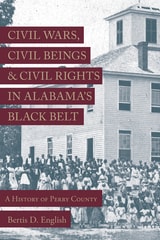
cover of Civil Wars, Civil Beings, and Civil Rights in Alabama's Black Belt: A History of Perry County

Civil Wars, Civil Beings, and Civil Rights in Alabama's Black Belt

A History of Perry County

Bertis D. English, Foreword by Wayne Flynt

University of Alabama Press, 2020

Reconstruction politics and race relations between freed blacks and the white establishment in Perry County, Alabama

In his fascinating, in-depth study, Bertis D. English analyzes why Perry County, situated in the heart of a violence-prone subregion of Alabama, enjoyed more peaceful race relations and less bloodshed than several neighboring counties. Choosing an atypical locality as central to his study, English raises questions about factors affecting ethnic disturbances in the Black Belt and elsewhere in Alabama. He also uses Perry County, which he deems an anomalous county, to caution against the tendency of some scholars to make sweeping generalizations about entire regions and subregions.

English contends Perry County was a relatively tranquil place with a set of extremely influential African American businessmen, clergy, politicians, and other leaders during Reconstruction. Together with egalitarian or opportunistic white citizens, they headed a successful campaign for black agency and biracial cooperation that few counties in Alabama matched. English also illustrates how a significant number of educational institutions, a high density of African American residents, and an unusually organized and informed African American population were essential factors in forming Perry County’s character. He likewise traces the development of religion in Perry, the nineteenth-century Baptist capital of Alabama, and the emergence of civil rights in Perry, an underemphasized center of activism during the twentieth century.

This well-researched and comprehensive volume illuminates Perry County’s history from the various perspectives of its black, interracial, and white inhabitants, amplifying their own voices in a novel way. The narrative includes rich personal details about ordinary and affluent people, both free and unfree, creating a distinctive resource that will be useful to scholars as well as a reference that will serve the needs of students and general readers.
 

[more]
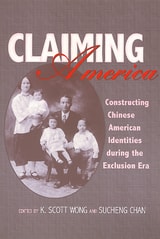
cover of Claiming America

Claiming America

edited by K. Scott Wong and Sucheng Chan

Temple University Press, 1998

This collection of essays centers on the formation of an ethnic identity among Chinese Americans during the period when immigration was halted. The first section emphasizes the attempts by immigrant Chinese to assert their intention of becoming Americans and to defend the few rights they had as resident aliens. Highlighting such individuals as Yung Wing, and ardent advocate of American social and political ideals, and Wong Chin Foo, one of the first activists for Chinese citizenship and voting rights, these essays speak eloquently about the early struggles in the Americanization movement.

The second section shows how children of the immigrants developed a sense of themselves as having a distinct identity as Chinese Americans. For this generation, many of the opportunities available to other immigrants' children were simply inaccessible. In some districts explicit policies kept Chinese children in segregated schools; in many workplaces discriminatory practices kept them from being hired or from advancing beyond the lowest positions. In the 1930s, in fact, some Chinese Americans felt  their only option was to emigrate to China, where they could find jobs better matched to their abilities. Many young Chinese women who were eager to take advantage of the educational and work options opening to women in the wider U.S. society first had to overcome their family's opposition and then racism. As the personal testimonies and historical biographies eloquently attest, these young people deeply felt the contradictions between Chinese and American ways; but they also saw themselves as having to balance the demands of the two cultures rather than as having to choose between them.
[more]
cover of Claiming Home, Shaping Community: Testimonios de los valles

Claiming Home, Shaping Community

Testimonios de los valles

Edited by Gloria H. Cuádraz and Yolanda Flores

University of Arizona Press, 2017

To offer testimonio is inherently political, a vehicle that counters the hegemony of the state and illuminates the repression and denial of human rights. Claiming Home, Shaping Community shares testimonios from and about the lives of Mexican-origin people who left the rural, agricultural Imperial and San Joaquín Valleys to pursue higher education at a University of California campus.

While symbolically their journeys embody the master narrative of the “American Dream,” Claiming Home, Shaping Community does not echo the “rags to riches” trope reified in dominant culture, but rather, it asserts the need to rehumanize the purpose and heart of education. In each chapter, the narrators illustrate myriad supports that allowed them to move forward on their academic and professional journeys: hard work, affirmative action, inclusionary practices, mentors, and their communities’ cultural wealth. Each trajectory is unique, but put together as a collection, the commonalities emerge.

Denoting a sense of political and social urgency that responds to the current accentuated economic disparities between the haves and the have-nots, these essays illuminate the broader societal benefits of federal legislation and resources for state-funded public higher education and policies that broaden access and resources. By telling their stories, the contributors seek to empower others on their journeys to and through higher education.

Contributors:

Daniel “Nane” Alejandrez
Manuel Barajas
Angelica Cárdenas-Chaisson
Gloria H. Cuádraz
Yolanda Flores
Francisco J. Galarte
John J. Halcón
Ester Hernández
Rosa M. Jiménez
Roberto Moreno
José R. Padilla
Enid Pérez
Caroline Sotello Viernes Turner
[more]
cover of Claiming Place: On the Agency of Hmong Women

Claiming Place

On the Agency of Hmong Women

Chia Youyee Vang

University of Minnesota Press, 2016

Countering the idea of Hmong women as victims, the contributors to this pathbreaking volume demonstrate how the prevailing scholarly emphasis on Hmong culture and men as the primary culprits of women’s subjugation perpetuates the perception of a Hmong premodern status and renders unintelligible women’s nuanced responses to patriarchal strategies of domination both in the United States and in Southeast Asia.

Claiming Place expands knowledge about the Hmong lived reality while contributing to broader conversations on sexuality, diaspora, and agency. While these essays center on Hmong experiences, activism, and popular representations, they also underscore the complex gender dynamics between women and men and address the wider concerns of gendered status of the Hmong in historical and contemporary contexts, including deeply embedded notions around issues of masculinity.

Organized to highlight themes of history, memory, war, migration, sexuality, selfhood, and belonging, this book moves beyond a critique of Hmong patriarchy to argue that Hmong women have been and continue to be active agents not only in challenging oppressive societal practices within hierarchies of power but also in creating alternative forms of belonging.

Contributors: Geraldine Craig, Kansas State U; Leena N. Her, Santa Rosa Junior College; Julie Keown-Bomar, U of Wisconsin–Extension; Mai Na M. Lee, U of Minnesota; Prasit Leepreecha, Chiang Mai U; Aline Lo, Allegheny College; Kong Pha; Louisa Schein, Rutgers U; Cathy J. Schlund-Vials, U of Connecticut; Bruce Thao; Ka Vang, U of Wisconsin–Eau Claire.

[more]
cover of Claiming Space: Performing the Personal through Decorated Mortarboards

Claiming Space

Performing the Personal through Decorated Mortarboards

Sheila Bock

Utah State University Press, 2023

Claiming Space examines the growing tradition of decorating mortarboards at college graduations, offering a performance-centered approach to these material sites of display. Taking mortarboard displays seriously as public performances of the personal, this book highlights the creative, playful, and powerful ways graduates use their caps to fashion their personal engagement with notions of self, community, education, and the unknown future.
 
Claiming the space of these graduation caps is a popular and widespread way that individuals make their voices heard, or rather seen, in the visual landscape of commencement ceremonies. The forms and meanings of these material displays take shape in relation to broader, ongoing conversations about higher education in the United States, conversations grounded in discourses of belonging, citizenship, and the promises of the American Dream. Integrating observational fieldwork with extensive interviews and surveys, author Sheila Bock highlights the interpretations of individuals participating in this tradition. She also attends to the public framings of this tradition, including how images of mortarboards have grounded online enactments of community through hashtags such as #LatinxGradCaps and #LetTheFeathersFly, as well as what rhetorical framings are employed in news coverage and legal documents in cases where the value of the practice is both called into question and justified.
 
As university administrators and cultural commentators seek to make sense of the current state of higher education, these forms of material expression offer insight into how students themselves are grappling with higher ed's promises and shortcomings. Claiming Space is a meaningful contribution to folklore, cultural studies, media studies, and education.
 
[more]
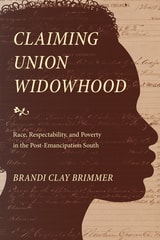
cover of Claiming Union Widowhood: Race, Respectability, and Poverty in the Post-Emancipation South

Claiming Union Widowhood

Race, Respectability, and Poverty in the Post-Emancipation South

Brandi Clay Brimmer

Duke University Press, 2020

In Claiming Union Widowhood, Brandi Clay Brimmer analyzes the US pension system from the perspective of poor black women during and after the Civil War. Reconstructing the grassroots pension network in New Bern, North Carolina, through a broad range of historical sources, she outlines how the mothers, wives, and widows of black Union soldiers struggled to claim pensions in the face of evidentiary obstacles and personal scrutiny. Brimmer exposes and examines the numerous attempts by the federal government to exclude black women from receiving the federal pensions that they had been promised. Her analyses illustrate the complexities of social policy and law administration and the interconnectedness of race, gender, and class formation. Expanding on previous analyses of pension records, Brimmer offers an interpretive framework of emancipation and the freedom narrative that places black women at the forefront of demands for black citizenship.
[more]
cover of Claiming the Oriental Gateway: Prewar Seattle and Japanese America

Claiming the Oriental Gateway

Prewar Seattle and Japanese America

Authored by Shelley S. Lee

Temple University Press, 2012

In Claiming the Oriental Gateway, Shelley Sang-Hee Lee explores the various intersections of urbanization, ethnic identity, and internationalism in the experience of Japanese Americans in early twentieth-century Seattle. She examines the development and self-image of the city by documenting how U.S. expansion, Asian trans-Pacific migration, and internationalism were manifested locally—and how these forces affected residents’ relationships with one another and their surroundings.

Lee details the significant role Japanese Americans—both immigrants and U.S. born citizens—played in the social and civic life of the city as a means of becoming American. Seattle embraced the idea of cosmopolitanism and boosted its role as a cultural and commercial "Gateway to the Orient" at the same time as it limited the ways in which Asian Americans could participate in the public schools, local art production, civic celebrations, and sports. She also looks at how Japan encouraged the notion of the "gateway" in its participation in the Alaska-Yukon-Pacific Exposition and International Potlach.

Claiming the Oriental Gateway thus offers an illuminating study of the "Pacific Era" and trans-Pacific relations in the first four decades of the twentieth century.
[more]
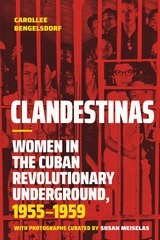
cover of Clandestinas: Women in the Cuban Revolutionary Underground, 1955–1959

Clandestinas

Women in the Cuban Revolutionary Underground, 1955–1959

Carollee Bengelsdorf. With Photographs Curated by Susan Meiselas.

Duke University Press, 2025
In Clandestinas, Carollee Bengelsdorf challenges the silences surrounding women’s participation in the insurrection in Havana during the Cuban Revolution. The official narrative of the revolution emphasizes virtually exclusively the role of the guerrillas in the sierra in defeating the Batista dictatorship, thereby diminishing the centrality of the urban underground. Given that women insurrectionists were overwhelmingly concentrated in the cities, this inevitably meant that their presence was diminished as well. But even in the urban movements, women are portrayed as secondary, as enablers of the men who do the real fighting. Drawing on fieldwork and in-depth interviews with over thirty former clandestinas, Bengelsdorf surfaces a different narrative. She paints a portrait detailing the lives of women and the actions in which they were involved in the clandestinidad. She briefly examines the trauma each of her interviewees experienced to different degrees both during and after the dictatorship’s downfall. The book includes a visual essay with photographs curated by Susan Meiselas.
[more]
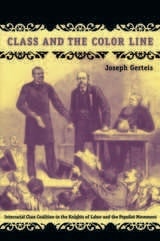
cover of Class and the Color Line: Interracial Class Coalition in the Knights of Labor and the Populist Movement

Class and the Color Line

Interracial Class Coalition in the Knights of Labor and the Populist Movement

Joseph Gerteis

Duke University Press, 2007

A lauded contribution to historical sociology, Class and the Color Line is an analysis of social-movement organizing across racial lines in the American South during the 1880s and the 1890s. The Knights of Labor and the Populists were the largest and most influential movements of their day, as well as the first to undertake large-scale organizing in the former Confederate states, where they attempted to recruit African Americans as fellow workers and voters.

While scholars have long debated whether the Knights and the Populists were genuine in their efforts to cross the color line, Joseph Gerteis shifts attention from that question to those of how, where, and when the movements’ organizers drew racial boundaries. Arguing that the movements were simultaneously racially inclusive and exclusive, Gerteis explores the connections between race and the movements’ economic and political interests in their cultural claims and in the dynamics of local organizing.

Interpreting data from the central journals of the Knights of Labor and the two major Populist organizations, the Farmers’ Alliance and the People’s Party, Gerteis explains how the movements made sense of the tangled connections between race, class, and republican citizenship. He considers how these collective narratives motivated action in specific contexts: in Richmond and Atlanta in the case of the Knights of Labor, and in Virginia and Georgia in that of the Populists. Gerteis demonstrates that the movements’ collective narratives galvanized interracial organizing to varying degrees in different settings. At the same time, he illuminates the ways that interracial organizing was enabled or constrained by local material, political, and social conditions.

[more]
cover of Classifying the Zhuangzi Chapters

Classifying the Zhuangzi Chapters

Liu Xiaogan

University of Michigan Press, 1995
The relationships, both historical and philosophical, among the Zhuangzi’s Inner, Outer, and Miscellaneous chapters are the subject of ancient and enduring controversy. Liu marshals linguistic, intertextual, intratextual, and historical evidence to establish an objectively demonstrable chronology and determine the philosophical affiliations among the various chapters. This major advance in Zhuangzi scholarship furnishes indispensable data for all students of the great Daoist text. In a lengthy afterword, Liu compares his conclusions with those of A. C. Graham and addresses the relationship between the Zhuangzi and the Laozi.
[more]
cover of Clicas: Gender, Sexuality, and Struggle in Latina/o/x Gang Literature and Film

Clicas

Gender, Sexuality, and Struggle in Latina/o/x Gang Literature and Film

Frank García

University of Texas Press, 2024

2025 First Book Prize Honorable Mention, Cultural Studies Association

How Latina/o/x gang literature and film represent women and gay gang members’ challenges to gendered, sexual, racial, and class oppression.

Clicas examines Latina/o/x literature and film by and/or about gay and women gang members. Through close readings of literature and film, Frank García reimagines the typical narratives describing gang membership and culture, amplifying and complicating critical gang studies in the social sciences and humanities and looking at gangs across racial, ethnic, and national identities. Analyzing how the autobiographical poetry of Ana Castillo presents gang fashion, culture, and violence to the outside world, the effects of women performing female masculinity in the novel Locas, and gay gang members’ experiences of community in the documentary Homeboy, García complicates the dialogue regarding hypermasculine gang cultures. He shows how they are accessible not only to straight men but also to women and gay men who can appropriate them in complicated ways, which can be harming and also, at times, emancipating. Reading gang members as (de)colonial agents who contest the power relations, inequalities, oppressions, and hierarchies of the United States, Clicas considers how women and gay gang members resist materially and psychologically within a milieu shaped by the intersection of race, gender, sexuality, and class.

[more]
cover of Climate Lyricism

Climate Lyricism

Min Hyoung Song

Duke University Press, 2022
In Climate Lyricism Min Hyoung Song articulates a climate change-centered reading practice that foregrounds how climate is present in most literature. Song shows how literature, poetry, and essays by Tommy Pico, Solmaz Sharif, Frank O’Hara, Ilya Kaminsky, Claudia Rankine, Kazuo Ishiguro, Teju Cole, Richard Powers, and others help us to better grapple with our everyday encounters with climate change and its disastrous effects, which are inextricably linked to the legacies of racism, colonialism, and extraction. These works employ what Song calls climate lyricism—a mode of address in which a first-person “I” speaks to a “you” about how climate change thoroughly shapes daily life. The relationship between “I” and “you” in this lyricism, Song contends, affects the ways readers comprehend the world, fostering a model of shared agency from which it can become possible to collectively and urgently respond to the catastrophe of our rapidly changing climate. In this way, climate lyricism helps to ameliorate the sense of being overwhelmed and feeling unable to do anything to combat climate change.
[more]
cover of Closing the Education Achievement Gaps for African American Males

Closing the Education Achievement Gaps for African American Males

Theodore S. Ransaw

Michigan State University Press, 2016

Closing the Education Achievement Gaps for African American Males is a research-based tool to improve the schooling experience of African American males. Editors Theodore S. Ransaw and Richard Majors draw together a collection of writings that provide much-needed engagement with issues of gender and identity for black males, as well as those of culture, media, and technology, in the context of education.
The distinguished and expert contributors whose work comprises this volume include an achievement-gap specialist for males of color, two psychologists, a math teacher, an electrical engineer, a former school principal, a social worker, and a former human rights commissioner. From black male learning styles to STEM, this book shows that issues pertaining to educational outcomes for black males are nuanced and complex but not unsolvable.
With its combination of fresh new approaches to closing achievement gaps and up-to-date views on trends, this volume is an invaluable resource on vital contemporary social and educational issues that aims to improve learning, equity, and access for African American males.
 
[more]
cover of Co-wives and Calabashes

Co-wives and Calabashes

Sally Price

University of Michigan Press, 1984

A fascinating exploration into the world of the Saramaka Maroons of the Suriname rain forest, Co-wives and Calabashes examines the status of women in this polygynous and matrilineal society as reflected in its social structure and in its art. The product of seventeen years of research, the book draws upon a rich variety of resources — from bawdy popular songs to dusty museum artifacts, from animated gossip sessions to comprehensive social statistics — to reveal the complex ways in which notions of gender, patterns of marriage, and the cultural definition of art are interrelated.
[more]
cover of Code of the Quipu: A Study in Media, Mathematics, and Culture

Code of the Quipu

A Study in Media, Mathematics, and Culture

Marcia Ascher and Robert Ascher

University of Michigan Press, 0

This book explores Inca use of knotted cords to transmit information and the problem of interpreting artifacts from distant cultures.
[more]
cover of Coethnicity: Diversity and the Dilemmas of Collective Action

Coethnicity

Diversity and the Dilemmas of Collective Action

James Habyarimana

Russell Sage Foundation, 2009

Ethnically homogenous communities often do a better job than diverse communities of producing public goods such as satisfactory schools and health care, adequate sanitation, and low levels of crime. Coethnicity reports the results of a landmark study that aimed to find out why diversity has this cooperation-undermining effect. The study, conducted in a neighborhood of Kampala, Uganda, notable for both its high levels of diversity and low levels of public goods provision, hones in on the mechanisms that might account for the difficulties diverse societies often face in trying to act collectively. The Mulago-Kyebando Community Study uses behavioral games to explore how the ethnicity of the person with whom one is interacting shapes social behavior. Hundreds of local participants interacted with various partners in laboratory games simulating real-life decisions involving the allocation of money and the completion of joint tasks. Many of the subsequent findings debunk long-standing explanations for diversity's adverse effects. Contrary to the prevalent notion that shared preferences facilitate ethnic collective action, differences in goals and priorities among participants were not found to be structured along ethnic lines. Nor was there evidence that subjects favored the welfare of their coethnics over that of non-coethnics. When given the opportunity to act altruistically, individuals did not choose to benefit coethnics disproportionately when their actions were anonymous. Yet when anonymity was removed, subjects behaved very differently. With their actions publicly observed, subjects gave significantly more to coethnics, expected their partners to reciprocate, and expected that they would be sanctioned for a failure to cooperate. This effect was most pronounced among individuals who were otherwise least likely to cooperate. These results suggest that what may look like ethnic favoritism is, in fact, a set of reciprocity norms—stronger among coethnics than among non-coethnics—that make it possible for members of more homogeneous communities to take risks, invest, and cooperate without the fear of getting cheated. Such norms may be more subject to change than deeply held ethnic antipathies—a powerful finding for policymakers seeking to design social institutions in diverse societies. Research on ethnic diversity typically draws on either experimental research or field work. Coethnicity does both. By taking the crucial step from observation to experimentation, this study marks a major breakthrough in the study of ethnic diversity. A Volume in the Russell Sage Foundation Series on Trust
[more]
cover of Collected Prose

Collected Prose

Robert Hayden

University of Michigan Press, 1984
"A collection of essays on poetry and the experiences that influenced poet Robert Hayden. Contents include "The History of Punchinello: A Baroque Play in One Act," Hayden's introductory remarks to volumes like Kaleidoscope: Poems by American Negro Poet and The New Negro, and interviews with Hayden."
[more]
cover of Collecting Antiquity in Modern China: Artifacts and Their Afterlives

Collecting Antiquity in Modern China

Artifacts and Their Afterlives

Guangchen Chen

University of Chicago Press, 2026

A look at twentieth-century Chinese writers and intellectuals who used the material remains of the past to unsettle the present. 
 
In this book, Guangchen Chen argues that discerning collectors used antiquities to upend dominant discourses on history and cultural memory in twentieth-century China. Examining four categories of ancient artifacts—“carving” (oracle bones), “rubbing” (imprints of inscriptions and books), “brushing” (calligraphy), and “weaving” (textiles and costumes)—Chen explains how their modern (re)emergences changed our understanding of the relationship between tradition and modernity, textuality and materiality, and the very meaning of “Chineseness.”
 
Chen considers intellectuals such as Wang Yirong, Liu E, Luo Zhenyu, Wang Guowei, and Chen Mengjia, who played a pivotal role in the oracle bones’ modern reception. He also looks to major literary figures including Lu Xun, whose engagements with textual remnants of the past inspired his critique of Chinese culture; Guo Moruo, whose work on the calligraphic masterpiece Lantingxu contributed to the cultural-political climate that sparked the Cultural Revolution; Shi Zhecun, whose interest in inscriptions on ancient stelae helped him to hold fast to intellectual integrity in the face of political pressure; and Shen Congwen, whose obsession with ancient textiles saved him from committing suicide after his writing fell out of favor. These antiquarians used their collections as a strategy to synchronize historical time and to challenge two dominant yet contrasting ideologies in modern China: a regressive idealization of antiquity and an unquestioning trust in linear progress. During this turbulent period, long-lost artifacts came to function as omens, warnings, and revelations from another time, generating new meanings that were uniquely relevant to the present.
 
 
[more]
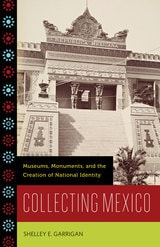
cover of Collecting Mexico: Museums, Monuments, and the Creation of National Identity

Collecting Mexico

Museums, Monuments, and the Creation of National Identity

Shelley E. Garrigan

University of Minnesota Press, 2012

Collecting Mexico centers on the ways in which aesthetics and commercialism intersected in officially sanctioned public collections and displays in late nineteenth-century Mexico. Shelley E. Garrigan approaches questions of origin, citizenry, membership, and difference by reconstructing the lineage of institutionally collected objects around which a modern Mexican identity was negotiated. In doing so, she arrives at a deeper understanding of the ways in which displayed objects become linked with nationalistic meaning and why they exert such persuasive force.

Spanning the Porfiriato period from 1867 to 1910, Collecting Mexico illuminates the creation and institutionalization of a Mexican cultural inheritance. Employing a wide range of examples—including the erection of public monuments, the culture of fine arts, and the representation of Mexico at the Paris World’s Fair of 1889—Garrigan pursues two strands of thought that weave together in surprising ways: national heritage as a transcendental value and patrimony as potential commercial interest.

Collecting Mexico shows that the patterns of institutional collecting reveal how Mexican public collections engendered social meaning. Using extensive archival materials, Garrigan’s close readings of the processes of collection building offer a new vantage point for viewing larger issues of identity, social position, and cultural/capital exchange.
[more]
cover of Collective Action and the Civil Rights Movement

Collective Action and the Civil Rights Movement

Dennis Chong

University of Chicago Press, 1991
Collective Action and the Civil Rights Movement is a theoretical study of the dynamics of public-spirited collective action as well as a substantial study of the American civil rights movement and the local and national politics that surrounded it. In this major historical application of rational choice theory to a social movement, Dennis Chong reexamines the problem of organizing collective action by focusing on the social, psychological, and moral incentives of political activism that are often neglected by rational choice theorists. Using game theoretic concepts as well as dynamic models, he explores how rational individuals decide to participate in social movements and how these individual decisions translate into collective outcomes. In addition to applying formal modeling to the puzzling and important social phenomenon of collective action, he offers persuasive insights into the political and psychological dynamics that provoke and sustain public activism. This remarkably accessible study demonstrates how the civil rights movement succeeded against difficult odds by mobilizing community resources, resisting powerful opposition, and winning concessions from the government.
[more]
cover of Collective Decision Making in Rural Japan

Collective Decision Making in Rural Japan

Robert C. Marshall

University of Michigan Press, 1984
This study is a result of three continuous years of fieldwork in a hamlet in rural Japan. The data presented and analyzed here consist of records from participant observation, formal and informal interviews, casual conversation and formal questionnaires, and public and private documents. The subject of this research is group decision making, and the results of this process are, after all, a matter of public record.
The major conclusions of this study are outlined in their simplest and most straightforward form. A hamlet is fundamentally a nexus for the organization of productive exchange among member households, the form of exchange through which two or more parties actively combine their resources to produce something of value not available, or as cheaply available, to any of them separately. Defection from productive exchange agreements by hamlet members is reduced by making access to future valuable transactions and corporate property contingent upon the integrity of each current exchange transaction. This method of combining a common interest in production with contingent access to productive resources is termed mutual investment and is the major source of consensus in hamlet decision making. When only cooperate resources are at issue, decisions regularly result in unanimity. When a course of action can be implemented only if hamlet members relinquish control over individually held resources, a division will emerge among the membership. Whether or not a formal vote is taken, the distribution of differing opinion will be known through more informal means of communication. In all cases of division, by the time the course of action to be implemented is formally announced, the minority in opposition will be extremely small. The question then must be resolved whether those in the minority will participate in the implementation or resign as hamlet members.
This book is written with two rather disparate audiences in mind: readers interested primarily in exchange and decision-making phenomenon, on the one hand, and readers interested primarily in the unity of experience represented by the Japanese sensibility, on the other.
[more]
cover of Collective Security beyond the Cold War

Collective Security beyond the Cold War

George W. Downs, Editor

University of Michigan Press, 1994
The fall of the Soviet empire, like the redistributions of power that followed the fall of Napoleon and the end of the two world wars, has focused attention on schemes that advertise an ability to prevent the return of conflict and promote cooperation. Chief among these is the controversial idea of a new collective security system or a redesigned United Nations. Advocates view such an institution as an inevitable step in human evolution and the basic prerequisite for long-term stability and peace. Critics consider the idea a pipe dream that has been historically and theoretically discredited. This volume reexamines the idea of collective security, weighing the arguments for and against it and assessing its potential for coping with the regional and global security problems of a post-Cold War world. Six of the essays contained herein examine collective security from a theoretical and historical perspective; three evaluate its potential to manage problems in the former Soviet empire, the Middle East, and Europe. The recurring theme of Collective Security beyond the Cold War is the importance of reviewing the potential advantages of ambitious but imperfect collective security systems and the virtues of systems less ambitious than the League of Nations. The factors limiting the potential of collective security systems are no different from those that limit the potential of other forms of state collective action, such as alliances. How great a problem these factors pose for collective security arrangements depends on the design of the system and the setting.
[more]
cover of Colonial Legacies in Chicana/o Literature and Culture: Looking Through the Kaleidoscope

Colonial Legacies in Chicana/o Literature and Culture

Looking Through the Kaleidoscope

Vanessa Fonseca-Chávez

University of Arizona Press, 2020

Colonial Legacies in Chicana/o Literature and Culture exposes the ways in which colonialism is expressed in the literary and cultural production of the U.S. Southwest, a region that has experienced at least two distinct colonial periods since the sixteenth century.

Vanessa Fonseca-Chávez traces how Spanish colonial texts reflect the motivation for colonial domination. She argues that layers of U.S. colonialism complicate how Chicana/o literary scholars think about Chicana/o literary and cultural production. She brings into view the experiences of Chicana/o communities that have long-standing ties to the U.S. Southwest but whose cultural heritage is tied through colonialism to multiple nations, including Spain, Mexico, and the United States.

While the legacies of Chicana/o literature simultaneously uphold and challenge colonial constructs, the metaphor of the kaleidoscope makes visible the rupturing of these colonial fragments via political and social urgencies. This book challenges readers to consider the possibilities of shifting our perspectives to reflect on stories told and untold and to advocate for the inclusion of fragmented and peripheral pieces within the kaleidoscope for more complex understandings of individual and collective subjectivities.

This book is intended for readers interested in how colonial legacies are performed in the U.S. Southwest, particularly in the context of New Mexico, Texas, and Arizona. Readers will relate to the book’s personal narrative thread that provides a path to understanding fragmented identities.
[more]
cover of Colonial Power, Colonial Texts: India in the Modern British Novel

Colonial Power, Colonial Texts

India in the Modern British Novel

M. Keith Booker

University of Michigan Press, 1997
Half a century after the Raj, India retains a major place in the British imagination. In Colonial Power, Colonial Texts, M. Keith Booker examines a number of British novels that deal with colonial rule in India in the first half of the twentieth century. The works discussed -- by authors such as Rudyard Kipling, E. M. Forster, George Orwell, Paul Scott, and J. G. Farrell -- date from both the colonial and postcolonial periods, and Booker pays attention as well to representations of India in both British and American popular culture, especially film. These various cultural texts open multiple viewpoints on the role of literature in the British vision of India and the role of India in the British conception of literature. Drawing particularly on the work of Georg Lukács and Fredric Jameson, Booker focuses on the treatment of British colonial power in these fictions as that treatment indicates how colonialism and decolonization participate in a larger historical process of modernization. The author uses a Marxist model of bourgeois cultural revolution to illustrate the ways these texts engage in productive exchanges with their historical context. Colonial Power, Colonial Texts will be of particular value to those who study the role of culture in colonialism and anticolonial resistance, as well as to students and scholars of modern British literature and culture.
[more]
cover of Colonial Racial Capitalism

Colonial Racial Capitalism

Susan Koshy, Lisa Marie Cacho, Jodi A. Byrd, and Brian Jordan Jefferson, editors

Duke University Press, 2022

The contributors to Colonial Racial Capitalism consider anti-Blackness, human commodification, and slave labor alongside the history of Indigenous dispossession and the uneven development of colonized lands across the globe. They demonstrate the co-constitution and entanglement of slavery and colonialism from the conquest of the New World through industrial capitalism to contemporary financial capitalism. Among other topics, the essays explore the historical suturing of Blackness and Black people to debt, the violence of uranium mining on Indigenous lands in Canada and the Belgian Congo, how municipal property assessment and waste management software encodes and produces racial difference, how Puerto Rican police crackdowns on protestors in 2010 and 2011 drew on decades of policing racially and economically marginalized people, and how historic sites in Los Angeles County narrate the Mexican-American War in ways that occlude the war’s imperialist groundings. The volume’s analytic of colonial racial capitalism opens new frameworks for understanding the persistence of violence, precarity, and inequality in modern society.

Contributors. Joanne Barker, Jodi A. Byrd, Lisa Marie Cacho, Michael Dawson, Iyko Day, Ruth Wilson Gilmore, Alyosha Goldstein, Cheryl I. Harris, Kimberly Kay Hoang, Brian Jordan Jefferson, Susan Koshy, Marisol LeBrón, Jodi Melamed, Laura Pulido
[more]
cover of Colonial Reckoning: Race and Revolution in Nineteenth-Century Cuba

Colonial Reckoning

Race and Revolution in Nineteenth-Century Cuba

Louis A. Pérez Jr.

Duke University Press, 2023
In Colonial Reckoning Louis A. Pérez Jr. examines Cuba’s wars for independence in the second half of the nineteenth century, focusing specifically on those Cubans who remained loyal to Spain. Drawing on newspaper articles, personal letters, military battle reports, government commissions, consular reports, literature, and other materials, Pérez shows how everyday black, white, and creole Cubans defended the Spanish empire as paramilitary guerrillas alongside white elites. These loyalist Cubans helped the Spanish fight a separatist insurgency composed of a similarly diverse population of Cubans. Pérez demonstrates that these wars were so deadly and drawn out precisely because Cubans fought on both sides, each holding myriad competing visions of sovereignty and contested meanings of nation. Complicating mythical and historiographical narratives that Cuban national liberation was a struggle waged between Cubans of color and white elites beholden to Spain, Pérez shows that the fight consisted of a great number of factions with unique and evolving motivations. In so doing, he interrogates anew the multifaceted social dimensions and multiple political aspects of the complex drama of Cuban national formation.
[more]
cover of Colonialism Experienced: Vietnamese Writings on Colonialism, 1900-1931

Colonialism Experienced

Vietnamese Writings on Colonialism, 1900-1931

Truong Buu Lam

University of Michigan Press, 2000
The first three decades of the twentieth century in late-colonial Vietnam -- the period that also marked the transition between the dominant Confucian and nascent Western worldviews -- generated an abundance of political literature in that country. The documents from this transitional era belong to a variety of genres: propaganda pamphlets, open letters to government officials, texts for private or clandestine classrooms, manifestos of political or cultural organizations, columns from newspapers, public proclamations, petitions to international agencies, and poems. Whether from the old or the new era, however, they all expressed an opinion on the colonial status of their country. Scholar Truong Buu Lam has collected twenty of these documents, all written between 1900 and 1931, into an anthology which captures the spirit of the conflicting ideologies and the political struggles of this time. Written originally in Vietnamese, French, or classical Chinese, the documents have been translated into English by Lam and given individual introductions in an effort to clarify their historical contexts most accurately. Lam also provides a lengthy overview of the contemporary scene at the time of the writings to further illuminate the grander themes tying the writings together. In Vietnam, all of these writings are well-known texts, quoted in every publication that examines the period under consideration; yet, to the best of our knowledge, few have been reproduced in their entirety and none has ever been translated into English. This translation marks an important addition to the fields of Southeast Asian and colonial studies and will be welcomed by historians, political scientists, and anthropologists alike.
[more]
cover of Colonialism and Culture

Colonialism and Culture

Nicholas B. Dirks, Editor

University of Michigan Press, 1992
Colonialism and Culture, edited by Nicholas B. Dirks, is an insightful exploration of the intricate relationship between colonialism and cultural transformation. The book features contributions that reflect how colonialism reshaped cultural identities and expressions across the globe, and how it remains a potent force defining both historical and contemporary landscapes. Drawing on cases from different historical periods and geographic locations, the essays examine how colonial powers imposed and justified their dominance through cultural means—such as transforming local cultures into rigid categories of the "other." The impact of this cultural hegemony extended beyond the local to influence metropolitan societies, altering notions of race, nationality, and power even in the colonizers’ homelands. Essays delve into various aspects such as the role of missionary work in the Philippines, peasant resistance in Southeast Asia, labor practices in colonial Kenya, and the conceptualization of time and development in colonial India. The work encourages a reconsideration of colonialism not just as a historical occurrence but as an active component in the configuration of modern cultural and social institutions. Engaging with the intersection of power and culture, the book challenges readers to rethink traditional narratives of empire and its legacy, offering new insights into the ongoing global implications of colonial structures.
[more]
cover of Coloniality in the Maya Lowlands: Archaeological Perspectives

Coloniality in the Maya Lowlands

Archaeological Perspectives

edited by Kasey Diserens Morgan &Tiffany C. Fryer

University Press of Colorado, 2022

Coloniality in the Maya Lowlands explores what has been required of the Maya to survive both internal and external threats and other destabilizing forces. These include shifting power dynamics and sociocultural transformations, tumultuous political regimes, the precarity of newly formed nation states, migration in search of refuge, and newly globalizing economies in the Yucatecan lowlands in the Late Colonial to Early National periods—the times when formal Spanish colonial rule was giving way to Yucatecan and Mexican neocolonial settler systems.
 
The work takes a hemispheric approach to the historical and material analysis of colonialism, bridging the often disparate literatures on coloniality and settler colonialism. Archaeologists and anthropologists working in what are today southeastern Mexico, Belize, Guatemala, and Honduras grapple with the material realities of coloniality at a regional level. They provide sustained discussions of Maya experiences with wide-ranging colonial endurances: violence, resource insecurity, land rights, refugees, the control of borders, the movement of contraband, surveillance, individual and collective agency, consumption, and use of historic resources.
 
Considering a future for historical archaeologies of the Maya region that bridges anthropology, ethnohistory, Indigenous studies, settler colonial studies, and Latin American studies, Coloniality in the Maya Lowlands presents a new understanding of how ways of being in the Maya world have formed and changed over time, as well as the shared investments of historical archaeologists and sociocultural anthropologists working in the Maya region.
 
 
Contributors: Fernando Armstrong-Fumero, Alejandra Badillo Sánchez, Adolfo Iván Batún Alpuche, A. Brooke Bonorden, Maia C. Dedrick, Scott L. Fedick, Fior García Lara, John Gust, Brett A. Houk, Rosemary A. Joyce, Gertrude B. Kilgore, Jennifer P. Mathews, Patricia A. McAnany, James W. Meierhoff, Fabián A. Olán de la Cruz, Julie K. Wesp
 
[more]
cover of Coloniality of the US/Mexico Border: Power, Violence, and the Decolonial Imperative

Coloniality of the US/Mexico Border

Power, Violence, and the Decolonial Imperative

Roberto D. Hernández

University of Arizona Press, 2018

National borders are often taken for granted as normal and necessary for a peaceful and orderly global civil society. Roberto D. Hernández here advances a provocative argument that borders—and border violence—are geospatial manifestations of long histories of racialized and gendered colonial violence.

In Coloniality of the U-S///Mexico Border, Hernández offers an exemplary case and lens for understanding what he terms the “epistemic and cartographic prison of modernity/coloniality.” He adopts “coloniality of power” as a central analytical category and framework to consider multiple forms of real and symbolic violence (territorial, corporeal, cultural, and epistemic) and analyzes the varied responses by diverse actors, including local residents, government officials, and cultural producers.

Based on more than twenty years of border activism in San Diego–Tijuana and El Paso–Ciudad Juárez, this book is an interdisciplinary examination that considers the 1984 McDonald’s massacre, Minutemen vigilantism, border urbanism, the ongoing murder of women in Ciudad Juárez, and anti-border music.

Hernández’s approach is at once historical, ethnographic, and theoretically driven, yet it is grounded in analyses and debates that cut across political theory, border studies, and cultural studies. The volume concludes with a theoretical discussion of the future of violence at—and because of—­national territorial borders, offering a call for epistemic and cartographic disobedience.
 
[more]
cover of Colonias in Arizona and New Mexico: Border Poverty and Community Development Solutions

Colonias in Arizona and New Mexico

Border Poverty and Community Development Solutions

Adrian X. Esparza and Angela J. Donelson

University of Arizona Press, 2008

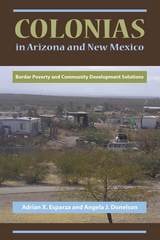
There are approximately half a million people living in 227 officially designated colonias in southern Arizona and New Mexico. These border communities are characterized by poor-quality housing, a lack of infrastructure (paved roads, water and sewer systems, and electricity), high levels of poverty and unemployment, and a disproportionate concentration of Hispanics. These colonias comprise one of the country’s largest pockets of poverty. Even so, little is known about these towns or the people who live in them. This book provides the first comprehensive treatment of Arizona and New Mexico colonias, with the aim of increasing their visibility and promoting community development.

Beginning with an examination of the origins of border region settlement and the emergence of colonias in southern Arizona and New Mexico in the late 1800s, the book then turns to an assessment of current social, economic, and housing conditions. The authors also examine how Mexico’s recent economic crises and U.S. immigration and border security policies have shaped the quality of life in colonias, and they evaluate recent community development initiatives. By examining the challenges and successes of these recent efforts, the authors are able to provide a generalized plan for community development. Balancing analyses of these communities with a review of the positive steps taken to improve the quality of life of their inhabitants, Colonias in Arizona and New Mexico is an indispensable tool for anyone interested in public policy or immigration issues.
[more]
cover of Colonization After Emancipation: Lincoln and the Movement for Black Resettlement

Colonization After Emancipation

Lincoln and the Movement for Black Resettlement

Phillip W. Magness and Sebastian N. Page

University of Missouri Press, 2011

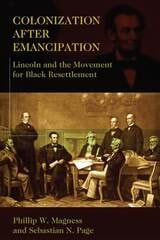
History has long acknowledged that President Abraham Lincoln, the Great Emancipator, had considered other approaches to rectifying the problem of slavery during his administration. Prior to Emancipation, Lincoln was a proponent of colonization: the idea of sending African American slaves to another land to live as free people. Lincoln supported resettlement schemes in Panama and Haiti early in his presidency and openly advocated the idea through the fall of 1862. But the bigoted, flawed concept of colonization never became a permanent fixture of U.S. policy, and by the time Lincoln had signed the Emancipation Proclamation on January 1, 1863, the word “colonization” had disappeared from his public lexicon. As such, history remembers Lincoln as having abandoned his support of colonization when he signed the proclamation. Documents exist, however, that tell another story.

Colonization after Emancipation: Lincoln and the Movement for Black Resettlement explores the previously unknown truth about Lincoln’s attitude toward colonization. Scholars Phillip W. Magness and Sebastian N. Page combed through extensive archival materials, finding evidence, particularly within British Colonial and Foreign Office documents, which exposes what history has neglected to reveal—that Lincoln continued to pursue colonization for close to a year after emancipation. Their research even shows that Lincoln may have been attempting to revive this policy at the time of his assassination.

Using long-forgotten records scattered across three continents—many of them untouched since the Civil War—the authors show that Lincoln continued his search for a freedmen’s colony much longer than previously thought. Colonization after Emancipation reveals Lincoln’s highly secretive negotiations with the British government to find suitable lands for colonization in the West Indies and depicts how the U.S. government worked with British agents and leaders in the free black community to recruit emigrants for the proposed colonies. The book shows that the scheme was never very popular within Lincoln’s administration and even became a subject of subversion when the president’s subordinates began battling for control over a lucrative “colonization fund” established by Congress.

Colonization after Emancipation reveals an unexplored chapter of the emancipation story. A valuable contribution to Lincoln studies and Civil War history, this book unearths the facts about an ill-fated project and illuminates just how complex, and even convoluted, Abraham Lincoln’s ideas about the end of slavery really were.

[more]
cover of Color of Privilege: Three Blasphemies on Race and Feminism

Color of Privilege

Three Blasphemies on Race and Feminism

Aida Hurtado

University of Michigan Press, 1996
This groundbreaking and important book explores how women of different ethnic/racial groups conceive of feminism. Aída Hurtado advances the theory of relational privilege to explain those differing conceptions. Previous theories about feminism have predominantly emphasized the lives and experiences of middle-class white women. Aída Hurtado argues that the different responses to feminism by women of color are not so much the result of personality or cultural differences between white women and women of color, but of their differing relationship to white men. For Hurtado, subordination and privilege must be conceived as relational in nature, and gender subordination and political solidarity must be examined in the framework of culture and socioeconomic context. Hurtado's analysis of gender oppression is written from an interdisciplinary, multicultural standpoint and is enriched by selections from poems by Sandra Cisneros, Gloria Anzaldúa, Lorna Dee Cervantes, and Elba Sanchez, and from plays by El Teatro Campesino, the United Farm Workers theater group. A final chapter proposes that progressive scholarship, and especially feminist scholarship, must have at its core a reflexive theory of gender oppression that allows writers to simultaneously document oppression while taking into account the writer's own privilege, to analyze the observed as well as the observer. Aída Hurtado is Associate Professor of Psychology, University of California, Santa Cruz.
[more]
cover of Color of Violence: The INCITE! Anthology

Color of Violence

The INCITE! Anthology

INCITE! Women of Color Against Violence, editor

Duke University Press, 2016
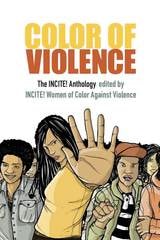
The editors and contributors to Color of Violence ask: What would it take to end violence against women of color? Presenting the fierce and vital writing of organizers, lawyers, scholars, poets, and policy makers, Color of Violence radically repositions the antiviolence movement by putting women of color at its center. The contributors shift the focus from domestic violence and sexual assault and map innovative strategies of movement building and resistance used by women of color around the world. The volume's thirty pieces—which include poems, short essays, position papers, letters, and personal reflections—cover violence against women of color in its myriad forms, manifestations, and settings, while identifying the links between gender, militarism, reproductive and economic violence, prisons and policing, colonialism, and war. At a time of heightened state surveillance and repression of people of color, Color of Violence is an essential intervention.
 
Contributors. Dena Al-Adeeb, Patricia Allard, Lina Baroudi, Communities Against Rape and Abuse (CARA), Critical Resistance, Sarah Deer, Eman Desouky, Ana Clarissa Rojas Durazo, Dana Erekat, Nirmala Erevelles, Sylvanna Falcón, Rosa Linda Fregoso, Emi Koyama, Elizabeth "Betita" Martínez, maina minahal, Nadine Naber, Stormy Ogden, Julia Chinyere Oparah, Beth Richie, Andrea J. Ritchie, Dorothy Roberts, Loretta J. Ross, s.r., Puneet Kaur Chawla Sahota, Renee Saucedo, Sista II Sista, Aishah Simmons, Andrea Smith, Neferti Tadiar, TransJustice, Haunani-Kay Trask, Traci C. West, Janelle White
[more]
cover of Colorado's Japanese Americans: From 1886 to the Present

Colorado's Japanese Americans

From 1886 to the Present

Bill Hosokawa

University Press of Colorado, 2005

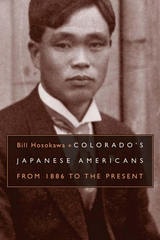
In Colorado's Japanese Americans, renowned journalist and author Bill Hosokawa pens the first history of this significant minority in the Centennial State. From 1886, when the young aristocrat Matsudaira Tadaatsu settled in Denver, to today, when Colorado boasts a population of more than 11,000 people of Japanese ancestry, Japanese Americans have worked to build homes, businesses, families, and friendships in the state.

Hosokawa traces personal histories, such as Bob Sakata's journey from internment in a relocation camp to his founding of a prosperous truck farm; the conviction of three sisters for assisting the escape of German POWs; and the years of initiative and determination behind Toshihiro Kizaki's ownership of Sushi Den, a beloved Denver eatery. In addition to personal stories, the author also relates the larger history of the interweave of cultures in Colorado, from the founding of the Navy's Japanese language school at the University of Colorado to the merging of predominantly white and Japanese American congregations at Arvada's Simpson United Methodist Church.

With the author's long view and sharp eye, Colorado's Japanese Americans creates a storied document of lasting legacy about the Issei and Nisei in Colorado.
[more]
cover of Colorblind Tools: Global Technologies of Racial Power

Colorblind Tools

Global Technologies of Racial Power

Marzia Milazzo

Northwestern University Press, 2023

Winner of the 2023 Association for Ethnic Studies Outstanding Book Award

A study of anti-Blackness and white supremacy across four continents demonstrates that colorblindness is neither new nor a subtype of racist ideology, but a constitutive technology of racism

 
In Colorblind Tools, Marzia Milazzo offers a transnational account of anti-Blackness and white supremacy that pushes against the dominant emphasis on historical change pervading current racial theory. This emphasis on change, she contends, misses critical lessons from the past.
 
Bringing together a capacious archive of texts on race produced in Brazil, Cuba, Mexico, Panama, the United States, and South Africa from multiple disciplines and genres, Milazzo uncovers transnational continuities in structural racism and white supremacist discourse from the inception of colonial modernity to the present. In the process, she traces the global workings of what she calls colorblind tools: technologies and strategies that at once camouflage and reproduce white domination. Whether examining Rijno van der Riet’s defense of slavery in the Cape Colony, discourses of racial mixture in Latin American eugenics and their reverberations in contemporary scholarship, the pitfalls of white “antiracism,” or Chicana indigenist aesthetics, Milazzo illustrates how white people collectively disavow racism to maintain power across national boundaries, and how anti-Black and colonial logics can be reproduced even in some decolonial literatures. Milazzo’s groundbreaking study proves that colorblindness is not new, nor is it a subtype of racist ideology or a hallmark of our era. It is a constitutive technology of racism—a tool the master cannot do without.

[more]