Results by title
4030 books match the query 'Language Arts & Disciplines' and 283 start with c
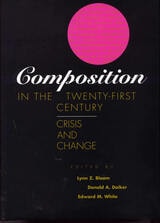
Composition in the Twenty-First Century
Crisis and ChangeEdited by Lynn Z. Bloom, Donald A. Daiker, and Edward M. White
Southern Illinois University Press, 1997
Despite its pervasiveness and its significance, composition has an unstable status within the curriculum. Writing programs and writing faculty are besieged by academic, political, and financial concerns that have not been well understood or addressed.
At many institutions, composition functions paradoxically as both the gateway to academic success and as the gatekeeper, reducing access to academic work and opportunity for those with limited facility in English. Although writing programs are expected to provide services that range from instruction in correct grammar to assisting—or resisting—political correctness, expanding programs and shrinking faculty get caught in the crossfire. The bottom line becomes the firing line as forces outside the classroom determine funding and seek to define what composition should do.
In search of that definition, the contributors ask and answer a series of specific and salient questions: What implications—intellectual, political, and institutional—will forces outside the classroom have on the quality and delivery of composition in the twenty-first century? How will faculty and administrators identify and address these issues? What policies and practices ought we propose for the century to come?
This book features sixteen position papers by distinguished scholars and researchers in composition and rhetoric; most of the papers are followed by invited responses by other notable compositionists. In all, twenty-five contributors approach composition from a wide variety of contemporary perspectives: rhetorical, historical, social, cultural, political, intellectual, economic, structural, administrative, and developmental. They propose solutions applicable to pedagogy, research, graduate training of composition teachers, academic administration, and public and social policy. In a very real sense, then, this is the only book to offer a map to the future of composition.
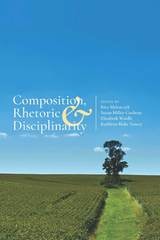
Composition, Rhetoric, and Disciplinarity
Rita Malenczyk
Utah State University Press, 2018
Edited by four nationally recognized leaders of composition scholarship, Composition, Rhetoric, and Disciplinarity asks a fundamental question: can Composition and Rhetoric, as a discipline, continue its historical commitment to pedagogy without sacrificing equal attention to other areas, such as research and theory? In response, contributors to the volume address disagreements about what it means to be called a discipline rather than a profession or a field; elucidate tensions over the defined breadth of Composition and Rhetoric; and consider the roles of research and responsibility as Composition and Rhetoric shifts from field to discipline.
Outlining a field with a complex and unusual formation story, Composition, Rhetoric, and Disciplinarity employs several lenses for understanding disciplinarity—theory, history, labor, and pedagogy—and for teasing out the implications of disciplinarity for students, faculty, institutions, and Composition and Rhetoric itself. Collectively, the chapters speak to the intellectual and embodied history leading to this point; to questions about how disciplinarity is, and might be, understood, especially with regard to Composition and Rhetoric; to the curricular, conceptual, labor, and other sites of tension inherent in thinking about Composition and Rhetoric as a discipline; and to the implications of Composition and Rhetoric’s disciplinarity for the future.
Contributors: Linda Adler-Kassner, Elizabeth H. Boquet, Christiane Donahue, Whitney Douglas, Doug Downs, Heidi Estrem, Kristine Hansen, Doug Hesse, Sandra Jamieson, Neal Lerner, Jennifer Helene Maher, Barry Maid, Jaime Armin Mejía, Carolyn R. Miller, Kelly Myers, Gwendolynne Reid, Liane Robertson, Rochelle Rodrigo, Dawn Shepherd, Kara Taczak

Comprehensive Guide To Emergency And Disaster Prepar
Frances Wilkinson
Assoc of College & Research Libraries, 2010
Comprehensive Guide to Emergency Preparedness and Disaster Recovery
Frances C. Wilkinson
Assoc of College & Research Libraries, 2010
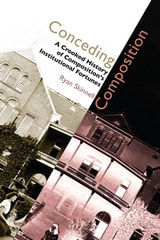
Conceding Composition
A Crooked History of Composition's Institutional FortunesRyan Skinnell
Utah State University Press, 2016
Based on extensive archival research conducted at six American universities and using the specific cases of institutional mission, regional accreditation, and federal funding, this study demonstrates that administrators and faculty have introduced, reformed, maintained, threatened, or eliminated composition as part of negotiations related to nondisciplinary institutional exigencies. Viewing composition from this perspective, author Ryan Skinnell raises new questions about why composition exists in the university, how it exists, and how teachers and scholars might productively reconceive first-year composition in light of its institutional functions.
The book considers the rhetorical, political, organizational, institutional, and promotional options conceding composition opened up for institutions of higher education and considers what the first-year course and the discipline might look like with composition’s transience reimagined not as a barrier but as a consummate institutional value.
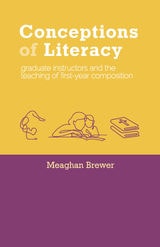
Conceptions of Literacy
Graduate Instructors and the Teaching of First-Year CompositionMeaghan Brewer
Utah State University Press, 2020
Brewer argues that conceptions of literacy undergird the work of writing instructors and that many of the anxieties around composition studies’ disciplinary status are related to the differences perceived between the field’s conceptions of literacy and those of the graduate instructors and adjuncts who teach the majority of composition courses. Conceptions of Literacy makes practical recommendations for how new graduate instructors can begin to perceive and interrogate their conceptions of literacy, which, while influential, are often too personal to recognize.
Conceptual Structure, Discourse and Language
Edited by Adele Goldberg
CSLI, 1996

Conceptualizing 21st-Century Archives
Anne J. Gilliland
American Library Association, 2017
Concise AACR2
Michael Gorman
American Library Association, 2004
Concreteness in Grammar
Lise Dobrin
CSLI, 2013
Conducting the Reference Interview
Catherine Sheldrick Ross
American Library Association, 2019
Based on the latest research in communication theory but tailored specifically for real-world application, this updated manual speaks equally to the needs of students preparing to enter the profession and those who are already fielding reference inquiries. The authors, working in consultation with a stellar advisory board of scholars and practitioners, present a convenient and comprehensive resource that will teach you how to understand the needs of public, academic, and special library users across any virtual setting—including email, text messaging, and social media—as well as in traditional and face-to-face models of communication. Packed with exercises and examples to help you practice effective reference transactions and avoid common pitfalls, this book
- tackles the fundamentals of the reference interview, from why it’s important in the first place to methods for setting the stage for a successful interview and techniques for finding out what the library user really wants to know;
- covers the ins and outs of the readers’ advisory interview;
- examines a wide range of contexts, such as children, young adults, parents, seniors, adults from diverse communities, and those with disabilities;
- presents case studies of innovative reference and user encounters at a variety of libraries;
- offers updated coverage of virtual reference, including new research, virtual reality transcripts, and a look at crowd-sourcing reference via social media;
- features new content on common microaggressions, with guidance on how to use awareness of emotion as a factor in reference interactions to ensure better outcomes;
- discusses topics such as respecting/protecting privacy, overcoming assumptions, implicit judgment, the importance of context, determining the real information need, and many other lessons learned from challenging reference encounters; and
- thoroughly addresses policy and training procedures, as well as the unique challenges faced by paraprofessionals and non-degreed staff.
Find your bearings in the continually evolving hybrid reference environment through proven strategies, advice, exercises, and research from three experts in the field.

Confessions of St. Augustine in Latin
Andrew Beer
Catholic University of America Press, 2026
Confessions of a Book Reviewer
The Best of Carte BlancheMichael Cart
American Library Association, 2018
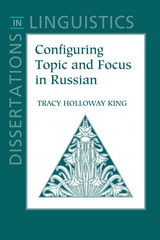
Configuring Topic and Focus in Russian
Tracy Holloway King
CSLI, 1995
Connecting Boys
American Library Association, 2003
Connecting Boys With Books 2
Michael Sullivan
American Library Association, 2008
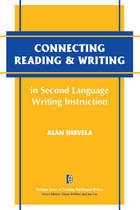
Connecting Reading & Writing in Second Language Writing Instruction
Alan Hirvela
University of Michigan Press, 2004
Although the integrated reading-writing model has gained popularity in recent years, many teachers have little more than an intuitive sense of the connections between these skills. As part of the popular Michigan Series on Teaching Multilingual Writers, Connecting Reading and Writing in Second Language Instruction will provide invaluable background knowledge on this issue to ESL teachers in training, as well as teachers who are already practicing.
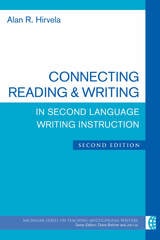
Connecting Reading & Writing in Second Language Writing Instruction, Second Edition
Alan R. Hirvela
University of Michigan Press, 2016
The new edition features two new chapters. The first is a chapter on assessment because students are now being asked to connect reading and writing in the classroom and on formal assessments like the TOEFL®. The second new chapter is an argument for accounting for transfer elements in the teaching and researching of reading-writing connections.
The goals of this revised volume are to provide: resources for those wishing to pursue reading-writing connections, summaries of the beliefs underlying those connections, ideas for teaching the connections in the classroom, and information about the work others have done to develop this domain of L2 writing.
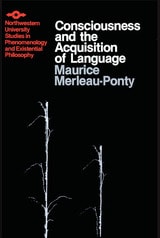
Consciousness and the Acquisition of Language
Maurice Merleau-Ponty
Northwestern University Press, 1979
Considering Students, Teachers, and Writing Assessment, Vol 2
Emerging Theoretical and Pedagogical PracticeDiane Kelly-Riley
University Press of Colorado, 2024
Considering Students, Teachers, and Writing Assessment, Vol. 1
Technical and Political ContextsDiane Kelly-Riley
University Press of Colorado, 2024
Constellating Home
Trans and Queer Asian American RhetoricsV. Jo Hsu
The Ohio State University Press, 2022
Winner of the 2024 Winifred Bryan Horner Outstanding Book Award
Winner of the 2023 NCA Diamond Anniversary Book Award
Winner of the Innovations in Community Writing Book Award from the Conference on Community Writing
Constellating Home: Trans and Queer Asian American Rhetorics explores how race, migration, gender, and disability entwine in conceptions of deserving citizens. V. Jo Hsu explores three archives of trans and queer Asian American (QTAPI) rhetorics, considering a range of texts including oral histories, photography, personal essays, and performance showcases. To demonstrate how QTAPI use personal narrative to critique and revise the conditions of their exclusion, Hsu forwards a critical approach to storytelling, homing, which deliberately engages sites of alienation and belonging. Through a practice of diasporic listening, Hsu tracks confluences among seemingly divergent journeys and locates trans and queer Asian American experiences within broader US and global politics.
The stories at the heart of Constellating Home center the voices of trans and nonbinary people, disabled people, and others often overlooked in conceptions of US citizenry. Hsu’s analyses demonstrate the inextricability of Asian American activism from queer politics, disability activism, and racial justice, and they consider how stories network individual experiences with resonant histories and struggles. Finding unlikely intimacies among individual and communal histories, Constellating Home provides tools for fostering mutual care, revealing harmful social patterns, and orienting shared values and politics.
Constraint-Based Approaches to Germanic Syntax
Edited by W. Detmar Meurers and Tibor Kiss
CSLI, 2001
This volume begins with an introduction to the recent research performed on Germanic syntax using constraint-based frameworks. It then goes on to investigate the linguistic phenomena found in the grammar of the German and Danish languages. Using such approaches as Lexical-Functional Grammar and Head-Driven Phrase Structure Grammar, contributors shed a different light on theoretical issues addressed by past studies, including semi-free word order, partial front phenomena, and complex predicate formation. While alternative approaches have assumed that meaning (semantics) is dependent on form (syntax), various analyses presented in this volume explore the idea that both form and meaning are equally constitutive for grammatical descriptions.
Constraints and Resources in Natural Language Syntax and Semantics
Edited by Gosse Bouma, Erhard Hinrichs, Geert-Jan M. Kruijff, and Richard Oehrle
CSLI, 1999
Constructing Library Buildings That Work
Fred Schlipf
American Library Association, 2020
When it’s time to start planning for a renovation or construction project, you don’t need a book that covers everything from A to Z. Instead you need a concentrated set of tools and techniques that will guide you and your team to find the best solutions for your specific project. That’s exactly what library building expert Schlipf provides in his new book, which will be a key resource for library directors, administrators, board members, trustees, and planning professionals. Pinpointing the elements that make library buildings functional, in this book readers will find
- a streamlined organization of the text that enables quick consultation and facilitates collaboration;
- concise coverage of the essentials of the library construction process, including who does what, how things work, and how to stay out of trouble along the way;
- advice on important planning and workflow considerations such as site selection, schematic design, funding, design development, the bidding process, construction, and post-construction occupancy;
- discussion of the characteristics of successful library buildings—buildings that are easy to maintain, welcoming to people with disabilities, have less trouble-prone restrooms, and provide security for users, staff, and collections; and
- an overview of bad ideas in library architecture, with pointed guidance on how to steer clear of them from the very beginning of your project.
Constructing Rhetorical Education
Edited by Marie Secor and Davida Charney
Southern Illinois University Press, 1992
In nineteen essays illustrating its many aspects, this book offers an argument for what it takes to construct a complete rhetorical education.
The editors take an approach that is pragmatic and pluralistic, based as it is on the assumptions that a rhetorical education is not limited to teaching freshman composition (or any specific writing course) and that the contexts in which such an education occurs are not limited to classrooms. This thought-provoking volume stresses that while a rhetorical education results in the growth of writing skills, its larger goal is to foster critical thinking.
Constructions in Acquisition
Edited by Barb Kelly and Eve V. Clark
CSLI, 2006
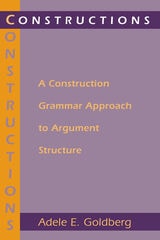
Constructions
A Construction Grammar Approach to Argument StructureAdele E. Goldberg
University of Chicago Press, 1995
Goldberg provides a comprehensive account of the relation between verbs and constructions, offering ways to relate verb and constructional meaning, and to capture relations among constructions and generalizations over constructions. Prototypes, frame semantics, and metaphor are shown to play crucial roles. In addition, Goldberg presents specific analyses of several constructions, including the ditransitive and the resultative constructions, revealing systematic semantic generalizations.
Through a comparison with other current approaches to argument structure phenomena, this book narrows the gap between generative and cognitive theories of language.

Contact, Structure, and Change
A Festschrift in Honor of Sarah G. ThomasonEdited by Anna M. Babel and Mark A. Sicoli
Michigan Publishing Services, 2021
Contemporary Perspectives on Cognition and Writing
Patricia Portanova
University Press of Colorado, 2017
Co-Published with CSU Open Press
Since the 1980s, even as international writing scholars have embraced cognitive science, the number of studies building on research in writing and cognition has decreased in the United States. Despite this decline, significant interest and ongoing research in this critical area continues. Contemporary Perspectives on Cognition and Writing explores the historical context of cognitive studies, the importance to our field of studies in neuroscience, the applicability of habits of mind, and the role of cognition in literate development and transfer. These works—each of which offers a timely contribution to research, teaching, and learning in the composition classroom—are book-ended by a foreword and afterword by cognition and writing pioneers John Hayes and Linda Flower. This collection, as a result, offers a historical marker of where we were in cognitive studies and where we might go.
Content-Based Second Language Instruction
Michigan Classics EditionDonna M. Brinton, Marguerite Ann Snow, and Marjorie Wesche
University of Michigan Press, 2003
While the core of the book remains the same, new features discuss important CBI-related research and modifications to the pedagogy in the past many years.
Content-Based Second Language Instruction, Michigan Classics Edition, now includes:
a new preface
a glossary of key terms
an updated bibliography
an epilogue highlighting the major developments in the field since 1989.
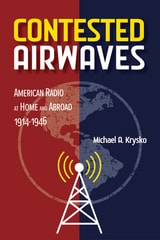
Contested Airwaves
American Radio at Home and Abroad, 1914-1946Michael A. Krysko
University of Illinois Press, 2025
Controversial American-led radio initiatives sparked a kaleidoscope of conflicts and rivalries from the medium’s earliest days through the end of World War II. Michael A. Krysko explores how the medium engaged the knowledge, assumptions, and prejudices that fueled listeners’ and policymakers’ objections to foreign and unwelcome radio content.
Krysko considers Americans’ antagonism toward non-English language broadcasting; issues of identity, geography, and sovereignty that propelled opposition to Mexico’s “border blaster” stations; how a project aimed at helping Cajun-speaking listeners became a French-only celebration of Acadian culture; a failed initiative to teach English to Latin Americans via shortwave broadcasting; enduring US-Panamanian conflicts over the control of radio in and around the Panama Canal; and how farmers from across the Southwest protested a radio treaty’s perceived preferential treatment of Cuba. Paying particular attention to the act of listening, Krysko shows how these initiatives illuminated and solidified divisions rooted in identity, nationalism, and prejudice.
Clear and wide-ranging, Contested Airwaves reveals early radio’s place at the nexus of public programming, transnational relations, and its own evolution as a communication medium.
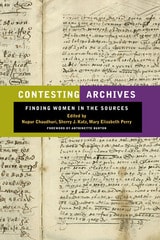
Contesting Archives
Finding Women in the SourcesEdited by Nupur Chaudhuri, Sherry J. Katz, and Mary Elizabeth Perry
University of Illinois Press, 2010
The contributors of Contesting Archives challenge the assumption that an archive is a neutral, immutable, and a historical repository of information. Instead, these historians view it as a place where decisions are made about whose documents--and therefore whose history--is important. Finding that women's voices and their texts were often obscured or lost altogether, they have developed many new methodologies for creating unique archives and uncovering more evidence by reading documents "against the grain," weaving together many layers of information to reveal complexities and working collectively to reconstruct the lives of women in the past.
Global in scope, this volume demonstrates innovative research on diverse women from the sixteenth century to the present in Spain, Mexico, Tunisia, India, Iran, Poland, Mozambique, and the United States. Addressing gender, race, class, nationalism, transnationalism, and migration, these essays' subjects include indigenous women of colonial Mexico, Muslim slave women, African American women of the early twentieth century, Bengali women activists of pre-independence India, wives and daughters of Qajar rulers in Iran, women industrial workers in communist Poland and socialist Mozambique, and women club owners in modern Las Vegas. A foreword by Antoinette Burton adroitly synthesizes the disparate themes woven throughout the book.
Contributors are Janet Afary, Maryam Ameli-Rezai, Antoinette Burton, Nupur Chaudhuri, Julia Clancy-Smith, Mansoureh Ettehadieh, Malgorzata Fidelis, Joanne L. Goodwin, Kali Nicole Gross, Daniel S. Haworth, Sherry J. Katz, Elham Malekzadeh, Mary Elizabeth Perry, Kathleen Sheldon, Lisa Sousa, and Ula Y. Taylor.
Contesting the Master Narrative
Essays In Social HistoryJeffrey Cox
University of Iowa Press, 1998
Critically examining past master narratives in light of emerging alternatives, these essayists ask us to reevaluate the stories we tell, the narrative traditions within which they are situated, and the audiences they are designed to persuade. The first essays explore the gendered character of social history rhetoric by exposing alternative, feminist traditions of social scientific and social historical writing. The second section focuses on alternative narrative traditions of historical writing in non-European contexts, specifically India, Japan, and China. And the third group spotlights the rhetorical uses of synthesis in the writings of social historians.
The essays feature the range of narrative possibilities available to historians who have become self-critical about the pervasive use of unexamined master narratives; they show how limited that tradition can be compared with the diverse alternatives derived from, for example, gendered traditions of Latin American travel writers of the nineteenth century, Victorian women's historical writing, or the lively subaltern tradition in Indian social history. Together they argue not for the abandonment of historical materialism or the elimination of all master narratives but for the reinvigoration of social history through the use of new and more persuasive arguments based on alternative narratives.
Contextualizing Israel's Sacred Writings
Ancient Literacy, Orality, and Literary ProductionBrian B. Schmidt
SBL Press, 2015
An essential resource exploring orality and literacy in the pre-Hellenistic southern Levant and the Hebrew Bible
Situated historically between the invention of the alphabet, on the one hand, and the creation of ancient Israel's sacred writings, on the other, is the emergence of literary production in the ancient Levant. In this timely collection of essays by an international cadre of scholars, the dialectic between the oral and the written, the intersection of orality with literacy, and the advent of literary composition are each explored as a prelude to the emergence of biblical writing in ancient Israel. Contributors also examine a range of relevant topics including scripturalization, the compositional dimensions of orality and textuality as they engage biblical poetry, prophecy, and narrative along with their antecedents, and the ultimate autonomy of the written in early Israel. The contributors are James M. Bos, David M. Carr, André Lemaire, Robert D. Miller II, Nadav Na'aman, Raymond F. Person Jr., Frank H. Polak, Christopher A. Rollston, Seth L. Sanders, Joachim Schaper, Brian B. Schmidt, William M. Schniedewind, Elsie Stern, and Jessica Whisenant.
Features
- Addresses questions of literacy and scribal activity in the Levant and Negev
- Articles examine memory, oral tradition, and text criticism
- Discussion of the processes of scripturalization
Contingency, Exploitation, and Solidarity
Labor and Action in English CompositionSeth Kahn
University Press of Colorado, 2017
Composition has been a microcosm of the corporatization of higher education for thirty years, with adjuncts often handling the hard work of writing instruction. We've learned enough to know that change is needed. Influenced by the efforts of organizations such as New Faculty Majority, Faculty Forward, PrecariCorps, and national faculty unions, this collection highlights action, describing efforts that have improved adjunct working conditions in English departments. The editors categorize these efforts into five threads: strategies for self-advocacy; organizing within and across ranks; professionalizing in complex contexts; working for local changes to workload, pay, and material conditions; and protecting gains.
Contributors to this collection include contingent and tenure-line faculty from private, public, and community colleges, as well as writing program administrators and writing center faculty. Their voices address contingency, exploitation, and solidarity in activist terms deriving from institutional realities and cases. Collectively, they offer creative and constructive responses that can enact labor justice and champion the disciplinary energies of all members of our collegial community.
Contributors: Janelle Adsit, Jacob Babb, Chris Blankenship, Rebekah Shultz Colby, Richard Colby, Anicca Cox, Sue Doe, Tracy Donhardt, Dawn Fels, Barbara Heifferon, Desirée M. Holter, Justin Jory, Jeffrey Klausman, Michelle LaFrance, Sarah Layden, Carol Lind, Maria Maisto, Amanda Martin, Mark McBeth, Tim McCormack, Joan Mullin, Dani Nier-Weber, Glenn Moomau, Michael Murphy, Anna K. Nardo, Rolf Norgaard, Courtney Adams Wooten, Lacey Wootton, Allison Laubach Wright
Continuing Cooperative Development
A Discourse Framework for Individuals as ColleaguesJulian Edge
University of Michigan Press, 2002
Controversies in Second Language Writing, Second Edition
Dilemmas and Decisions in Research and InstructionChristine Pearson Casanave
University of Michigan Press, 2017
The second edition is a thorough revision with all chapters updated to refer to works written since the first edition was published. A few chapters have been added: one devoted to writing in a digital era (Chapter 3); one devoted to the debates about English as a lingua franca, "translingual literacy practices," and other hybrid uses of English that have been ongoing in the last ten years (Chapter 4); and one giving special attention to issues related to writing from sources and plagiarism (Chapter 6).
As with the first edition, the second edition of Controversies is not a book that will teach readers how to do things. Rather, it is a book designed to help readers think and to wrestle with issues in L2 writing that are not easily resolved by how-to prescriptions.
Controversies in Second Language Writing
Dilemmas and Decisions in Research and InstructionChristine Pearson Casanave
University of Michigan Press, 2003
To counteract some of the debates, Casanave explores the different sides of the arguments and provides examples of how other teachers have dealt with these issues. The book presents novice and seasoned teachers with thought-provoking issues and questions to consider when determining and reflecting on their own teaching strategies and criteria.
Topics discussed include:
contrastive rhetoric
product vs. process
fluency and accuracy
assessment of student work
audience
plagiarism
politics and ideology.
Conversation and Community
Chat in a Virtual WorldLynn Cherny
CSLI, 1999
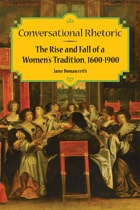
Conversational Rhetoric
The Rise and Fall of a Women's Tradition, 1600-1900Jane Donawerth
Southern Illinois University Press, 2011
Donawerth traces the development of women’s rhetorical theory through the voices of English and American women (and one much-translated French woman) over three centuries. She demonstrates how they cultivated theories of rhetoric centered on conversation that faded once women began writing composition textbooks for mixed-gender audiences in the latter part of the nineteenth century. She recovers and elucidates the importance of the theories in dialogues and defenses of women’s education by Bathsua Makin, Mary Astell, and Madeleine de Scudéry; in conduct books by Hannah More, Lydia Sigourney, and Eliza Farrar; in defenses of women’s preaching by Ellen Stewart, Lucretia Mott, Catherine Booth, and Frances Willard; and in elocution handbooks by Anna Morgan, Hallie Quinn Brown, Genevieve Stebbins, and Emily Bishop. In each genre, Donawerth explores facets of women’s rhetorical theory, such as the recognition of the gendered nature of communication in conduct books, the incorporation of the language of women’s rights in the defenses of women’s preaching, and the adaptation of sentimental culture to the cultivation of women’s bodies as tools of communication in elocution books.
Rather than a linear history, Conversational Rhetoric follows the starts, stops, and starting over in women’s rhetorical theory. It covers a broad range of women’s rhetorical theory in the Anglo-American world and places them in their social, rhetorical, and gendered historical contexts. This study adds women’s rhetorical theory to the rhetorical tradition, advances our understanding of women’s theories and their use of rhetoric, and offers a paradigm for analyzing the differences between men’s and women’s rhetoric from 1600 to 1900.
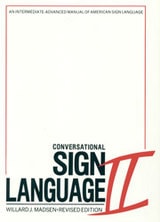
Conversational Sign Language II
An Intermediate Advanced ManualWillard J Madsen
Gallaudet University Press, 1972
This book presents English words and their American Sign Language (ASL) equivalents in 63 lessons. Part one covers 750 words and their signs. Part two deals with the interpretation of 220 English idioms (which have over 300 usages in ASL). Part three presents over 300 ASL idioms and colloquialisms prevalent in informal conversations.
Conversational Sign Language II is excellent for the classroom or for self-instructional use and includes a separate index for each part as well as a bibliography. Each of the 63 lessons in the text is illustrated and has follow-up exercises. A practice test is included after every third lesson.
Conversations with Interpreter Educators
Exploring Best PracticesChristine Monikowski
Gallaudet University Press, 2017
In Conversations with Interpreter Educators, Monikowski assembles a group of 17 professors in the field of sign language interpretation. Through individual interviews conducted via Skype, Monikowski engages them in informal conversations about their teaching experiences and the professional publications that have influenced their teaching philosophies. She guides each conversation by asking these experts to share a scholarly publication that they assign to their students. They discuss the merits of the text and its role in the classroom, which serves to highlight the varying goals each professor sets for students. The complexity of the interpreting task, self-reflection, critical thinking, linguistics, backchannel feedback, and cultural understanding are a sampling of topics explored in these exchanges. Engaging and accessible, Monikowski’s conversations offer evidence-based practices that will inform and inspire her fellow educators.
Conversations with Shotetsu
Translated by Robert H. Brower; With an Introduction and Notes by Steven D. Carter
University of Michigan Press, 1992
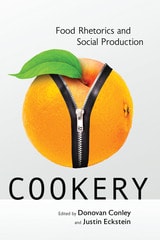
Cookery
Food Rhetorics and Social ProductionEdited by Donovan Conley and Justin Eckstein
University of Alabama Press, 2020
The rhetoric of contemporary food production and consumption with a focus on social boundaries
The rhetoric of food is more than just words about food, and food is more than just edible matter. Cookery: Food Rhetorics and Social Production explores how food mediates both rhetorical influence and material life through the overlapping concepts of invention and production. The classical canon of rhetorical invention entails the process of discovering one’s persuasive appeals, whereas the contemporary landscape of agricultural production touches virtually everyone on the planet. Together, rhetoric and food shape the boundaries of shared living.
The essays in this volume probe the many ways that food informs contemporary social life through its mediation of bodies—human and extra-human alike—in the forms of intoxication, addiction, estrangement, identification, repulsion, and eroticism. Our bodies, in turn, shape the boundaries of food through research, technology, cultural trends, and, of course, by talking about it.
Each chapter explores food’s persuasive nature through a unique prism that includes intoxication, dirt, “food porn,” strange foods, and political “invisibility.” Each case offers new insights about the relations between rhetorical influence and embodied practice through food. As a whole Cookery articulates new ways of viewing food’s powers of persuasion, as well as the inherent role of persuasion in agricultural production.
The purpose of Cookery, then, is to demonstrate the deep rhetoricity of our modern industrial food system through critical examinations of concepts, practices, and tendencies endemic to this system. Food has become an essential topic for discussions concerned with the larger social dynamics of production, distribution, access, reception, consumption, influence, and the fraught question of choice. These questions about food and rhetoric are equally questions about the assumptions, values, and practices of contemporary public life.
Cooking Up a Storytime
Mix-and-Match Menus for Easy ProgrammingSusan Anderson-Newham
American Library Association, 2014
Cool Story Programs for the School-Age Crowd
Rob Reid
American Library Association, 2004
Copyright Conversations
Rights Literacy in a Digital WorldSara Benson
Assoc of College & Research Libraries, 2019
Copyright Essentials for Librarians and Educators
American Library Association, 2000
Copyright Law for Librarians and Educators
Creative Strategies and Practical SolutionsKenneth D. Crews
American Library Association, 2020
Copyright law never sleeps, making it imperative to keep abreast of the latest developments. Declared “an exemplary text that seals the standards for such books” (Managing Information), this newly revised and updated edition by respected copyright authority Crews offers timely insights and succinct guidance for LIS students, librarians, and educators alike. Readers will
- learn basic copyright definitions and key exceptions for education and library services;
- find information quickly with “key points” sidebars, legislative citations, and cross-references;
- get up to speed on fresh developments, such as how the recently signed Marrakesh Treaty expands access for people with disabilities and why the latest ruling in the Georgia State University case makes developing a fair use policy so important;
- understand the concept of fair use, with fresh interpretations of its many gray areas that will aid decision making;
- learn the current state of affairs regarding mass digitization, Creative Commons, classroom use and distance education, the Digital Millennium Copyright Act, and other important topics;
- receive guidance on setting up on a copyright service at a library, college, or university; and
- find many helpful checklists for navigating copyright in various situations.
This straightforward, easy-to-use guide provides the tools librarians and educators need to take control of their rights and responsibilities as copyright owners and users.