Results by title
3576 books match the query 'American' and 225 start with c
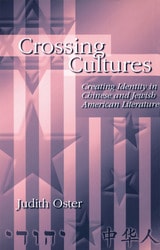
Crossing Cultures
Creating Identity in Chinese and Jewish American LiteratureJudith Oster
University of Missouri Press, 2003
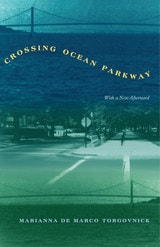
Crossing Ocean Parkway
Marianna De Marco Torgovnick
University of Chicago Press, 1994
Included are autobiographical moments interwoven with engrossing interpretations of American cultural icons from Dr. Dolittle to Lionel Trilling, The Godfather to Camille Paglia. Her experiences allow her to probe the cultural tensions in America caused by competing ideas of individuality and community, upward mobility and ethnic loyalty, acquisitiveness and spirituality.
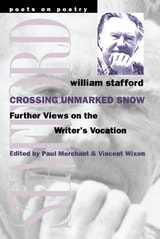
Crossing Unmarked Snow
Further Views on the Writer's VocationWilliam Stafford
University of Michigan Press, 1998
--William Stafford
A plain-spoken but eminently effective poet, the late William Stafford (1914-1993) has managed to shape part of the mainstream of American poetry by distancing himself from its trends and politics. Though his work has always inspired controversy, he was widely admired by students and poetry lovers as well as his own peers. His fascination with the process of writing joined with his love of the land and his faith in the teaching power of nature to produce a unique poetic voice in the last third of the twentieth century.
Crossing Unmarked Snow continues--in the tradition of Stafford's well-loved collections Writing the Australian Crawl and You Must Revise Your Life-- collecting prose and poetry on the writer's profession. The book includes reviews and reflections on poets from Theodore Roethke to Carolyn Forche, from May Sarton to Philip Levine; conversations on the making of poems; and a selection of Stafford's own poetry. The book also includes a section on the art of teaching, featuring interviews, writing exercises, and essays on the writer's vocation.
William Stafford authored more than thirty-five books of poetry and prose during his lifetime, including the highly acclaimed Writing the Australian Crawl: Views on the Writer's Vocation and You Must Revise Your Life.
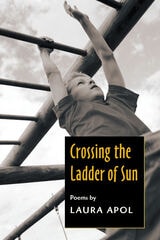
Crossing the Ladder of the Sun
Laura Apol
Michigan State University Press, 2004
In her new collection of poetry, Crossing the Ladder of Sun, Laura Apol explores the ordinary moments of life—watching her daughter, picking blueberries, sharing confidences with friends, arriving and leaving, and driving, always driving—and transforms them into the extraordinary. This book is rich with the lyrical found in what is considered the mundane as it portrays the multiple roles of a woman’s life—mother, daughter, lover, ex-wife, friend. Apol’s highly personal poems reflect a caring and compassion that transcends loneliness and heartache.
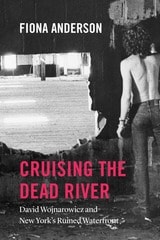
Cruising the Dead River
David Wojnarowicz and New York's Ruined WaterfrontFiona Anderson
University of Chicago Press, 2019

Cry Sower
Whitney Koo
University of Utah Press, 2027
Culinary Poetics and Edible Images in Twentieth-Century American Literature
Stacie Cassarino
The Ohio State University Press, 2018
Cassarino takes the reader through the changing dynamics of food production and consumption, from wartime sensibilities of patriotic eating to the postwar excess of culinary cosmopolitanism and finally to contemporary supermarket pastorals. She pairs chefs and poets—Julia Child and Gertrude Stein, Poppy Cannon and Frank O’Hara, Vertamae Smart-Grosvenor and Harryette Mullen—to argue that each converts eating into an aesthetic opportunity that has the power to impact how people consume. In this way, Cassarino reveals the modern cookbook not just as a literary counterpart to contemporary poetry but also as vital to the literature and art occurring around it. From Futurist cookbooks to fast food lyrics, from Gullah recipes to Eat Art, she reminds us that global foodscapes are connected to aesthetic movements in literature and art.
Cultivating Environmental Justice
A Literary History of U.S. Garden WritingRobert S. Emmett
University of Massachusetts Press, 2016
Drawing on ecocriticism, environmental history, landscape architecture, and recent work in environmental justice and food studies, Emmett explores how the language of environmental justice emerged in descriptions of gardening across a variety of literary forms. He reveals early egalitarian associations found in garden writing, despite a popular focus on elite sites such as suburban lawns and formal southern gardens. Cultivating Environmental Justice emphasizes the intergenerational work of gardeners and garden writers who, from the 1930s on, asserted increasingly radical socioeconomic and ecological claims to justice. Emmett considers a wide range of texts by authors including Bernard M'Mahon, Scott and Helen Nearing, Katharine S. White, Elizabeth Lawrence, Alice Walker, and Novella Carpenter.
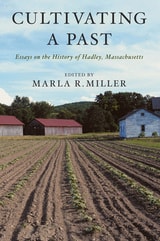
Cultivating a Past
Essays on the History of Hadley, MassachusettsMarla R. Miller
University of Massachusetts Press, 2009
Edited with an introduction by Marla R. Miller, Cultivating a Past brings together fifteen essays, some previously published and others new, that tell the story of Hadley from a variety of disciplinary vantage points. Archaeologists Elizabeth Chilton, Siobhan Hart, Christopher Donta, Edward Hood, and Rita Reinke investigate relations between Native and European communities, while historians Gregory Nobles, Alice Nash, and Pulitzer Prize winner Laurel Thatcher Ulrich explore the social, cultural, and political past of this New England town. Musicologist Andrea Olmstead surveys the career of composer Roger Sessions, costume specialist Lynne Bassett interprets the wardrobes of the town's seventeenth-century residents, Douglas Wilson investigates the connection between Hadley and the regicides William Goffe and Edward Whalley, and Martin Antonetti charts the course of a 1599 Bible alleged to have belonged Goffe.
Taken together, the essays capture how men and women in this small community responded to the same challenges that have faced other New Englanders from the seventeenth century to the present. They also reveal how the town's historical sense of itself evolved along the way, as stories of the alleged "Angel of Hadley," of favorite sons Joseph Hooker and Clarence Hawkes, and of daughters Mary Webster and Elizabeth Porter Phelps contributed to a civic identity that celebrates strength of character.

Cultural Conservatism, Political Liberalism
From Criticism to Cultural StudiesJames Seaton
University of Michigan Press, 1996
Chapters on Lionel Trilling, H. L. Mencken and Irving Babbitt, Ralph Ellison, Dwight Macdonald, Diana Trilling, and Edmund Wilson affirm the continuing pertinence of their work to today's concerns. Seaton then turns to the careers of Leslie Fiedler and Susan Sontag to explore the impact of the cultural radicalism of the sixties on literary criticism. Subsequent chapters analyze the successes and failures of contemporary cultural studies through the writings of Richard Rorty, Edward Said, Stanley Fish and Fredric Jameson.
Separately, these chapters provide provocative readings of the individual critics; together they make a case for the tradition exemplified by these critics as an alternative to contemporary cultural studies. The issues the book discusses extend beyond literary criticism and the academic world to the political-religious- cultural conflicts of today's culture wars.
"These lively, closely argued essays explain very clearly what the issues are, how they arose, and why they are important." --Christopher Lasch
"A forceful argument about the relationship between literary studies and politics that will add something important to the vigorous, and often fierce, discussion of the canon, the politics of literature, and educational reform."--William Cain, Wellesley College
James Seaton is Professor of English, Michigan State University. He is co-editor, with William K. Buckley, of Beyond Cheering and Bashing: New Perspectives on the Closing of the American Mind.
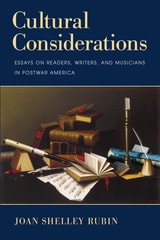
Cultural Considerations
Essays on Readers, Writers, and Musicians in Postwar AmericaJoan Shelley Rubin
University of Massachusetts Press, 2013
Focusing on aspects of American literary and musical culture in the decades after World War II, Rubin examines the contests between critics and their readers over the authority to make aesthetic judgments; the effort of academics to extend the university outward by bringing the humanities to a wide public; the politics of setting poetic texts to music; the role of ideology in the practice of commissioning and performing choral works; and the uses of reading in the service of both individualism and community. Specific topics include the 1957 attack by the critic John Ciardi on the poetry of Anne Morrow Lindbergh in the Saturday Review; the radio broadcasts of the classicist Gilbert Highet; Dwight Macdonald's vitriolic depiction of the novelist James Gould Cozzens as a pernicious middlebrow; the composition and reception of Howard Hanson's "Song of Democracy"; the varied career of musician Gunther Schuller; the liberal humanism of America's foremost twentieth-century choral conductor, Robert Shaw; and the place of books in the student and women's movements of the 1960s.
What unites these essays is the author's ongoing concern with cultural boundaries, mediation, and ideology--and the contradictions they frequently entail.
Cultural Democracy
The Arts, Community, and the Public PurposeJames Bau Graves
University of Illinois Press, 2004
Drawing upon a range of scholarship and illustrative anecdotes from his own experiences with cultural programs in ethnically diverse communities, Graves explains in convincing detail the dynamics of how traditional and grassroots cultures may survive and thrive--or not--and what we can do to provide them opportunities equal to those of mainstream, Eurocentric culture.

Cultural Difference and the Literary Text
Pluralism and the Limits of Authenticity in North American LiteratureWinfried Siemerling
University of Iowa Press, 1997
This dynamic, open-minded collection of essays responds to the issues raised by Werner Sollors when he argues against the rigidity of cultural pluralism, against the ethnic group-by-group segregation of American literature. Instead he calls for an openly transethinic recognition of cross-cultural interplays and connections among all so-called groups and their canons. In enthusiastic response to such issues, the contributors explore a variety of approaches to pluralism, multiculturalism, group identity, and the problematics of authenticity in literary texts and criticism both historically and currently.
The scholars in this civil, persuasive volume are at home in an international world that crosses linguistic, cultural, and national boundaries. They thus transcend the customary restrictions of earlier, relatively isolationist scholarship to form new, nonpolemical links among cultural identities. This relationship between oral modes of communal identity and writing in tribal cultures joins an examination of Houston Baker's discursive strategies. A consideration of ethnic humor in the writings of Zora Neale Hurston and Jerre Mangione and a discussion of Jean Toomer's racial persona offer striking contextualizations. Two contributors study discursive constructions of mestizaje in Chicano/a texts, followed by essays on cultural difference in Faulkner's Light in August and Roth's Call It Sleep.Finally, Werner Sollers's essay extends the interactions among all these energetic, nonjudgmental dialogues.

Cultural Erotics in Cuban America
Ricardo L. Ortíz
University of Minnesota Press, 2006
In this wide-ranging work Ortíz argues for the authentically diasporic quality of postrevolutionary, off-island Cuban experience. Highlighting various forms of cultural expression, Cultural Erotics in Cuban America traces underrepresented communities’ responses to the threat of cultural disappearance in an overwhelming and hegemonic U.S. culture. Ortíz shows how the work of Cuban-American writers and artists challenges the heteronormativity of both home and host culture. Focusing on artists who have had an ambivalent, indirect, or nonexistent connection to Miami, he presents close readings of such novelists as Reinaldo Arenas, Roberto G. Fernández, Achy Obejas, and Cristina García, the playwright Eduardo Machado, the poet Rafael Campo, and musical performers Albita Rodríguez and Celia Cruz.
Ortíz charts the legacies of sexism and homophobia in patriarchal Cuban culture, as well as their influence on Cuban-revolutionary and Cuban-exile ideologies. Moving beyond the outdated cultural terms of the Cold War, he looks forward to envision queer futures for Cuban-American culture free from the ties to restrictive—indeed, oppressive—constructions of nation, place, language, and desire.
Ricardo L. Ortíz is associate professor of English at Georgetown University.
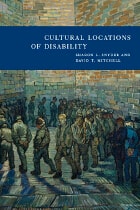
Cultural Locations of Disability
Sharon L. Snyder and David T. Mitchell
University of Chicago Press, 2006
Snyder and Mitchell reveal cracks in the social production of human variation as aberrancy. From our modern obsessions with tidiness and cleanliness to our desire to attain perfect bodies, notions of disabilities as examples of human insufficiency proliferate. These disability practices infuse more general modes of social obedience at work today. Consequently, this important study explains how disabled people are instrumental to charting the passage from a disciplinary society to one based upon regulation of the self.

Cultural Offensive
America's Impact on British Art Since 1945John A. Walker
Pluto Press, 1998
This is the first text to document in detail the variegated responses of British artists to postwar America and its art, criticism and mass media. Their reactions that ranged from Americanism – enthusiasm and compliance – to Anti-Americanism – criticism and resistance. Covering significant art movements such as Abstract Expressionism, the Independent Group and Pop Art, Walker synthesises information from hundreds of published sources and interviews to paint a vivid picture of a crucial period in British culture.
Many of the critics, painters and sculptors featured – Lawrence Alloway, Peter Blake, Reyner Banham, Anthony Caro, Clement Greenberg, David Hockney, Richard Hamilton, R.B. Kitaj, John Latham, Claes Oldenburg, Eduardo Paolozzi, Herbert Read, Bridget Riley, Larry Rivers – are now internationally famous. The study is brought up to date with an overview of the decline in American influence during in the 1980s and 1990s and the rise of Brit Art.
Cultural Studies in the Interregnum
Edited by Robert F. Carley, Anne Donlon, Beenash Jafri, Laura J. Kwak, Eero Laine, SAJ, and Chris Alen Sula
Temple University Press, 2025
Covering queer and feminist studies, critical disability studies, and critical race and ethnic studies, the essays in Cultural Studies in the Interregnum reflect on our shared political pasts and futures. Using examples ranging from media and literature to sex work, policing, and university systems, this exciting volume probes what cultural studies means in moments of social transformation.
Contributors include: Sean Johnson Andrews, C.M. Kaliko Baker, Mary Tuti Baker, James Bliss, Jorge E. Cuéllar, John R. Decker, Brian Dolber, Candace Fujikane, Evyn Lê Espiritu Gandhi, Chris Hall, Rachel Lim, Alexis Pauline Gumbs, Anna Karthika, Manu Karuka, Najwa Mayer, Kyle Mays, Andrew Ó Baoill, Yumi Pak, Therí A. Pickens, Sami Schalk, Leanne Betasamosake Simpson, Tia Trafford, and the editors
Culture, Genre, and Literary Vocation
Selected Essays on American LiteratureMichael Davitt Bell
University of Chicago Press, 2000
Throughout, Bell revisits issues of genre with an eye toward the unexpected details of authors' lives, and invites us to reconsider the hidden functions that terms such as "romanticism" and "realism" served for authors and their critics. Whether tracing the demands of the market or the expectations of readers, Bell examines the intimate relationship between literary production and culture; each essay closely links the milieu in which American writers worked with the trajectory of their storied careers.
Cultures of Letters
Scenes of Reading and Writing in Nineteenth-Century AmericaRichard H. Brodhead
University of Chicago Press, 1993
Cultures of Print
Essays in the History of the BookDavid D. Hall
University of Massachusetts Press, 1996
David D. Hall examines the interchange between popular and learned cultures and the practices of reading and writing. His writings deal with change and continuity, exploring the possibility of a reading revolution and arguing for the long duration of a Protestant vernacular tradition. A newly written essay on book culture in the early Chesapeake describes a system of scribal publication. The pieces reflect Hall's belief that the better we understand the production and consumption of books, the closer we come to a social history of culture.
Curators and Culture
The Museum Movement in America, 1740-1870Joel J. Orosz
University of Alabama Press, 1990
Tracing the birth of American museums and the curators who shaped a nation’s cultural identity.
As they formed their pioneer museums, these men were guided not so much by European examples, but rather by the imperatives of the American democratic culture, including the Enlightenment, the simultaneous decline of the respectability and rise of the middle classes, the Age of Egalitarianism, and the advent of professionalism in the sciences. Thus the pre-1870 American museum was neither the frivolous sideshow some critics have imagined, nor the enclave for elitists that others have charged. Instead, the proprietors displayed serious motives and egalitarian aspirations.
The conflicting demands for popular education on the one hand and professionalism on the other were a continuing source of tension in American museums after about 1835, but by 1870 the two claims had synthesized into a rough parity. This synthesis, the "American Compromise," has remained the basic model of museums in America down to the present. Thus, by 1870, the form of the modern American museum as an institution which simultaneously provides popular education and promotes scholarly research was completely developed.
Curiosities
William Matthews
University of Michigan Press, 1989
Curved Thought and Textual Wandering
Gertrude Stein's PostmodernismEllen E. Berry
University of Michigan Press, 1992
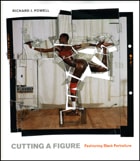
Cutting a Figure
Fashioning Black PortraitureRichard J. Powell
University of Chicago Press, 2009
Powell forcefully supports this argument with evidence drawn from a survey of nineteenth-century portraits, in-depth case studies of the postwar fashion model Donyale Luna and the contemporary portraitist Barkley L. Hendricks, and insightful analyses of images created since the late 1970s. Along the way, he discusses major artists—such as Frédéric Bazille, John Singer Sargent, James Van Der Zee, and David Hammons—alongside such overlooked producers of black visual culture as the Tonka and Nike corporations. Combining previously unpublished images with scrupulous archival research, Cutting a Figure illuminates the ideological nature of the genre and the centrality of race and cultural identity in understanding modern and contemporary portraiture.
collective
Katie Berta
University of Iowa Press, 2027