Results by title
3071 books match the query 'Business & Economics' and 254 start with c
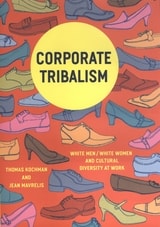
Corporate Tribalism
White Men/White Women and Cultural Diversity at WorkThomas Kochman and Jean Mavrelis
University of Chicago Press, 2009
The 2008 elections shattered historical precedents and pushed race and gender back to the forefront of our national consciousness. The wide range of reactions to the efforts of Barack Obama, Hillary Clinton, and Sarah Palin dramatically reflected ongoing conflicts over diversity in our society, especially in the venue where people are most likely to encounter them: work. As more and more people who aren’t white men enter corporate America, we urgently need to learn how to avoid clashes over these issues and how to resolve them when they do occur.
Thomas Kochman and Jean Mavrelis have been helping corporations successfully do that for over twenty years. Their diversity training and consulting firm has helped managers and employees at numerous companies recognize and overcome the cultural bases of miscommunication between ethnic groups and across gender lines—and in Corporate Tribalism they seek to share their expertise with the world. In the first half of the book, Kochman addresses white men, explicating the ways that their cultural background can motivate their behavior, work style, and perspective on others. Then Mavrelis turns to white women, focusing on the particular problems they face, including conflicts with men, other women, and themselves. Together they emphasize the need for a multicultural—rather than homogenizing—approach and offer constructive ideas for turning the workplace into a more interactive community for everyone who works there.
Written with the wisdom and clarity gained from two decades of hands-on work, Corporate Tribalism will be an invaluable resource as we look toward a future beyond the glass ceiling.
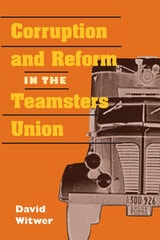
Corruption and Reform in the Teamsters Union
David Witwer
University of Illinois Press, 2002
Almost since its creation, recurring problems with corruption bedeviled the Teamsters Union. David Witwer provides the first in-depth historical study of the forces that contributed to the Teamsters' troubled past and the mechanisms the union employed--from top-down directives to grassroots measures--to combat corruption.
Witwer draws on the perspectives of rank-and-file members, union leaders, and the criminal element to explain the processes that allowed organized crime to seize power inside the union. His account includes the infamous links between the Mafia and union head Jimmy Hoffa, but he also tells the little-known story of the McClellan Committee investigation that first brought those links to light. Witwer also examines how anti-labor forces used the Teamsters' unsavory reputation to influence popular and legislative opinion in a broad attack on workers' rights.
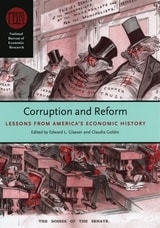
Corruption and Reform
Lessons from America's Economic HistoryEdited by Edward L. Glaeser and Claudia Goldin
University of Chicago Press, 2006
Contributors to this volume address the measurement and consequences of fraud and corruption and the forces that ultimately led to their decline within the United States. They show that various approaches to reducing corruption have met with success, such as deregulation, particularly “free banking,” in the 1830s. In the 1930s, corruption was kept in check when new federal bureaucracies replaced local administrations in doling out relief. Another deterrent to corruption was the independent press, which kept a watchful eye over government and business. These and other facets of American history analyzed in this volume make it indispensable as background for anyone interested in corruption today.
Cost and Choice
An Inquiry in Economic TheoryJames M. Buchanan
University of Chicago Press, 1979

Cost-Benefit Analysis
Economic, Philosophical, and Legal PerspectivesEdited by Matthew D. Adler and Eric A. Posner
University of Chicago Press, 2001
This new scholarly debate includes not only economists, but also contributors from philosophy, cognitive psychology, legal studies, and public policy who can further illuminate the justification and moral implications of this method and specify alternative measures.
These articles originally appeared in the Journal of Legal Studies.
Contributors:
- Matthew D. Adler - Gary S. Becker
- John Broome - Robert H. Frank
- Robert W. Hahn - Lewis A. Kornhauser
- Martha C. Nussbaum - Eric A. Posner
- Richard A. Posner - Henry S. Richardson
- Amartya Sen - Cass R. Sunstein
- W. Kip Viscusi

Costs of Occupational Injuries and Illnesses
J. Paul Leigh, Steven Markowitz, Marianne Fahs, and Philip Landrigan
University of Michigan Press, 2000
The incidence and mortality of occupational injury and illness were assessed by reviewing data from national surveys and applied an attributable-risk-proportion method. Costs were assessed using the human capital method that decomposes costs into direct categories such as medical costs and insurance administration expenses, as well as indirect categories such as lost earnings and lost fringe benefits. The total is estimated to be $155 billion and is likely to be low as it does not include costs associated with pain and suffering or of home care provided by family members.
Invaluable as an aid in the analysis of policy issues, Costs of Occupational Injuryand Illness will serve as a resource and reference for economists, policy analysts, public health researchers, insurance administrators, labor unions and labor lawyers, benefits managers, and environmental scientists, among others.
J. Paul Leigh is Professor in the School of Medicine, Department of Epidemiology and Preventive Medicine, University of California, Davis. Stephen Markowitz, M.D., is Professor in the Department of Community Health and Social Medicine, City University of New York Medical School. Marianne Fahs is Director of the Health Policy Research Center, Milano Graduate School of Management and Urban Policy, New School University. Philip Landrigan, M.D., is Wise Professor and Chair of the Department of Community Medicine, Mount Sinai Medical Center, New York.

Cotton City
Urban Development in Antebellum MobileHarriet E. Amos Doss
University of Alabama Press, 2001
The exploration of the North-South relationship and the growth of of antebellum Mobile.
Cotton City offers a compelling exploration of Mobile, Alabama’s transformation into a thriving urban center during the antebellum period. Historian Harriet E. Amos examines how economic ambition, civic planning, and the cotton trade shaped the city’s development between 1819 and 1861. Through detailed archival research, Amos reveals how Mobile’s leaders sought to modernize infrastructure, expand commerce, and assert the city’s regional importance—all while navigating the tensions of slavery, class, and Southern identity.
This richly contextualized study highlights the interplay between urban growth and the broader forces of the Southern economy, making Cotton City a vital contribution to the histories of the American South, urbanization, and antebellum society.

Cotton
Companies, Fashion and the Fabric of Our LivesEdited by Joseph H. II Hancock, Nioka Wyatt, and Tasha L. Lewis
Intellect Books, 2016
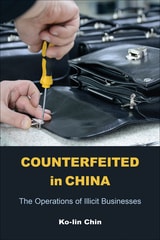
Counterfeited in China
The Operations of Illicit BusinessesKo-lin Chin
Temple University Press, 2025
In his illuminating study, Counterfeited in China, Ko-lin Chin investigates this lucrative industry and its emergence in China. His face-to-face interviews with counterfeiters — business owners, workers, facilitators, and key informants — in the hub of Guangzhou, China reveal how businesses that design, produce, and distribute fake and unauthorized luxury goods manage the risks inherent in their business.
Counterfeited in China examines the individual and group characteristics of counterfeiters and their relationships with organized crime; analyzes the economic aspects of counterfeiting; assesses the relationships among counterfeiting, violence, and corruption; and seeks to understand the demand for counterfeit goods. Chin also discusses the role of Chinese authorities and other parties in the war against counterfeiting.
Assessing the state of the industry and its future, Chin provides fascinating new insights into the modus operandi of counterfeiters.
Counterproductive
Time Management in the Knowledge EconomyMelissa Gregg
Duke University Press, 2018
Courting Failure
How Competition for Big Cases Is Corrupting the Bankruptcy CourtsLynn Lopucki
University of Michigan Press, 2006
-Douglas Baird, University of Chicago Law School
"This book is smart, shocking and funny. This story has everything-professional greed, wrecked companies, and embarrassed judges. Insiders are already buzzing."
-Elizabeth Warren, Leo Gottlieb Professor of Law, Harvard Law School
"LoPucki provides a scathing attack on reorganization practice. Courting Failure recounts how lawyers, managers and judges have transformed Chapter 11. It uses empirical data to explore how the interests of the various participants have combined to create a system markedly different from the one envisioned by Congress. LoPucki not only questions the wisdom of these changes but also the free market ideology that supports much of the general regulation of the corporate sector."
-Robert Rasmussen, University of Chicago Law School
A sobering chronicle of our broken bankruptcy-court system, Courting Failure exposes yet another American institution corrupted by greed, avarice, and the thirst for power.
Lynn LoPucki's eye-opening account of the widespread and systematic decay of America's bankruptcy courts is a blockbuster story that has yet to be reported in the media. LoPucki reveals the profound corruption in the U.S. bankruptcy system and how this breakdown has directly led to the major corporate failures of the last decade, including Enron, MCI, WorldCom, and Global Crossing.
LoPucki, one of the nation's leading experts on bankruptcy law, offers a clear and compelling picture of the destructive power of "forum shopping," in which corporations choose courts that offer the most favorable outcome for bankruptcy litigation. The courts, lured by big money and prestige, streamline their requirements and lower their standards to compete for these lucrative cases. The result has been a series of increasingly shoddy reorganizations of major American corporations, proposed by greedy corporate executives and authorized by case-hungry judges.
Crap
A History of Cheap Stuff in AmericaWendy A. Woloson
University of Chicago Press, 2020
In Crap: A History of Cheap Stuff in America, Wendy A. Woloson takes seriously the history of objects that are often cynically-made and easy to dismiss: things not made to last; things we don't really need; things we often don't even really want. Woloson does not mock these ordinary, everyday possessions but seeks to understand them as a way to understand aspects of ourselves, socially, culturally, and economically: Why do we—as individuals and as a culture—possess these things? Where do they come from? Why do we want them? And what is the true cost of owning them?
Woloson tells the history of crap from the late eighteenth century up through today, exploring its many categories: gadgets, knickknacks, novelty goods, mass-produced collectibles, giftware, variety store merchandise. As Woloson shows, not all crap is crappy in the same way—bric-a-brac is crappy in a different way from, say, advertising giveaways, which are differently crappy from commemorative plates. Taking on the full brilliant and depressing array of crappy material goods, the book explores the overlooked corners of the American market and mindset, revealing the complexity of our relationship with commodity culture over time.
By studying crap rather than finely made material objects, Woloson shows us a new way to truly understand ourselves, our national character, and our collective psyche. For all its problems, and despite its disposability, our crap is us.
Created Unequal
The Crisis in American PayJames K. Galbraith
University of Chicago Press, 2000
"Created Unequal is not light reading, but Galbraith's elegant arguments, passionate exposition, and profound conclusions make it worth the trouble. . . . [Galbraith] remind[s] us that the economy is and ought to be run by humans, not humans by the economy."—Joanna Ciulla, Los Angeles Times Book Review
"Created Unequal is a lucid and wise explanation of why America seems to be prospering while most Americans aren't. James Galbraith takes steady aim at a variety of widely accepted economic myths and hits most of them dead center. This book will tell you a lot about the way your economic world really works."—Jeff Faux, President of the Economic Policy Institute
"[A] brilliant and iconoclastic examination of the major social trend of our time."—Michael Lind, Washington Monthly

Creating Dairyland
How caring for cows saved our soil, created our landscape, brought prosperity to our state, and still shapes our way of life in WisconsinEdward Janus
Wisconsin Historical Society Press, 2011
The story of dairying in Wisconsin is the story of how our very landscape and way of life were created. By making cows the center of our farm life and learning how to care for them, our ancestors launched a revolution that changed much more than the way farmers earned their living — it changed us.

Creating Dairyland
How caring for cows saved our soil, created our landscape, brought prosperity to our state, and still shapes our way of life in WisconsinEdward Janus
Wisconsin Historical Society Press, 2011
The story of dairying in Wisconsin is the story of how our very landscape and way of life were created. By making cows the center of our farm life and learning how to care for them, our ancestors launched a revolution that changed much more than the way farmers earned their living — it changed us.

Creating Dairyland
How caring for cows saved our soil, created our landscape, brought prosperity to our state, and still shapes our way of life in WisconsinEdward Janus
Wisconsin Historical Society Press, 2012
The story of dairying in Wisconsin is the story of how our very landscape and way of life were created. By making cows the center of our farm life and learning how to care for them, our ancestors launched a revolution that changed much more than the way farmers earned their living — it changed us.
Creating Worlds Otherwise
Art, Collective Action, and (Post)ExtractivismPaula Serafini
Vanderbilt University Press, 2022
Extractivism has increasingly become the ground on which activists and scholars in Latin America frame the dynamics of ecological devastation, accumulation of wealth, and erosion of rights. These maladies are the direct consequences of long-standing extraction-oriented economies, and more recently from the expansion of the extractive frontier and the implementation of new technologies in the extraction of fossil fuels, mining, and agriculture. But the fields of sociology, political ecology, anthropology, and geography have largely ignored the role of art and cultural practices in studies of extractivism and post-extractivism.
The field of art theory, on the other hand, has offered a number of texts that put forward insightful analyses of artwork addressing extraction, environmental devastation, and the climate crisis. However, an art theory perspective that does not engage firsthand and in depth with collective action remains limited and fails to provide an account of the role, processes, and politics of art in anti- and post-extractivist movements.
Creating Worlds Otherwise examines the narratives that subaltern groups generate around extractivism, and how they develop, communicate, and mobilize these narratives through art and cultural practices. It reports on a six-year project on creative resistance to extractivism in Argentina and builds on long-term engagement working on environmental justice projects and campaigns in Argentina and the UK.
It is an innovative contribution to the fields of Latin American studies, political ecology, cultural studies, and art theory, and addresses pressing questions regarding what post-extractivist worlds might look like as well as how such visions are put into practice.
Creating a New World Economy
Forces of Change and Plans for Actionedited by Gerald Epstein, Julie Graham and Jessica Nembhard, foreword by Samuel Bowles
Temple University Press, 1993
Creating the Viewer
Market Research and the Evolving Media EcosystemJustin Wyatt
University of Texas Press, 2024
A study of the largely hidden world of primary media market research and the different methods used to understand how the viewer is pictured in the industry.
The first book on the intersection between market research and media, Creating the Viewer takes a critical look at media companies’ studies of television viewers, the assumptions behind these studies, and the images of the viewer that are constructed through them. Justin Wyatt examines various types of market research, including talent testing, pilot testing, series maintenance, brand studies, and new show “ideation,” providing examples from a range of programming including news, sitcoms, reality shows, and dramas. He looks at brand studies for networks such as E!, and examines how the brands of individuals such as showrunner Ryan Murphy can be tested. Both an analytical and practical work, the book includes sample questionnaires and paths for study moderators and research analysts to follow. Drawn from over fifteen years of experience in research departments at various media companies, Creating the Viewer looks toward the future of media viewership, discussing how the concept of the viewer has changed in the age of streaming, how services such as Netflix view market research, and how viewers themselves can shift the industry through their media choices, behaviors, and activities.
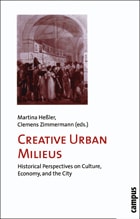
Creative Urban Milieus
Historical Perspectives on Culture, Economy, and the CityEdited by Martina Heßler and Clemens Zimmermann
Campus Verlag, 2008
Skeptical of the current euphoria surrounding the commercialization of culture, a distinguished group of contributors apply a comparative and historical perspective to probe how creative works have affected the global economy. Drawing on lessons from urban planning, art history, and cultural spectacles alike, Creative Urban Milieus will change the way we think about the symbiotic relationship between cities and innovation.
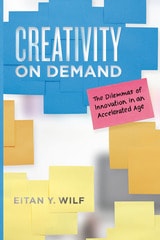
Creativity on Demand
The Dilemmas of Innovation in an Accelerated AgeEitan Y. Wilf
University of Chicago Press, 2019
In Creativity on Demand, cultural anthropologist Eitan Wilf seeks to answer these questions by returning to the fundamental and pervasive expectation of continual innovation. Wilf focuses a keen eye on how our obsession with ceaseless innovation stems from the long-standing value of acceleration in capitalist society. Based on ethnographic work with innovation consultants in the United States, he reveals, among other surprises, how routine the culture of innovation actually is. Procedures and strategies are repeated in a formulaic way, and imagination is harnessed as a new professional ethos, not always to generate genuinely new thinking, but to produce predictable signs of continual change. A masterful look at the contradictions of our capitalist age, Creativity on Demand is a model for the anthropological study of our cultures of work.
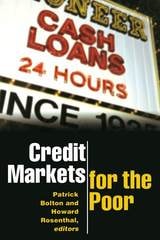
Credit Markets for the Poor
Patrick Bolton
Russell Sage Foundation, 2005
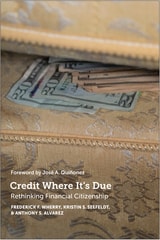
Credit Where It's Due
Rethinking Financial CitizenshipFrederick F. Wherry
Russell Sage Foundation, 2019
Wherry, Seefeldt, and Alvarez tell the story of the Mission Asset Fund, a San Francisco-based organization that assists mostly low- and moderate-income people of color with building credit. The Mission Asset Fund facilitates zero-interest lending circles, which have been practiced by generations of immigrants, but have gone largely unrecognized by mainstream financial institutions. Participants decide how the circles are run and how they will use their loans, and the organization reports their clients’ lending activity to credit bureaus. As the authors show, this system not only helps clients build credit, but also allows them to manage debt with dignity, have some say in the creation of financial products, and reaffirm their sense of social membership. The authors delve into the history of racial wealth inequality in the U.S. to show that for many black and Latino households, credit invisibility is not simply a matter of individual choices or inadequate financial education. Rather, financial marginalization is the result of historical policies that enabled predatory lending, discriminatory banking and housing practices, and the rollback of regulatory protections for first-time homeowners.
To rectify these inequalities, the authors propose common sense regulations to protect consumers from abuse alongside new initiatives that provide seed capital for every child, create affordable short-term loans, and ensure that financial institutions treat low- and moderate-income clients with equal respect. By situating the successes of the Mission Asset Fund in the larger history of credit and debt, Credit Where It’s Due shows how to prioritize financial citizenship for all.
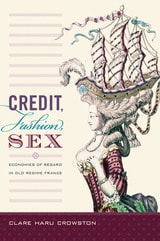
Credit, Fashion, Sex
Economies of Regard in Old Regime FranceClare Haru Crowston
Duke University Press, 2013
Credit economies constituted "economies of regard" in which reputation depended on embodied performances of credibility. Crowston explores the role of fashionable appearances and sexual desire in leveraging credit and reconstructs women's vigorous participation in its gray markets. The scandalous relationship between Queen Marie Antoinette and fashion merchant Rose Bertin epitomizes the vertical loyalties and deep social divides of the credit regime and its increasingly urgent political stakes.
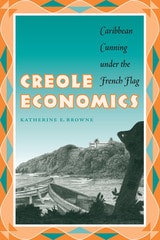
Creole Economics
Caribbean Cunning under the French FlagBy Katherine E. Browne
University of Texas Press, 2004
What do the trickster Rabbit, slave descendants, off-the-books economies, and French citizens have to do with each other? Plenty, says Katherine Browne in her anthropological investigation of the informal economy in the Caribbean island of Martinique. She begins with a question: Why, after more than three hundred years as colonial subjects of France, did the residents of Martinique opt in 1946 to integrate fully with France, the very nation that had enslaved their ancestors? The author suggests that the choice to decline sovereignty reflects the same clear-headed opportunism that defines successful, crafty, and illicit entrepreneurs who work off the books in Martinique today.
Browne draws on a decade of ethnographic fieldwork and interview data from all socioeconomic sectors to question the common understanding of informal economies as culture-free, survival strategies of the poor. Anchoring her own insights to longer historical and literary views, the author shows how adaptations of cunning have been reinforced since the days of plantation slavery. These adaptations occur, not in spite of French economic and political control, but rather because of it. Powered by the "essential tensions" of maintaining French and Creole identities, the practice of creole economics provides both assertion of and refuge from the difficulties of being dark-skinned and French.
This powerful ethnographic study shows how local economic meanings and plural identities help explain work off the books. Like creole language and music, creole economics expresses an irreducibly complex blend of historical, contemporary, and cultural influences.

Crime and Justice, Volume 18
Beyond the Law: Crime in Complex OrganizationsEdited by Michael Tonry and Albert J. Reiss Jr.
University of Chicago Press Journals, 1993
Crippled Justice
The History of Modern Disability Policy in the WorkplaceRuth O'Brien
University of Chicago Press, 2001
O'Brien shows how the remnants of postwar cultural values bogged down the rights-oriented policy in the 1970s and how they continue to permeate judicial interpretations of provisions under the Americans with Disabilities Act. In effect, O'Brien argues, these decisions have created a lose/lose situation for the very people the act was meant to protect. Covering developments up to the present, Crippled Justice is an eye-opening story of government officials and influential experts, and how our legislative and judicial institutions have responded to them.
Crisis Leadership in Higher Education
Theory and PracticeRalph A. Gigliotti
Rutgers University Press, 2020

Crisis and Control
Institutional Change in Financial Market RegulationEdited by Renate Mayntz
Campus Verlag, 2012
Crisis in Higher Education
A Plan to Save Small Liberal Arts Colleges in AmericaJeffrey R. Docking
Michigan State University Press, 2014

Critical Studies in Organization and Bureaucracy
Revised and ExpandedFrank Fischer
Temple University Press, 1993
Critical Study Of Work
edited by Rick Baldoz, Charles Koeber and Philip Kraft
Temple University Press, 2001
The editors have assembled a collection of provocative, original essays on work and workplaces throughout the world that challenge the current celebration of globalization and new technologies. Building on labor process analysis, individual case studies venture beyond factory and office to examine "virtual" workplaces, computer-era cottage work, and emotional and household labor. The settings range from Indian and Irish software factories to Brazilian supermarkets, Los Angeles sweatshops, and Taiwanese department stores.
Other essays seek to make theoretical sense of increasingly de-centered production chains, fluid work relations, and uncertain employment. Individually and collectively the authors construct a new critical study of work, highlighting the connections between geography, technology, gender, race, and class. They offer an accessible and flexible approach to the study of workplace relations and production organization -- and even the notion of work itself.
Critical Theory of Communication
New Readings of Lukács, Adorno, Marcuse, Honneth and Habermas in the Age of the InternetChristian Fuchs
University of Westminster Press, 2016
Critical Theory of Communication offers a vital set of new insights on how communication operates in the age of information, digital media and social media, arguing that we need to transcend the communication theory of Habermas by establishing a dialectical and cultural-materialist critical theory of communication.
It is the first title in a major new book series 'Critical Digital and Social Media Studies' published by the University of Westminster Press.
Critically Capitalist
The Spirit of Asset Capitalism in South KoreaBohyeong Kim
University of Michigan Press, 2025
Drawing on multi-sited ethnography and in-depth interviews with a broad community of aspiring millionaires, Critically Capitalist illuminates how contemporary capitalism thrives by channeling discontent into financial and real estate markets, which in turn has cemented critical capitalism as the cultural and affective backbone of South Korea’s economy.
Cross-National Comparative Research Using Panel Surveys
Special Issue of Journal of Human Resources 38:2 (Spring 2003)Edited by James P. Smith, Frank Stafford, and James R. Walker
University of Wisconsin Press, 2010
This special issue revises and expands on presentations given at a conference on comparative research using international panel surveys held in Ann Arbor, Michigan. Five of the articles explicitly or implicitly examine international differences in savings behavior and wealth accumulation. The final two articles use international comparisons to assess the status of young children.

Crunch!
A History of the Great American Potato ChipDirk Burhans
University of Wisconsin Press, 2017
Crunch! also uncovers a dark side of potato chip history, including a federal investigation of the snack food industry in the 1990s following widespread allegations of antitrust activity, illegal buyouts, and predatory pricing. In the wake of these "Great Potato Chip Wars," corporate snack divisions closed and dozens of family-owned companies went bankrupt. Yet, despite consolidation, many small chippers persist into the twenty-first century, as mom-and-pop companies and upstart "boutique" businesses serve both new consumers and markets with strong regional loyalties.
Illustrated with images of early snack food paraphernalia and clever packaging from the glory days of American advertising art, Crunch! is an informative tour of large and small business in America and the vicissitudes of popular tastes.
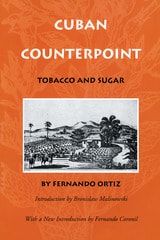
Cuban Counterpoint
Tobacco and SugarFernando Ortiz
Duke University Press, 1995
Ortiz presents his understanding of Cuban history in two complementary sections written in contrasting styles: a playful allegorical tale narrated as a counterpoint between tobacco and sugar and a historical analysis of their development as the central agricultural products of the Cuban economy. Treating tobacco and sugar both as agricultural commodities and as social characters in a historical process, he examines changes in their roles as the result of transculturation. His work shows how transculturation, a critical category Ortiz developed to grasp the complex transformation of cultures brought together in the crucible of colonial and imperial histories, can be used to illuminate not only the history of Cuba, but, more generally, that of America as well.
This new edition includes an introductory essay by Fernando Coronil that provides a contrapuntal reading of the relationship between Ortiz’s book and its original introduction by the renowned anthropologist Bronislaw Malinowski. Arguing for a distinction between theory production and canon formation, Coronil demonstrates the value of Ortiz’s book for anthropology as well as Cuban, Caribbean, and Latin American studies, and shows Ortiz to be newly relevant to contemporary debates about modernity, postmodernism, and postcoloniality.

Cubs' Fans Leadership Secrets
Learning to Win From a Cursed Team's ErrorsJohn Charles Kunich and Richard I. Lester
Parkhurst Brothers, Inc., 2009
Cubs fans have often focused on one or two star performers, to the detriment of the team's overall performance.
Stars have often been selfish and devoted to their own success. Leaders have toleratged them, often at a price
to the whole team. Effective leadership recognizes the dangers in this situation. Here's their antidote--in a
highly-readable book that's hot off the press! Foreword by bestselling-author Ken Blanchard.
Cultural Crowdfunding
Platform Capitalism, Labour and GlobalizationVincent Rouzé
University of Westminster Press, 2019
This new book analyses the strategies, usages and wider implications of crowdsourcing and crowdfunding platforms in the culture and communication industries that are reshaping economic, organizational and social logics. Platforms are the object of considerable hype with a growing global presence. Relying on individual contributions coordinated by social media to finance cultural production (and carry out promotional tasks) is a significant shift, especially when supported by morphing public policies, supposedly enhancing cultural diversity and accessibility.
The aim of this book is to propose a critical analysis of these phenomena by questioning what follows from decisions to outsource modes of creation and funding to consumers. Drawing on research carried out within the ‘Collab’ programme backed by the French National Research Agency, the book considers how platforms are used to organize cultural labour and/or to control usages, following a logic of suggestion rather than overt injunction. Four key areas are considered: the history of crowdfunding as a system; whose interests crowdfunding may serve; the implications for digital labour and lastly crowdfunding’s interface with globalization and contemporary capitalism. The book concludes with an assessment of claims that crowdfunding can democratize culture.
Cultural Economies Past and Present
By Rhoda H. Halperin
University of Texas Press, 1994
When anthropologists and other students of culture want to compare different societies in such areas as the organization of land, labor, trade, or barter, they often discover that individual researchers use these concepts inconsistently and from a variety of theoretical approaches, so that data from one society cannot be compared with data from another.
In this book, Rhoda Halperin offers an analytical tool kit for studying economic processes in all societies and at all times. She uniquely organizes the book around key concepts: economy, ecology, equivalencies, householding, storage, and time and the economy. These concepts are designed to facilitate the understanding of similarities, differences, and changes between contemporary and past economies. While this is not only a "how-to" book or handbook, it can be used as such. It will be of great value to scholars and students of archaeology and history, as well as to ethnographers and economists.

Culture Incorporated
Museums, Artists, And Corporate SponsorshipsMark W. Rectanus
University of Minnesota Press, 2002
An exposé of the hidden costs of corporate funding of the arts
Photographer Annie Leibowitz collaborates with American Express on a portrait exhibition. Absolut Vodka engages artists for their advertisements. Philip Morris mounts an "Arts Against Hunger" campaign in partnership with prominent museums. Is it art or PR, and where is the line that separates the artistic from the corporate? According to Mark Rectanus, that line has blurred. These mergers of art, business, and museums, he argues, are examples of the worldwide privatization of cultural funding.
In Culture Incorporated, Rectanus calls for full disclosure of corporate involvement in cultural events and examines how corporations, art institutions, and foundations are reshaping the cultural terrain. In turn, he also shows how that ground is destabilized by artists subverting these same institutions to create a heightened awareness of critical alternatives. Rectanus exposes how sponsorship helps maintain social legitimation in a time when corporations are the target of significant criticism. He provides wide-ranging examples of artists and institutions grappling with corporate sponsorship, including artists’s collaboration with sponsors, corporate sponsorship of museum exhibitions, festivals, and rock concerts, and cybersponsoring. Throughout, Rectanus analyzes the convergence of cultural institutions with global corporate politics and its influence on our culture and our communities.
Culture and Economy
The Shaping of Capitalism in Eastern AsiaTimothy Brook and Hy Van Luong, Editors
University of Michigan Press, 1999
Culture and Money in the Nineteenth Century
Abstracting EconomicsDaniel Bivona
Ohio University Press, 2016
Since the 1980s, scholars have made the case for examining nineteenth-century culture—particularly literary output—through the lens of economics. In Culture and Money in the Nineteenth Century: Abstracting Economics, two luminaries in the field of Victorian studies, Daniel Bivona and Marlene Tromp, have collected contributions from leading thinkers that push New Economic Criticism in new and exciting directions.
Spanning the Americas, India, England, and Scotland, this volume adopts an inclusive, global view of the cultural effects of economics and exchange. Contributors use the concept of abstraction to show how economic thought and concerns around money permeated all aspects of nineteenth-century culture, from the language of wills to arguments around the social purpose of art.
The characteristics of investment and speculation; the fraught symbolic and practical meanings of paper money to the Victorians; the shifting value of goods, services, and ideas; the evolving legal conceptualizations of artistic ownership—all of these, contributors argue, are essential to understanding nineteenth-century culture in Britain and beyond.
Contributors: Daniel Bivona, Suzanne Daly, Jennifer Hayward, Aeron Hunt, Roy Kreitner, Kathryn Pratt Russell, Cordelia Smith, and Marlene Tromp.
Culture and the Question of Rights
Forests, Coasts, and Seas in Southeast AsiaCharles Zerner, ed.
Duke University Press, 2003
Calling for radical redefinitions of development and ownership and for new understandings of the translation of culture and rights in politically dangerous contexts—natural resource frontiers—this volume links social injustice and the degradation of Southeast Asian environments. Charles Zerner and his colleagues show how geographical areas once viewed as wild and undeveloped are actually cultural artifacts shaped by complex interactions with human societies. Drawing on richly varied sources of evidence and interpretation—from trance dances, court proceedings, tree planting patterns, marine and forest rituals, erotic poems, and codifications of customary law, Culture and the Question of Rights reveals the ironies, complexities, and histories of contemporary communities’ struggles to retain their gardens, forests, fishing territories, and graveyards. The contributors examine how these cultural activities work to both construct and to lay claim to nature. These essays open up new avenues for negotiating indigenous rights against a background of violence, proliferating markets, and global ideas of biodiversity and threatened habitat.
Contributors. Jane Atkinson, Don Brenneis, Stephanie Fried, Nancy Peluso, Marina Roseman, Anna Tsing, Charles Zerner
Curating the American Past
A Memoir of a Quarter Century at the Smithsonian National Museum of American HistoryPete Daniel
University of Arkansas Press, 2022
“As is well known, Pete is an outstanding storyteller, and this book is no exception."
—Claire Strom, Journal of Southern History
In addition to chronicling significant exhibit work at the Smithsonian National Museum of American History, Curating the American Past, captures the excitement inherent in researching and writing history and Pete Daniel’s efforts to prevent diluted celebratory stories from replacing the red meat of the American past.
In Curating the American Past, Pete Daniel reveals how curators collect objects, plan exhibits, and bring alive the country’s complex and exciting history. In vivid detail, Daniel recounts the exhilaration of innovative research, the joys of collaboration, and the rewards of mentoring new generations of historians. In a career distinguished by prize-winning publications and pathbreaking exhibitions, Daniel also confronted the challenges of serving as a public historian tasked with protecting a definitive American museum from the erosion of scholarly standards. Curating the American Past offers a wealth of museum wisdom, illuminating the crucial role that dedicated historians and curators serve within our most important repositories of cultural memory.
Curbing Bailouts
Bank Crises and Democratic Accountability in Comparative PerspectiveGuillermo Rosas
University of Michigan Press, 2009
"Rosas's compelling theory and wide-ranging empirical evidence yield a persuasive but surprising conclusion in light of the financial meltdown of 2008–9. In the event of banking crises, not only do elected governments treat taxpayers better and force bankers and their creditors to pay more for their mistakes, but bankers in democracies are more prudent as a consequence . . . essential reading for all interested in the political economy of crisis and in the future of banking regulation."
---Philip Keefer, Lead Economist, Development Research Group, The World Bank
"Rosas convincingly demonstrates how democratic accountability affects the incidence and resolution of banking crises. Combining formal models, case studies, and cutting-edge quantitative methods, Rosas's book represents a model for political economy research."
---William Bernhard, Professor, Department of Political Science, University of Illinois
"When the financial crises of the 1990s hit Asia, Russia, and Latin America, the U.S. scolded them about the moral hazard problems of bailing out the banks. Now, the shoe is on the other foot, with the U.S. struggling to manage an imploding financial sector. Rosas's study of bank bailouts could not be more timely, providing us with both a framework for thinking about the issue and some sobering history of how things go both right and badly wrong. Democratic accountability proves the crucial factor in making sure bailouts are fair, a point that is as relevant for U.S. policy as for an understanding of the emerging markets."
---Stephan Haggard, Krause Professor, Graduate School of International Relations and Pacific Studies, University of California, San Diego
Banking crises threaten the stability and growth of economies around the world. In response, politicians restore banks to solvency by redistributing losses from bank shareholders and depositors to taxpayers, and the burden the citizenry must bear varies from case to case. Whereas some governments stay close to the prescriptions espoused by Sir Walter Bagehot in the nineteenth century that limit the costs shouldered by taxpayers, others engage in generous bank bailouts at great cost to society. What factors determine a government's response?
In this comparative analysis of late-twentieth-century banking crises, Guillermo Rosas identifies political regime type as the determining factor. During a crisis, powerful financial players demand protection of their assets. Rosas maintains that in authoritarian regimes, government officials have little to shield them from such demands and little incentive for rebuffing them, while in democratic regimes, elected officials must weigh these demands against the interests of the voters---that is, the taxpayers. As a result, compared with authoritarian regimes, democratic regimes show a lower propensity toward dramatic, costly bailouts.
Guillermo Rosas is Assistant Professor in the Department of Political Science and Fellow at the Center in Political Economy at Washington University in St. Louis.
Currency Crises
Edited by Paul Krugman
University of Chicago Press, 2000
Reflecting the latest thinking on the subject, this offering from the NBER will serve as a useful basis for further debate on the theory and practice of speculative attacks, as well as a valuable resource as new crises loom.
Currency Statecraft
Monetary Rivalry and Geopolitical AmbitionBenjamin J. Cohen
University of Chicago Press, 2018
In a comprehensive review that ranges from World War II to the present, Cohen convincingly argues that one goal stands out as the primary motivation for currency statecraft: the extent of a country’s geopolitical ambition, or how driven it is to build or sustain a prominent place in the international community. When a currency becomes internationalized, it generally increases the power of the nation that produces it. In the persistent contestation that characterizes global politics, that extra edge can matter greatly, making monetary rivalry an integral component of geopolitics. Today, the major example of monetary rivalry is the emerging confrontation between the US dollar and the Chinese renminbi. Cohen describes how China has vigorously promoted the international standing of its currency in recent years, even at the risk of exacerbating relations with the United States, and explains how the outcome could play a major role in shaping the broader geopolitical engagement between the two superpowers.
Currency of the Heart
A Year of Investing, Death, Work, and CoinsDonald Nichols
University of Iowa Press, 2002
Nichols uses money in myriad forms—a grandfather‘s silver dollar, stocks and bonds, salaries, pallets of coins at the U.S. Mint, on-the-job dealings with coin collectors—as touchstones for reflections on relationships, motives, and a career "like one of those moving walkways in airports." His father's health is measured, tested, and evaluated in part by the health of his finances; at the same time, the turmoil and mystery surrounding both money and relationships are reflected in this memorable story.
Curtains?
The Future of the Arts in AmericaMichael M. Kaiser
Brandeis University Press, 2015