Results by title
4155 books match the query 'State & Local' and 291 start with c
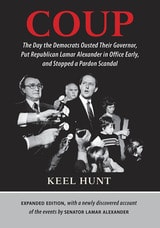
Coup
The Day the Democrats Ousted Their Governor, Put Republican Lamar Alexander in Office Early, and Stopped a Pardon ScandalKeel Hunt
Vanderbilt University Press, 2017
On January 17, 1979, driven by new information that some of the worst criminals in the state's penitentiaries were about to be released (and fears that James Earl Ray might be one of them), a small bipartisan group chose to take charge. Senior Democratic leaders, friends of the sitting governor, together with the Republican governor-elect Lamar Alexander (now US Senator from Tennessee), agreed to oust Blanton from office before another night fell. It was a maneuver unique in American political history.
Expanded edition, with a newly discovered account of the events by Senator Lamar Alexander:
"In December 2015 something unexpected happened. Keel [Hunt] delivered to my Nashville office a brown three-ring binder. He had only recently discovered it in a box that had been in storage for thirty years." —Senator Lamar Alexander
This binder contained the forgotten typescript, written in 1985, of Alexander's recollections of the events leading up to his early inauguration on January 17, 1979. In this expanded edition of Coup, the Senator's 22,000-word text has been added as a lost footnote to Hunt's definitive account.
From the foreword by John L. Seigenthaler:
"The individual stories of those government officials involved in the coup—each account unique, but all of them intersecting—were scattered like disconnected pieces of a jigsaw puzzle on the table of history until the author conceived this book. Perhaps because it happened so quickly, and without major disagreement, protest, or dissent, this truly historic moment has been buried in the public mind. In unearthing the drama in gripping detail, Keel Hunt assures that the 'dark day' will be remembered as a bright one in which conflicted politicians came together in the public interest."
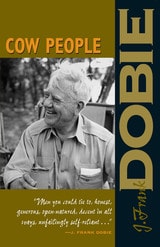
Cow People
By J. Frank Dobie
University of Texas Press, 1981
Cow People records the fading memories of a bygone Texas, the reminiscences of the cow people themselves. These are the Texans of the don't-fence-me-in era, their faces pinched by years of squinting into the desert glare, tanned by the sun and coarsened by the dust of the Chisholm Trail. Their stories are often raucous but just as often quiet as hot plains under a pale Texan sky.
A native Texan, J. Frank Dobie had an inborn knowledge of the men and customs of the trail camps. Cattlemen were as various as the country was big. Ab Blocker was a tall, quiet man who belonged totally to the cattle and the silent plains. But big men often had big lungs. "Shanghai Pierce was the loudest man in the country. He would sit at one end of a day coach and in normal voice hold conversation with some man at the other end of the coach, who of course had to yell, while the train was clanking along. He knew everybody, yelled at everybody he saw."
Texas bred tall men and taller stories. There was Findlay Simpson, who played havoc with fact but whiled away the drivers' long, lonely evenings with his tales. Old Findlay told of a country so wet that it bogged down the shadow of a buzzard, and of cattle that went into hibernation during rugged winters; he once spun yarns for three days straight, outlasting his listeners in a marathon of endurance.
All real cow people—from the cattle drivers to the cattle owners—lived by a simple code based on the individual's integrity. Bothering anyone else's poke or business uninvited was strictly forbidden, and enforcement of this unwritten law was as easy as pulling a trigger. Honesty was taken for granted, and a cowman's name on a check made it negotiable currency.
Yet Texas had its "bad guys"—the crooks, the thieves, even the tightwads. "A world big enough to hold a rattlesnake and a purty woman is big enough for all kinds of people," wrote Dobie. This is the world whose vast and various population the reader will find in Cow People.
Cowboy Apostle
The Diaries of Anthony W. Ivins, 1875-1932Anthony W. Ivins
Signature Books, 2013
Anthony W. Ivins (1852-1934) migrated to St. George, Utah, at age nine where he later became an influential civic and ecclesiastical leader. He married Elizabeth A. Snow, daughter of apostle Erastus F. Snow. Ivins was a first cousin of Heber J. Grant, and served as his counselor while Grant was LDS president. Ivins filled several Mormon missions to Mexico and presided as the Juarez, Mexico stake president where he performed post-manifesto marriages. He was appointed by the U.S. government as an Indian agent, and was warmly acquainted with Porfirio Diaz, president of Mexico. Involved in politics in St. George, Ivins held aspirations of running as a Democrat for governor of Utah. In 1907, he was ordained an apostle and later advanced to the First Presidency. Tone, as he called himself, was an accomplished horseman who worked with, and invested in, livestock. He was a game-hunting cowboy who became a statesman for both his country and his expanding religious community.
Though in his correspondence Ivins expressed paramount concern for members of his family, he rarely mentions them in his journals. Rather, his diaries chronicle his business and religious observations including meetings with the Quorum of the Twelve and others. He records meetings of the apostles where decisions were made to remove Church leaders from office who had entered into polygamy after 1904, and details the Church’s dealings with the Mexican government to safeguard the Mormon colonists. There are also discussions where doctrinal principles were clarified. For example, in 1912, Ivins reported that President Joseph F. Smith addressed Brigham Young’s Adam God teachings and affirmed that it was “not a doctrine of the Church.” Ivins clearly loved the ruggedness of outdoor life, as evidenced in his passion for hunting, but was also intrigued with the curiosities at the Utah State Fair, the entertaining showmanship of Buffalo Bill, and the refinement of the theater. Tragedy became commonplace as he recorded vigilante-like justice against Indians and Mexicans who were killed for stealing food, and witnessing the execution of John D. Lee, a once favored son of Mormonism. Appendices of Cowboy Apostle include Ivins Record Book of Marriage and an essay by Ivins son, H. Grant Ivins titled “Polygamy in Mexico as Practiced by the Mormon Church, 1895-1905.”
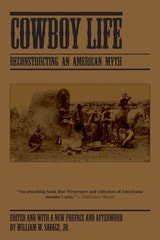
Cowboy Life
Reconstructing an American MythWilliam W. Savage, Jr.
University Press of Colorado, 1993
The central figure in American mythology, the cowboy can be seen everywhere: in films, novels, advertisements, TV, sports, and music. Though his image holds little resemblance to the historical cowboy, it is important because it represents many qualities with which Americans identify, including bravery, honor, chivalry, and individualism.
Accounts by Joseph G. McCoy, Richard Irving Dodge, Charles A. Siringo, and many others detail the daily trials and tribulations of cowboy life on the southern Great Plains-particularly Texas, Indian Territory, and Kansas-from the 1860s to around 1900. And in a new Afterword, editor William W. Savage, Jr. discusses the directions the cowboy myth has taken in the past two decades, as well as the impact the "new Western history" and films such as Lonesome Dove have had on popular culture.
This edition contains a new preface and afterword by the author.
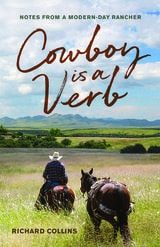
Cowboy is a Verb
Notes from a Modern-day RancherRichard Collins
University of Nevada Press, 2019
A born storyteller with a flair for words, Collins breathes life into the geology, history, and interdependency of land, water, and native and introduced plants and animals. He conjures indelible portraits of the hardworking, dedicated people he comes to know. With both humor and humility, he recounts the day-to-day challenges of ranch life such as how to build a productive herd, distribute your cattle evenly across a rough and rocky landscape, and establish a grazing system that allows pastures enough time to recover. He also intimately recounts a battle over the endangered Gila topminnow and how he and his neighbors worked with university range scientists, forest service conservationists, and funding agencies to improve their ranches as well as the ecological health of the Redrock Canyon watershed.
Ranchers who want to stay in the game don’t dominate the landscape; instead, they have to continually study the land and the animals it supports. Collins is a keen observer of both. He demonstrates that patience, resilience, and a common-sense approach to conservation and range management are what counts, combined with an enduring affection for nature, its animals, and the land. Cowboy is a Verb is not a romanticized story of cowboy life on the range, rather it is a complex story of the complicated work involved with being a rancher in the twenty-first-century West.
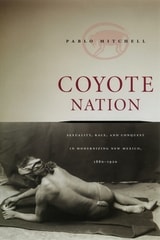
Coyote Nation
Sexuality, Race, and Conquest in Modernizing New Mexico, 1880-1920Pablo Mitchell
University of Chicago Press, 2005
Coyote Nation considers these questions as it explores how New Mexicans evaluated and categorized racial identities through bodily practices. Where ethnic groups were numerous and—in the wake of miscegenation—often difficult to discern, the ways one dressed, bathed, spoke, gestured, or even stood were largely instrumental in conveying one's race. Even such practices as cutting one's hair, shopping, drinking alcohol, or embalming a deceased loved one could inextricably link a person to a very specific racial identity.
A fascinating history of an extraordinarily plural and polyglot region, Coyote Nation will be of value to historians of race and ethnicity in American culture.
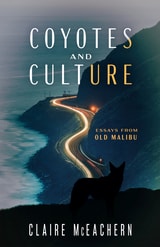
Coyotes and Culture
Essays from Old MalibuClaire McEachern
University of Nevada Press, 2025
This unique collection of essays offers a gripping exploration of the precarious beauty and peril of California’s iconic coastline. Through essays blending personal narrative, cultural analysis, and history, author Claire McEachern takes us behind the scenes of surf and celebrities to paint a vivid portrait of life on the edge —both literally and metaphorically. From the rugged Santa Monica Mountains to the shimmering Pacific, this work captures the paradoxes of Old Malibu: a place of luxury and risk, natural splendor and ecological vulnerability.
As an East Coast academic married to a fifth-generation Californian cowboy, McEachern brings a wry yet tender lens to the modern American story, delving into what happens to love and community in a land of both devastating wildfires and extravagant wildflowers. Her reflections weave together questions of beauty, resilience, and humanity’s uneasy relationship with nature, creating an unforgettable narrative of place and survival. Readers drawn to the drama of human stories set against larger cultural and environmental forces will find this book both thought-provoking and deeply moving.
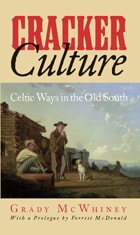
Cracker Culture
Celtic Ways in the Old SouthGrady McWhiney
University of Alabama Press, 1989
Cracker Culture is a provocative study of social life in the Old South that probes the origin of cultural differences between the South and the North throughout American history.
Among Scotch-Irish settlers the term “Cracker” initially designated a person who boasted, but in American usage the word has come to designate poor whites. McWhiney uses the term to define culture rather than to signify an economic condition. Although all poor whites were Crackers, not all Crackers were poor whites; both, however, were Southerners.
The author insists that Southerners and Northerners were never alike. American colonists who settled south and west of Pennsylvania during the 17th and 18th centuries were mainly from the “Celtic fringe” of the British Isles. The culture that these people retained in the New World accounts in considerable measure for the difference between them and the Yankees of New England, most of whom originated in the lowlands of the southeastern half of the island of Britain. From their solid base in the southern backcountry, Celts and their “Cracker” descendants swept westward throughout the antebellum period until they had established themselves and their practices across the Old South. Basic among those practices that determined their traditional folkways, values, norms, and attitudes was the herding of livestock on the open range, in contrast to the mixed agriculture that was the norm both in southeastern Britain and in New England. The Celts brought to the Old South leisurely ways that fostered idleness and gaiety. Like their Celtic ancestors, Southerners were characteristically violent; they scorned pacifism; they considered fights and duels honorable and consistently ignored laws designed to control their actions. In addition, family and kinship were much more important in Celtic Britain and the antebellum South than in England and the Northern United States. Fundamental differences between Southerners and Northerners shaped the course of antebellum American history; their conflict in the 1860s was not so much brother against brother as culture against culture.
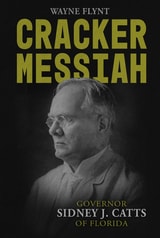
Cracker Messiah
Governor Sidney J. Catts of FloridaWayne Flynt
University of Alabama Press, 1977
The definitive biography of Sidney J. Catts—Florida’s fiery governor who fused pulpit rhetoric with populist politics in the early twentieth century.
Cracker Messiah by Wayne Flynt is a riveting portrait of Sidney J. Catts, one of the most controversial figures in Southern political history. Catts rose from Baptist pulpits and Chautauqua stages to Florida’s governor’s mansion in 1916, riding a wave of rural populism, prohibition fervor, and anti-Catholic rhetoric. His fiery oratory and outsider persona electrified “Florida crackers” at a time when industrial and urban forces were reshaping the South. Yet Catts was more than a demagogue. His administration championed progressive reforms—good roads, penal improvements, vocational education, and even women’s political participation—while his career oscillated between idealism and opportunism.
Wayne Flynt’s meticulously documented biography illuminates this complicated politician, tracing Catts’s battles with the Democratic establishment, his failed Senate bid, and his later flirtations with gambling and real estate during Florida’s boom years. Drawing on interviews, archival sources, and legislative records, Cracker Messiah illuminates the tensions between nativism and reform, faith and hypocrisy, populism and progressivism in the early twentieth-century South. This new edition will appeal to readers of Southern history, political biography, and Progressive Era studies, as well as anyone interested in the roots of American populism and the enduring complexities of cultural and political identity in the Deep South.
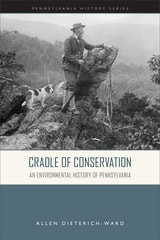
Cradle of Conservation
An Environmental History of PennsylvaniaAllen Dieterich-Ward
Temple University Press, 2024
Cradle of Conservation moves across time and place, from the Haudenosaunee people of the Susquehanna Valley, to the iron furnaces of nineteenth-century Pittsburgh, to the diesel trucks on the twentieth-century Pennsylvania Turnpike. In addition, Dieterich-Ward explores the histories of Philadelphia’s Schuylkill River and the state’s anthracite region and traces the environmental movements and crises that have led to public policy changes in the face of climate change.
Cradle of Conservation deepens our understanding of how Pennsylvanians have conserved and consumed.
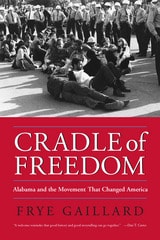
Cradle of Freedom
Alabama and the Movement That Changed AmericaFrye Gaillard
University of Alabama Press, 2006
Cradle of Freedom puts a human face on the story of the black American struggle for equality in Alabama during the 1960s.
While exceptional leaders such as Martin Luther King Jr., Rosa Parks, Fred Shuttlesworth, Ralph Abernathy, John Lewis, and others rose up from the ranks and carved their places in history, the burden of the movement was not carried by them alone. It was fueled by the commitment and hard work of thousands of everyday people who decided that the time had come to take a stand.
Cradle of Freedom is tied to the chronology of pivotal events occurring in Alabama the Montgomery bus boycott, the Freedom Rides, the Letter from the Birmingham Jail, the bombing of the 16th Street Baptist Church, Bloody Sunday, and the Black Power movement in the Black Belt. Gaillard artfully interweaves fresh stories of ordinary people with the familiar ones of the civil rights icons. We learn about the ministers and lawyers, both black and white, who aided the movement in distinct ways at key points. We meet Vernon Johns, King's predecessor at the Dexter Avenue Baptist Church in Montgomery, who first suggested boycotting the buses and who wrote later, "It is a heart strangely un-Christian that cannot thrill with joy when the least of men begin to pull in the direction of the stars." We hear from John Hulett who tells how terror of lynching forced him down into ditches whenever headlights appeared on a night road. We see the Edmund Pettus Bridge beatings from the perspective of marcher JoAnne Bland, who was only a child at the time. We learn of E. D. Nixon, a Pullman porter who helped organize the bus boycott and who later choked with emotion when, for the first time in his life, a white man extended his hand in greeting to him on a public street.
How these ordinary people rose to the challenges of an unfair system with a will and determination that changed their times forever is a fascinating and extraordinary story that Gaillard tells with his hallmark talent. Cradle of Freedom unfolds with the dramatic flow of a novel, yet it is based on meticulous research. With authority and grace, Gaillard explains how the southern state deemed the cradle of the Confederacy became with great struggle, some loss, and much hope the cradle of freedom.
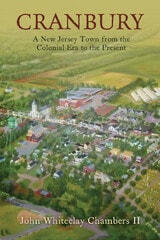
Cranbury
A New Jersey Town from the Colonial Era to the PresentChambers, John Whiteclay
Rutgers University Press, 2012
Winner of the 2013 Award of Merit by the American Association for State and Local History Leadership in History awards committee
Winner of the 2013 New Jersey Studies Academic Alliance, Author Awards, Non-fiction Popular Category
One of the oldest towns in New Jersey, Cranbury has a long and noteworthy history that is in part distinctive and in part broadly representative of larger themes in the development of the state and the nation. In this beautifully illustrated book sponsored by Cranbury Landmarks, Inc., historian John Whiteclay Chambers II links the narrative of this remarkable place to contemporary debates about suburbanization and land-use planning.
Founded in 1697 and soon featuring an inn, a gristmill, and a church, the village prospered due to its strategic location on important transportation routes between New York and Philadelphia and its fertile, productive farmland. David Brainerd, a famous and controversial young missionary, came there to preach to the Lenape Indians. In 1778, George Washington and his army stayed there on their way to the Battle of Monmouth. In the nineteenth century, roadways, railroads, and turnpikes spurred the town’s commerce and agriculture. Yet unlike many old agricultural centers transformed by suburbanization in the twentieth century, Cranbury has retained its picturesque, small-town image and much of its charm.
Cranbury has the feel of a well-preserved nineteenth-century village, remarkable for its intact and cohesive domestic and commercial architecture—a status recognized when it was placed on the State and National Registers of Historic Places. In the last several decades, an active citizenry has innovatively linked the historic preservation of the town center with the maintenance of adjoining farmland, stream corridors, and wildlife habitats. How Cranbury preserved much of its character while accommodating economic growth provides a central theme in this book. Preserving the best of the past while astutely meeting the challenges of the present, Cranbury’s history offers an inspiration for active civic participation, a model for enlightened development, and an engaging American story.
A project of Cranbury Landmarks, Inc.
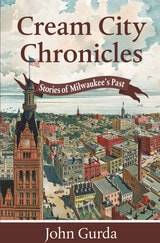
Cream City Chronicles
Stories of Milwaukee’s PastJohn Gurda
Wisconsin Historical Society Press, 2016
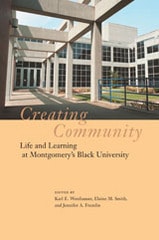
Creating Community
Life and Learning at Alabama State UniversityEdited by Karl E. Westhauser, Elaine M. Smith, and Jennifer A. Fremlin
University of Alabama Press, 2008
Creating Dairyland
How caring for cows saved our soil, created our landscape, brought prosperity to our state, and still shapes our way of life in WisconsinEdward Janus
Wisconsin Historical Society Press, 2011
The story of dairying in Wisconsin is the story of how our very landscape and way of life were created. By making cows the center of our farm life and learning how to care for them, our ancestors launched a revolution that changed much more than the way farmers earned their living — it changed us.
Creating Dairyland
How caring for cows saved our soil, created our landscape, brought prosperity to our state, and still shapes our way of life in WisconsinEdward Janus
Wisconsin Historical Society Press, 2011
The story of dairying in Wisconsin is the story of how our very landscape and way of life were created. By making cows the center of our farm life and learning how to care for them, our ancestors launched a revolution that changed much more than the way farmers earned their living — it changed us.
Creating Dairyland
How caring for cows saved our soil, created our landscape, brought prosperity to our state, and still shapes our way of life in WisconsinEdward Janus
Wisconsin Historical Society Press, 2012
The story of dairying in Wisconsin is the story of how our very landscape and way of life were created. By making cows the center of our farm life and learning how to care for them, our ancestors launched a revolution that changed much more than the way farmers earned their living — it changed us.
Creating New England, Defending the Northeast
Contested Algonquian and English Spatial Worlds, 1500–1700Nathan Braccio
University of Massachusetts Press, 2026
Between 1500 and 1700, Indigenous and English mapmakers across the North Atlantic depicted present-day New England in markedly distinct ways, highlighting how differently their communities understood the landscape. While English cartographers relied on new mathematics and other developing scientific knowledge from Europe, as well as an overhead perspective of the world, Algonquian mapmakers drew on deep knowledge of the landscape, derived from their communities’ long history upon it. Nathan Braccio refers to this phenomenon as “parallel landscapes.”
Creating New England, Defending the Northeast asserts that Algonquian knowledge of the landscape represented a powerful and persistent alternative to English surveying and mapmaking in the Northeast. When English colonists and explorers recognized the unsuitability of their techniques for understanding New England’s unfamiliar landscape, they attempted to appropriate Indigenous knowledge and maps. Algonquian sachems used this as an opportunity to control and benefit from their new English neighbors. Later, as the English became insecure in their dependence on Indigenous people, they began to remake and mark the landscape. Algonquians adapted, maintaining control of important spatial knowledge, even in a place no longer entirely of their making. This story complicates narratives of conquest and highlights the Indigenous spatial knowledge too often overlooked.
Creating Old World Wisconsin
The Struggle to Build an Outdoor History Museum of Ethnic ArchitectureJohn D. Krugler
University of Wisconsin Press, 2013
Visionaries, researchers, curators, and volunteers launched a massive preservation initiative to salvage fast-disappearing immigrant and migrant architecture. Dozens of historic buildings in the 1970s were transported from locations throughout the state to the Kettle Moraine State Forest. These buildings created a backdrop against which twenty-first-century interpreters demonstrate nineteenth- and early twentieth-century agricultural techniques and artisanal craftsmanship. The site, created and maintained by the Wisconsin Historical Society, offers visitors a unique opportunity to learn about the state’s rich and ethnically diverse past through depictions of the everyday lives of its Norwegian, Danish, Finnish, German, Polish, African American, and Yankee inhabitants.
Creating Old World Wisconsin chronicles the fascinating and complex origins of this outdoor museum, highlighting the struggles that faced its creators as they worked to achieve their vision. Even as Milwaukee architect and preservationist Richard W. E. Perrin, the Society's staff, and enthusiastic volunteers opened the museum in time for the national bicentennial in 1976, the site was plagued by limited funds, bureaucratic tangles, and problems associated with gaining public support. By documenting the engaging story of the challenges, roadblocks, false starts, and achievements of the site's founders, Krugler brings to life the history of the dedicated corps who collected and preserved Wisconsin's diverse social history and heritage.
Creating a Perfect World
Religious and Secular Utopias in Nineteenth-Century OhioCatherine M. Rokicky
Ohio University Press, 2002
Powerful currents of religious revival and political and social reform swept nineteenth-century America. Many people expressed their radical religious and social ideals by creating or joining self-contained utopian communities. These utopianists challenged the existing social and economic order with alternative notions about religion, marriage, family, sexuality, property ownership, and wage labor.
Between 1787 and 1919, approximately 270 utopian communities existed in the United States. Due to its unique location on the young nation’s frontier, the state of Ohio was the site of much of this activity.
Creating a Perfect World examines Ohio’s utopian movements, both religious and secular. These include the United Society of Believers in Christ’s Second Coming, or Shakers; the Society of Separatists at Zoar; the Mormons, who stopped in the state for several years on their way west; and several societies based on the philosophies of European social reformers Robert Owen and Charles Fourier.
In this detailed account of a unique and fascinating chapter in Ohio’s history, Catherine M. Rokicky profiles these communities and explores their ideals, how and why they were established, their leaders, and their members’ reasons for joining and sometimes leaving. She also examines the roles men and women played, their approaches to communal living and community property, their economic activities, their relations with surrounding communities and the state, and the various reasons for their success or failure.
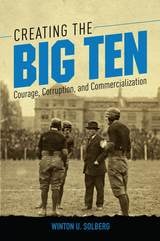
Creating the Big Ten
Courage, Corruption, and CommercializationWinton U Solberg
University of Illinois Press, 2018
Winton U. Solberg explores the relationship between higher education and collegiate football in the Big Ten's first fifty years. This formative era saw debates over eligibility and amateurism roil the sport. In particular, faculty concerned with academics clashed with coaches, university presidents, and others who played to win. Solberg follows the conference's successful early efforts to put the best interests of institutions and athletes first. Yet, as he shows, commercial concerns undid such work after World War I as sports increasingly eclipsed academics. By the 1940s, the Big Ten's impact on American sports was undeniable. It had shaped the development of intercollegiate athletics and college football nationwide while serving as a model for other athletic conferences.
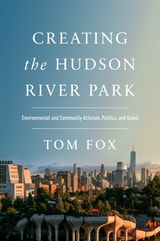
Creating the Hudson River Park
Environmental and Community Activism, Politics, and GreedTom Fox
Rutgers University Press, 2024
The 4-mile-long, 550-acre Hudson River Park is nearing completion and is the largest park built in Manhattan since Central Park opened more than 150 years ago. It has transformed a derelict waterfront, protected the Hudson River estuary, preserved commercial maritime activities, created new recreational opportunities for millions of New Yorkers, enhanced tourism, stimulated redevelopment in adjacent neighborhoods, and set a precedent for waterfront redevelopment. The Park attracts seventeen million visitors annually. Creating the Hudson River Park is a first-person story of how this park came to be. Working together over three decades, community groups, civic and environmental organizations, labor, the real estate and business community, government agencies, and elected officials won a historic victory for environmental preservation, the use and enjoyment of the Hudson River, and urban redevelopment. However, the park is also the embodiment of a troubling trend toward the commercialization of America’s public parks.
After the defeat of the $2.4 billion Westway plan to fill 234 acres of the Hudson in 1985, the stage was set for the revitalization of Manhattan’s West Side waterfront. Between 1986 and 1998 the process focused on the basics like designing an appropriate roadway, removing noncompliant municipal and commercial activities from the waterfront, implementing temporary improvements, developing the Park’s first revenue-producing commercial area at Chelsea Piers, completing the public planning and environmental review processes, and negotiating the 1998 Hudson River Park Act that officially created the Park. From 1999 to 2009 planning and construction were funded with public money and focused on creating active and passive recreation opportunities on the Tribeca, Greenwich Village, Chelsea, and Hell’s Kitchen waterfronts.
However, initial recommendations to secure long term financial support for the Park from the increase in adjacent real estate values that resulted from the Park’s creation were ignored. City and state politicians had other priorities and public funding for the Park dwindled. The recent phase of the project, from 2010 to 2021, focused on “development” both in and adjacent to the Park. Changes in leadership, and new challenges provide an opportunity to return to a transparent public planning process and complete the redevelopment of the waterfront for the remainder of the 21st-century. Fox’s first-person perspective helps to document the history of the Hudson River Park, recognizes those who made it happen and those who made it difficult, and provides lessons that may help private citizens and public servants expand and protect the public parks and natural systems that are so critical to urban well-being.
Creating the Land of Lincoln
The History and Constitutions of Illinois, 1778-1870Frank Cicero Jr.
University of Illinois Press, 2018
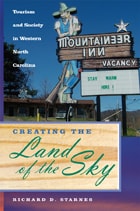
Creating the Land of the Sky
Tourism and Society in Western North CarolinaRichard D. Starnes
University of Alabama Press, 2005
A sophisticated inquiry into tourism's social and economic power across the South.
In the early 19th century, planter families from South Carolina, Georgia, and eastern North Carolina left their low-country estates during the summer to relocate their households to vacation homes in the mountains of western North Carolina. Those unable to afford the expense of a second home relaxed at the hotels that emerged to meet their needs. This early tourist activity set the stage for tourism to become the region's New South industry. After 1865, the development of railroads and the bugeoning consumer culture led to the expansion of tourism across the whole region.
Richard Starnes argues that western North Carolina benefited from the romanticized image of Appalachia in the post-Civil War American consciousness. This image transformed the southern highlands into an exotic travel destination, a place where both climate and culture offered visitors a myriad of diversions. This depiction was futher bolstered by partnerships between state and federal agencies, local boosters, and outside developers to create the atrtactions necessary to lure tourists to the region.
As tourism grew, so did the tension between leaders in the industry and local residents. The commodification of regional culture, low-wage tourism jobs, inflated land prices, and negative personal experiences bred no small degree of animosity among mountain residents toward visitors. Starnes's study provides a better understanding of the significant role that tourism played in shaping communities across the South.
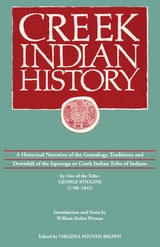
Creek Indian History
A Historical Narrative of the Genealogy, Traditions and Downfall of the Ispocoga or Creek Indian Tribe of Indians by One of the Tribe, George Stiggins (1788-1845)George Stiggins
University of Alabama Press, 2003
An essential narrative preserving the cultural memory, social life, and internal conflicts of the Creek people from an author within the tribe.
George Stiggins, a Creek Indian half blood living in Alabama, wrote this history more than 150 years ago. Raised in the white culture by his father, an English trader, Stiggins nevertheless lived in close contact with the Creeks because his mother was a full blood of the Natchez tribe, part of the Creek Confederacy.
Stiggins writes with firsthand knowledge of the tribes in the central southeast—the Alabamas, Natchez, Abekas, Uchees, and others. He tells of their origins, their towns and chiefs, and their way of life, he traces critical events leading to the Creek War—the battles of Burnt Corn and Fort Mims—and details the roles of the Indian leaders involved. In “Tecumseh and the Age of Prophecy,” he describes how the powerful influence of prophets, such as Josiah Francis and Jim Boy, who incited the Creeks to civil war as the confederacy split into war and peace factions. Stiggin’s account of William Weatherford’s controversial role in the Creek War has special value because Weatherford was Stiggins’s brother-in-law. His descriptions of religious and social aspects of the Creek lifeways make this work prime source material.
William Wyman’s notes and introduction put the Stiggins account into historical perspective and trace its circuitous route to publication. First issued in 1989, Creek Indian History has become an important primary document for the study of Native American history and culture.
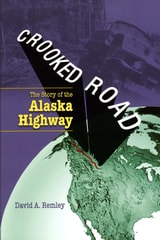
Crooked Road
The Story of the Alaska HighwayDavid A. Remley
University of Alaska Press, 2008
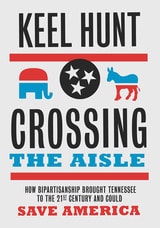
Crossing the Aisle
How Bipartisanship Brought Tennessee to the Twenty-First Century and Could Save AmericaKeel Hunt
Vanderbilt University Press, 2018
The Tennessee story, as the Pulitzer Prize–winning author Jon Meacham observes in his foreword to this book, offers striking examples of bipartisan cooperation on many policy fronts—and a mode of governing that provides lessons for America in this frustrating era of partisan stalemate.
For more on Crossing the Aisle and author Keel Hunt, visit KeelHunt.com.
Crossing the Aisle
How Bipartisanship Brought Tennessee to the Twenty-First Century and Could Save AmericaKeel Hunt
Vanderbilt University Press, 2018
The Tennessee story, as the Pulitzer Prize–winning author Jon Meacham observes in his foreword to this book, offers striking examples of bipartisan cooperation on many policy fronts—and a mode of governing that provides lessons for America in this frustrating era of partisan stalemate.
For more on Crossing the Aisle and author Keel Hunt, visit KeelHunt.com.
Crossing the Hudson
Historic Bridges and Tunnels of the RiverWolf, Donald
Rutgers University Press, 2010
Crossing the Hudson continues this story soon after the end of the war, in 1805, when the first bridge was completed. Donald E. Wolf simultaneously tracks the founding of the towns and villages along the water's edge and the development of technologies such as steam and internal combustion that demanded new ways to cross the river. As a result, innovative engineering was created to provide for these resources.
From hybrid, timber arch, and truss bridges on stone piers to long-span suspension and cantilevered bridges, railroad tunnels, and improvements in iron and steel technology, the construction feats that cross the Hudson represent technical elegance and physical beauty. Crossing the Hudson reveals their often multileveled stories--a history of where, why, when, and how these structures were built; the social, political, and commercial forces that influenced decisions to erect them; the personalities of the planners and builders; the unique connection between a builder and his bridge; and the design and construction techniques that turned mythical goals into structures of utility and beauty.
Crow's Range
An Environmental History Of The Sierra NevadaDavid Beesley
University of Nevada Press, 2007
John Muir called it the "Range of Light, the most divinely beautiful of all the mountain chains I’ve ever seen." The Sierra Nevada—a single unbroken mountain range stretching north to south over four hundred miles, best understood as a single ecosystem but embracing a number of environmental communities—has been the site of human activity for millennia. From the efforts of ancient Native Americans to encourage game animals by burning brush to create meadows to the burgeoning resort and residential development of the present, the Sierra has endured, and often suffered from, the efforts of humans to exploit its bountiful resources for their own benefit. Historian David Beesley examines the history of the Sierra Nevada from earliest times, beginning with a comprehensive discussion of the geologic development of the range and its various ecological communities. Using a wide range of sources, including the records of explorers and early settlers, scientific and government documents, and newspaper reports, Beesley offers a lively and informed account of the history, environmental challenges, and political controversies that lie behind the breathtaking scenery of the Sierra. Among the highlights are discussions of the impact of the Gold Rush and later mining efforts, as well as the supporting industries that mining spawned, including logging, grazing, water-resource development, market hunting, urbanization, and transportation; the politics and emotions surrounding the establishment of Yosemite and other state and national parks; the transformation of the Hetch Hetchy into a reservoir and the desertification of the once-lush Owens Valley; the roles of the Forest Service, Park Service, and other regulatory agencies; the consequences of the fateful commitment to wildfire suppression in Sierran forests; and the ever-growing impact of tourism and recreational use. Through Beesley’s wide-ranging discussion, John Muir’s "divinely beautiful" range is revealed in all its natural and economic complexity, a place that at the beginning of the twenty-first century is in grave danger of being loved to death. Available in hardcover and paperback.
Crucibles of Black Empowerment
Chicago's Neighborhood Politics from the New Deal to Harold WashingtonJeffrey Helgeson
University of Chicago Press, 2014
In Crucibles of Black Empowerment, Jeffrey Helgeson recounts the rise of African American political power and activism from the 1930s onward, revealing how it was achieved through community building. His book tells stories of the housewives who organized their neighbors, building tradesmen who used connections with federal officials to create opportunities in a deeply discriminatory employment sector, and the social workers, personnel managers, and journalists who carved out positions in the white-collar workforce. Looking closely at black liberal politics at the neighborhood level in Chicago, Helgeson explains how black Chicagoans built the networks that eventually would overthrow the city’s seemingly invincible political machine.

Cruising Guide To N J Waters
Launer, Donald
Rutgers University Press, 1995
This revised edition contains updated information about on-shore facilities, marinas, restaurants, stores, sites of interest, docking fees, bridge heights, maritime service stations, weather, navigation, and safety, as well as post-September 11 regulations in the waters around New York city. The book also includes a wealth of photographs and sea charts.

Cruising the Dead River
David Wojnarowicz and New York's Ruined WaterfrontFiona Anderson
University of Chicago Press, 2019
Crush
The Triumph of California WineJohn Briscoe
University of Nevada Press, 2018
Finalist, Northern California Book Awards General Non-Fiction
Look. Smell. Taste. Judge. Crush is the 200-year story of the heady dream that wines as good as the greatest of France could be made in California. A dream dashed four times in merciless succession until it was ultimately realized in a stunning blind tasting in Paris. In that tasting, in the year of America's bicentennial, California wines took their place as the leading wines of the world.
For the first time, Briscoe tells the complete and dramatic story of the ascendancy of California wine in vivid detail. He also profiles the larger story of California itself by looking at it from an entirely innovative perspective, the state seen through its singular wine history.
With dramatic flair and verve, Briscoe not only recounts the history of wine and winemaking in California, he encompasses a multidimensional approach that takes into account an array of social, political, cultural, legal, and winemaking sources. Elements of this history have plot lines that seem scripted by a Sophocles, or Shakespeare. It is a fusion of wine, personal histories, cultural, and socioeconomic aspects.
Crush is the story of how wine from California finally gained its global due. Briscoe recounts wine’s often fickle affair with California, now several centuries old, from the first harvest and vintage, through the four overwhelming catastrophes, to its amazing triumph in Paris.
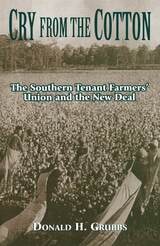
Cry from the Cotton
The Southern Tenant Farmers' Union and the New DealDonald Grubbs
University of Arkansas Press, 2000

Cultivating Justice in the Garden State
My Life in the Colorful World of New Jersey PoliticsRaymond Lesniak
Rutgers University Press, 2022
He recounts the many causes he championed in his forty years as a state legislator, from the landmark Environmental Cleanup Responsibility Act to bills concerning animal protections, marriage equality, women’s reproductive rights, and the abolition of the death penalty. He also delves into his experiences on the national stage as a key advisor for Bill Clinton and Al Gore’s presidential campaigns. With refreshing candor, Lesniak describes both his greatest achievements and his moments of failure, including his unsuccessful 2017 gubernatorial run.
Cultivating Justice in the Garden State is both a gripping American success story and a must-read for anyone seeking to understand the inner workings of our political system. It offers an insider’s perspective on the past fifty years of New Jersey politics, while presenting a compelling message about what leaders and citizens can do to improve the state’s future.
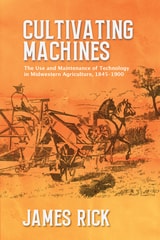
Cultivating Machines
The Use and Maintenance of Technology in Midwestern Agriculture, 1845–1900James Rick
Ohio University Press, 0
How farmers shaped the development of agricultural machinery
Throughout the second half of the nineteenth century, farmers in the midwestern United States and in Ontario began adopting new agricultural machines: threshers, reapers, and drills for more efficient production of grains, as well as sewing and washing machines for more efficient production within the farm household. By using, maintaining, and altering these machines within the natural and social contexts of their farms, rural people produced new technological systems of industrial agriculture. They also struggled with machine manufacturers and their agents for control of those systems—both individually and through farmers’ organizations. Cultivating Machines contributes to historiographies of capitalism, technology, and agriculture as it demonstrates the importance of everyday know-how and informed tinkering to the mechanization of grain agriculture.
In this study, James Rick moves from the middle decades of the nineteenth century, and the introduction of horse-powered machines, to the end of the century, when mechanized technologies became indispensable and central parts of farms themselves. Ultimately, large-scale wheat production, the increased complexity of machines, the need for replacement parts, and the efforts of manufacturers and their agents to assert themselves as authorities over industrial agriculture diminished the technological independence of farming people.
Culture and Agriculture
An Anthropological Study of a Corn Belt CountyHorace Miner
University of Michigan Press, 1949
Culture, Class, and Politics in Modern Appalachia
Essays in Honor of Ronald L. LewisEdited by Jennifer Egolf, Ken Fones-Wolf, and Louis C. Martin
West Virginia University Press, 2009
Culture, Class, and Politics in Modern Appalachia takes stock of the field of Appalachian studies as it explores issues still at the center of its scholarship: culture, industrialization, the labor movement, and twentieth-century economic and political failure and their social impact. A new generation of scholars continues the work of Appalachian studies’ pioneers, exploring the diversity and complexity of the region and its people. Labor migrations from around the world transformed the region during its critical period of economic growth. Collective struggles over occupational health and safety, the environment, equal rights, and civil rights challenged longstanding stereotypes. Investigations of political and economic power and the role of social actors and social movements in Appalachian history add to the foundational work that demonstrates a dynamic and diverse region.
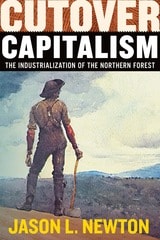
Cutover Capitalism
The Industrialization of the Northern ForestJason L. Newton
West Virginia University Press, 2024
2024 George Perkins Marsh Prize Runner-up
What happened to the loggers of America’s past when lumbermen moved west and south in the late nineteenth and early twentieth centuries? How did these communities continue to create value and meaning in these marginal lands? Cutover Capitalism: The Industrialization of the Northern Forest provides a new perspective on the process of industrialization in America through the study of rural workers in a cutover landscape.
Back when resources started running scarce, the environment of the forest and bodies of workers became the natural resources from which mills and landowners extracted. Bodies and cutover landscapes were mobilized in new ways to increase the scale and efficiency of production—a brutal process for workers, human and animal alike. In the Northern Forest, an industrial working class formed in relation to the unique ways that workers' bodies were used to produce value and in relation to the seasonal cycles of the forest environment.
Cutover Capitalism is an innovative historical study that combines methodological approaches from labor history, environmental history, and the new history of capitalism. The book tells a character-driven yet theoretically sophisticated story about what it was like to live through this process of industrialization.
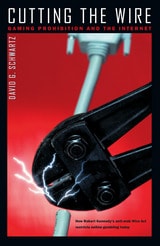
Cutting The Wire
Gaming Prohibition And The InternetDavid G. Schwartz
University of Nevada Press, 2005
The story of the Wire Act and how Robert Kennedy’s crusade against the Mob is creating a new generation of Internet gaming outlaws.
Gambling has been part of American life since long before the existence of the nation, but Americans have always been ambivalent about it. What David Schwartz calls the “pell-mell history of legal gaming in the United States” is a testament to our paradoxical desire both to gamble and to control gambling. It is in this context that Schwartz examines the history of the Wire Act, passed in 1961 as part of Attorney General Robert F. Kennedy’s crusade against organized crime and given new life in recent efforts to control Internet gambling. Cutting the Wire presents the story of how this law first developed, how it helped fight a war against organized crime, and how it is being used today. The Wire Act achieved new significance with the development of the Internet in the early 1990s and the growing popularity of online wagering through offshore facilities. The United States government has invoked the Wire Act in a vain effort to control gambling within its borders, at a time when online sports betting is soaring in popularity. By placing the Wire Act into the larger context of Americans’ continuing ambivalence about gambling, Schwartz has produced a provocative analysis of a national habit and the vexing predicaments that derive from it. In America today, 48 of 50 states currently permit some kind of legal gambling. Schwartz’s historical unraveling of the Wire Act exposes the illogic of an outdated law intended to stifle organized crime being used to set national policy on Internet gaming. Cutting the Wire carefully dissects two centuries of American attempts to balance public interest with the technology of gambling. Available in hardcover and paperback.