Results by title
3576 books match the query 'American' and 110 start with d
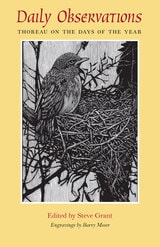
Daily Observations
Thoreau on the Days of the YearSteve Grant
University of Massachusetts Press, 2005
“How many a man has dated a new era in his life from the reading of a book,” wrote Henry David Thoreau in Walden. Today that book continues to provoke, inspire, and change lives all over the world, and each rereading is fresh and challenging. Yet as Thoreau's countless admirers know, there is more to the man than Walden. An engineer, poet, teacher, naturalist, lecturer, and political activist, he truly had multiple lives to lead, and each one speaks forcefully to us today.
Sponsored by the Thoreau Society, the brief, handsomely presented books in this series offer the thoughts of a great writer on a variety of topics, some that we readily associate with him, some that may be surprising. Each volume includes selections from his familiar published works as well as from less well known lectures, letters, and journal entries. The books include original engravings by renowned illustrator and book artist Barry Moser.
Dairy Hollow House Soup & Bread
Thirtieth Anniversary EditionCrescent Dragonwagon
University of Arkansas Press, 2021
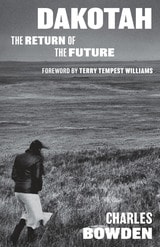
Dakotah
The Return of the FutureBy Charles Bowden; foreword by Terry Tempest Williams
University of Texas Press, 2019
“[Dakotah] is about hope, disappointment, impermanence and erasure. . . . This is a meditation Bowden fans will not want to miss.”—Arizona Daily Star
“Bowden’s prose—bleak, fierce, surreal like a swirling sandstorm, like an endlessly ramifying arroyo—provided for me, in its rejection of facile theses and clear-cut answers, an honest mapping of our contemporary predicament.”—Leath Tonino, Lit Hub
The fourth installment in Charles Bowden's acclaimed “Unnatural History of America,” Dakotah uses America’s Great Plains as a lens—sometimes sullied, sometimes shattered, but always sharp—for observing pivotal moments in the lives of anguished figures, including himself.
In scenes that are by turns wrenching and poetic, Bowden describes the Sioux’s forced migrations and rebellions alongside his own ancestors’ migrations from Europe to Midwestern acres beset by unforgiving winters. He meditates on the life of his resourceful mother and his philosophical father, who rambled between farm communities and city life. Interspersed with these images are clear-eyed, textbook-defying anecdotes about Lewis and Clark, Daniel Boone, and, with equal verve, twentieth-century entertainers “Pee Wee” Russell, Peggy Lee, and other musicians. The result is a kaleidoscopic journey that penetrates the senses and redefines the notion of heartland. Dakotah is a powerful ode to loss from one of our most fiercely independent writers.
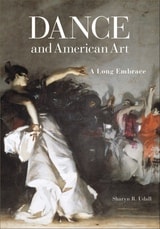
Dance and American Art
A Long EmbraceSharyn R. Udall
University of Wisconsin Press, 2012
From ballet to burlesque, from the frontier jig to the jitterbug, Americans have always loved watching dance, whether in grand ballrooms, on Mississippi riverboats, or in the streets. Dance and American Art is an innovative look at the elusive, evocative nature of dance and the American visual artists who captured it through their paintings, sculpture, photography, and prints from the early nineteenth century through the mid-twentieth century. The scores of artists discussed include many icons of American art: Winslow Homer, George Caleb Bingham, Mary Cassatt, James McNeill Whistler, Alexander Calder, Joseph Cornell, Edward Steichen, David Smith, and others.
As a subject for visual artists, dance has given new meaning to America’s perennial myths, cherished identities, and most powerful dreams. Their portrayals of dance and dancers, from the anonymous to the famous—Anna Pavlova, Isadora Duncan, Loïe Fuller, Josephine Baker, Martha Graham—have testified to the enduring importance of spatial organization, physical pattern, and rhythmic motion in creating aesthetic form.
Through extensive research, sparkling prose, and beautiful color reproductions, art historian Sharyn R. Udall draws attention to the ways that artists’ portrayals of dance have defined the visual character of the modern world and have embodied culturally specific ideas about order and meaning, about the human body, and about the diverse fusions that comprise American culture.
Dancing Ghosts
Native American And Christian Syncretism In Mary Austin's WorkMark T. Hoyer
University of Nevada Press, 1998
A significant and innovative contribution to Austin studies. How did an Illinois Methodist homesteader in the West come to create one of the most significant cosmological syntheses in American literature? In this study, Hoyer draws on his own knowledge of biblical religion and Native American cultures to explore Austin's creation of the "mythology of the American continent" she so valued. Austin lived in and wrote about "the land of little rain," semiarid and arid parts of California and Nevada that were home to the Northern Paiute, Shoshone, Interior Chumash, and Yokut peoples. Hoyer makes new and provocative connections between Austin and spiritual figures like Wovoka, the prophet of the Ghost Dance religion, and writers like Zitkala-sa and Mourning Dove, and he provides a particularly fine reading of Cogowea.
Dancing at the Devil's Party
Essays on Poetry, Politics, and the EroticAlicia Suskin Ostriker
University of Michigan Press, 2000
In her work, Ostriker can be controversial, as when she attacks the academic establishment for rejecting the erotic dimension of poetry, or when she meditates on the significance of the black poet Lucille Clifton to herself as a reader, or when she argues that Allen Ginsberg's "Howl"--famous as the primary poem of the Beat Generation--is also a profoundly Jewish poem. Yet her writing is always lively and readable, free of academic jargon, inviting the reader to enjoy a wide range of poetic styles and experiences.
Ostriker's criticism, like her poetry, is both feminist and deeply humane. These essays on American poetry will appeal to students of poetry, scholars of American literature, and anyone who enjoys the work of the poets discussed in the book.
Alicia Ostriker is the author of nine books of poetry, including The Imaginary Lover, which won the William Carlos Williams Award and The Crack in Everything, which was a National Book award finalist in 1996, and which received the Paterson Prize in 1997 and the San Fransisco State Poetry Center Award in 1998. She is Distinguished Professor of English at Rutgers University.
Dancing with Poets
Reed Turchi
University Press of Colorado, 2026
Reed Turchi’s debut collection, Dancing with Poets, explores what it means to make—and re-make—oneself amid a swirl of love, loss, and memory. In dive bars and art museums, baseball stadiums and blues clubs, Turchi summons his ghosts and invites them to sing their songs. A Grammy Award–winning musician as well as poet, Turchi is guided by finely honed rhythm and a singular sonic sensibility that coaxes music from poems that are narrative and lyric in turn. As a collection, Dancing with Poets remembers those the author has loved and lost, but avoids nostalgia, asking instead what futures may be built from grief and how love may grow on the other side of devastation. While the poems may swirl, their emotional truth remains crystalline: The characters, moments, and stories in each poem are infinitely recognizable—fantastic and quotidian in equal measure. Within these poems there are chicken tenders and high art, motorcycles and funerals—a familiar boyhood that happened to be spent surrounded by some of the finest American poets of the late twentieth century. In Dancing with Poets, Turchi invites his reader to join him—“to strut and spin” in grief and joy alike.
Dancing with Poets
Reed Turchi
University Press of Colorado, 2026
Reed Turchi’s debut collection, Dancing with Poets, explores what it means to make—and re-make—oneself amid a swirl of love, loss, and memory. In dive bars and art museums, baseball stadiums and blues clubs, Turchi summons his ghosts and invites them to sing their songs. A Grammy Award–winning musician as well as poet, Turchi is guided by finely honed rhythm and a singular sonic sensibility that coaxes music from poems that are narrative and lyric in turn. As a collection, Dancing with Poets remembers those the author has loved and lost, but avoids nostalgia, asking instead what futures may be built from grief and how love may grow on the other side of devastation. While the poems may swirl, their emotional truth remains crystalline: The characters, moments, and stories in each poem are infinitely recognizable—fantastic and quotidian in equal measure. Within these poems there are chicken tenders and high art, motorcycles and funerals—a familiar boyhood that happened to be spent surrounded by some of the finest American poets of the late twentieth century. In Dancing with Poets, Turchi invites his reader to join him—“to strut and spin” in grief and joy alike.
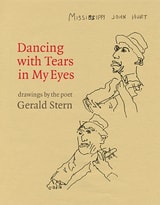
Dancing with Tears in My Eyes
Gerald Stern
University of Iowa Press, 2014
Long recognized as one of the most original poets in America, Stern is known for his tragi-comic, irascible vision that has been vividly rendered in hundreds of poems. All along, he has also been drafting these whimsical sketches. The Thurber-esque drawings represented here are daft, graphic expressions of Stern’s fearless and shameless sense of self.
In addition to expressing a forgiving and cavalier attitude toward aging, these saucy drawings, until now a well-kept secret of Stern’s creative life, capture something essential about his character. By turns profane and playfully romantic, they are another expression of the cutting wit and inimitable charm of Gerald Stern.
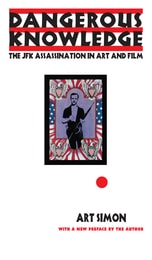
Dangerous Knowledge
The JFK Assassination in Art and FilmArt Simon
Temple University Press, 2013
In his new Preface to this edition of Dangerous Knowledge, Art Simon discusses public fascination with celebrity deaths and recent assassination-related media-from documentaries to scholarly books to the scandalous video game JFK Reloaded-to show that the assassination continues to inspire writers, artists, and filmmakers.
Dangerous Knowledge examines the seminal works of art associated with the assassination, including Andy Warhol's silk screens, the underground films of Bruce Conner, and provocative Hollywood films like The Parallax View and JFK. Simon's investigation places assassination art and images within a historical context-one that helps us understand what the assassination has meant to American culture.
Dark Alphabet
Jennifer Maier
Southern Illinois University Press, 2006

Dark Braid
PoemsDara Yen Elerath
BkMk Press, 2020
Julie Suk Prize longlist
Through the use of imagination, fairy tale and persona Dark Braid bridges the universal and the personal by focusing on the body, problematic relationships, illness (both mental and physical) and feelings of being an outsider.

Dark Film, Blood Money
The Economic Unconscious of American Neo-Noir CinemaVernon Shetley
Intellect Books, 2027
Neo-noir films exert their fascination not only through their suspense, shadowy atmosphere, and moral ambiguity, but also through their registration of the experience of American life in the long twilight of the American Dream. With a sharp curatorial eye and an elegant critical voice, Vernon Shetley interprets landmark works from the noir revival of the early 1970s to the present, showing how neo-noir reflects the darkening national mood as postwar prosperity gave way to economic stagnation and inequality, social alienation, and a deepening sense of crisis.
Through close readings of key films and overviews of neo-noir’s treatment of the genre’s defining themes and archetypes—desire and betrayal, corruption and alienation, the private detective and the femme fatale—Shetley delineates neo-noir’s exploration of anxieties about work, money, trust, and exchange. From Chinatown to Mulholland Drive, from Night Moves to Nightmare Alley, neo-noir’s marginalized characters and extreme situations emerge in Shetley’s account as powerful representations of concerns central to economic and social life. Combining illuminating analysis with lucid prose, this book offers scholars and general readers alike a fresh, penetrating understanding of the dynamics of neo-noir filmmaking and its continually renewed vitality over the last five decades.
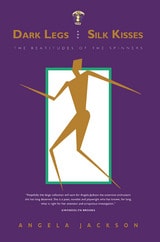
Dark Legs and Silk Kisses
The Beatitudes of the SpinnersAngela Jackson
Northwestern University Press, 1993
Angela Jackson brings her remarkable linguistic and poetic gifts to the articulation of African-American experience. The recurrent motif of the spider, which she presents as both creator and predator, demonstrates her deliberate reshaping of myth in the context of contemporary human experience. Informed by African-American speech and poetic traditions, yet uniquely her own, these poems display Jackson's stylistic grace, her exuberance and vitality of spirit, and her emotional sensitivity and psychological insight.
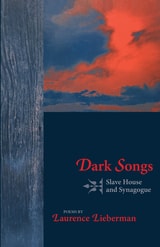
Dark Songs
Slave House and SynagogueLaurence Lieberman
University of Arkansas Press, 1996
Laurence Lieberman writes poems that successfully utilize techniques from every possible form of literature—including histories, travelogues, short stories, and epics. All the while, his lines maintain a deft balance of lyrical intensity, clear, methodical description, and the pure dialect of the characters living his poetry.
In Dark Songs: Slave House and Synagogue, Lieberman creates a narrative mosaic of the eastern Caribbean islands, ranging from St. Eustatius in the eighteenth century to the island of Grenada after the United States–led invasion in 1983. When he writes of African slaves, British governors, Dutch Jews, island guerillas, fallen Swiss nobility, and piratelike charter captains, the wealth of his details, the force, and often the truth behind his stories allow us to witness the whole human saga of the Caribbean.
With humor, absolute candor, and relentless observation, Lieberman has, as reviewer Samuel Maio says, “given is a new form of fiction in his poetry. He has created a singular art.”
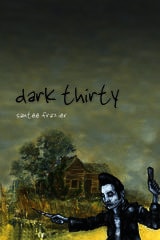
Dark Thirty
Santee Frazier
University of Arizona Press, 2009
Dark Thirty takes us on a loosely autobiographical trip through Cherokee country, the backwoods towns and the big cities, giving us clear-eyed portraits of Native people surviving contemporary America. In Frazier’s world, there is no romanticizing of Native American life. Here cops knock on the door of a low-rent apartment after a neighbor has been stabbed. Here a poem’s narrator recalls firing a .38 pistol—“barrel glowing like oil in a gutter-puddle”—for the first time. Here a young man catches a Greyhound bus to Flagstaff after his ex-girlfriend tells him he has fathered a child. Yet even in the midst of violence and despair there is time for the beauty of the world to shine through: “The Cutlass rattling out / the last fumes of gas, engine stops, / the night dimly lit by the moon / hung over the treetops; / owls calling each other from / hilltop to valley bend.”
Like viewing photographs that repel us even as they draw us in, we are pulled into these poems. We’re compelled to turn the page and read the next poem. And the next. And each poem rewards us with a world freshly seen and remade for us of sound and image and voice.
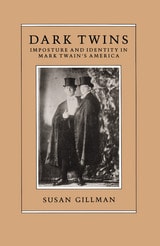
Dark Twins
Imposture and Identity in Mark Twain's AmericaSusan Gillman
University of Chicago Press, 1989
Gillman shows that laws regulating race classification, paternity, and rape cases underwrite Twain's critical exploration of racial and sexual difference in the writings of the 1890s and after, most strikingly in the little-known manuscripts that Gillman calls the "tales of transvestism." The "pseudoscience" of spiritualism and the "science" of psychology provide the cultural vocabularies essential to Twain's fantasy and science fiction writings of his last two decades. Twain stands forth finally as a representative man, not only a child of his culture, but also as one implicated in a continuing American anxiety about freedom, race, and identity.
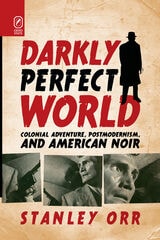
Darkly Perfect World
Colonial Adventure, Postmodernism, and American NoirStanley Orr
The Ohio State University Press, 2010
Dashiell Hammett and the Movies
Mooney, William H
Rutgers University Press, 2014
Data Mind
PoemsJoanna Fuhrman
Northwestern University Press, 2025
Wrestling with the experience of living online as a non-digital native
Joanna Fuhrman didn’t grow up online. Her generation entered the digital age as adults, with optimism about the possibilities it would bring for community building. In the alien landscape of the internet, they indeed found moments of joy and connection, but they also watched in anguish as what had been sold as a utopian space instead magnified the anti-democratic demons of necrocapitalism. In this darkly comic and surreal collection, Fuhrman lets herself fall into the internet wormhole of these conflicting realities. With titles ranging from “You Won’t Believe How Your Favorite Childhood Star Looks Now” to “We’ll Burn That Algorithm When We Get to It,” the feminist prose poems in Data Mind remix the tropes of digital life with the puckishness and embodied urgency for which Fuhrman is celebrated.
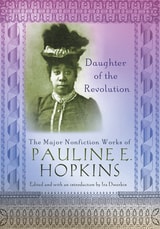
Daughter of the Revolution
The Major Nonfiction Works of Pauline HopkinsDworkin, Ira
Rutgers University Press, 2007
Pauline E. Hopkins (1859–1930) came to prominence in the early years of the twentieth century as an outspoken writer, editor, and critic. Frequently recognized for her first novel, Contending Forces, she is currently one of the most widely read and studied African American novelists from that period.
While nearly all of Hopkins’s fiction remains in print, there is very little of her nonfiction available. This reader brings together dozens of her hard-to-find essays, including longer nonfiction works such as Famous Men of the Negro Race and The Dark Races of the Twentieth Century, some of which are published here for the first time in their entirety.
Through these works, along with two juvenile essays from the 1870s, a personal letter, and two speeches, readers encounter a voice that is committed to constructing an international discourse on race, recovering the militant abolitionist tradition to combat Jim Crow, celebrating black political participation during and after the Reconstruction era, articulating the connections between race and labor, and insisting on equal rights for women. Hopkins’s writing will challenge contemporary scholars to rethink their understanding of black activism and modernity in the early twentieth century.
Daughters of Decadence
Women Writers of the Fin de SiecleShowalter, Elaine
Rutgers University Press, 1993

David Mamet in Conversation
Leslie Kane, Editor
University of Michigan Press, 2001
Contemporary playwright David Mamet's thought-provoking plays and screenplays such as Wag the Dog, Glengarry Glen Ross (for which he won the Pulitzer Prize), and Oleanna have enjoyed popular and critical success in the past two decades. Among the most prolific and provocative of writers, Mamet frequently draws emotional responses from both audiences and critics. Mamet in Conversation collects interviews with the playwright that offer readers insight into his life in the theater, his artistic vision, and the evolution of his craft. The interviews help followers of his work better understand the sensibilities that have informed his work in drama, film, and prose over a twenty-five-year career. The conversations collected here--several of which appear in print for the first time--allow a glimpse inside Mamet's creative process, and into the recurring motifs that drive his work. The range of topics is impressive and includes the celebratory purpose of theater, the responsibility of the playwright, writing for Hollywood, the seduction of fame, the search for truth and the merchandising of it, and the decay of culture. The interviews shed light on the personal as well: Mamet's return to Judaism, his appreciation of Midwestern virtues, his love of rural Vermont, the problems of embattled virtue, and the challenge of aging. The book includes transcripts of Mamet's engagingly candid broadcast interviews with Jim Lehrer and Charlie Rose of PBS, published here for the first time.
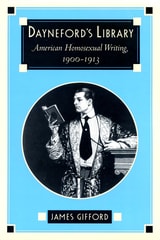
Dayneford's Library
American Homosexual Writing, 1900-1913James Gifford
University of Massachusetts Press, 1995
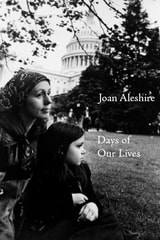
Days of Our Lives
Joan Aleshire
Four Way Books, 2019
Deaf American Poetry
An AnthologyJohn Lee Clark
Gallaudet University Press, 2009
“The Deaf poet is no oxymoron,” declares editor John Lee Clark in his introduction to Deaf American Poetry: An Anthology. The 95 poems by 35 Deaf American poets in this volume more than confirm his point. From James Nack’s early metered narrative poem “The Minstrel Boy” to the free association of Kristi Merriweather’s contemporary “It Was His Movin’ Hands Be Tellin’ Me,” these Deaf poets display mastery of all forms prevalent during the past two centuries. Beyond that, E. Lynn Jacobowitz’s “In Memoriam: Stephen Michael Ryan” exemplifies a form unique to Deaf American poets, the transliteration of verse originally created in American Sign Language.
This anthology showcases for the first time the best works of Deaf poets throughout the nation’s history — John R. Burnet, Laura C. Redden, George M. Teegarden, Agatha Tiegel Hanson, Loy E. Golladay, Robert F. Panara, Mervin D. Garretson, Clayton Valli, Willy Conley, Raymond Luczak, Christopher Jon Heuer, Pamela Wright-Meinhardt, and many others. Each of their poems reflects the sensibilities of their times, and the progression of their work marks the changes that deaf Americans have witnessed through the years. In “The Mute’s Lament,” John Carlin mourns the wonderful things that he cannot hear, and looks forward to heaven where “replete with purest joys/My ears shall be unsealed, and I shall hear.” In sharp contrast, Mary Toles Peet, who benefitted from being taught by Deaf teachers, wrote “Thoughts on Music” with an entirely different attitude. She concludes her account of the purported beauty of music with the realization that “the music of my inward ear/Brings joy far more intense.”
Clark tracks these subtle shifts in awareness through telling, brief biographies of each poet. By doing so, he reveals in Deaf American Poetry how “the work of Deaf poets serves as a prism through which Deaf people can know themselves better and through which the rest of the world can see life in a new light.”
Dear Blackbird,
Jane Springer
University of Utah Press, 2007
Dear Blackbird, is the 2006 prize-winning volume selected by this year's judge, J. D. McClatchy, editor of The Yale Review.
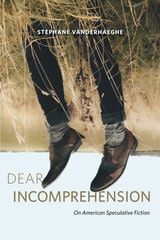
Dear Incomprehension
On American Speculative FictionStéphane Vanderhaeghe
University of Alabama Press, 2024
WINNER OF THE ELIZABETH AGEE PRIZE IN AMERICAN LITERARY STUDIES
A philosophical and formally inventive inquiry into the experimental terrains of American speculative fiction, where meaning emerges through ambiguity, rupture, and critical refusal.
Dear Incomprehension: On American Speculative Fiction is a thought-provoking exploration of the fascinating field of contemporary speculative fiction, a genre that transcends boundaries and encompasses science fiction, fabulist tales, modern fairy tales, and experimental narratives that challenge the very essence of storytelling and reading.
Written as a philosophical essay that mirrors the unorthodox nature of the texts it analyzes, Dear Incomprehension examines American works that defy traditional narrative devices such as plot, character, logic, and even legibility. Drawing on a number of philosophical theories, among them object-oriented ontology and speculative realism, Vanderhaeghe argues that these unconventional works resist the standard tools of criticism, demanding instead a novel perspective and approach.
An in-depth resource for scholars and students of contemporary literature, philosophy, and digital literary studies, Dear Incomprehension offers a fresh framework for analyzing experimental fiction and alternative modes of meaning-making. It is a must-read for those seeking to grasp the complexities and nuances of American experimental and speculative fiction.

Dear Munificent Friends
Henry James's Letters to Four WomenSusan E. Gunter, Editor
University of Michigan Press, 2000
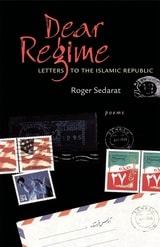
Dear Regime
Letters to the Islamic RepublicRoger Sedarat
Ohio University Press, 2007
In his provocative, brave, and sometimes brutal first book of poems, Roger Sedarat directly addresses the possibility of political change in a nation that some in America consider part of “the axis of evil.” Iranianon his father’s side, Sedarat explores the effects of the Islamic Revolution of 1979—including censorship, execution, and pending war—on the country as well as on his understanding of his own origins. Written in a style that is as sure-footed as it is experimental, Dear Regime: Letters to the Islamic Republic confronts the past and current injustices of the Iranian government while retaining a sense of respect and admiration for the country itself. Woven into this collection are the author’s vividdescriptions of the landscape as well as the people of Iran. Throughout, Sedarat exhibits a keen appreciation for the literary tradition of Iran, and inmaking it new, attempts to preserve the culture of a country he still claims as his own.
Thigh
With honesty of homemade butter,
paddle-churned cream (eshta in Arabic,
ecstasy foaming to the brim), a woman
river-bathes, sheet of oil-black hair breaking
in rapids, cut lemon scintillating
olive skin free of tree-stumped chador, skirts
within skirts, peal of her bell-body rung
muffled in Iran heat—a splash of white.
The rhythm of pumice scraping her feet,
sandbar against warm current, frothy cape
a bee-bubbled hive, honeyed trace curling
to her bare knees, thick transparent lather.
At a Tehran bazaar endless gold-stores
could never return me anywhere pure.
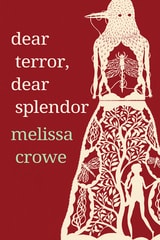
Dear Terror, Dear Splendor
Melissa Crowe
University of Wisconsin Press, 2019
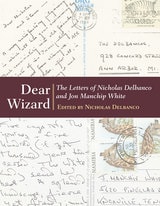
Dear Wizard
The Letters of Nicholas Delbanco and Jon Manchip Whiteedited by Nicholas Delbanco
University of Michigan Press, 2014
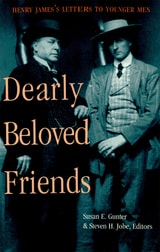
Dearly Beloved Friends
Henry James's Letters to Younger MenSusan E. Gunter and Steven H. Jobe, Editors
University of Michigan Press, 2004
Death to the Death of Poetry
Essays, Reviews, Notes, InterviewsDonald Hall
University of Michigan Press, 1994
Donald Hall believes that American poetry, at the present moment, thrives both in quality and in leadership. In his latest collection of essays, reviews, and interviews, Hall counters the increasingly publicized view that poetry has an ever-diminishing importance in contemporary American culture. He resents the endlessly repeated cliché that finds poetry unpopular and losing popularity. Thus: Death to the Death of Poetry.
Throughout the pages of this latest offering in the Poets on Poetry series, Hall returns again and again to the theme of poetry's health, and offers essays praising contemporary poets, who serve as examples of poetry's thriving condition. In addition, Death to the Death of Poetry collects interviews in which Hall discusses the work of poetry--revisions, standards, the psychology and sociology of the poet's life.
The collection will be warmly received by Donald Hall's large readership, enhanced in 1993 by publication of two exemplary volumes: The Museum of Clear Ideas, his eleventh book of poetry; and his essay Life Work, which brought him both new and returning readers.
Debris
Jonathan Wells
Four Way Books, 2021
Debts & Lessons
Lynn Xu
Omnidawn, 2013

Deep Freeze
The United States, the International Geophysical Year, and the Origins of Antarctica's Age of ScienceDian Olson Belanger
University Press of Colorado, 2006
In the tense 1950s, even as the world was locked in the Cold War, U.S. scientists, maintained by the Navy's Operation Deep Freeze, came together in Antarctica with counterparts from eleven other countries to participate in the International Geophysical Year (IGY). On July 1, 1957, they began systematic, simultaneous scientific observations of the south-polar ice and atmosphere. Their collaborative success over eighteen months inspired the Antarctic Treaty of 1959, which formalized their peaceful pursuit of scientific knowledge. Still building on the achievements of the individuals and distrustful nations thrown together by the IGY from mutually wary military, scientific, and political cultures, science prospers today and peace endures.
The year 2007 marked the fiftieth anniversary of the IGY and the commencement of a new International Polar Year - a compelling moment to review what a singular enterprise accomplished in a troubled time. Belanger draws from interviews, diaries, memoirs, and official records to weave together the first thorough study of the dawn of Antarctica's scientific age. Deep Freeze offers absorbing reading for those who have ventured onto Antarctic ice and those who dream of it, as well as historians, scientists, and policy makers.

Delinquent Palaces
PoemsDanielle Chapman
Northwestern University Press, 2015
Demands of the Dead
Executions, Storytelling, and Activism in the United StatesKaty Ryan
University of Iowa Press, 2012
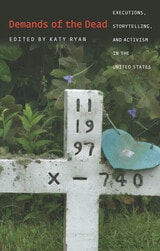
The first work to combine literary criticism with other forms of death penalty–abolitionist writing, Demands of the Dead demonstrates the active importance of literature and literary criticism to the struggle for greater justice in the United States. Gathering personal essays, scholarly articles, and creative writings on the death penalty in American culture, this striking collection brings human voices and literary perspectives to a subject that is often overburdened by statistics and angry polemics. Contributors include death-row prisoners, playwrights, poets, activists, and literary scholars.
Highlighting collaborations between writers inside and outside prison, all within the context of the history of state killing laws and foundational concepts that perpetuate a culture of violent death, Demands of the Dead opens with a pamphlet dictated by Willie Francis, a teenager who survived a first execution attempt in Louisiana’s electric chair before he was subsequently killed by the state in 1947.
Writers are a conspicuous part of U.S. death-penalty history, composing a vibrant literary record of resistance to state killing. This multigenre collection both recalls and contributes to this tradition through discussions of such writers as Walt Whitman, Herman Melville, Gertrude Atherton, Ernest Gaines, Sonia Sanchez, Kia Corthron, and Sherman Alexie. A major contribution to literary studies and American prison studies, Demands of the Dead asserts the relevance of storytelling to ethical questions and matters of public policy.
Democratic Art
The New Deal's Influence on American CultureSharon Ann Musher
University of Chicago Press, 2015
In Democratic Art, Sharon Musher explores these questions and uses them as a springboard for an examination of the role art can and should play in contemporary society. Drawing on close readings of government-funded architecture, murals, plays, writing, and photographs, Democratic Art examines the New Deal’s diverse cultural initiatives and outlines five perspectives on art that were prominent at the time: art as grandeur, enrichment, weapon, experience, and subversion. Musher argues that those engaged in New Deal art were part of an explicitly cultural agenda that sought not just to create art but to democratize and Americanize it as well. By tracing a range of aesthetic visions that flourished during the 1930s, this highly original book outlines the successes, shortcomings, and lessons of the golden age of government funding for the arts.
Democratic Discourses
The Radical Abolition Movement and Antebellum American LiteratureBennett, Michael
Rutgers University Press, 2005
Ever since the hallowed statement, "All men are created equal," was penned in the Declaration of Independence, it has become a historical tenet that freedom and equality were brought to American shores by the so-called Founding Fathers.
In this path-breaking study, Michael Bennett departs from tradition to argue that the democratic ideal of equality and the actual ways in which it has been practiced are grounded less in the fledgling government documents written by a handful of white men than in the actions and writings of the radical abolitionists of the nineteenth century. Bringing together key texts of both African American and European American authors, Democratic Discourses shows the important ways that abolitionist writing shaped a powerful counterculture within a slave-holding society. Bennett offers fresh new analysis through unusual pairings of authors, including Frederick Douglass with Henry David Thoreau, Frances Ellen Watkins Harper with Walt Whitman, and Margaret Fuller with Sojourner Truth. These rereadings avoid the tendency to view antebellum writing as a product primarily of either European American or African American influences and, instead, illustrate the interconnections of white and black literature in the creation and practice of democracy.
Drawing on discourses about race, the body, gender, economics, and aesthetics, this unique study encourages readers to reconsider the reality and roots of freedoms experienced in the United States today.
Demographic Angst
Cultural Narratives and American Films of the 1950sNadel, Alan
Rutgers University Press, 2017
Demographic Angst argues that mandated normativity—as a political agenda and a social ethic—precluded explicit expression of the anxiety produced by America’s radically reconfigured postwar population. Alan Nadel explores influential non-fiction books, magazine articles, and public documents in conjunction with films such as Singin’ in the Rain, On the Waterfront, Sunset Boulevard, and Sayonara, to examine how these films worked through fresh anxieties that emerged during the 1950s.
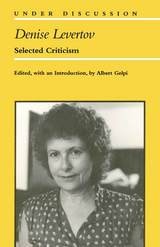
Denise Levertov
Selected CriticismEdited with an Introduction by Albert Gelpi
University of Michigan Press, 1993
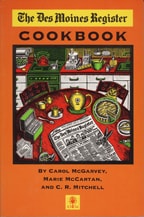
Des Moines Register Cookbook
Carol Mcgarvey
University of Iowa Press, 1995
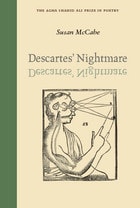
Descartes' Nightmare
Susan McCabe
University of Utah Press, 2008
Descartes’ Nightmare is the 2007 prizewinning volume selected by this year’s judge, Cole Swenson, of the Iowa Writers’ Workshop.
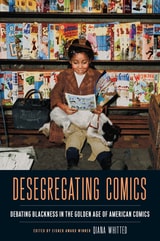
Desegregating Comics
Debating Blackness in the Golden Age of American ComicsQiana Whitted
Rutgers University Press, 2023
Shortlisted for the Best Academic / Scholarly Work Eisner Award
Honorable Mention for the Harry Shaw and Katrina Hazzard-Donald Award for Outstanding Work in African-American Popular Culture Studies from the Popular Culture Association
Some comics fans view the industry’s Golden Age (1930s-1950s) as a challenging time when it comes to representations of race, an era when the few Black characters appeared as brutal savages, devious witch doctors, or unintelligible minstrels. Yet the true portrait is more complex and reveals that even as caricatures predominated, some Golden Age comics creators offered more progressive and nuanced depictions of Black people.
Desegregating Comics assembles a team of leading scholars to explore how debates about the representation of Blackness shaped both the production and reception of Golden Age comics. Some essays showcase rare titles like Negro Romance and consider the formal innovations introduced by Black comics creators like Matt Baker and Alvin Hollingsworth, while others examine the treatment of race in the work of such canonical cartoonists as George Herriman and Will Eisner. The collection also investigates how Black fans read and loved comics, but implored publishers to stop including hurtful stereotypes. As this book shows, Golden Age comics artists, writers, editors, distributors, and readers engaged in heated negotiations over how Blackness should be portrayed, and the outcomes of those debates continue to shape popular culture today.
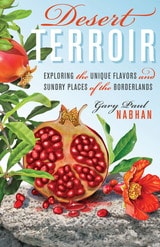
Desert Terroir
Exploring the Unique Flavors and Sundry Places of the BorderlandsBy Gary Paul Nabhan
University of Texas Press, 2012
Why does food taste better when you know where it comes from? Because history—ecological, cultural, even personal—flavors every bite we eat. Whether it’s the volatile chemical compounds that a plant absorbs from the soil or the stories and memories of places that are evoked by taste, layers of flavor await those willing to delve into the roots of real food. In this landmark book, Gary Paul Nabhan takes us on a personal trip into the southwestern borderlands to discover the terroir—the “taste of the place”—that makes this desert so delicious.
To savor the terroir of the borderlands, Nabhan presents a cornucopia of local foods—Mexican oregano, mesquite-flour tortillas, grass-fed beef, the popular Mexican dessert capirotada, and corvina (croaker or drum fish) among them—as well as food experiences that range from the foraging of Cabeza de Vaca and his shipwrecked companions to a modern-day camping expedition on the Rio Grande. Nabhan explores everything from the biochemical agents that create taste in these foods to their history and dispersion around the world. Through his field adventures and humorous stories, we learn why Mexican oregano is most potent when gathered at the most arid margins of its range—and why foods found in the remote regions of the borderlands have surprising connections to foods found by his ancestors in the deserts of the Mediterranean and the Middle East. By the end of his movable feast, Nabhan convinces us that the roots of this fascinating terroir must be anchored in our imaginations as well as in our shifting soils.
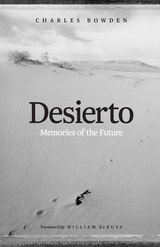
Desierto
Memories of the FutureBy Charles Bowden, foreword by William deBuys
University of Texas Press, 2018
“A dark, troubling vision of life in the desert, defined broadly; of mountain lions and drug kingpins, Mexican hopes and Indian feuds.”
—Los Angeles Times
“In these powerful epic tales of the Sonora Desert, Bowden peoples the harsh land on both sides of the US-Mexican border with saints and sinners, but his enduring hero is the desert itself.”
—Kirkus Reviews

Desire and Truth
Functions of Plot in Eighteenth-Century English NovelsPatricia Meyer Spacks
University of Chicago Press, 1990
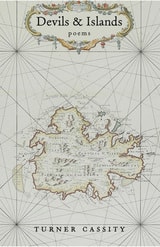
Devils & Islands
PoemsTurner Cassity
Ohio University Press, 2007
As he approaches eighty, Turner Cassity may finally be out of control. His hatchet has never fallen more lethally, meaning if you have the stomach for him he is more enjoyable than ever. Under the blade come Martha Graham, Johann Sebastian Bach, musicologists, tree huggers, Frank Gehry, folk music, folk art of all times and all places, folk… . There are, however, his unpredictable sympathies: Edith Wilson, skyscrapers, Pontius Pilate, Pilate’s legionnaires. He obviously has a soft spot for Pop Culture, although he cannot avoid seeingit de haut en bas.
As usual, he is all over the place geographically. One feels he would slash his wrists before he would write a poem about any city on the traditional Grand Tour. Manaus, Campeche, Trieste, Budapest (as destroyed by Godzilla)—these are his places. He has a disturbing willingness to write on both sides of an issue, resembling in this Bernard Shaw. You have to read very carefully to see whether he tips his hand.
One looks forward to Mr. Cassity’s posthumous poems, when he is beyond the reach of libel. For now, at least, we have Devils & Islands.