Results by title
935 books match the query 'Ancient' and 32 start with d
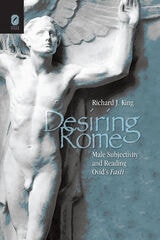
DESIRING ROME
Male Subjectivity and Reading Ovid’s FastiRichard J. King
The Ohio State University Press, 2006
Desiring Rome expands upon recent recognition of the Fasti’s centrality to early imperial politics by situating the poem’s “failure” within broader negotiations of identity between early imperial citizen-subjects and the cultural ideology of Roman manhood.
Dangerous Counsel
Accountability and Advice in Ancient GreeceMatthew Landauer
University of Chicago Press, 2019
With Dangerous Counsel, Matthew Landauer analyzes the sometimes ferocious and unpredictable politics of accountability in ancient Greece and offers novel readings of ancient history, philosophy, rhetoric, and drama. In comparing the demos to a tyrant, thinkers such as Herodotus, Plato, Isocrates, and Aristophanes were attempting to work out a theory of the badness of unaccountable power; to understand the basic logic of accountability and why it is difficult to get right; and to explore the ways in which political discourse is profoundly shaped by institutions and power relationships. In the process they created strikingly portable theories of counsel and accountability that traveled across political regime types and remain relevant to our contemporary political dilemmas.

Dangerous Gifts
Gender and Exchange in Ancient GreeceBy Deborah Lyons
University of Texas Press, 2012
Deianeira sends her husband Herakles a poisoned robe. Eriphyle trades the life of her husband Amphiaraos for a golden necklace. Atreus’s wife Aerope gives away the token of his sovereignty, a lamb with a golden fleece, to his brother Thyestes, who has seduced her. Gifts and exchanges always involve a certain risk in any culture, but in the ancient Greek imagination, women and gifts appear to be a particularly deadly combination.
This book explores the role of gender in exchange as represented in ancient Greek culture, including Homeric epic and tragedy, non-literary texts, and iconographic and historical evidence of various kinds. Using extensive insights from anthropological work on marriage, kinship, and exchange, as well as ethnographic parallels from other traditional societies, Deborah Lyons probes the gendered division of labor among both gods and mortals, the role of marriage (and its failure) in transforming women from objects to agents of exchange, the equivocal nature of women as exchange-partners, and the importance of the sister-brother bond in understanding the economic and social place of women in ancient Greece. Her findings not only enlarge our understanding of social attitudes and practices in Greek antiquity but also demonstrate the applicability of ethnographic techniques and anthropological theory to the study of ancient societies.
Dante's Epistle to Cangrande
Robert Hollander
University of Michigan Press, 1994
In Dante's Epistle to Cangrande Robert Hollander commandingly marshals new evidence to demonstrate that the epistle should be considered authentically Dantean. He further provides enlightening discussion of the nature of tragedy and comedy in the Divine Comedy. The author draws authoritatively on the extensive array of medieval and modern commentaries stored in electronic form by the Dartmouth Dante Project, of which he is the director.
Dante's Epistle to Cangrande makes a signal contribution to Dante studies. Naturally of interest to students of Dante's work, it will also be important reading for those concerned with literary critical questions such as authorial intent, programmatic statements, and allegorical interpretations of literature.
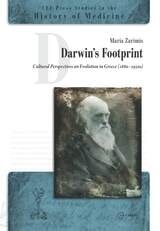
Darwin's Footprint
Cultural Perspectives on Evolution in Greece (1880–1930s)Maria Zarimis
Central European University Press, 2015
Darwin’s Footprint examines the impact of Darwinism in Greece, investigating how it has shaped Greece in terms of its cultural and intellectual history, and in particular its literature.
The book demonstrates that in the late 19th to early 20th centuries Darwinism and associated science strongly influenced celebrated Greek literary writers and other influential intellectuals, which fueled debate in various areas such as ‘man’s place in nature’, eugenics, the nature-nurture controversy, religion, as well as class, race and gender.
In addition, the study reveals that many of these individuals were also considering alternative approaches to these issues based on Darwinian and associated biological post-Darwinian ideas. Their concerns included the Greek “race” or nation, its culture, language and identity; also politics and gender equality.
Zarimis’s monograph devotes considerable space to Xenopoulos (1867-1951), notable novelist, journalist and playwright.
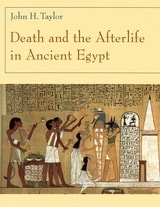
Death and the Afterlife in Ancient Egypt
John H. Taylor
University of Chicago Press, 2001
The author describes in detail the numerous provisions made for the dead and the intricate rituals carried out on their behalf. He considers embalming, coffins and sarcophagi, shabti figures, magic and ritual, and amulets and papyri, as well as the mummification of sacred animals, which were buried by the millions in vast labyrinthine catacombs.
The text also reflects recent developments in the interpretation of Egyptian burial practices, and incorporates the results of much new scientific research. Newly acquired information derives from a range of sophisticated applications, such as the use of noninvasive imaging techniques to look inside the wrappings of a mummy, and the chemical analysis of materials used in the embalming process. Authoritative, concise, and lucidly written, Death and the Afterlife in Ancient Egypt illuminates aspects of this complex, vibrant culture that still perplex us more than 3,000 years later.
Death by Philosophy
The Biographical Tradition in the Life and Death of the Archaic Philosophers Empedocles, Heraclitus, and DemocritusAva Chitwood
University of Michigan Press, 2004
How does one die by philosophy? In Diogenes Laertius, philosophers jump into volcanoes, bury themselves in dung, get eaten by dogs, hang themselves, drown, and vanish into thin air -- sometimes all in a single lifetime. But what happens when we look beyond the fantastic and absurd to examine the particular ways that the philosophers' lives and deaths are recounted?
Ava Chitwood's reexamination of Diogenes Laertius's philosophical biographies opens a new window on the intellectual culture and context in which the work of philosophers like Empedocles, Heraclitus, and Democritus was read, received, and transmitted. Chitwood's analysis also suggests a methodology for understanding the interplay between biography and philosophy and for evaluating biographical sources.
While Chitwood's approach combines the disciplines of classical philology and philosophy, Death by Philosophy is not intended solely for the specialist. This investigation offers the modern reader a fascinating, fresh, and entertaining view of the ancient literary and philosophical world.
Ava Chitwood is Assistant Professor of Classics, at the University of South Florida.
Democracy Ancient and Modern
Finley, M. I.
Rutgers University Press, 2019
This classic study of democratic principles is thus now more relevant than ever. A renowned historian of antiquity and political philosophy, Sir M.I. Finley offers a comparative analysis of Greek and modern conceptions of democracy. As he puts the ancient Greeks in dialogue with their contemporary counterparts, Finley tackles some of the most pressing issues of our day, including public apathy, partisanship, consensus politics, distrust of professional politicians, and the limits of free speech.
Including three lectures that Finley delivered at Rutgers University, plus two additional essays that further illuminate his thinking, Democracy Ancient and Modern explores the dramatic differences between the close-knit civil society of the ancient Greeks and our own atomized mass societies. By mapping out democracy’s past and its present manifestations, this book helps us plot a course for democracy’s future.
Democratic Law in Classical Athens
By Michael Gagarin
University of Texas Press, 2020
The democratic legal system created by the Athenians was completely controlled by ordinary citizens, with no judges, lawyers, or jurists involved. It placed great importance on the litigants’ rhetorical performances. Did this make it nothing more than a rhetorical contest judged by largely uneducated citizens that had nothing to do with law, a criticism that some, including Plato, have made?
Michael Gagarin argues to the contrary, contending that the Athenians both controlled litigants’ performances and incorporated many other unusual features into their legal system, including rules for interrogating slaves and swearing an oath. The Athenians, Gagarin shows, adhered to the law as they understood it, which was a set of principles more flexible than our current understanding allows. The Athenians also insisted that their legal system serve the ends of justice and benefit the city and its people. In this way, the law ultimately satisfied most Athenians and probably produced just results as often as modern legal systems do. Comprehensive and wide-ranging, Democratic Law in Classical Athens offers a new perspective for viewing a legal system that was democratic in a way only the Athenians could achieve.
Democratic Swarms
Ancient Comedy and the Politics of the PeoplePage duBois
University of Chicago Press, 2022
With Democratic Swarms, Page duBois revisits the role of Greek comedy in ancient politics, considering how it has been overlooked as a political medium by modern theorists and critics. Moving beyond the popular readings of ancient Greece through the lens of tragedy, she calls for a revitalized look at Greek comedy. Rather than revisiting the sufferings of Oedipus and his family or tragedy’s relationship to questions of sovereignty, this book calls for comedy—its laughter, its free speech, its wild swarming animal choruses, and its rebellious women—to inform another model of democracy.
Ancient comedy has been underplayed in the study of Greek drama. Yet, with the irrepressible energy of the comic swarm, it provides a unique perspective on everyday life, gender and sexuality, and the utopian politics of the classical period of Athenian democracy. Using the concepts of swarm intelligence and nomadic theory, duBois augments tragic thought with the resistant, utopian, libidinous, and often joyous communal legacy of comedy, and she connects the lively anti-authoritarianism of the ancient comic chorus with the social justice movements of today.

Deus
The Fall of Pompeii and the Rise of ChristianityGabriel Zuchtriegel
University of Chicago Press, 2027
Amid the city’s ruins, the director of the Pompeii Archaeological Park seeks signs of profound religious and cultural transformation to come.
Recent excavations in Pompeii have unearthed stunning discoveries and a new understanding of how people really lived, revealing a city simmering with tension in an age of great upheaval. From the author of The Buried City comes a riveting account of religious and ritual engagement in and around Pompeii at the time of its destruction in 79 CE, a moment when Christianity was just beginning to gain footing in the Roman world.
Drawing on ancient artifacts and the latest findings from Pompeii, Gabriel Zuchtriegel, director of the Pompeii Archaeological Park, considers how such a momentous transformation might have come to pass. Each chapter takes a different deity as its starting point, exploring the place of the ancient gods in the life of the city and its people. Inviting readers behind the scenes to experience discoveries through the eyes of the excavation team, Zuchtriegel shares insights about Pompeii’s red-light district, where archaeologists have found graffiti that may refer to Christians; excavations in several of the city’s sanctuaries and in nearby Longola, a Bronze and Early Iron Age precursor of Pompeii; a top-secret dig in the House of the Thiasus that has yielded wall paintings as provocative as those of the famous Villa of the Mysteries; and much more. With intimate detail, this book brings to life a raw and often brutal society, capturing beauty and humanity in places both expected and surprising.
Diagnoses in Assyrian and Babylonian Medicine
Ancient Sources, Translations, and Modern Medical AnalysesTranslated and with Commentary by JoAnn Scurlock and Burton R. Andersen
University of Illinois Press, 2005
The collaboration of medical expert Burton R. Andersen and cuneiformist JoAnn Scurlock makes it finally possible to survey this collected corpus and discern magic from experimental medicine in Ashur, Babylon, and Nineveh. Diagnoses in Assyrian and Babylonian Medicine is the first systematic study of all the available texts, which together reveal a level of medical knowledge not matched again until the nineteenth century A.D. Over the course of a millennium, these nations were able to develop tests, prepare drugs, and encourage public sanitation. Their careful observation and recording of data resulted in a description of symptoms so precise as to enable modern identification of numerous diseases and afflictions.
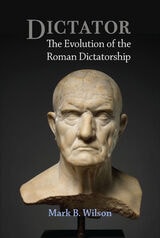
Dictator
The Evolution of the Roman DictatorshipMark B. Wilson
University of Michigan Press, 2021
Roman consuls were routinely trained by background and experience to handle the usual problems of a twelve-month turn in office. But what if a crisis arose that wasn’t best met by whoever happened to be in office that year? The Romans had a mechanism for that: the dictatorship, an alternative emergency executive post that granted total, unanswerable power to that man who was best suited to resolve the crisis and then stand down, restoring normality. This office was so useful and effective that it was invoked at least 85 times across three centuries against every kind of serious problem, from conspiracies and insurgencies to the repelling of invaders to propitiation of the gods.
In Dictator: The Evolution of the Roman Dictatorship, Mark B. Wilson makes the first detailed and comprehensive examination of the role and evolution of the dictatorship as an integral element of the Roman Republic. Each stage of a dictatorship—need, call, choice, invocation, mandate, imperium, answerability, colleague, and renunciation—is explored, with examples and case studies illustrating the dictators’ rigorous adherence to a set of core principles, or, in rare cases of deviation, showing how exceptions tended to demonstrate the rule as vividly as instances. Wilson also charts the flexibility of the dictatorship as it adapted to the needs of the Republic, reshaping its role in relation to the consuls, the senate, and the people.
The routine use of the dictatorship is only part of the story. The abandonment and disuse of the dictatorship for 120 years, its revival under Sulla, and its appropriation and transformation under Caesar are all examined in detail, with attention paid to what the dictatorship meant to the Romans of the late Republic, alternative means of crisis resolution in contrast with the dictatorship, and the groundwork laid in those last two centuries for that which was to come. Dictator provides a new basis for discussion and debate relating to the Roman dictatorship, Roman crisis management, and the systems and institutions of the Roman Republic.
Did the Greeks Believe in Their Myths?
An Essay on the Constitutive ImaginationPaul Veyne
University of Chicago Press, 1988
A groundbreaking, innovative exploration of what the ancient Greeks really believed
Did the Greeks believe in their mythology? This question implies other difficult ones concerning the meaning of belief. While knowing that Theseus never slew the Minotaur, the Greeks were still capable of believing in the existence of Theseus, of crafting a genealogy for him and assigning him a place in history. This apparently contradictory process, the application of reason to myth, prompts legendary archaeologist Paul Veyne’s meditation on the nature of “truth.” Beginning with the example of the Greeks’ attitude toward their myths, Veyne argues that truth is not found, but created, as is history. His discussion reveals the historical quality of the imagination and its role in the constitution of a cultural tradition.
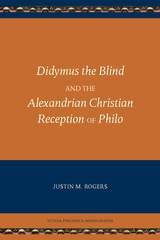
Didymus the Blind and the Alexandrian Christian Reception of Philo
Justin M. Rogers
SBL Press, 2017
Explore the Jewish traditions preserved in the commentaries of a largely neglected Alexandrian Christian exegete
Justin M. Rogers surveys commentaries on Genesis, Job, Psalms, Ecclesiastes, and Zechariah by Didymus the Blind (ca. 313–398 CE), who was regarded by his students as one of the greatest Christian exegetes of the fourth century. Rogers highlights Didymus’s Jewish sources, zeroing in on traditions of Philo of Alexandria, whose treatises were directly accessible to Didymus while he was authoring his exegetical works. Philonic material in Didymus is covered by extensive commentary, demonstrating that Philo was among the principle sources for the exegetical works of Didymus the Blind. Rogers also explores the mediating influence of the Alexandrian Christian tradition, focusing especially on the roles of Clement and Origen.
Features
- Fresh insights into the Alexandrian Christian reception of Philo
- A thorough discussion of Didymus’s exegetical method, particularly in the Commentary on Genesis
- Examination of the use and importance of Jewish and Christian sources in Late Antique Christian commentaries

Dining in a Classical Context
William J. Slater, Editor
University of Michigan Press, 1991
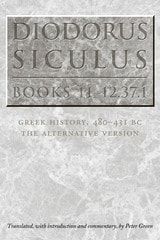
Diodorus Siculus, Books 11-12.37.1
Greek History, 480-431 BC—the Alternative VersionTranslated with introduction and commentary by Peter Green
University of Texas Press, 2006
2007 — A Choice Magazine Outstanding Academic Book
Sicilian historian Diodorus Siculus (ca. 100-30 BCE) is our only surviving source for a continuous narrative of Greek history from Xerxes' invasion to the Wars of the Successors following the death of Alexander the Great. Yet this important historian has been consistently denigrated as a mere copyist who slavishly reproduced the works of earlier historians without understanding what he was writing. By contrast, in this iconoclastic work Peter Green builds a convincing case for Diodorus' merits as a historian. Through a fresh English translation of a key portion of his multi-volume history (the so-called Bibliotheke, or "Library") and a commentary and notes that refute earlier assessments of Diodorus, Green offers a fairer, better balanced estimate of this much-maligned historian.
The portion of Diodorus' history translated here covers the period 480-431 BCE, from the Persian invasion of Greece to the outbreak of the Peloponnesian War. This half-century, known as the Pentekontaetia, was the Golden Age of Periclean Athens, a time of unprecedented achievement in drama, architecture, philosophy, historiography, and the visual arts. Green's accompanying notes and commentary revisit longstanding debates about historical inconsistencies in Diodorus' work and offer thought-provoking new interpretations and conclusions. In his masterful introductory essay, Green demolishes the traditional view of Diodorus and argues for a thorough critical reappraisal of this synthesizing historian, who attempted nothing less than a "universal history" that begins with the gods of mythology and continues down to the eve of Julius Caesar's Gallic campaigns.
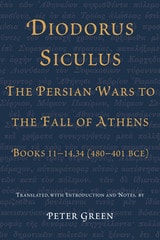
Diodorus Siculus, The Persian Wars to the Fall of Athens
Books 11-14.34 (480-401 BCE)Translated with Introduction and Notes by Peter Green
University of Texas Press, 2010
Only one surviving source provides a continuous narrative of Greek history from Xerxes' invasion to the Wars of the Successors following the death of Alexander the Great—the Bibliotheke, or "Library," produced by Sicilian historian Diodorus Siculus (ca. 90–30 BCE). Yet generations of scholars have disdained Diodorus as a spectacularly unintelligent copyist who only reproduced, and often mangled, the works of earlier historians. Arguing for a thorough critical reappraisal of Diodorus as a minor but far from idiotic historian himself, Peter Green published Diodorus Siculus, Books 11-12.37.1, a fresh translation, with extensive commentary, of the portion of Diodorus's history dealing with the period 480–431 BCE, the so-called "Golden Age" of Athens.
This is the only recent modern English translation of the Bibliotheke in existence. In the present volume—the first of two covering Diodorus's text up to the death of Alexander—Green expands his translation of Diodorus up to Athens' defeat after the Peloponnesian War. In contrast to the full scholarly apparatus in his earlier volume (the translation of which is incorporated) the present volume's purpose is to give students, teachers, and general readers an accessible version of Diodorus's history. Its introduction and notes are especially designed for this audience and provide an up-to-date overview of fifth-century Greece during the years that saw the unparalleled flowering of drama, architecture, philosophy, historiography, and the visual arts for which Greece still remains famous.
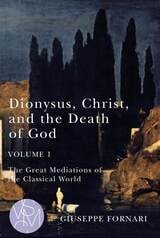
Dionysus, Christ, and the Death of God, Volume 1
The Great Mediations of the Classical WorldGiuseppe Fornari
Michigan State University Press, 2020
Dionysus, Christ, and the Death of God, Volume 2
Christianity and ModernityGiuseppe Fornari
Michigan State University Press, 2020
Dioscorides on Pharmacy and Medicine
By John M. Riddle
University of Texas Press, 1985
For 1,600 years Dioscorides (ca. AD 40–80) was regarded as the foremost authority on drugs. He knew mild laxatives and strong purgatives, analgesics for headaches, antiseptics for wounds, emetics to rid one of ingested poisons, chemotherapy agents for cancer treatments, and even oral contraceptives. Why, then, have his works remained obscure in recent centuries? Because of one small oversight (Dioscorides himself thought it was self-evident): he failed to describe his method for organizing drugs by their affinities. This omission led medical authorities to use his materials as a guide to pharmacy while overlooking Dioscorides' most valuable contribution—his empirically derived method for observing and classifying drugs by clinical testing.
Dioscorides' De materia medica, a five-volume work, was written in the first century. Here revealed for the first time is the thesis that Dioscorides wrote more than a lengthy guide book. He wrote a great work of science. He had said that he discovered the natural order and would demonstrate it by his arrangement of drugs from plants, minerals, and animals. Until John M. Riddle's pathfinding study, no one saw the genius of his system. Botanists from the eighteenth century often attempted to find his unexplained method by identifying the sequences of his plants according to the Linnean system but, while there are certain patterns, there remained inexplicable incoherencies. However, Dioscorides' natural order as set down in De materia medica was determined by drug affinities as detected by his acute, clinical ability to observe drug reactions in and on the body. So remarkable was his ability to see relationships that, in some cases, he saw what we know to be common chemicals shared by plants of the same and related species and other natural product drugs from animal and mineral sources.
Western European and Islamic medicine considered Dioscorides the foremost authority on drugs, just as Hippocrates is regarded as the Father of Medicine. They saw him point the way but only described the end of his finger, despite the fact that in the sixteenth century alone there were over one hundred books published on him. If he had explained what he thought to be self-evident, then science, especially chemistry and medicine, would almost certainly have developed differently. In this culmination of over twenty years of research, Riddle employs modern science and anthropological studies innovatively and cautiously to demonstrate the substance to Dioscorides' authority in medicine.
Diplomacy by Design
Luxury Arts and an "International Style" in the Ancient Near East, 1400-1200 BCEMarian H. Feldman
University of Chicago Press, 2006
Marian Feldman's Diplomacy by Design examines the profound connection between art produced during this period and its social context, revealing inanimate objects as catalysts—or even participants—in human dynamics. Feldman's fascinating study shows the ways in which the exchange of these works of art actively mediated and strengthened political relations, intercultural interactions, and economic negotiations. Previous studies of this international style have focused almost exclusively on stylistic attribution at the expense of social contextualization. Written by a specialist in ancient Near Eastern art and archaeology who has excavated and traveled extensively in this area of the world, Diplomacy by Design provides a much broader consideration of the symbolic power of material culture and its centrality in the construction of human relations.
Discarded, Discovered, Collected
The University of Michigan Papyrus CollectionArthur Verhoogt
University of Michigan Press, 2017
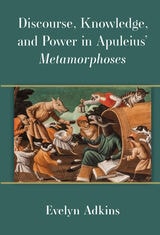
Discourse, Knowledge, and Power in Apuleius’ Metamorphoses
Evelyn Adkins
University of Michigan Press, 2022
In ancient Rome, where literacy was limited and speech was the main medium used to communicate status and identity face-to-face in daily life, an education in rhetoric was a valuable form of cultural capital and a key signifier of elite male identity. To lose the ability to speak would have caused one to be viewed as no longer elite, no longer a man, and perhaps even no longer human. We see such a fantasy horror story played out in the Metamorphoses or The Golden Ass, written by Roman North African author, orator, and philosopher Apuleius of Madauros—the only novel in Latin to survive in its entirety from antiquity. In the novel’s first-person narrative as well as its famous inset tales such as the Tale of Cupid and Psyche, the Metamorphoses is invested in questions of power and powerlessness, truth and knowledge, and communication and interpretation within the pluralistic but hierarchical world of the High Roman Empire (ca. 100–200 CE).
Discourse, Knowledge, and Power presents a new approach to the Metamorphoses: it is the first in-depth investigation of the use of speech and discourse as tools of characterization in Apuleius’ novel. It argues that discourse, broadly defined to include speech, silence, written text, and nonverbal communication, is the primary tool for negotiating identity, status, and power in the Metamorphoses. Although it takes as its starting point the role of discourse in the characterization of literary figures, it contends that the process we see in the Metamorphoses reflects the real world of the second century CE Roman Empire. Previous scholarship on Apuleius’ novel has read it as either a literary puzzle or a source-text for social, philosophical, or religious history. In contrast, this book uses a framework of discourse analysis, an umbrella term for various methods of studying the social political functions of discourse, to bring Latin literary studies into dialogue with Roman rhetoric, social and cultural history, religion, and philosophy as well as approaches to language and power from the fields of sociology, linguistics, and linguistic anthropology. Discourse, Knowledge, and Power argues that a fictional account of a man who becomes an animal has much to tell us not only about ancient Roman society and culture, but also about the dynamics of human and gendered communication, the anxieties of the privileged, and their implications for swiftly shifting configurations of status and power whether in the second or twenty-first centuries.
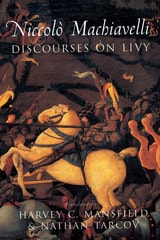
Discourses on Livy
Niccolò Machiavelli
University of Chicago Press, 1998
"[Machiavelli] found in Livy the means to inspire scholars for five centuries. Within the Discourses, often hidden and sometimes unintended by their author, lie the seeds of modern political thought. . . . [Mansfield and Tarcov's] translation is careful and idiomatic."—Peter Stothard, The Times
"Translated with painstaking accuracy—but also great readability."—Weekly Standard
"A model of contemporary scholarship and a brave effort at Machiavelli translation that allows the great Florentine to speak in his own voice."—Choice
Discourses on Livy
Niccolò Machiavelli
University of Chicago Press, 1996
"[Machiavelli] found in Livy the means to inspire scholars for five centuries. Within the Discourses, often hidden and sometimes unintended by their author, lie the seeds of modern political thought. . . . [Mansfield and Tarcov's] translation is careful and idiomatic."—Peter Stothard, The Times
"Translated with painstaking accuracy—but also great readability."—Weekly Standard
"A model of contemporary scholarship and a brave effort at Machiavelli translation that allows the great Florentine to speak in his own voice."—Choice
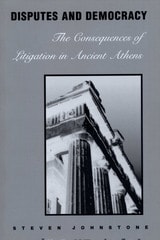
Disputes and Democracy
The Consequences of Litigation in Ancient AthensBy Steven Johnstone
University of Texas Press, 1999
Athenians performed democracy daily in their law courts. Without lawyers or judges, private citizens, acting as accusers and defendants, argued their own cases directly to juries composed typically of 201 to 501 jurors, who voted on a verdict without deliberation. This legal system strengthened and perpetuated democracy as Athenians understood it, for it emphasized the ideological equality of all (male) citizens and the hierarchy that placed them above women, children, and slaves.
This study uses Athenian court speeches to trace the consequences for both disputants and society of individuals' decisions to turn their quarrels into legal cases. Steven Johnstone describes the rhetorical strategies that prosecutors and defendants used to persuade juries and shows how these strategies reveal both the problems and the possibilities of language in the Athenian courts. He argues that Athenian "law" had no objective existence outside the courts and was, therefore, itself inherently rhetorical. This daring new interpretation advances an understanding of Athenian democracy that is not narrowly political, but rather links power to the practices of a particular institution.
Divination, Politics, and Ancient Near Eastern Empires
Alan Lenzi
SBL Press, 2014
Advance your understanding of divination’s role in supporting or undermining imperial aspirations in the ancient Near East
This collection examines the ways that divinatory texts in the Hebrew Bible and the ancient Near East undermined and upheld the empires in which the texts were composed, edited, and read. Nine essays and an introduction engage biblical scholarship on the Prophets, Assyriology, the Dead Sea Scrolls, and the critical study of Ancient Empires.
Features:
- Interdisciplinary approaches include propaganda studies
- Essays examine how biblical and other ancient Near Eastern texts were shaped by political and theological empires
- Index of ancient sources
Documents from the Luciferians
In Defense of the Nicene CreedColin M. Whiting
SBL Press, 2019
Six important documents for scholars of early church history
This volume includes English translations of several documents concerning the Luciferians, a group of fourth-century Christians whose name derives from the bishop Lucifer of Cagliari. Documents include a confession of faith written for Emperor Theodosius I and a theological treatise written for his wife by Luciferian clergyman Faustinus, the first English translation of a Luciferian petition to Theodosius that focuses on the persecution the community has suffered, Theodosius’s imperial law in response to the Luciferians, two letters composed by Luciferians that purport to represent correspondence from the bishop Athanasius of Alexandria to Lucifer, and the priest Jerome’s Dialogus adversus Luciferianos. These texts highlight connections between developments in Christian theology and local Christian communities in the course of the fourth century.
Features:
- The first English translation of Faustinus’s Libellus precum
- An overview of the development of late antique theology and Christianity
- An introduction to Luciferian beliefs and the translated texts
Domitian’s Rome and the Augustan Legacy
Edited by Raymond Marks and Marcello Mogetta
University of Michigan Press, 2021
The legacy of the Roman emperor Augustus and the culture of his age was profound and immediately evident after his death in 14 CE. His first four successors based their claims to rule on kinship with him, thus establishing the Julio-Claudian dynasty (14–68 CE), and plied an evolving form of the Principate, the political arrangement Augustus carved out for himself. His building and restoration programs gave the city an “Augustan” appearance that remained relatively unchanged throughout subsequent reigns. And, among literary luminaries of his age, figures such as Horace and Ovid left an indelible mark on the poetic practices of future generations while Virgil insinuated himself still more deeply into the Roman psyche. But it was after the reigns of Augustus’ own descendants, oddly enough, that we witness the most spirited and thoroughgoing engagement with the Augustan past; during the reign of the emperor Domitian, the third and last ruler of the subsequent Flavian dynasty (81–96 CE), there was a veritable Augustan renaissance.
This volume represents the first book-length treatment of the reception of Augustus and his age during the reign of Domitian. Its thirteen chapters, authored by an international group of scholars, offer readers a glimpse into the fascinating history and culture of Domitian’s Rome and its multifaceted engagement with the Augustan past. Combining material and literary cultural approaches and covering a diverse range of topics—art, architecture, literature, history, law—the studies in this volume capture the rich complexity of the Augustan legacy in Domitian’s Rome while also revising our understanding of Domitian’s own legacy. Far from being the cruel tyrant history has made him out to be, Domitian emerges as a studious, thoughtful cultivator of the Augustan past who helped shape an age that not only took inspiration from that past, but managed to rival it.
Dream, Fantasy, and Visual Art in Roman Elegy
Emma Scioli
University of Wisconsin Press, 2015
By treating dreams as a mode for viewing, an analogy suggested by diverse ancient authors, Emma Scioli extracts new information from the poetry of Propertius, Tibullus, and Ovid about the Roman concept of “seeing” dreams. Through comparison with other visual modes of description, such as ekphrasis and simile, as well as with related types of visual experience, such as fantasy and voyeurism, Scioli demonstrates similarities between artist, dreamer, and poet as creators, identifying the dreamer as a particular type of both viewer and narrator.
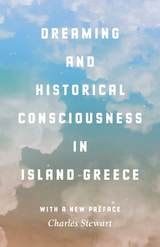
Dreaming and Historical Consciousness in Island Greece
Charles Stewart
University of Chicago Press, 2017
Charles Stewart tells the story of the inhabitants of Kóronos, on the Greek island of Naxos, who, in the 1830s, began experiencing dreams in which the Virgin Mary instructed them to search for buried Christian icons nearby and build a church to house the ones they found. Miraculously, they dug and found several icons and human remains, and at night the ancient owners of them would speak to them in dreams. The inhabitants built the church and in the years since have experienced further waves of dreams and startling prophesies that shaped their understanding of the past and future and often put them at odds with state authorities. Today, Kóronos is the site of one of the largest annual pilgrimages in the Mediterranean. Telling this fascinating story, Stewart draws on his long-term fieldwork and original historical sources to explore dreaming as a mediator of historical change, while widening the understanding of historical consciousness and history itself.