Results by title
3071 books match the query 'Business & Economics' and 73 start with d

Dangerous Occupations
Archaeologies of Structural Violence, Immigrants, and Resilience in Early CaliforniaMarco G. Meniketti
University of Alabama Press, 2026
Addresses structural violence through history and archaeology of immigrant workers
Dangerous Occupations: Archaeologies of Structural Violence, Immigrants, and Resilience in Early California is an impactful work of historical archaeology combined with social history that addresses structural violence in key California industries from the Gold Rush in 1849 until 1920. Monopolistic industries, such as railroading, mining, timbering, explosive manufacturing, lime production, meatpacking, textile milling, and fishing/whaling, relied on immigrant laborers who were recruited and perceived as expendable. Restrictive laws and lack of employment opportunities based on bigotry often forced immigrants into the most dangerous occupations. In the days before workmen’s compensation insurance and strict labor safety laws, laborers often risked their health and even their lives for employment.
Marco G. Meniketti’s analysis comes from examining excavation of labor camps and housing, landscape studies, bioarchaeological data, architectural footprints, and archival sources. Each chapter offers a case study of industries to exemplify structural violence and its broader consequences among various immigrant labor groups, such as Chinese, Scandinavian, Irish, Italian, Chilean, Cornish, and Portuguese. The narrative includes a historical overview of the industries, identifies who the immigrant laborers were and how they came to be there, examines the dangers and health risks of their jobs, and details their living conditions and daily life, including foodways, leisure, and efforts to treat their job-inflicted maladies. Dangerous Occupations introduces a new generation of readers to how immigrants built the West Coast and at what great cost.

Dark Victory
The United States and Global PovertyWalden Bello
Pluto Press, 1999

Darwin's Conjecture
The Search for General Principles of Social and Economic EvolutionGeoffrey M. Hodgson and Thorbjørn Knudsen
University of Chicago Press, 2010
Of paramount importance to the natural sciences, the principles of Darwinism, which involve variation, inheritance, and selection, are increasingly of interest to social scientists as well. But no one has provided a truly rigorous account of how the principles apply to the evolution of human society—until now.
In Darwin’s Conjecture, Geoffrey Hodgson and Thorbjørn Knudsen reveal how the British naturalist’s core concepts apply to a wide range of phenomena, including business practices, legal systems, technology, and even science itself. They also critique some prominent objections to applying Darwin to social science, arguing that ultimately Darwinism functions as a general theoretical framework for stimulating further inquiry. Social scientists who adopt a Darwinian approach, they contend, can then use it to frame and help develop new explanatory theories and predictive models.
This truly pathbreaking workat long last makes the powerful conceptual tools of Darwin available to the social sciences and will be welcomed by scholars and students from a range of disciplines.

Data Privacy Protection and the Conduct of Applied Research
Methods, Approaches, and New FindingsEdited by V. Joseph Hotz, Ruobin Gong, and Ian M. Schmutte
University of Chicago Press, 2026
A necessary exploration into the mechanics of data privacy protections within empirical social science research.
The explosion of computational power and data availability has revolutionized empirical social science research, but it has also created unprecedented challenges for protecting the privacy of individuals and businesses. As computational tools make it increasingly possible to breach data anonymity in government surveys by combining the survey data with additional information from external sources, statistical agencies face mounting pressure to develop new privacy protection methods while maintaining data quality essential for research and policymaking. This volume explores how innovations in data privacy protection, including differential privacy and synthetic data methods, affect the conduct of empirical analysis in economics, computer science, and statistics. Contributors explore critical questions about the trade-offs between privacy and data usability: How do new protection methods impact statistical inference and parameter estimation? What standards should data providers adopt? The chapters examine frameworks for characterizing privacy protection, disclosure limitation challenges for survey data, methodological innovations for privacy-preserving statistical analysis, regulatory considerations in modern data governance, and strategies for balancing confidentiality with research access.
This volume provides researchers, statistical agencies, and policymakers with essential guidance for navigating the complex landscape where data protection meets scientific inquiry.
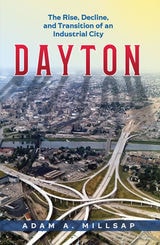
Dayton
The Rise, Decline, and Transition of an Industrial CityAdam A. Millsap
The Ohio State University Press, 2019
Thoroughly researched and engagingly written, Millsap’s book explores the economic background of the region made famous by J. D. Vance’s Hillbilly Elegy. From early twentieth-century optimism, through the Great Depression and post-WWII manufacturing decline, to Dayton now, with its labor-force problems and opioid crisis, Millsap tracks the underlying forces driving the city’s trajectory. Race relations, interstates, suburbanization, climate, crime, geography, and government policies all come into play as Millsap develops a picture of the city, past and present. By examining the past, Millsap proposes a plan for the future, claiming that there is hope for Dayton to thrive again. And if Dayton can rise from its industrial ashes, then perhaps the Rust Belt can shed its stigma and once again become the backbone of American innovation.

Dead in the Water
Global Lessons from the World Bank's Model Hydropower Project in LaosEdited by Bruce Shoemaker and William Robichaud; foreword by Yos Santasombat; afterword by Philip Hirsch
University of Wisconsin Press, 2019
In the 2000s, as the World Bank was reeling from revelations of past hydropower failures, it nonetheless promoted the enormous Nam Theun 2 project. NT2, the Bank believed, offered a new, wiser model of dam development that would alleviate poverty, protect the environment, engage locally affected people in a transparent fashion, and stimulate political transformation. This was a tall order. For the first time, this book shows in detail why, despite assertions of success from the World Bank and other agencies involved in the project, the dam's true story has been one of substantial loss for affected villagers and the regional environment. Nam Theun 2 is an important case study that illustrates much broader problems of global development policy.

Dealing in Virtue
International Commercial Arbitration and the Construction of a Transnational Legal OrderYves Dezalay and Bryant G. Garth
University of Chicago Press, 1996
Building on Pierre Bourdieu's structural approach, the authors show how an informal, settlement-oriented system became formalized and litigious. Integral to this new legal field is the intense personal competition among arbitrators to gain a reputation for virtue, hoping to be selected for arbitration panels. Since arbitration fees have skyrocketed, this is a high-stakes game.
Using multiple examples, Yves Dezalay and Bryant G. Garth explore how international developments can transform domestic methods for handling disputes and analyze the changing prospects for international business dispute resolution given the growing presence of such international market and regulatory institutions as the EEC, the WTO, and NAFTA.
Debt or Democracy
Public Money for Sustainability and Social JusticeMary Mellor
Pluto Press, 2015
A direct challenge to conventional economic thinking, Debt or Democracy offers a bracing new analysis of our economic crisis and offers cogent, radical alternatives to create a more just and sustainable economic future.
Debt, Investment, Slaves
Credit Relations in East Feliciana Parish, Louisiana, 1825-1885Richard Holcombe Kilbourne
University of Alabama Press, 2013
For his landmark Debt, Investment, Slaves, Louisiana attorney Richard Holcombe Kilbourne Jr. performed a thorough survey of parish mortgage records and other manuscripts to create a rich map of antebellum credit relationships in the region. He demonstrates that most credit relationships, collateralized and uncollateralized, were grounded in slave property and not, as a contemporary reader would assume, land or other forms of wealth. Antebellum slavery was thus not only an arrangement of labor, but also an arrangement of finance and economics that shaped all of Southern life and politics. For this reason, defeat in the Civil War and emancipation not only freed enslaved people to work and earn wages, it occasioned a monumental credit implosion from which the Southern economy did not recover for the remainder of the nineteenth century.
To understand the antebellum South, it is necessary to set aside assumptions shared by modern Americans about the nature of borrowing, lending, banking, and investing. Kilbourne's seminal work reminds readers of the absence of banks outside of major cities like Charleston, New Orleans, and Mobile. He explains the defined and ad hoc roles that regional banks, intermediary lenders, and flexible agents ("factors") played in the absence of a robust banking system. He persuasively shows that this network of borrowers and lenders was based to an extent not well understood today on bondage. He then demonstrates how this fragile and improvised financial system had no ability to respond to the shocks and disruptions of war.
Setting out to write a book of local history, Kilbourne achieved an enduring work that illuminated aspects of Southern life that are indispensable to understanding American history.
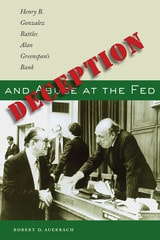
Deception and Abuse at the Fed
Henry B. Gonzalez Battles Alan Greenspan's BankBy Robert D. Auerbach
University of Texas Press, 2008
The Federal Reserve—the central bank of the United States—is the most powerful peacetime bureaucracy in the federal government. Under the chairmanship of Alan Greenspan (1987-2006), the Fed achieved near mythical status for its part in managing the economy, and Greenspan was lauded as a genius. Few seemed to notice or care that Fed officials operated secretly with almost no public accountability. There was a courageous exception to this lack of oversight, however: Henry B. Gonzalez (D-TX)—chairman of the U.S. House of Representatives Financial Services (banking) Committee.
In Deception and Abuse at the Fed, Robert Auerbach, a former banking committee investigator, recounts major instances of Fed mismanagement and abuse of power that were exposed by Rep. Gonzalez, including:
- Blocking Congress and the public from holding powerful Fed officials accountable by falsely declaring—for 17 years—it had no transcripts of its meetings;
- Manipulating the stock and bond markets in 1994 under cover of a preemptive strike against inflation;
- Allowing $5.5 billion to be sent to Saddam Hussein from a small Atlanta branch of a foreign bank—the result of faulty bank examination practices by the Fed;
- Stonewalling Congressional investigations and misleading the Washington Post about the $6,300 found on the Watergate burglars.
Auerbach provides documentation of these and other abuses at the Fed, which confirms Rep. Gonzalez's belief that no government agency should be allowed to operate with the secrecy and independence in which the Federal Reserve has shrouded itself. Auerbach concludes with recommendations for specific, broad-ranging reforms that will make the Fed accountable to the government and the people of the United States.
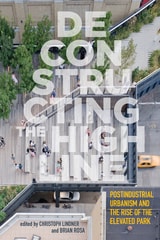
Deconstructing the High Line
Postindustrial Urbanism and the Rise of the Elevated ParkLindner, Christoph
Rutgers University Press, 2017
The High Line, an innovative promenade created on a disused elevated railway in Manhattan, is one of the world’s most iconic new urban landmarks. Since the opening of its first section in 2009, this unique greenway has exceeded all expectations in terms of attracting visitors, investment, and property development to Manhattan’s West Side. Frequently celebrated as a monument to community-led activism, adaptive re-use of urban infrastructure, and innovative ecological design, the High Line is being used as a model for numerous urban redevelopment plans proliferating worldwide.
Deconstructing the High Line is the first book to analyze the High Line from multiple perspectives, critically assessing its aesthetic, economic, ecological, symbolic, and social impacts. Including several essays by planners and architects directly involved in the High Line’s design, this volume also brings together a diverse range of scholars from the fields of urban studies, geography, anthropology, sociology, and cultural studies. Together, they offer insights into the project’s remarkable success, while also giving serious consideration to the critical charge that the High Line is “Disney World on the Hudson,” a project that has merely greened, sanitized, and gentrified an urban neighborhood while displacing longstanding residents and businesses.
Deconstructing the High Line is not just for New Yorkers, but for anyone interested in larger issues of public space, neoliberal redevelopment, creative design practice, and urban renewal.
Deconstructing the Monolith
The Microeconomics of the National Industrial Recovery ActJason E. Taylor
University of Chicago Press, 2019
The NIRA is generally viewed as a monolithic program, its dramatic and sweeping effects best measurable through a macroeconomic lens. In this pioneering book, however, Jason E. Taylor examines the act instead using microeconomic tools, probing the uneven implementation of the act’s codes and the radical heterogeneity of its impact across industries and time. Deconstructing the Monolith employs a mixture of archival and empirical research to enrich our understanding of how the program affected the behavior and well-being of workers and firms during the two years NIRA existed as well as in the period immediately following its demise.

Deficit and Debt in Transition
The Political Economy of Public Finances in Central and Eastern EuropeIstvan Benczes
Central European University Press, 2014
Defusing Democracy
Central Bank Autonomy and the Transition from Authoritarian RuleDelia M. Boylan
University of Michigan Press, 2001

Degraded Work
The Struggle at the Bottom of the Labor MarketMarc Doussard
University of Minnesota Press, 2013
Critics on the left and the right typically agree that globalization, the loss of manufacturing jobs, and the expansion of the service sector have led to income inequality and rising numbers of low-paying jobs with poor working conditions.
In Degraded Work, Marc Doussard demonstrates that this decline in wages and working conditions is anything but the unavoidable result of competitive economic forces. Rather, he makes the case that service sector and other local-serving employers have boosted profit with innovative practices to exploit workers, demeaning their jobs in new ways—denying safety equipment, fining workers for taking scheduled breaks, requiring unpaid overtime—that go far beyond wage cuts. Doussard asserts that the degradation of service work is a choice rather than an inevitability, and he outlines concrete steps that can be taken to help establish a fairer postindustrial labor market.
Drawing on fieldwork in Chicago, Degraded Work examines changes in two industries in which inferior job quality is assumed to be intrinsic: residential construction and food retail. In both cases, Doussard shows how employers degraded working conditions as part of a successful and intricate strategy to increase profits. Arguing that a growing service sector does not have to mean growing inequality, Doussard proposes creative policy and organizing opportunities that workers and advocates can use to improve job quality despite the overwhelming barriers to national political action.
Democracy Declined
The Failed Politics of Consumer Financial ProtectionMallory E. SoRelle
University of Chicago Press, 2020
In Democracy Declined, Mallory E. SoRelle argues that the failure of federal policy makers to curb risky practices can be explained by the evolution of consumer finance policies aimed at encouraging easy credit in part by foregoing more stringent regulation. Furthermore, SoRelle explains how angry borrowers’ experiences with these policies teach them to focus their attention primarily on banks and lenders instead of demanding that lawmakers address predatory behavior. As a result, advocacy groups have been mostly unsuccessful in mobilizing borrowers in support of stronger consumer financial protections. The absence of safeguards on consumer financing is particularly dangerous because the consequences extend well beyond harm to individuals—they threaten the stability of entire economies. SoRelle identifies pathways to mitigate these potentially disastrous consequences through greater public participation.
Democracy and Trade Policy in Developing Countries
Bumba Mukherjee
University of Chicago Press, 2016
Mukherjee offers the first comprehensive cross-national framework for identifying the specific economic conditions that influence trade policy in developing countries. Laying out the causes of variation in trade policy in four developing or recently developed countries—Brazil, India, Indonesia, and South Africa—he argues persuasively that changing political interactions among parties, party leaders, and the labor market are often key to trade policy outcome. For instance, if workers are in a position to benefit from opening up to trade, party leaders in turn support trade reforms by decreasing tariffs and other trade barriers.
At a time when discussions about the stability of new democracies are at the forefront, Democracy and Trade Policy in Developing Countries provides invaluable insight into the conditions needed for a democracy to survive in the developing world in the context of globalization.

Democracy in Power
A History of Electrification in the United StatesSandeep Vaheesan
University of Chicago Press, 2024
Private money, public good, and the original fight for control of America’s energy industry.
Until the 1930s, financial interests dominated electrical power in the United States. That changed with President Franklin D. Roosevelt’s New Deal, which restructured the industry. The government expanded public ownership, famously through the Tennessee Valley Authority, and promoted a new kind of utility: the rural electric cooperative that brought light and power to millions in the countryside. Since then, public and cooperative utilities have persisted as an alternative to shareholder control. Democracy in Power traces the rise of publicly governed utilities in the twentieth-century electrification of America.
Sandeep Vaheesan shows that the path to accountability in America’s power sector was beset by bureaucratic challenges and fierce private resistance. Through a detailed and critical examination of this evolution, Vaheesan offers a blueprint for a publicly led and managed path to decarbonization. Democracy in Power is at once an essential history, a deeply relevant accounting of successes and failures, and a guide on how to avoid repeating past mistakes.
Democracy in Power
A History of Electrification in the United StatesSandeep Vaheesan
University of Chicago Press, 2024
This is an auto-narrated audiobook version of this book.
Private money, public good, and the original fight for control of America’s energy industry.
Until the 1930s, financial interests dominated electrical power in the United States. That changed with President Franklin D. Roosevelt’s New Deal which restructured the industry. The government expanded public ownership, famously through the Tennessee Valley Authority, and promoted a new kind of utility: the rural electric cooperative that brought light and power to millions in the countryside. Since then, public and cooperative utilities have persisted as an alternative to shareholder control. Democracy in Power traces the rise of publicly governed utilities in the twentieth-century electrification of America.
Sandeep Vaheesan shows that the path to accountability in America’s power sector was beset by bureaucratic challenges and fierce private resistance. Through a detailed and critical examination of this evolution, Vaheesan offers a blueprint for a publicly led and managed path to decarbonization. Democracy in Power is at once an essential history, a deeply relevant accounting of successes and failures, and a guide on how to avoid repeating past mistakes.

Democracy, Governance, and Growth
Stephen Knack, Editor
University of Michigan Press, 2003
The difference between developmental success and failure in this view has little to do with natural resource availability, climate, aid, or developed nations' policies. Rather, it is largely a function of whether incentives within a given society steer wealth-maximizing individuals toward producing new wealth or toward diverting it from others. The chapters, seminal essays written by Mancur Olson and his IRIS Center colleagues, provide theoretical and/or empirical underpinnings for the emerging consensus that differences in the way governments and societies are organized have enormous implications for the structure of incentives faced by politicians, bureaucrats, investors, and workers, which in turn determines the level of a nation's material well-being.
Overall this volume applies tools and concepts from the "New Institutional Economics" to some of the major issues in economic development. It will be of interest to scholars and students of various disciplines--including political science, law, and sociology as well as economics--interested in the determinants of economic development and global economic change. The book will also be of interest to many aid practitioners, particularly those working in anticorruption and public sector reform issues.
Stephen Knack is Senior Research Economist, Development Research Group, the World Bank.
Democracy, Inequality, and Representation in Comparative Perspective
Pablo Beramendi
Russell Sage Foundation, 2008
Demography and the Economy
Edited by John B. Shoven
University of Chicago Press, 2010
Demographics is a vital field of study for understanding social and economic change and it has attracted attention in recent years as concerns have grown over the aging populations of developed nations. Demographic studies help make sense of key aspects of the economy, offering insight into trends in fertility, mortality, immigration, and labor force participation, as well as age, gender, and race specific trends in health and disability.
Demography and the Economy explores the connections between demography and economics, paying special attention to what demographic trends can reveal about the sustainability of traditional social security programs and the larger implications for economic growth. The volume brings together some of the leading scholars working at the border between the two disciplines, and it provides an eclectic overview of both fields. Contributors also offer deeper analysis of a variety of issues such as the impact of greater wealth on choices about marriage and childbearing and the effects of aging populations on housing prices, Social Security, and Medicare.
Deregulation and Interdependence in the Asia-Pacific Region
Edited by Takatoshi Ito and Anne O. Krueger
University of Chicago Press, 2000

Derelict Paradise
Homelessness and Urban Development in Cleveland, OhioDaniel R. Kerr
University of Massachusetts Press, 2011
Seeking answers to the question, “Who benefits from homelessness?” this book takes the reader on a sweeping tour of Cleveland's history from the late nineteenth-century through the early twenty-first. Daniel Kerr shows that homelessness has deep roots in the shifting ground of urban labor markets, social policy, downtown development, the criminal justice system, and corporate power. Rather than being attributable to the illnesses and inadequacies of the unhoused themselves, it is a product of both structural and political dynamics shaping the city. Kerr locates the origins of today's shelter system in the era that followed the massive railroad rebellions of 1877. From that period through the Great Depression, business and political leaders sought to transform downtown Cleveland to their own advantage. As they focused on bringing business travelers and tourists to the city and beckoned upper-income residents to return to its center, they demolished two downtown working-class neighborhoods and institutionalized a shelter system to contain and control the unhoused and unemployed. The precedents from this period informed the strategies of the post–World War II urban renewal era as the "new urbanism" of the late twentieth century. The efforts of the city's elites have not gone uncontested. Kerr documents a rich history of opposition by people at the margins of whose organized resistance and everyday survival strategies have undermined the grand plans crafted by the powerful and transformed the institutions designed to constrain the lives of the homeless.
Derivatives and the Wealth of Societies
Edited by Benjamin Lee and Randy Martin
University of Chicago Press, 2016
To answer that question, the contributors to this book draw upon their deep backgrounds in finance, social science, art, and the humanities to create a new way of understanding derivative finance that does justice to its social and cultural dimensions. They offer a two-pronged analysis. First, they develop a social understanding of the derivative that casts it in the light of anthropological concepts such as the gift, ritual, play, dividuality, and performativity. Second, they develop a derivative understanding of the social, using financial concepts such as risk, hedging, optionality, and arbitrage to uncover new dimensions of contemporary social reality. In doing so, they construct a necessary, renewed vision of derivative finance as a deeply embedded aspect not just of our economics but our culture.

Deserted
Life Without Local News in Rural AmericaNick Mathews
University of Illinois Press, 2026
The devastation of local news organizations has left rural areas of the US marooned in information deserts. Nick Mathews offers a boots-on-the-ground examination of the human toll of local news’s erosion by the winds of de-localization and corporate indifference.
It is no secret that ownership transfers, corporate mergers, and hedge fund takeovers have relentlessly consolidated and closed local news organizations. Mathews exposes the impact of that process on journalism, journalists, and news consumers hungry for outlets that tell their stories. A fundamental breakdown within journalism itself, the abandonment of community news has left disgruntled and disconnected locals to piece together news and information themselves. Mathews draws on the personal experiences of news gatherers and consumers to illuminate why local news cannot be scaled. Mass-produced content inevitably severs ties to communities while distant ownership is indifferent to local concerns.
Nuanced and sympathetic, <i>Deserted</i> provides a vivid portrait of the people and places forsaken by journalism’s corporate owners.

Designing Innovative Corporate Water Risk Management Strategies from an Ecosystem Services Perspective
Daniel Gerding
Michigan Publishing Services, 2014

Despite Good Intentions
Why Development Assistance to the Third World Has FailedThomas W. Dichter
University of Massachusetts Press, 2003
For more than thirty-five years, Thomas W. Dichter has worked in the field of international development, managing and evaluating projects for nongovernmental organizations, directing a Peace Corps country program, and serving as a consultant for such agencies as USAID, UNDP, and the World Bank. On the basis of this extensive and varied experience, he has become an outspoken critic of what he terms the “international poverty alleviation industry.” He believes that efforts to reduce world poverty have been well-intentioned but largely ineffective. On the whole, the development industry has failed to serve the needs of the people it has sought to help.
To make his case, Dichter reviews the major trends in development assistance from the 1960s through the 1990s, illustrating his analysis with eighteen short stories based on his own experiences in the field. The analytic chapters are thus grounded in the daily life of development workers as described in the stories.
Dichter shows how development organizations have often become caught up in their own self-perpetuation and in public relations efforts designed to create an illusion of effectiveness. Tracing the evolution of the role of money (as opposed to ideas) in development assistance, he suggests how financial imperatives have reinforced the tendency to sponsor time-bound projects, creating a dependency among aid recipients. He also examines the rise of careerism and increased bureaucratization in the industry, arguing that assistance efforts have become disconnected from important lessons learned on the ground, and often lessons of world history.
In the end, Dichter calls for a more light-handed and artful approach to development assistance, with fewer agencies and experts involved. His stance is pragmatic, rather than ideological or political. What matters, he says, is what works, and the current practices of the development industry are simply not effective.

Destined for Greatness
Passions, Dreams, and Aspirations in a College Music TownRamirez, Michael
Rutgers University Press, 2018
In Destined for Greatness, sociologist Michael Ramirez examines the lives of forty-eight independent rock musicians who seek out such non-normative choices in a college town renowned for its music scene. He explores the rich life course trajectories of women and men to explore the extent to which pathways are structured to allow some, but not all, individuals to fashion careers in music worlds. Ramirez suggests a more nuanced understanding of factors that enable the pursuit of musical livelihoods well into adulthood.
Developing Country Debt and Economic Performance, Volume 1
The International Financial SystemEdited by Jeffrey D. Sachs
University of Chicago Press, 1988
This project on developing country debt, undertaken by the National Bureau of Economic Research, provides a detailed analysis of the ongoing developing country debt crisis. The project focuses on the middle-income developing countries, particularly those in Latin America and East Asia, although many lessons of the study should apply as well to other, poorer debtor countries. The project analyzes the crisis from two perspectives, that of the international financial system as a whole (volume 1) and that of individual debtor countries (volumes 2 and 3).
Developing Country Debt and Economic Performance, Volume 2
Country Studies--Argentina, Bolivia, Brazil, MexicoEdited by Jeffrey D. Sachs
University of Chicago Press, 1990
This project on developing country debt, undertaken by the National Bureau of Economic Research, provides a detailed analysis of the ongoing developing country debt crisis. The project focuses on the middle-income developing countries, particularly those in Latin America and East Asia, although many lessons of the study should apply as well to other, poorer debtor countries. The project analyzes the crisis from two perspectives, that of the international financial system as a whole (volume 1) and that of individual debtor countries (volumes 2 and 3).
This second volume contains lengthy and detailed case studies of four Latin American nations—Argentina, Bolivia, Brazil, and Mexico—providing a wealth of comparative data and new statistics on the general economic development of each nation. The authors explore the various factors that contributed to the debt crisis in each country and analyze how the crisis was managed once it had taken hold. Trenchant economic analyses are enchanced by assessments of the stark political realities behind the policy choices facing each nation.
Developing Country Debt and Economic Performance, Volume 3
Country Studies--Indonesia, Korea, Philippines, TurkeyEdited by Jeffrey D. Sachs and Susan M. Collins
University of Chicago Press, 1990
This project on developing country debt, undertaken by the National Bureau of Economic Research, provides a detailed analysis of the ongoing developing country debt crisis. The project focuses on the middle-income developing countries, particularly those in Latin America and East Asia, although many lessons of the study should apply as well to other, poorer debtor countries. The project analyzes the crisis from two perspectives, that of the international financial system as a whole (volume 1) and that of individual debtor countries (volumes 2 and 3).
This third volume contains lengthy and detailed case studies of four very different Asian countries—Turkey, Indonesia, Korea, and the Philippines.
Developing Country Debt and the World Economy
Edited by Jeffrey D. Sachs
University of Chicago Press, 1989
Developing Country Debt and the World Economy contains nontechnical versions of papers prepared under the auspices of the project on developing country debt, sponsored by the National Bureau of Economic Research. The project focuses on the middle-income developing countries, particularly those in Latin America and East Asia, although many lessons of the study should apply as well to other, poorer debtor countries. The contributors analyze the crisis from two perspectives, that of the international financial system as a whole and that of individual debtor countries.
Studies of eight countries—Argentina, Bolivia, Brazil, Indonesia, Mexico, the Philippines, South Korea, and Turkey—explore the question of why some countries succumbed to serious financial crises while other did not. Each study was prepared by a team of two authors—a U.S.-based research and an economist from the country under study. An additional eight papers approach the problem of developing country debt from a global or "systemic" perspective. The topics they cover include the history of international sovereign lending and previous debt crises, the political factors that contribute to poor economic policies in many debtor nations, the role of commercial banks and the International Monetary Fund during the current crisis, the links between debt in developing countries and economic policies in the industrialized nations, and possible new approaches to the global management of the crisis.

Developing Successful Sport Marketing Plans
Fifth EditionDavid K. Stotlar
FiT Publishing, 2018
With an abundance of goods and services available to consumers in the sport industry, it can be difficult for products or organizations to stand out from the competition. Combining theoretical foundation with real-world examples, the updated fifth edition of Developing Successful Sport Marketing Plans guides readers through the sequential process of creating and implementing a winning marketing strategy—including understanding the market environment, defining target markets, developing marketing objectives and strategies, and evaluating the plan.
Esteemed scholar and author Mark S. Nagel joins internationally recognized academician David Stotlar in writing the revised fifth edition that includes updated information and examples, interviews with sport marketing professionals to provide insight into the industry, and worksheets to provide a hands-on guide to assist students in crafting a sport marketing plan.

Developing Uganda
Hölger Bernt Hansen
Ohio University Press, 1998
Essays by the top scholars in the Weld span the breadth of the issue, from Uganda's growth out of poverty to development at the grass roots level. Developing Uganda replaces the myth and misinformation the last decade has witnessed with a realistic scrutiny by those who have studied it with care and caution.

Development Prospects in Cuba
An Agenda in the MakingEdited by Pedro Monreal
University of London Press, 2002
Contributors include Julio Carranza, Anicia Garcia, Hiram Marquetti, Lazaro Pena, Omar Everleny Perez, and Julio Diaz Vazquez (University of Havana, Cuba), Claes Brundenius (Centre for Development Research, Copenhagen, Denmark), David Dapice (Tufts University and Harvard University, USA), Francisco Leon (United Nations Economic Commission for Latin America and the Caribbean), and Mauricio de Miranda (Pontificia Universidad Javeriana, Colombia).
Development Theory and the Economics of Growth
Jaime Ros
University of Michigan Press, 2000
Developments in the Economics of Aging
Edited by David A. Wise
University of Chicago Press, 2009
The number of Americans eligible to receive Social Security benefits will increase from forty-five million to nearly eighty million in the next twenty years. Retirement systems must therefore adapt to meet the demands of the largest aging population in our nation’s history. In Developments in the Economics of Aging, David A. Wise and a distinguished group of analysts examine the economic issues that will confront policy makers as they seek to design policies to protect the economic and physical health of these older Americans.
The volume looks at such topics as factors influencing work and retirement decisions at older ages, changes in life satisfaction associated with retirement, and the shift in responsibility for managing retirement assets from professional money managers of traditional pension plans to individual account holders of 401(k)s. Developments in the Economics of Aging also addresses the complicated relationship between health and economic status, including why health behaviors vary across populations and how socioeconomic measures correlate with health outcomes.

Dialectic II
Shundana The School of Architecture Univ of Utah
University of Utah Press, 2014
The second issue of Dialectic, “Architecture between Boom and Bust,” is dedicated to the question of economy. While the boom of the 1990s and 2000s made architects and media designers the epitome of the urban creative class, the credit crunch and economic downturn of 2008 dramatically shrunk the profession. With the collapse of the U.S. housing market arguably the trigger for global financial and economic crisis, the building industry became a primary victim. All this has directly affected architects, whose fees are linked to building costs and built volume.
Dramatic economic turns, while involving individual hardship, are nevertheless great indices for making visible the immanent connections of the discipline to the marketplace. They challenge our understanding of what it means “to architect.” The history of the architecture profession in the twentieth century bears witness to the attempts of the Modern Movement to bring the elite cultural products to the ordinary person. Architects in the 1960s critiqued the paternalism of their disciplinary forebears and interrogated the role of an architect both as a social engineer and as a moderator of participatory design. The accompanying post-modern turn to semiotics and imagery moved the discipline to the opposite position of “art for art’s sake.” The public learned to expect extravagant signature buildings, formal experiments and endless artistic ingenuity. With this, they traded the role of the architect as a keeper of a common good for a celebrity figure who would bring global fame and tourists to their communities. Now, following the economic downturn in 2008, what may we expect from the next calibration of architecture to society?

Dictionary for Business & Finance
John V. Terry
University of Arkansas Press, 1995
This revised and expanded edition of the Dictionary for Business & Finance defines terms from every field of business, as well as economics, statistics, and management and many words and expressions from other fields which have been adopted for special use by the business community. In this new edition, John V. Terry has added more than two hundred terms that help define the rapidly changing global economy of the late 1990s—terms like “European Currency Unit,” “Datsu-sara,” and “Keiretsu.” Of particular value to the student and business person alike are appendices for ratios, equations, formulas, abbreviations, and general financial and investment information.
In a clear, easy-to-follow style, Dictionary for Business & Finance goes directly to the business usage of a word or term, making it unnecessary to wade through irrelevant definitions.
Differences and Changes in Wage Structures
Edited by Richard B. Freeman and Lawrence F. Katz
University of Chicago Press, 1995
Focusing on labor market institutions and the supply and demand forces that affect wages, the papers compare patterns of earnings inequality and pay differentials in the United States, Australia, Korea, Japan, Western Europe, and the changing economies of Eastern Europe. Cross-country studies examine issues such as managerial compensation, gender differences in earnings, and the relationship of pay to regional unemployment.
From this rich store of data, the contributors attribute changes in relative wages and unemployment among countries both to differences in labor market institutions and training and education systems, and to long-term shifts in supply and demand for skilled workers. These shifts are driven in part by skill-biased technological change and the growing internationalization of advanced industrial economies.
Digital Depression
Information Technology and Economic CrisisDan Schiller
University of Illinois Press, 2014

Digital Rights at the Periphery
Making Brazil's Marco CivilGuy T. Hoskins
University of Illinois Press, 2025
Signed into law in 2014, the Marco Civil da Internet (Brazilian Civil Rights Framework for the Internet) appeared to offer pioneering legislation for a digital bill of rights that addressed issues like network neutrality and privacy. Guy T. Hoskins chronicles the Marco Civil’s development and its failure to confront the greatest concentration of power in the digital age: informational capitalism. Combining interviews with discourse and political-economic analysis, Hoskins reveals why the legislation fell short while examining the implications of its emergence in Brazil, which remains on the margins of the global system of informational capitalism. Hoskins places collectivist and public service principles at the core of any framework’s effectiveness. He also shows why we must create systems sensitive to the sociocultural and political-economic contexts that will shape digital rights and their usefulness.
Compelling and contrarian, Digital Rights at the Periphery looks at communications policy and internet governance in the Global South and the lessons they provide for the rest of the world.
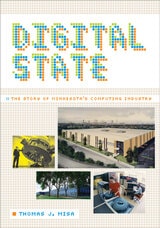
Digital State
The Story of Minnesota's Computing IndustryThomas J. Misa
University of Minnesota Press, 2013
Accounts of the early events of the computing industry—the Turing machine, the massive Colossus, the ENIAC computer—are well-told tales, and equally well known is the later emergence of Silicon Valley and the rise of the personal computer. Yet there is an extraordinary untold middle history—with deep roots in Minnesota. From the end of World War II through the 1970s, Minnesota was home to the first computing-centered industrial district in the world.
Drawing on rare archival documents, photographs, and a wealth of oral histories, Digital State unveils the remarkable story of computer development in the heartland after World War II. These decades found corporations—concentrated in large part in Minnesota—designing state-of-the-art mainframe technologies, revolutionizing new methods of magnetic data storage, and, for the first time, truly integrating software and hardware into valuable products for the American government and public. Minnesota-based companies such as Engineering Research Associates, Univac, Control Data, Cray Research, Honeywell, and IBM Rochester were major international players and together formed an unrivaled epicenter advancing digital technologies. These companies not only brought vibrant economic growth to Minnesota, they nurtured the state’s present-day medical device and software industries and possibly even tomorrow’s nanotechnology.
Thomas J. Misa’s groundbreaking history shows how Minnesota recognized and embraced the coming information age through its leading-edge companies, its workforce, and its prominent institutions. Digital State reveals the inner workings of the birth of the digital age in Minnesota and what we can learn from this era of sustained innovation.
Dilemmas of Political Change in Mexico
Edited by Kevin J. Middlebrook
University of London Press, 2004
They examine: (1) changes affecting the party system, electoral institutions, and voting behavior; (2) the evolving role of the armed forces, organized labor, big business, and rural producers; (3) the new importance of civil society, the mass media, and cross-border social coalitions; (4) and key issues of political representation and governance, including executive-legislative relations, judicial performance, federalism, the constitutional rights of indigenous peoples, and the political role of Mexicans resident in the United States.

Disconnected
Call Center Workers Fight for Good Jobs in the Digital AgeDebbie J. Goldman
University of Illinois Press, 2024
Call center employees once blended skill and emotional intelligence to solve customer problems while the workplace itself encouraged camaraderie and job satisfaction. Ten years after telecom industry deregulation, management had isolated the largely female workforce in cubicles, imposed quotas to sell products, and installed surveillance systems that tracked every call and keystroke.
Debbie J. Goldman explores how call center employees and their union fought for good, humane jobs in the face of degraded working conditions and lowered wages. As the workforce coalesced to resist the changes, it demanded the Communications Workers of America (CWA) fight for safe and secure good-paying jobs. But trends in technology, capitalism, and corporate governance--combined with the decline of unions--narrowed the negotiating options for workers. Goldman describes how the actions of workers, management, and policymakers shaped the social impact of the new digital technologies and gave new form to the telecommunications industry in a time of momentous change.
Perceptive and nuanced, Disconnected tells an overlooked story of service workers in a time of change.

Discoveries in the Economics of Aging
Edited by David A. Wise
University of Chicago Press, 2014
The latest volume in the NBER’s Economics of Aging series, Discoveries in the Economics of Aging assembles incisive analyses of the most recent research in this expanding field of study. A substantive focus of the volume is the well-documented relationship between health and financial well-being, especially as people age. The contributors explore this issue from a variety of perspectives within the context of the changing demographic landscape. The first part of the volume explores recent trends in health measurement, including the use of alternative measurement indices. Later contributions explore, among other topics, alternate determinants of health, including retirement, marital status, and cohabitation with family, and the potential for innovations, interventions, and public policy to improve health and financial well-being.

Dishing It Out
Waitresses and Their Unions in the Twentieth CenturyDorothy Sue Cobble
University of Illinois Press, 1991
Back when SOS or Adam and Eve on a raft were things to order if you were hungry but a little short on time and money, nearly one-fourth of all waitresses belonged to unions. By the time their movement peaked in the 1940s and 1950s, the women had developed a distinctive form of working-class feminism, simultaneously pushing for equal rights and pay and affirming their need for special protections.
Dorothy Sue Cobble shows how sexual and racial segregation persisted in wait work, but she rejects the idea that this was caused by employers' actions or the exclusionary policies of male trade unionists. Dishing It Out contends that the success of waitress unionism was due to several factors: waitresses, for the most part, had nontraditional family backgrounds, and most were primary wage-earners. Their close-knit occupational community and sex-separate union encouraged female assertiveness and a decidedly unromantic view of men and marriage. Cobble skillfully combines oral interviews and extensive archival records to show how waitresses adopted the basic tenets of male-dominated craft unions but rejected other aspects of male union culture. The result is a book that will expand our understanding of feminism and unionism by including the gender conscious perspectives of working women.
Disinflation in Transition Economies
Marek Dabrowski
Central European University Press, 2003
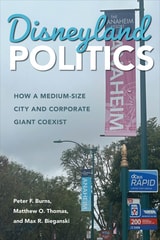
Disneyland Politics
How a Medium-Size City and Corporate Giant CoexistPeter F. Burns, Matthew O. Thomas, and Max R. Bieganski
Temple University Press, 2026
Disneyland Politics is a cogent examination of this urban power struggle, which has been playing out for 70 years. The authors show how the city was initially bound to the Disneyland Imperative, which placed the theme park above everything else in the city, including other economic development projects. However, starting in the 1990s, citizens pushed back against the corporation and its supporters, wanting a more balanced public policy agenda and ultimately loosening the stranglehold Disneyland had over the city’s political order.
Recounting the history of Disney’s power in action and the tension between democratic governance and reliance on private investment, Disneyland Politics illustrates how those who pursue alternative agendas attempt to get their way, and how the fight for a more balanced public policy agenda has changed local power dynamics to be less favorable to Disneyland over time.
In the series Urban Life, Landscape, and Policy