Results by title
429 books match the query 'Development' and 27 start with d
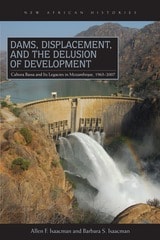
Dams, Displacement, and the Delusion of Development
Cahora Bassa and Its Legacies in Mozambique, 1965–2007Allen F. Isaacman
Ohio University Press, 2013
Cahora Bassa Dam on the Zambezi River, built in the early 1970s during the final years of Portuguese rule, was the last major infrastructure project constructed in Africa during the turbulent era of decolonization. Engineers and hydrologists praised the dam for its technical complexity and the skills required to construct what was then the world’s fifth-largest mega-dam. Portuguese colonial officials cited benefits they expected from the dam—from expansion of irrigated farming and European settlement, to improved transportation throughout the Zambezi River Valley, to reduced flooding in this area of unpredictable rainfall. “The project, however, actually resulted in cascading layers of human displacement, violence, and environmental destruction. Its electricity benefited few Mozambicans, even after the former guerrillas of FRELIMO (Frente de Libertação de Moçambique) came to power; instead, it fed industrialization in apartheid South Africa.” (Richard Roberts)
This in-depth study of the region examines the dominant developmentalist narrative that has surrounded the dam, chronicles the continual violence that has accompanied its existence, and gives voice to previously unheard narratives of forced labor, displacement, and historical and contemporary life in the dam’s shadow.

Dark Victory
The United States and Global PovertyWalden Bello
Pluto Press, 1999
Defusing Democracy
Central Bank Autonomy and the Transition from Authoritarian RuleDelia M. Boylan
University of Michigan Press, 2001
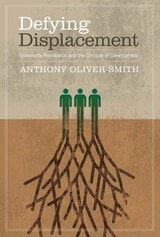
Defying Displacement
Grassroots Resistance and the Critique of DevelopmentBy Anthony Oliver-Smith
University of Texas Press, 2010
The uprooting and displacement of people has long been among the hardships associated with development and modernity. Indeed, the circulation of commodities, currency, and labor in modern society necessitates both social and spatial mobility. However, the displacement and resettlement of millions of people each year by large-scale infrastructural projects raises serious questions about the democratic character of the development process.
Although designed to spur economic growth, many of these projects leave local people struggling against serious impoverishment and gross violations of human rights. Working from a political-ecological perspective, Anthony Oliver-Smith offers the first book to document the fight against involuntary displacement and resettlement being waged by people and communities around the world.
Increasingly over the last twenty-five years, the voices of people at the grass roots are being heard. People from many societies and cultures are taking action against development-forced displacement and resettlement (DFDR) and articulating alternatives. Taking the promise of democracy seriously, they are fighting not only for their place in the world, but also for their place at the negotiating table, where decisions affecting their well-being are made.

Delivering Health
Midwifery and Development in MexicoLydia Z. Dixon
Vanderbilt University Press, 2020
Maternal health outcomes are a key focus of global health initiatives. In Delivering Health, author Lydia Z. Dixon uncovers the ways such outcomes have been shaped by broader historical, political, and social factors in Mexico, through the perspectives of those who are at the front lines fighting for change: midwives.
Midwives have long been marginalized in Mexico as remnants of the country's precolonial past, yet Dixon shows how they are now strategically positioning themselves as agents of modernity and development. Midwifery education programs have popped up across Mexico, each with their own critique of the health care system and vision for how midwifery can help. Delivering Health ethnographically examines three such schools with very different educational approaches and professional goals. From San Miguel de Allende to Oaxaca to Michoacán and points between, Dixon takes us into the classrooms, clinics, and conferences where questions of what it means to provide good reproductive health care are being taught, challenged, and implemented. Through interviews, observational data, and even student artwork, we are shown how underlying inequality manifests in poor care for many Mexican women. The midwives in this book argue that they can improve care while also addressing this inequality. Ultimately, Delivering Health asks us to consider the possibility that marginalized actors like midwives may hold the solution to widespread concerns in health.
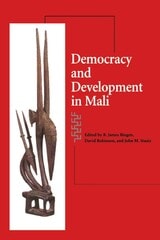
Democracy and Development in Mali
R. James Bingen
Michigan State University Press, 2000
During the past twenty-five years, the scholarly research and applied development work of Michigan State University faculty and students in Mali represents the most significant combined, long-term, and continuing contribution of any group of university faculty in the United States or Europe to the study of Malian society, economy, and politics. The applied nature of much of this work has resulted in a significant number of working papers, reports, and conference presentations. This volume represents a coherent and connected set of essays from one American university with a widely known and highly respected role in African development. While the essays identify and review Mali's unique historical and contemporary path to democracy and development, they also contribute to the advancement of theoretical knowledge about African development.

Democracy, Governance, and Growth
Stephen Knack, Editor
University of Michigan Press, 2003
The difference between developmental success and failure in this view has little to do with natural resource availability, climate, aid, or developed nations' policies. Rather, it is largely a function of whether incentives within a given society steer wealth-maximizing individuals toward producing new wealth or toward diverting it from others. The chapters, seminal essays written by Mancur Olson and his IRIS Center colleagues, provide theoretical and/or empirical underpinnings for the emerging consensus that differences in the way governments and societies are organized have enormous implications for the structure of incentives faced by politicians, bureaucrats, investors, and workers, which in turn determines the level of a nation's material well-being.
Overall this volume applies tools and concepts from the "New Institutional Economics" to some of the major issues in economic development. It will be of interest to scholars and students of various disciplines--including political science, law, and sociology as well as economics--interested in the determinants of economic development and global economic change. The book will also be of interest to many aid practitioners, particularly those working in anticorruption and public sector reform issues.
Stephen Knack is Senior Research Economist, Development Research Group, the World Bank.
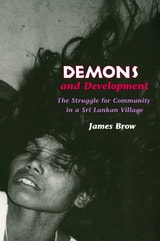
Demons and Development
The Struggle for Community in a Sri Lankan VillageJames Brow
University of Arizona Press, 1996
James Brow witnessed these possession trances and sorcery accusations as they occurred, enabling him to convey this richly textured story interweaving political factionalism and troubled spirits. Official projects of development have proceeded apace in Sri Lanka, but until now there have been few accounts of their tendency to tear apart the fabric of rural society. Demons and Development combines an engaging narrative of how development was experienced in one particular village with an original contribution to theories of hegemony, the social anthropology of South Asia, the ethnography of nationalism, and the sociology of development.
Deregulation and Interdependence in the Asia-Pacific Region
Edited by Takatoshi Ito and Anne O. Krueger
University of Chicago Press, 2000

Design and Development of Multi-Lane Smart Electromechanical Actuators
Fawaz Yahya Annaz
The Institution of Engineering and Technology, 2014

Designing Innovative Corporate Water Risk Management Strategies from an Ecosystem Services Perspective
Daniel Gerding
Michigan Publishing Services, 2014

Developing Uganda
Hölger Bernt Hansen
Ohio University Press, 1998
Essays by the top scholars in the Weld span the breadth of the issue, from Uganda's growth out of poverty to development at the grass roots level. Developing Uganda replaces the myth and misinformation the last decade has witnessed with a realistic scrutiny by those who have studied it with care and caution.
Development Theory and the Economics of Growth
Jaime Ros
University of Michigan Press, 2000
Development and Crisis of the Welfare State
Parties and Policies in Global MarketsEvelyne Huber and John D. Stephens
University of Chicago Press, 2001
Building on their previous research, Huber and Stephens show how high wages and generous welfare states are still possible in an age of globalization and trade competition.

Development as Communication
A Perspective on IndiaUma Narula
Southern Illinois University Press, 1986
This book applies a systematic communication theory to the 30-plus years of development experience in India.
Never before has development been treated from a communication perspective. This perspective demonstrates that the role of communication in development is not limited to the technology of satellites or to the economics of mass media; it is a way of thinking about the interaction among all agents involved.
The empirical data describe patterns of social realities, actions, and communication networks among planners, contact agents, and the masses in two Indian communities. The result is an analytical review of development theories and practice in India.
This study is practical as well as theoretical. The authors show how the theory of the “coordinated management of meaning” applies to large-scale social interactions. They also offer specific recommendations for Indian development planners.
Development in Multiple Dimensions
Social Power and Regional Policy in IndiaAlexander Lee
University of Michigan Press, 2019
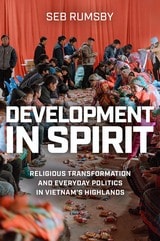
Development in Spirit
Religious Transformation and Everyday Politics in Vietnam’s HighlandsSeb Rumsby
University of Wisconsin Press, 2023
Following state-led market reforms in the 1980s, Vietnam experienced stunning economic transformation. But for the Hmong communities of the country’s north and central highlands, the benefits proved elusive. Instead, the Hmong people have pursued their own alternative paths to development. Rumsby shows how mass conversion to Christianity led to a case of “unplanned development” that put the Hmong on a trajectory of simultaneous integration into the market economy and resistance to state authority.
Many of the strategies community members employ are tied to the Christianization of everyday life. Religious actors play complex and often contradictory roles in facilitating networks of exchange, challenging or enforcing gender norms, promoting communalism and enforcing discipline, and shaping local ideas about progress. They are influenced by national and transnational religious networks, especially US-produced radio broadcasts by Hmong American Christians and local converts.
This compelling account provides fresh theoretical and empirical insights into the interplay of religion, neoliberal development, and marketization across the world.

Development of Arab-American Identity
Ernest McCarus, Editor
University of Michigan Press, 1994

Development of Southern French and Catalan Society, 718-1050
By Archibald R. Lewis
University of Texas Press, 1965
Early in the eighth century, the current of the Muslim movement that inundated northern Spain crept over the Pyrenees to spread across a portion of the French Midi. From the north the tide of Carolingian conquest forced the Muslims back and took in these same southern French and northern Spanish provinces. During the same era the Vikings raided intermittently and with varying degrees of intensity along the seacoasts and up the inland waterways, sometimes controlling considerable areas for extended periods.
These raids and conquests inevitably affected the way of life of the people of southern France and Catalonia. Contemporary travelers and later scholars have noted that the feudal traditions and obligations that were so strong in the north seemed very weak or nonexistent in the south. They found that the land seemed to be held largely as allods, not as feudal fiefs; they saw that women held positions of surprising power, that throughout the area there was great emphasis on money, and that the traditions of Roman and Visigothic law still survived.
Although scholars have noted these differences, no one has made a comprehensive study of southern French and Catalan society as a whole. It is to fill this void that Archibald Lewis provides this volume. In a detailed and scholarly study, based largely upon original records and chronicles, he examines the familial, social, economic, governmental, military, and religious life of the area from 718 to 1050 A.D.
Lewis gives as comprehensive a picture as the records will permit of the society that existed in the early eighth century, describes and discusses the major changes which took place during the next three centuries, and analyzes their causes and effects. This study, which includes careful and detailed notes and an extensive bibliography, provides a reliable and long-needed reference tool.
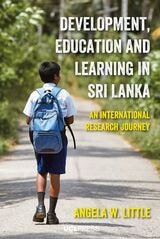
Development, Education and Learning in Sri Lanka
An International Research JourneyAngela W. Little
University College London, 2024
Sri Lanka’s early achievements in education and literacy became well-known among the international development community in the middle of the last century and were often used to benchmark progress elsewhere. Development, Education and Learning in Sri Lanka presents an illuminating narrative of changing education fortunes and inequalities, based on half a century of research conducted by Angela W. Little. This journey was undertaken in collaboration with Sri Lankan researchers island-wide in myriad communities, schools, classrooms, and education offices, through conversations with countless parents, teachers, students, community members, trade union officers, politicians, and members of local, national, and international development agencies, as well as through extensive documentary analysis.
The book delineates the distinctive and changing features of the Sri Lankan education system and compares it with systems elsewhere, to offer in-depth analyses of myriad issues and challenges in a single country over an extended period, framed by shifting international discourses and comparisons with education systems elsewhere. These analyses are framed by themes in the international development discourse on education and development–some of which have been influenced by the Sri Lankan story–ranging from modernization to basic needs to sustainable development. The book promotes a message about the need to understand education and development on a country’s own terms and to place learning at the heart of education policy, situating it within broader conceptions of the purpose, values, and means of development.
Developmental Programming for Infants and Young Children
Volume 1. Assessment and ApplicationD. Sue Schafer and Martha S. Moersch, Editors
University of Michigan Press, 1981
Developmental Programming for Infants and Young Children: Volume 1 provides detailed instructions for the use of Volume 2: Early Intervention Developmental Profile, including administration and evaluation techniques, scoring and interpretation of results, validity and reliability of findings, and complete item descriptions. To be used with children functioning in the 0-to-36-month developmental age range. Volume 1 includes the scoring sheet (Volume 2).
Developmental Programming for Infants and Young Children has proven to be an invaluable tool for teachers, therapists, and other professionals who assess and facilitate the development of children functioning primarily in the 0-to-60 month range. The authors address six areas of development: perceptual/fine motor, cognition, language, social/emotional, self-care, and gross motor. Volumes 1, 2, and 3 are designed for use with children functioning in the 0-to-36-month developmental age range, while Volumes 4 and 5 extend assessment and programming guidelines to 5-year (preschool) levels.
Carefully designed and tested by the University of Michigan's Institute for the Study of Mental Retardation and Related Disabilities, all volumes bridge the gap between assessment and program implementation.

Dilemmas of Political Change in Mexico
Edited by Kevin J. Middlebrook
University of London Press, 2004
They examine: (1) changes affecting the party system, electoral institutions, and voting behavior; (2) the evolving role of the armed forces, organized labor, big business, and rural producers; (3) the new importance of civil society, the mass media, and cross-border social coalitions; (4) and key issues of political representation and governance, including executive-legislative relations, judicial performance, federalism, the constitutional rights of indigenous peoples, and the political role of Mexicans resident in the United States.

Doing Development in Arkansas
Using Credit to Create Opportunity for Entrepreneurs Outside the MainstreamRichard Taub
University of Arkansas Press, 2004
Doing Development in Arkansas is a history of that program as its creators tried to find their footing in new terrain, establish trust, work with borrowers despite legal pitfalls in doing so, and attempted to create new loan and technical assistance products. It is the story of the towns themselves in which Southern tried to have a substantial impact, including Arkadelphia, Hope, Malvern, Hot Springs, and Pine Bluff. Southern was an experiment and many of its achievements were the results in some cases of trying new ideas and in others of transporting programs successful in one setting to new locations. The most dramatic example of such a move is the development of the Good Faith Fund in Pine Bluff, based on a model of the Grameen Bank in Bangladesh.
Dream Zones
Anticipating Capitalism and Development in IndiaJamie Cross
Pluto Press, 2014
Dream Zones explores the dreamed of and desired futures that constitute, sustain and disrupt capitalism in contemporary India.
Drawing on five years of research in and around India's Special Economic Zones (SEZs), the book follows the stories of regional politicians, corporate executives, rural farmers, industrial workers and social activists to show how the pursuit of growth, profit and development shapes the politics of industrialisation and liberalisation.
This book offers a timely reminder that the global economy is shaped by sentiment as much as reason and that un-realised expectations are the grounds on which new hopes for the future are sown.

Dreamers, Thinkers, Doers
Conversations on the Economy of TomorrowGovert Buijs
Amsterdam University Press, 2026
But these voices do more than imagine a better future; they show how it can be realized. They examine what it takes to turn ideas into action and take the first concrete steps toward change. The collection brings to life a new “multi-actor approach,” as outlined by Jan Peter Balkenende and Govert Buijs in Capitalism Reconnected (2024) – an approach in which everyone matters and shares responsibility: governments, businesses, civil society, and consumers alike.

Dreaming Revolution
Transgression in the Development of American RomanceScott Bradfield
University of Iowa Press, 1993
Dreaming Revolution usefully employs current critical theory to address how the European novel of class revolt was transformed into the American novel of imperial expansion. Bradfield shows that early American romantic fiction—including works by William Godwin, Charles Brockden Brown, James Fenimore Cooper, and Edgar Allan Poe—can and should be considered as part of a genre too often limited to the nineteenth-century European novel. In a spirited discussion of the works from these four authors, Bradfield argues that Americans take the class dynamics of the European psychological novel and apply them to the American landscape, reimagining psychological spaces as geographical ones.
Dynamics, Economic Growth, and International Trade
Bjarne S. Jensen and Kar-yiu Wong, Editors
University of Michigan Press, 1997