Results by title
347 books match the query 'Early works to 1800' and 23 start with d
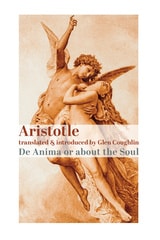
De Anima, or About the Soul
Glen Aristotle
St. Augustine's Press, 2021
In this text, Aristotle discusses his predecessors’ views of life, defines the principle of life (“soul”), discusses the principle sorts of living things (plants, animals, and human beings), and analyzes the chief activities of each sort of life. In the case of rational life, he shows that the ability to think implies an immaterial aspect to the human soul.
The De Anima is necessary not only to the study of biology, but also advances the understanding of metaphysics, of ethics and of politics, and even of logic, insofar as logic directs the acts of the human mind.
Like Coughlin’s translation of Aristotle’s Physics (also published by St. Augustine Press), this translation attempts to be literal and concrete. The edition includes the translation, introduction, glossary, index, and explanatory notes.
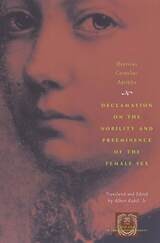
Declamation on the Nobility and Preeminence of the Female Sex
Henricus Cornelius Agrippa
University of Chicago Press, 1996
Rather than directly refuting prevailing wisdom, Agrippa uses women's superiority as a rhetorical device and overturns the misogynistic interpretations of the female body in Greek medicine, in the Bible, in Roman and canon law, in theology and moral philosophy, and in politics. He raised the question of why women were excluded and provided answers based not on sex but on social conditioning, education, and the prejudices of their more powerful oppressors. His declamation, disseminated through the printing press, illustrated the power of that new medium, soon to be used to generate a larger reformation of religion.
Demosthenes, Speeches 18 and 19
Translated by Harvey Yunis
University of Texas Press, 2005
2006 — Soeurette Diehl Fraser Award for Best Translation of a Book, Texas Institute of Letters
This is the ninth volume in the Oratory of Classical Greece. This series presents all of the surviving speeches from the late fifth and fourth centuries BC in new translations prepared by classical scholars who are at the forefront of the discipline. These translations are especially designed for the needs and interests of today's undergraduates, Greekless scholars in other disciplines, and the general public.
Classical oratory is an invaluable resource for the study of ancient Greek life and culture. The speeches offer evidence on Greek moral views, social and economic conditions, political and social ideology, law and legal procedure, and other aspects of Athenian culture that have recently been attracting particular interest: women and family life, slavery, and religion, to name just a few.
Demosthenes is regarded as the greatest orator of classical antiquity. The two speeches translated here grew out of his longtime rivalry with the orator Aeschines. In Speech 19 (On the Dishonest Embassy) delivered in 343 BC, Demosthenes attacks Aeschines for corruption centered around an ultimately disastrous embassy to Philip of Macedon that both men took part in. This speech made Demosthenes the leading politician in Athens for a time. Speech 18 (On the Crown or De Corona), delivered in 330 BC, is Demosthenes' most famous and influential oration. It resulted not only in Demosthenes receiving one of Athens' highest political honors but also in the defeat and disgrace of Aeschines, who retired from public life and left Athens forever.
Demosthenes, Speeches 1–17
Translated by Jeremy Trevett
University of Texas Press, 2011
This is the fourteenth volume in the Oratory of Classical Greece. This series presents all of the surviving speeches from the late fifth and fourth centuries BC in new translations prepared by classical scholars who are at the forefront of the discipline. These translations are especially designed for the needs and interests of today's undergraduates, Greekless scholars in other disciplines, and the general public.
Classical oratory is an invaluable resource for the study of ancient Greek life and culture. The speeches offer evidence on Greek moral views, social and economic conditions, political and social ideology, law and legal procedure, and other aspects of Athenian culture that have recently been attracting particular interest: women and family life, slavery, and religion, to name just a few.
This volume contains translations of all the surviving deliberative speeches of Demosthenes (plus two that are almost certainly not his, although they have been passed down as part of his corpus), as well as the text of a letter from Philip of Macedon to the Athenians. All of the speeches were purportedly written to be delivered to the Athenian assembly and are in fact almost the only examples in Attic oratory of the genre of deliberative oratory. In the Olynthiac and Philippic speeches, Demosthenes identifies the Macedonian king Philip as a major threat to Athens and urges direct action against him. The Philippic speeches later inspired the Roman orator Cicero in his own attacks against Mark Antony, and became one of Demosthenes' claims to fame throughout history.
Demosthenes, Speeches 20-22
Translated by Edward M. Harris
University of Texas Press, 2008
This is the twelfth volume in the Oratory of Classical Greece. This series presents all of the surviving speeches from the late fifth and fourth centuries BC in new translations prepared by classical scholars who are at the forefront of the discipline. These translations are especially designed for the needs and interests of today's undergraduates, Greekless scholars in other disciplines, and the general public.
Classical oratory is an invaluable resource for the study of ancient Greek life and culture. The speeches offer evidence on Greek moral views, social and economic conditions, political and social ideology, law and legal procedure, and other aspects of Athenian culture that have recently been attracting particular interest: women and family life, slavery, and religion, to name just a few.
Demosthenes is regarded as the greatest orator of classical antiquity. This volume contains three important speeches from the earliest years of his political career: Against Leptines, a prosecution brought against a law repealing all exemptions from liturgies; Against Meidias, a prosecution for aggravated insult (hybris) brought against an influential politician; and Against Androtion, an indictment of a decree of honors for the Council of Athens. Edward M. Harris provides contemporary English translations of these speeches, two of which (Leptines and Androtion) have not been translated into English in over sixty years, along with introductions and extensive notes that take account of recent developments in Classical scholarship.
Demosthenes, Speeches 23-26
Translated by Edward M. Harris
University of Texas Press, 2018
This is the fifteenth volume in the Oratory of Classical Greece. This series presents all of the surviving speeches from the late fifth and fourth centuries BC in new translations prepared by classical scholars who are at the forefront of the discipline. These translations are especially designed for the needs and interests of today’s undergraduates, Greekless scholars in other disciplines, and the general public.
Classical oratory is an invaluable resource for the study of ancient Greek life and culture. The speeches offer evidence on Greek moral views, social and economic conditions, political and social ideology, law and legal procedure, and other aspects of Athenian culture that have recently been attracting particular interest: women and family life, slavery, and religion, to name just a few.
This volume provides introductions, translations, and notes for four speeches found in the Demosthenic corpus that have not been translated in recent times. Against Aristocrates deals with matters of foreign policy involving a mercenary general, Charidemus, and is a valuable source for Athenian homicide law. Against Timocrates involves domestic politics and provides important information about Athenian procedures for enacting legislation. In both speeches, the litigants stress the importance of the rule of law in Athenian democracy and emphasize key ideas, such as the monopoly of legitimate force by the state, the need for consistency in statutes, and the principle of no punishment without a written law. The remaining two speeches, Against Aristogeiton, are forgeries composed in the Hellenistic period, as Edward Harris demonstrates conclusively through a study of laws and legal procedures and an analysis of style and vocabulary.
Demosthenes, Speeches 27-38
Translated by Douglas M. MacDowell
University of Texas Press, 2004
This is the eighth volume in the Oratory of Classical Greece. This series presents all of the surviving speeches from the late fifth and fourth centuries BC in new translations prepared by classical scholars who are at the forefront of the discipline. These translations are especially designed for the needs and interests of today's undergraduates, Greekless scholars in other disciplines, and the general public.
Classical oratory is an invaluable resource for the study of ancient Greek life and culture. The speeches offer evidence on Greek moral views, social and economic conditions, political and social ideology, law and legal procedure, and other aspects of Athenian culture that have recently been attracting particular interest: women and family life, slavery, and religion, to name just a few.
Demosthenes is regarded as the greatest orator of classical antiquity. This volume contains five speeches written for lawsuits in which Demosthenes sought to recover his inheritance, which he claimed was fraudulently misappropriated and squandered by the trustees of the estate. These speeches shed light on Athenian systems of inheritance, marriage, and dowry. The volume also contains seven speeches illustrating the legal procedure known as paragraphe, or "counter-indictment." Four of these are for lawsuits involving commercial shipping, a vital aspect of the Athenian economy that was crucial to maintaining the city's imported food supply. Another concerns the famous Athenian silver mines.
Demosthenes, Speeches 39-49
Translated by Adele C. Scafuro
University of Texas Press, 2011
This is the thirteenth volume in the Oratory of Classical Greece. This series presents all of the surviving speeches from the late fifth and fourth centuries BC in new translations prepared by classical scholars who are at the forefront of the discipline. These translations are especially designed for the needs and interests of today's undergraduates, Greekless scholars in other disciplines, and the general public.
Classical oratory is an invaluable resource for the study of ancient Greek life and culture. The speeches offer evidence on Greek moral views, social and economic conditions, political and social ideology, law and legal procedure, and other aspects of Athenian culture that have recently been attracting particular interest: women and family life, slavery, and religion, to name just a few.
Demosthenes is regarded as the greatest orator of classical antiquity. This volume contains eleven law court speeches ascribed to Demosthenes, though modern scholars believe that only two or three of them are actually his. Most of the speeches here concern inheriting an estate, recovering debts owed to an estate, or exchanging someone else's estate for one's own. Adele Scafuro's supplementary material allows even non-specialists to follow the ins and outs of the legal arguments as she details what we know about the matters involved in each case, including marriage laws, adoptions, inheritances, and the financial obligations of the rich. While Athenian laws and family institutions (e.g., the marriages of heiresses) differ from ours in quite interesting ways, nevertheless the motives and strategies of the litigants often have a contemporary resonance.
Demosthenes, Speeches 50-59
Translated by Victor Bers
University of Texas Press, 2003
This is the sixth volume in the Oratory of Classical Greece. This series presents all of the surviving speeches from the late fifth and fourth centuries BC in new translations prepared by classical scholars who are at the forefront of the discipline. These translations are especially designed for the needs and interests of today's undergraduates, Greekless scholars in other disciplines, and the general public.
Classical oratory is an invaluable resource for the study of ancient Greek life and culture. The speeches offer evidence on Greek moral views, social and economic conditions, political and social ideology, law and legal procedure, and other aspects of Athenian culture that have been largely ignored: women and family life, slavery, and religion, to name just a few.
Demosthenes is regarded as the greatest orator of classical antiquity; indeed, his very eminence may be responsible for the inclusion under his name of a number of speeches he almost certainly did not write. This volume contains four speeches that are most probably the work of Apollodorus, who is often known as "the Eleventh Attic Orator." Regardless of their authorship, however, this set of ten law court speeches gives a vivid sense of public and private life in fourth-century BC Athens. They tell of the friendships and quarrels of rural neighbors, of young men joined in raucous, intentionally shocking behavior, of families enduring great poverty, and of the intricate involvement of prostitutes in the lives of citizens. They also deal with the outfitting of warships, the grain trade, challenges to citizenship, and restrictions on the civic role of men in debt to the state.
Demosthenes, Speeches 60 and 61, Prologues, Letters
Translated by Ian Worthington
University of Texas Press, 2006
This is the tenth volume in the Oratory of Classical Greece. This series presents all of the surviving speeches from the late fifth and fourth centuries BC in new translations prepared by classical scholars who are at the forefront of the discipline. These translations are especially designed for the needs and interests of today's undergraduates, Greekless scholars in other disciplines, and the general public.
Classical oratory is an invaluable resource for the study of ancient Greek life and culture. The speeches offer evidence on Greek moral views, social and economic conditions, political and social ideology, law and legal procedure, and other aspects of Athenian culture that have recently been attracting particular interest: women and family life, slavery, and religion, to name just a few.
Demosthenes is regarded as the greatest orator of classical antiquity. This volume contains his Funeral Oration (Speech 60) for those who died in the Battle of Chaeronea in 338 BC, in which Philip of Macedonia secured his dominance over Greece, as well as the so-called Erotic Essay (Speech 61), a rhetorical exercise in which the speaker eulogizes the youth Epicrates for his looks and physical prowess and encourages him to study philosophy in order to become a virtuous and morally upright citizen. The volume also includes fifty-six prologues (the openings to political speeches to the Athenian Assembly) and six letters apparently written during the orator's exile from Athens. Because so little literature survives from the 330s and 320s BC, these works provide valuable insights into Athenian culture and politics of that era.
Dialogue against the Jews
Petrus Alfonsi
Catholic University of America Press, 2006
Dialogue on the Infinity of Love
Tullia d'Aragona
University of Chicago Press, 1997
Sexually liberated and financially independent, Tullia d'Aragona dared to argue that the only moral form of love between woman and man is one that recognizes both the sensual and the spiritual needs of humankind. Declaring sexual drives to be fundamentally irrepressible and blameless, she challenged the Platonic and religious orthodoxy of her time, which condemned all forms of sensual experience, denied the rationality of women, and relegated femininity to the realm of physicality and sin. Human beings, she argued, consist of body and soul, sense and intellect, and honorable love must be based on this real nature.
By exposing the intrinsic misogyny of prevailing theories of love, Aragona vindicates all women, proposing a morality of love that restores them to intellectual and sexual parity with men. Through Aragona's sharp reasoning, her sense of irony and humor, and her renowned linguistic skill, a rare picture unfolds of an intelligent and thoughtful woman fighting sixteenth-century stereotypes of women and sexuality.
Dialogue with Trypho (Selections from the Fathers of the Church, Volume 3)
Saint Justin Martyr
Catholic University of America Press, 2003
Dialogues and Addresses
Madame de Maintenon
University of Chicago Press, 2004
Denounced by her contemporaries as a political schemer and religious fanatic, Maintenon has long been criticized as an opponent of gender equality. The writings in this volume faithfully reflect Maintenon's respect for social hierarchy and her stoic call for women to accept the duties of their state in life. But the writings also echo Maintenon's more feminist concerns: the need to redefine the virtues in the light of women's experience, the importance of naming the constraints on women's freedom, and the urgent need to remedy the scandalous neglect of the education of women.
In her writings as well as in her own model school at Saint-Cyr, Maintenon embodies the demand for educational reform as the key to the empowerment of women at the dawn of modernity.
Dioscorides on Pharmacy and Medicine
By John M. Riddle
University of Texas Press, 1985
For 1,600 years Dioscorides (ca. AD 40–80) was regarded as the foremost authority on drugs. He knew mild laxatives and strong purgatives, analgesics for headaches, antiseptics for wounds, emetics to rid one of ingested poisons, chemotherapy agents for cancer treatments, and even oral contraceptives. Why, then, have his works remained obscure in recent centuries? Because of one small oversight (Dioscorides himself thought it was self-evident): he failed to describe his method for organizing drugs by their affinities. This omission led medical authorities to use his materials as a guide to pharmacy while overlooking Dioscorides' most valuable contribution—his empirically derived method for observing and classifying drugs by clinical testing.
Dioscorides' De materia medica, a five-volume work, was written in the first century. Here revealed for the first time is the thesis that Dioscorides wrote more than a lengthy guide book. He wrote a great work of science. He had said that he discovered the natural order and would demonstrate it by his arrangement of drugs from plants, minerals, and animals. Until John M. Riddle's pathfinding study, no one saw the genius of his system. Botanists from the eighteenth century often attempted to find his unexplained method by identifying the sequences of his plants according to the Linnean system but, while there are certain patterns, there remained inexplicable incoherencies. However, Dioscorides' natural order as set down in De materia medica was determined by drug affinities as detected by his acute, clinical ability to observe drug reactions in and on the body. So remarkable was his ability to see relationships that, in some cases, he saw what we know to be common chemicals shared by plants of the same and related species and other natural product drugs from animal and mineral sources.
Western European and Islamic medicine considered Dioscorides the foremost authority on drugs, just as Hippocrates is regarded as the Father of Medicine. They saw him point the way but only described the end of his finger, despite the fact that in the sixteenth century alone there were over one hundred books published on him. If he had explained what he thought to be self-evident, then science, especially chemistry and medicine, would almost certainly have developed differently. In this culmination of over twenty years of research, Riddle employs modern science and anthropological studies innovatively and cautiously to demonstrate the substance to Dioscorides' authority in medicine.
Discourse to Lady Lavinia His Daughter
Annibal Guasco
University of Chicago Press, 2003
The Discourse displays an incredibly far-sighted view of women's education. Annibal thought gifted young girls should develop their talents and apply them to careers outside the home. In the Discourse, he details the unique and extremely rigorous educational program to which he had subjected Lavinia almost from the cradle with this end in mind. To complete Lavinia's education, Annibal filled the Discourse with advice on spirituality and morality, health and beauty, and how to behave at court—everything a well-bred lady-in-waiting would need to know. This edition also includes an appendix that traces the later events of Lavinia's life through excerpts from her father's letters.
Discourses against Judaizing Christians
Saint John Chrysostom
Catholic University of America Press, 1979
Discourses on Livy
Niccolò Machiavelli
University of Chicago Press, 1998
"[Machiavelli] found in Livy the means to inspire scholars for five centuries. Within the Discourses, often hidden and sometimes unintended by their author, lie the seeds of modern political thought. . . . [Mansfield and Tarcov's] translation is careful and idiomatic."—Peter Stothard, The Times
"Translated with painstaking accuracy—but also great readability."—Weekly Standard
"A model of contemporary scholarship and a brave effort at Machiavelli translation that allows the great Florentine to speak in his own voice."—Choice
Domesticating Empire
Enlightenment in Spanish AmericaKaren Stolley
Vanderbilt University Press, 2013
Through the work of five authors--Jose de Oviedo y Banos, Juan Ignacio Molina, Felix de Azara, Catalina de Jesus Herrera, and Felix de Arrate--Domesticating Empire explores the Ibero-American Enlightenment as a project that reflects both key Enlightenment concerns and the particular preoccupations of Bourbon Spain and its territories in the Americas. At a crucial moment in Spain's imperial trajectory, these authors domesticate topics central to empire--conquest, Indians, nature, God, and gold--by making them familiar and utilitarian. As a result, their works later proved resistant to overarching schemes of Latin American literary history and have been largely forgotten. Nevertheless, eighteenth-century Ibero-American writing complicates narratives about both the Enlightenment and Latin American cultural identity.

Dreams, Illusion, and Other Realities
Wendy Doniger O'Flaherty
University of Chicago Press, 1984
"Dazzling analysis. . . . The book is firm and convincing once you appreciate its central point, which is that in traditional Hindu thought the dream isn't an accident or byway of experience, but rather the locus of epistemology. In its willful confusion of categories, its teasing readiness to blur the line between the imagined and the real, the dream actually embodies the whole problem of knowledge. . . . [O'Flaherty] wants to make your mental flesh creep, and she succeeds."—Mark Caldwell, Village Voice

Duchess of Palms
A MemoirBy Nadine Eckhardt
University of Texas Press, 2009
A “fifties girl” tells the fascinating story of her marriages to novelist Billy Lee Brammer and Congressman Bob Eckhardt, and how these relationships propelled her into the multifaceted life she led on her own terms.
Child of the Great Depression, teenage "Duchess of Palms" beauty queen, wife of an acclaimed novelist and later of a brilliant U.S. congressman, and ultimately a successful single working woman and mother, Nadine Eckhardt has lived a fascinating life. In this unique, funny, and honest memoir, she recounts her journey from being a "fifties girl" who lived through the men in her life to becoming a woman in her own right, working toward her own goals.
Eckhardt's first marriage to writer Billy Lee Brammer gave her entrée to liberal political and literary circles in Austin and Washington, where she and Brammer both worked for Senator Lyndon B. Johnson. She describes the heady excitement of LBJ's world—a milieu that Brammer vividly captured in his novel The Gay Place. She next recalls her second marriage to Bob Eckhardt, whom she helped get elected to the U.S. House of Representatives, as well as her growing involvement with the counterculture of social protest, sexual revolution, and drug use. Eckhardt honestly recounts how the changing times changed her perception of herself, recalling that "I didn't know how to achieve for myself, only for others, and I felt ripped off and empty." This painful realization opened the door to a new life for Eckhardt. Her memoir concludes with a joyful description of her multifaceted later life as a restaurateur, assistant to Molly Ivins, writer, and center of a wide circle of friends.
Duns Scotus on Time and Existence
John Duns Scotus
Catholic University of America Press, 2014
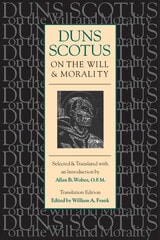
Duns Scotus on the Will and Morality
John Duns Scotus
Catholic University of America Press, 1997