Results by title
240 books match the query 'English as a Second Language' and 8 start with d
Decentering Advocacy in English Language Teaching
Global Perspectives and Local PracticesKate Mastruserio Reynolds, Grazzia Maria Mendoza Chirinos, Debra Suarez, Okon Effiong, and Georgios Kormpas
University of Michigan Press, 2024
In each chapter, an ELT advocate describes the need for their project, the steps they took, the challenges they faced in their particular context, the parameters they needed to work within, and how they worked within these constraints to achieve their goals. These stories offer insight into classroom and school focused efforts as well as social projects, and touch upon contexts in which educators may feel that they cannot engage in overt advocacy movements. With chapters focused on Africa, East Asia, the Middle East, and Latin America, the volume contributors identify patterns based on what has worked well transculturally and in sociopolitically constrained contexts to develop effective principles and practices. By bringing many different advocacy efforts and the latest advocacy research together, Decentering Advocacy in English Language Teaching identifies recognizable standards that can take the onus off of individual advocates to reinvent the wheel.
Developing Information Literacy Skills
A Guide to Finding, Evaluating, and Citing SourcesJanine Carlock
University of Michigan Press, 2020
This text has been structured around the six critical elements of the ACRL Framework for Information Literacy in Higher Education, contextualizing these elements by fitting them into the research and writing process. The book focuses on providing students with the critical-thinking and problem-solving skills needed to: (1) identify the conversation that exists around a topic, (2) clarify their own perspective on that topic, and (3) efficiently and effectively read and evaluate what others have said that can inform their perspective and research. The critical-thinking and problem-solving skills practiced here are good preparation for what students will encounter in their academic and professional lives.
As an experienced writing instructor, the author has evaluated the final written products of hundreds of students who were trained through one-shot workshops and first-year introductory courses. She has applied that knowledge to create the tasks in this book so that students have the skills to successfully find, evaluate, and use sources and then produce a paper that incorporates valid research responsibly and effectively.
Developmental Programming for Infants and Young Children
Volume 1. Assessment and ApplicationD. Sue Schafer and Martha S. Moersch, Editors
University of Michigan Press, 1981
Developmental Programming for Infants and Young Children: Volume 1 provides detailed instructions for the use of Volume 2: Early Intervention Developmental Profile, including administration and evaluation techniques, scoring and interpretation of results, validity and reliability of findings, and complete item descriptions. To be used with children functioning in the 0-to-36-month developmental age range. Volume 1 includes the scoring sheet (Volume 2).
Developmental Programming for Infants and Young Children has proven to be an invaluable tool for teachers, therapists, and other professionals who assess and facilitate the development of children functioning primarily in the 0-to-60 month range. The authors address six areas of development: perceptual/fine motor, cognition, language, social/emotional, self-care, and gross motor. Volumes 1, 2, and 3 are designed for use with children functioning in the 0-to-36-month developmental age range, while Volumes 4 and 5 extend assessment and programming guidelines to 5-year (preschool) levels.
Carefully designed and tested by the University of Michigan's Institute for the Study of Mental Retardation and Related Disabilities, all volumes bridge the gap between assessment and program implementation.
Developmental Programming for Infants and Young Children
Volume 3. Stimulation ActivitiesD. Sue Schafer and Martha S. Moersch, Editors
University of Michigan Press, 1981
Developmental Programming for Infants and Young Children: Volume 3 provides a reservoir of ideas for carrying out planned program objectives. Each developmental area contains sequenced develop mental behaviors that would be expected in a normal child, with adaptations for specific handicapping conditions noted. This volume describes ways to handle, stimulate, and interact with a young child functioning in the developmental age range 0-to-36 months. It can be used by parents for at-home activities.
This volume is available as a set in combination with Volumes 1 and 2.
Developmental Programming for Infants and Young Children has proven to be an invaluable tool for teachers, therapists, and other professionals who assess and facilitate the development of children functioning primarily in the 0-to-60 month range. The authors address six areas of development: perceptual/fine motor, cognition, language, social/emotional, self-care, and gross motor. Volumes 1, 2, and 3 are designed for use with children functioning in the 0-to-36-month developmental age range, while Volumes 4 and 5 extend assessment and programming guidelines to 5-year (preschool) levels.
Carefully designed and tested by the University of Michigan's Institute for the Study of Mental Retardation and Related Disabilities, all volumes bridge the gap between assessment and program implementation.

Disciplinary Discourses, Michigan Classics Ed.
Social Interactions in Academic WritingKen Hyland
University of Michigan Press, 2004
As issues of linguistic and rhetorical expression of disciplinary conventions are becoming more central to teachers, students, and researchers, the careful analysis and straightforward style of Disciplinary Discourses make it a remarkable asset.
The Michigan Classics Edition features a new preface by the author and a new foreword by John M. Swales.
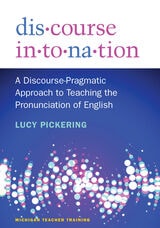
Discourse Intonation
A Discourse-Pragmatic Approach to Teaching the Pronunciation of EnglishLucy Pickering
University of Michigan Press, 2018
This textbook relies heavily on the Brazil model; chapters are organized around different parts of that model and how they can be most effectively taught. Readers will learn the conventions underlying, for example, how we group words in prosodic units, how we understand turn-taking cues in conversation, and how we assess whether someone is feeling angry or sad.
This text features Check Your Learning sections, discussion questions, and hands-on activities at the end of every chapter. Chapters 3-9 also include a section on pedagogical implications. Some of the example sentences that illustrate intonation have accompanying short audio (MP3) files, which can be found online at www.press.umich.edu/elt/compsite/DI.
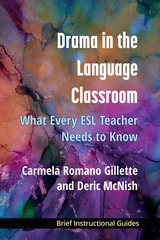
Drama in the Language Classroom
What Every ESL Teacher Needs to KnowCarmela Romano Gillette and Deric McNish
University of Michigan Press, 2019
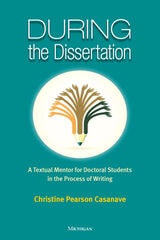
During the Dissertation
A Textual Mentor for Doctoral Students in the Process of WritingChristine Pearson Casanave
University of Michigan Press, 2020
This volume is a sequel to Casanave’s popular Before the Dissertation. Like that volume, this book is designed as a companion for doctoral dissertation writers of qualitative or mixed methods work in fields related to language education. It could also benefit those writing master’s theses and those writing in other social science fields. It is meant to be consulted once the writing has begun—once students have settled on a topic, designed the project, or collected the data—because this is the time when they are analyzing, drafting, revising, polishing, and probably fretting, deleting, reconstructing, and even losing sleep. Also, like its predecessor, it is not designed to teach anyone how to write a dissertation as there are plenty of those available elsewhere.
For most doctoral students, writing will happen at different stages of the project. Strategies for timing of these kinds of writing differ across students, and also across supervisors and advisers. If dissertation writers do not know by the time they start writing which strategies and issues pertain to them, this book can help them craft some approaches to suit their own personalities, preferred practices, and individual goals and visions, as well as help them figure out how dissertation writing might fit into the real-life intrusions of work and family.
Issues covered in the book are: starting to write, envisioning the project as a whole, relationships with supervisors, perfectionism and other maladies, health, low- and high-IQ days, loneliness and isolation, distractions and interruptions, revising, and knowing when to stop.