Results by title
338 books match the query 'Ethnology' and 13 start with d
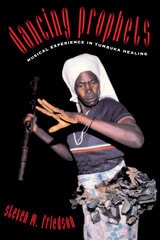
Dancing Prophets
Musical Experience in Tumbuka HealingSteven M. Friedson
University of Chicago Press, 1996
Tumbuka healers diagnose diseases by enacting divination trances in which they "see" the causes of past events and their consequences for patients. Music is the structural nexus where healer, patient, and spirit meet—it is the energizing heat that fuels the trance, transforming both the bodily and social functioning of the individual. Friedson shows how the sound of the ng'oma drum, the clapping of the choir, call-and-response singing, and the jangle of tin belts and iron anklets do not simply accompany other more important ritual activities—they are the very substance of a sacred clinical reality.
This novel look at the relation between music and mental and biological health will interest medical anthropologists, Africanists, and religious scholars as well as ethnomusicologists.
Dancing with the Dead
Memory, Performance, and Everyday Life in Postwar OkinawaChristopher T. Nelson
Duke University Press, 2008
Nelson analyzes the practices of specific performers, showing how memories are recalled, bodies remade, and actions rethought as Okinawans work through fragments of the past in order to reconstruct the fabric of everyday life. Artists such as the popular Okinawan actor and storyteller Fujiki Hayato weave together genres including Japanese stand-up comedy, Okinawan celebratory rituals, and ethnographic studies of war memory, encouraging their audiences to imagine other ways to live in the modern world. Nelson looks at the efforts of performers and activists to wrest the Okinawan past from romantic representations of idyllic rural life in the Japanese media and reactionary appropriations of traditional values by conservative politicians. In his consideration of eisā, the traditional dance for the dead, Nelson finds a practice that reaches beyond the expected boundaries of mourning and commemoration, as the living and the dead come together to create a moment in which a new world might be built from the ruins of the old.
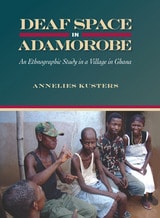
Deaf Space in Adamorobe
An Ethnographic Study in a Village in GhanaAnnelies Kusters
Gallaudet University Press, 2015
Deaf Space in Adamorobe reveals one example of the considerable variation in shared signing communities regarding rates of sign language proficiency and use, deaf people’s marriage rates, deaf people’s participation in village economies and politics, and the role of deaf education. Kusters describes spaces produced by both deaf and hearing people as a cohesive community where living together is an integral fact of their sociocultural environments. At the same time, Kusters identifies tension points between deaf and hearing perspectives and also between outside perspectives and discourses that originated within the community. Because of these differences and the relatively high number of deaf people in the community, Kusters concludes it is natural that they form deaf spaces within the shared space of the village community.
Decolonizing Ethnography
Undocumented Immigrants and New Directions in Social ScienceCarolina Alonso-Bejarano, Lucia López Juárez, Mirian A. Mijangos García, and Daniel M. Goldstein
Duke University Press, 2019
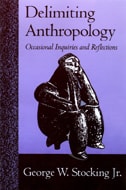
Delimiting Anthropology
Occasional Inquiries and ReflectionsGeorge W. Stocking, Jr.
University of Wisconsin Press, 2001
The first quartet focuses on the work of Franz Boas and the emergence of "Boasian Culturalism." In the second set of essays Stocking addresses the careers of three British "evolutionaries"—Lord Kames; Sir E. B. Tylor; and Sir James G. Frazer—tracking the development of cultural evolutionary thought from its origins in the Scottish Enlightenment through its early twentieth-century afterglow in Frazer's The Golden Bough.
The third group of essays looks at institutions and national traditions, including British ethnography exemplified in the fieldwork manual Notes and Queries; the humanistic Parisian Société d'Ethnographie; the early tension at the Laboratory of Anthropology in Santa Fe between aspiring local amateur anthropologists and professionals from Eastern universities; and the history of ethnographic museums in the European tradition. In closing, Stocking offers reflections on major tendencies in anthropology from the eighteenth century to the present.
"George Stocking is without rival as an historian of modern anthropology. He is trained as an historian, and he knows anthropologists from having lived among them. This collection is indispensable for any one or place concerned with the subject."—Dell Hymes, editor of Reinventing Anthropology

Delirio—The Fantastic, the Demonic, and the Réel
The Buried History of Nuevo LeónBy Marie Theresa Hernández
University of Texas Press, 2002
Striking, inexplicable stories circulate among the people of Nuevo León in northern Mexico. Stories of conversos (converted Jews) who fled the Inquisition in Spain and became fabulously wealthy in Mexico. Stories of women and children buried in walls and under houses. Stories of an entire, secret city hidden under modern-day Monterrey. All these stories have no place or corroboration in the official histories of Nuevo León.
In this pioneering ethnography, Marie Theresa Hernández explores how the folktales of Nuevo León encode aspects of Nuevolenese identity that have been lost, repressed, or fetishized in "legitimate" histories of the region. She focuses particularly on stories regarding three groups: the Sephardic Jews said to be the "original" settlers of the region, the "disappeared" indigenous population, and the supposed "barbaric" society that persists in modern Nuevo León. Hernández's explorations into these stories uncover the region's complicated history, as well as the problematic and often fascinating relationship between history and folklore, between officially accepted "facts" and "fictions" that many Nuevoleneses believe as truth.
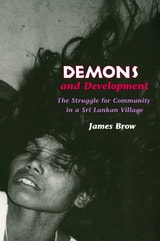
Demons and Development
The Struggle for Community in a Sri Lankan VillageJames Brow
University of Arizona Press, 1996
James Brow witnessed these possession trances and sorcery accusations as they occurred, enabling him to convey this richly textured story interweaving political factionalism and troubled spirits. Official projects of development have proceeded apace in Sri Lanka, but until now there have been few accounts of their tendency to tear apart the fabric of rural society. Demons and Development combines an engaging narrative of how development was experienced in one particular village with an original contribution to theories of hegemony, the social anthropology of South Asia, the ethnography of nationalism, and the sociology of development.
Designs for an Anthropology of the Contemporary
Paul Rabinow, George E. Marcus with James D. Faubion and Tobias Rees
Duke University Press, 2008
Both Rabinow and Marcus participated in the milestone collection Writing Culture: The Poetics and Politics of Ethnography. Published in 1986, Writing Culture catalyzed a reassessment of how ethnographers encountered, studied, and wrote about their subjects. In the opening conversations of Designs for an Anthropology of the Contemporary, Rabinow and Marcus take stock of anthropology’s recent past by discussing the intellectual scene in which Writing Culture intervened, the book’s contributions, and its conceptual limitations. Considering how the field has developed since the publication of that volume, they address topics including ethnography’s self-reflexive turn, scholars’ increased focus on questions of identity, the Public Culture project, science and technology studies, and the changing interests and goals of students. Designs for an Anthropology of the Contemporary allows readers to eavesdrop on lively conversations between anthropologists who have helped to shape their field’s recent past and are deeply invested in its future.
Diagnosing America
Anthropology and Public EngagementShepard Forman, Editor
University of Michigan Press, 1995
Debunking the notion of anthropology as a "value-free" science, the authors argue forcefully for an anthropology expressly committed to cultural pluralism and democratic participation.
At the same time, individual essays demonstrate the applicability of standard anthropological methods to the study of contemporary U.S. society and culture as they investigate contested values, community politics, middle-class economics, and workplace culture or describe the psychophysiological stress effects of exclusion on African- Americans and the coping mechanisms of Mexican-Americans along the border.
Diagnosing America and the challenging "Statement to the Profession" that concludes it call for anthropologists to reach beyond the parochialism of their own discipline and to engage history, economics, sociology, and the policy sciences. It will be of interest to scholars in each of these fields who are concerned with the study and resolution of contemporary social problems in the United States and to students of American culture in this country and abroad.
Shepard Forman is Director of the International Affairs Program of the Ford Foundation and a former Professor of Anthropology, University of Michigan.
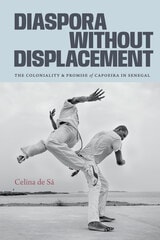
Diaspora Without Displacement
The Coloniality and Promise of Capoeira in SenegalCelina de Sá
Duke University Press, 2025
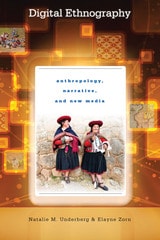
Digital Ethnography
Anthropology, Narrative, and New MediaBy Natalie M. Underberg and Elayne Zorn
University of Texas Press, 2013
Digital ethnography can be understood as a method for representing real-life cultures through storytelling in digital media. Enabling audiences to go beyond absorbing facts, computer-based storytelling allows for immersion in the experience of another culture. A guide for anyone in the social sciences who seeks to enrich ethnographic techniques, Digital Ethnography offers a groundbreaking approach that utilizes interactive components to simulate cultural narratives.
Integrating insights from cultural anthropology, folklore, digital humanities, and digital heritage studies, this work brims with case studies that provide in-depth discussions of applied projects. Web links to multimedia examples are included as well, including projects, design documents, and other relevant materials related to the planning and execution of digital ethnography projects. In addition, new media tools such as database development and XML coding are explored and explained, bridging the literature on cyber-ethnography with inspiring examples such as blending cultural heritage with computer games.
One of the few books in its field to address the digital divide among researchers, Digital Ethnography guides readers through the extraordinary potential for enrichment offered by technological resources, far from restricting research to quantitative methods usually associated with technology. The authors powerfully remind us that the study of culture is as much about affective traits of feeling and sensing as it is about cognition—an approach facilitated (not hindered) by the digital age.

Discourses of the Vanishing
Modernity, Phantasm, JapanMarilyn Ivy
University of Chicago Press, 1995
Ivy shows how a fascination with cultural margins accompanied the emergence of Japan as a modern nation-state. This fascination culminated in the early twentieth-century establishment of Japanese folklore studies and its attempts to record the spectral, sometimes violent, narratives of those margins. She then traces the obsession with the vanishing through a range of contemporary reconfigurations: efforts by remote communities to promote themselves as nostalgic sites of authenticity, storytelling practices as signs of premodern presence, mass travel campaigns, recallings of the dead by blind mediums, and itinerant, kabuki-inspired populist theater.
Displacement, Diaspora, and Geographies of Identity
Smadar Lavie and Ted Swedenburg, eds.
Duke University Press, 1996
This volume exemplifies a cross-disciplinary cultural studies and a concept of culture rooted in lived experience as well as textual readings. Anthropologists and scholars from related fields deploy a range of methodologies and styles of writing to blur and complicate conventional dualisms between authors and subjects of research, home and away, center and periphery, and first and third world. Essays discuss topics such as Rai, a North African pop music viewed as westernized in Algeria and as Arab music in France; the place of Sephardic and Palestinian writers within Israel’s Ashkenazic-dominated arts community; and the use and misuse of the concept “postcolonial” as it is applied in various regional contexts.
In exploring histories of displacement and geographies of identity, these essays call for the reconceptualization of theoretical binarisms such as modern and postmodern, colonial and postcolonial. It will be of interest to a broad spectrum of scholars and students concerned with postmodern and postcolonial theory, ethnography, anthropology, and cultural studies.
Contributors. Norma Alarcón, Edward M. Bruner, Nahum D. Chandler, Ruth Frankenberg, Joan Gross, Dorinne Kondo, Kristin Koptiuch, Smadar Lavie, Lata Mani, David McMurray, Kirin Narayan, Greg Sarris, Ted Swedenburg