Results by title
486 books match the query 'LGBTQ+' and 16 start with d
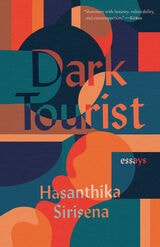
Dark Tourist
EssaysHasanthika Sirisena
The Ohio State University Press, 2021
Finalist for the 2022 LAMBDA literary award in bisexual nonfiction
Winner of the 2021 Gournay Prize
“Shimmers with honesty, vulnerability, and circumspection.” —Kirkus“Sirisena explores how stories can become a ‘talisman against the overwhelming darkness of another’s pain’ in her emotionally charged nonfiction debut … [Her] searching spirit leaves readers with plenty to dig into.” —Publishers Weekly
Dark tourism—visiting sites of war, violence, and other traumas experienced by others—takes different forms in Hasanthika Sirisena’s stunning excavation of the unexpected places (and ways) in which personal identity and the riptides of history meet. The 1961 plane crash that left a nuclear warhead buried near her North Carolina hometown, juxtaposed with reflections on her father’s stroke. A visit to Jaffna in Sri Lanka—the country of her birth, yet where she is unmistakably a foreigner—to view sites from the recent civil war, already layered over with the narratives of the victors. A fraught memory of her time as a young art student in Chicago that is uneasily foundational to her bisexual, queer identity today. The ways that life-changing impairments following a severe eye injury have shaped her thinking about disability and self-worth.
Deftly blending reportage, cultural criticism, and memoir, Sirisena pieces together facets of her own sometimes-fractured self to find wider resonances with the human universals of love, sex, family, and art—and with language’s ability to both fail and save us. Dark Tourist becomes then about finding a home, if not in the world, at least within the limitless expanse of the page.

Dear All,
Maggie Anderson
Four Way Books, 2017
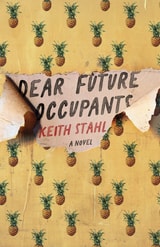
Dear Future Occupants
Keith Stahl
University of Wisconsin Press, 2026
It is 1979 and patriarch Bud relocates his family to his conservative hometown of Greenhill, Connecticut. Despite dubious restaurant experience, he uses his wife’s inheritance to purchase a diner in hopes of proving himself. Things begin to fall apart when police find an all-too-literal skeleton in the family’s basement. A series of misfortunes, accidents, and comedic events follow, including the creation of a vending-machine-sandwich/drug-dealing business and a protest-turned-siege at the local hospital.
Charting one family’s rise to subversive glory in a genteel New England town, this colonial gothic novel is told through found documents and multiple perspectives, including those of Bud; Victor, the middle son; and Herman, the ahead-of-their time, nonbinary, eldest child whose journal entries serve as a kind of Greek chorus throughout. In this breathless, exuberant work, Keith Stahl brilliantly captures the foundational dichotomies at the heart of the American experience: a puritanical distrust of anything fun and a nearly anarchic love of pleasure and freedom. Moving and bitterly humorous, Dear Future Occupants is a paean to the working class and the diversity that holds a family together.
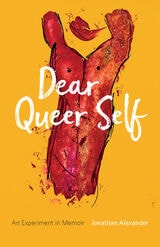
Dear Queer Self
An Experiment in MemoirJonathan Alexander
Acre Books, 2022
In this unconventional memoir, Jonathan Alexander addresses wry and affecting missives to a conflicted younger self. Focusing on three years—1989, 1993, and 1996—Dear Queer Self follows the author through the homophobic heights of the AIDS epidemic, the fall of the Berlin Wall, the election of Bill Clinton, and the steady advancements in gay rights that followed. With humor and wit afforded by hindsight, Alexander relives his closeted college years, his experiments with his sexuality in graduate school, his first marriage to a woman, and his budding career as a college professor.
As he moves from tortured self-denial to hard-won self-acceptance, the author confronts the deeply uncomfortable ways he is implicated in his own story. More than just a coming-out narrative, Dear Queer Self is both an intimate psychological exploration and a cultural examination—a meshing of inner and outer realities and a personal reckoning with how we sometimes torture the truth to make a life. It is also a love letter, an homage to a decade of rapid change, and a playlist of the sounds, sights, and feelings of a difficult, but ultimately transformative, time.
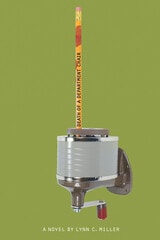
Death of a Department Chair
A NovelLynn C. Miller
University of Wisconsin Press, 2006
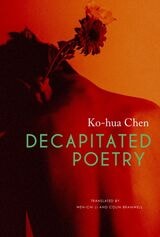
Decapitated Poetry
Ko-Hua Chen
Seagull Books, 2023
Ko-hua Chen’s Decapitated Poetry was the first explicitly queer book of poems published in Taiwan and remains a foundational work in Taiwanese poetry. Decades after it first appeared in 1995, this collection retains the capacity to shock, appall, and jolt readers into recognizing homosexuality as its own specific category of being. Behind Chen’s depictions of the disjunctive realities of queer erotic life, a formidable and uncompromising poetic intelligence can be seen at play. Alongside the erotic, satirical offerings from Decapitated Poetry, this volume includes selections from Chen’s remarkable sci-fi sequences that offer further transcorporeal meditations on forbidden queer love. Excoriating, heretical, tender, and always alive to the transgressive potential of language, this exhilarating volume from Seagull’s Pride List is the perfect introduction to one of Taiwanese poetry’s most daring voices.
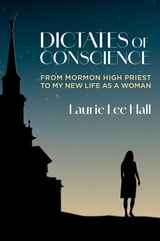
Dictates of Conscience
From Mormon High Priest to My New Life as a WomanLaurie Lee Hall
Signature Books, 2024
Laurie Lee Hall’s growing-up years were defined by the conflict between her physical condition as a boy and her inherent identity as a girl. Unable to explain or resolve her gender dysphoria, she committed to living her adult life as a male. She joined the Church of Jesus Christ of Latter-day Saints, eventually becoming chief architect of its temples and an ecclesiastical leader. In her church and community, rigid adherence to gender roles is not only the norm, but the defining issue of a faith that doctrinally declares one’s gender as an “eternal identity.” Against this traditional backdrop, Hall finally received spiritual confirmation and personally accepted that she was transgender and always had been. In this remarkable memoir, Laurie Lee details how she risked everything to live true to her long-suppressed gender identity.
Through the power of lived experience, Laurie Lee’s story affirms the reality of gender identity and the strength and joy of self-acceptance.
Dictates of Conscience
From Mormon High Priest to My New Life as a WomanLaurie Lee Hall
Signature Books, 2026
Laurie Lee Hall’s growing-up years were defined by the conflict between her physical condition as a boy and her inherent identity as a girl. Unable to explain or resolve her gender dysphoria, she committed to living her adult life as a male. She joined the Church of Jesus Christ of Latter-day Saints, eventually becoming chief architect of its temples and an ecclesiastical leader. In her church and community, rigid adherence to gender roles is not only the norm, but the defining issue of a faith that doctrinally declares one’s gender as an “eternal identity.” Against this traditional backdrop, Hall finally received spiritual confirmation and personally accepted that she was transgender and always had been. In this remarkable memoir, Laurie Lee details how she risked everything to live true to her long-suppressed gender identity.
Through the power of lived experience, Laurie Lee’s story affirms the reality of gender identity and the strength and joy of self-acceptance.
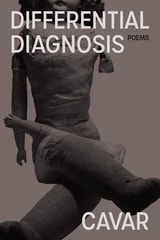
Differential Diagnosis
PoemsCavar
Northwestern University Press, 2026
Undoing traditional psychiatric narratives in this innovative and bold first collection
Drawing from queer, trans, disabled, and Mad poetic traditions, Differential Diagnosis introduces a deeply entangled transMad approach, investigating ways of knowing, loving, and living not legible to the normative eye. This collection challenges the architecture of institutional psychiatry and its popular “wellness” analogues, offering instead a counternarrative of forced institutionalization, disorderly embodiment, and transMad self-determination.
At once jarring and joyful, Differential Diagnosis interrogates psychiatric power and locates capacities for disabled and/or transMad resistance in the oblique, the speculative, and the “nonsensical.” Cavar’s inventive full-length debut defamiliarizes cis, sane, abled existence through linguistic play and speculative imagery, offering Madness not only as poetic content, but also as craft technique and, ultimately, as a new way of being in the normative world.
Directions to the Beach of the Dead
Richard Blanco
University of Arizona Press, 2005
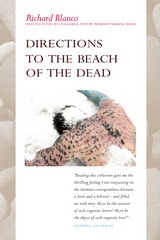
The words are redolent with his Cuban heritage: Marina making mole sauce; Tía Ida bitter over the revolution, missing the sisters who fled to Miami; his father, especially, “his hair once as black as the black of his oxfords…” Yet this is a volume for all who have longed for enveloping arms and words, and for that sanctuary called home. “So much of my life spent like this-suspended, moving toward unknown places and names or returning to those I know, corresponding with the paradox of crossing, being nowhere yet here.” Blanco embraces juxtaposition. There is the Cuban Blanco, the American Richard, the engineer by day, the poet by heart, the rhythms of Spanish, the percussion of English, the first-world professional, the immigrant, the gay man, the straight world. There is the ennui behind the question: why cannot I not just live where I live? Too, there is the precious, fleeting relief when he can write "…I am, for a moment, not afraid of being no more than what I hear and see, no more than this:..." It is what we all hope for, too.
Disturbing Attachments
Genet, Modern Pederasty, and Queer HistoryKadji Amin
Duke University Press, 2017
Don't Whisper Too Much and Portrait of a Young Artiste from Bona Mbella
Ekotto, Frieda
Bucknell University Press, 2019
Published by Bucknell University Press. Distributed worldwide by Rutgers University Press.
Dot & Ralfie
Amy Hoffman
University of Wisconsin Press, 2022
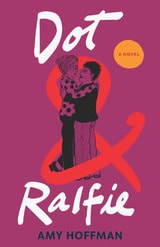
Dot is caring but hides hurtful secrets. Ralfie’s gruffness masks the physical and emotional pain she endures. Friends and relatives don’t necessarily offer appealing role models for their third act. Dot’s sister Susan is pushing them toward a stuffy “55 or better” community out in the ’burbs, populated by aging straights who mistake the butch Ralfie for a frumpy old man. Eighty-year-old Viola—Dot’s friend and sometime lover—lives alone and refuses help, even as she experiences a devastating fall. Rife with Hoffman’s characteristic wit, Dot & Ralfie takes a hard, sometimes painful look at elder care in the LGBTQ+ community, and the unique struggles that come with getting older outside of heteronormative structures.
Doubters and Dreamers
Janice Gould
University of Arizona Press, 2011
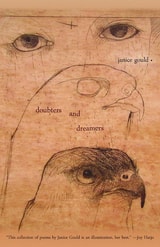
In the first half of the book, “Tribal History,” Gould ingeniously repurposes the sonnet form to preserve the stories of her mother and aunt, who grew up when “muleback was the customary mode / of transport” and the “spirit world was present”—stories of “old ways” and places claimed in memory but lost in time. Elsewhere, she remembers her mother’s “ferocious, upright anger” and her unexpected tenderness (“Like a miracle, I was still her child”), culminating in the profound expression of loss that is the poem “Our Mother’s Death.”
In the second half of the book, “It Was Raining,” Gould tells of the years of lonely self-making and “unfulfilled dreams” as she comes to terms with what she has been told are her “crazy longings” as a lesbian: “It’s been hammered into me / that I’ll be spurned / by a ‘real woman,’ / the only kind I like.” The writing here commemorates old loves and relationships in language that mingles hope and despair, doubt and devotion, veering at times into dreamlike moments of consciousness. One poem and vignette at a time, Doubters and Dreamers explores what it means to be a mixed-blood Native American who grew up urban, lesbian, and middle class in the West.
Drift Net
The Aesthetics of Literature and Media in MigrationChris Campanioni
Lever Press, 2025
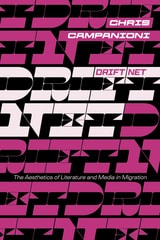
Through a model Campanioni calls a “migratory text,” Drift Net advances a theory of literature and art born in translation that calls into question established theories of world literature, national literatures, literary periodization, and translation itself. Through an analysis of works born in translation and produced in passage, detention, and exile, Campanioni utilizes this model to read creatively across a wide range of social and political formations, from the experience of his parents' exiles to alternative housing initiatives and asylum reform efforts throughout Europe, including the largest LGBT+ refugee center in the world. Drawing on a mixed methodology of qualitative interviews with asylum applicants and shelter directors, textual analysis, and autoethnographic narrative, Drift Net traces literary developments alongside contemporary social and political interventions. This approach proposes interventions on the organizational levels of asylum, integration, public housing, and membership. It also marks the ways migrant creators have reformulated subjectivity through the same genres and modes that have contributed to their devaluation as minoritized subjects.
Drift Net both deepens and broadens our conceptualization of migrant literature, and recovers an understanding and application of transmedia that predates digital cultures. Campanioni offers a wide-ranging study of texts including Edward Said and Jean Mohr’s After the Last Sky: Palestinian Lives, Edgar Garcia’s Skins of Columbus, Anna Seghers’s Transit, Francis Ponge’s Soap, Walid Raad’s The Atlas Group, Klára Hosnedlová’s embroidered paintings, Reem Karssli and Caroline Williams’s Now is the Time To Say Nothing, Cornelia Schleime’s paper prints, and more. Drift Net formulates the “migratory” as a site of artistic production, resistance, and possibility, where theory is not an end but the beginning of tools and practices that might help researchers, instructors, and organizers to develop their strategies.
Dry Land
B. Pladek
University of Wisconsin Press, 2023
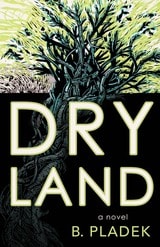
While at camp, Rand also realizes the true price of his gift: everything he grows withers and dies, leaving the soil empty of all living matter. Horrified, he throws himself into ever more self-destructive trials, buckling under the pressure of so many secrets. In order to survive, he must confront the terrifying possibility that his gift is actually a curse, upending everything he believes about nature, love, and himself.